
Chapter 2 Notes Representing Motion Chapter Objectives Draw
Chapter 2 Notes Representing Motion
Chapter Objectives • Draw and interpret motion and particle diagrams. • Define displacement and time interval and solve for them using given equations. • Draw and interpret position vs. time graphs illustrating motion. • Differentiate between vectors and scalars. • Use average velocity equation to solve motion problems. • Differentiate between average velocity and instantaneous velocity.
What is motion? • How do you know something is moving? • What evidence do you need to be convinced that something is moving?
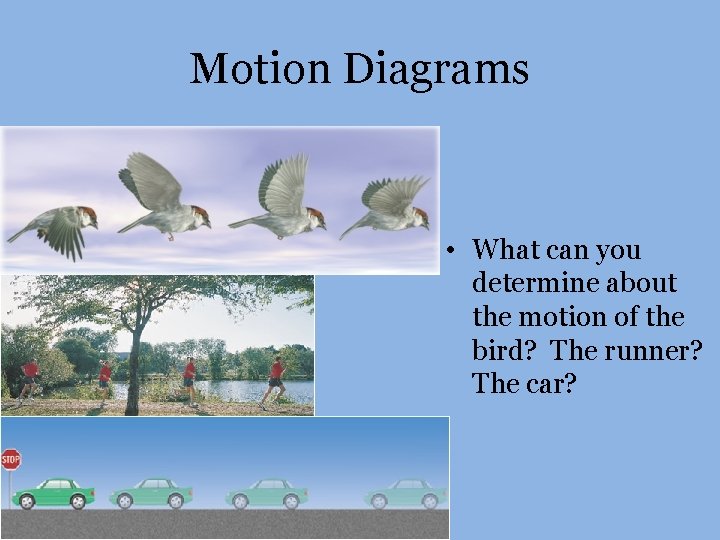
Motion Diagrams • What can you determine about the motion of the bird? The runner? The car?
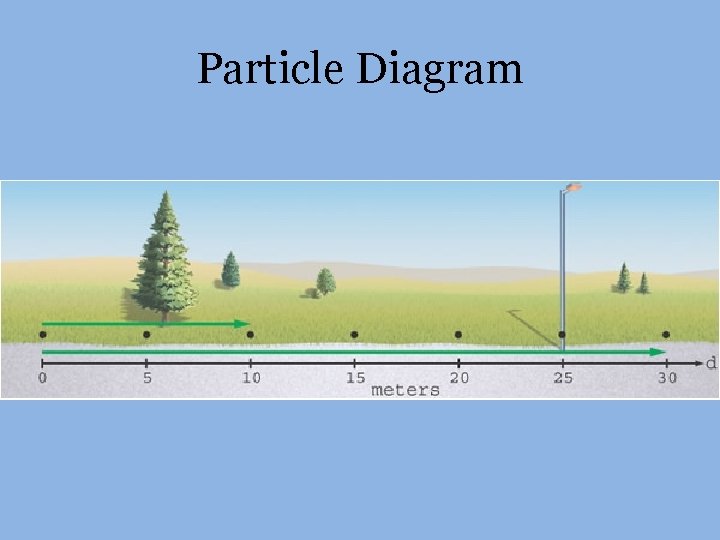
Particle Diagram
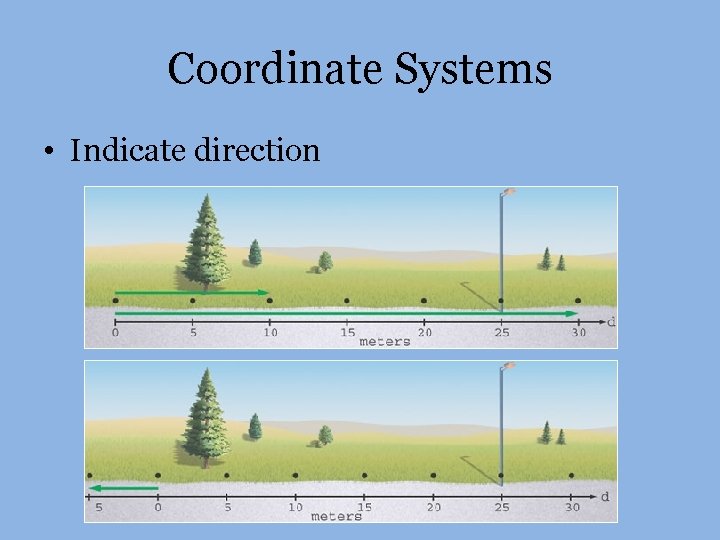
Coordinate Systems • Indicate direction
Quantities • Vectors – quantities that have magnitude and direction – Represented with arrows • Scalars – quantities that have no direction
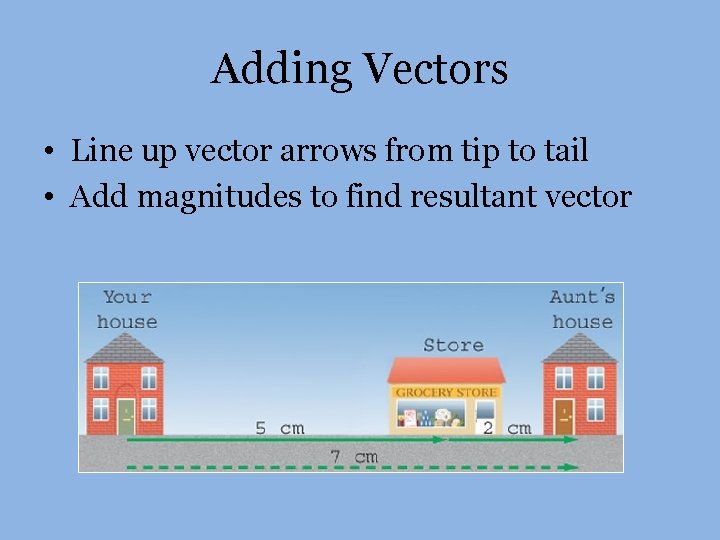
Adding Vectors • Line up vector arrows from tip to tail • Add magnitudes to find resultant vector
Subtracting Vectors • Treat subtraction as addition of vectors with a negative sign
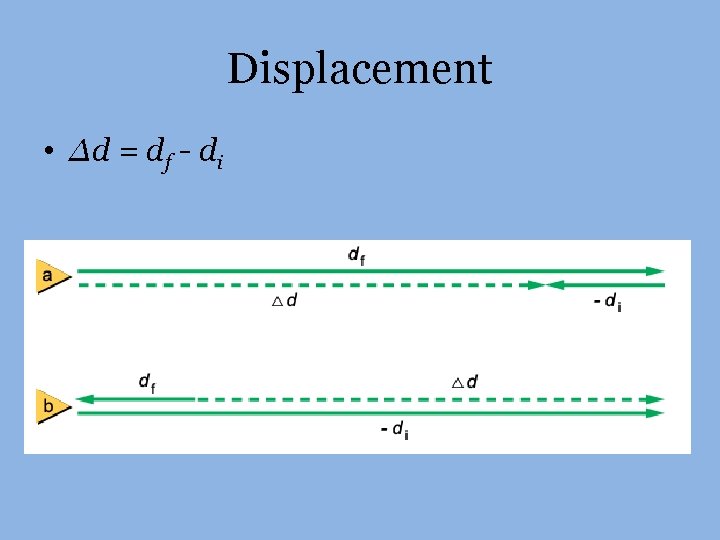
Displacement • ∆d = df - di
Distance vs. Displacement • A jogger travels 2 km, stops to rest, then jogs back to his starting place. – What is the distance the jogger traveled? – What is his displacement?
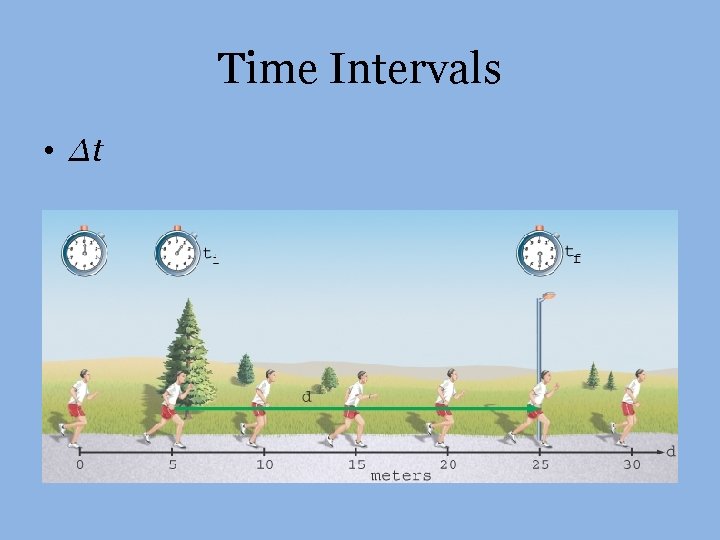
Time Intervals • ∆t
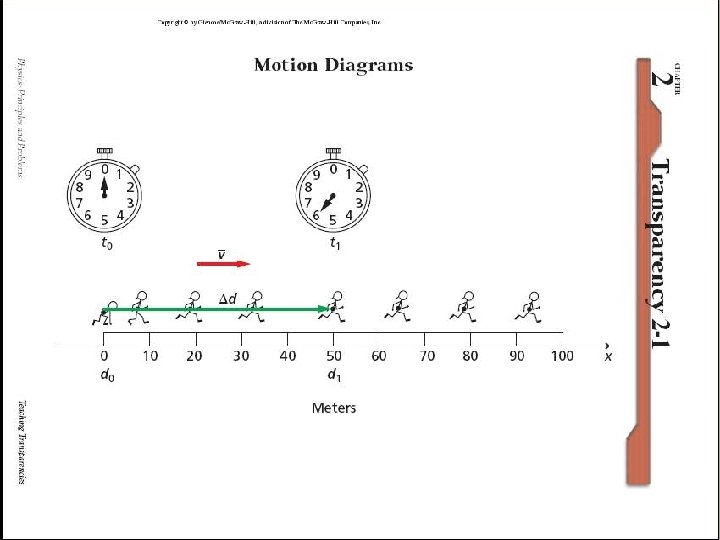
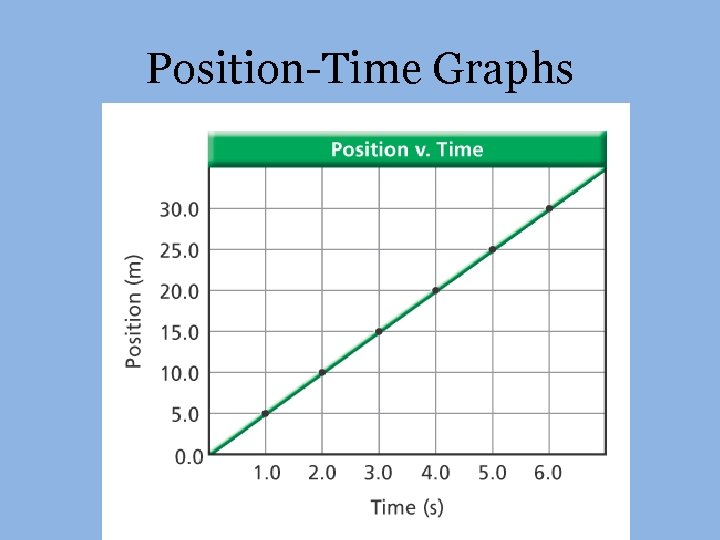
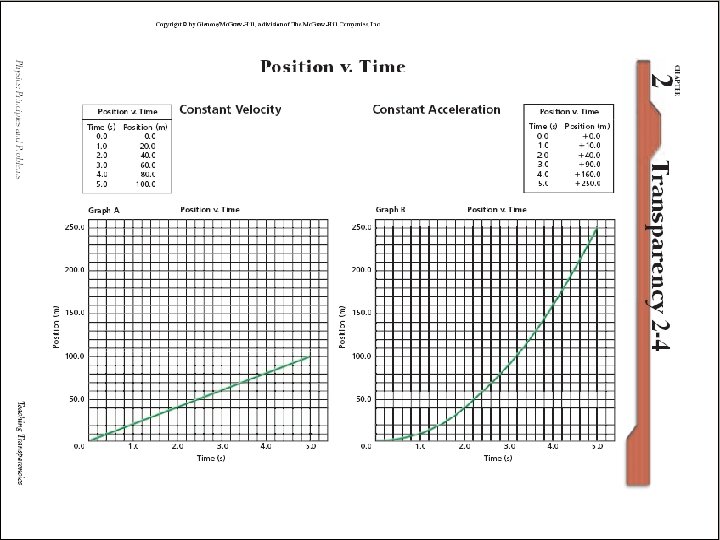
Position-Time Graphs
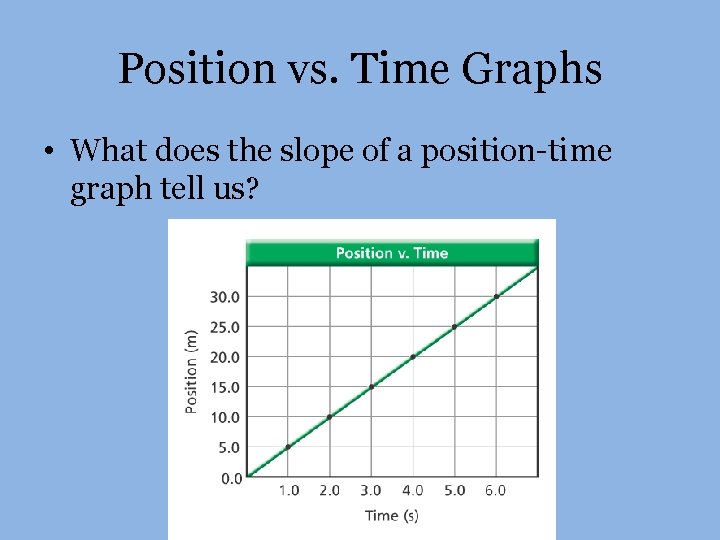
Position vs. Time Graphs • What does the slope of a position-time graph tell us?
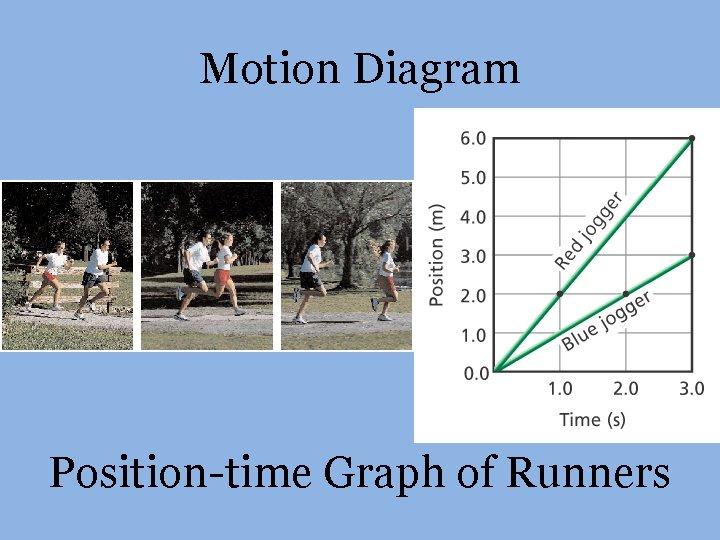
Motion Diagram Position-time Graph of Runners
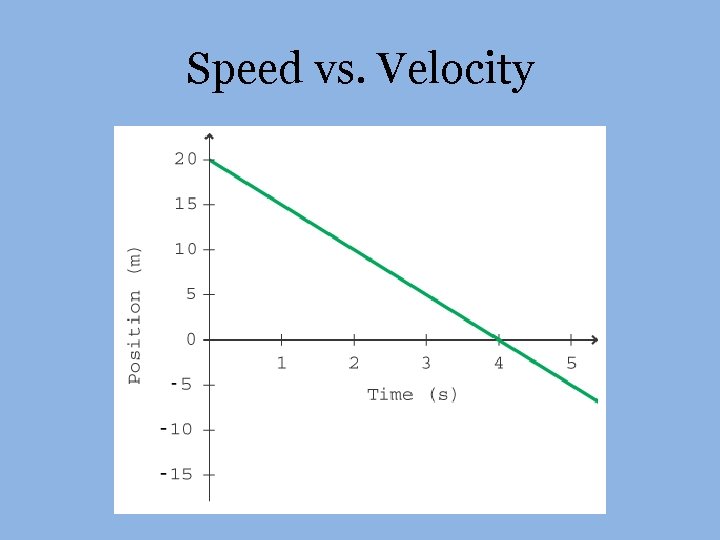
Speed vs. Velocity
Instantaneous Velocity • Speed and direction at a particular instant • Speedometer • How can we determine this on a positiontime graph?
- Slides: 19