
Chapter 2 Neurological and Genetic Basis of Behavior
Chapter 2: Neurological and Genetic Basis of Behavior Essentials of Psychology, 5 th Edition Stephen L. Franzoi © 2014 BVT Publishing Better textbooks, better prices.
Chapter Outline The Neuron Neural and Hormonal Systems Essentials of Psychology, 5 th Edition Stephen L. Franzoi © 2014 The Brain Genetic Influences on Behavior BVT Publishing Better textbooks, better prices.

The Neuron (Slide 1 of 5) Neurons are the nervous system’s building blocks. � Neurons: specialized cells in the nervous system that sends and receives information � Sensory neurons: neurons that send information from sensory receptors to the brain, usually by way of the spinal cord � Motor neurons: neurons that send commands from the brain to glands, muscles, and organs to do, cease, or inhibit something � Interneurons: neurons that connect the sensory neurons’ input signals with the motor neurons’ output signals Essentials of Psychology, 5 th Edition Stephen L. Franzoi © 2014 BVT Publishing Better textbooks, better prices.
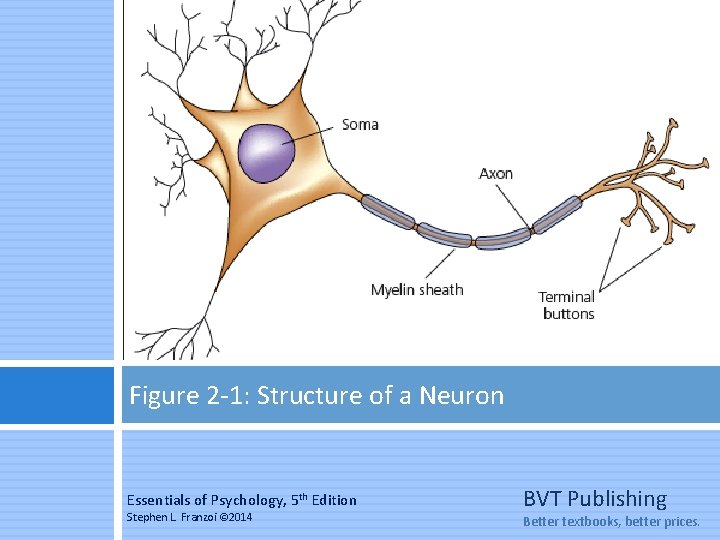
Figure 2 -1: Structure of a Neuron Essentials of Psychology, 5 th Edition Stephen L. Franzoi © 2014 BVT Publishing Better textbooks, better prices.
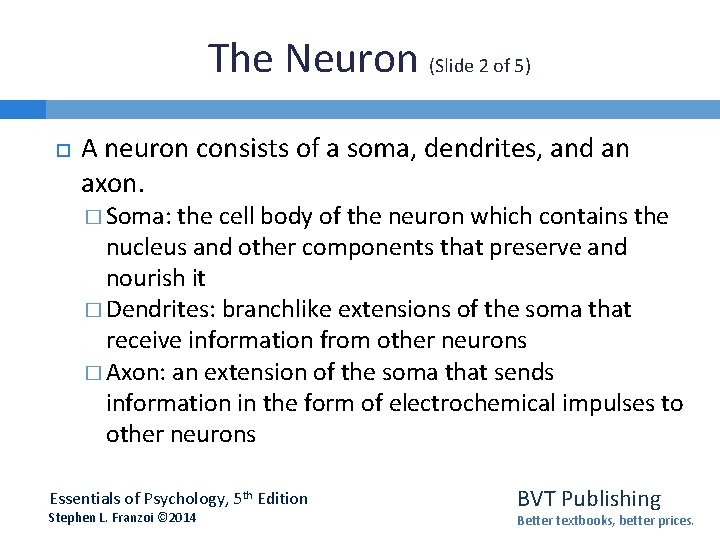
The Neuron (Slide 2 of 5) A neuron consists of a soma, dendrites, and an axon. � Soma: the cell body of the neuron which contains the nucleus and other components that preserve and nourish it � Dendrites: branchlike extensions of the soma that receive information from other neurons � Axon: an extension of the soma that sends information in the form of electrochemical impulses to other neurons Essentials of Psychology, 5 th Edition Stephen L. Franzoi © 2014 BVT Publishing Better textbooks, better prices.
The Neuron (Slide 3 of 5) Myelin sheath: a protective coating of fatty material around an axon that hastens the transmission of the electrochemical charge Synapse: the entire area composed of the terminal button of one neuron, the synaptic cleft, and the dendrite of another neuron Glial cells: non-neuron cells that supply the neurons with support, nutrients, and insulation Essentials of Psychology, 5 th Edition Stephen L. Franzoi © 2014 BVT Publishing Better textbooks, better prices.

The Neuron (Slide 4 of 5) A neuron is in either a resting or a firing state. � Resting potential: the stable, negative charge of an inactive neuron � Action potential: the brief shift in a neuron’s electrical charge that travels down the axon Neurons communicate with one another by releasing chemicals. � Neurotransmitters: chemical messengers released by the synaptic vesicles that travel across the synaptic cleft and either excites or inhibits adjacent neurons Essentials of Psychology, 5 th Edition Stephen L. Franzoi © 2014 BVT Publishing Better textbooks, better prices.
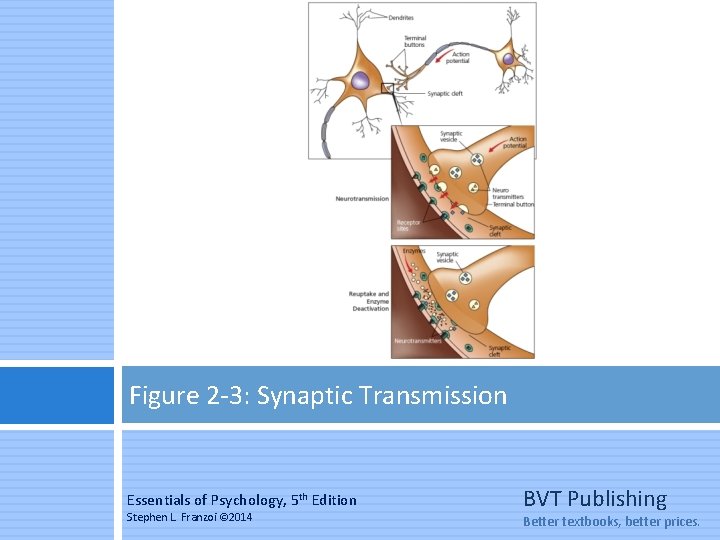
Figure 2 -3: Synaptic Transmission Essentials of Psychology, 5 th Edition Stephen L. Franzoi © 2014 BVT Publishing Better textbooks, better prices.

The Neuron (Slide 5 of 5) Major neurotransmitters � Acetylcholine (Ach): involved in muscle contraction and memory formation � Dopamine (DA): promotes and facilitates movement as well as influencing thought and emotion � Endorphins: similar to morphine and play an important role in the experience of pleasure and the control of pain � Serotonin: important in regulating emotional states, sleep cycles, dreaming, aggression, and appetite Essentials of Psychology, 5 th Edition Stephen L. Franzoi © 2014 BVT Publishing Better textbooks, better prices.
Neural and Hormonal Systems (Slide 1 of 5) The peripheral nervous system connects the brain and spinal cord with body organs and tissues. � Peripheral nervous system: that portion of the nervous system containing all the nerves outside the brain and spinal cord � Nerve: a bundle of axons from many neurons that are routed together in the peripheral nervous system Essentials of Psychology, 5 th Edition Stephen L. Franzoi © 2014 BVT Publishing Better textbooks, better prices.
Neural and Hormonal Systems (Slide 2 of 5) Somatic nervous system: transmits commands to the voluntary skeletal muscles and receives sensory information from the muscles and the skin Autonomic nervous system: controls the movement of non -skeletal muscles, such as the heart and lung muscles, over which people have little or no voluntary control Sympathetic nervous system: the part of the autonomic nervous system that activates the body’s energy resources to deal with threatening situations Parasympathetic nervous system: the part of the autonomic nervous system that acts to conserve and maintain the body’s energy resources Essentials of Psychology, 5 th Edition Stephen L. Franzoi © 2014 BVT Publishing Better textbooks, better prices.
Neural and Hormonal Systems (Slide 3 of 5) The spinal cord connects the peripheral nervous system to the brain. � Central nervous system: that portion of the nervous system located in the bony central core of the body. consisting of the brain and spinal cord � Cerebrospinal fluid: a clear, cushioning fluid secreted by the brain and circulated inside and around the brain and spinal cord � Spinal cord : that slender, tube-shaped part of the central nervous system that extends from the base of the brain down the center of the back made up of a bundle of nerves Essentials of Psychology, 5 th Edition Stephen L. Franzoi © 2014 BVT Publishing Better textbooks, better prices.
Neural and Hormonal Systems (Slide 4 of 5) The endocrine system communicates by secreting hormones. � Endocrine system: a network of glands in various parts of the body that manufactures and secretes hormones directly into the blood stream � Hormones: chemical signals, manufactured and secreted into the blood by the endocrine glands � Pituitary gland: the body’s “master” gland, located in the base of the brain, whose hormones stimulate and regulate the rest of the endocrine system Essentials of Psychology, 5 th Edition Stephen L. Franzoi © 2014 BVT Publishing Better textbooks, better prices.
Neural and Hormonal Systems (Slide 5 of 5) Thyroid gland: the gland located just below the larynx in the neck that controls metabolism Adrenal glands: two glands, located near the kidney, that secrete epinephrine and norepinephrine, which activate the sympathetic nervous system Gonads: the two sex glands, called ovaries in females and testes in males Essentials of Psychology, 5 th Edition Stephen L. Franzoi © 2014 BVT Publishing Better textbooks, better prices.
The Brain (Slide 1 of 5) Modern technology measures the brain’s electrical activity, structure, blood flow, and chemistry. � Electroencephalograph (EEG) � Computerized axial tomography (CAT) � Magnetic resonance imaging (MRI) � Positron emission tomography (PET) � Functional magnetic resonance imaging (f. MRI) Essentials of Psychology, 5 th Edition Stephen L. Franzoi © 2014 BVT Publishing Better textbooks, better prices.
The Brain (Slide 2 of 5) Three major brain regions are the hindbrain, midbrain, and forebrain. � Hindbrain: the region of the brain above the spinal cord that contains the medulla, the pons, and the cerebellum � Midbrain: the region of the brain above the hindbrain that contains the reticular formation � Forebrain: the region of the brain above the midbrain that contains the cerebral cortex, thalamus, hypothalamus, and limbic system Essentials of Psychology, 5 th Edition Stephen L. Franzoi © 2014 BVT Publishing Better textbooks, better prices.
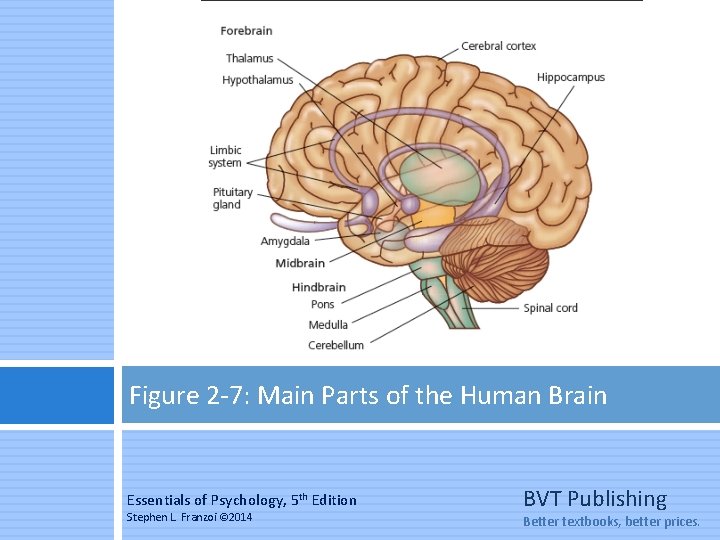
Figure 2 -7: Main Parts of the Human Brain Essentials of Psychology, 5 th Edition Stephen L. Franzoi © 2014 BVT Publishing Better textbooks, better prices.
The Brain (Slide 3 of 5) The cerebral cortex is the crowning achievement of human evolution. � Cerebral cortex: the largest structure in the forebrain, largely responsible for higher order mental processes The cerebral cortex consists of specialized regions, or “lobes. ” � Occipital lobe � Parietal lobe � Temporal lobe � Frontal lobe Essentials of Psychology, 5 th Edition Stephen L. Franzoi © 2014 BVT Publishing Better textbooks, better prices.
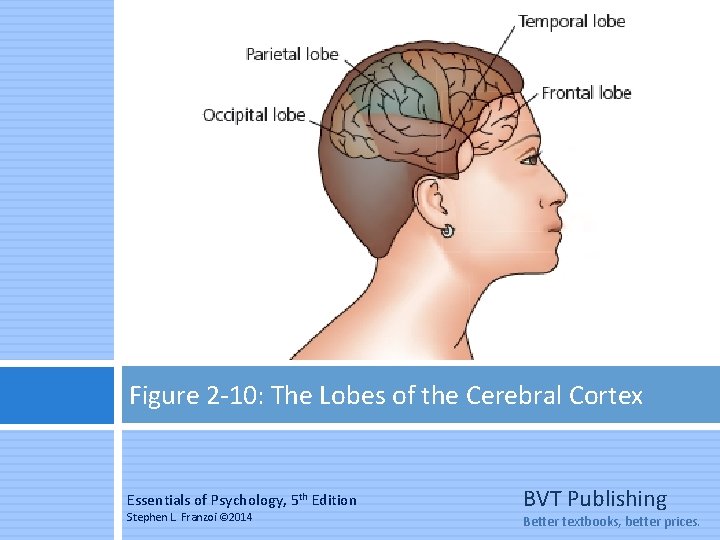
Figure 2 -10: The Lobes of the Cerebral Cortex Essentials of Psychology, 5 th Edition Stephen L. Franzoi © 2014 BVT Publishing Better textbooks, better prices.
The Brain (Slide 4 of 5) The right and left cerebral hemispheres function differently. � Cerebral lateralization: the degree to which the right or left hemisphere controls various cognitive and behavioral functions Are there “left-brain” and “right-brain” people? Are there sex differences in hemispheric organization? Essentials of Psychology, 5 th Edition Stephen L. Franzoi © 2014 BVT Publishing Better textbooks, better prices.
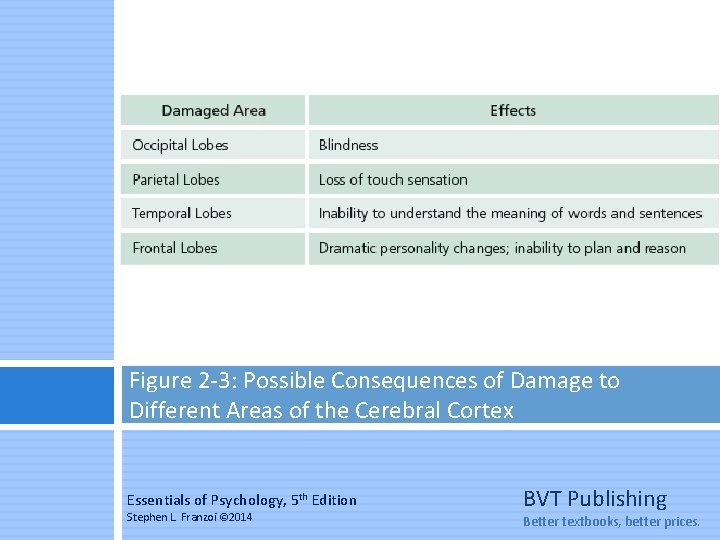
Figure 2 -3: Possible Consequences of Damage to Different Areas of the Cerebral Cortex Essentials of Psychology, 5 th Edition Stephen L. Franzoi © 2014 BVT Publishing Better textbooks, better prices.
The Brain (Slide 5 of 5) The brain can alter its neural connections. � Plasticity: the ability of the brain to alter its neural connections following damage Essentials of Psychology, 5 th Edition Stephen L. Franzoi © 2014 BVT Publishing Better textbooks, better prices.
Genetic Influences on Behavior (Slide 1 of 4) Phenotype: the visible and measurable traits of an organism Genotype: the underlying genetic composition of an organism Essentials of Psychology, 5 th Edition Stephen L. Franzoi © 2014 BVT Publishing Better textbooks, better prices.
Genetic Influences on Behavior (Slide 2 of 4) Gene: the basic biochemical unit of inheritance that is located on and transmitted by chromosomes Chromosomes: thread-like structures carrying genetic information that are found in every cell of the body Deoxyribonucleic acid: the complex molecule strand of the chromosome that contains thousands of different genes, located at fixed positions Sex chromosomes: one of the 23 pairs of chromosomes that determines whether an individual is male of female Essentials of Psychology, 5 th Edition Stephen L. Franzoi © 2014 BVT Publishing Better textbooks, better prices.
Genetic Influences on Behavior (Slide 3 of 4) Both heredity and environment influence physical and behavioral traits. � Behavior genetics: the study of how the genotype and the environment of an organism influence its behavior Molecular genetics seeks to identify specific genes that influence behavior. � Molecular genetics: the sub-discipline in biology that studies the molecular structure and function of genes to determine how they influence behavior Essentials of Psychology, 5 th Edition Stephen L. Franzoi © 2014 BVT Publishing Better textbooks, better prices.
Genetic Influences on Behavior (Slide 4 of 4) Controversies surround genetic explanations of certain sex and race differences. � Sex: the biological status of being female of male � Gender: the meaning that societies and individuals attach to being female and male Does race tell us anything useful about how people differ genetically? Essentials of Psychology, 5 th Edition Stephen L. Franzoi © 2014 BVT Publishing Better textbooks, better prices.
- Slides: 26