
CHAPTER 2 MOTION IN ONE DIMENSION Motion One


- Slides: 36
CHAPTER 2 MOTION IN ONE DIMENSION
Motion One dimensional motion is the simplest form of motion – Ex: a MARTA train traveling down the tracks Frame of reference – a system for specifying the precise location of objects in space and time
PHYSICAL QUANTITY SCALAR • can be completely specified by its magnitude with appropriate units. • It has no direction. • E. g. Distance, time, speed, mass, etc.
PHYSICAL QUANTITY VECTOR • Has a magnitude, a unit and a direction • e. g displacement, velocity, acceleration, force.
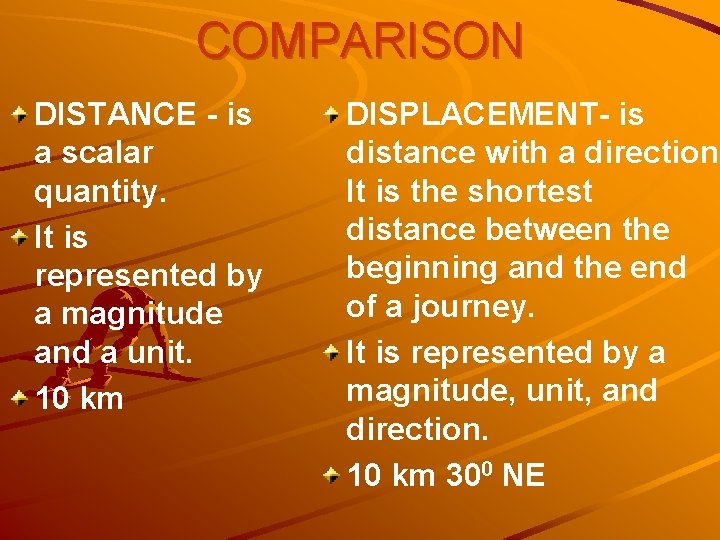
COMPARISON DISTANCE - is a scalar quantity. It is represented by a magnitude and a unit. 10 km DISPLACEMENT- is distance with a direction. It is the shortest distance between the beginning and the end of a journey. It is represented by a magnitude, unit, and direction. 10 km 300 NE
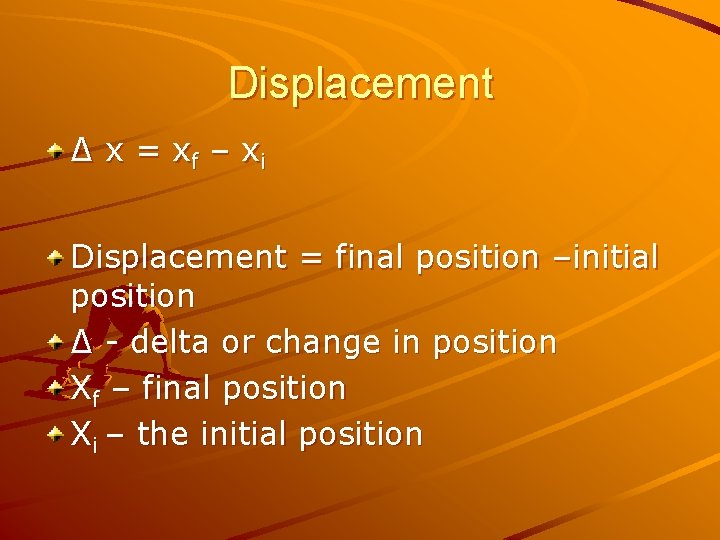
Displacement ∆ x = x f – xi Displacement = final position –initial position ∆ - delta or change in position Xf – final position Xi – the initial position
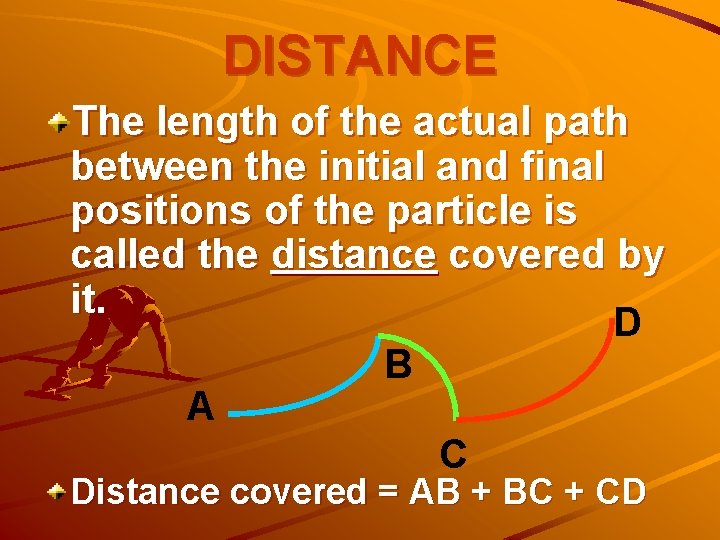
DISTANCE The length of the actual path between the initial and final positions of the particle is called the distance covered by it. D B A C Distance covered = AB + BC + CD
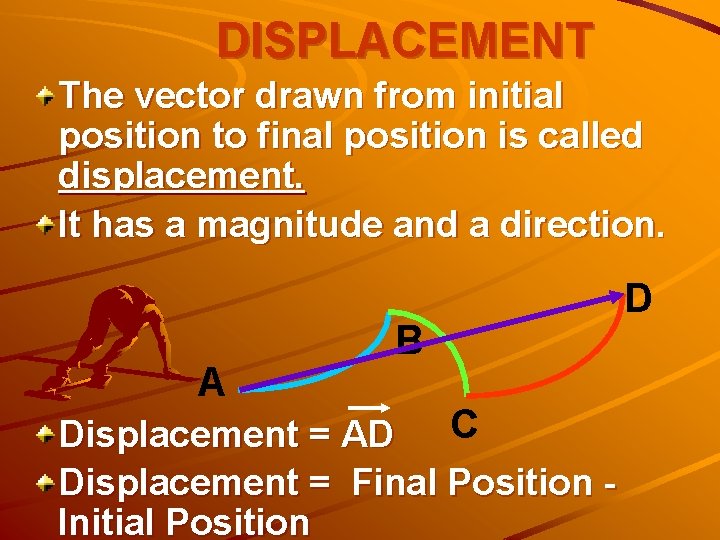
DISPLACEMENT The vector drawn from initial position to final position is called displacement. It has a magnitude and a direction. A B C Displacement = AD Displacement = Final Position Initial Position D
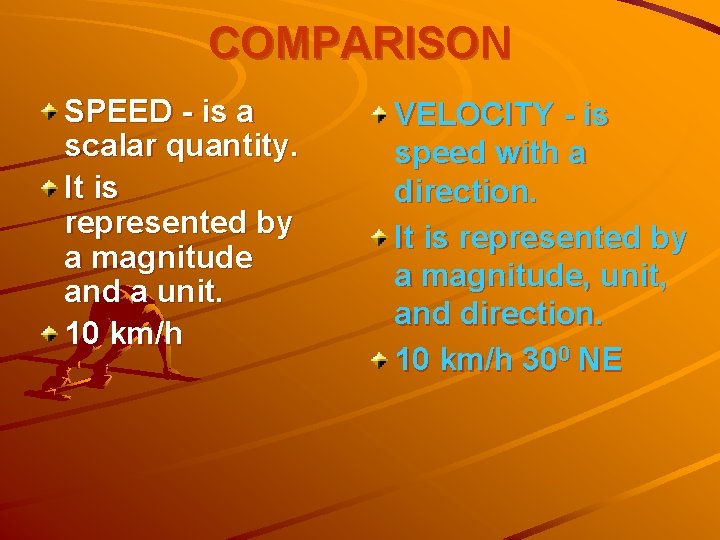
COMPARISON SPEED - is a scalar quantity. It is represented by a magnitude and a unit. 10 km/h VELOCITY - is speed with a direction. It is represented by a magnitude, unit, and direction. 10 km/h 300 NE
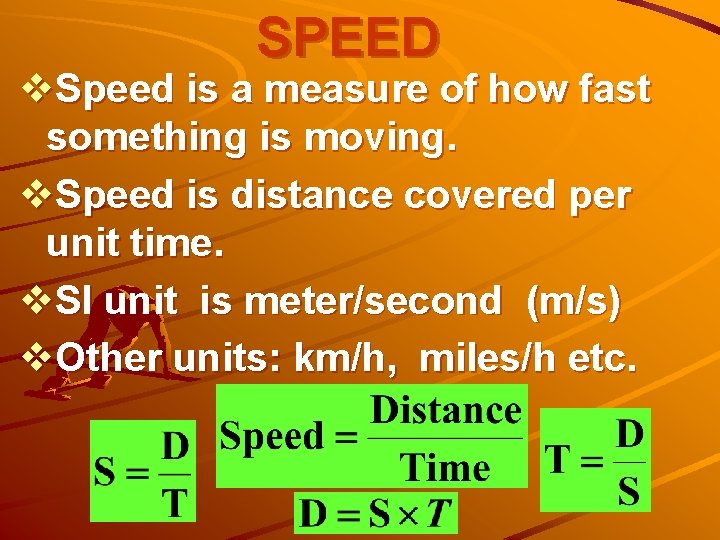
SPEED v. Speed is a measure of how fast something is moving. v. Speed is distance covered per unit time. v. SI unit is meter/second (m/s) v. Other units: km/h, miles/h etc.
VELOCITY Velocity describes the speed and direction of an object. It is a vector quantity, since it has a magnitude and a direction. E. g. object moving 30 miles/h due south.
VELOCITY Velocity is the rate at which an object changes its position.
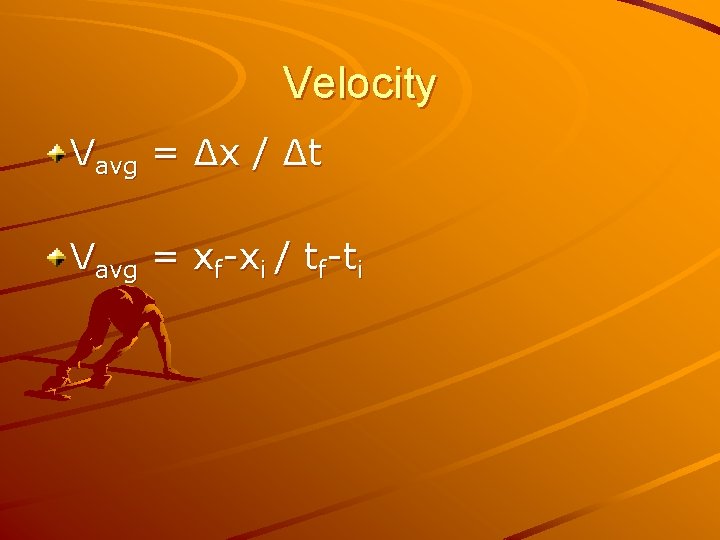
Velocity Vavg = ∆x / ∆t Vavg = xf-xi / tf-ti
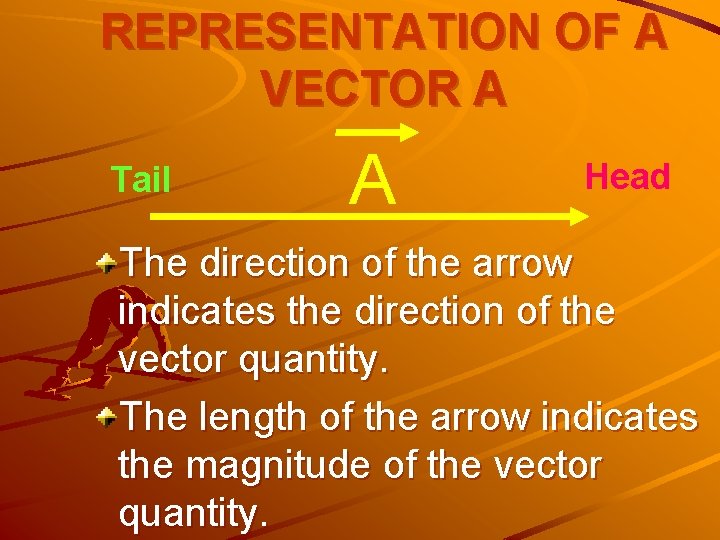
REPRESENTATION OF A VECTOR A Tail A Head The direction of the arrow indicates the direction of the vector quantity. The length of the arrow indicates the magnitude of the vector quantity.
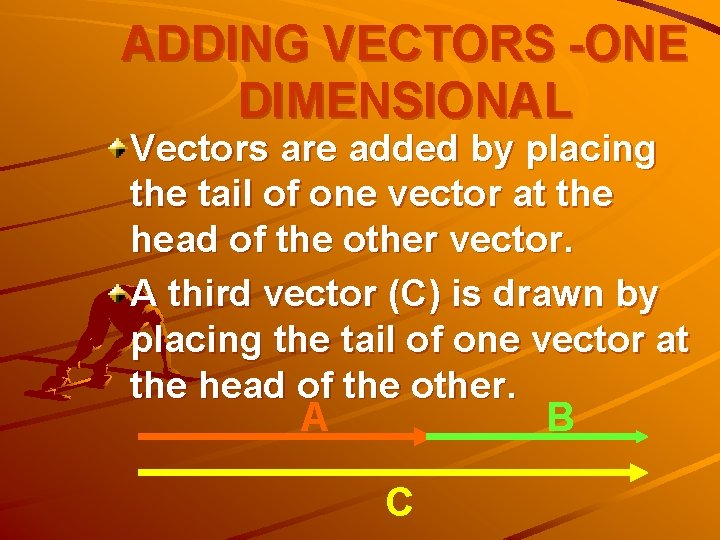
ADDING VECTORS -ONE DIMENSIONAL Vectors are added by placing the tail of one vector at the head of the other vector. A third vector (C) is drawn by placing the tail of one vector at the head of the other. A B C
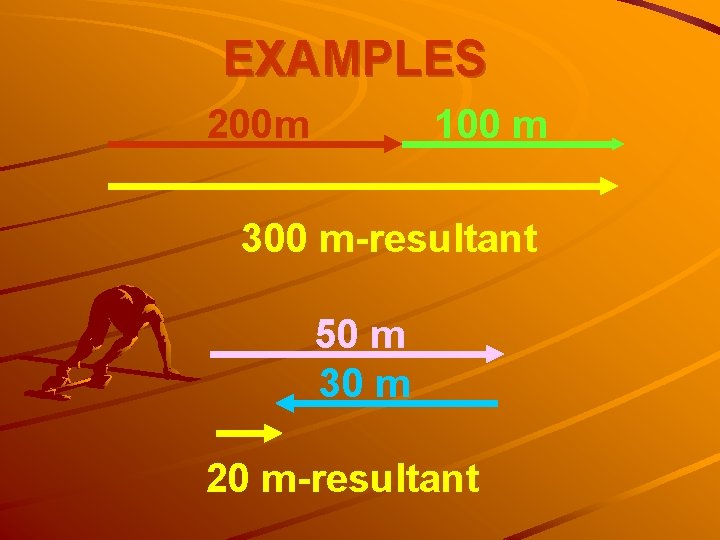
EXAMPLES 200 m 100 m 300 m-resultant 50 m 30 m 20 m-resultant
MOTION Motion is: • change in position • change in time • change in speed • change in distance
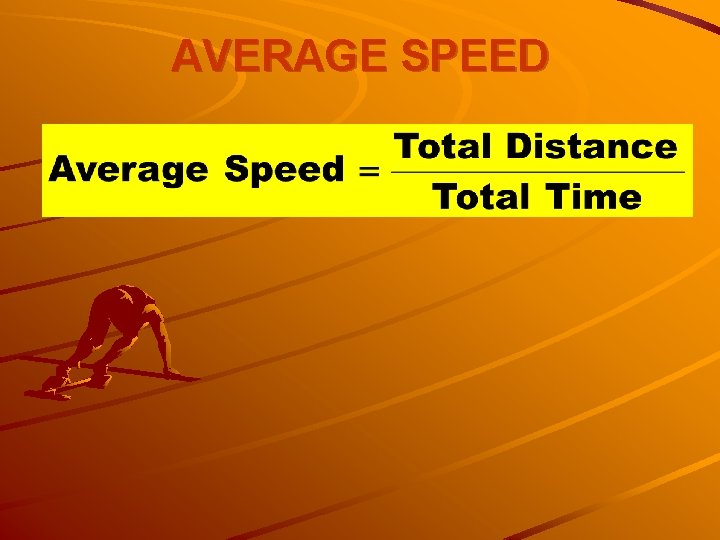
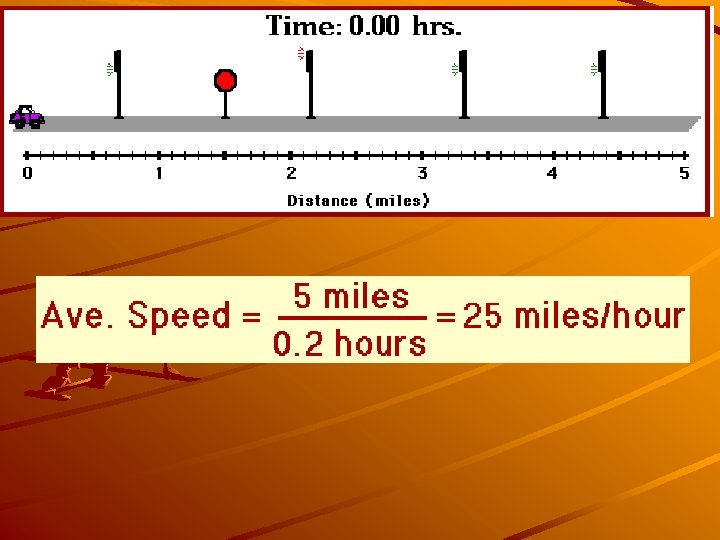
AVERAGE SPEED
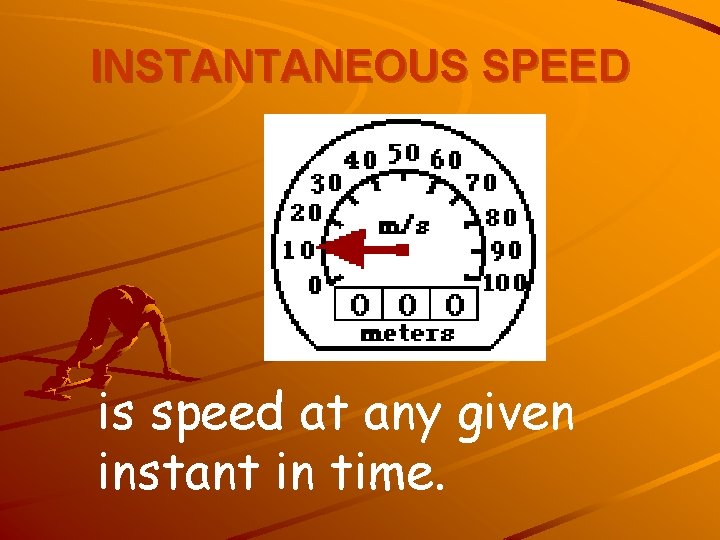
INSTANTANEOUS SPEED is speed at any given instant in time.
SIMPLE CONVERSIONS
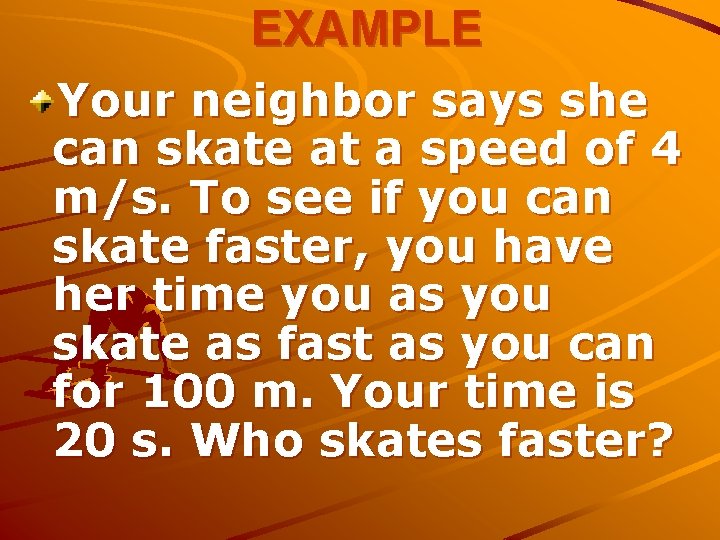
EXAMPLE Your neighbor says she can skate at a speed of 4 m/s. To see if you can skate faster, you have her time you as you skate as fast as you can for 100 m. Your time is 20 s. Who skates faster?
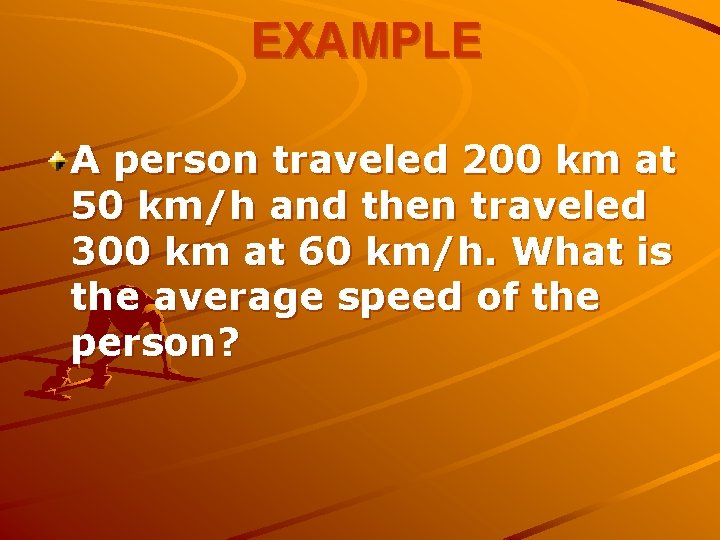
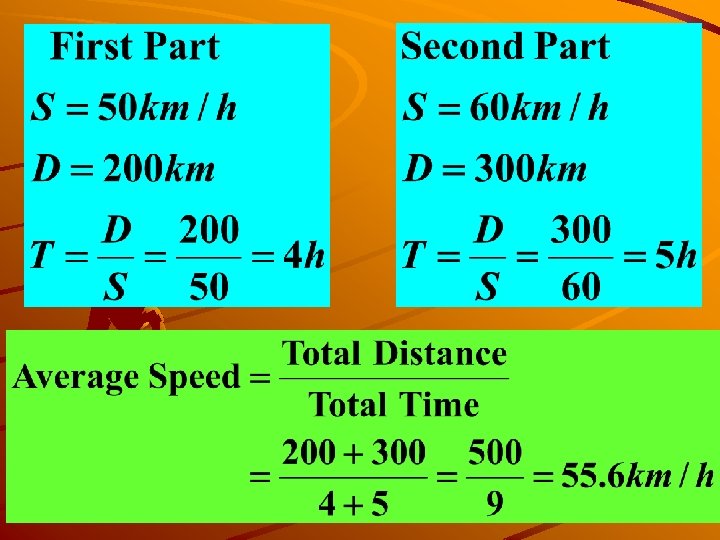
EXAMPLE A person traveled 200 km at 50 km/h and then traveled 300 km at 60 km/h. What is the average speed of the person?
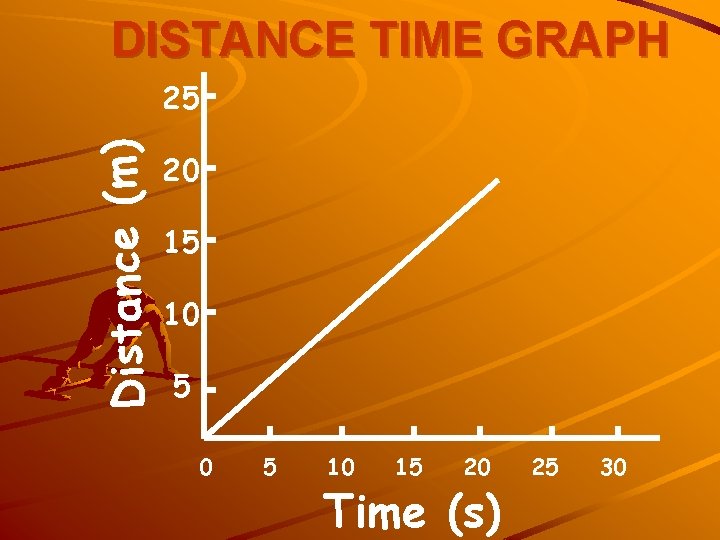
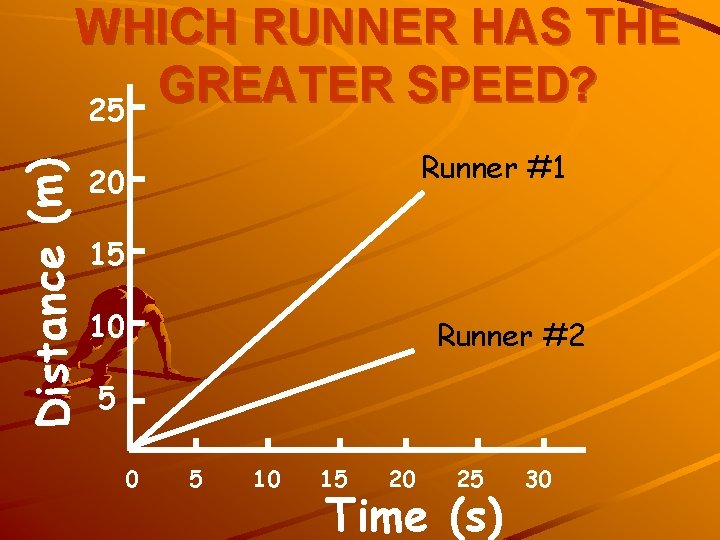
DISTANCE TIME GRAPH Makes it possible to “see” the motion of an object over a period of time. The slope of a distance time graph for an object in motion gives the speed of the object. The steeper the slope the greater is the speed of the object.
DISTANCE TIME GRAPH Distance (m) 25 20 15 10 15 20 Time (s) 25 30
Distance (m) WHICH RUNNER HAS THE GREATER SPEED? 25 Runner #1 20 15 10 Runner #2 5 0 5 10 15 20 25 Time (s) 30
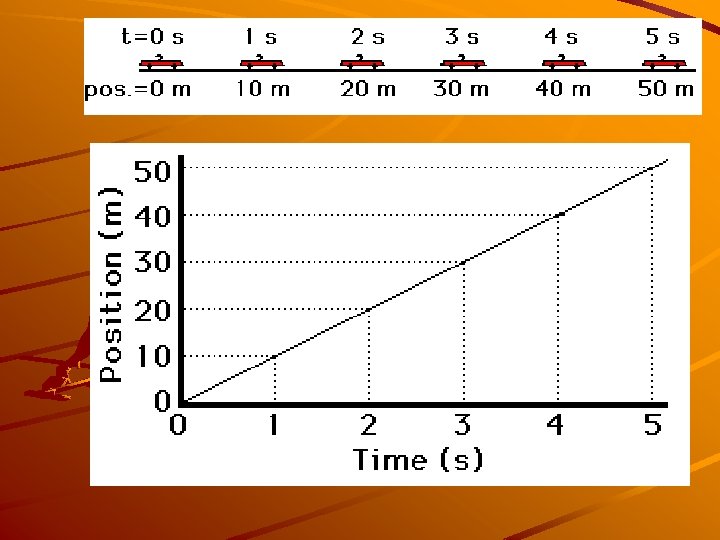
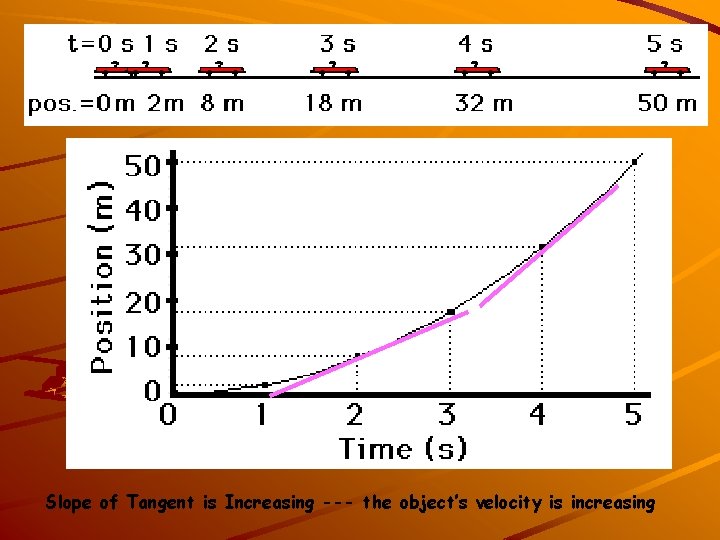
Position Time Graph is a graph with position plotted on the vertical (y) axis, and the time plotted on the horizontal (x) axis. It is used to find the instantaneous velocity of an object. The slope of the tangent to the curve at a particular point is called the instantaneous velocity at that instant. (What? !)
Slope of Tangent is Increasing --- the object’s velocity is increasing
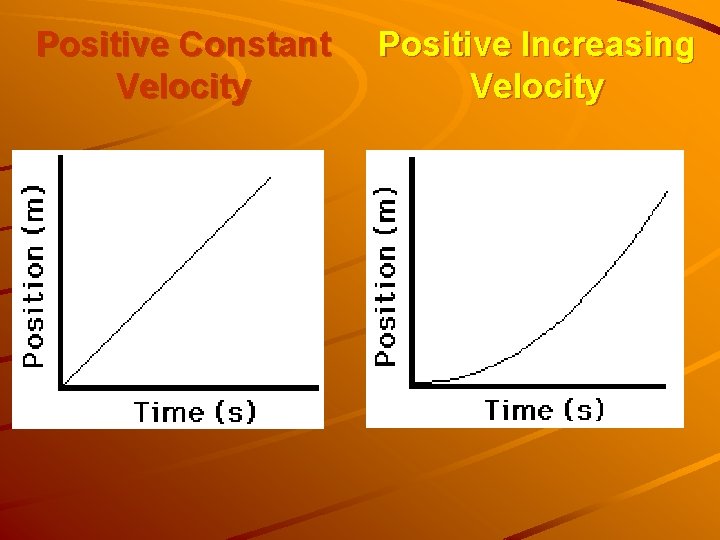
Positive Constant Velocity Positive Increasing Velocity
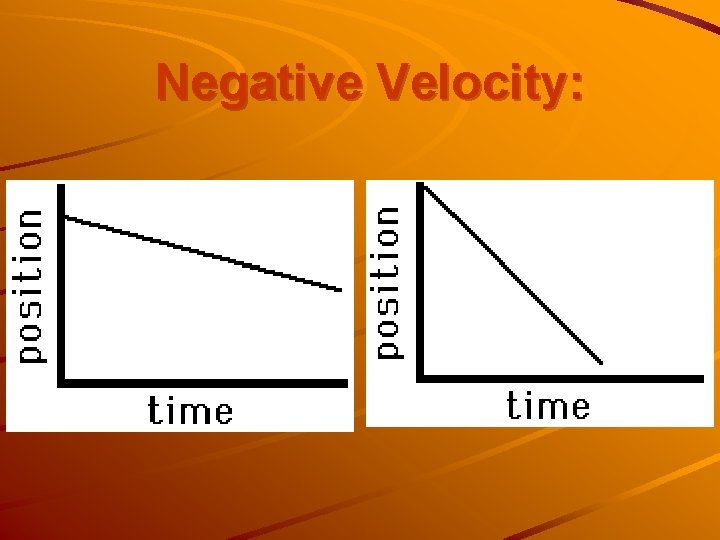
Negative Velocity: An object moving toward less positive position has a negative velocity. E. g an object moving from 30 m to 20 m may have a velocity of -10 m/s
Negative Velocity:
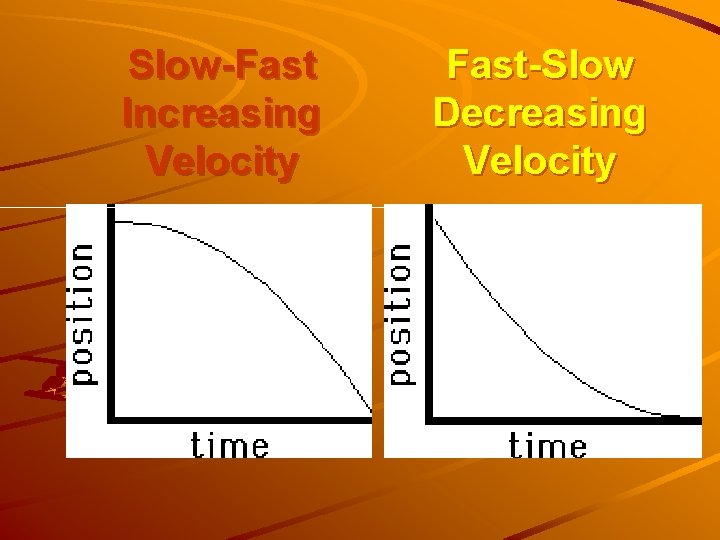
Slow-Fast Increasing Velocity Fast-Slow Decreasing Velocity
Positive Velocity: An object moving toward more positive position has a positive velocity. Example: an object moving from 20 m to 30 m has a velocity of 10 m/s.