
Chapter 2 Molecules Ions and Compounds MACROSCOPIC SCALE
- Slides: 34
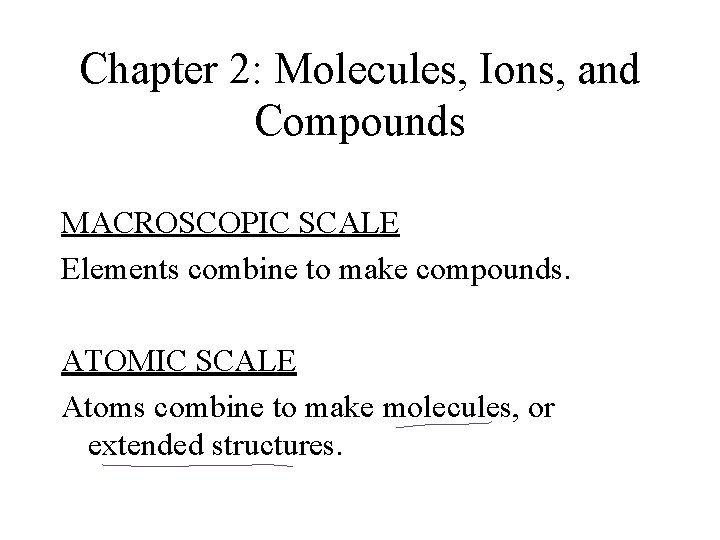
Chapter 2: Molecules, Ions, and Compounds MACROSCOPIC SCALE Elements combine to make compounds. ATOMIC SCALE Atoms combine to make molecules, or extended structures.
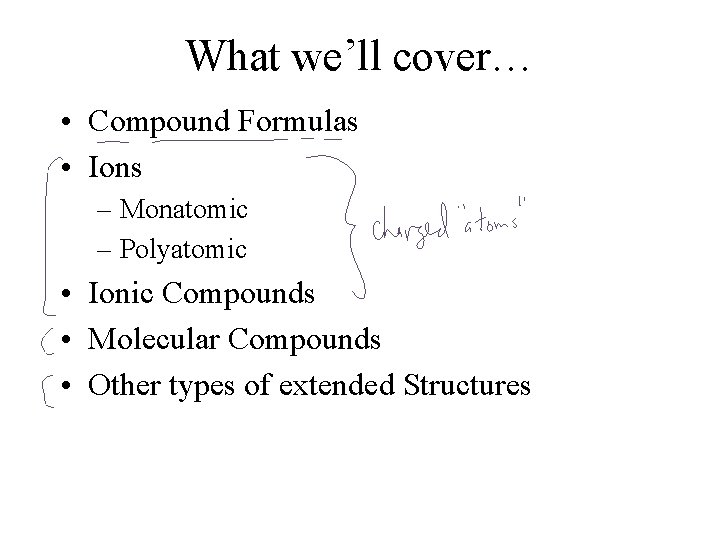
What we’ll cover… • Compound Formulas • Ions – Monatomic – Polyatomic • Ionic Compounds • Molecular Compounds • Other types of extended Structures
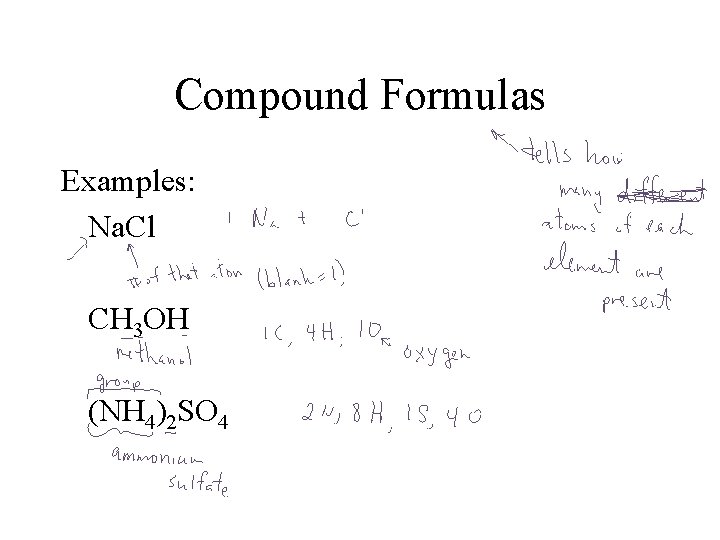
Compound Formulas Examples: Na. Cl CH 3 OH (NH 4)2 SO 4
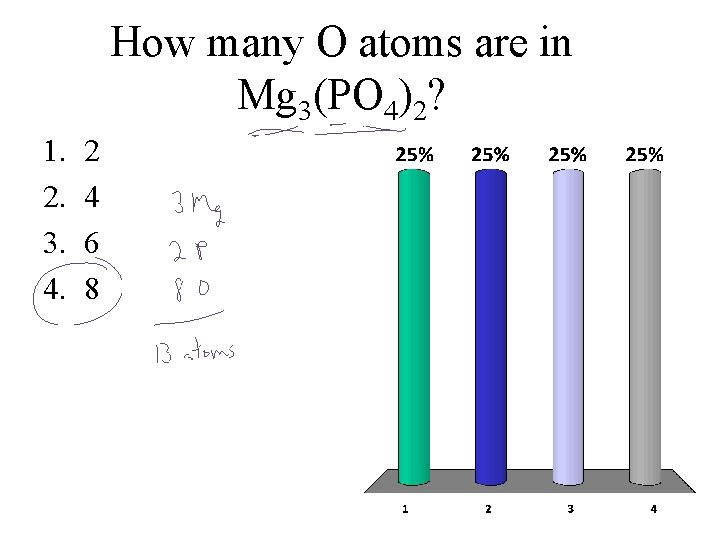
How many O atoms are in Mg 3(PO 4)2? 1. 2. 3. 4. 2 4 6 8
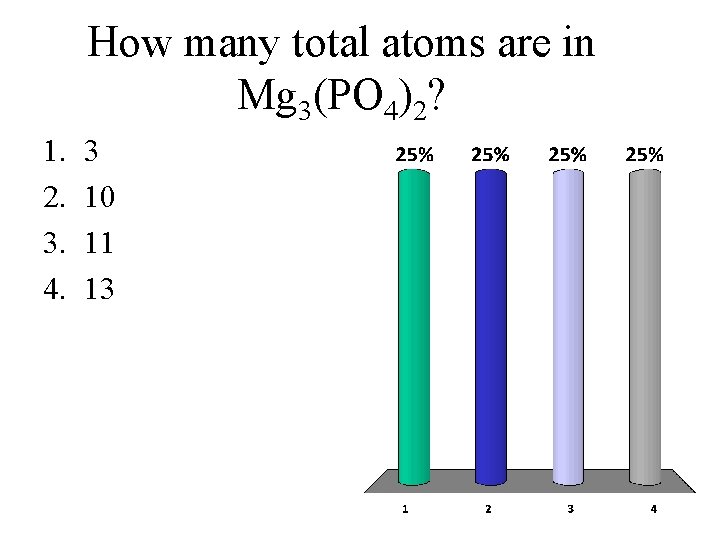
How many total atoms are in Mg 3(PO 4)2? 1. 2. 3. 4. 3 10 11 13
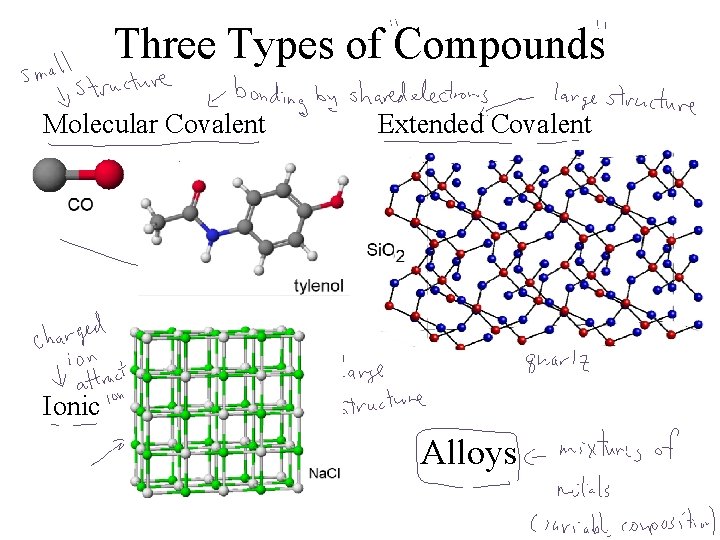
Three Types of Compounds Molecular Covalent Extended Covalent Ionic Alloys
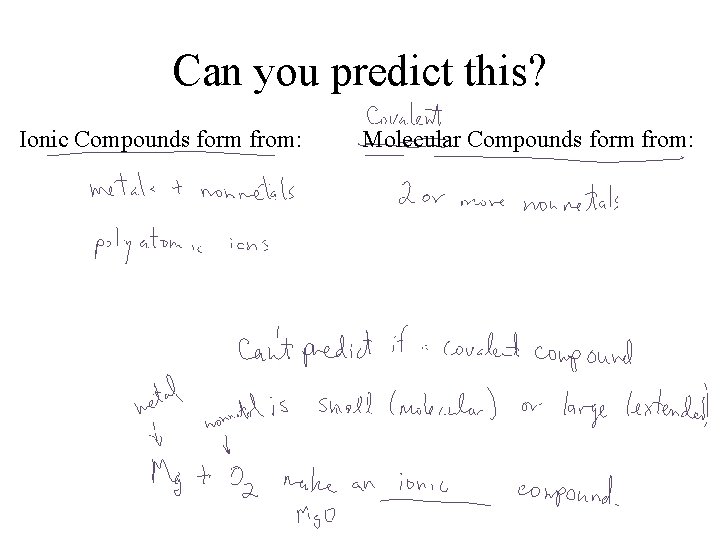
Can you predict this? Ionic Compounds form from: Molecular Compounds form from:
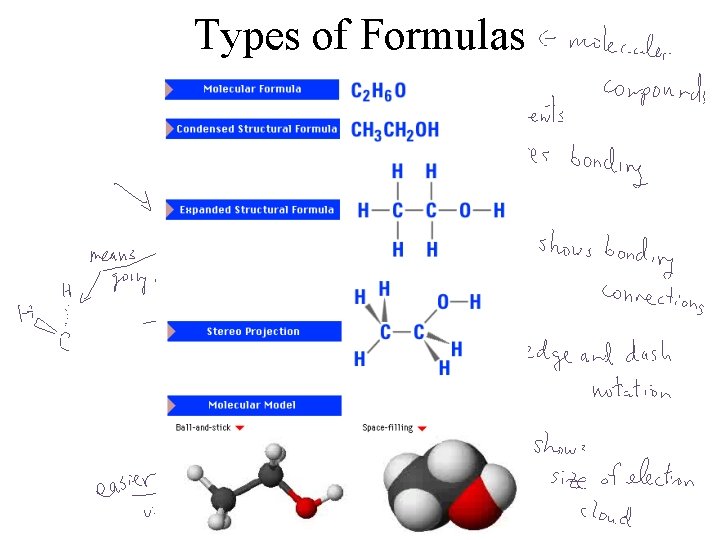
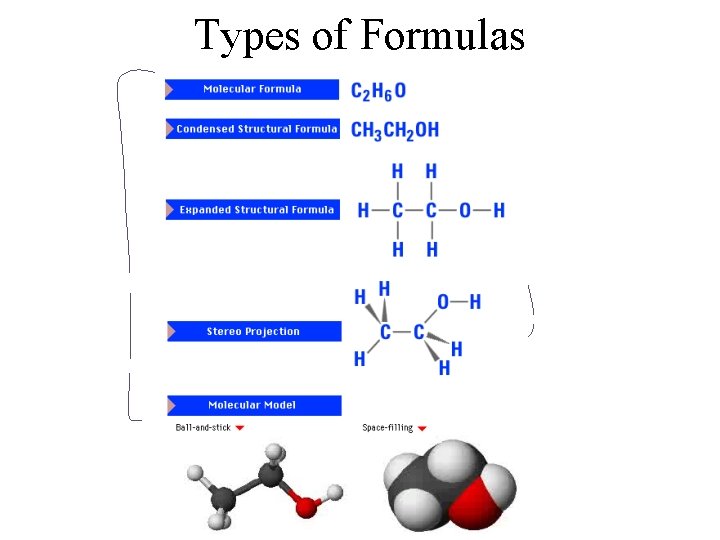
Types of Formulas
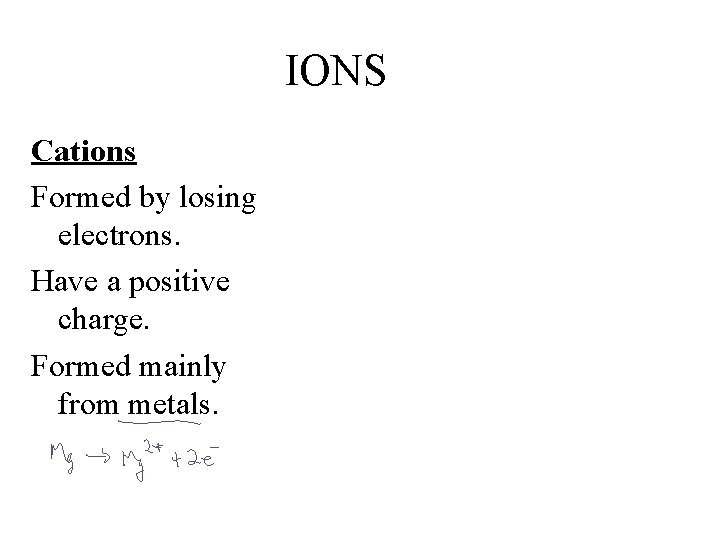
IONS Cations Formed by losing electrons. Have a positive charge. Formed mainly from metals.
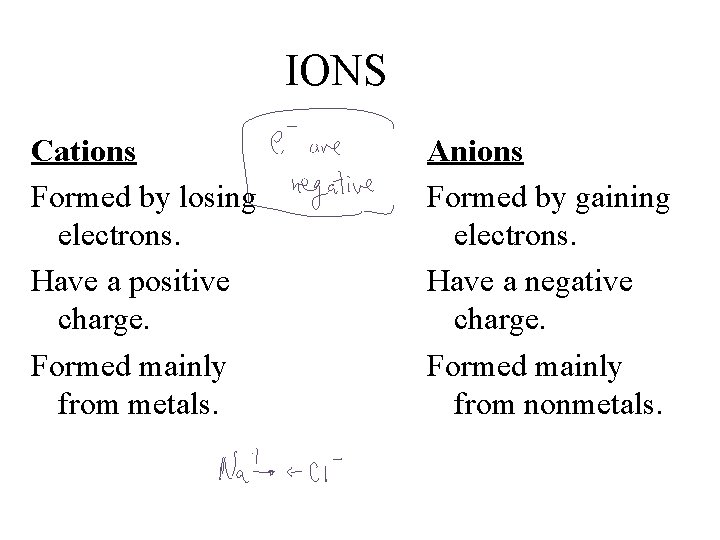
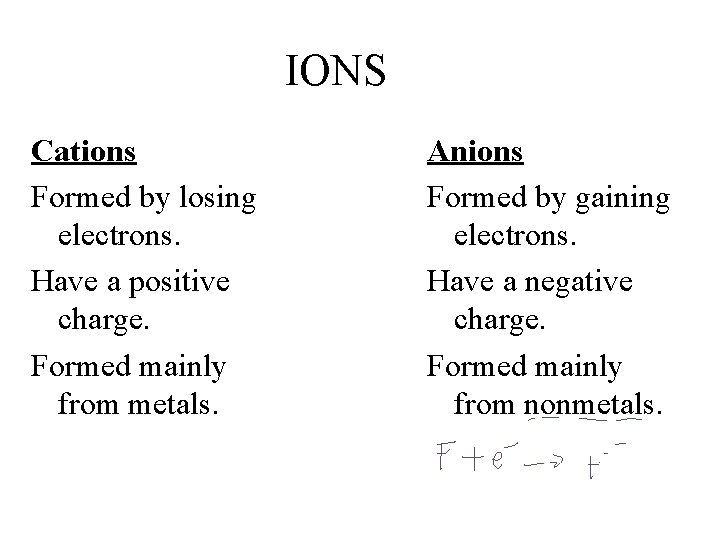
IONS Cations Formed by losing electrons. Have a positive charge. Formed mainly from metals. Anions Formed by gaining electrons. Have a negative charge. Formed mainly from nonmetals.
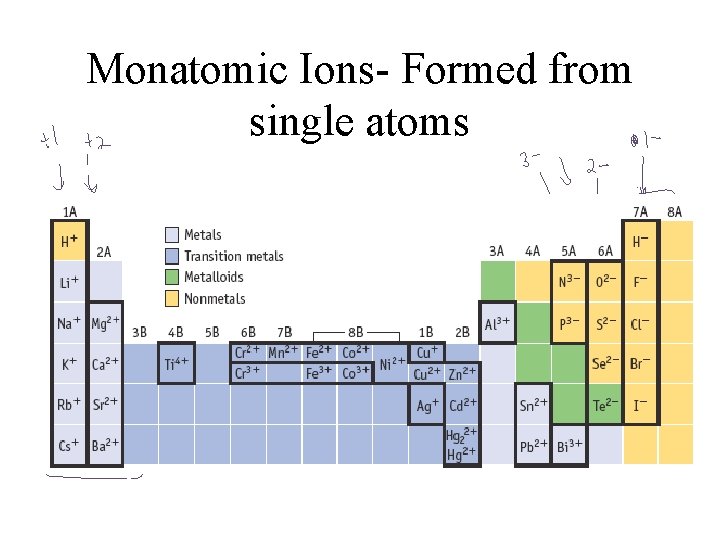
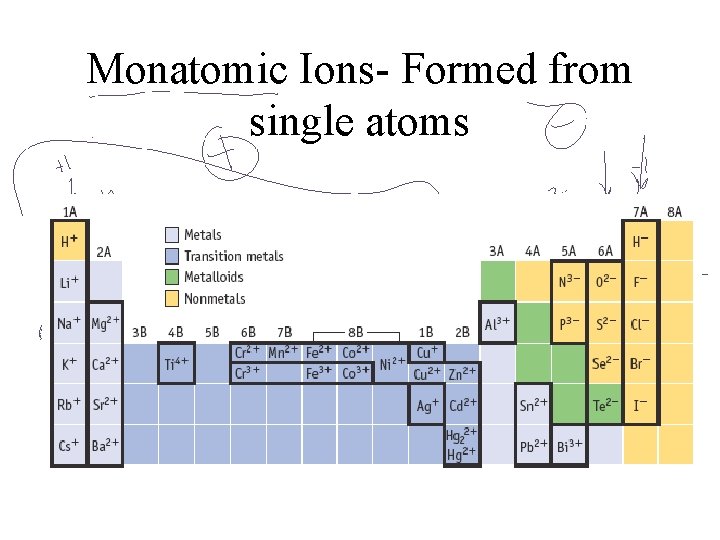
Monatomic Ions- Formed from single atoms
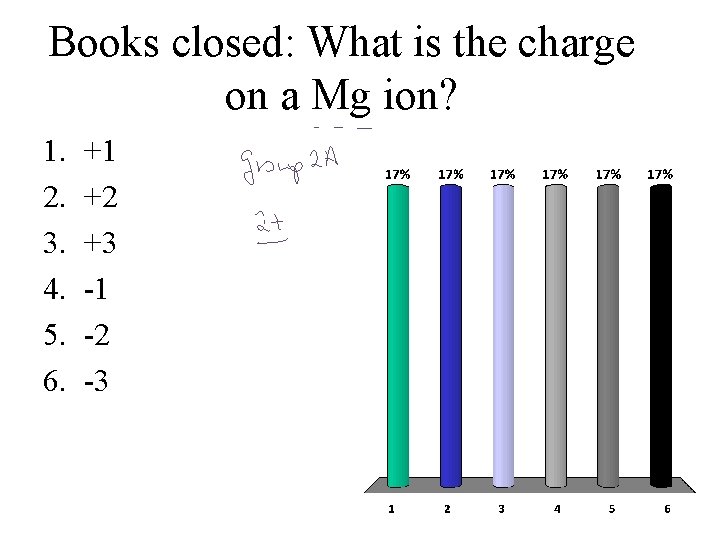
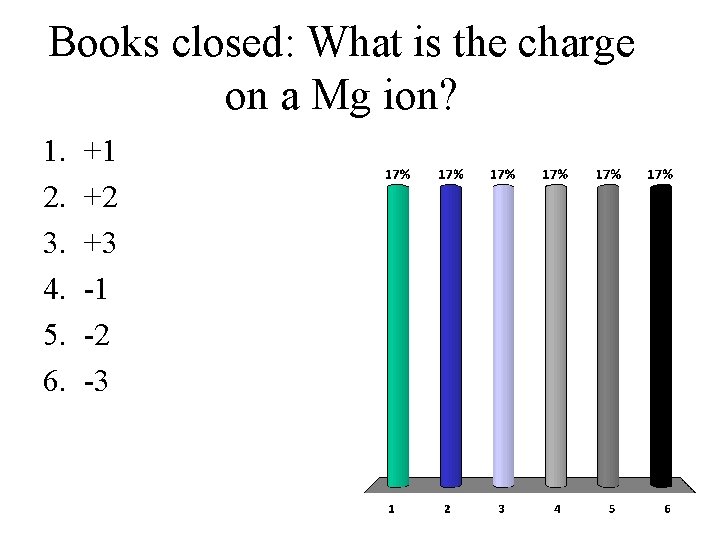
Books closed: What is the charge on a Mg ion? 1. 2. 3. 4. 5. 6. +1 +2 +3 -1 -2 -3
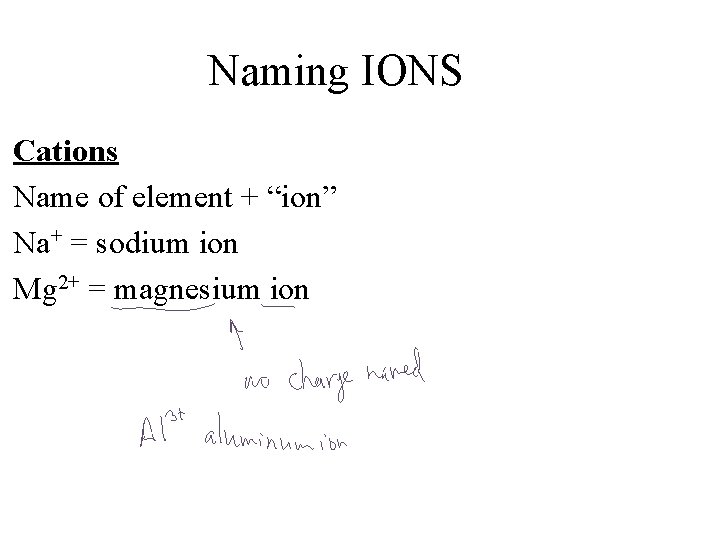
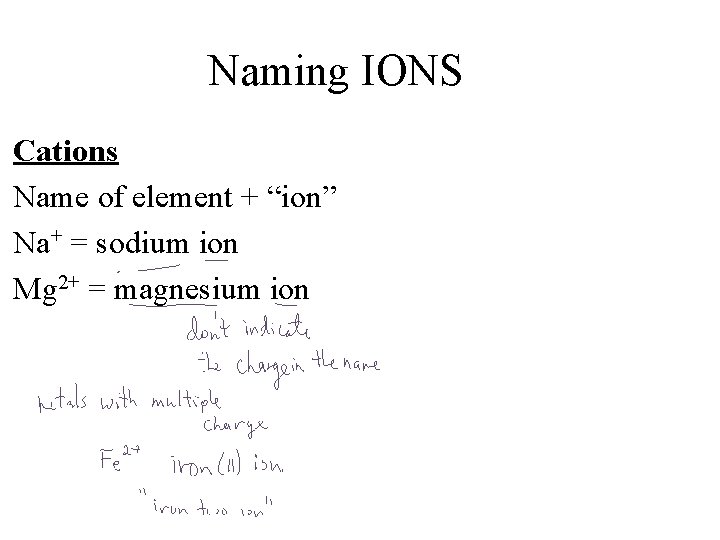
Naming IONS Cations Name of element + “ion” Na+ = sodium ion Mg 2+ = magnesium ion
Types of Formulas
IONS Cations Formed by losing electrons. Have a positive charge. Formed mainly from metals.
IONS Cations Formed by losing electrons. Have a positive charge. Formed mainly from metals. Anions Formed by gaining electrons. Have a negative charge. Formed mainly from nonmetals.
Monatomic Ions- Formed from single atoms
Books closed: What is the charge on a Mg ion? 1. 2. 3. 4. 5. 6. +1 +2 +3 -1 -2 -3
Naming IONS Cations Name of element + “ion” Na+ = sodium ion Mg 2+ = magnesium ion
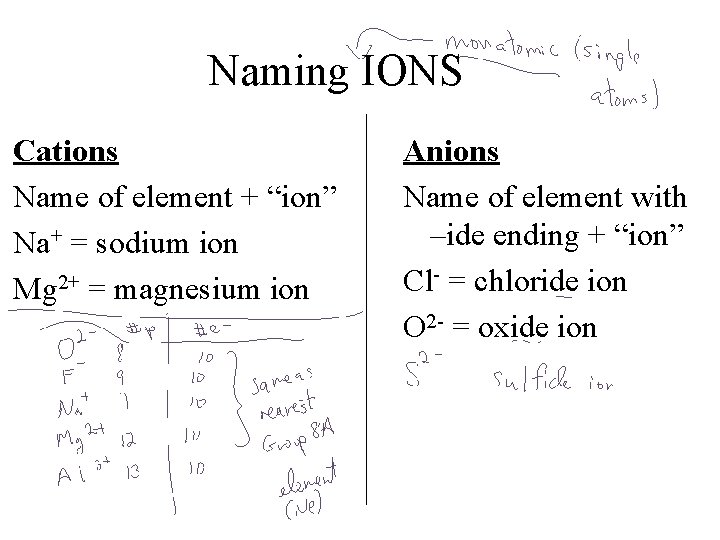
Naming IONS Cations Name of element + “ion” Na+ = sodium ion Mg 2+ = magnesium ion Anions Name of element with –ide ending + “ion” Cl- = chloride ion O 2 - = oxide ion
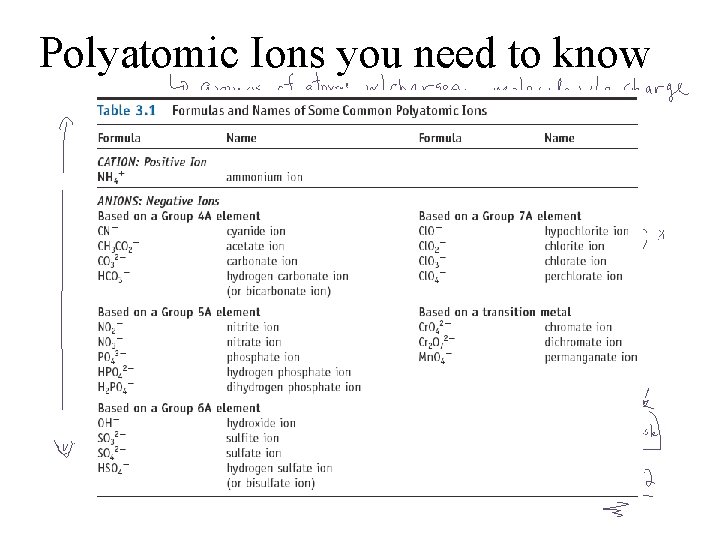
Polyatomic Ions you need to know
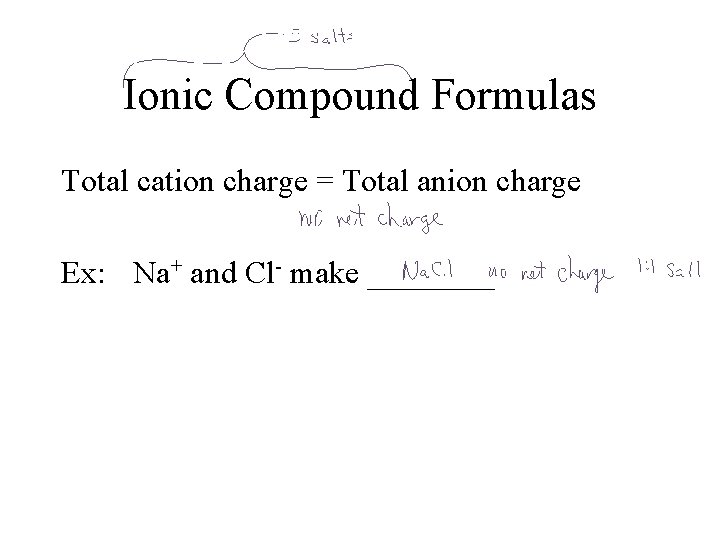
Ionic Compound Formulas Total cation charge = Total anion charge Ex: Na+ and Cl- make ____
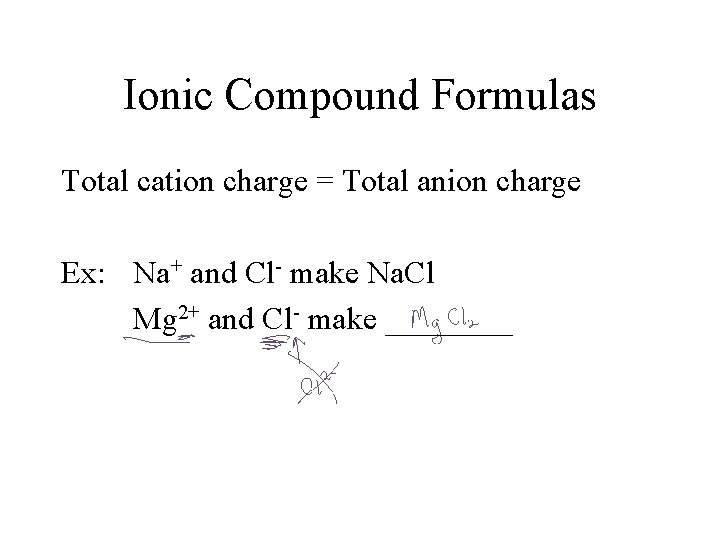
Ionic Compound Formulas Total cation charge = Total anion charge Ex: Na+ and Cl- make Na. Cl Mg 2+ and Cl- make ____
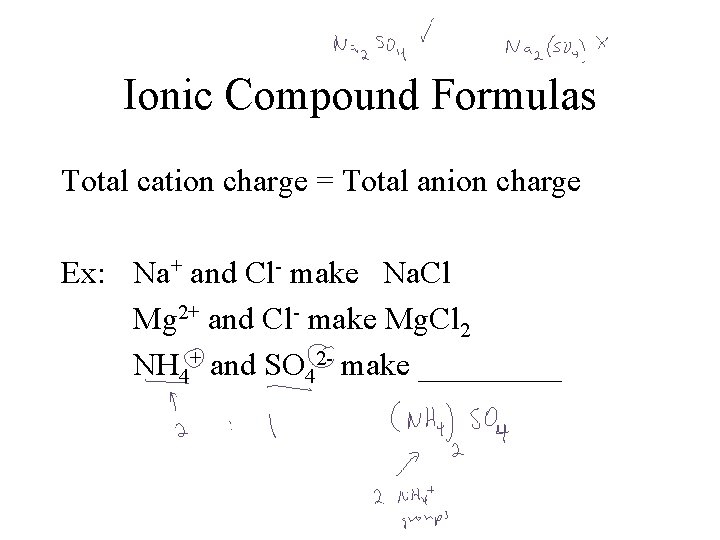
Ionic Compound Formulas Total cation charge = Total anion charge Ex: Na+ and Cl- make Na. Cl Mg 2+ and Cl- make Mg. Cl 2 NH 4+ and SO 42 - make _____
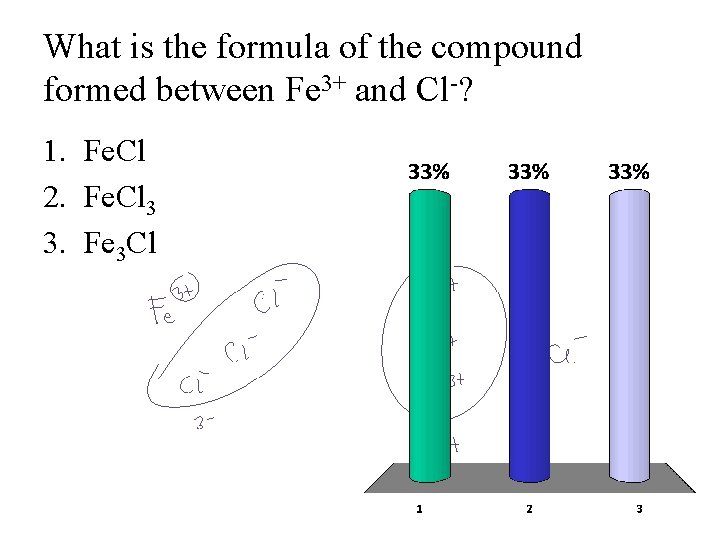
What is the formula of the compound formed between Fe 3+ and Cl-? 1. Fe. Cl 2. Fe. Cl 3 3. Fe 3 Cl
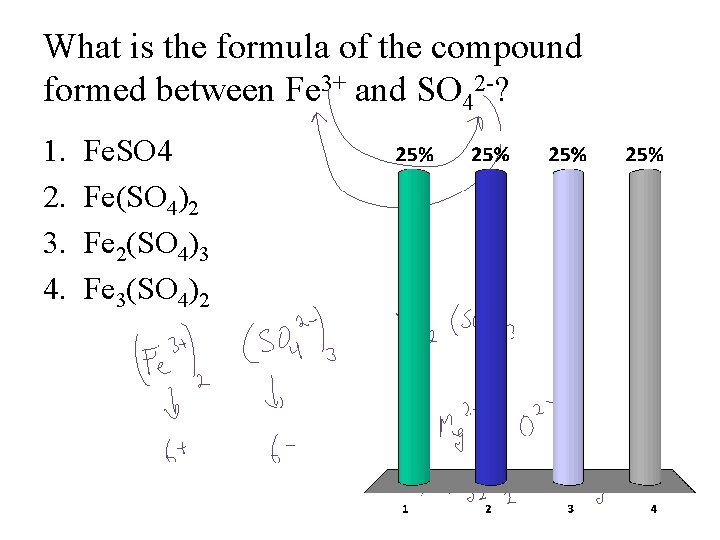
What is the formula of the compound formed between Fe 3+ and SO 42 -? 1. 2. 3. 4. Fe. SO 4 Fe(SO 4)2 Fe 2(SO 4)3 Fe 3(SO 4)2
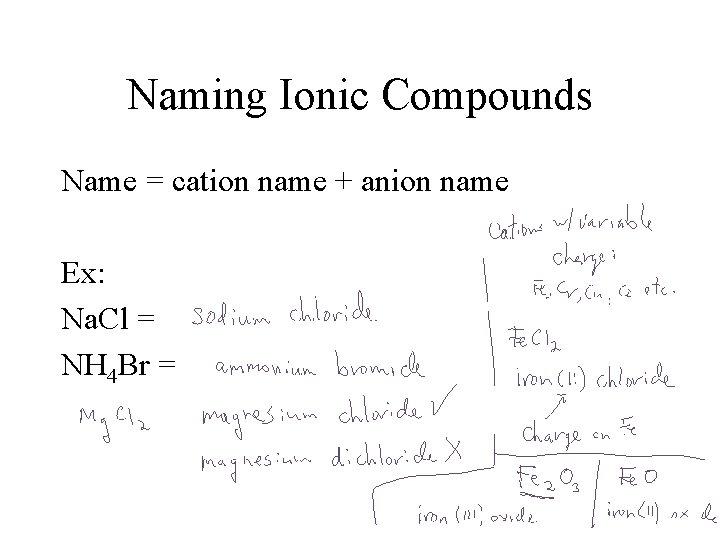
Naming Ionic Compounds Name = cation name + anion name Ex: Na. Cl = NH 4 Br =
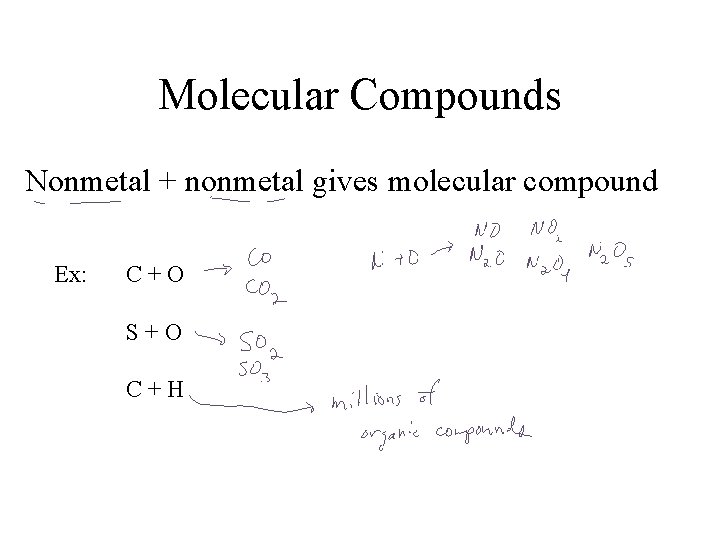
Molecular Compounds Nonmetal + nonmetal gives molecular compound Ex: C+O S+O C+H
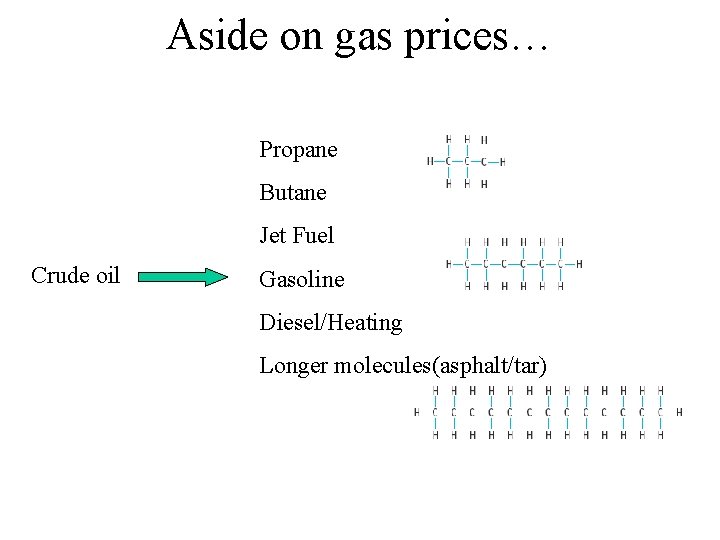
Aside on gas prices… Propane Butane Jet Fuel Crude oil Gasoline Diesel/Heating Longer molecules(asphalt/tar)
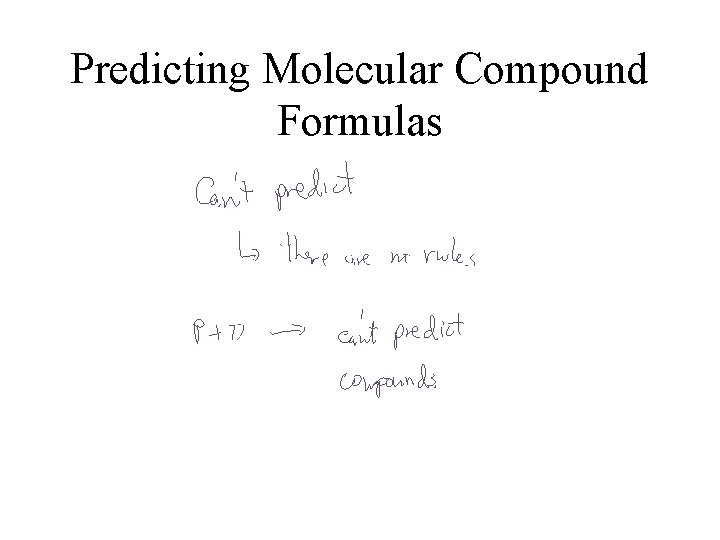
Predicting Molecular Compound Formulas
Naming Molecular Compounds Binary Compounds form between 2 elements
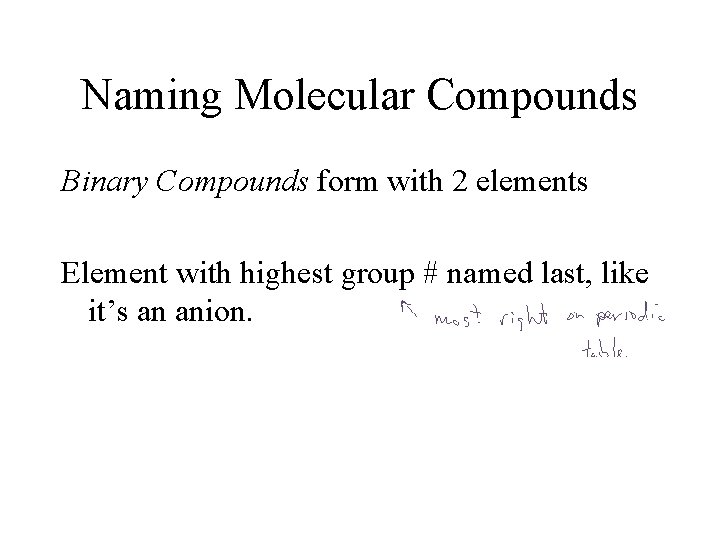
Naming Molecular Compounds Binary Compounds form with 2 elements Element with highest group # named last, like it’s an anion.
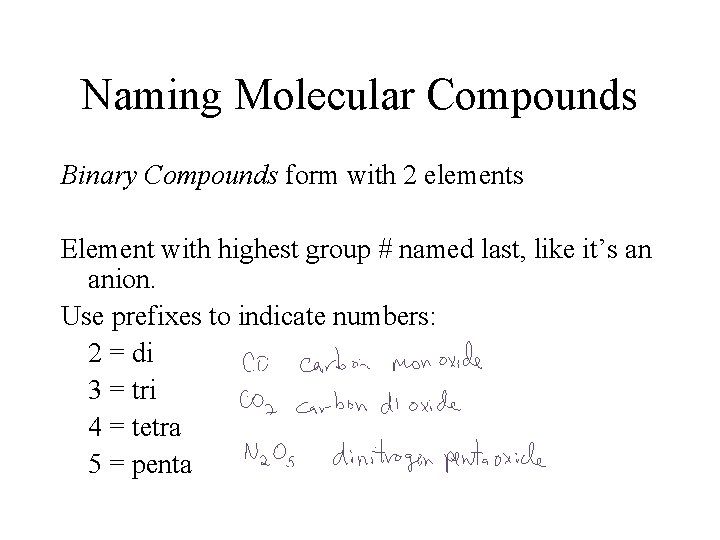
Naming Molecular Compounds Binary Compounds form with 2 elements Element with highest group # named last, like it’s an anion. Use prefixes to indicate numbers: 2 = di 3 = tri 4 = tetra 5 = penta
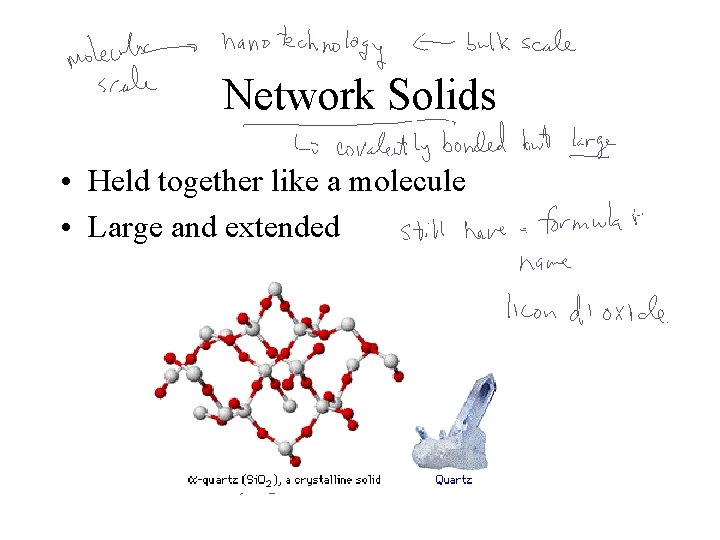
Network Solids • Held together like a molecule • Large and extended