
Chapter 2 Measurement Measuring GDP The National Income

- Slides: 38
Chapter 2 Measurement
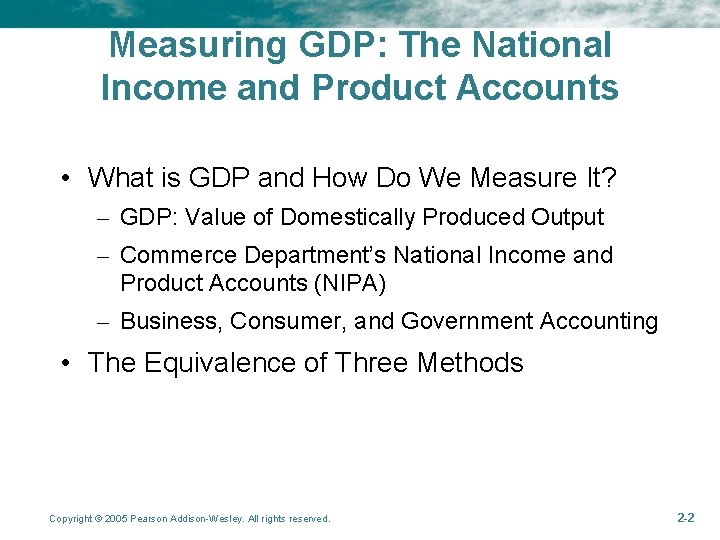
Measuring GDP: The National Income and Product Accounts • What is GDP and How Do We Measure It? – GDP: Value of Domestically Produced Output – Commerce Department’s National Income and Product Accounts (NIPA) – Business, Consumer, and Government Accounting • The Equivalence of Three Methods Copyright © 2005 Pearson Addison-Wesley. All rights reserved. 2 -2
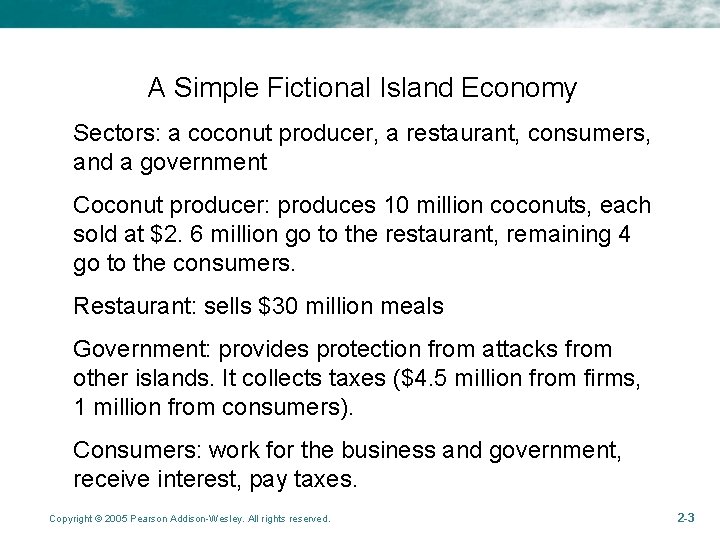
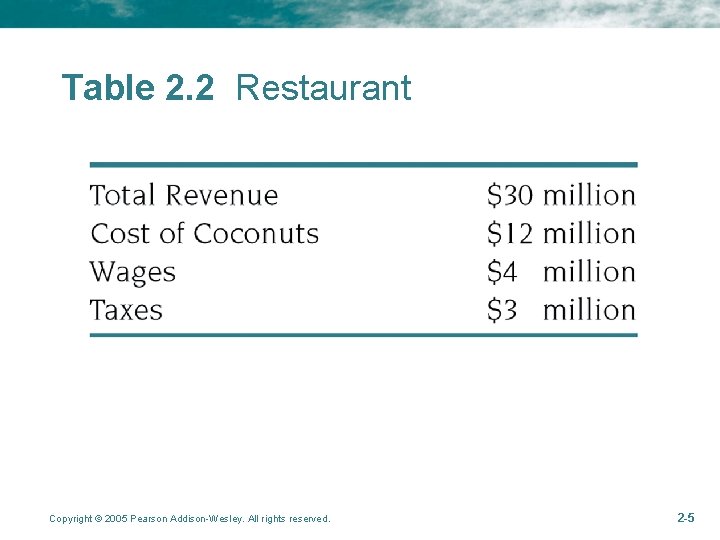
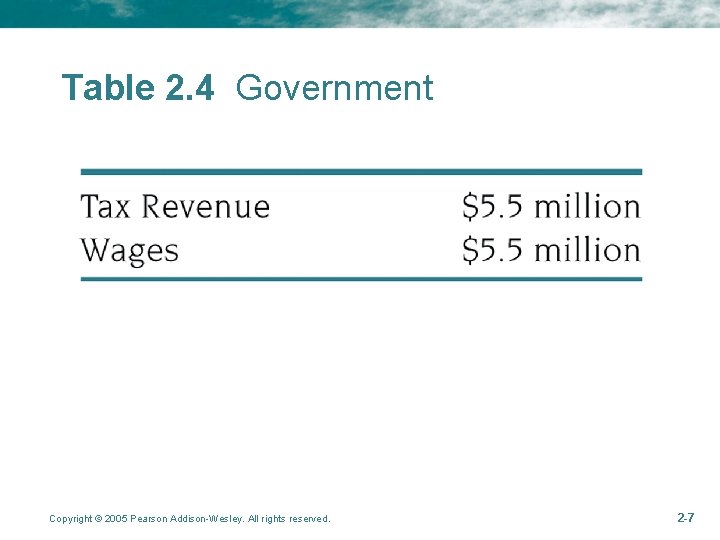
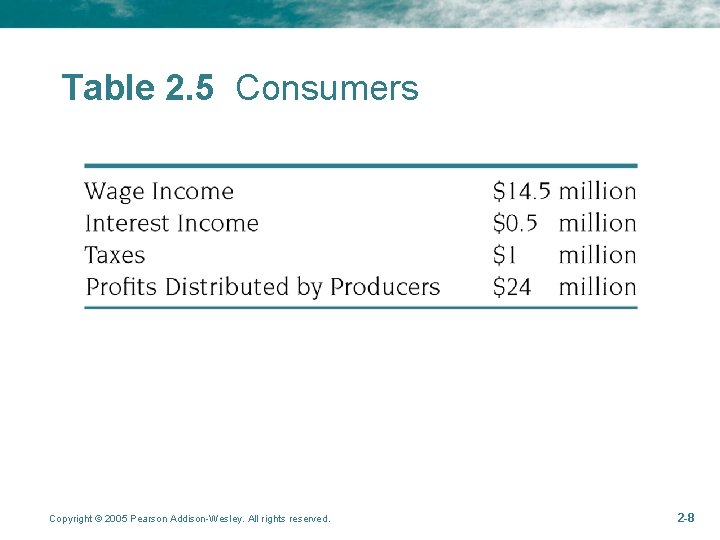
A Simple Fictional Island Economy Sectors: a coconut producer, a restaurant, consumers, and a government Coconut producer: produces 10 million coconuts, each sold at $2. 6 million go to the restaurant, remaining 4 go to the consumers. Restaurant: sells $30 million meals Government: provides protection from attacks from other islands. It collects taxes ($4. 5 million from firms, 1 million from consumers). Consumers: work for the business and government, receive interest, pay taxes. Copyright © 2005 Pearson Addison-Wesley. All rights reserved. 2 -3
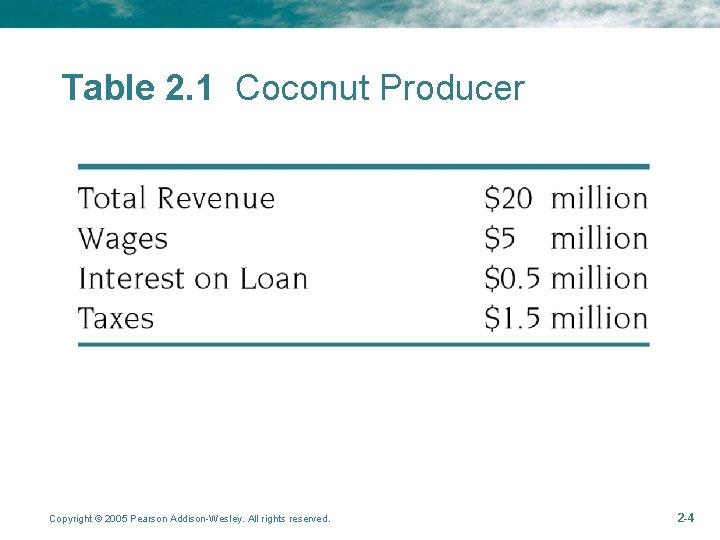
Table 2. 1 Coconut Producer Copyright © 2005 Pearson Addison-Wesley. All rights reserved. 2 -4
Table 2. 2 Restaurant Copyright © 2005 Pearson Addison-Wesley. All rights reserved. 2 -5
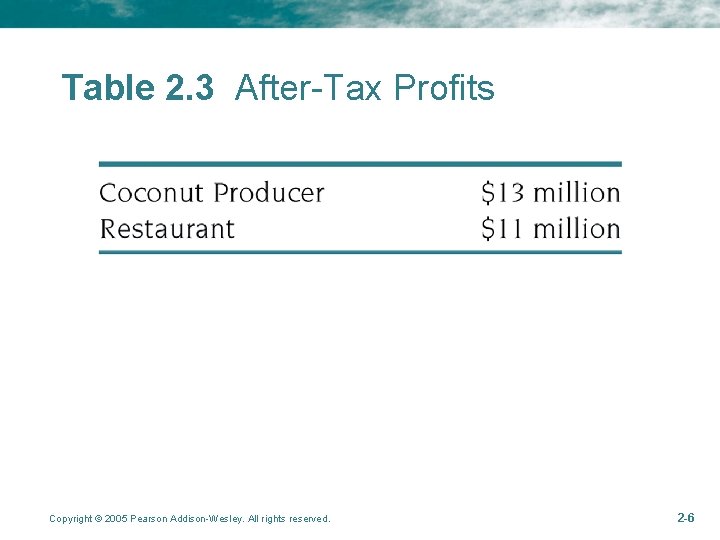
Table 2. 3 After-Tax Profits Copyright © 2005 Pearson Addison-Wesley. All rights reserved. 2 -6
Table 2. 4 Government Copyright © 2005 Pearson Addison-Wesley. All rights reserved. 2 -7
Table 2. 5 Consumers Copyright © 2005 Pearson Addison-Wesley. All rights reserved. 2 -8
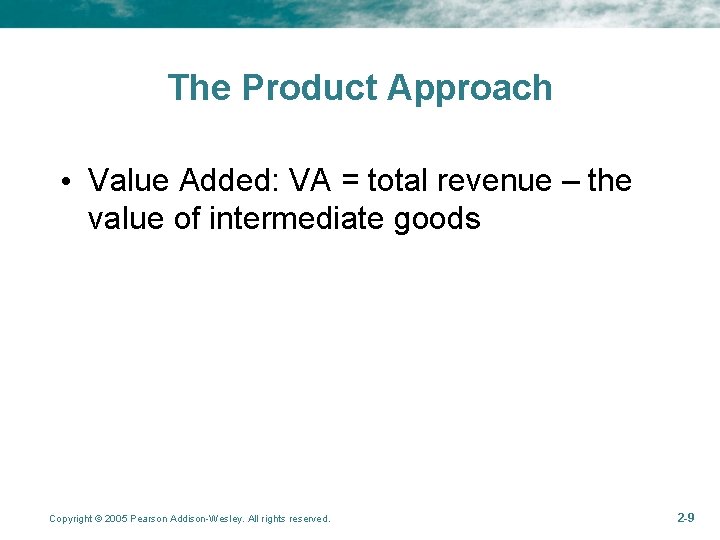
The Product Approach • Value Added: VA = total revenue – the value of intermediate goods Copyright © 2005 Pearson Addison-Wesley. All rights reserved. 2 -9
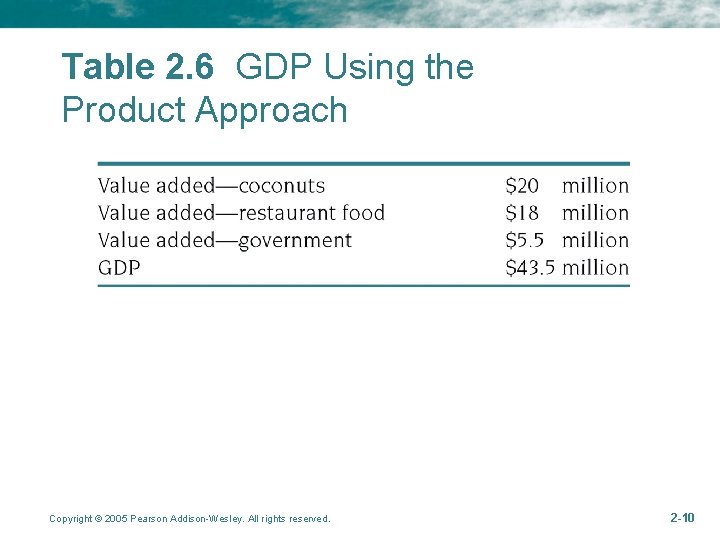
Table 2. 6 GDP Using the Product Approach Copyright © 2005 Pearson Addison-Wesley. All rights reserved. 2 -10
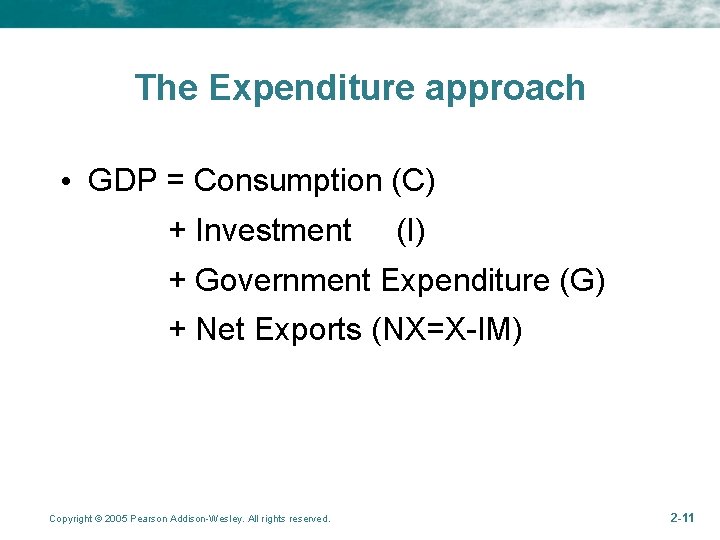
The Expenditure approach • GDP = Consumption (C) + Investment (I) + Government Expenditure (G) + Net Exports (NX=X-IM) Copyright © 2005 Pearson Addison-Wesley. All rights reserved. 2 -11
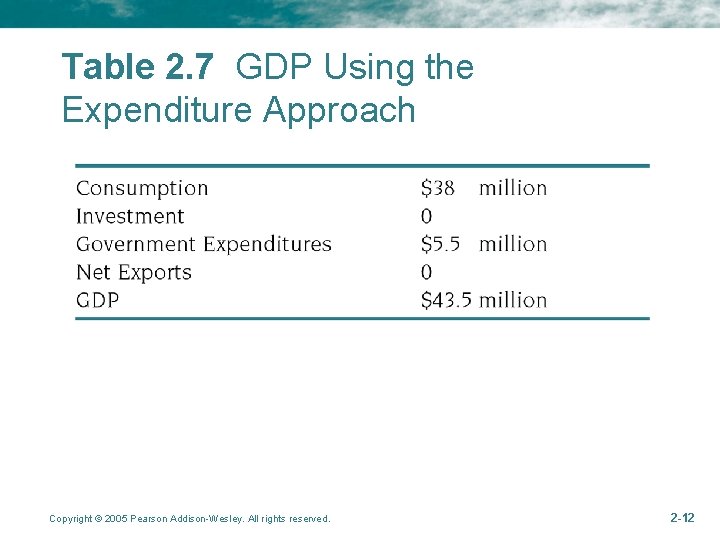
Table 2. 7 GDP Using the Expenditure Approach Copyright © 2005 Pearson Addison-Wesley. All rights reserved. 2 -12
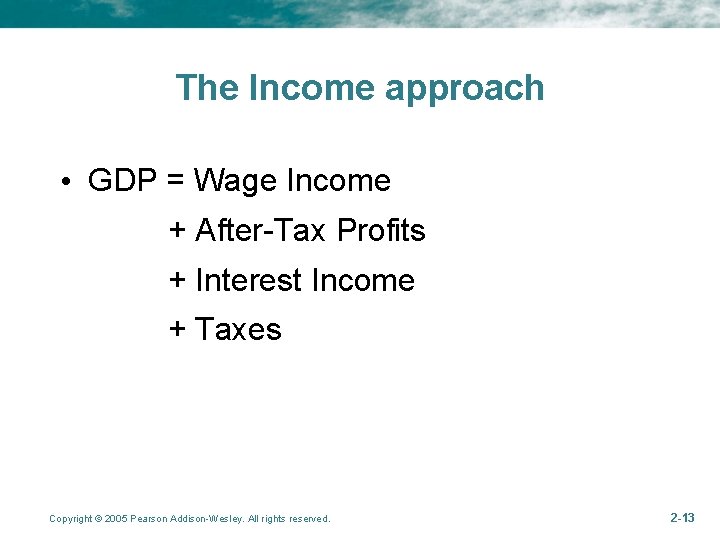
The Income approach • GDP = Wage Income + After-Tax Profits + Interest Income + Taxes Copyright © 2005 Pearson Addison-Wesley. All rights reserved. 2 -13
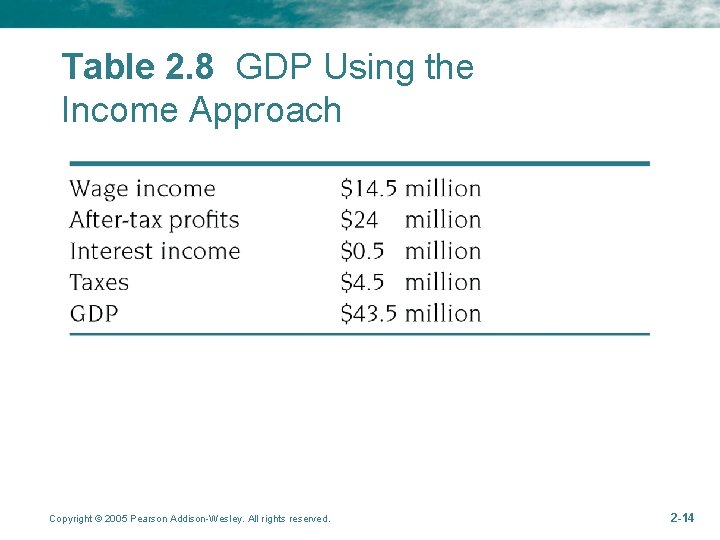
Table 2. 8 GDP Using the Income Approach Copyright © 2005 Pearson Addison-Wesley. All rights reserved. 2 -14
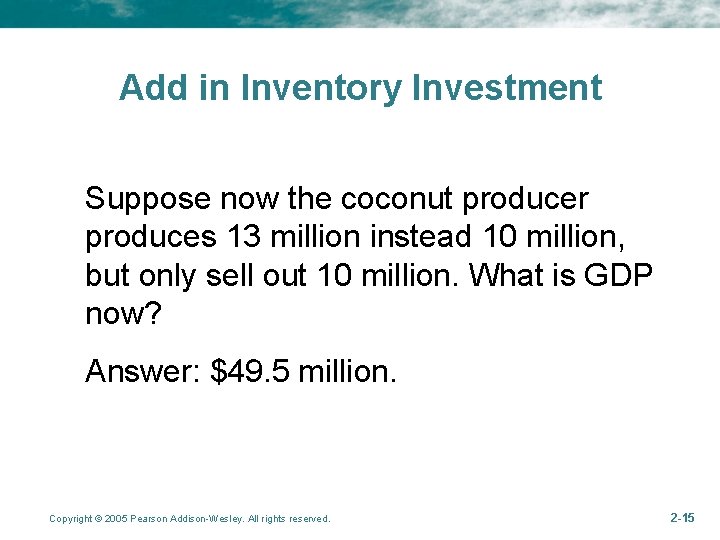
Add in Inventory Investment Suppose now the coconut producer produces 13 million instead 10 million, but only sell out 10 million. What is GDP now? Answer: $49. 5 million. Copyright © 2005 Pearson Addison-Wesley. All rights reserved. 2 -15
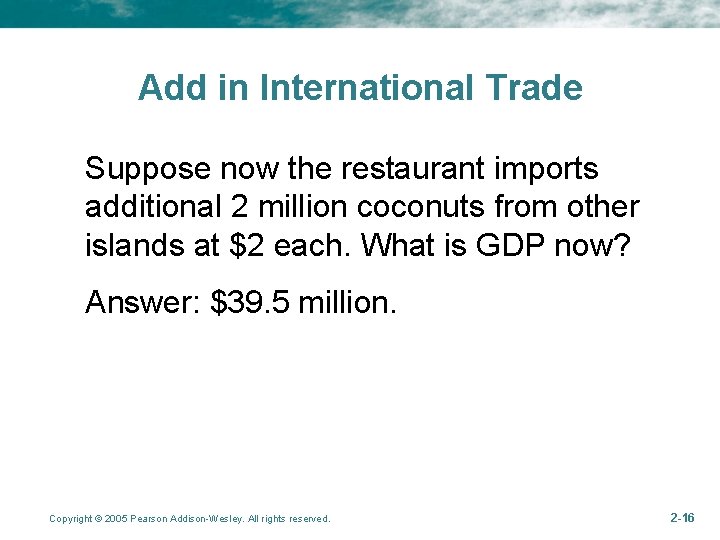
Add in International Trade Suppose now the restaurant imports additional 2 million coconuts from other islands at $2 each. What is GDP now? Answer: $39. 5 million. Copyright © 2005 Pearson Addison-Wesley. All rights reserved. 2 -16
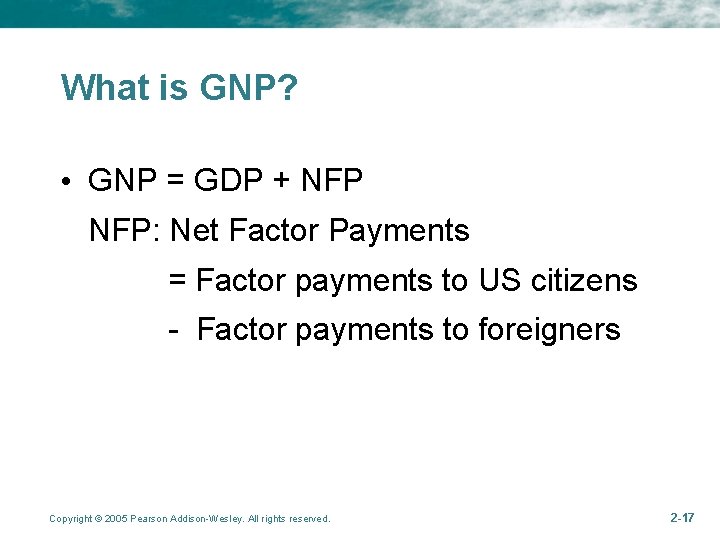
What is GNP? • GNP = GDP + NFP: Net Factor Payments = Factor payments to US citizens - Factor payments to foreigners Copyright © 2005 Pearson Addison-Wesley. All rights reserved. 2 -17
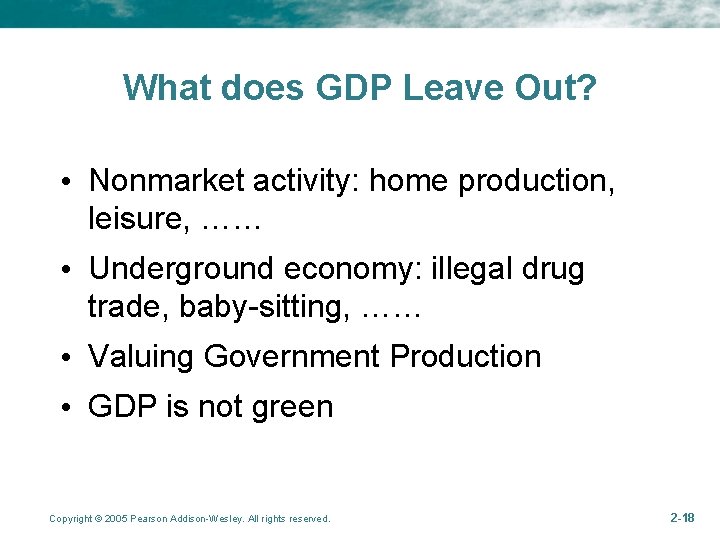
What does GDP Leave Out? • Nonmarket activity: home production, leisure, …… • Underground economy: illegal drug trade, baby-sitting, …… • Valuing Government Production • GDP is not green Copyright © 2005 Pearson Addison-Wesley. All rights reserved. 2 -18
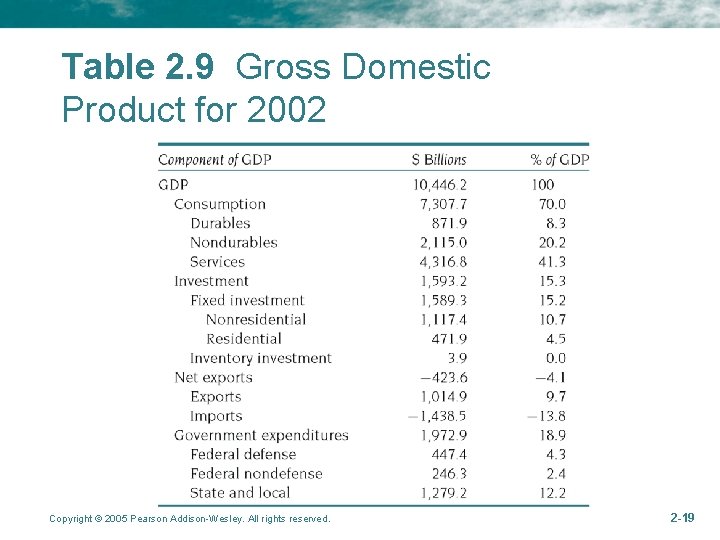
Table 2. 9 Gross Domestic Product for 2002 Copyright © 2005 Pearson Addison-Wesley. All rights reserved. 2 -19
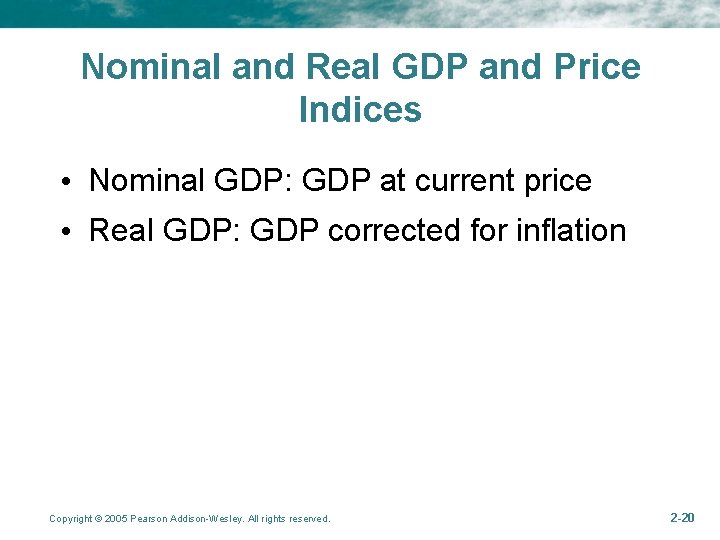
Nominal and Real GDP and Price Indices • Nominal GDP: GDP at current price • Real GDP: GDP corrected for inflation Copyright © 2005 Pearson Addison-Wesley. All rights reserved. 2 -20
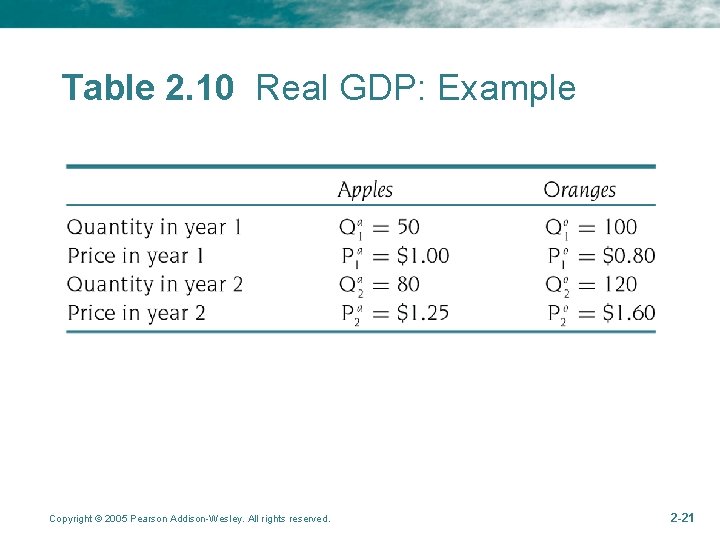
Table 2. 10 Real GDP: Example Copyright © 2005 Pearson Addison-Wesley. All rights reserved. 2 -21
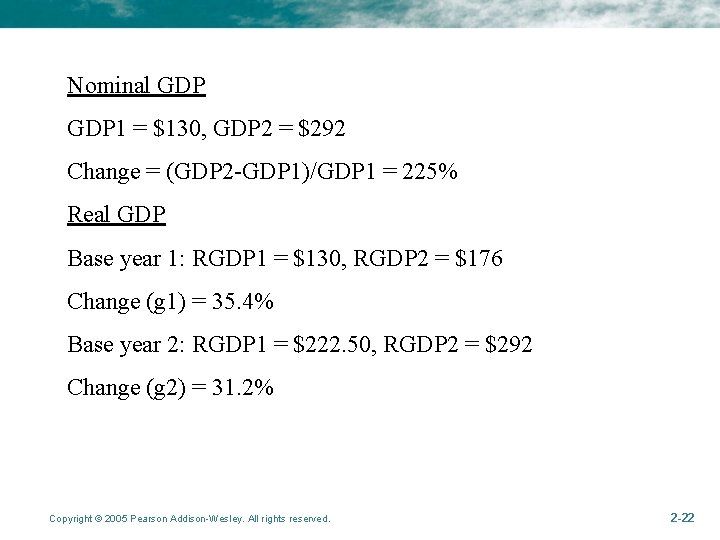
Nominal GDP 1 = $130, GDP 2 = $292 Change = (GDP 2 -GDP 1)/GDP 1 = 225% Real GDP Base year 1: RGDP 1 = $130, RGDP 2 = $176 Change (g 1) = 35. 4% Base year 2: RGDP 1 = $222. 50, RGDP 2 = $292 Change (g 2) = 31. 2% Copyright © 2005 Pearson Addison-Wesley. All rights reserved. 2 -22
Chain-Weighting Scheme Copyright © 2005 Pearson Addison-Wesley. All rights reserved. 2 -23
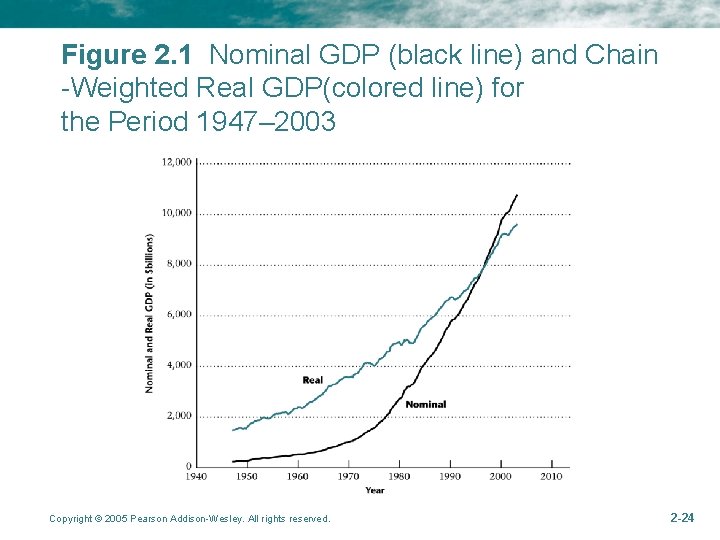
Figure 2. 1 Nominal GDP (black line) and Chain -Weighted Real GDP(colored line) for the Period 1947– 2003 Copyright © 2005 Pearson Addison-Wesley. All rights reserved. 2 -24
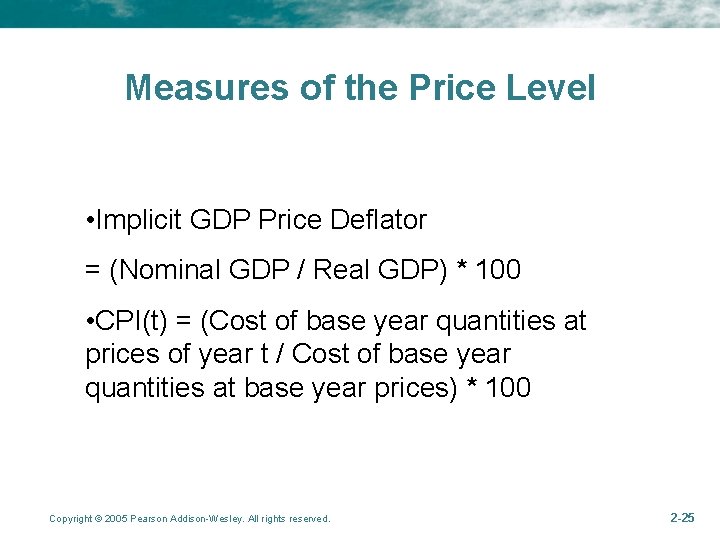
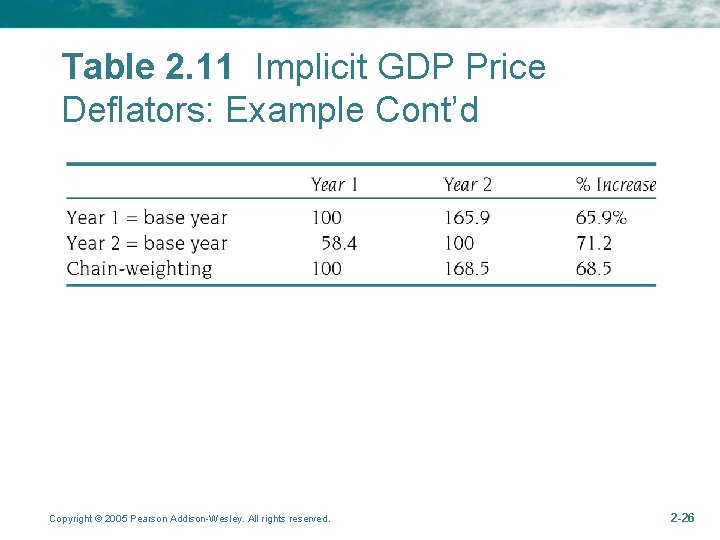
Measures of the Price Level • Implicit GDP Price Deflator = (Nominal GDP / Real GDP) * 100 • CPI(t) = (Cost of base year quantities at prices of year t / Cost of base year quantities at base year prices) * 100 Copyright © 2005 Pearson Addison-Wesley. All rights reserved. 2 -25
Table 2. 11 Implicit GDP Price Deflators: Example Cont’d Copyright © 2005 Pearson Addison-Wesley. All rights reserved. 2 -26
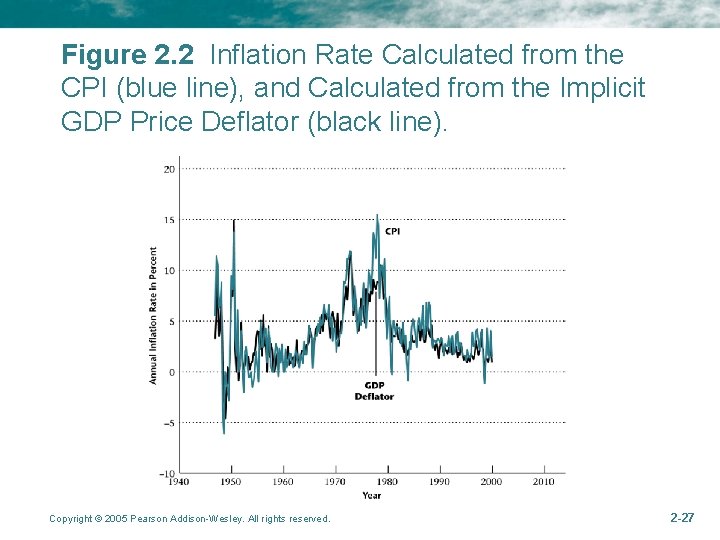
Figure 2. 2 Inflation Rate Calculated from the CPI (blue line), and Calculated from the Implicit GDP Price Deflator (black line). Copyright © 2005 Pearson Addison-Wesley. All rights reserved. 2 -27
Problems Measuring Real GDP and Prices • Substitution Biases: make CPI upward biased. • Accounting for Quality Changes: increase in prices maybe reflect the improvement in quality. Inflation is biased upward. • Treatment of Newly-Introduced Goods: bias downward GDP growth, upward the inflation Copyright © 2005 Pearson Addison-Wesley. All rights reserved. 2 -28
Homework • Find data of GDP deflator and CPI in China (at least from 1978)? • Which one is higher? Copyright © 2005 Pearson Addison-Wesley. All rights reserved. 2 -29
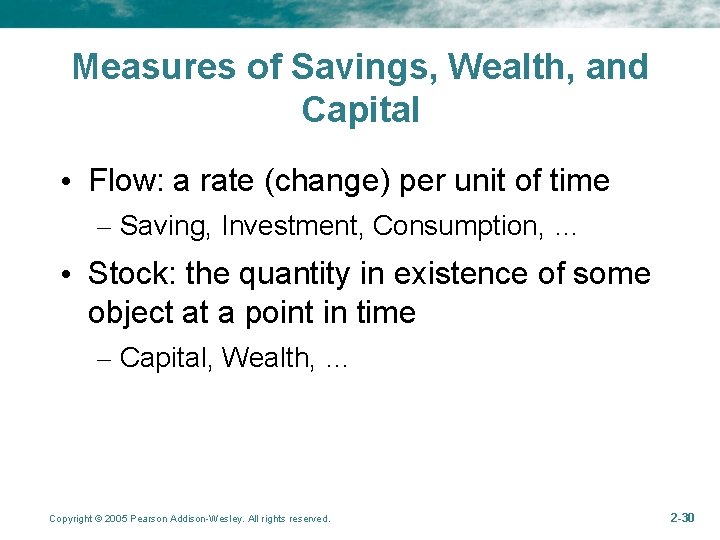
Measures of Savings, Wealth, and Capital • Flow: a rate (change) per unit of time – Saving, Investment, Consumption, … • Stock: the quantity in existence of some object at a point in time – Capital, Wealth, … Copyright © 2005 Pearson Addison-Wesley. All rights reserved. 2 -30
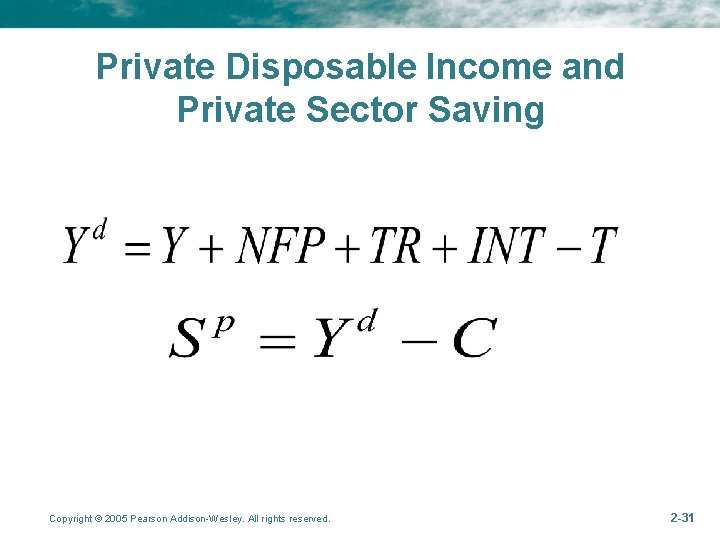
Private Disposable Income and Private Sector Saving Copyright © 2005 Pearson Addison-Wesley. All rights reserved. 2 -31
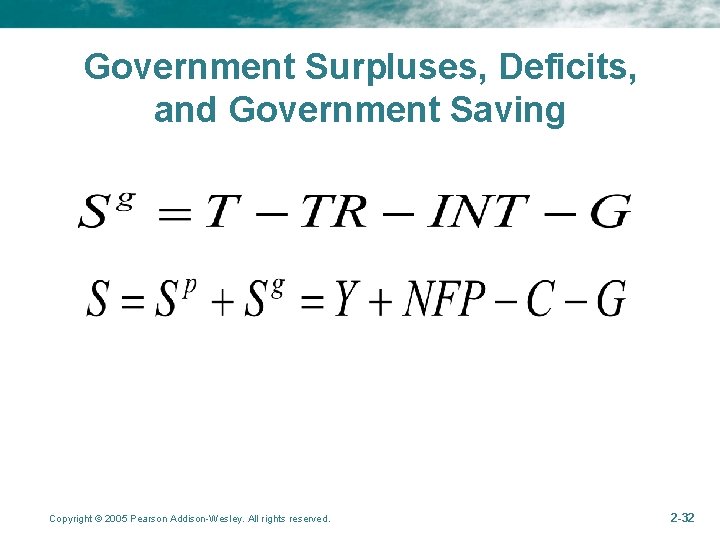
Government Surpluses, Deficits, and Government Saving Copyright © 2005 Pearson Addison-Wesley. All rights reserved. 2 -32
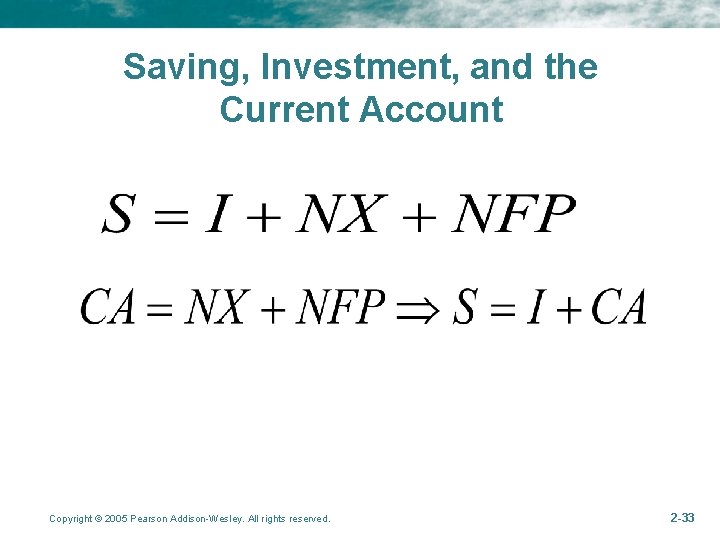
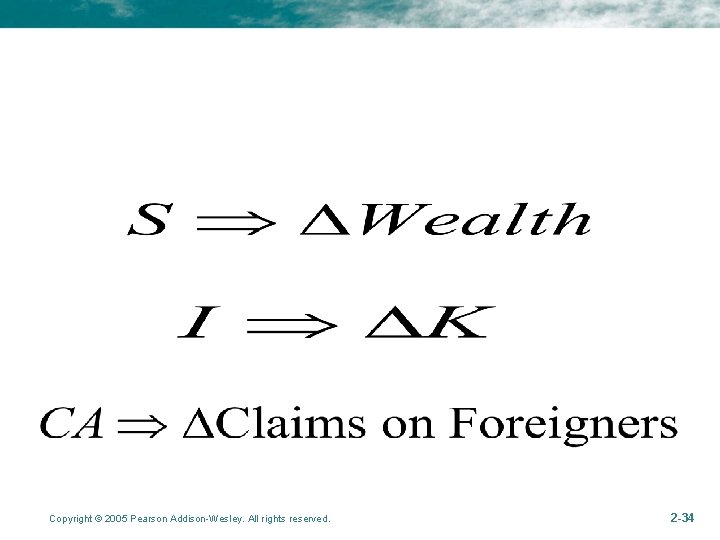
Saving, Investment, and the Current Account Copyright © 2005 Pearson Addison-Wesley. All rights reserved. 2 -33
Copyright © 2005 Pearson Addison-Wesley. All rights reserved. 2 -34
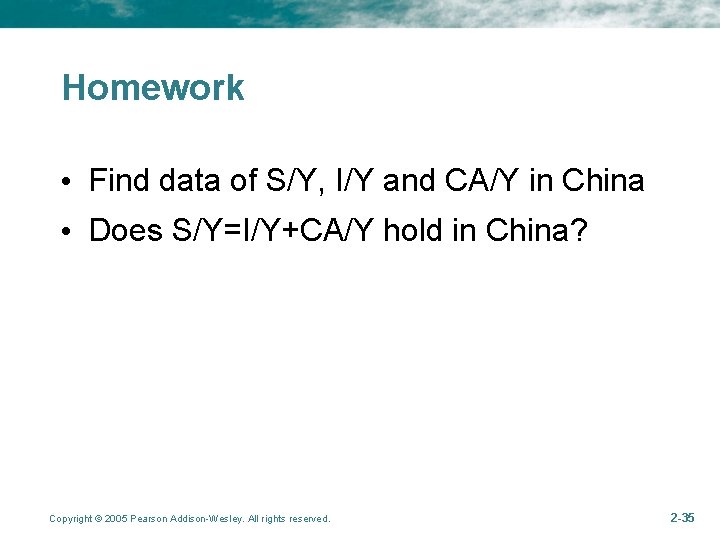
Homework • Find data of S/Y, I/Y and CA/Y in China • Does S/Y=I/Y+CA/Y hold in China? Copyright © 2005 Pearson Addison-Wesley. All rights reserved. 2 -35
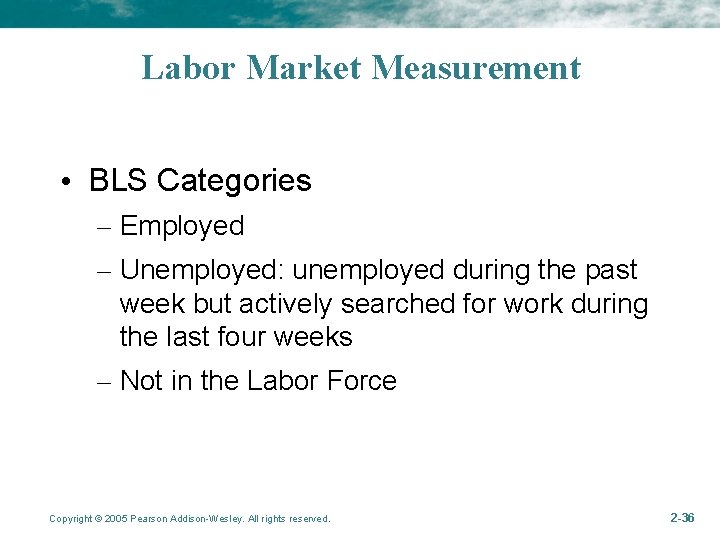
Labor Market Measurement • BLS Categories – Employed – Unemployed: unemployed during the past week but actively searched for work during the last four weeks – Not in the Labor Force Copyright © 2005 Pearson Addison-Wesley. All rights reserved. 2 -36
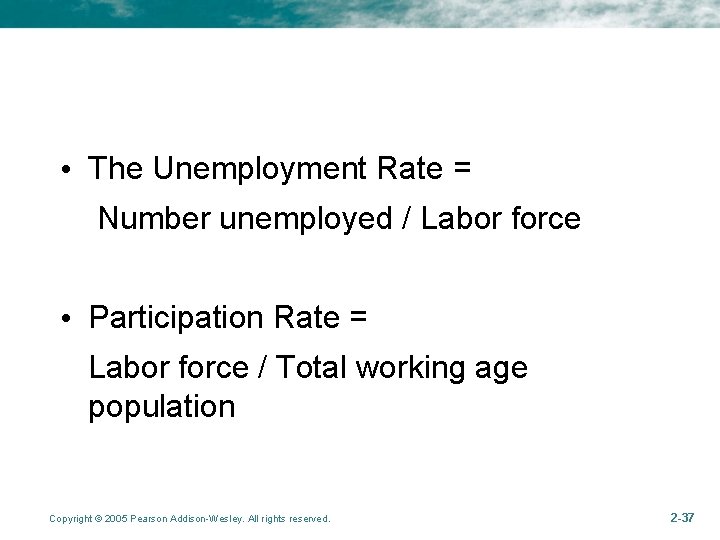
• The Unemployment Rate = Number unemployed / Labor force • Participation Rate = Labor force / Total working age population Copyright © 2005 Pearson Addison-Wesley. All rights reserved. 2 -37
Discussion • How to measure unemployment rate in China? – Migrated workers (�民 ) – Hidden unemployment in agricultural sector – Lay-off (下� ) in SOEs Copyright © 2005 Pearson Addison-Wesley. All rights reserved. 2 -38