
Chapter 2 Matter and Change p 38 Describing
Chapter 2 “Matter and Change” p. 38
Describing Matter Properties: 1) Extensive – depends on amt of matter in sample - ex’s. mass, volume, calories, magnetism 2) Intensive – depends on type of matter, not amt. - Hardness, Density, B. P. - All samples of same substance have same intensive prop’s. (same composition)
Identifying Substances Physical Properties- observed & measured w/o changing composition ◦ color, hardness, m. p. , b. p. Chemical Properties- observed by changing comp of material ◦ ability to burn, decompose, ferment, react w/, etc.
States of matter 1) Solid- cannot flow (definite shape & volume) 2) Liquid- definite vol - takes shape of container (flows) 3) Gas- w/o definite vol or shape & flows ◦ Vapor- gaseous but normally liquid or solid @ room temp water “gas”, or water “vapor”?
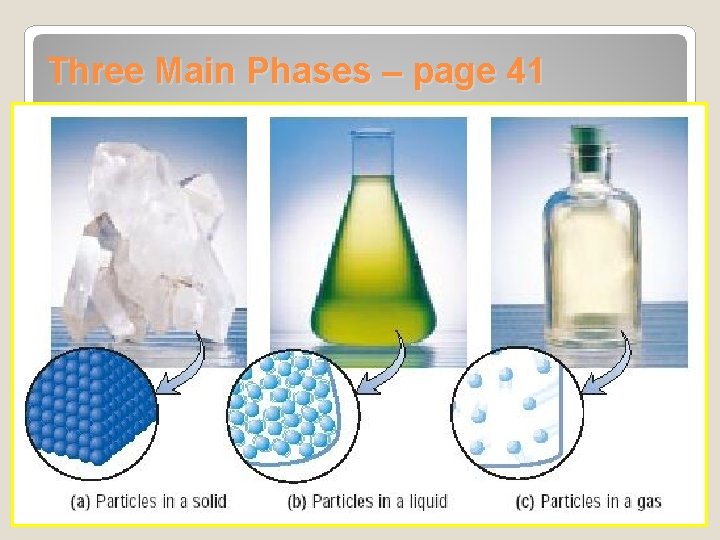
Three Main Phases – page 41
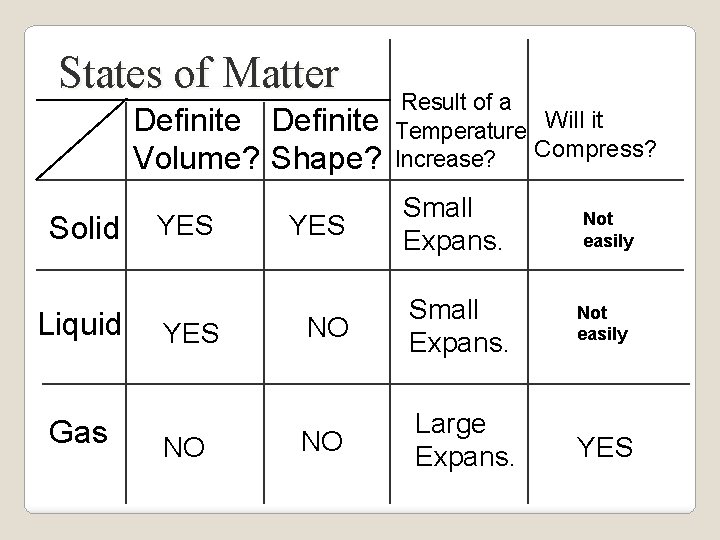
States of Matter Definite Volume? Shape? Solid Liquid Gas YES NO Result of a Temperature Will it Compress? Increase? YES Small Expans. NO Large Expans. Not easily YES
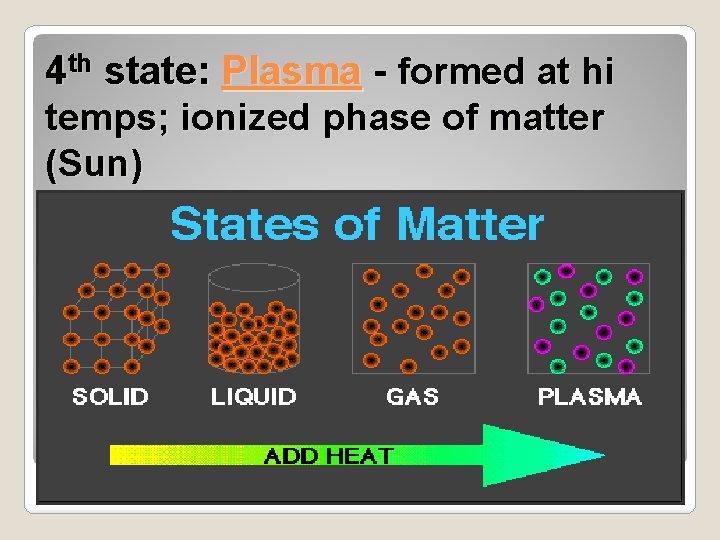
4 th state: Plasma - formed at hi temps; ionized phase of matter (Sun)
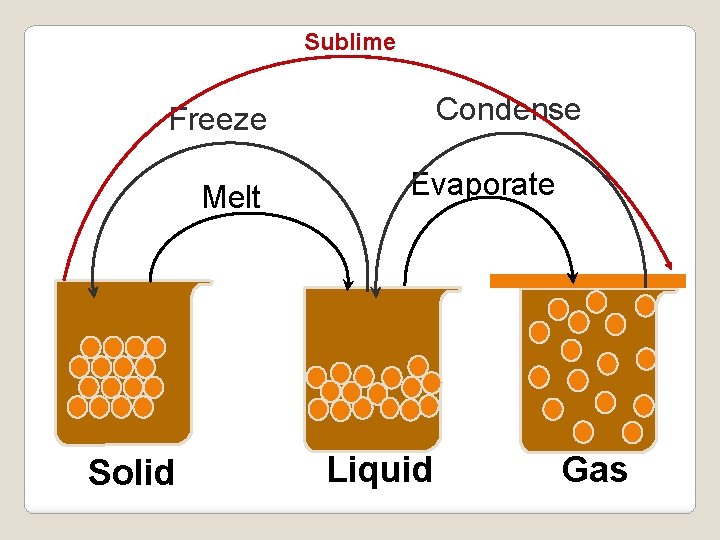
Sublime Condense Freeze Melt Solid Evaporate Liquid Gas
Physical vs. Chemical Change Physical changes visible appearance w/o changing comp of material ◦ Boil, melt, cut, bend, split, crack ◦ Is boiled water still water? Reversible, or irreversible Chemical change - change where new substance formed ◦ Rust, burn, decompose, ferment
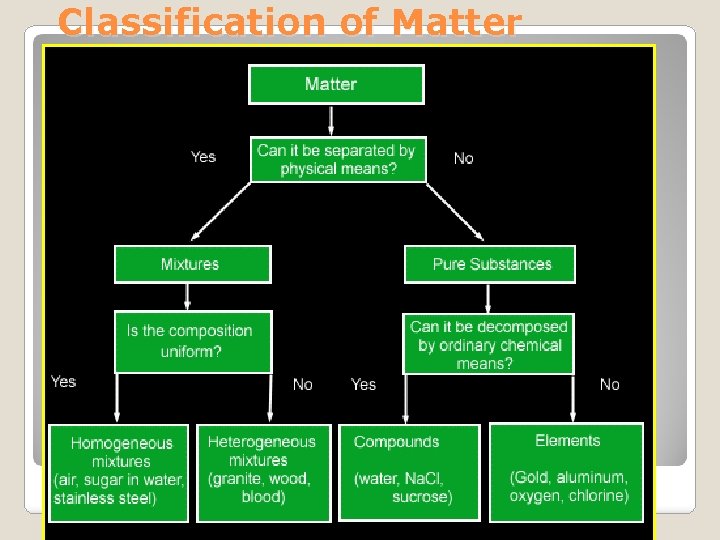
Section 2. 2 Mixtures p. 44 Mixture - physical blend of 2+ components 1) Heterogeneous – uniform in comp • Choc chip cookie, gravel, soil 2) Homogeneous - same comp thruout (solutions) • Kool-aid, air, salt water Every part keeps own prop’s
Solutions - homogeneous mixtures Mixed molecule by molecule, so too small to see diff pts occurs btwn any state of matter: gas-gas; liquid-gas; gas -liquid; solid-solid (alloys) ◦ Steel (Fe, Cr & Ni)
Phase? “phase” describes any pt of sample w/ uniform comp of properties A homogeneous mixture consists of a single phase A heterogeneous mixture consists of two or more phases. Note Figure 2. 6, page 45
Separating Mixtures Some by physical means: rocks & marbles, iron filings & sulfur (magnet) Differences in physical props used to separate mixtures Filtration - separates solid from liquid in hetero mix. (by size) – Figure 2. 7, page 46
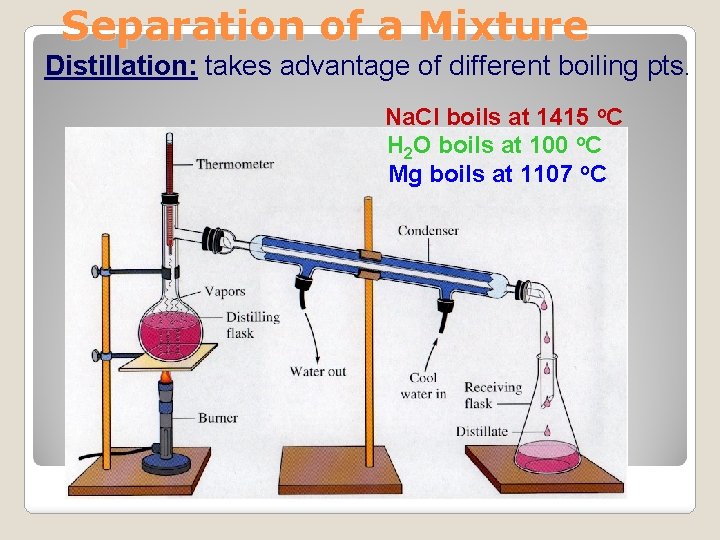
Separation of a Mixture Distillation: takes advantage of different boiling pts. Na. Cl boils at 1415 o. C H 2 O boils at 100 o. C Mg boils at 1107 o. C
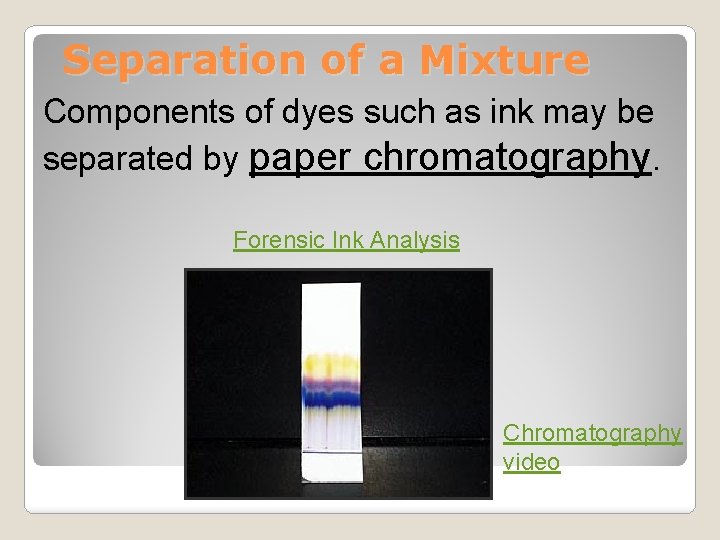
Separation of a Mixture Components of dyes such as ink may be separated by paper chromatography. Forensic Ink Analysis Chromatography video
Applications of Chromatography 2 Greek words: ◦ chroma "color" and “graphein "to write" Biological labs: ◦ ID amino acids ◦ detects drugs in urine Environmental labs: ◦ ID contaminants in waste oil ◦ pesticides in groundwater ◦ test drinking water & test air quality Pharmaceutical companies ◦ prepare quantities of extremely pure materials. Food industry ◦ ID contaminants like aflatoxin naturally occurring toxin produced by fungus
Sec 2. 3 Elements & Compounds p. 48 Substances are either: a) elements, or b) compounds
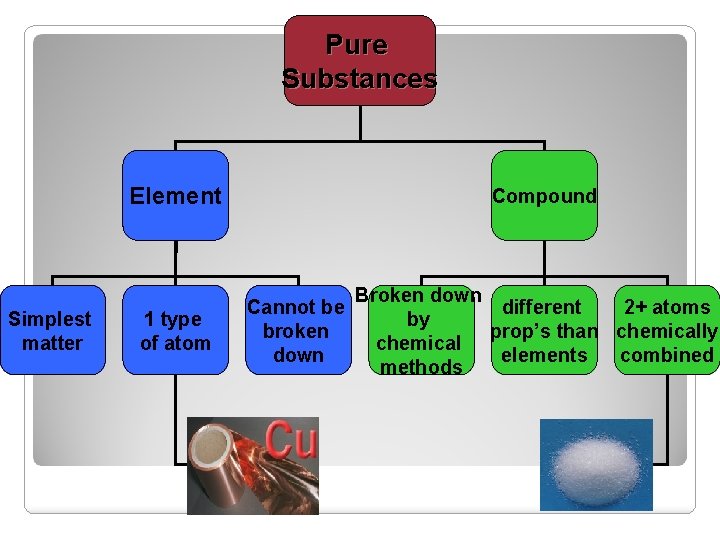
Pure Substances Element Simplest matter 1 type of atom Compound Cannot be broken down Broken down different 2+ atoms by prop’s than chemically chemical elements combined methods
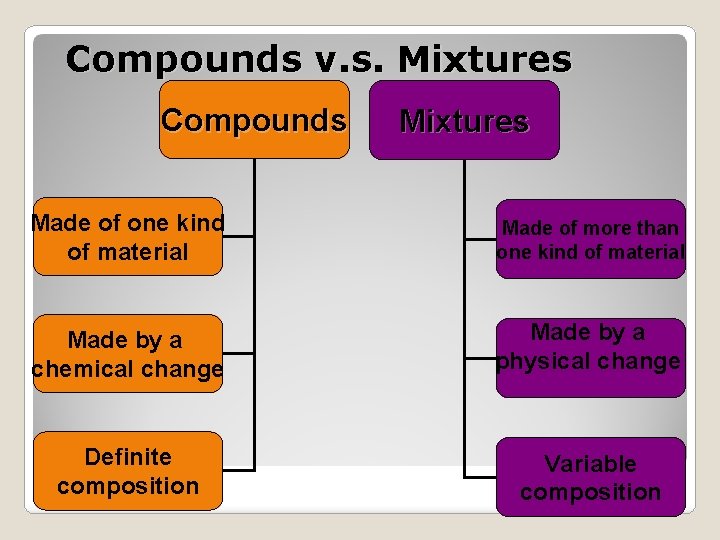
Compounds v. s. Mixtures Compounds Mixtures Made of one kind of material Made of more than one kind of material Made by a chemical change Made by a physical change Definite composition Variable composition
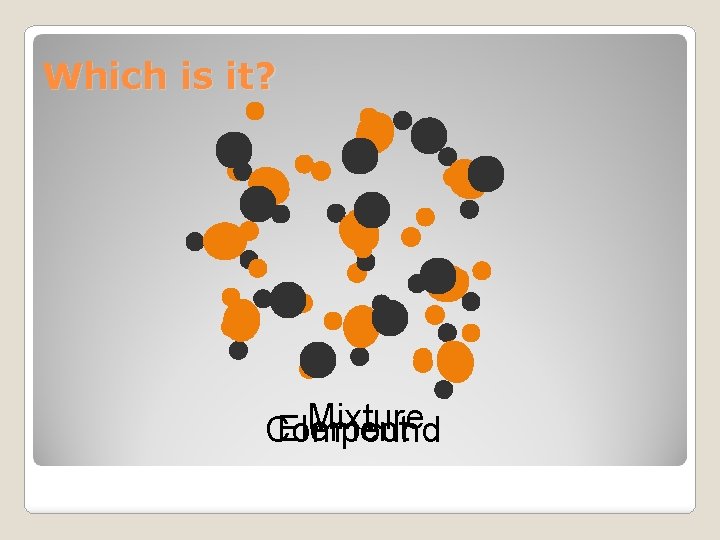
Which is it? Mixture Element Compound
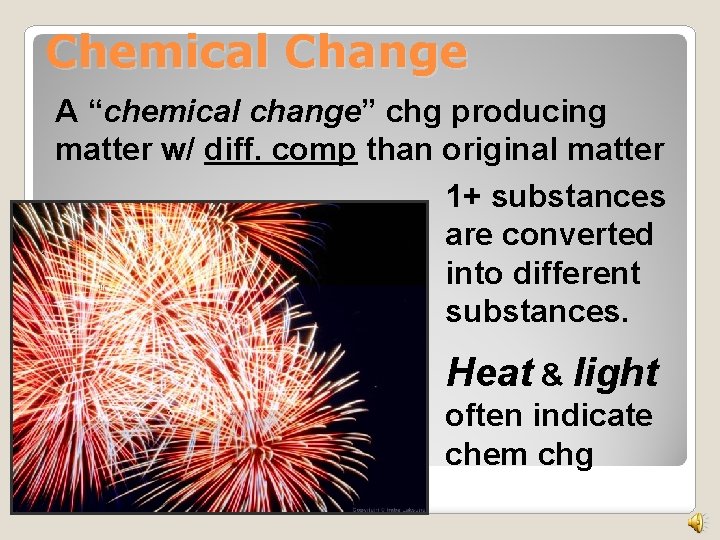
Chemical Change A “chemical change” chg producing matter w/ diff. comp than original matter 1+ substances are converted into different substances. Heat & light often indicate chem chg
Classification of Matter
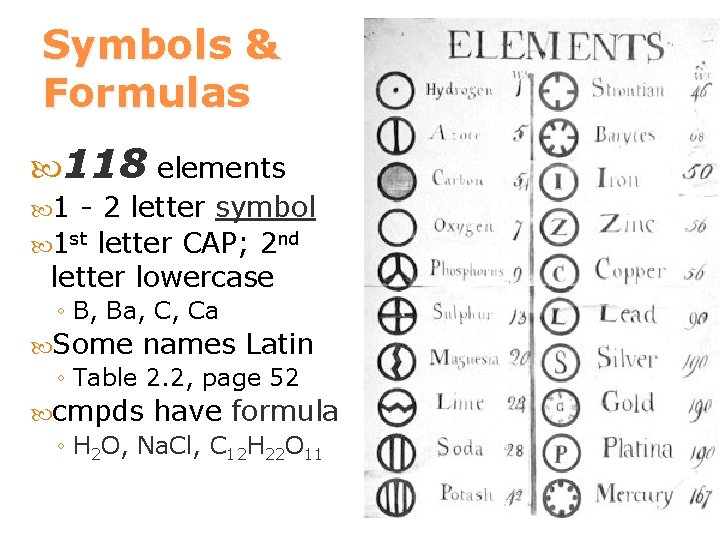
Symbols & Formulas 118 elements 1 - 2 letter symbol 1 st letter CAP; 2 nd letter lowercase ◦ B, Ba, C, Ca Some names Latin ◦ Table 2. 2, page 52 cmpds have formula ◦ H 2 O, Na. Cl, C 12 H 22 O 11
Sec 2. 4 Chemical Rxns p. 53 Chemical Changes Chemical property - ability of substance to undergo specific chem change • Fe + O = rust • rusting - chem prop of Fe During chem chge comp of matter always changes
Chemical Rxns are… When 1+ substances changed into new substances Reactants- start w/ Products- end w/ Products have NEW PROPS diff from reactants Arrow points from reactants to new products
Recognizing Chemical Changes Energy absorbed/released (temp changes hotter/colder) 2) Color changes 3) Gas production (bubbling, fizzing, or odor change; smoke) 4) precipitate forms - solid separates from solution (won’t dissolve) 5) Irreversibility - not easily reversed Some ex’s not chem – boiling water bubbles, choc syrup in milk, etc. 1)
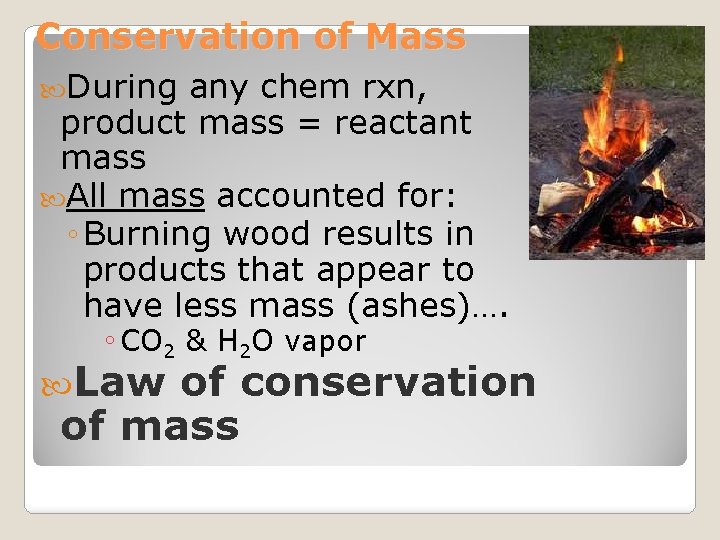
Conservation of Mass During any chem rxn, product mass = reactant mass All mass accounted for: ◦ Burning wood results in products that appear to have less mass (ashes)…. ◦ CO 2 & H 2 O vapor Law of conservation of mass
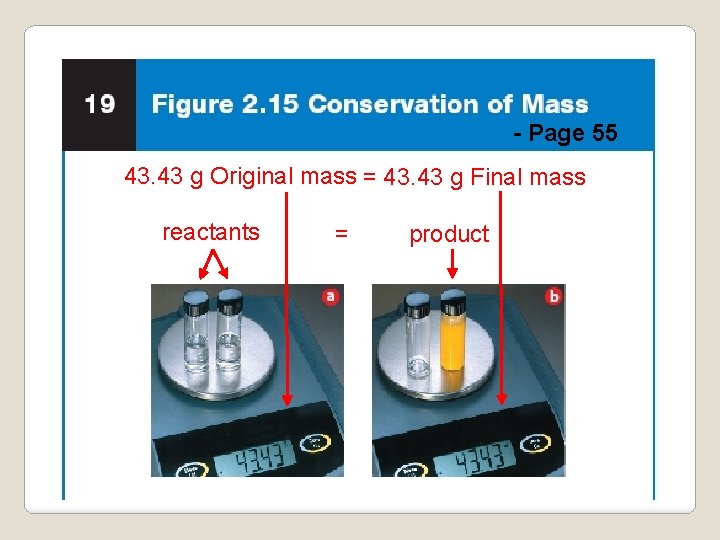
- Page 55 43. 43 g Original mass = 43. 43 g Final mass reactants = product
Using your online textbook: Due by Friday 9/22: Page 42 #1 -7 Page 47 #11 -16 Page 52 #20 -27 Page 55 #28 -34
- Slides: 29