
Chapter 2 Mastering Team Skills and Interpersonal Communication
- Slides: 43
Chapter 2 Mastering Team Skills and Interpersonal Communication Copyright © 2015 Pearson Education, Inc. publishing as Prentice Hall
Learning Objectives 1. List the advantages and disadvantages of working in teams, describe the characteristics of effective teams, and highlight four key issues of group dynamics 2. Offer guidelines for collaborative communication, identify major collaboration technologies, and explain how to give constructive feedback Copyright © 2015 Pearson Education, Inc. publishing as Prentice Hall Chapt er 2 2
Learning Objectives 3. List the steps needed to ensure productive team meetings 4. Identify the major technologies used to enhance or replace in-person meetings Copyright © 2015 Pearson Education, Inc. publishing as Prentice Hall Chapt er 2 3
Learning Objectives 5. Identify three major modes of listening, describe the listening process, and explain the problem of selective listening 6. Explain the importance of nonverbal communication, and identify six major categories of nonverbal expression Copyright © 2015 Pearson Education, Inc. publishing as Prentice Hall Chapt er 2 4
Learning Objectives 7. Explain the importance of business etiquette, and identify three key areas in which good etiquette is essential Copyright © 2015 Pearson Education, Inc. publishing as Prentice Hall Chapt er 2 5
I. Communicating Effectively in Teams A. Advantages and Disadvantages of Teams B. Characteristics of Effective Teams II. Collaborating on Communication Efforts Copyright © 2015 Pearson Education, Inc. publishing as Prentice Hall Chapt er 2 6
II. Collaborating on Communication Efforts A. Guidelines for Collaborative Writing B. Technologies for Collaborative Writing C. Giving and Responding to Constructive Feedback Copyright © 2015 Pearson Education, Inc. publishing as Prentice Hall Chapt er 2 7
III. Making Meetings More Productive A. Preparing for Meetings B. Conducting and Contributing to Meetings C. Using Meeting Technologies Copyright © 2015 Pearson Education, Inc. publishing as Prentice Hall Chapt er 2 8
IV. Improving Listening Skills A. Types of Listening B. Listening Process C. Barriers to Effective Listening V. Improving Nonverbal Communication Skills Chapt er 2 9
VI. Developing Business Etiquette A. Business Etiquette in Workplace B. Business Etiquette in Social Settings C. Business Etiquette Online Chapt er 2 10
I. Communicating Effectively in Teams Collaboration or working together to meet complex challenges has become a core job responsibility for the workforce. l
Communication skills pay off handsomely in these interactions A team is a unit of two or more people who share a mission and the responsibility for working together to achieve their goal.
Variety of teams --- short-term problem solving, permanent committees, virtual teams Successful teams can improve productivity, creativity, employee involvement, and job security. Teams are at the core of participative management. Copyright © 2015 Pearson Education, Inc. publishing as Prentice Hall Chapt er 2 13
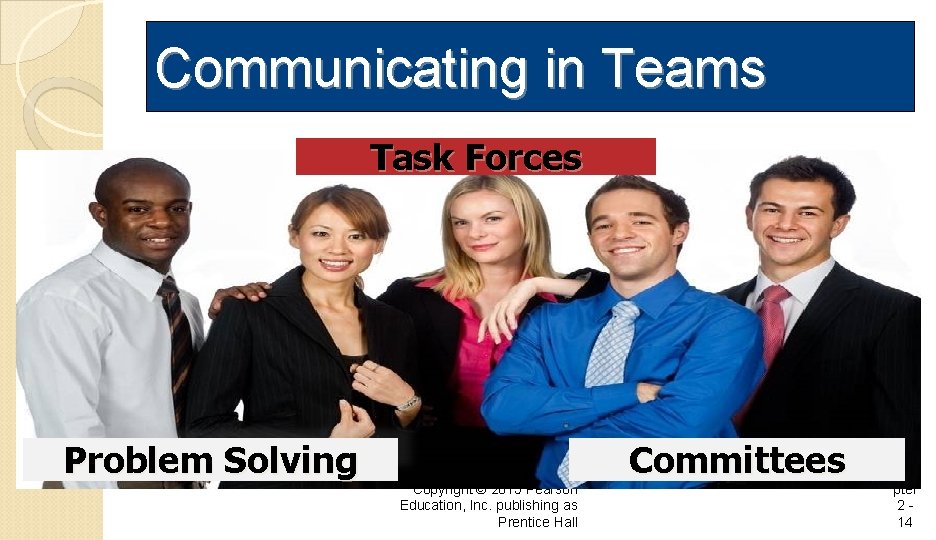
Communicating in Teams Task Forces Problem Solving Copyright © 2015 Pearson Education, Inc. publishing as Prentice Hall Committees Cha pter 214
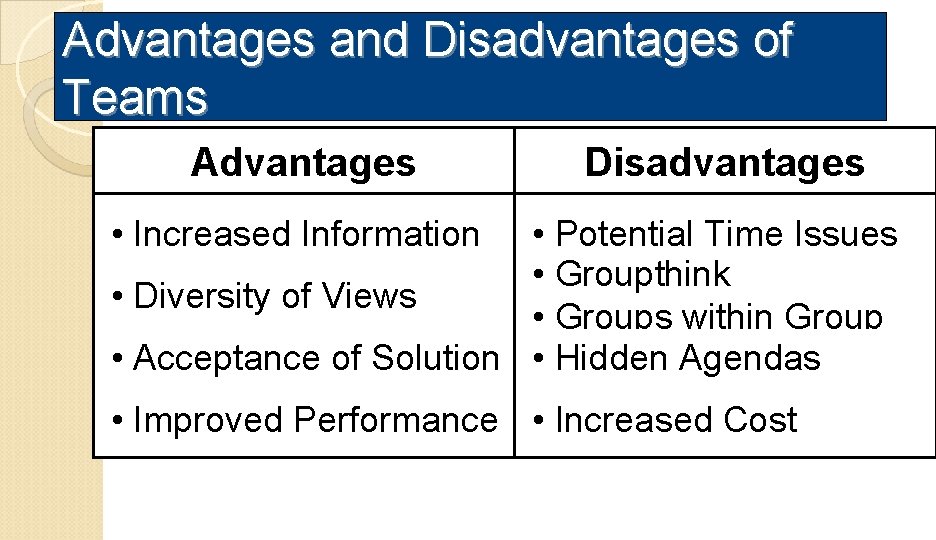
Advantages and Disadvantages of Teams Advantages Disadvantages • Increased Information • Potential Time Issues • Groupthink • Diversity of Views • Groups within Group • Acceptance of Solution • Hidden Agendas • Improved Performance • Increased Cost
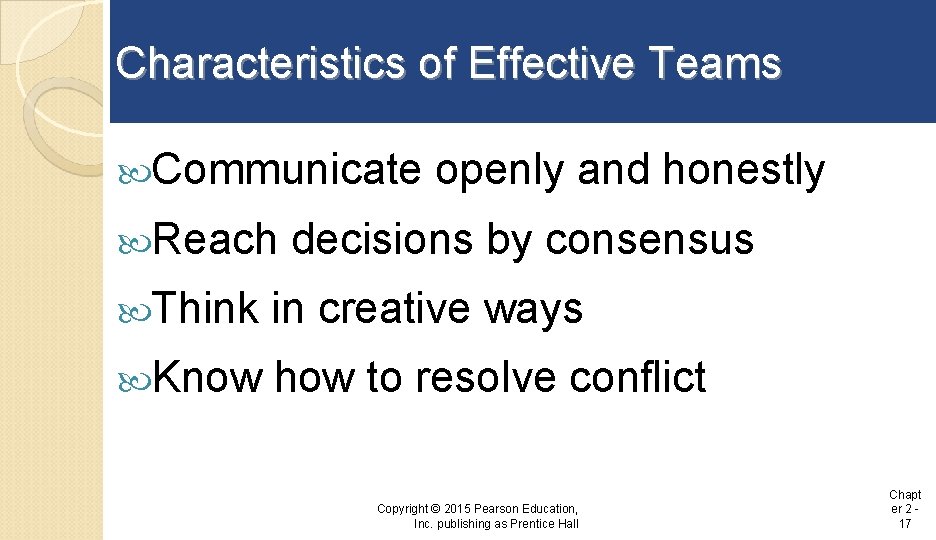
Characteristics of Effective Teams Have a clear objective Share a sense of purpose Have full engagement from all members Copyright © 2015 Pearson Education, Inc. publishing as Prentice Hall Chapt er 2 16
Characteristics of Effective Teams Communicate Reach openly and honestly decisions by consensus Think in creative ways Know how to resolve conflict Copyright © 2015 Pearson Education, Inc. publishing as Prentice Hall Chapt er 2 17
II. Collaborating on Communication Efforts When a team collaborates on reports, websites, presentations, communication energy and projects, expertise and the of the other collective various members can produce efficient results. Copyright © 2015 Pearson Education, Inc. publishing as Prentice Hall Chapt er 2 18
Collaborating on team messages requires special effort and planning. Copyright © 2015 Pearson Education, Inc. publishing as Prentice Hall Chapt er 2 19
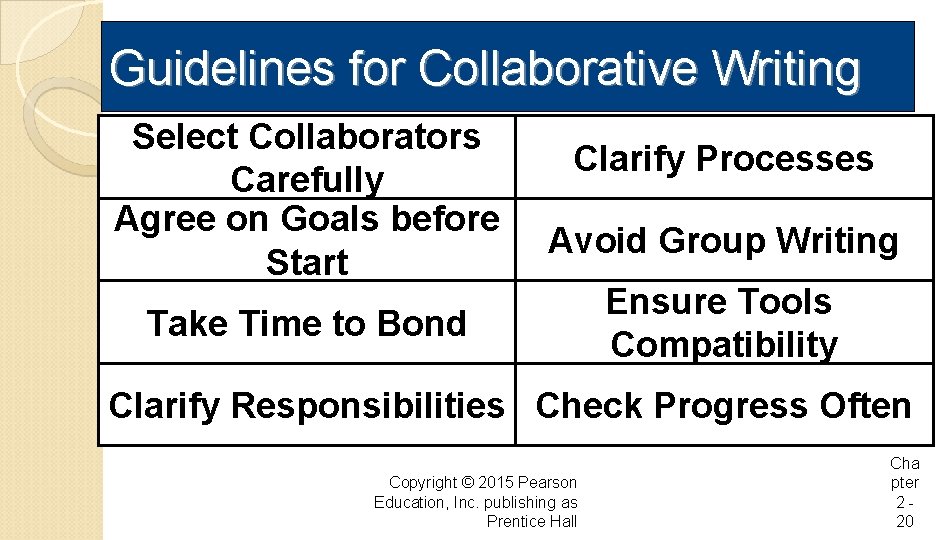
Guidelines for Collaborative Writing Select Collaborators Carefully Agree on Goals before Start Clarify Processes Avoid Group Writing Take Time to Bond Ensure Tools Compatibility Clarify Responsibilities Check Progress Often Copyright © 2015 Pearson Education, Inc. publishing as Prentice Hall Cha pter 220
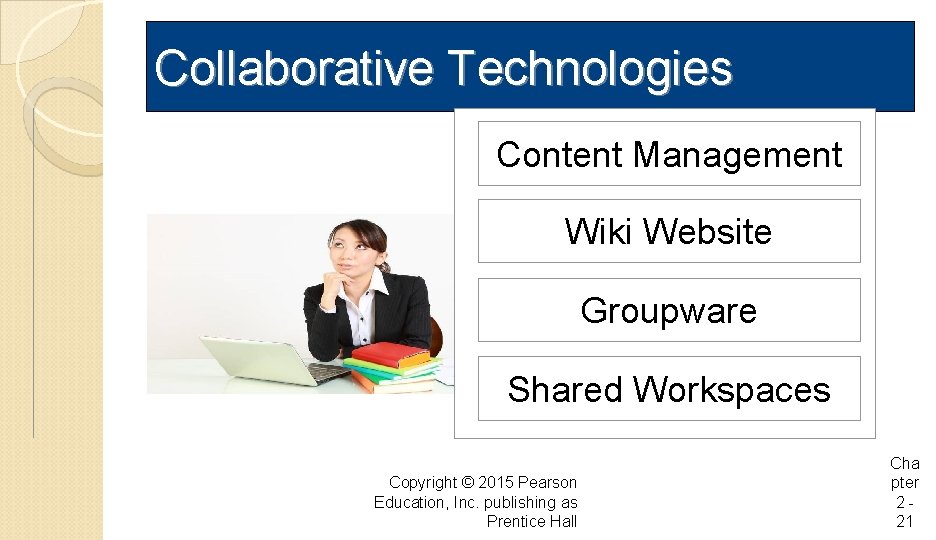
Collaborative Technologies Content Management Wiki Website Groupware Shared Workspaces Copyright © 2015 Pearson Education, Inc. publishing as Prentice Hall Cha pter 221
Internal Social Networks and Virtual Communities Internal technologies model sites similar Facebook Communities of Practice link employees with similar interests Collective specialized knowledge supports organizational goals Internal Community Building Copyright © 2015 Pearson Education, Inc. publishing as Prentice Hall Chapt er 2 22
Giving Constructive Feedback Discuss Improvements Be Specific Keep Feedback Impersonal Verify Understanding Time Feedback Carefully Copyright © 2015 Pearson Education, Inc. publishing as Prentice Hall Chapt er 2 23
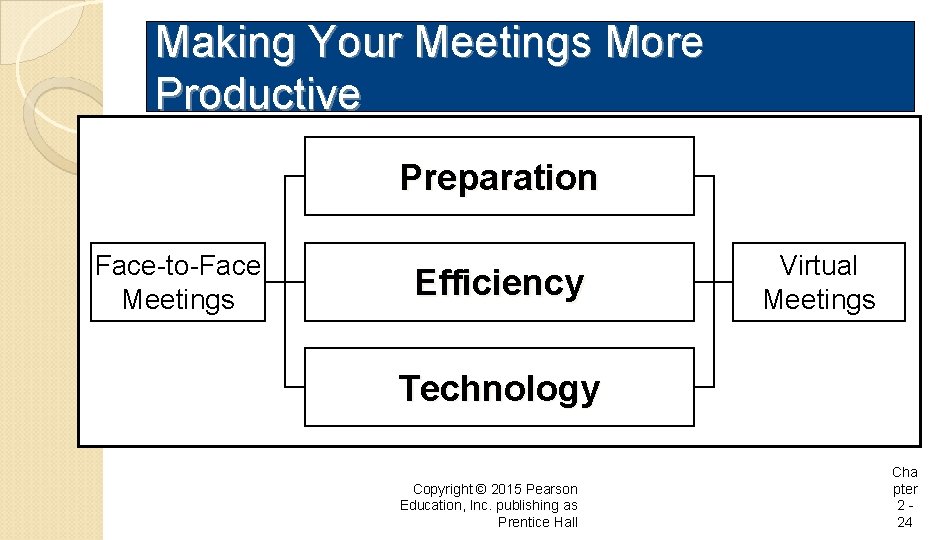
Making Your Meetings More Productive Preparation Face-to-Face Meetings Efficiency Virtual Meetings Technology Copyright © 2015 Pearson Education, Inc. publishing as Prentice Hall Cha pter 224
Preparing For Meetings Purpose Participants Time and Place Agenda Copyright © 2015 Pearson Education, Inc. publishing as Prentice Hall Chapt er 2 25
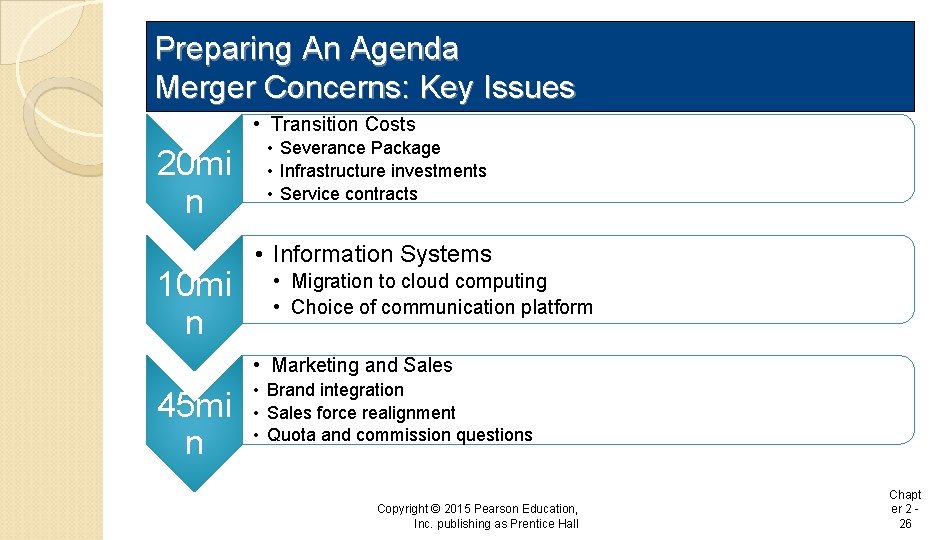
Preparing An Agenda Merger Concerns: Key Issues • Transition Costs 20 mi n 10 mi n • Severance Package • Infrastructure investments • Service contracts • Information Systems • Migration to cloud computing • Choice of communication platform • Marketing and Sales 45 mi n • Brand integration • Sales force realignment • Quota and commission questions Copyright © 2015 Pearson Education, Inc. publishing as Prentice Hall Chapt er 2 26
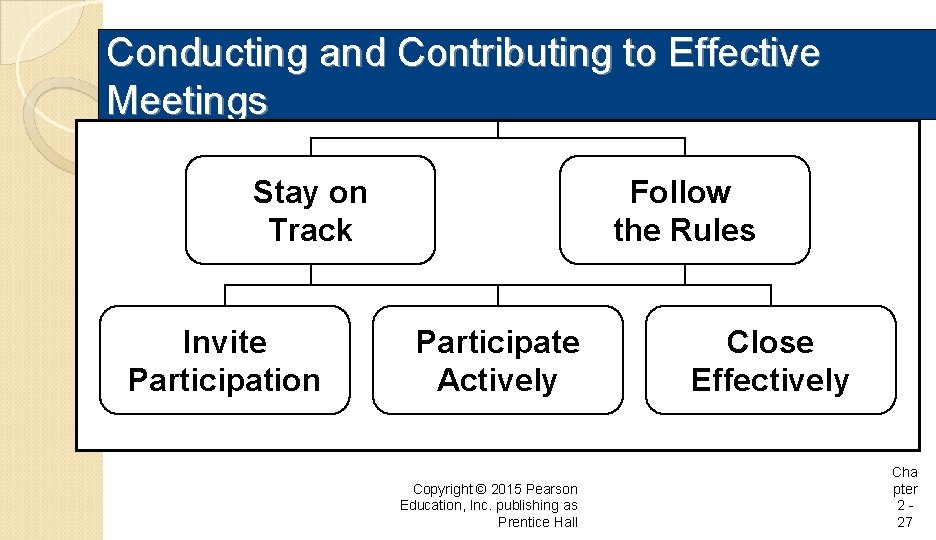
Conducting and Contributing to Effective Meetings Stay on Track Invite Participation Follow the Rules Participate Actively Copyright © 2015 Pearson Education, Inc. publishing as Prentice Hall Close Effectively Cha pter 227
Improve Meeting Productivity Prepare Lead carefully effectively and participate Record key decisions and action items Copyright © 2015 Pearson Education, Inc. publishing as Prentice Hall Cha pter 228
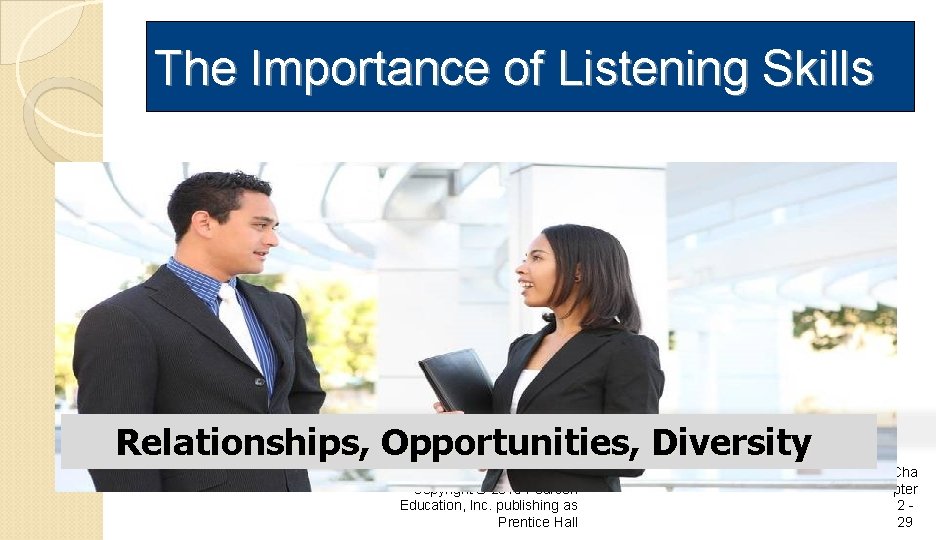
The Importance of Listening Skills Relationships, Opportunities, Diversity Copyright © 2015 Pearson Education, Inc. publishing as Prentice Hall Cha pter 229
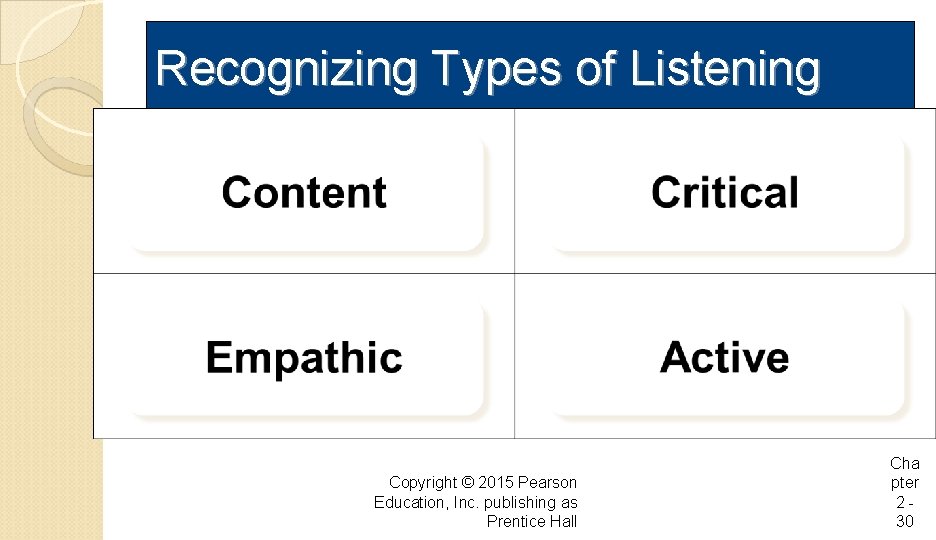
Recognizing Types of Listening Copyright © 2015 Pearson Education, Inc. publishing as Prentice Hall Cha pter 230
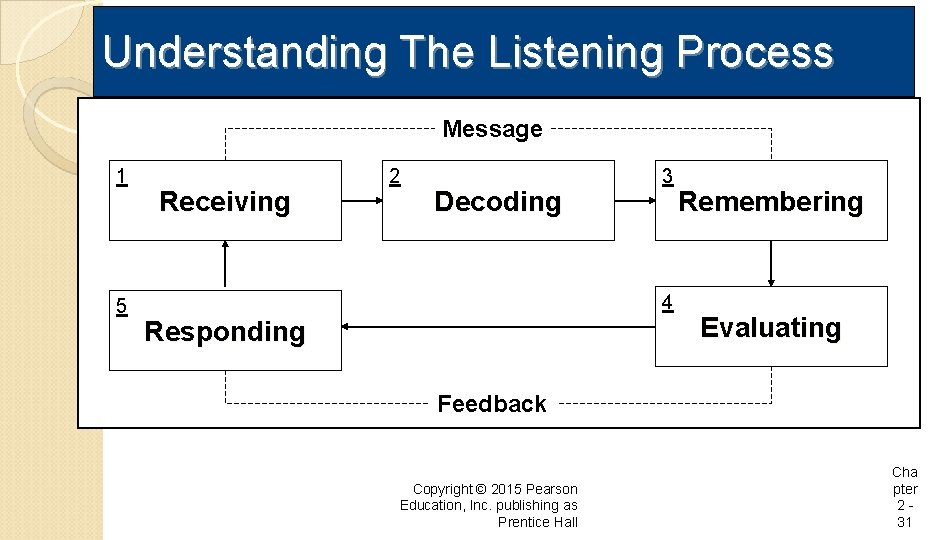
Understanding The Listening Process Message 1 5 Receiving 2 Decoding 3 4 Responding Remembering Evaluating Feedback Copyright © 2015 Pearson Education, Inc. publishing as Prentice Hall Cha pter 231
Some researchers suggest that we listen at only 25 percent efficiency. Such To poor listening habits are costly. improve listening skills, we must first recognize barriers that prevent effective listening. Copyright © 2015 Pearson Education, Inc. publishing as Prentice Hall Chapt er 2 32
1. Physical Barriers 2. Psychological Barriers 3. Language Problems 4. Nonverbal Distractions 5. Thought Speed 6. Faking Attention 7. Grandstanding 8. Delivery Copyright © 2015 Pearson Education, Inc. publishing as Prentice Hall Chapt er 2 33
Tips for Becoming Active Listeners 1. Stop talking. 2. Control your surroundings. 3. Establish a receptive mindset. 4. Keep an open mind. 5. Judge ideas or content, not appearance. 6. Hold your fire. 7. Provide feedback. Copyright © 2015 Pearson Education, Inc. publishing as Prentice Hall Chapt er 2 34
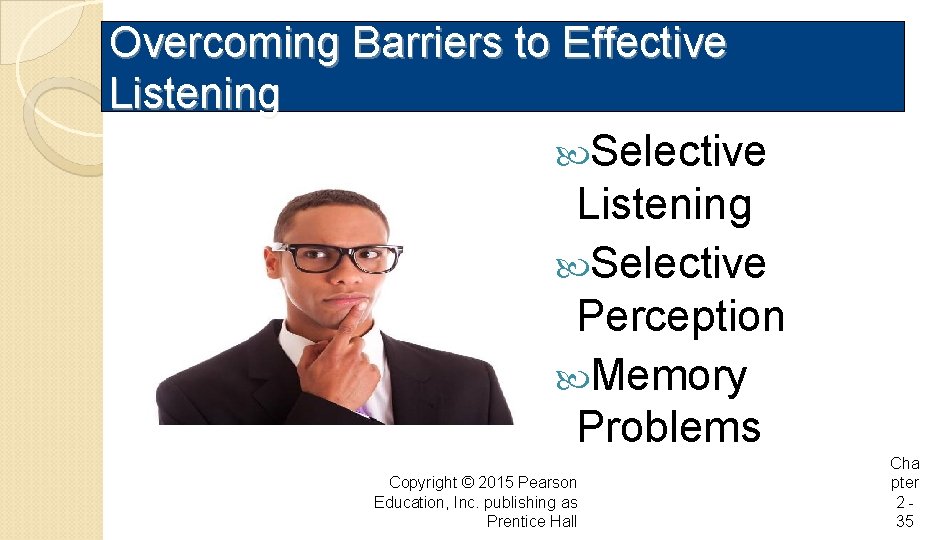
Overcoming Barriers to Effective Listening Selective Perception Memory Problems Copyright © 2015 Pearson Education, Inc. publishing as Prentice Hall Cha pter 235
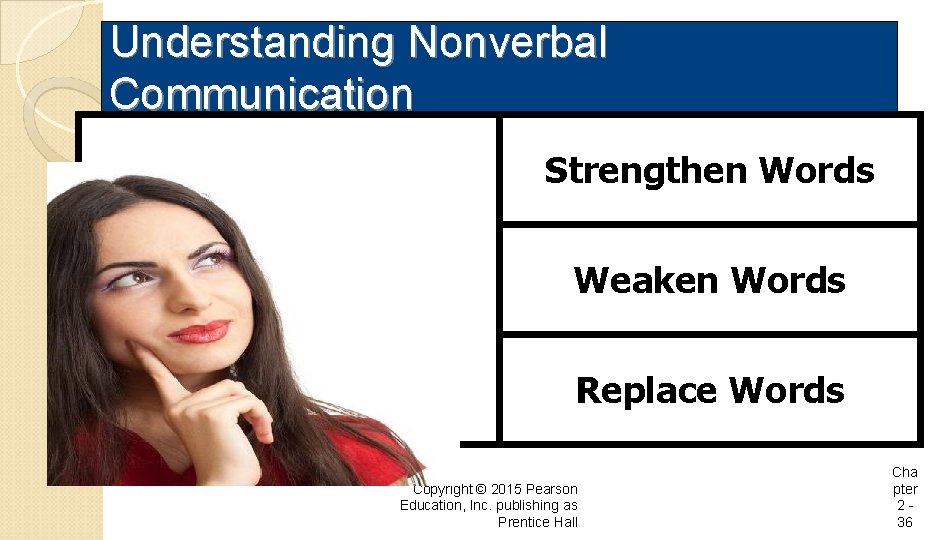
Understanding Nonverbal Communication Strengthen Words Weaken Words Replace Words Copyright © 2015 Pearson Education, Inc. publishing as Prentice Hall Cha pter 236
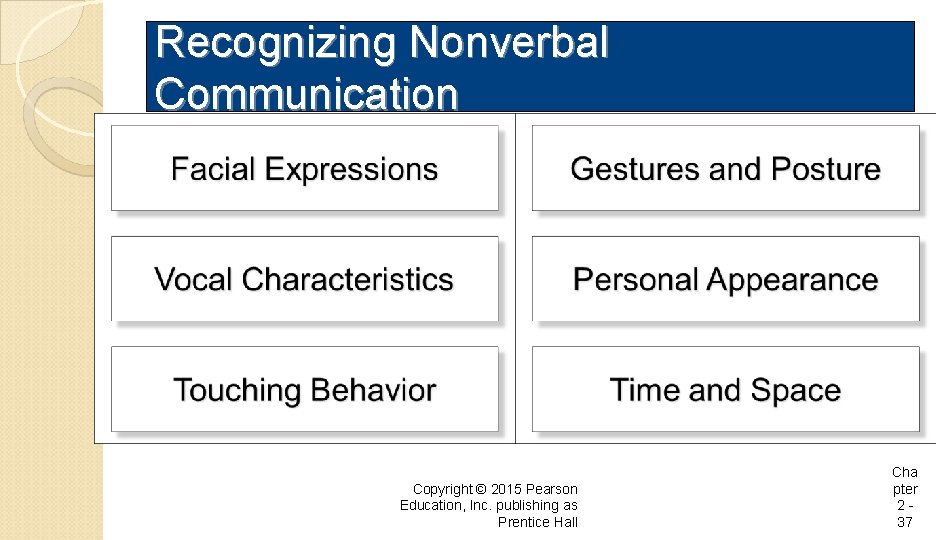
Recognizing Nonverbal Communication Copyright © 2015 Pearson Education, Inc. publishing as Prentice Hall Cha pter 237
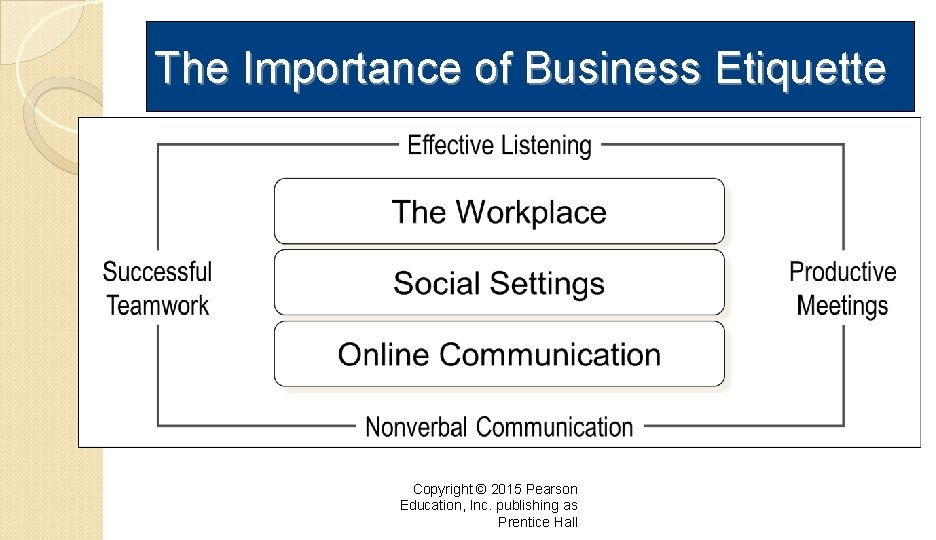
The Importance of Business Etiquette Copyright © 2015 Pearson Education, Inc. publishing as Prentice Hall
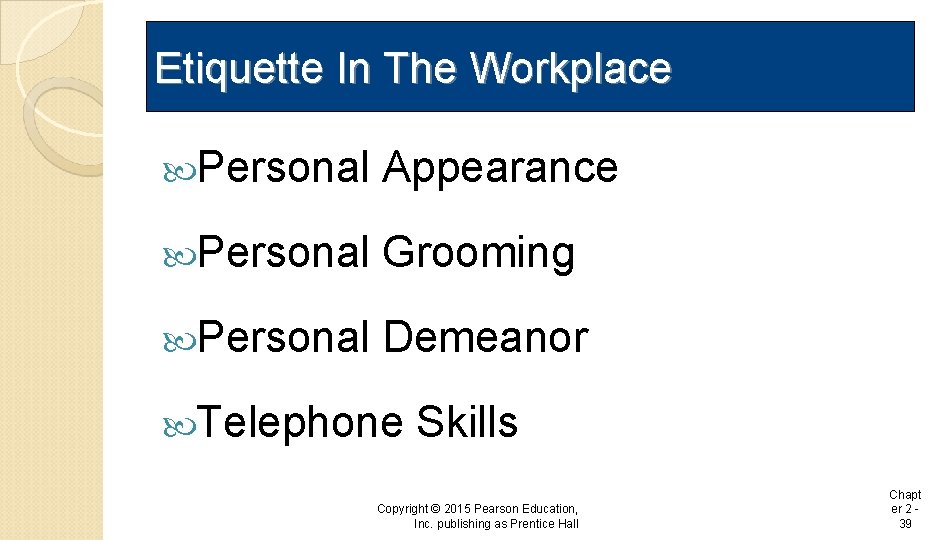
Etiquette In The Workplace Personal Appearance Personal Grooming Personal Demeanor Telephone Skills Copyright © 2015 Pearson Education, Inc. publishing as Prentice Hall Chapt er 2 39
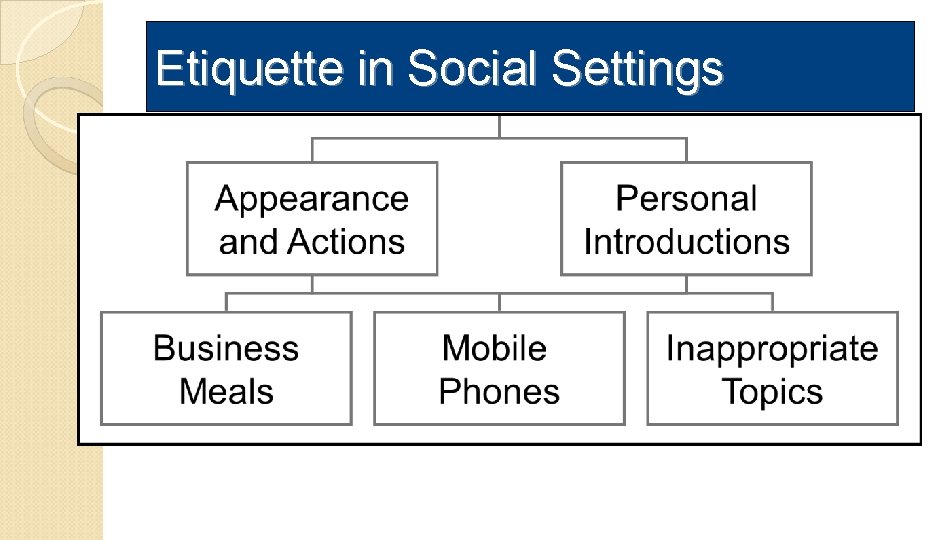
Etiquette in Social Settings
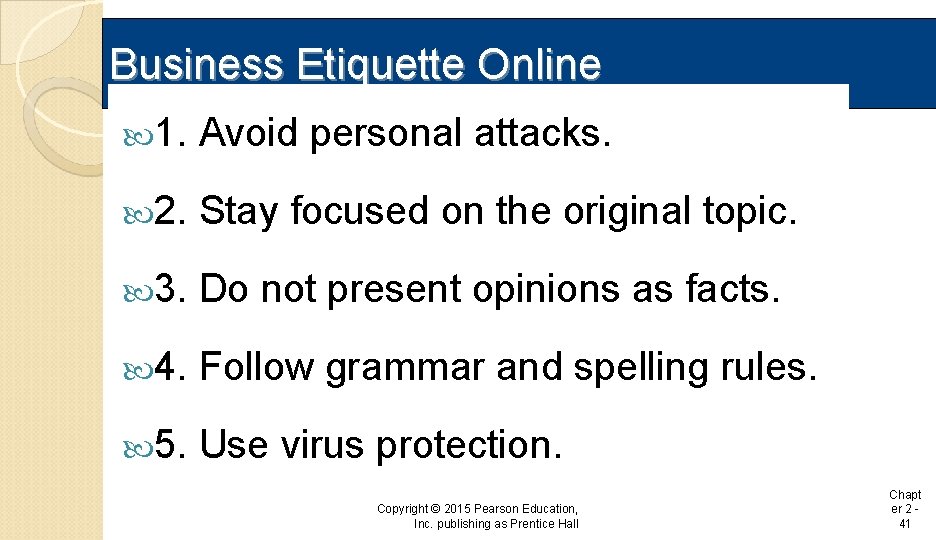
Business Etiquette Online 1. Avoid personal attacks. 2. Stay focused on the original topic. 3. Do not present opinions as facts. 4. Follow grammar and spelling rules. 5. Use virus protection. Copyright © 2015 Pearson Education, Inc. publishing as Prentice Hall Chapt er 2 41
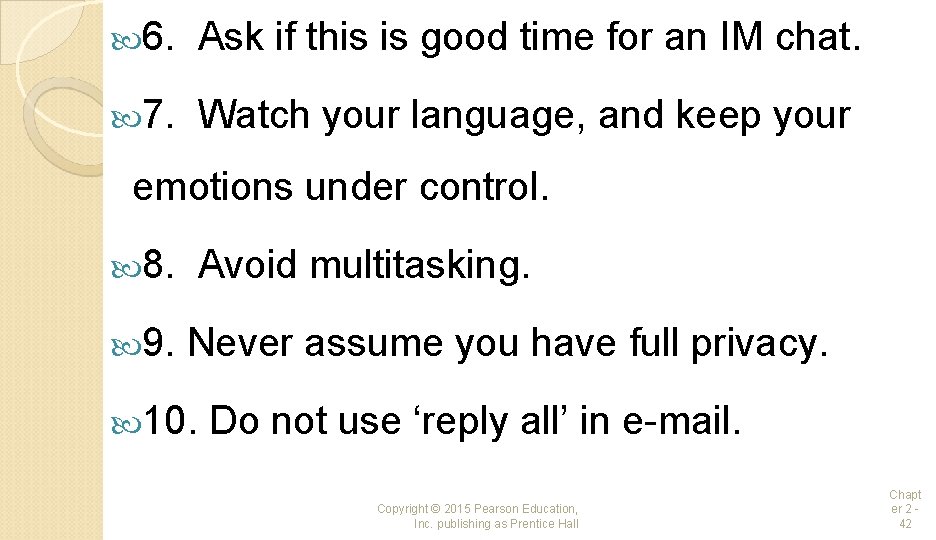
6. Ask if this is good time for an IM chat. 7. Watch your language, and keep your emotions under control. 8. 9. Avoid multitasking. Never assume you have full privacy. 10. Do not use ‘reply all’ in e-mail. Copyright © 2015 Pearson Education, Inc. publishing as Prentice Hall Chapt er 2 42
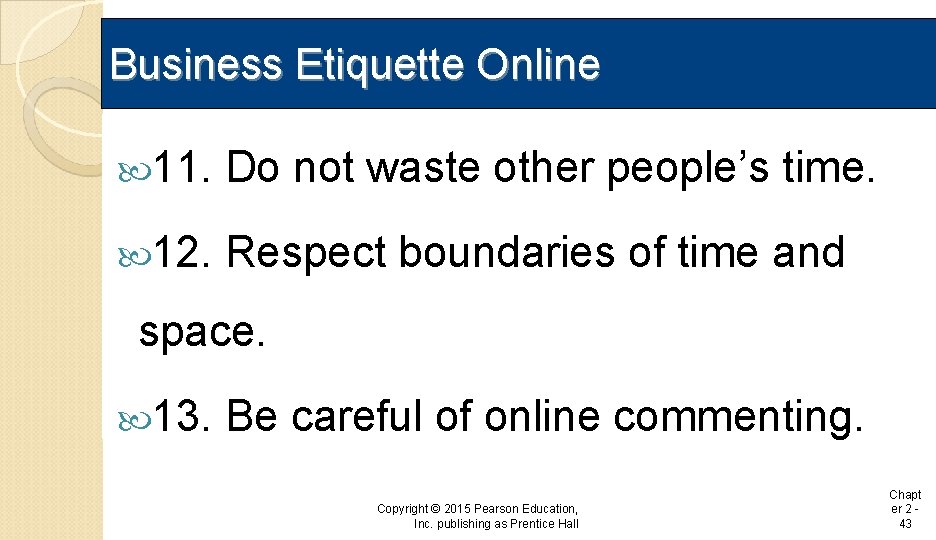
Business Etiquette Online 11. Do not waste other people’s time. 12. Respect boundaries of time and space. 13. Be careful of online commenting. Copyright © 2015 Pearson Education, Inc. publishing as Prentice Hall Chapt er 2 43