
Chapter 2 Managerial Traits and Skills Lectured by
Chapter 2 Managerial Traits and Skills Lectured by Dr. Tan Saroeun, NUM Copyright © 2010 Pearson Education, Inc. publishing as Prentice Hall Leadership in Organizations
Copyright © 2010 Pearson Education, Inc. publishing as Prentice Hall Leadership in Organizations 7 -2
Learning Objectives n n Understand how conceptions about the importance of traits have changed over the past 70 years Understand the different types of traits that have been used in leadership research Understand the types of research methods that have been used to study leadership traits and skills Understand what traits and skills are most relevant for effective leadership Copyright © 2010 Pearson Education, Inc. publishing as Prentice Hall Leadership in Organizations 7 -3
Learning Objectives (Cont. ) n n Understand how traits and skills are related to leadership behavior Understand how the relevance of a trait or skill depends on the situation, type of organization, and national culture Understand the traits and skills that cause some people to derail in their managerial careers Understand the limitations of the trait approach Copyright © 2010 Pearson Education, Inc. publishing as Prentice Hall Leadership in Organizations 7 -4
Nature of Traits and Skills Personality traits are relative stable dispositions to behave in a particular way. crits. MKal; Ca. TMlab; zitezr. Edl. Bak; Bn§½ e. TAkar Rb. RBwtþtam vi. FIm. Yy. Cak; lak; . Copyright © 2010 Pearson Education, Inc. publishing as Prentice Hall Leadership in Organizations 7 -5
Nature of Traits and Skills (Cont’d) n Trait – Variety of individual attributes, including aspects of personality, temperament, needs, motives, and values ចរតសគ ល ភ ពផស ងៗន ក តនភណឌបគគលរ បបញចលទដឋភ ពន ចរតលកខណ គណភ ពអ រមមណ តមរវក រ ចតតជរញ នង តមល ។ n n Need (motive) – Desire for particular types of stimuli or experiences តមរវក រឬចតតជរញ ជ ស ចកតបរ ថន សរ បបរភ ទន ក រល កទកចតតឬបទពស ធន ។ Copyright © 2010 Pearson Education, Inc. publishing as Prentice Hall Leadership in Organizations 7 -6
Nature of Traits and Skills (Cont’d) n Values – Internalized attitudes about what is right and wrong, ethical and unethical, moral and immoralតមល ជ អ កបបករយ ផទ កនងអពអវខសអវតរវ អភសម ច រ នងគម នអភសម ច រ សលធមនងអសលធម ។ n Skill – The ability to do something in an effective manner ជន ញជ សមតថភ ពធវ អវៗកនងប បបទបរសទធភ ព ។ Copyright © 2010 Pearson Education, Inc. publishing as Prentice Hall Leadership in Organizations 7 -7

Three-Factor Taxonomy of Skills Copyright © 2010 Pearson Education, Inc. publishing as Prentice Hall Leadership in Organizations 7 -8
c. Me. NHdwg. BIvi. FI d. Me. NIrkar n. Itivi. FI nig bec©ke. Tss. Mrab; kar. GnuvtþkargarÉke. Ts nig smtßPa. Bed. Im, I e. Rb. Is. MPar³ nig ]bkr. N_ Edl. Bak; Bn§½e. TAkargarena. H. ជន ញអនតរបគគល c. Me. NHdwg. GMBIriyabfmnus. S nig d. Me. NIr kar. Gnþrbu. KÁl smtßPa. Byl; BIGarmµN_ ជន ញបចច កទ ស Copyright © 2010 Pearson Education, Inc. publishing as Prentice Hall Leadership in Organizations 7 -9
-smtßPa. B begáIt. TMnak; TMng. Rbsi. T§Pa. B nig s¥itrm. Yt ¬esñot kar. TUt CMnajkarsþab; c. Me. NHdwg. GMBIriy abf xagsgÁm. Edl. TTYlsÁal; ¦. smtßPa. BTMnak; TMngya: gc, as; las; nig Copyright © 2010 Pearson Education, Inc. publishing as Prentice Hall Leadership in Organizations 7 -10
-kare. FVIe. Kal. KMnit Tak; Tge. TAPa. BsµúRKsµaj. Edlminc, as; las; -karbegáIt. KMnitnigd. Me. Na. HRsayb. Baða -smtßPa. Bvi. Pa. KRBwtþikar. N_ nigkaryl; dwg TMenar. Tised. A -c. Ulr. Ympøas; bþÚrnig TTYlsÁal; » kas nig b. Baðaep. Sg². Copyright © 2010 Pearson Education, Inc. publishing as Prentice Hall Leadership in Organizations 7 -11
Research on Leader Traits and Skills Stogdill’s Review of the Research (1948 & 1974) The most useful studies attempt to explain why a person is effective in a particular managerial position, or why the person is promoted to a higher position. Several different research programs will be described briefly. karsik. Sad¾man. Rbeya. Cn_m. Yy)a n. Bnül; fa ehtu. GVI)an. Camnus. Smñak; man Rbsi. T§Pa. Bkñúgkarkan; muxd. MEN g. RKb; RKg. Cak; lak; b¤ Copyright © 2010 Pearson Education, Inc. publishing as Prentice Hall Leadership in Organizations 7 -12
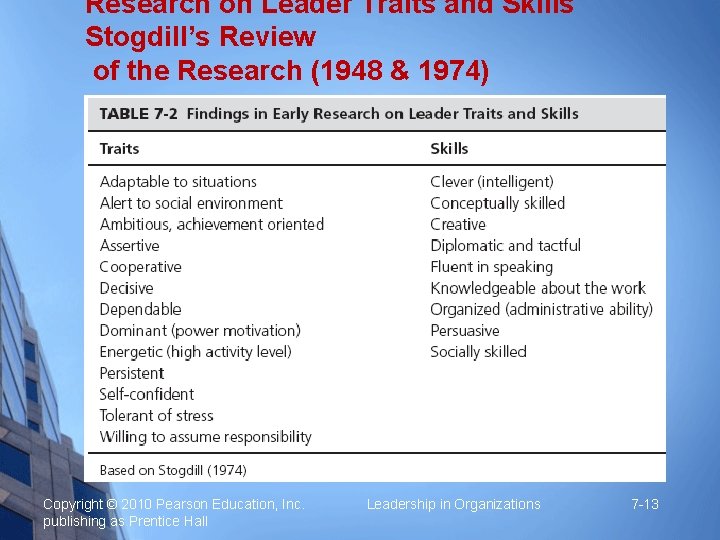
Research on Leader Traits and Skills Stogdill’s Review of the Research (1948 & 1974) Copyright © 2010 Pearson Education, Inc. publishing as Prentice Hall Leadership in Organizations 7 -13
Research on Leader Traits and Skills Stogdill’s Review of the Research (1948 & 1974) (Cont’d) It is important to remember that some traits may be relevant for one criterion but not other. c. Urr. MlwkfalkçN s. MKal; xøHGac. Tak; Tgnwgkarviniqäy½Etm. Yy b: u. Enþmin. Emn. Cakarviniqäy½ep. Sge. Tote. T. A manager who is highly ambitious and skilled at impression management may advance faster than other managers who have greater competence in doing the current job but are not as ambitious at selling themselves. Gñk. RKb; RKgmñak; Edlmanmhicäitanig. CMnajkñú gkar. RKb; RKg. KYre. Gaycab; GarmµN_ Copyright © 2010 Pearson Education, Inc. publishing as Prentice Hall Leadership in Organizations 7 -14
Mc. Clelland's Managerial Motivation n Measured with the Thematic Apperceptions Test(TAT) Need Basis n Need for power តរវក រអណ ច n Socialized power orientation តមរងទសអណ ចសងគម n Personalized power orientation តមរងទសអណ ចបគគល n Need for achievement តមរវក រសរ បសន ដ n Need for affiliation តមរវក រសរ បទន កទនង Optimal Pattern for Large Organizations គរសទដឋសរ បអងគភ ពធ n Strong socialized power orientation ក រតមរងទសអណ ចសងគមខល ង n Moderate need for achievement តមរវក រជ មនខពសព កសរ បសន ដ n Low need for affiliation តមរវក រទ បសរ បក រទ កទង Copyright © 2010 Pearson Education, Inc. publishing as Prentice Hall Leadership in Organizations 7 -15
Mc. Clelland's Managerial Motivation(Cont. ) 1 -A person with a high need for achievement obtains satisfaction from experiencing success in accomplishing a difficult task, mnus. Smñak; mant. Mr. Uvkarx<s; s. Mrab; sñaéd. Edl)an mk BIPa. Be. Ca. KCy½Cab. TBiesa. Fn_kñúgkars. Mercsñaé dénkargar. Bi)ak². Such people prefer tasks in which success depends on their own effort and ability rather than on chance factors beyond their control, or on a group effort. mnus. SEbben. Hc. Ulcitþkargar Na Copyright © 2010 Pearson Education, Inc. publishing as Prentice Hall Leadership in Organizations Edl. TTYle. Ca. KC½y Ep¥kel. Ikar. Rbwg. ERbg nig 7 -16
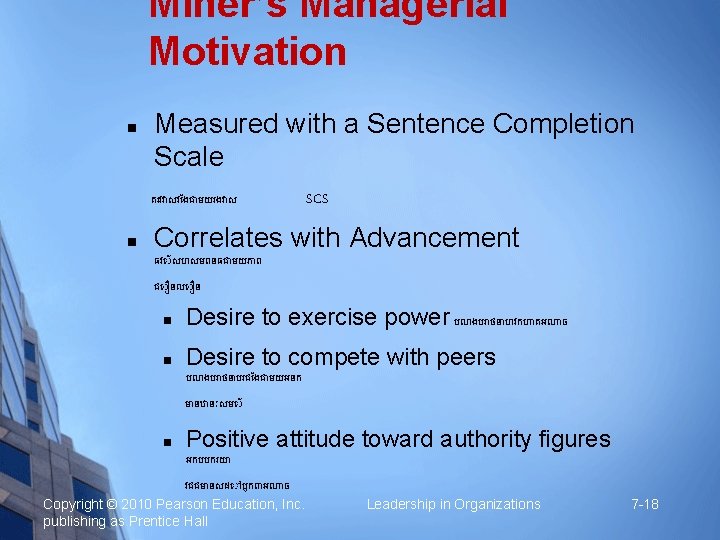
Miner’s Managerial Motivation n Measured with a Sentence Completion Scale តរវវ សវ ងជ មយរងវ ស n SCS Correlates with Advancement ធវ សហសមពនធជ មយភ ព ជ នល ន n Desire to exercise power បណងបរ ថន ហវកហ តអណ ច n Desire to compete with peers បណងបរ ថន បរជ ងជ មយអនក ម នឋ ន សម n Positive attitude toward authority figures អកបបករយ វជជម នសដ ឫកព អណ ច Copyright © 2010 Pearson Education, Inc. publishing as Prentice Hall Leadership in Organizations 7 -18
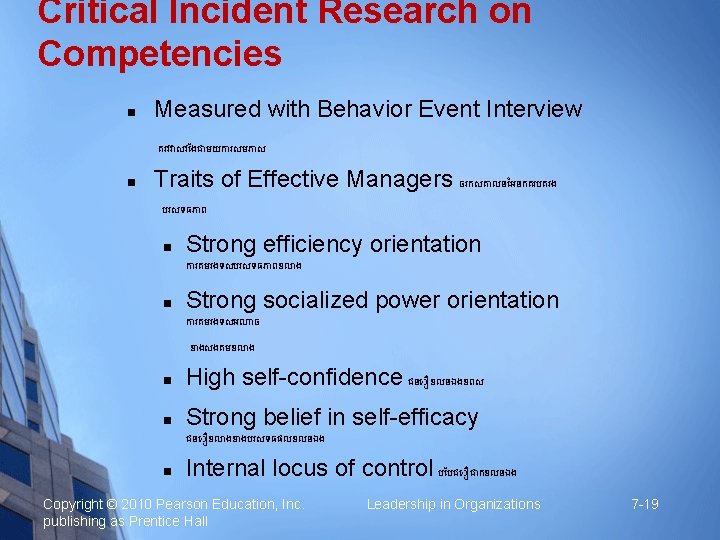
Critical Incident Research on Competencies n Measured with Behavior Event Interview តរវវ សវ ងជ មយក រសមភ ស n Traits of Effective Managers ចរកសគ លន អនកគរបគរង បរសទធភ ព n Strong efficiency orientation ក រតមរងទសបរសទធភ ពខល ង n Strong socialized power orientation ក រតមរងទសអណ ច ខ ងសងគមខល ង n High self-confidence ជន ខលនឯងខពស n Strong belief in self-efficacy ជន ខល ងខ ងបរសទធផលខលនឯង n Internal locus of control ប បជ ជ កខលនឯង Copyright © 2010 Pearson Education, Inc. publishing as Prentice Hall Leadership in Organizations 7 -19
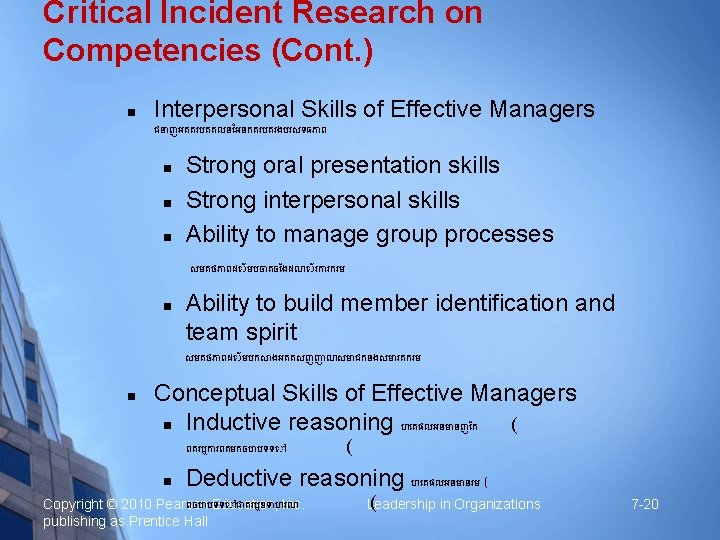
Critical Incident Research on Competencies (Cont. ) n Interpersonal Skills of Effective Managers ជន ញអតតរបគគលន អនកគរបគរងបរសទធភ ព n n n Strong oral presentation skills Strong interpersonal skills Ability to manage group processes សមតថភ ពដ មបច តច ងដណ រក រករម n Ability to build member identification and team spirit សមតថភ ពដ មបកស ងអតតសញញ ណសម ជកនងសម រតករម n Conceptual Skills of Effective Managers n Inductive reasoning ហ តផលអនម នញ ក ( ពគរឬក រពតមកចប បទទ n ( Deductive reasoning ហ តផលអនម នរម ( ពចប បទទ ជ គរឬឧទ ហរណ Copyright © 2010 Pearson Education, Inc. publishing as Prentice Hall ( Leadership in Organizations 7 -20
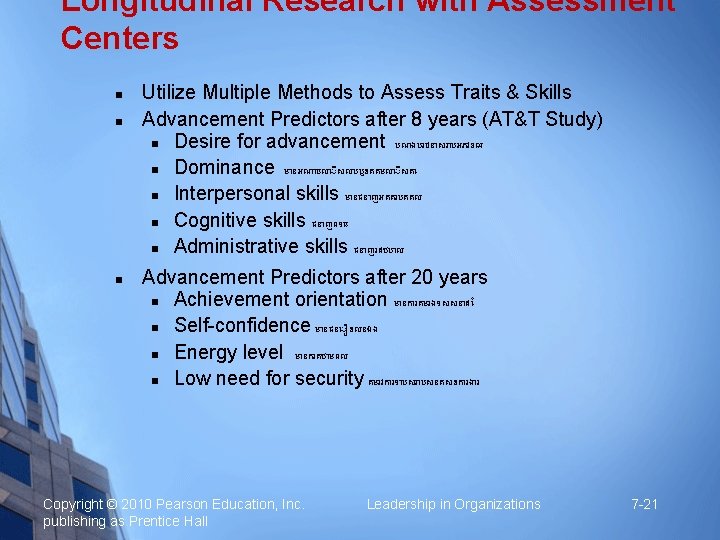
Longitudinal Research with Assessment Centers n n n Utilize Multiple Methods to Assess Traits & Skills Advancement Predictors after 8 years (AT&T Study) n Desire for advancement បណងបរថន សរ បអភវឌឍ n Dominance ម នអណ ចល សលបឬឧតតមល សគ n Interpersonal skills ម នជន ញអតតរបគគល n Cognitive skills ជន ញពទធ n Administrative skills ជន ញរដឋប ល Advancement Predictors after 20 years n Achievement orientation ម នក រតមរងទសសន ដ n Self-confidence ម នជន ខលនឯង n Energy level ម នករតឋ មពល n Low need for security តមរវក រទ បសរ បសនតសខក រង រ Copyright © 2010 Pearson Education, Inc. publishing as Prentice Hall Leadership in Organizations 7 -21
CCL Research on Managers Who Derail n Advancing Managers versus Managers who were Dismissed, Transferred, Retired Early, or Plateaued អនកគរបគរងដ លរកចរ នទបនងអនកគរបគរងដ លតរវបណត ញច ញ ផទ រច ញ ចលនវតតនមនកណតឬ ទល កមខតណ ងធមមត n Traits, Skills & Competencies of Successful Managers: Emotional stability សថ រភ ពអ រមមណ n Lack of defensiveness កងវ ភ ពក រព រ n Integrity សចរតភ ព n Interpersonal skills ជន ញអនតរបគគល n Technical and skills ជន ញបចច កទ សឬពទធ Copyright © 2010 Pearson Education, Inc. cognitive Leadership in Organizations n publishing as Prentice Hall 7 -22
Emotional Stability Managers who derailed were less able to handle pressure. They were more prone to moodiness, angry outbursts, and inconsistent behavior, which undermined their interpersonal relationships with subordinate, peers, and superiors. Copyright © 2010 Pearson Education, Inc. publishing as Prentice Hall Leadership in Organizations 7 -23
Defensiveness Managers who derailed were more likely to defensive about failure. They reacted by attempting to cover up mistakes or blame other people. The successful managers admitted mistakes, accepted responsibility, and then took action to fix the problem. In the more recent studies, lack of ability to learn and adapt to change was an especially important success factor, and it involves the lack of a learning orientation and defensiveness about failure. Copyright © 2010 Pearson Education, Inc. publishing as Prentice Hall Leadership in Organizations 7 -24
Integrity The successful managers were more focused on the immediate task and the needs of subordinates than on competing with rivals or impressing superiors. In contrast, many of the derailed managers were too ambitious about advancing their career at the expense of others. These managers were more likely to betray a trust or break a promise. Copyright © 2010 Pearson Education, Inc. publishing as Prentice Hall Leadership in Organizations 7 -25
Interpersonal Skills The most common reason for derailment was insensitivity, which was reflected in abrasive or intimidating behavior toward others. This flaw has been tolerated when the person was a lower-level manager, especially when the manager had outstanding technical skills, but at higher levels technical skills could not compensate for technical skills. Copyright © 2010 Pearson Education, Inc. publishing as Prentice Hall Leadership in Organizations 7 -26
Technical and Cognitive Skills Higher levels this strength could become a weakness if it led to overconfidence and arrogance, causing the person to reject sound advice, to offend others by acting superior, and to micromanage subordinates who had more expertise. Successful managers usually had experience in a variety of different types of situations where they acquired a broader pespective and expertise in dealing with different types of problems. Copyright © 2010 Pearson Education, Inc. publishing as Prentice Hall Leadership in Organizations 7 -27
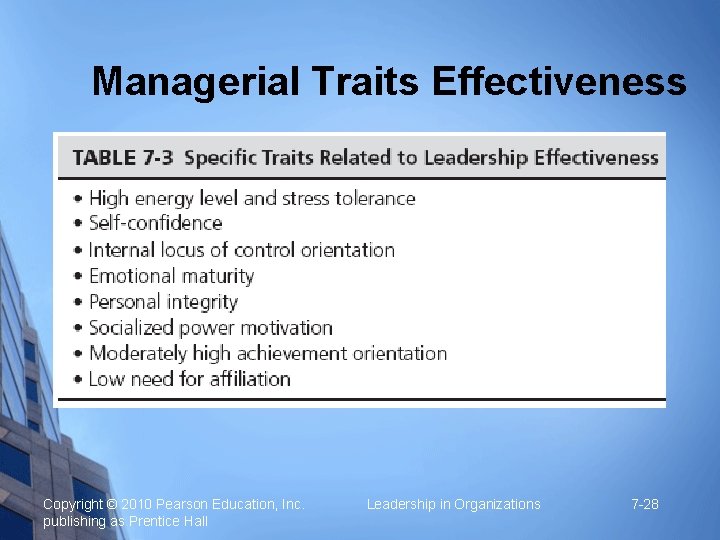
Managerial Traits Effectiveness Copyright © 2010 Pearson Education, Inc. publishing as Prentice Hall Leadership in Organizations 7 -28
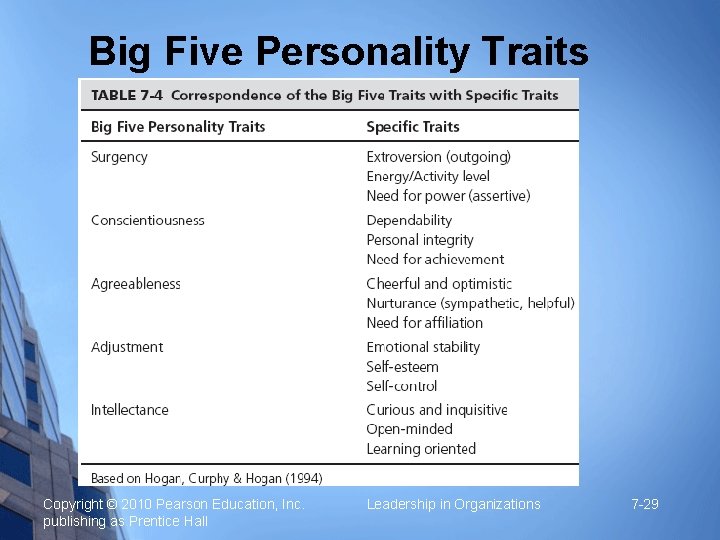
Big Five Personality Traits Copyright © 2010 Pearson Education, Inc. publishing as Prentice Hall Leadership in Organizations 7 -29
Managerial Skills and Effectiveness Technical Skills – Include knowledge about methods, processes, and equipment for conducting the specialized activities of the manager’s organizational unit n Conceptual Skills – Involve good judgment, foresight, intuition, creativity, and the ability to find meaning and order in ambiguous, uncertain event n Interpersonal Skills – Include knowledge about human behavior and group processes, ability to understand feelings, motives of 7 -30 Copyright © 2010 the Pearson Education, Inc. attitudes, Leadershipand in Organizations publishing as Prentice Hall others, and ability to communicate clearly n
Other Relevant Competencies n n Emotional Intelligence Social Intelligence Systems Thinking Ability to Learn Copyright © 2010 Pearson Education, Inc. publishing as Prentice Hall Leadership in Organizations 7 -31
Emotional Intelligence Self-awareness. The ability to be aware of what you’re feeling. n Self-management. The ability to manage one’s own emotions and impulses. n Self-motivation. The ability to persist in the face of setbacks and failures. Copyright © 2010 Pearson Education, Inc. Leadership in Organizations 7 -32 publishing as Prentice Hall n Empathy. The ability to sense how n
Social Intelligence is defined as the ability to determine the requirements for leadership in particular situation and select an appropriate response (Cantor & Kihlstrom, 1987) The two primary components of social intelligence are social perceptiveness and behavioral flexibility. social perceptiveness : The ability to understand the functional needs, problems, and Copyright © 2010 opportunities Pearson Education, Inc. that. Leadership in Organizations 7 -33 are relevant for a group publishing as Prentice Hall
Social Intelligence (Cont’d) behavioral flexibility is the ability and willingness to vary one’s behavior to accommodate situational requirements. A leader with high behavioral flexibility knows how to use a variety of different behaviors and is able to evaluate his or her behavior and modify it as needed. Copyright © 2010 Pearson Education, Inc. publishing as Prentice Hall Leadership in Organizations 7 -34
Systems Thinking It is important to understand that complex problems often have multiple causes, which may include actions taken earlier to solve other problems. In large systems such as organizations, actions invariably have multiple outcomes, including unintended side effects. Copyright © 2010 Pearson Education, Inc. publishing as Prentice Hall Leadership in Organizations 7 -35
Systems Thinking Copyright © 2010 Pearson Education, Inc. publishing as Prentice Hall Leadership in Organizations 7 -36
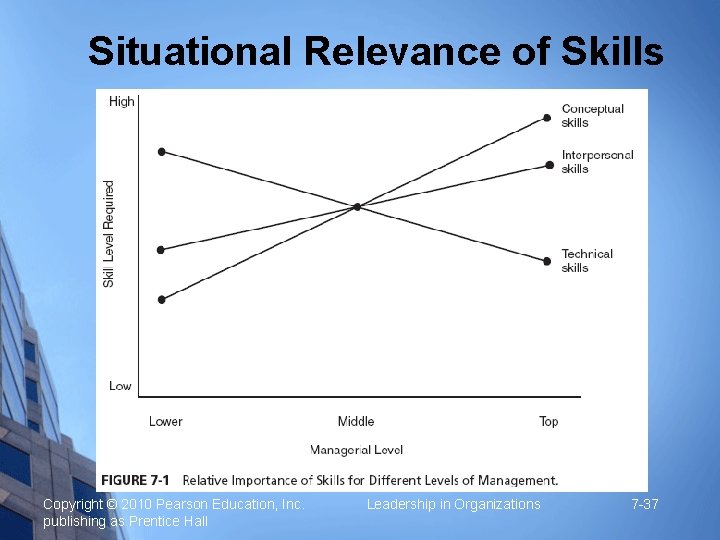
Situational Relevance of Skills Copyright © 2010 Pearson Education, Inc. publishing as Prentice Hall Leadership in Organizations 7 -37
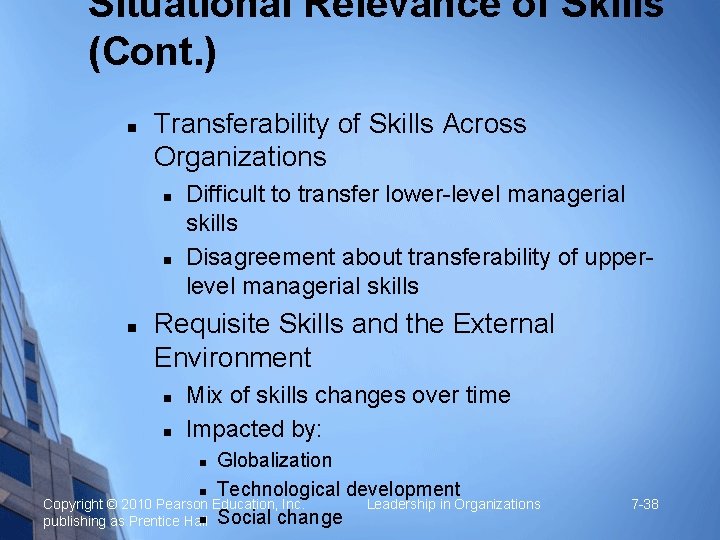
Situational Relevance of Skills (Cont. ) n Transferability of Skills Across Organizations n n n Difficult to transfer lower-level managerial skills Disagreement about transferability of upperlevel managerial skills Requisite Skills and the External Environment n n Mix of skills changes over time Impacted by: Globalization n Technological development Copyright © 2010 Pearson Education, Inc. Leadership in Organizations n Social change publishing as Prentice Hall n 7 -38
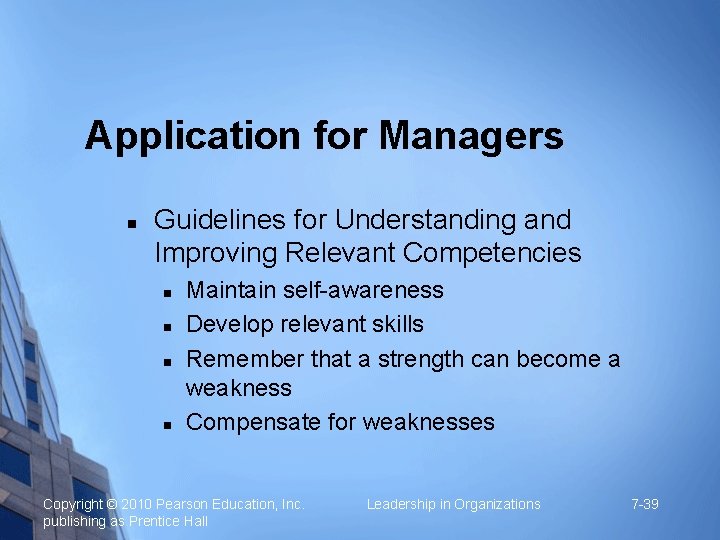
Application for Managers n Guidelines for Understanding and Improving Relevant Competencies n n Maintain self-awareness Develop relevant skills Remember that a strength can become a weakness Compensate for weaknesses Copyright © 2010 Pearson Education, Inc. publishing as Prentice Hall Leadership in Organizations 7 -39
All rights reserved. No part of this publication may be reproduced, stored in a retrieval system, or transmitted, in any form or by any means, electronic, mechanical, photocopying, recording, or otherwise, without the prior written permission of the publisher. Printed in the United States of America. Copyright © 2010 Pearson Education, Inc. publishing as Prentice Hall Leadership in Organizations 7 -40
- Slides: 40