
Chapter 2 Living and Nonliving Things interact in

- Slides: 16
Chapter 2 – Living and Nonliving Things interact in the Environment Section 2. 1 – Types of Interactions
Symbiosis Interactions between the biotic parts of the environment. There are three types: 1. Parasitism 2. Mutualism 3. Commensalism
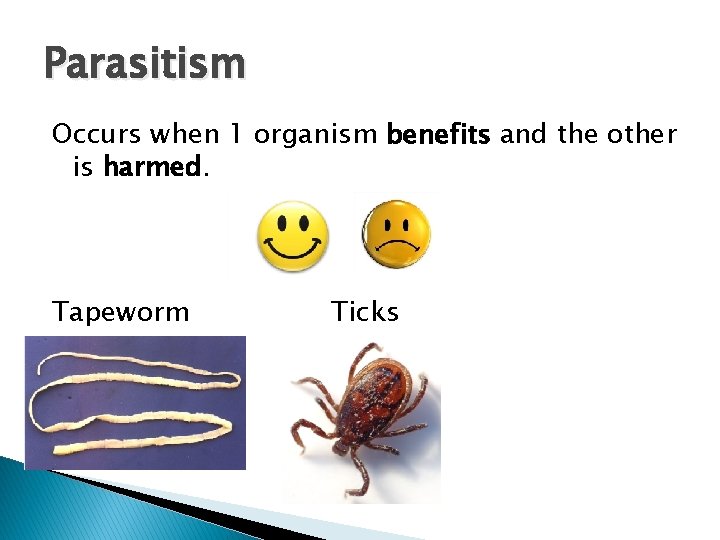
Parasitism Occurs when 1 organism benefits and the other is harmed. Tapeworm Ticks
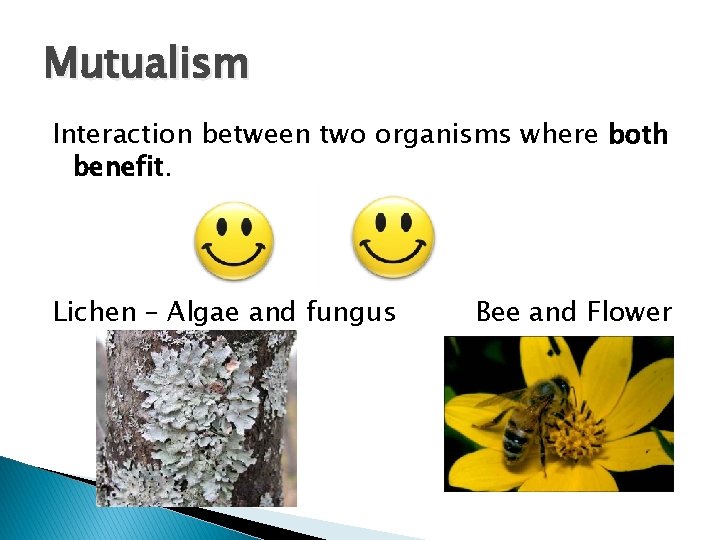
Mutualism Interaction between two organisms where both benefit. Lichen – Algae and fungus Bee and Flower
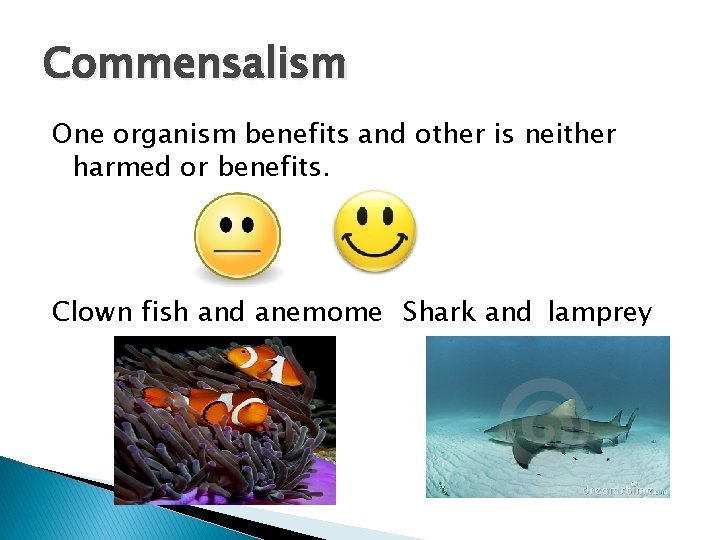
Commensalism One organism benefits and other is neither harmed or benefits. Clown fish and anemome Shark and lamprey
Section 2. 2 - Roles of Organisims in the Environment Organisms can be: 1. Producers 2. Consumers 3. Decomposers 4. Scavengers
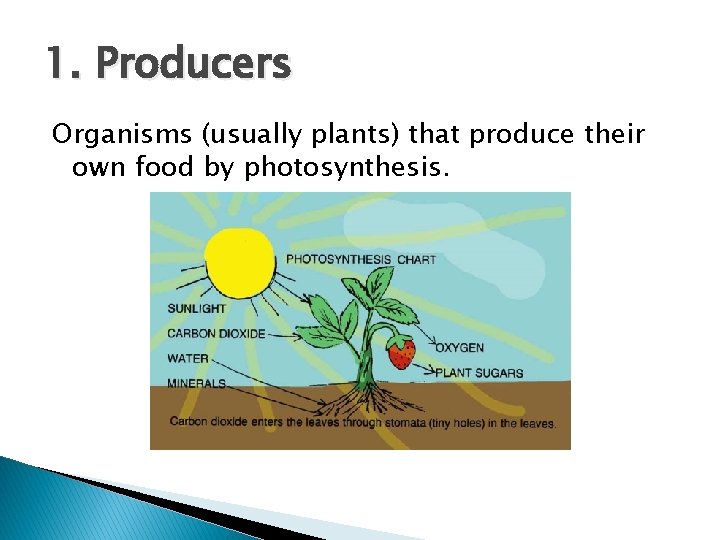
1. Producers Organisms (usually plants) that produce their own food by photosynthesis.
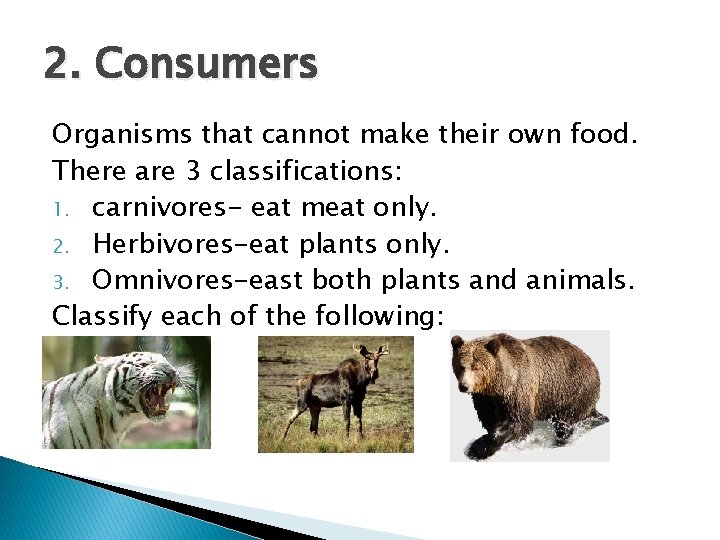
2. Consumers Organisms that cannot make their own food. There are 3 classifications: 1. carnivores- eat meat only. 2. Herbivores-eat plants only. 3. Omnivores-east both plants and animals. Classify each of the following:
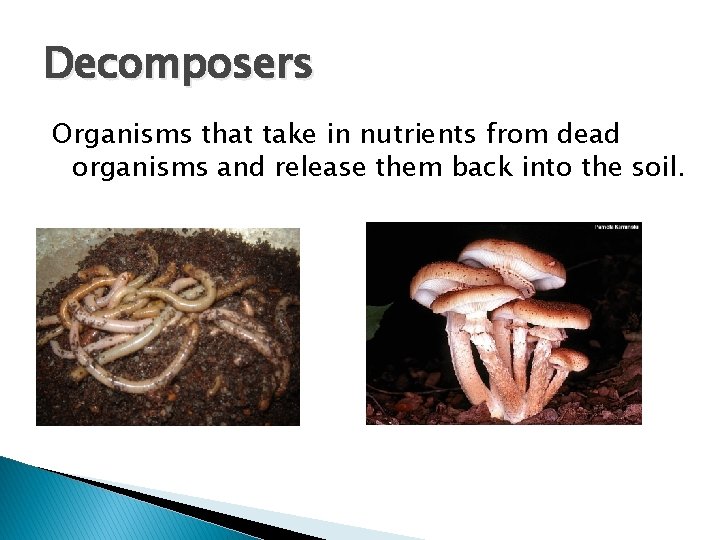
Decomposers Organisms that take in nutrients from dead organisms and release them back into the soil.
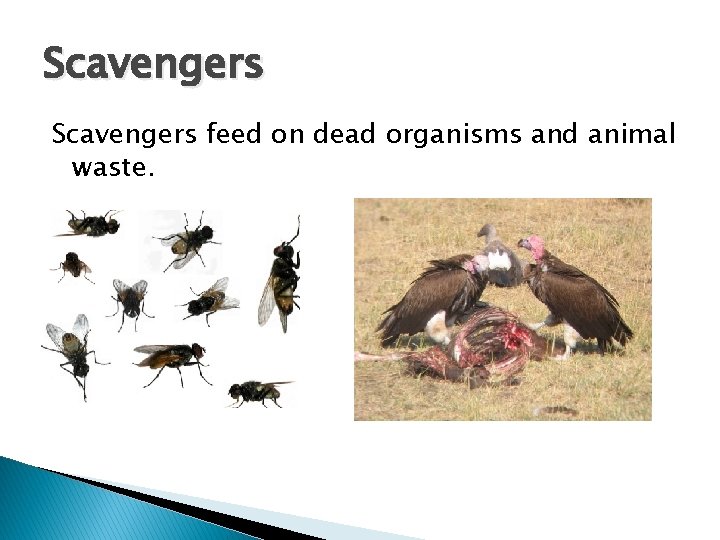
Scavengers feed on dead organisms and animal waste.
Food Preservation A way to kill decomposers and then either stops them from growing or slows their growth. There are several ways: 1. Pickling 2. Salting 3. Drying 4. Smoking 5. Refrigeration 6. Freeze-drying 7. Radiation 8. Canning
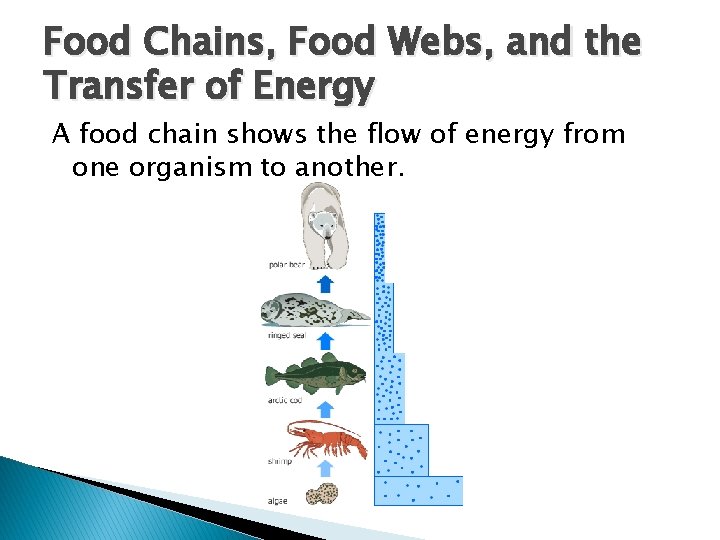
Food Chains, Food Webs, and the Transfer of Energy A food chain shows the flow of energy from one organism to another.
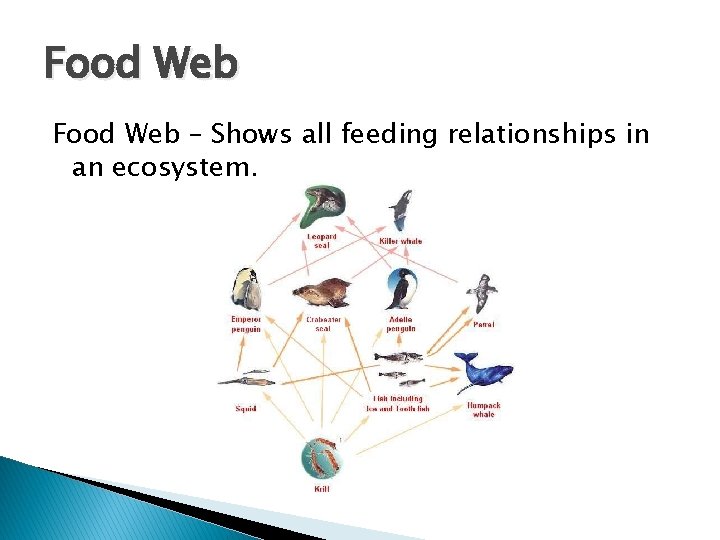
Food Web – Shows all feeding relationships in an ecosystem.
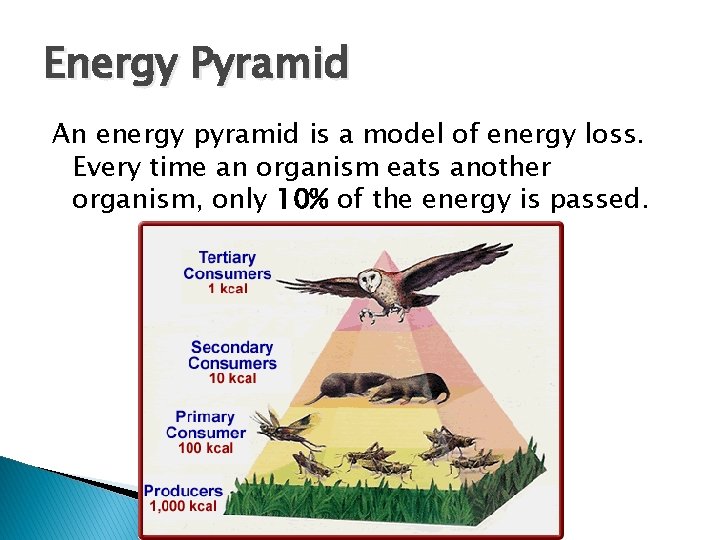
Energy Pyramid An energy pyramid is a model of energy loss. Every time an organism eats another organism, only 10% of the energy is passed.
Nutrient Cycles Nutrients are contained in food. Examples include carbon, and nitrogen. They are needed to build and repair our bodies.
Nutrients are used over and over. The process that cycles nutrients is called the nutrient cycle. Decomposers play a very important role because they release nutrients back into the soil.