
Chapter 2 Linear Motion The Language of Physics





- Slides: 34
Chapter 2 Linear Motion
The Language of Physics
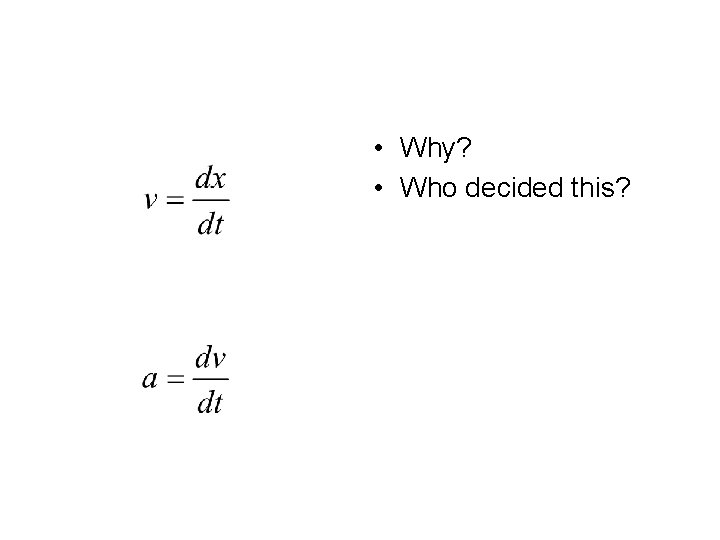
• Why? • Who decided this?
• We need to be able to describe the location of an object relative to a fixed coordinate system • That takes too many words… • Let’s call it…position
Position • Describes the location relative to a fixed coordinate system • Mathematical description: x, y, r, s…
• When an object moves, it changes position • That takes too many words • We need to define a word for change in position… • Let’s call it…displacement
Displacement • Change in position
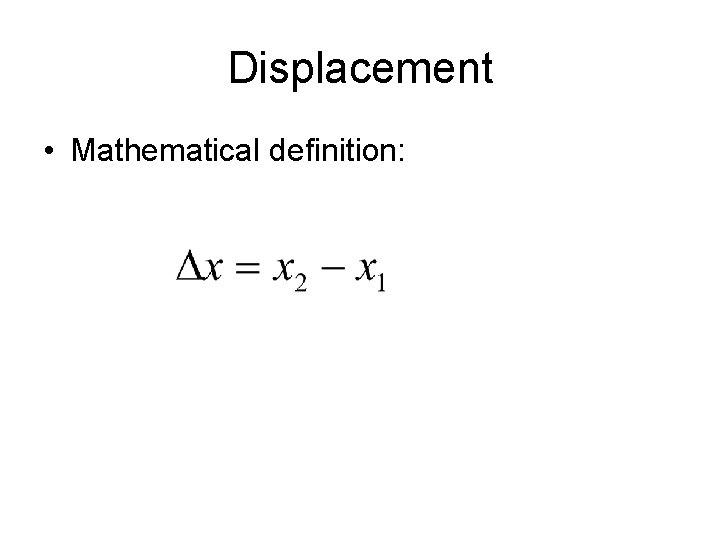
Displacement • Mathematical definition:
Distance • What’s the difference between displacement and distance? • Distance is how far you travel to get there
• Now that we can describe how much something moved, we would like to describe how quickly it moved • The faster it moves, the less time it takes (inversely proportional) • So…if we compare displacement divided by time to displace, we have described how quickly it moved • That takes too many words…let’s call it:
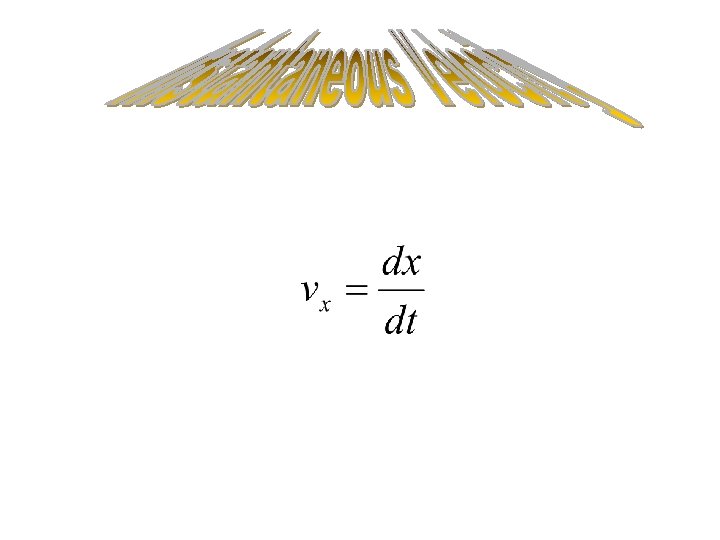
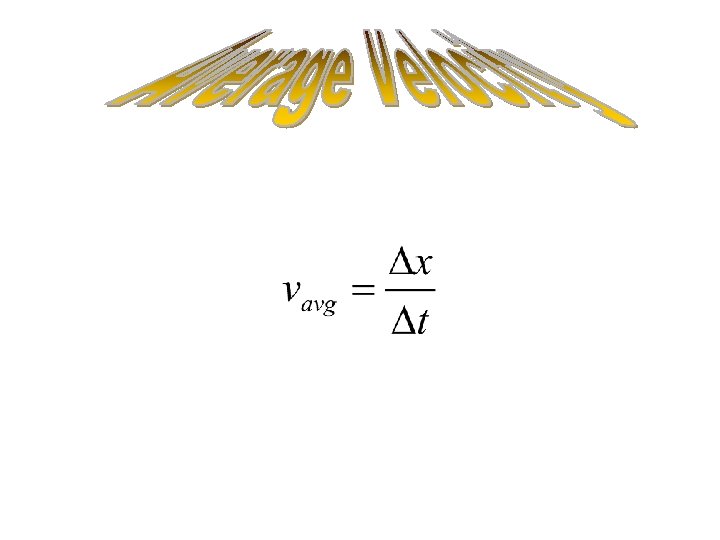
Velocity • How quickly an object displaces • The rate of change of position
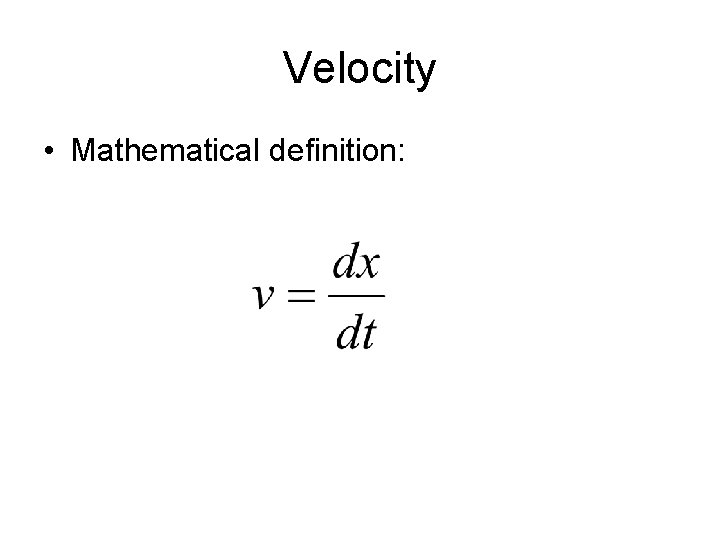
Velocity • Mathematical definition:
Speed • What’s the difference between speed and velocity? • Speed is distance divided by time
Example #1
Velocity Average vs. Instantaneous
• Velocity describes how quickly something moves – we might even call it the rate of movement • What if the rate of movement changes? • We might say it’s speeding up or slowing down • We need to be able to describe how quickly it’s speeding up or slowing down • That takes too many words…let’s call it:
Acceleration • How quickly an object is speeding up or slowing down • How quickly the velocity is changing • The rate of change of velocity
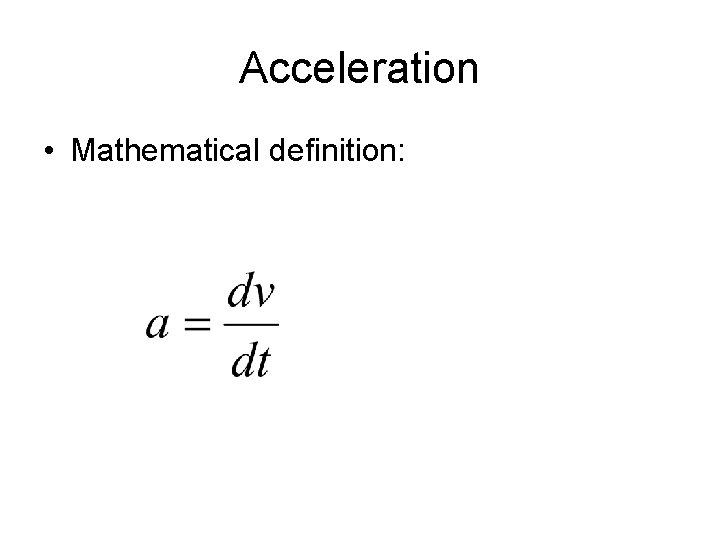
Acceleration • Mathematical definition:
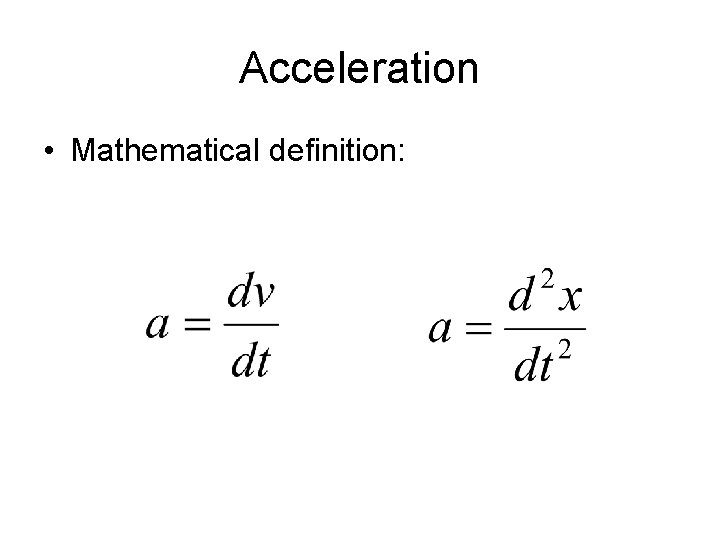
Acceleration • Mathematical definition:
• How do we describe a changing acceleration? • Jerk
Constant Acceleration
Example #2
Example #3
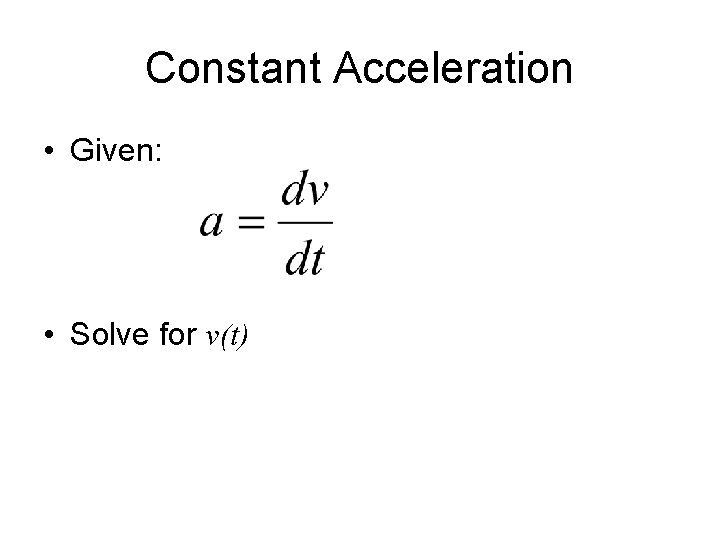
Constant Acceleration • Given: • Solve for v(t)
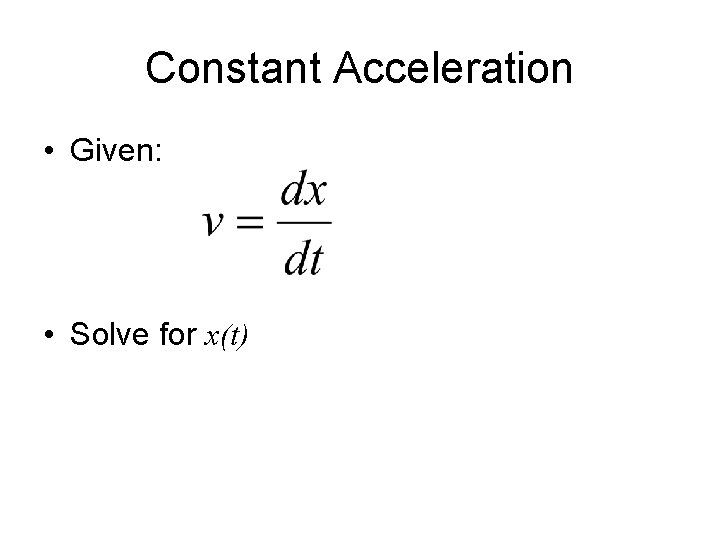
Constant Acceleration • Given: • Solve for x(t)
Example 4
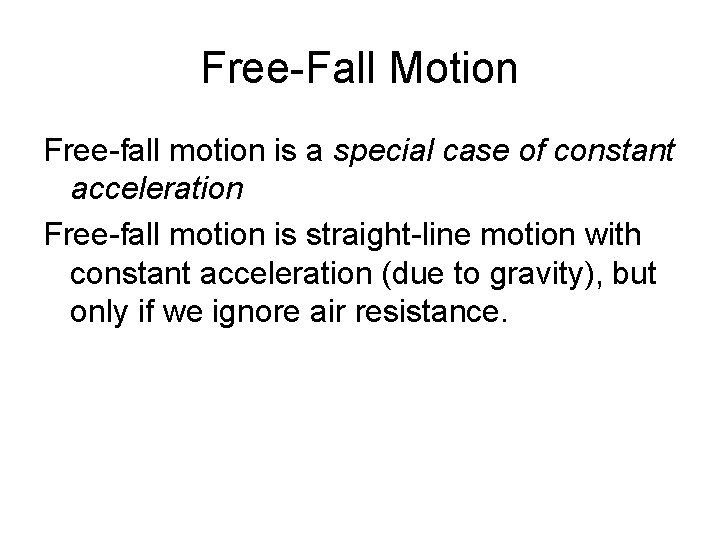
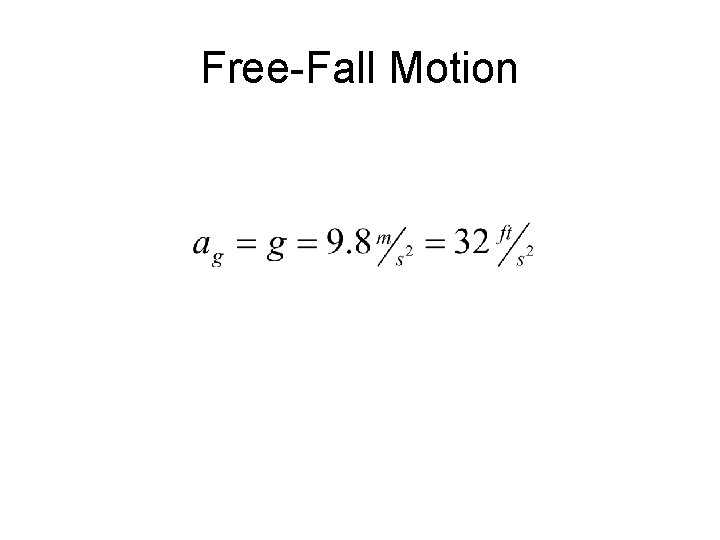
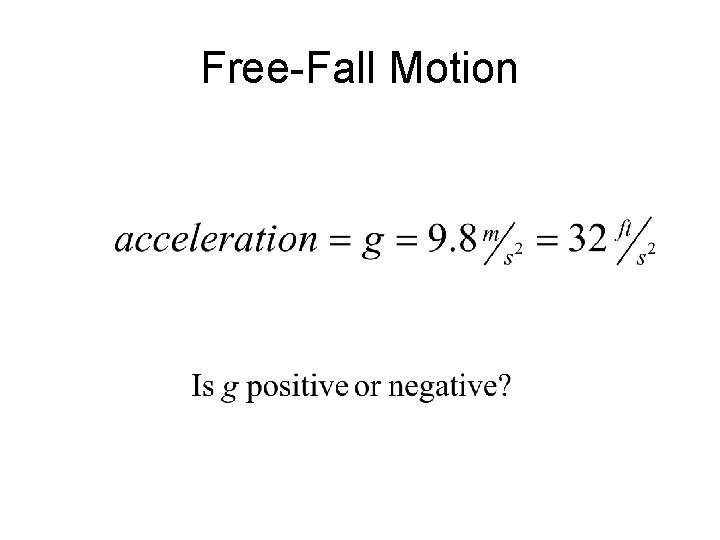
Free-Fall Motion Free-fall motion is a special case of constant acceleration Free-fall motion is straight-line motion with constant acceleration (due to gravity), but only if we ignore air resistance.
Free-Fall Motion
Free-Fall Motion
Examples 5 -7