
Chapter 2 Kinematics in One Dimension Kinematics deals
- Slides: 43
Chapter 2 Kinematics in One Dimension
Kinematics deals with the concepts that are needed to describe motion. Dynamics deals with the effect that forces have on motion. Together, kinematics and dynamics form the branch of physics known as Mechanics.
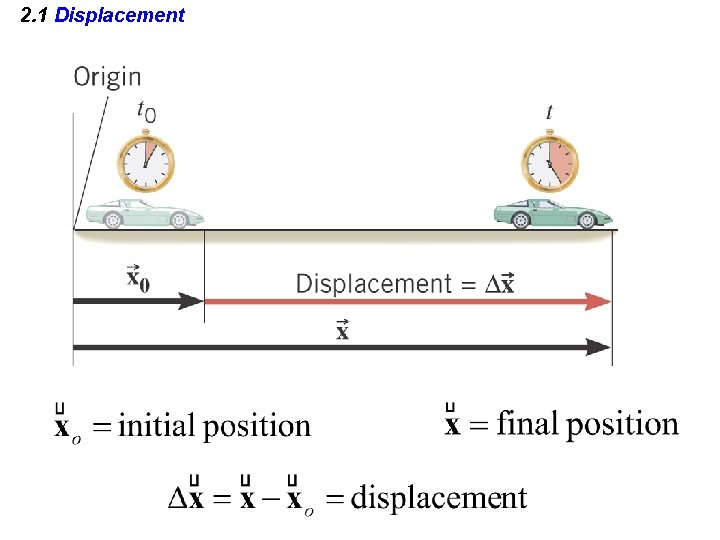
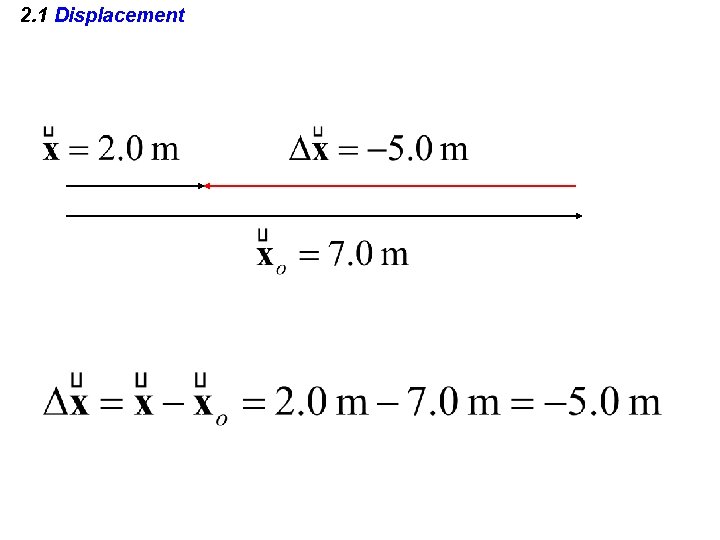
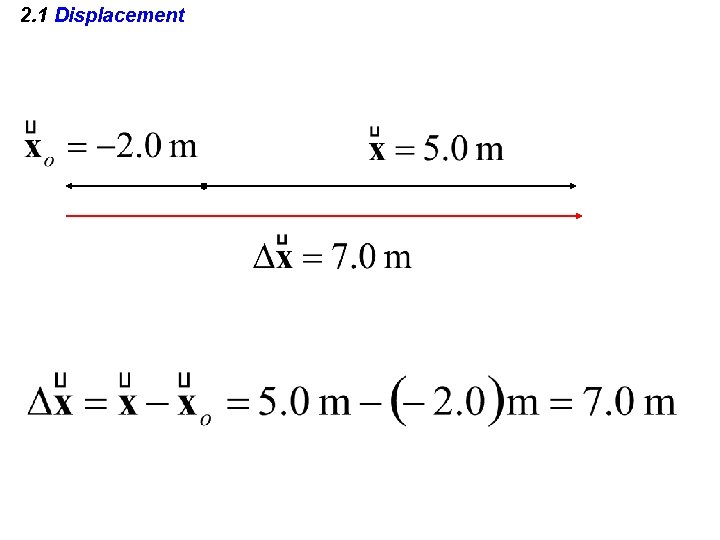
2. 1 Displacement
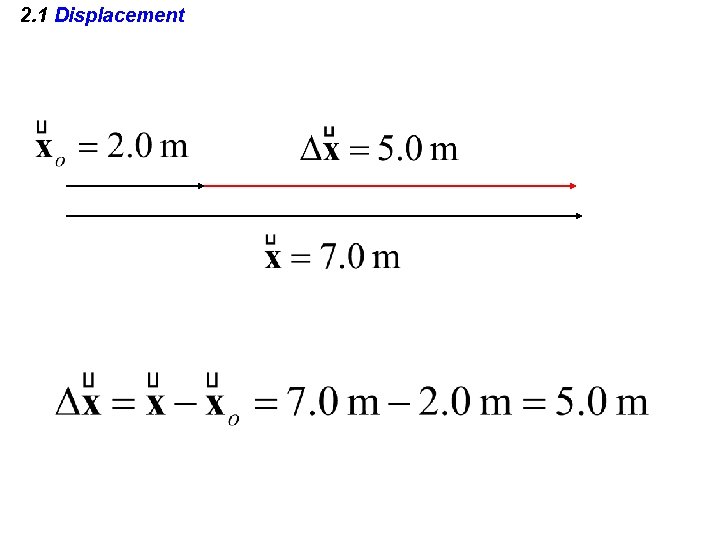
2. 1 Displacement
2. 1 Displacement
2. 1 Displacement
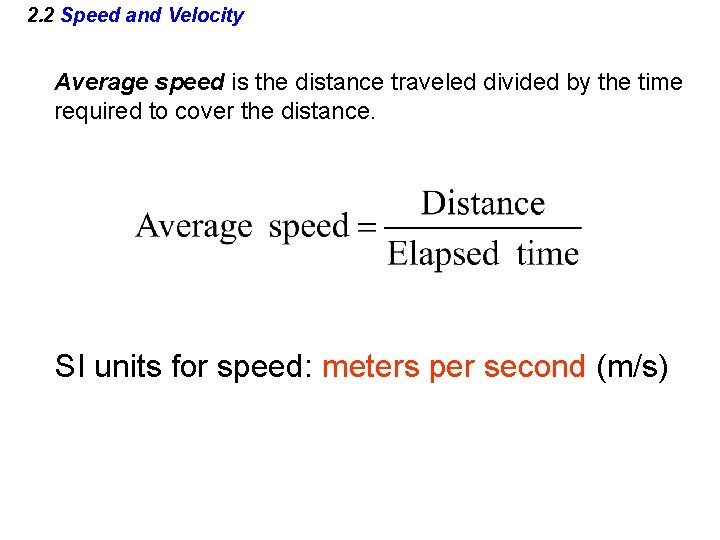
2. 2 Speed and Velocity Average speed is the distance traveled divided by the time required to cover the distance. SI units for speed: meters per second (m/s)
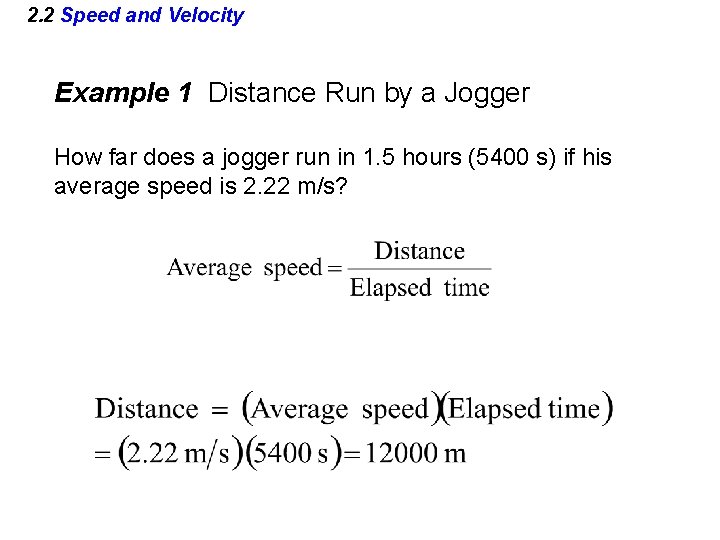
2. 2 Speed and Velocity Example 1 Distance Run by a Jogger How far does a jogger run in 1. 5 hours (5400 s) if his average speed is 2. 22 m/s?
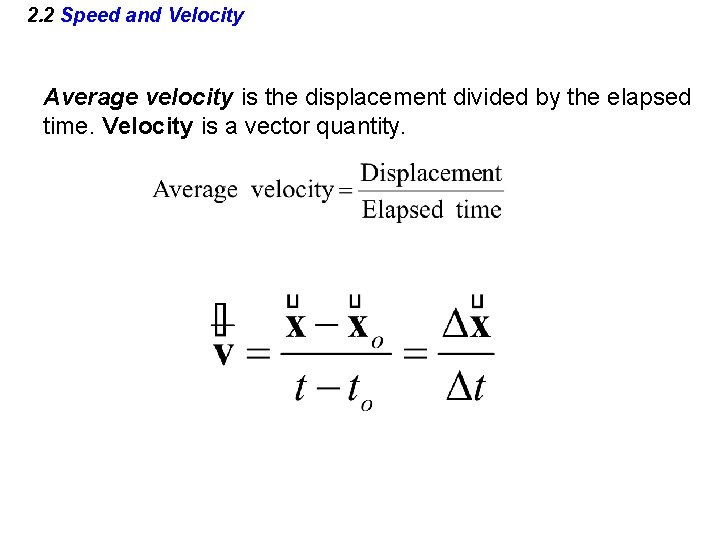
2. 2 Speed and Velocity Average velocity is the displacement divided by the elapsed time. Velocity is a vector quantity.
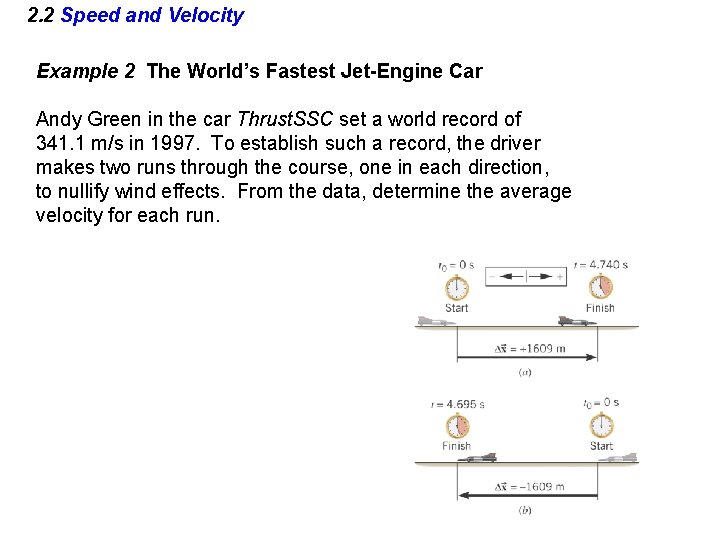
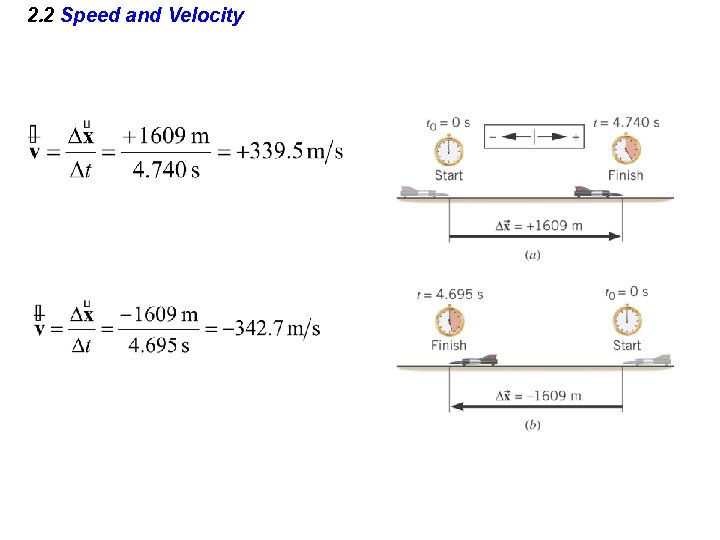
2. 2 Speed and Velocity Example 2 The World’s Fastest Jet-Engine Car Andy Green in the car Thrust. SSC set a world record of 341. 1 m/s in 1997. To establish such a record, the driver makes two runs through the course, one in each direction, to nullify wind effects. From the data, determine the average velocity for each run.
2. 2 Speed and Velocity
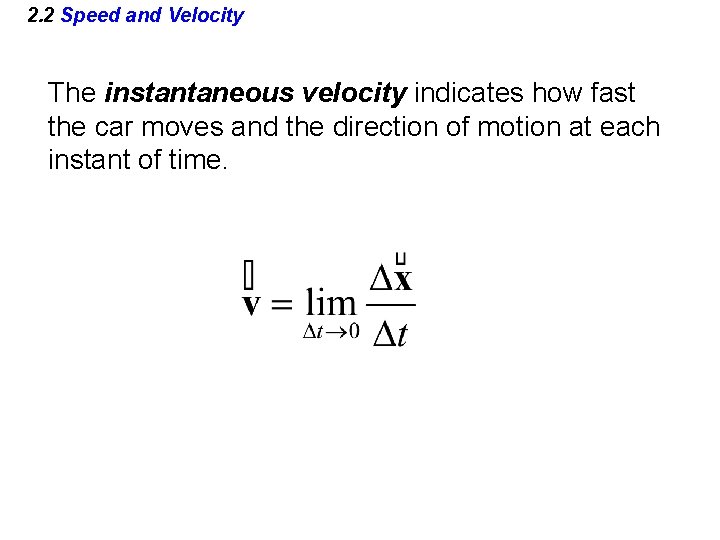
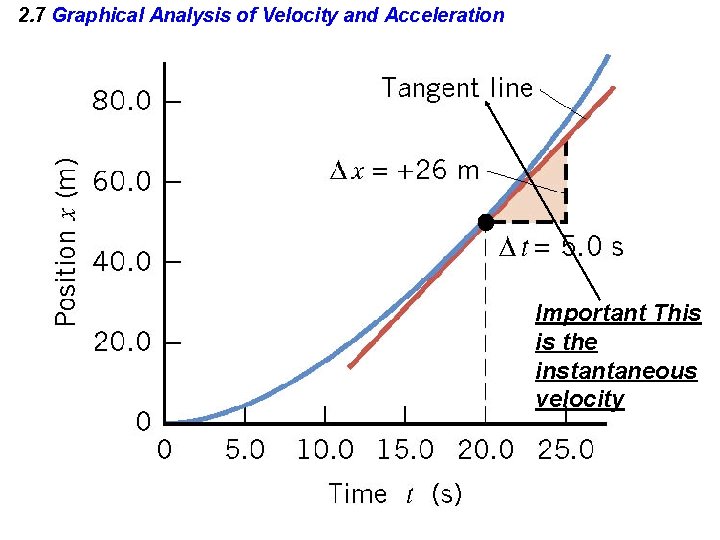
2. 2 Speed and Velocity The instantaneous velocity indicates how fast the car moves and the direction of motion at each instant of time.
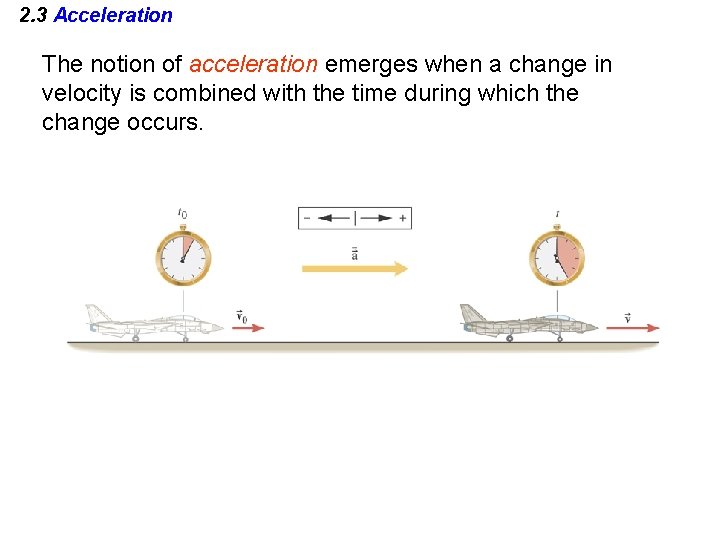
2. 3 Acceleration The notion of acceleration emerges when a change in velocity is combined with the time during which the change occurs.
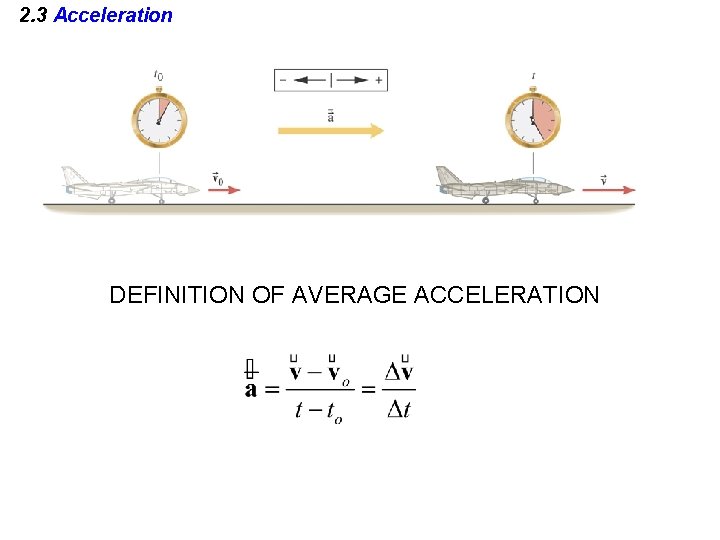
2. 3 Acceleration DEFINITION OF AVERAGE ACCELERATION
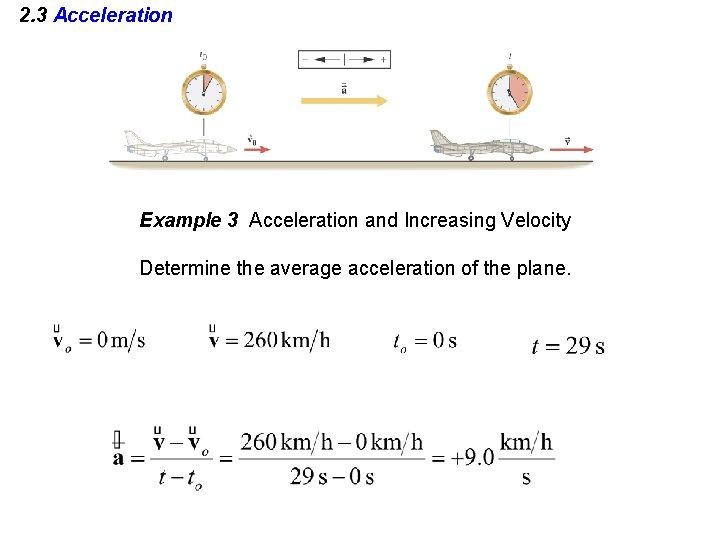
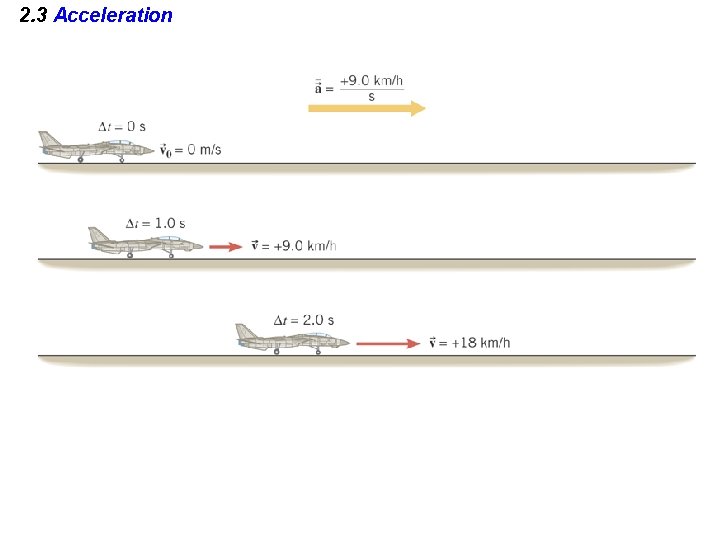
2. 3 Acceleration Example 3 Acceleration and Increasing Velocity Determine the average acceleration of the plane.
2. 3 Acceleration
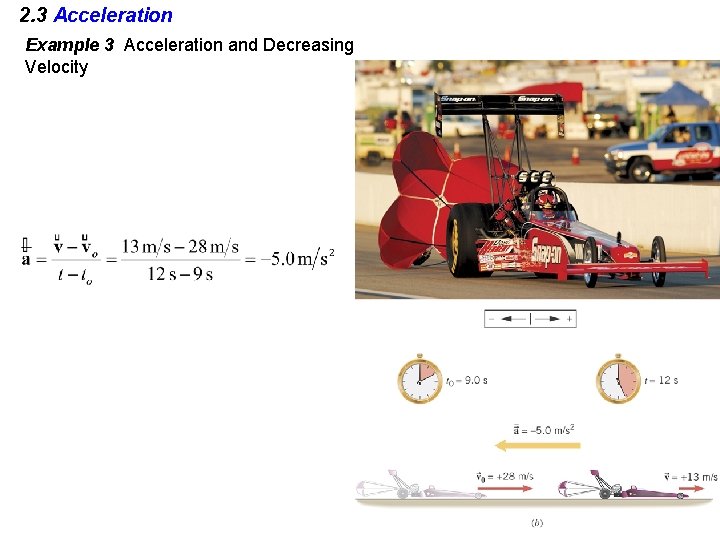
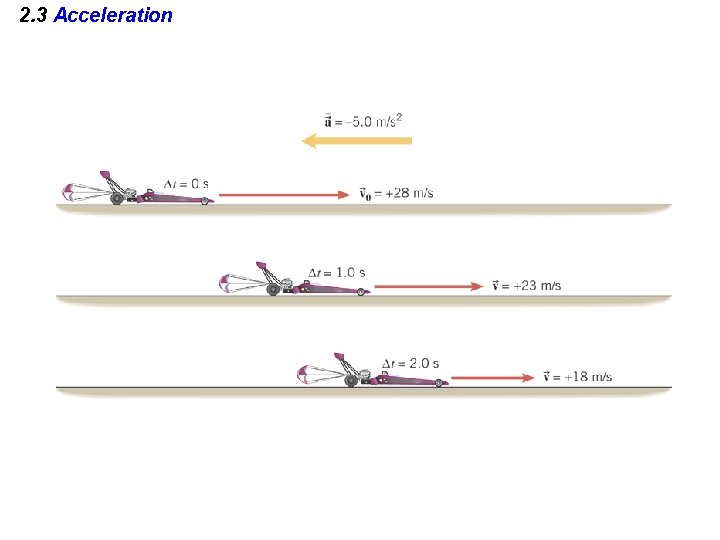
2. 3 Acceleration Example 3 Acceleration and Decreasing Velocity
2. 3 Acceleration
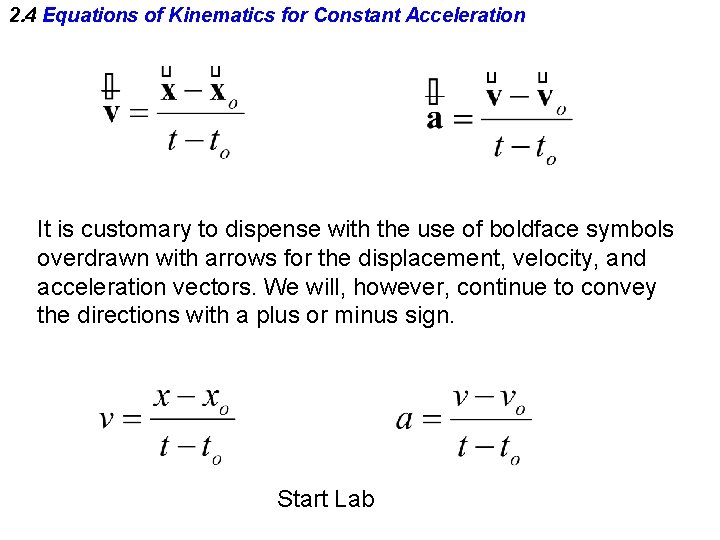
2. 4 Equations of Kinematics for Constant Acceleration It is customary to dispense with the use of boldface symbols overdrawn with arrows for the displacement, velocity, and acceleration vectors. We will, however, continue to convey the directions with a plus or minus sign. Start Lab
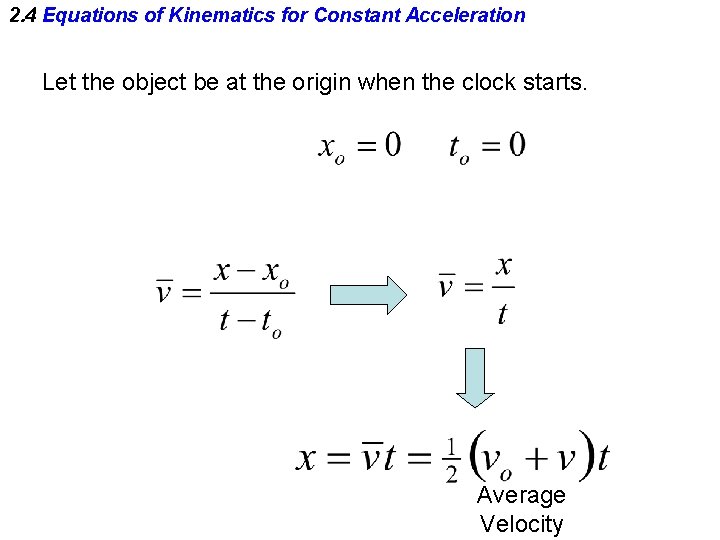
2. 4 Equations of Kinematics for Constant Acceleration Let the object be at the origin when the clock starts. Average Velocity
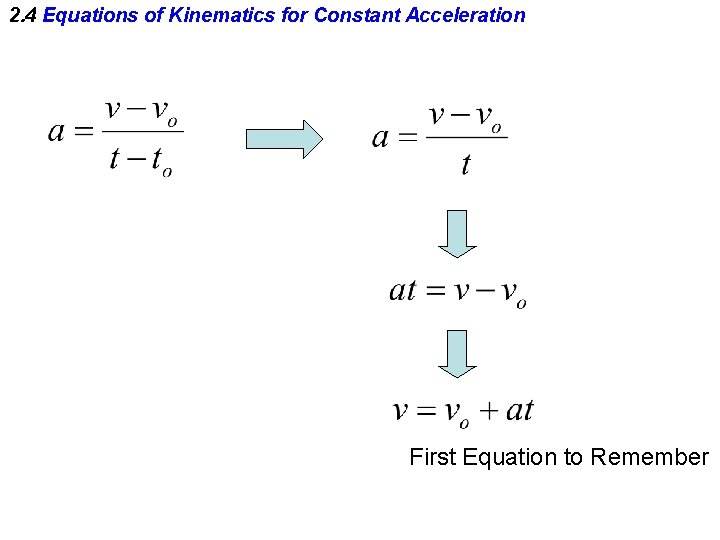
2. 4 Equations of Kinematics for Constant Acceleration First Equation to Remember
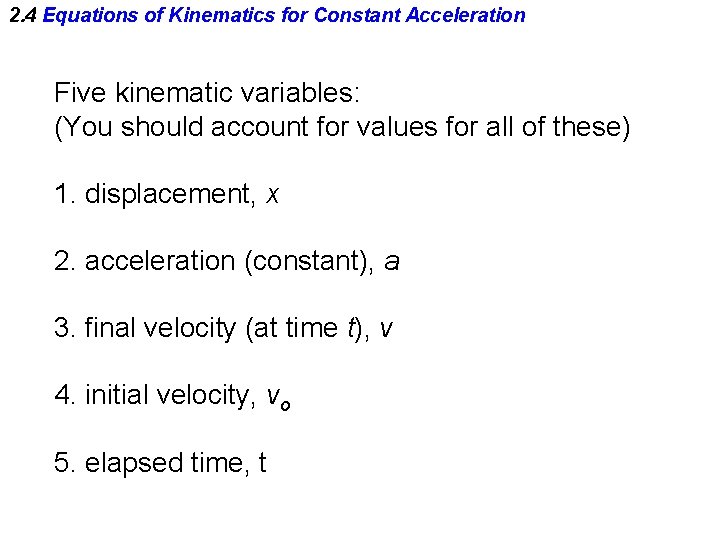
2. 4 Equations of Kinematics for Constant Acceleration Five kinematic variables: (You should account for values for all of these) 1. displacement, x 2. acceleration (constant), a 3. final velocity (at time t), v 4. initial velocity, vo 5. elapsed time, t
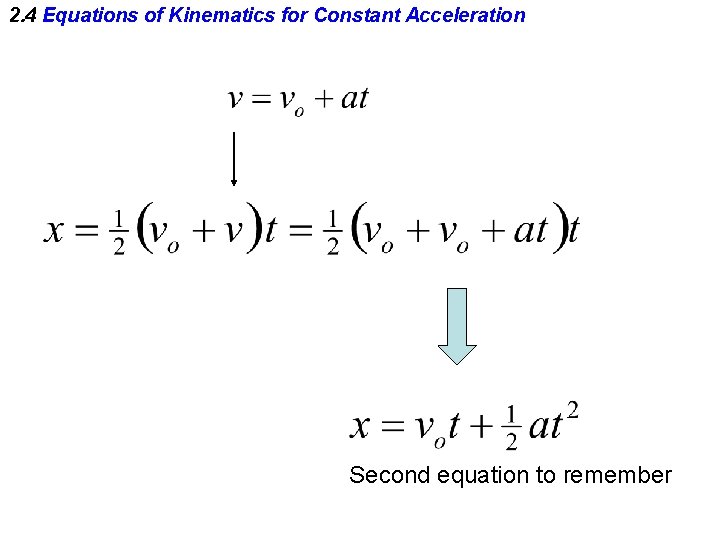
2. 4 Equations of Kinematics for Constant Acceleration Second equation to remember
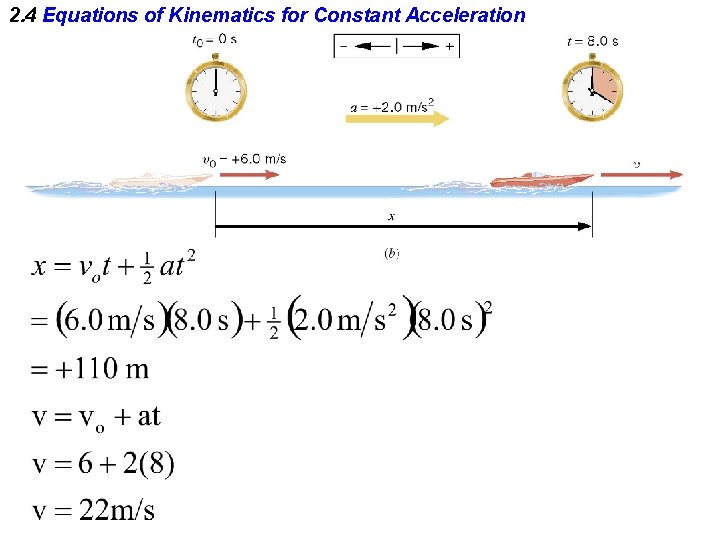
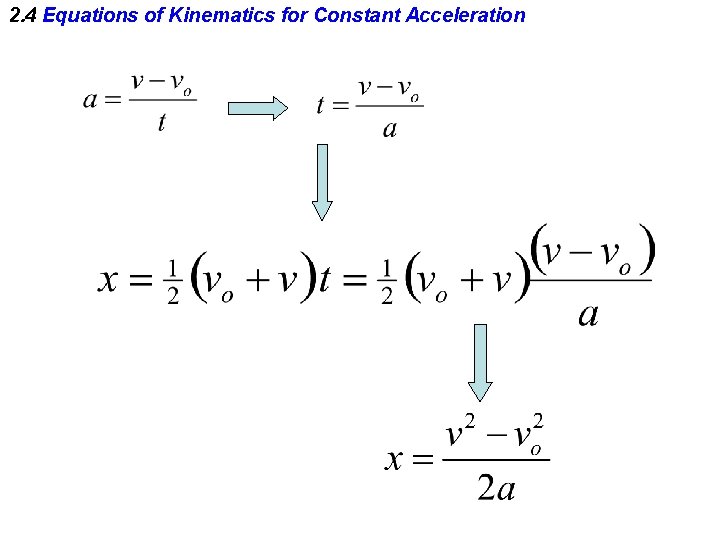
2. 4 Equations of Kinematics for Constant Acceleration
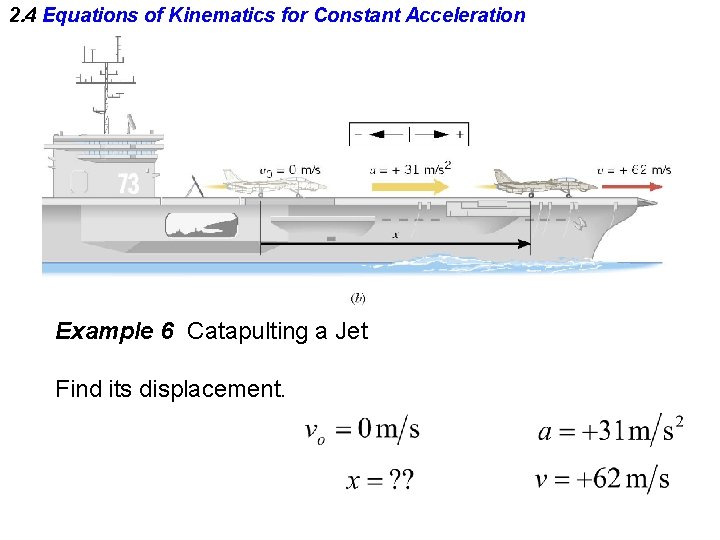
2. 4 Equations of Kinematics for Constant Acceleration Example 6 Catapulting a Jet Find its displacement.
2. 4 Equations of Kinematics for Constant Acceleration
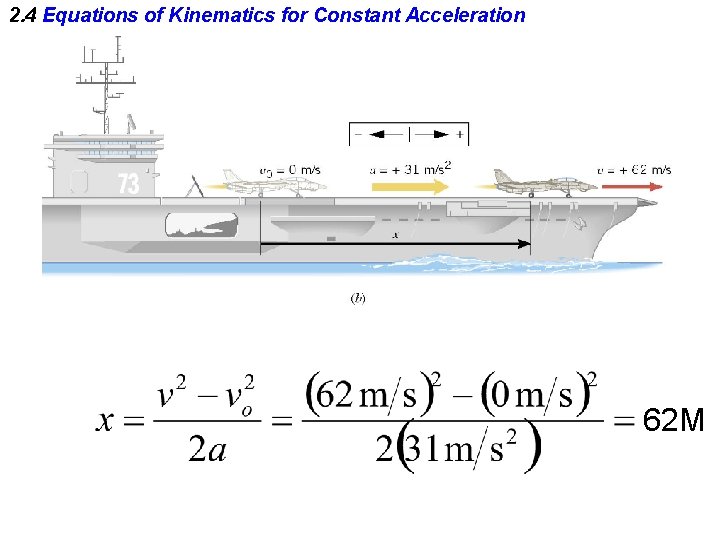
2. 4 Equations of Kinematics for Constant Acceleration 62 M
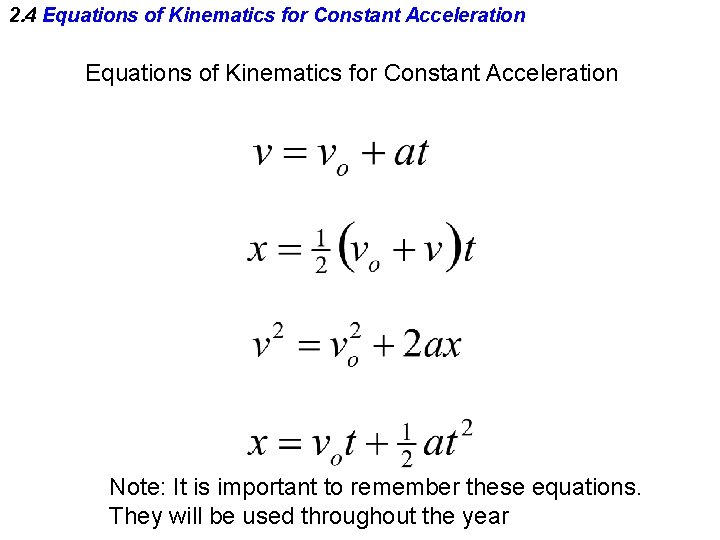
2. 4 Equations of Kinematics for Constant Acceleration Note: It is important to remember these equations. They will be used throughout the year
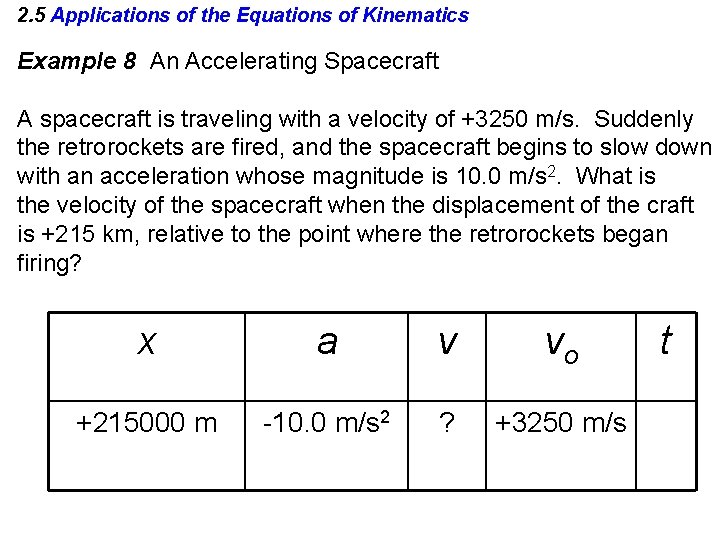
2. 5 Applications of the Equations of Kinematics Example 8 An Accelerating Spacecraft A spacecraft is traveling with a velocity of +3250 m/s. Suddenly the retrorockets are fired, and the spacecraft begins to slow down with an acceleration whose magnitude is 10. 0 m/s 2. What is the velocity of the spacecraft when the displacement of the craft is +215 km, relative to the point where the retrorockets began firing? x a v vo +215000 m -10. 0 m/s 2 ? +3250 m/s t
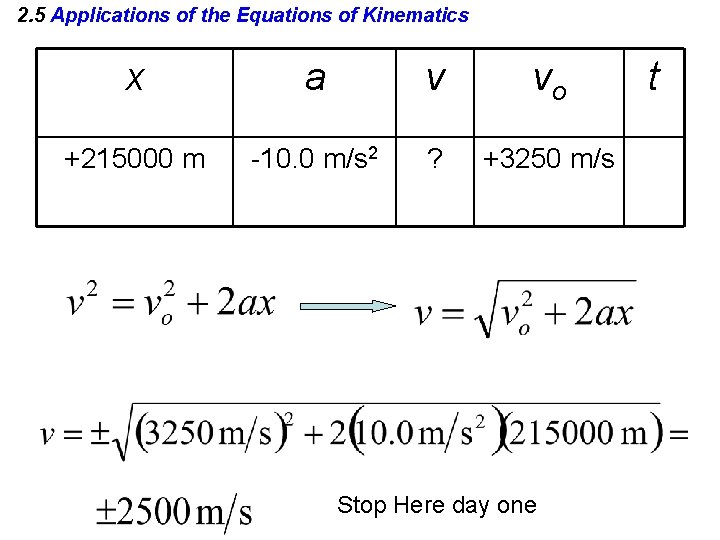
2. 5 Applications of the Equations of Kinematics x a v vo +215000 m -10. 0 m/s 2 ? +3250 m/s Stop Here day one t
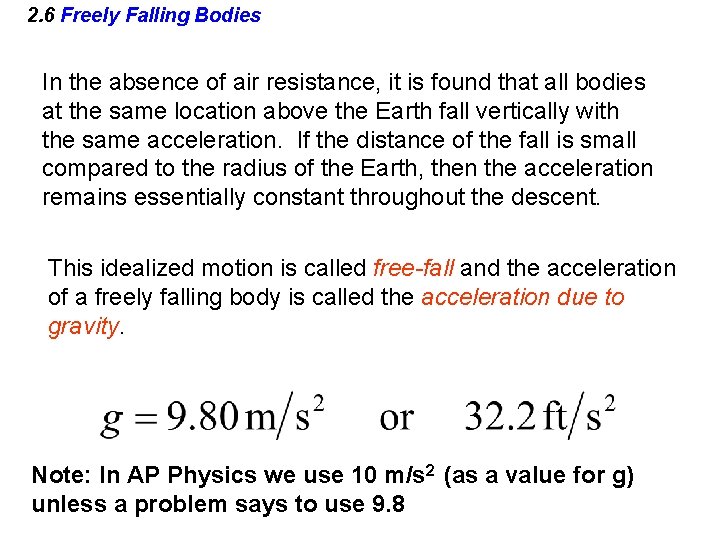
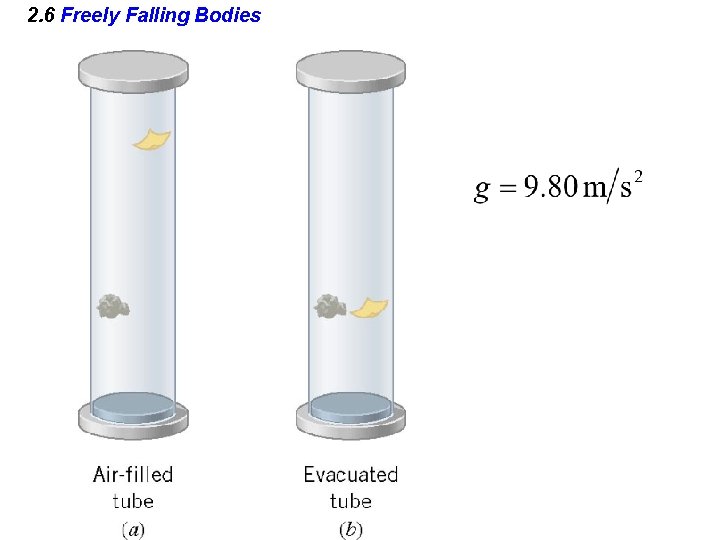
2. 6 Freely Falling Bodies In the absence of air resistance, it is found that all bodies at the same location above the Earth fall vertically with the same acceleration. If the distance of the fall is small compared to the radius of the Earth, then the acceleration remains essentially constant throughout the descent. This idealized motion is called free-fall and the acceleration of a freely falling body is called the acceleration due to gravity. Note: In AP Physics we use 10 m/s 2 (as a value for g) unless a problem says to use 9. 8
2. 6 Freely Falling Bodies
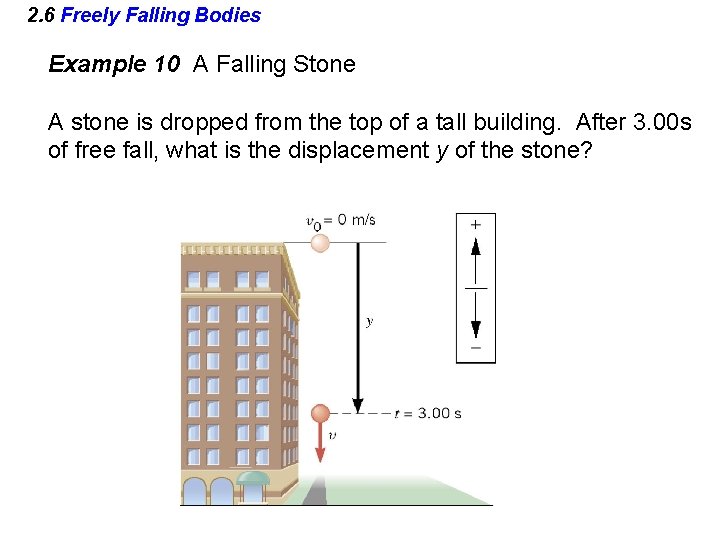
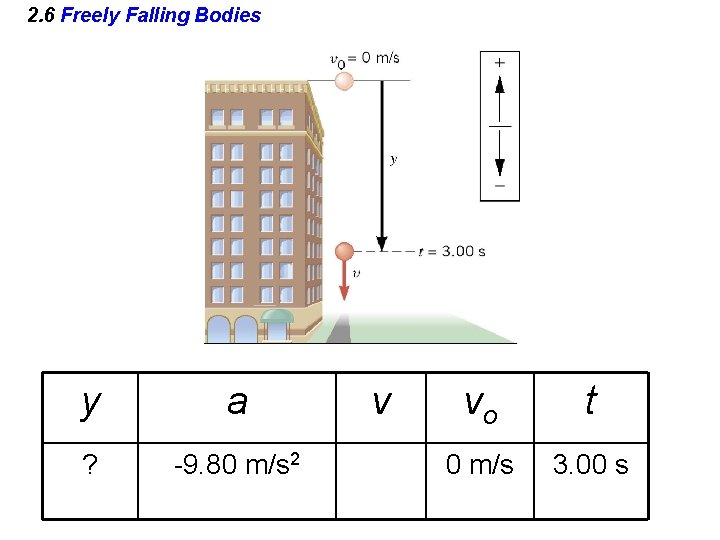
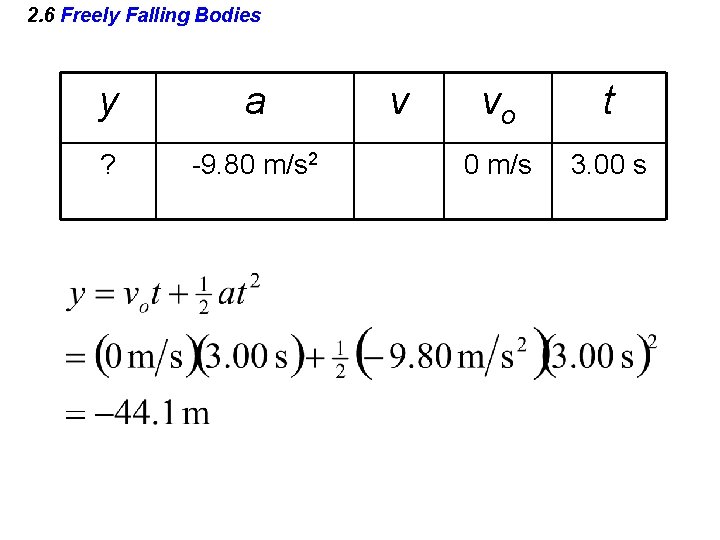
2. 6 Freely Falling Bodies Example 10 A Falling Stone A stone is dropped from the top of a tall building. After 3. 00 s of free fall, what is the displacement y of the stone?
2. 6 Freely Falling Bodies y a ? -9. 80 m/s 2 v vo t 0 m/s 3. 00 s
2. 6 Freely Falling Bodies y a ? -9. 80 m/s 2 v vo t 0 m/s 3. 00 s
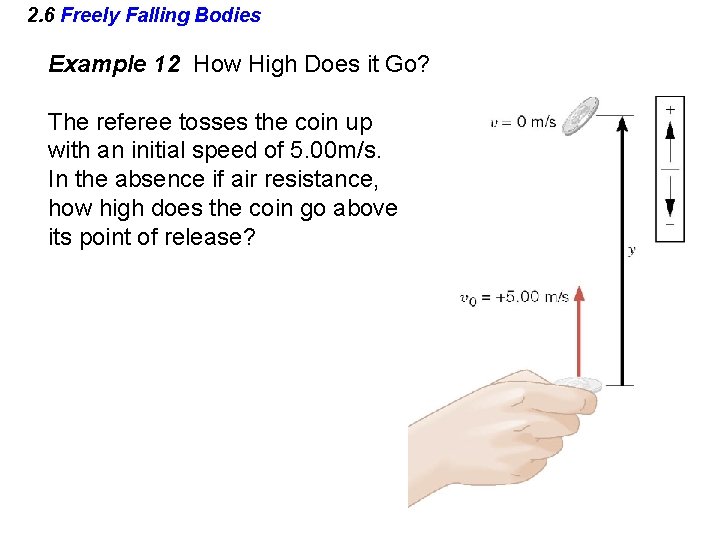
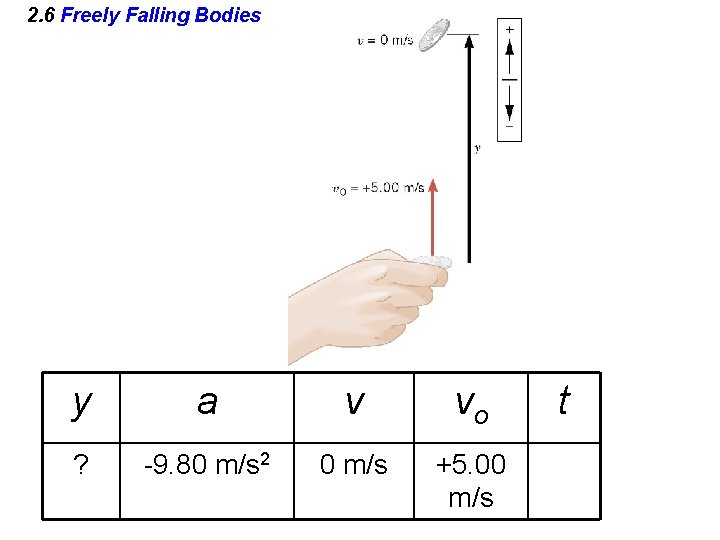
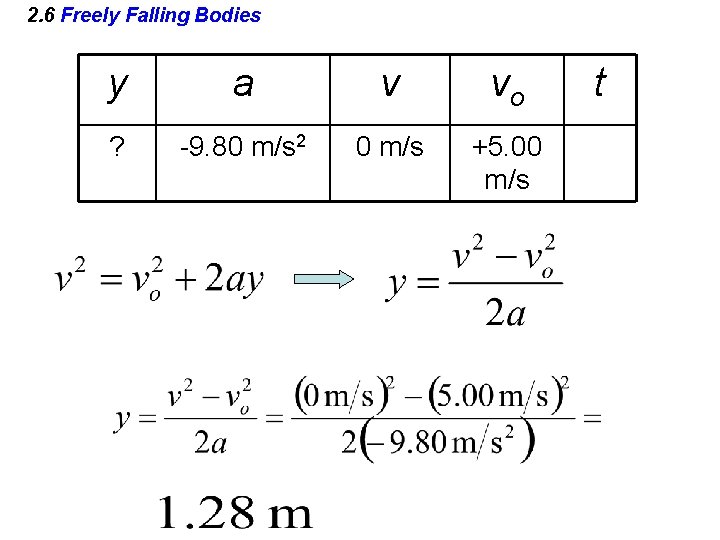
2. 6 Freely Falling Bodies Example 12 How High Does it Go? The referee tosses the coin up with an initial speed of 5. 00 m/s. In the absence if air resistance, how high does the coin go above its point of release?
2. 6 Freely Falling Bodies y a v vo ? -9. 80 m/s 2 0 m/s +5. 00 m/s t
2. 6 Freely Falling Bodies y a v vo ? -9. 80 m/s 2 0 m/s +5. 00 m/s t
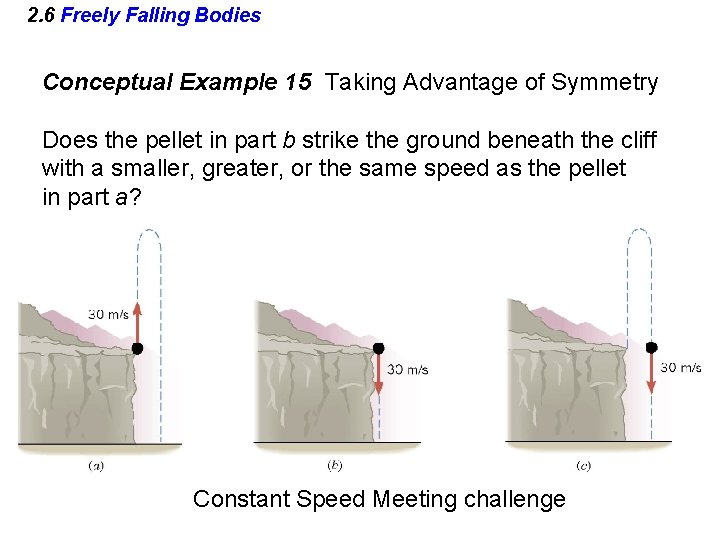
2. 6 Freely Falling Bodies Conceptual Example 15 Taking Advantage of Symmetry Does the pellet in part b strike the ground beneath the cliff with a smaller, greater, or the same speed as the pellet in part a? Constant Speed Meeting challenge
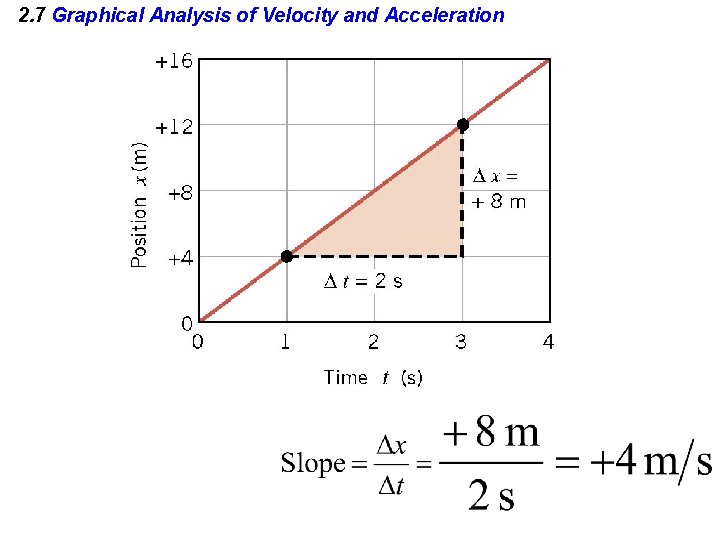
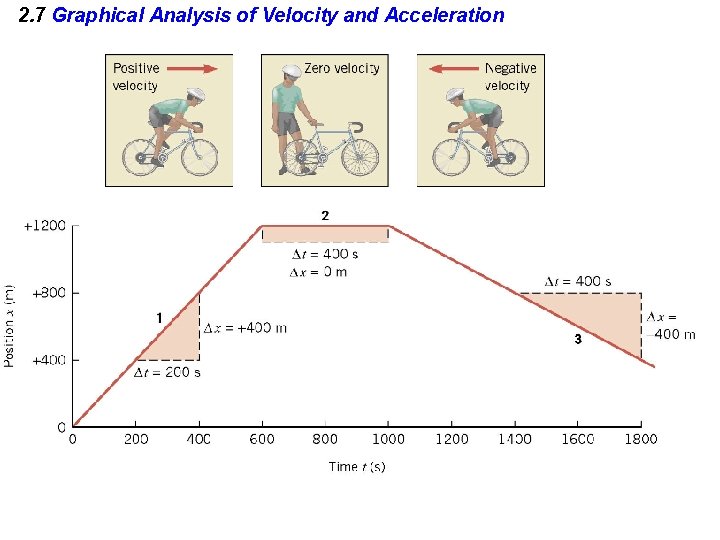
2. 7 Graphical Analysis of Velocity and Acceleration
2. 7 Graphical Analysis of Velocity and Acceleration
2. 7 Graphical Analysis of Velocity and Acceleration Important This is the instantaneous velocity
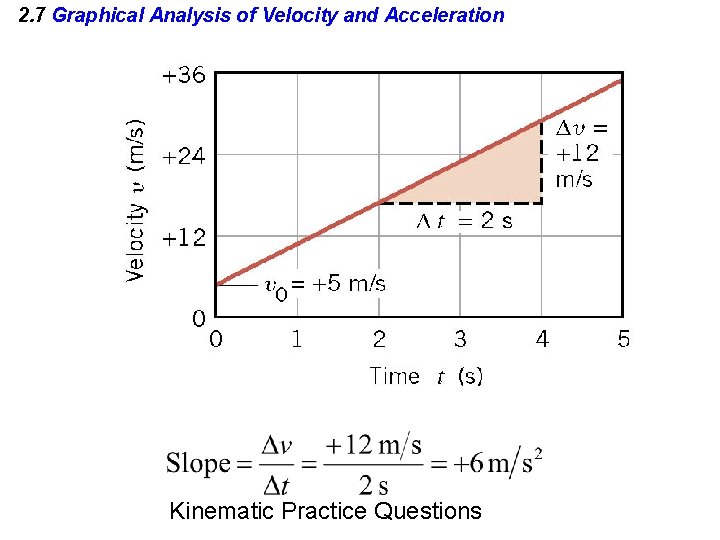
2. 7 Graphical Analysis of Velocity and Acceleration Kinematic Practice Questions