
Chapter 2 Introduction to Static Analysis Chapter Outline
- Slides: 6
Chapter 2 Introduction to Static Analysis
Chapter Outline Capabilities and Limitations of Static Analysis Type checking Style checking Program understanding tools Program verification Bug finding Some theory and implications
Capabilities and Limitations of SA tools are thorough and consistent. Examine the code itself, not the symptoms. Find errors early in development, thereby cutting costs. Easy to retool for new vulnerabilities. Not perfect
Solving Problems with Static Analysis Type Checking Style Checking (lint, PMD) Programming Understanding tools (fujaba) Program Verification and Property Checking Temporal safety properties – counterexamples “sound with respect to the specifiication” Bug finding (“bug idioms”) Security Review
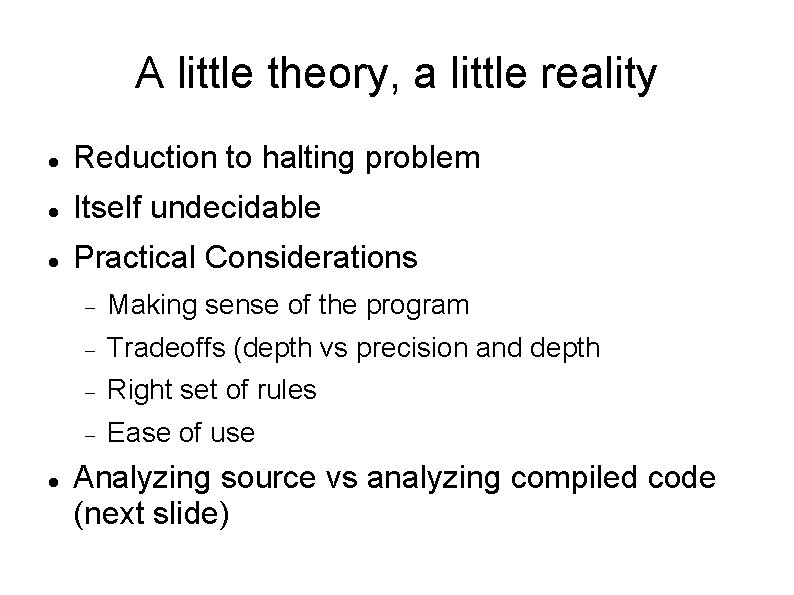
A little theory, a little reality Reduction to halting problem Itself undecidable Practical Considerations Making sense of the program Tradeoffs (depth vs precision and depth Right set of rules Ease of use Analyzing source vs analyzing compiled code (next slide)
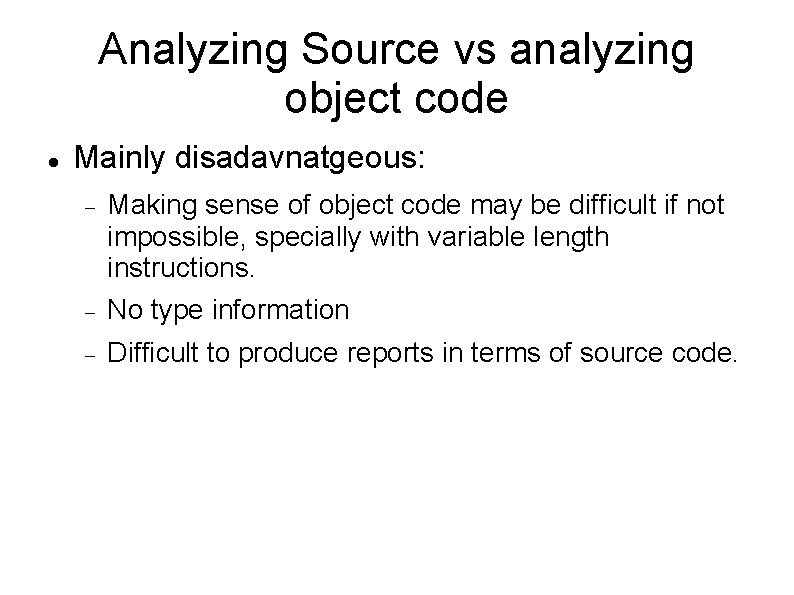
Analyzing Source vs analyzing object code Mainly disadavnatgeous: Making sense of object code may be difficult if not impossible, specially with variable length instructions. No type information Difficult to produce reports in terms of source code.