
Chapter 2 Introduction to Cost Management Systems Learning
- Slides: 44
Chapter 2 Introduction to Cost Management Systems
Learning Objectives 1. How do control systems aid managers in achieving organizational goals and objectives? 2. What is a cost management system and what major factors influence its design? C 2
Continuing. . . Learning Objectives 3. How are accounting systems influenced by both external and internal reporting requirements? 4. How are product and period costs differentiated? 5. How can product costing and valuation systems be compared and contrasted? C 2
Continuing. . . Learning Objectives 6. How is an actual costing system different from normal and standard costing systems? 7. How do the internal and external operating environments impact cost management systems? C 2
Continuing. . . Learning Objectives 8. How does the product life cycle affect cost management strategies? 9. What three groups of elements affect the design of a cost management system and how are these elements used? C 2
Continuing. . . Learning Objectives 10. How is gap analysis used in the implementation of a cost management system? C 2
Management Information Competing in the global marketplace requires managers to have access to information that supports effective and efficient operation of their business.
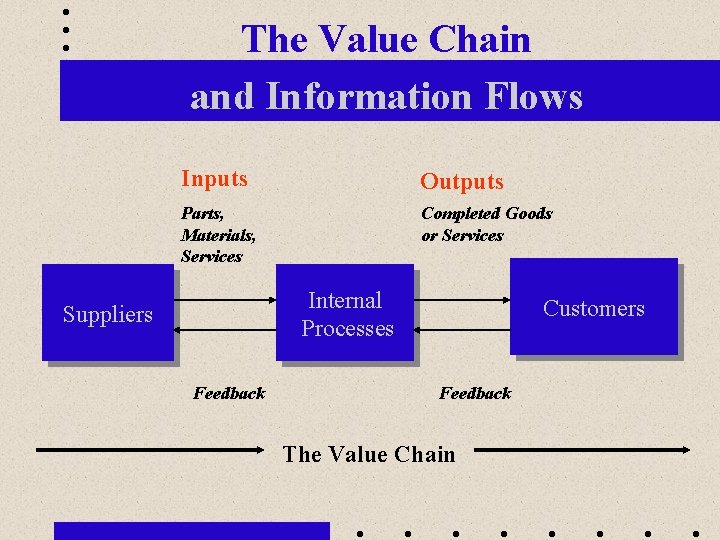
The Value Chain and Information Flows Inputs Outputs Parts, Materials, Services Completed Goods or Services Internal Processes Suppliers Feedback Customers Feedback The Value Chain
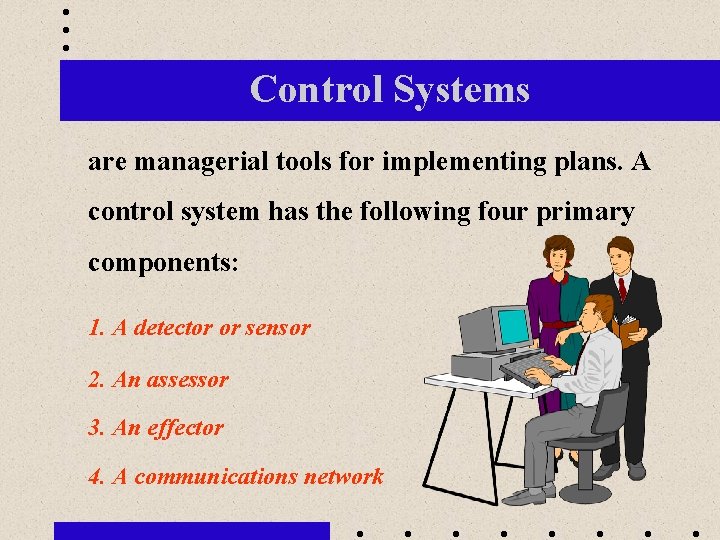
Control Systems are managerial tools for implementing plans. A control system has the following four primary components: 1. A detector or sensor 2. An assessor 3. An effector 4. A communications network
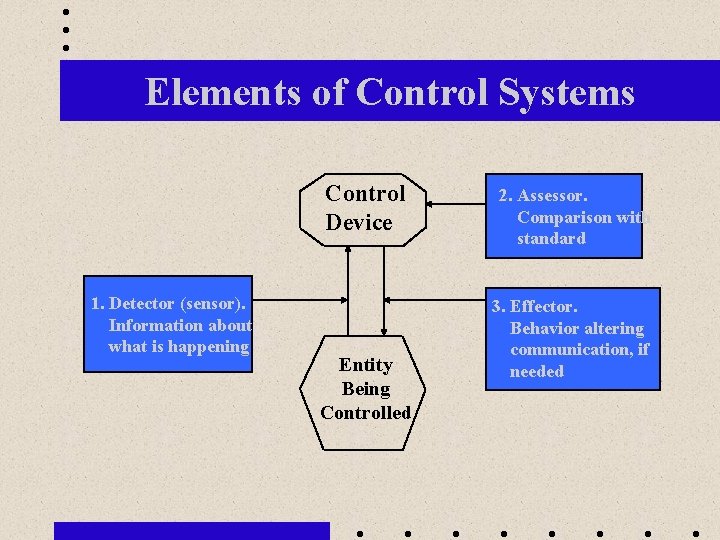
Elements of Control Systems Control Device 1. Detector (sensor). Information about what is happening Entity Being Controlled 2. Assessor. Comparison with standard 3. Effector. Behavior altering communication, if needed
Continuing. . . Control Systems A detector or sensor is a measuring device that identifies what is actually happening in the process being controlled.
Continuing. . . Control Systems An assessor is a device for determining the significance of what is happening. Usually, significance is assessed by comparing the information on what is actually happening with some standard or plan of what should be happening.
Continuing. . . Control Systems An effector is a device that alters behavior if the assessor indicates the need for doing so. This device is often called “feedback. ”
Continuing. . . Control Systems A communications network transmits information between the detector and the assessor and between the assessor and the effector.
Cost Management Systems A cost management system (CMS) is a set of formal methods developed for controlling an organization’s cost-generating activities relative to its goals and objectives. A CMS is not merely a system for minimizing the costs incurred by an organization. Rather, a CMS should help an organization obtain maximum benefits from incurring costs.
Continuing. . . Cost Management Systems A CMS should help managers • Identify the cost of resources consumed in performing significant activities of the firm (accounting systems); • Determine the efficiency and effectiveness of the activities performed (performance measurement); • Identify and evaluate new activities that can improve the future performance of he firm (investment management); and • Accomplish the three previous objectives in an environment characterized by changing technology (manufacturing processes)
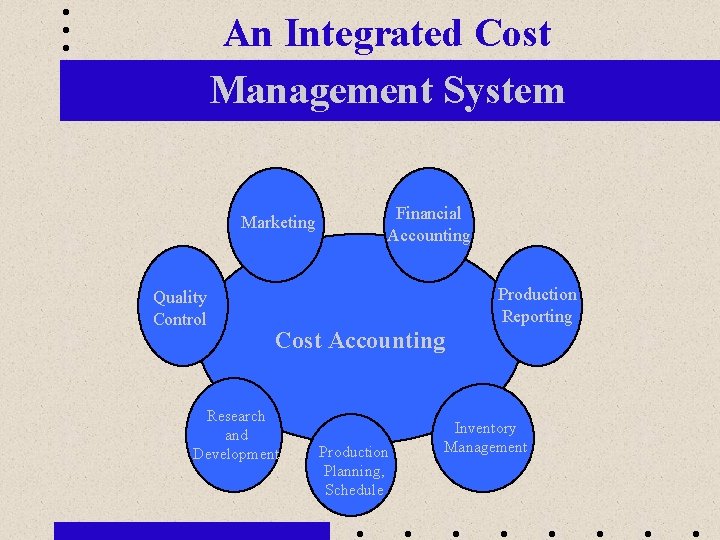
An Integrated Cost Management System Marketing Quality Control Financial Accounting Production Reporting Cost Accounting Research and Development Production Planning, Schedule Inventory Management
Integrating External and Internal Information Needs Financial accounting focuses on external users and is generally required for obtaining loans, preparing tax returns, and reporting to the investment community how well or poorly the business is performing. Management accounting refers to the gathering and application of information used to plan, make decisions, evaluate performance, and control an organization.
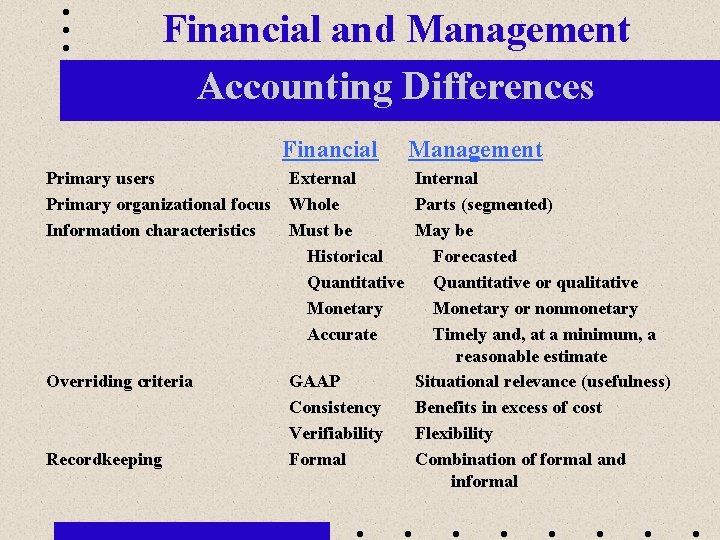
Financial and Management Accounting Differences Financial Primary users Primary organizational focus Information characteristics Overriding criteria Recordkeeping Management External Internal Whole Parts (segmented) Must be May be Historical Forecasted Quantitative or qualitative Monetary or nonmonetary Accurate Timely and, at a minimum, a reasonable estimate GAAP Situational relevance (usefulness) Consistency Benefits in excess of cost Verifiability Flexibility Formal Combination of formal and informal
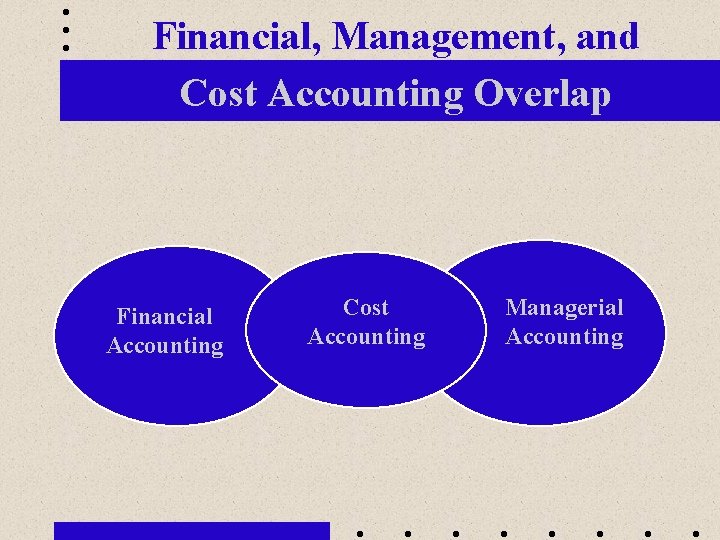
Financial, Management, and Cost Accounting Overlap Financial Accounting Cost Accounting Managerial Accounting
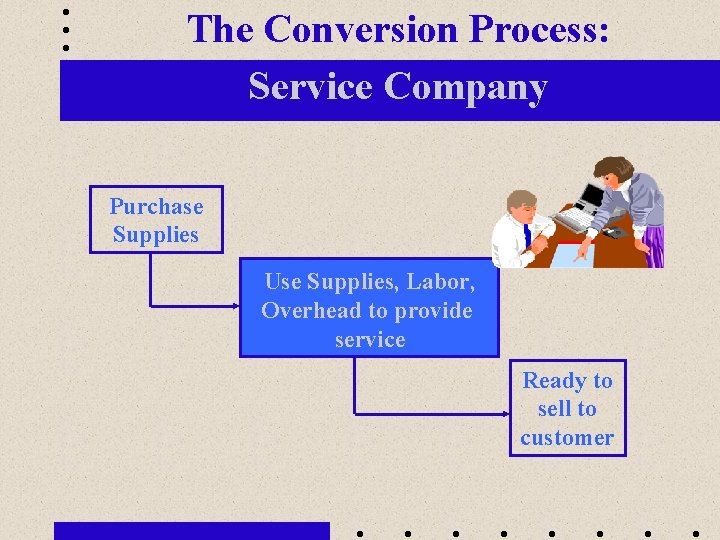
The Conversion Process: Service Company Purchase Supplies Use Supplies, Labor, Overhead to provide service Ready to sell to customer
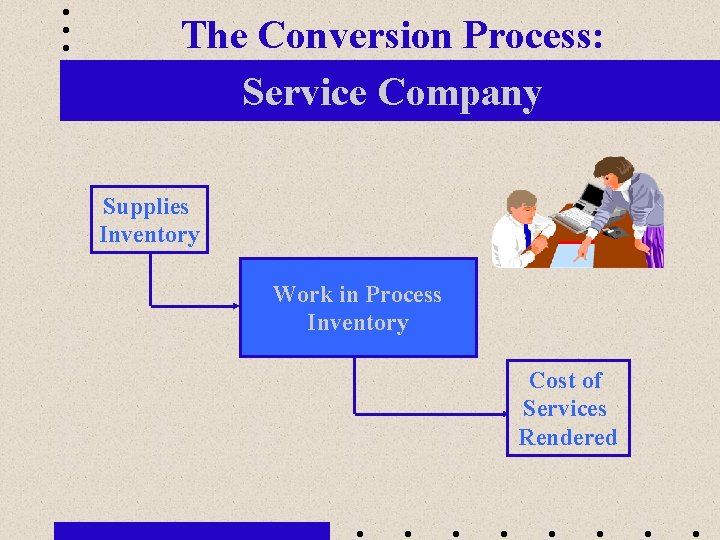
The Conversion Process: Service Company Supplies Inventory Work in Process Inventory Cost of Services Rendered
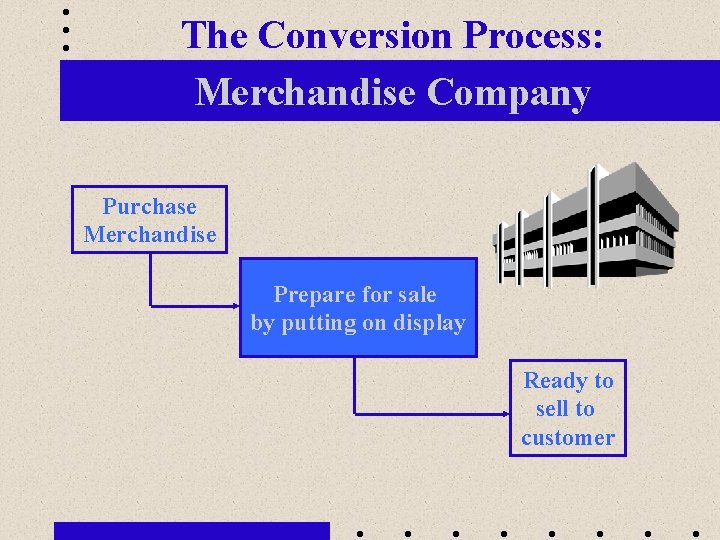
The Conversion Process: Merchandise Company Purchase Merchandise Prepare for sale by putting on display Ready to sell to customer
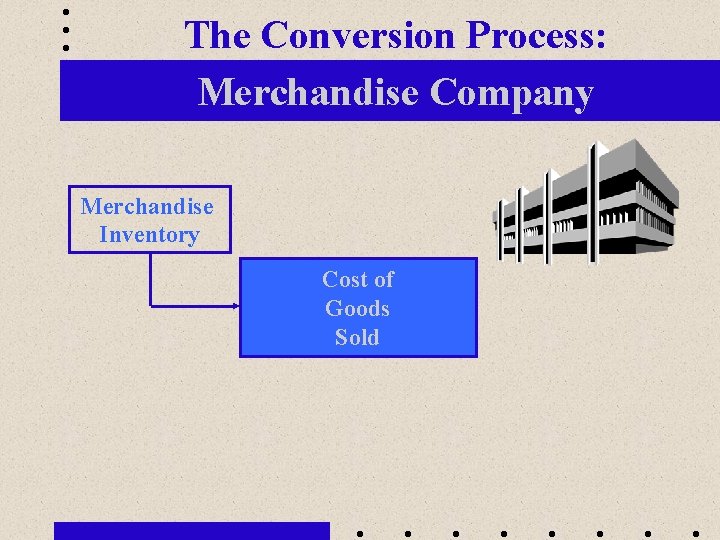
The Conversion Process: Merchandise Company Merchandise Inventory Cost of Goods Sold
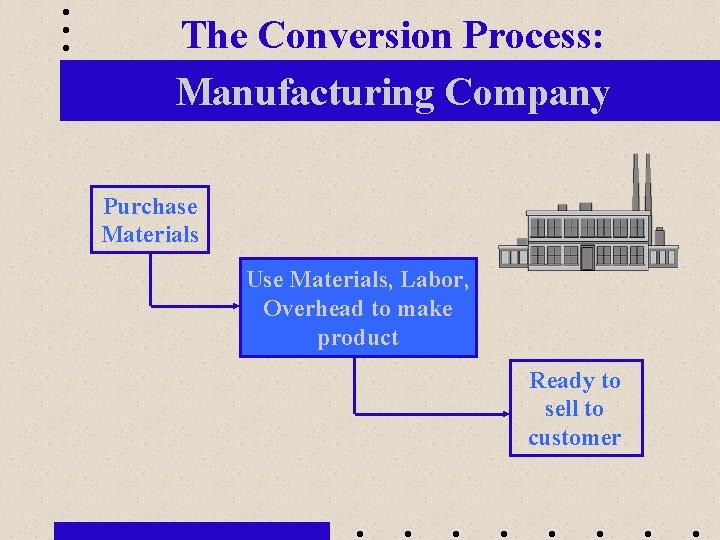
The Conversion Process: Manufacturing Company Purchase Materials Use Materials, Labor, Overhead to make product Ready to sell to customer
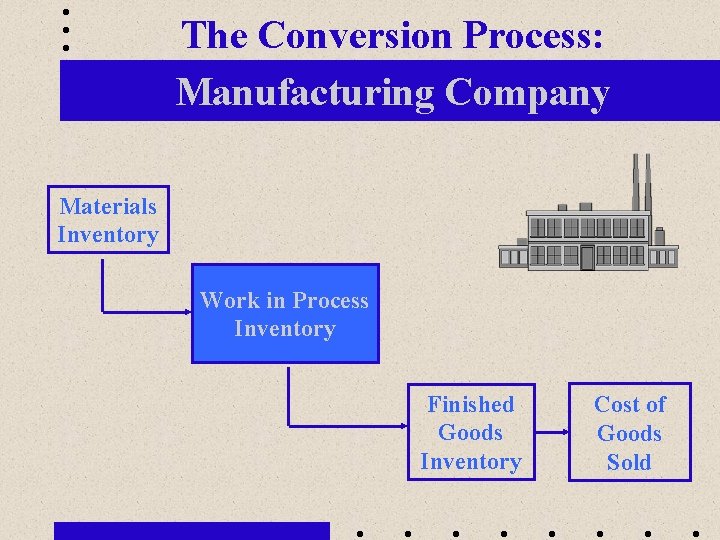
The Conversion Process: Manufacturing Company Materials Inventory Work in Process Inventory Finished Goods Inventory Cost of Goods Sold
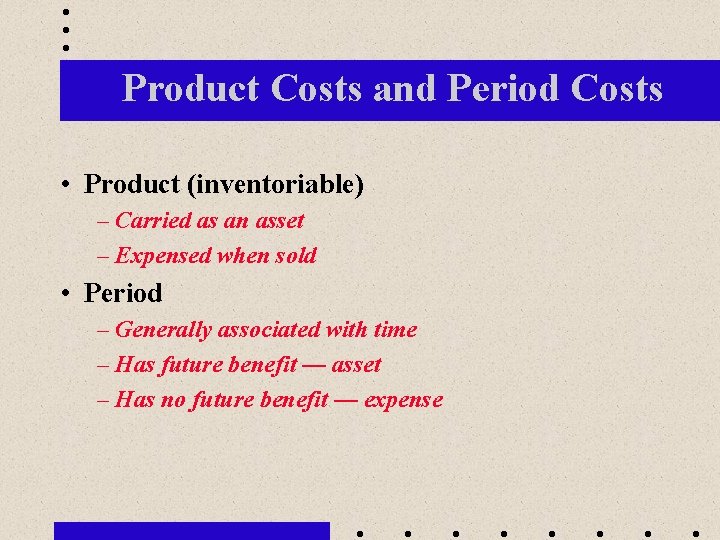
Product Costs and Period Costs • Product (inventoriable) – Carried as an asset – Expensed when sold • Period – Generally associated with time – Has future benefit — asset – Has no future benefit — expense
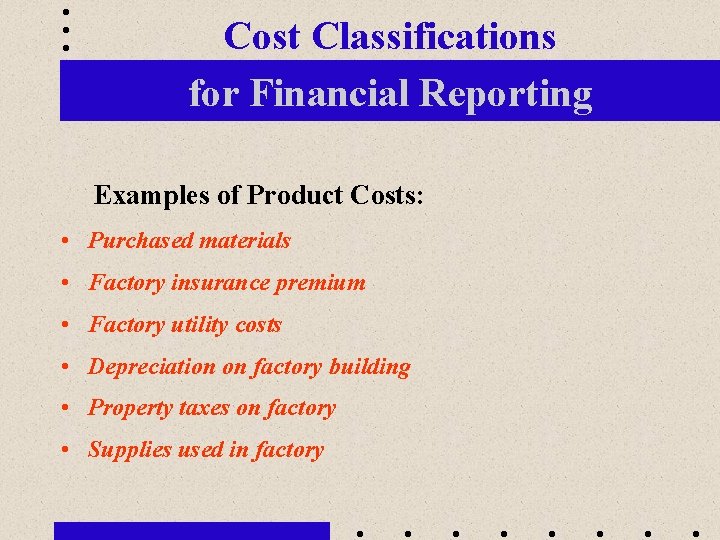
Cost Classifications for Financial Reporting Examples of Product Costs: • Purchased materials • Factory insurance premium • Factory utility costs • Depreciation on factory building • Property taxes on factory • Supplies used in factory
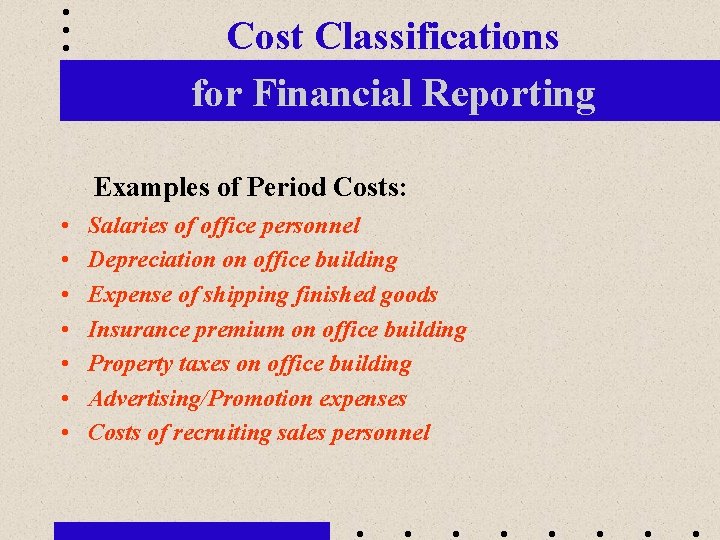
Cost Classifications for Financial Reporting Examples of Period Costs: • • Salaries of office personnel Depreciation on office building Expense of shipping finished goods Insurance premium on office building Property taxes on office building Advertising/Promotion expenses Costs of recruiting sales personnel
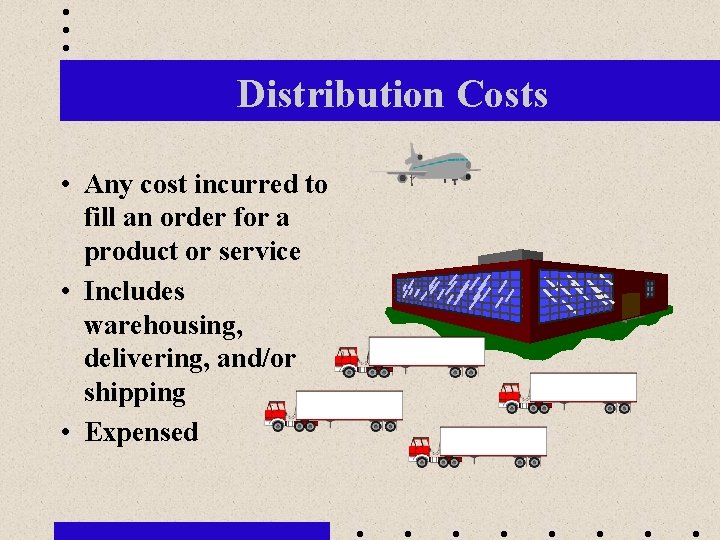
Distribution Costs • Any cost incurred to fill an order for a product or service • Includes warehousing, delivering, and/or shipping • Expensed
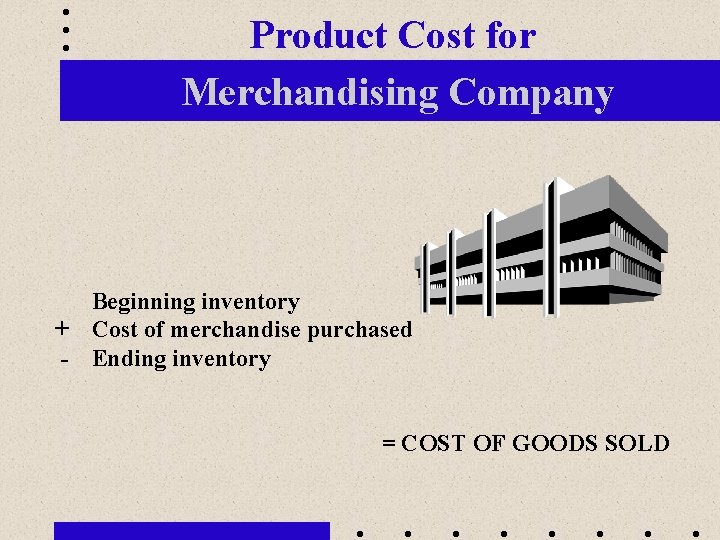
Product Cost for Merchandising Company Beginning inventory + Cost of merchandise purchased - Ending inventory = COST OF GOODS SOLD
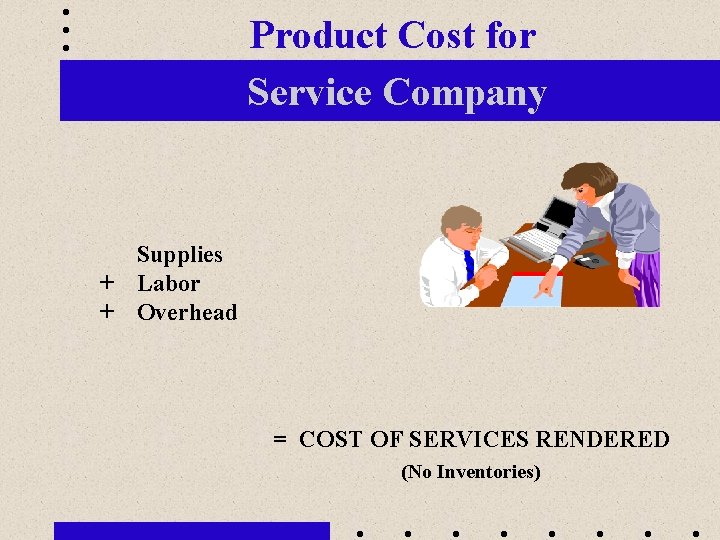
Product Cost for Service Company Supplies + Labor + Overhead = COST OF SERVICES RENDERED (No Inventories)
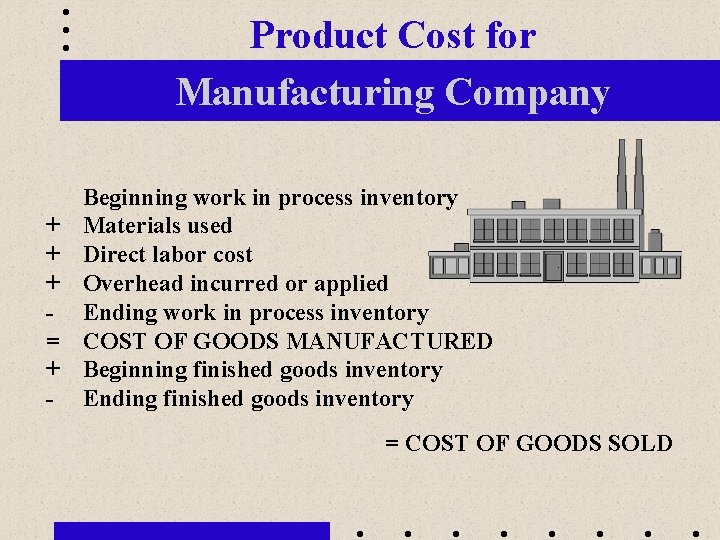
Product Cost for Manufacturing Company + + + = + - Beginning work in process inventory Materials used Direct labor cost Overhead incurred or applied Ending work in process inventory COST OF GOODS MANUFACTURED Beginning finished goods inventory Ending finished goods inventory = COST OF GOODS SOLD
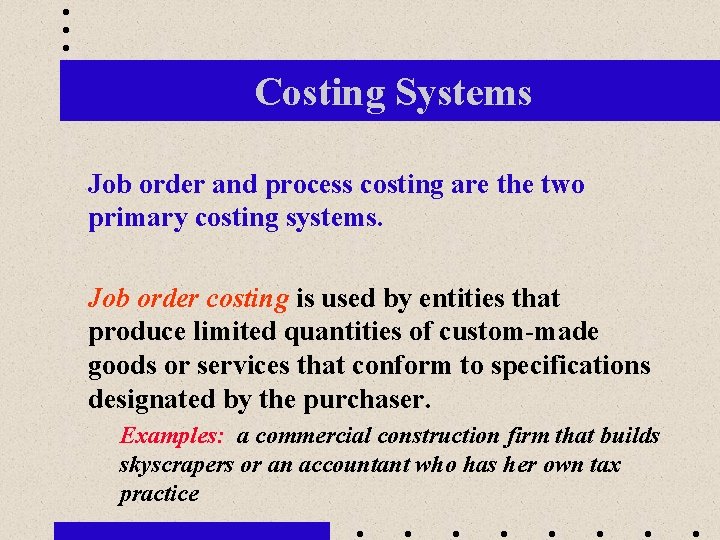
Costing Systems Job order and process costing are the two primary costing systems. Job order costing is used by entities that produce limited quantities of custom-made goods or services that conform to specifications designated by the purchaser. Examples: a commercial construction firm that builds skyscrapers or an accountant who has her own tax practice
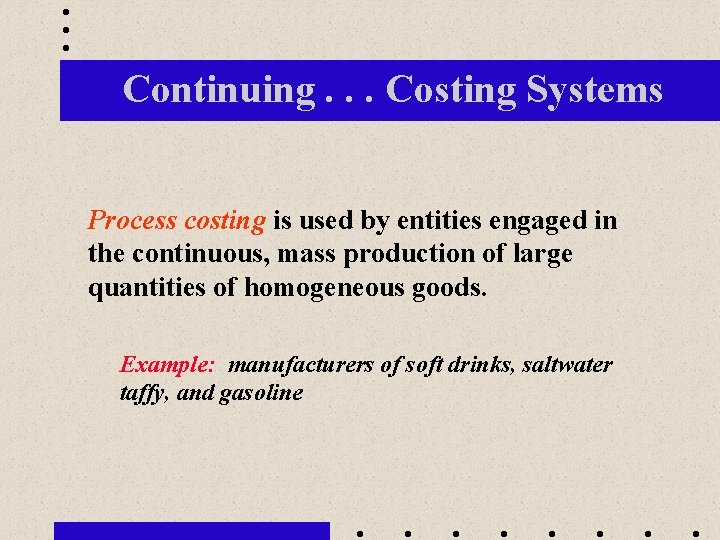
Continuing. . . Costing Systems Process costing is used by entities engaged in the continuous, mass production of large quantities of homogeneous goods. Example: manufacturers of soft drinks, saltwater taffy, and gasoline
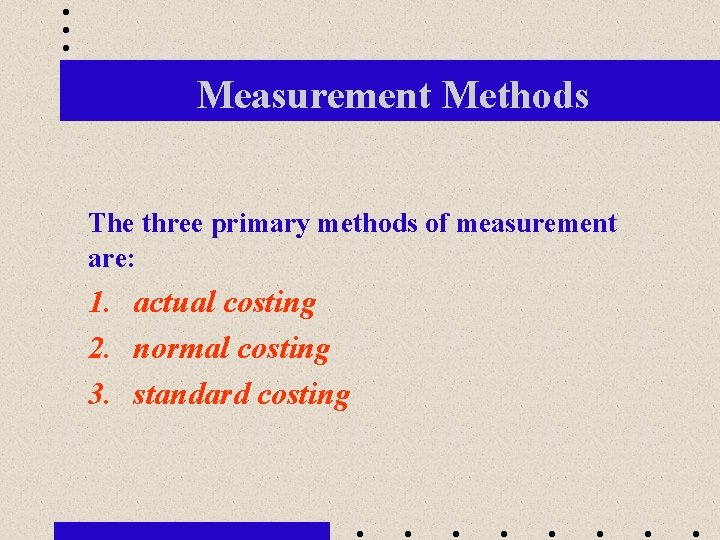
Measurement Methods The three primary methods of measurement are: 1. actual costing 2. normal costing 3. standard costing
Organizational Mission and Critical Success Factors Clarification of mission can be served by identifying the organization’s critical success factors (CSFs), which are dimensions of operations that are so important to an organization’s survival that, with poor performance in these areas, the entity would cease to exist.
Continuing. . . Organizational Mission and Critical Success Factors Once managers have gained consensus on the entity’s CSFs, the cost management system can be designed to 1. gather information related to measurement of those items and 2. generate output about those CSFs in forms that are useful to interested parties such as top managers.
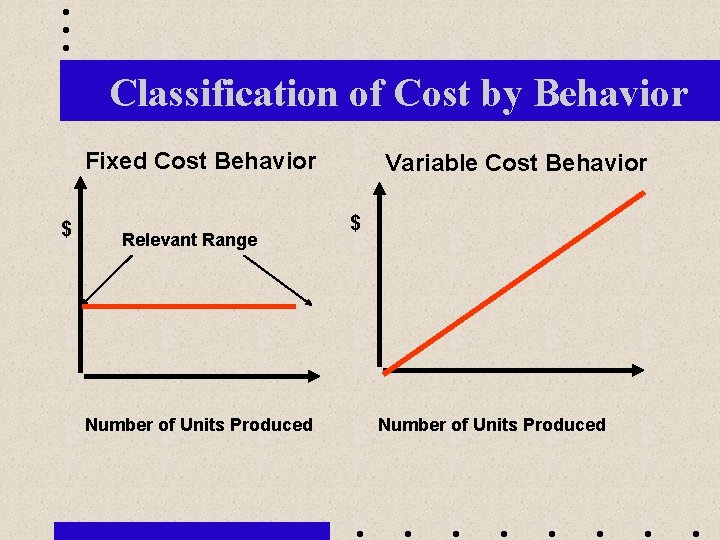
Classification of Cost by Behavior Fixed Cost Behavior $ Relevant Range Number of Units Produced Variable Cost Behavior $ Number of Units Produced
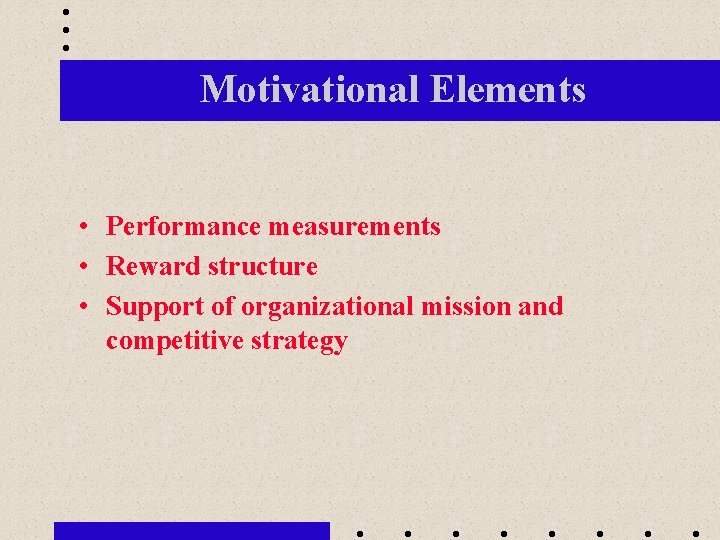
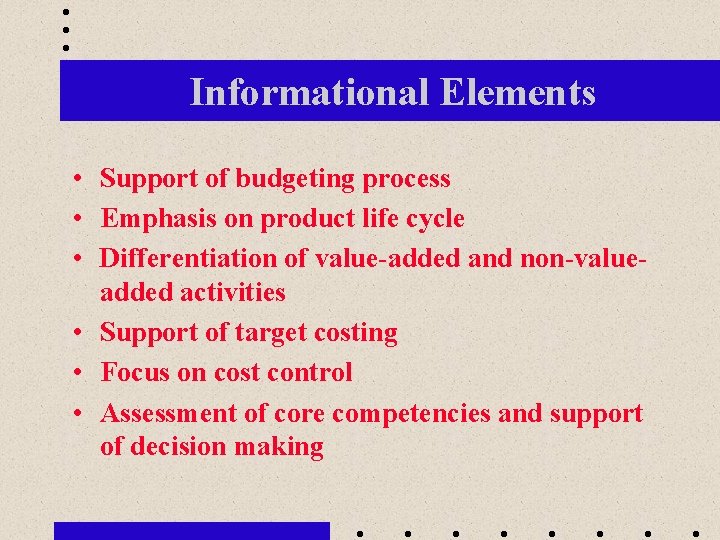
Elements of a Cost Management System A cost management system is composed of a set of the following three primary elements: – motivational – informational – reporting
Motivational Elements • Performance measurements • Reward structure • Support of organizational mission and competitive strategy
Informational Elements • Support of budgeting process • Emphasis on product life cycle • Differentiation of value-added and non-valueadded activities • Support of target costing • Focus on cost control • Assessment of core competencies and support of decision making
Reporting Elements • Preparation of financial statements • Provision of details for responsibility accounting system
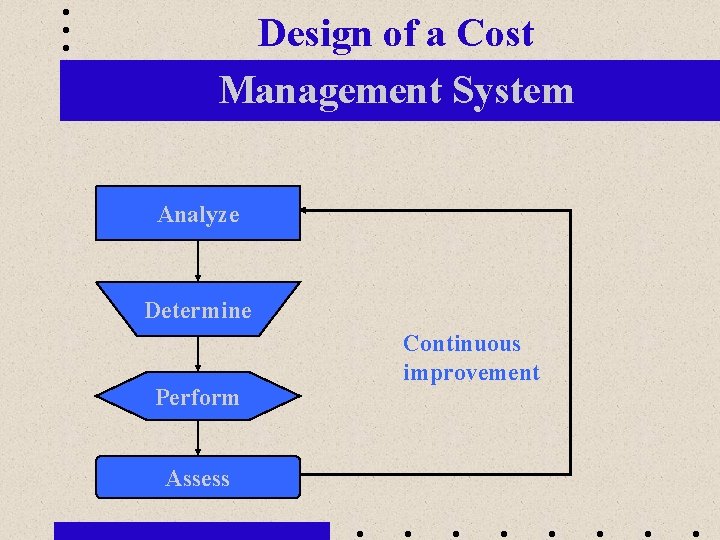
Design of a Cost Management System Analyze Determine Perform Assess Continuous improvement