
Chapter 2 Introduction to Argument From the book
Chapter 2 Introduction to Argument (From the book Writing Arguments, pages 23 – 56) Mrs. Franklin English 102 February 2016
Introduction • Argument is an exploratory process. • Position yourself as an inquirer and a persuader. • Engage thoughtfully with alternative points of view. • Listen to other perspectives. • Examine your own values and assumptions. • Don’t be afraid to change your point of view if you are convinced that doing so is the right thing to do. • Use argument as a means to seek answers to questions. 2
Techniques for Exploring Ideas There are several techniques for exploring ideas. • Brainstorming • Freewriting • Idea Mapping • Playing the Believing and Doubting Game 3
Genres of Argument A genre is a recurring type or pattern of argument. There are several genres of argument. A few examples are: • Personal Correspondence • Letter to the editor • Articles in public affairs or niche magazines • Advocacy websites • Documentary films Refer to pages 32 – 34 in the book for more examples. 4
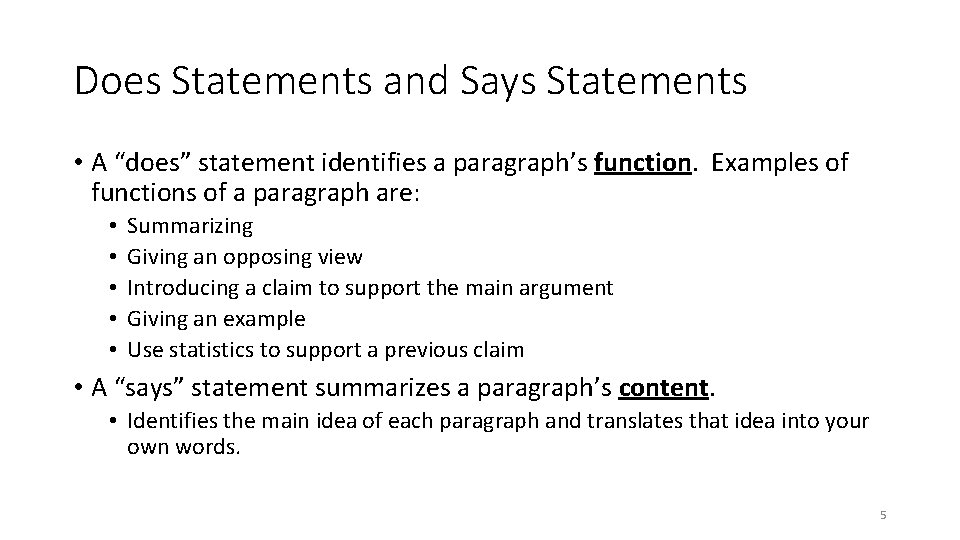
Does Statements and Says Statements • A “does” statement identifies a paragraph’s function. Examples of functions of a paragraph are: • • • Summarizing Giving an opposing view Introducing a claim to support the main argument Giving an example Use statistics to support a previous claim • A “says” statement summarizes a paragraph’s content. • Identifies the main idea of each paragraph and translates that idea into your own words. 5

Thinking Dialectically What is “Dialectic Thinking”? • Dialectic thinking is playing ideas against each other, creating a tension that forces you to keep expanding your perspective. • Dialectic thinking explores all sides of an argument – not just the side you support. Questions to promote dialectic thinking: • What would writer A say to writer B? • To what extent do writer A and B disagree about facts and interpretations of facts? 6
- Slides: 6