
CHAPTER 2 Homework 4 Exothermic and Endothermic Reactions

- Slides: 60
CHAPTER 2: Homework # 4 • Exothermic and Endothermic Reactions WS • TEST: THURSDAY • CHAPTER 2: AIM # 1 -5
Homework # 4 • Energy (Online)
AIM # 4: How can we describe energy?
1. Energy is the ability to move or change something. • Units: calories, joules, and kilojoules. • Kilojoule = 103 joules • 1 calorie = 4. 18 joules
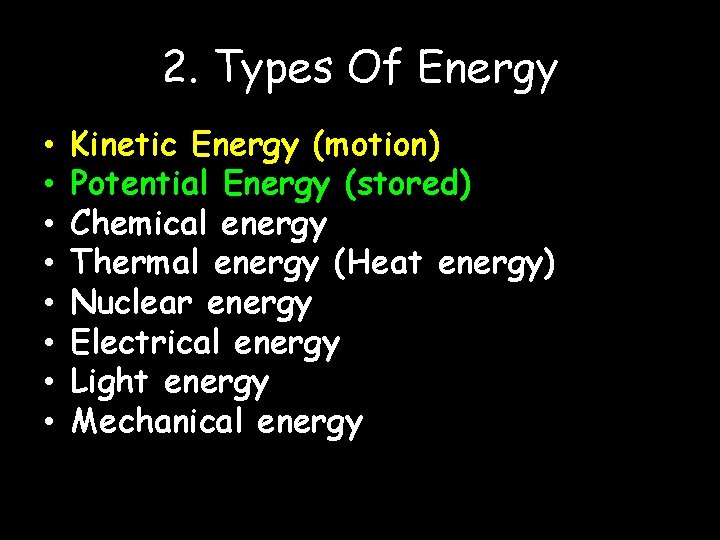
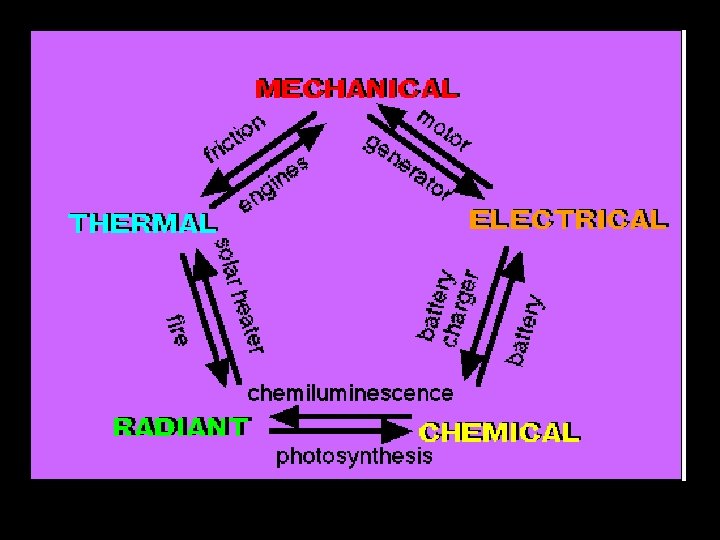
2. Types Of Energy • • Kinetic Energy (motion) Potential Energy (stored) Chemical energy Thermal energy (Heat energy) Nuclear energy Electrical energy Light energy Mechanical energy
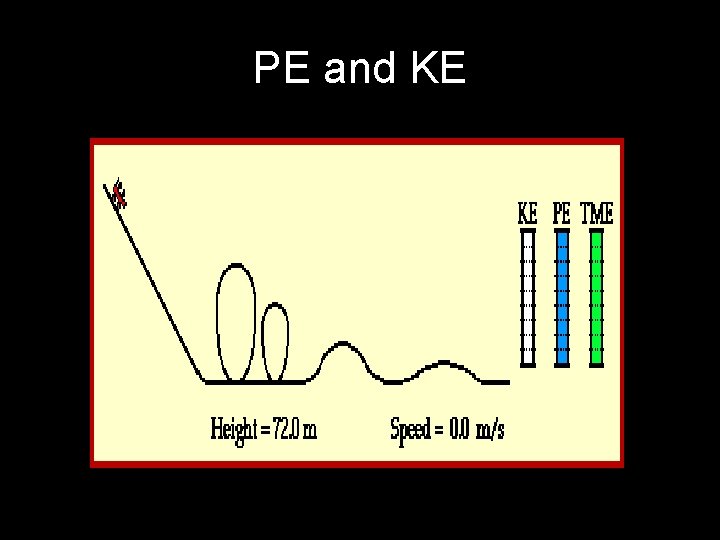
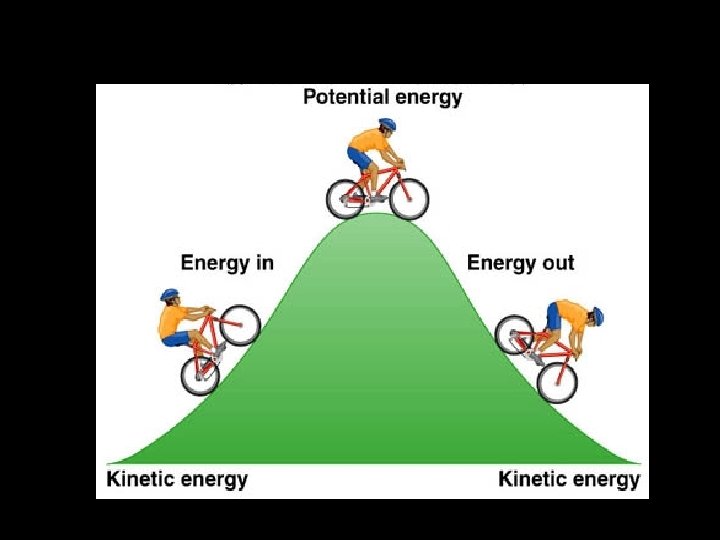
PE and KE
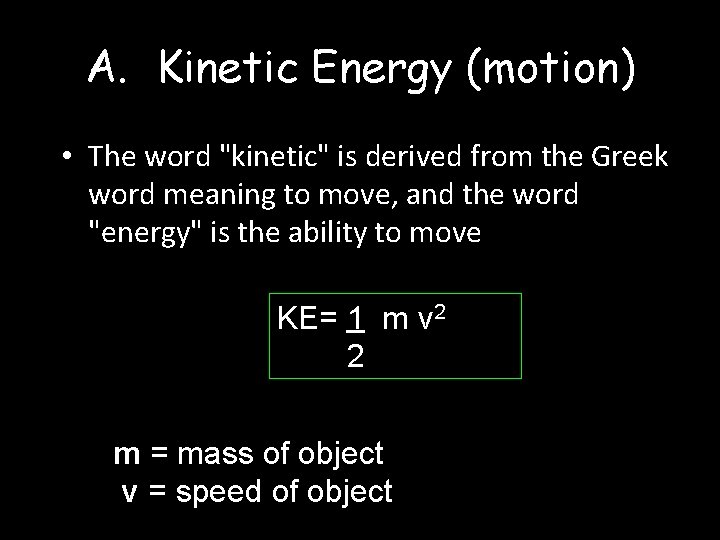
A. Kinetic Energy (motion) • The word "kinetic" is derived from the Greek word meaning to move, and the word "energy" is the ability to move KE= 1 m v 2 m = mass of object v = speed of object
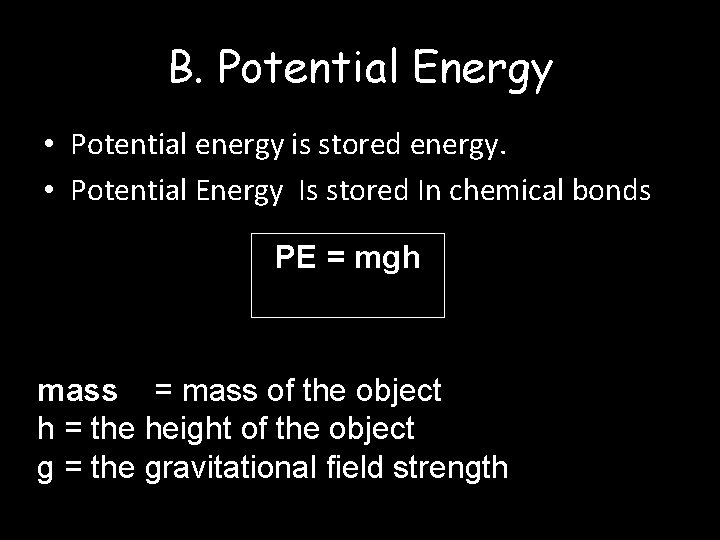
B. Potential Energy • Potential energy is stored energy. • Potential Energy Is stored In chemical bonds PE = mgh mass = mass of the object h = the height of the object g = the gravitational field strength
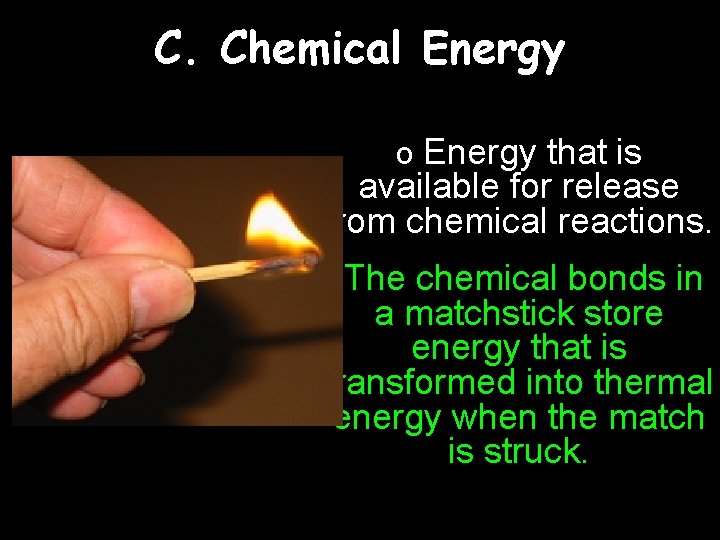
C. Chemical Energy o Energy that is available for release from chemical reactions. The chemical bonds in a matchstick store energy that is transformed into thermal energy when the match is struck.
D. Electrical Energy
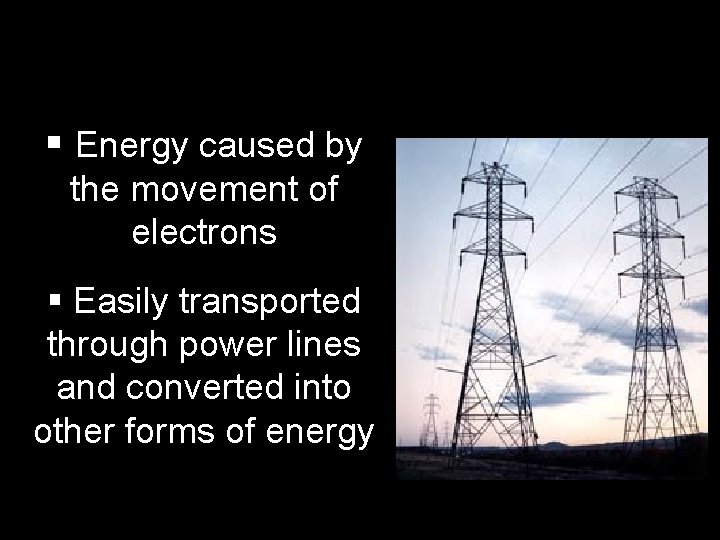
§ Energy caused by the movement of electrons § Easily transported through power lines and converted into other forms of energy
E. Thermal Energy? § Heat energy § The heat energy of an object determines how active its atoms are.
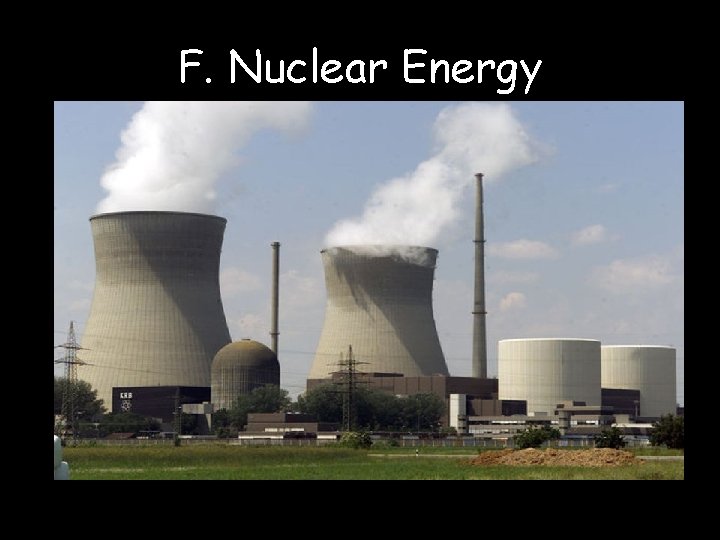
F. Nuclear Energy
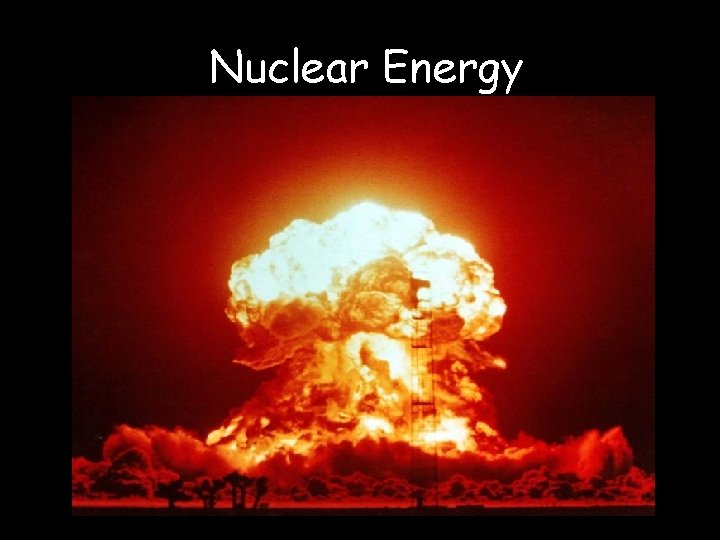
Nuclear Energy
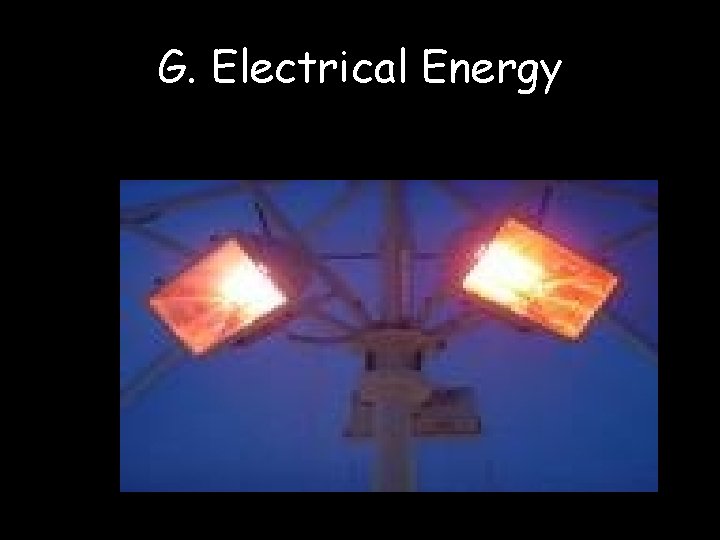
G. Electrical Energy
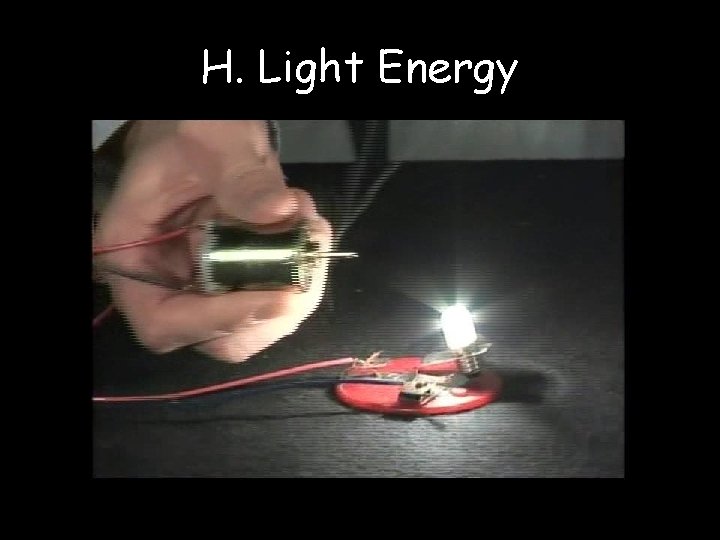
H. Light Energy
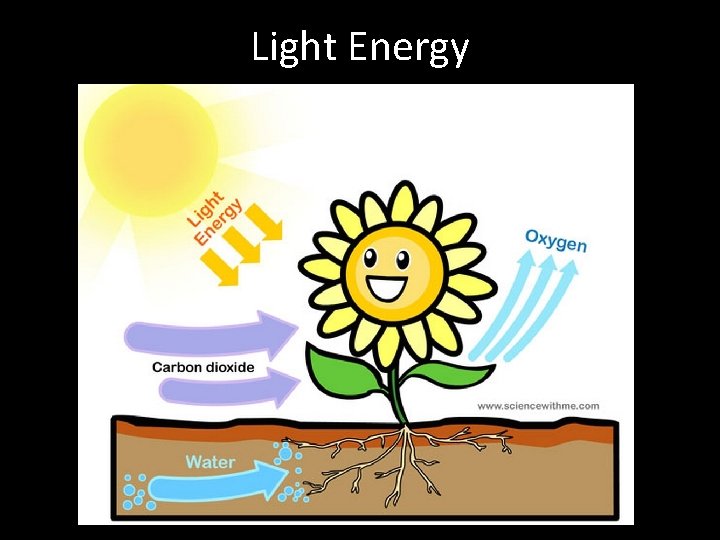
Light Energy
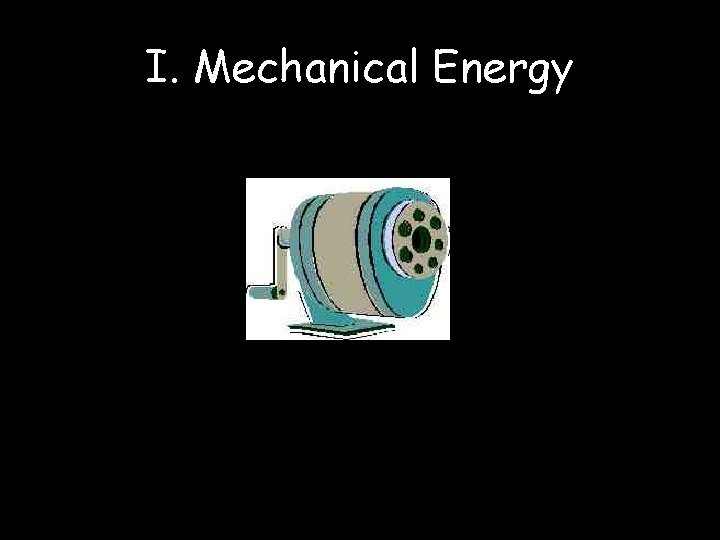
I. Mechanical Energy
3. First Law of Thermodynamics • States that energy cannot be created nor destroyed but is converted from one form to another.
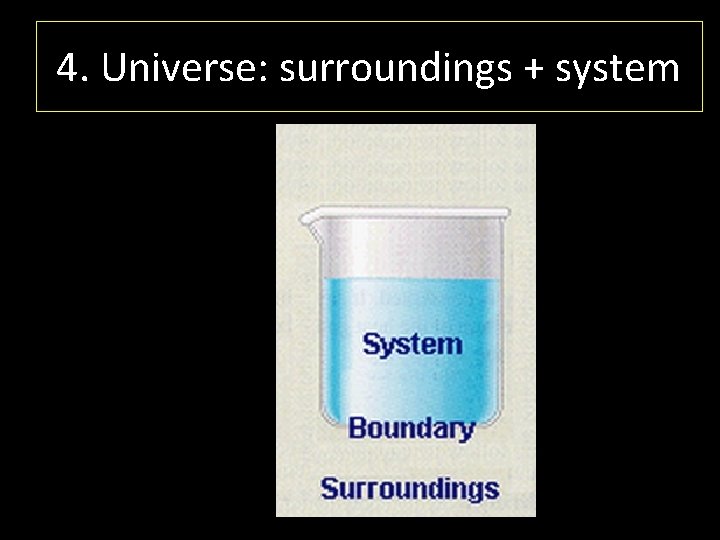
4. Universe: surroundings + system
System: “whatever we can observed. ” Surroundings: “everything else”
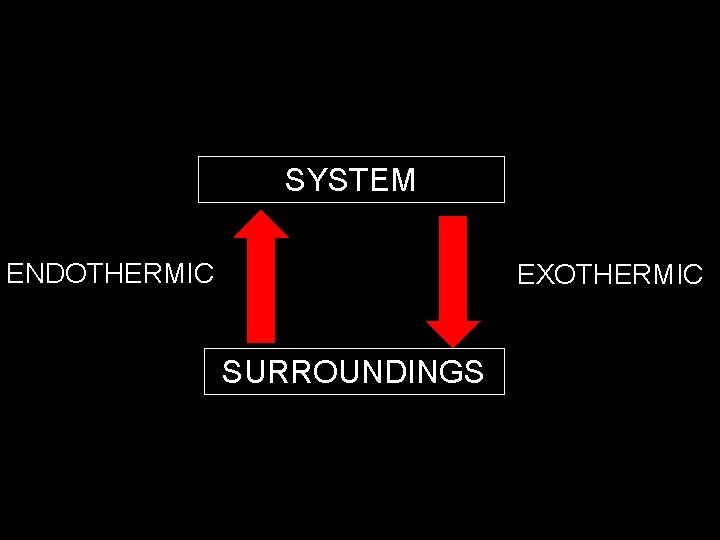
SYSTEM ENDOTHERMIC EXOTHERMIC SURROUNDINGS
5. Energy is Absorbed or Released in a Chemical Reaction
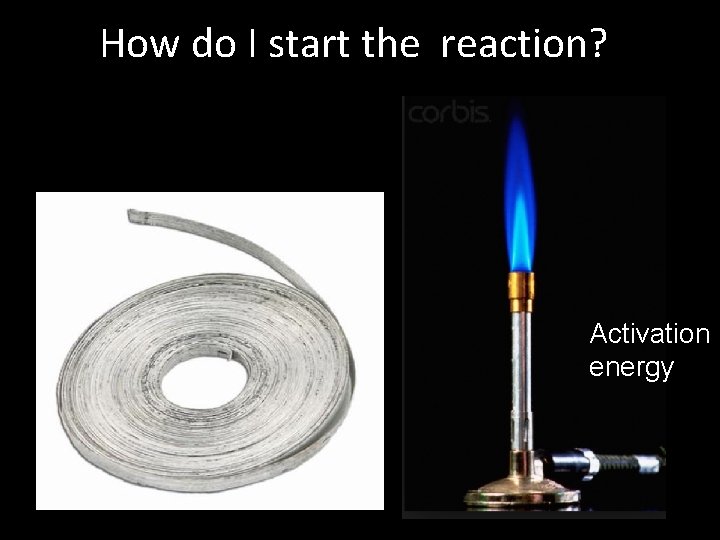
How do I start the reaction? Activation energy
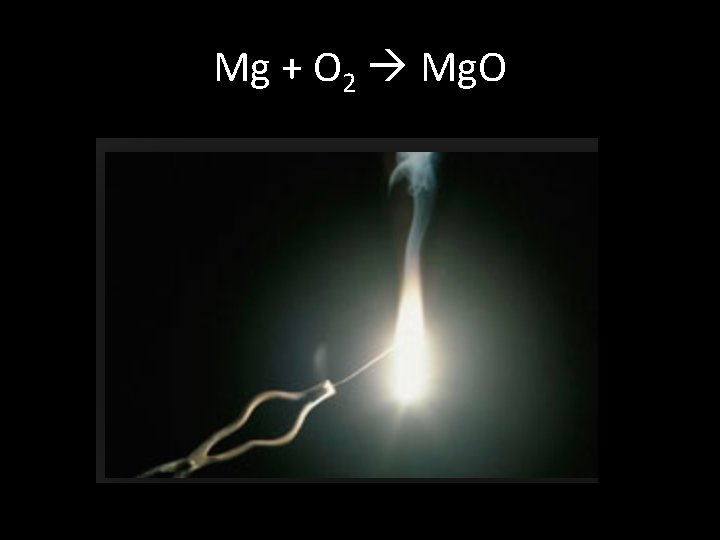
Mg + O 2 Mg. O
Potassium Permanganate and Glycerol
http: //www. premedhq. com/2013/11/mcatendothermic-and-exothermic_24. html
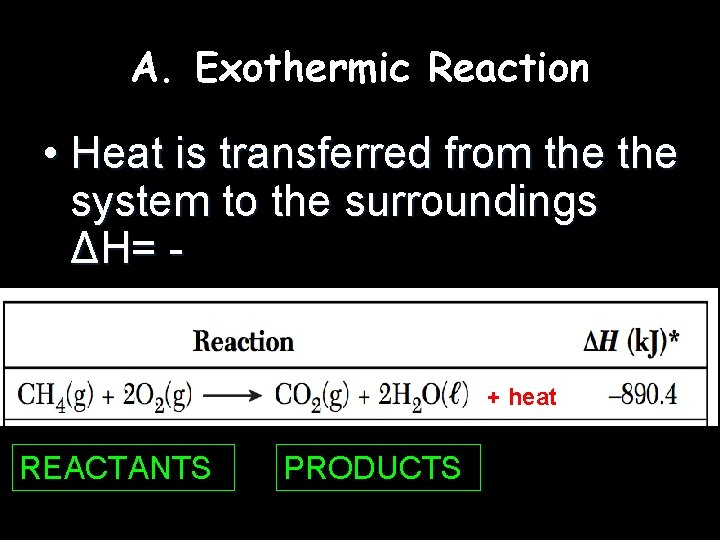
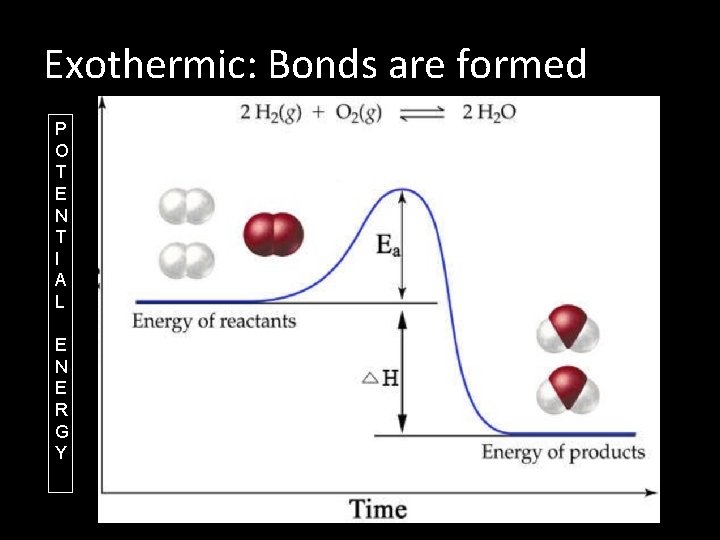
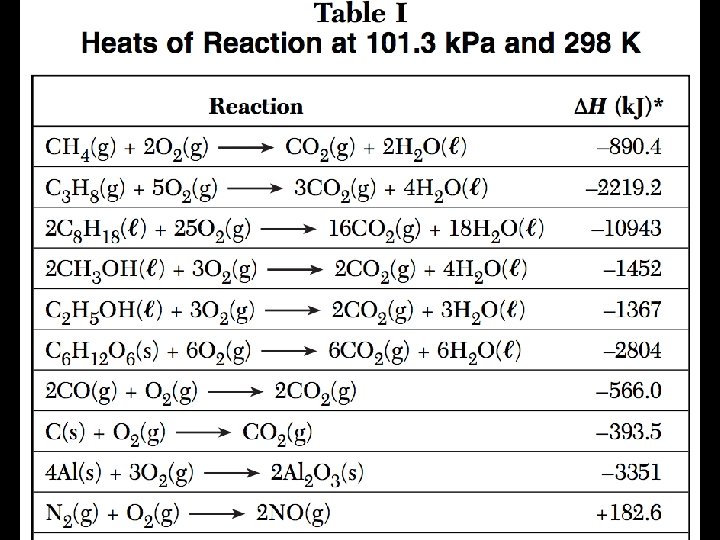
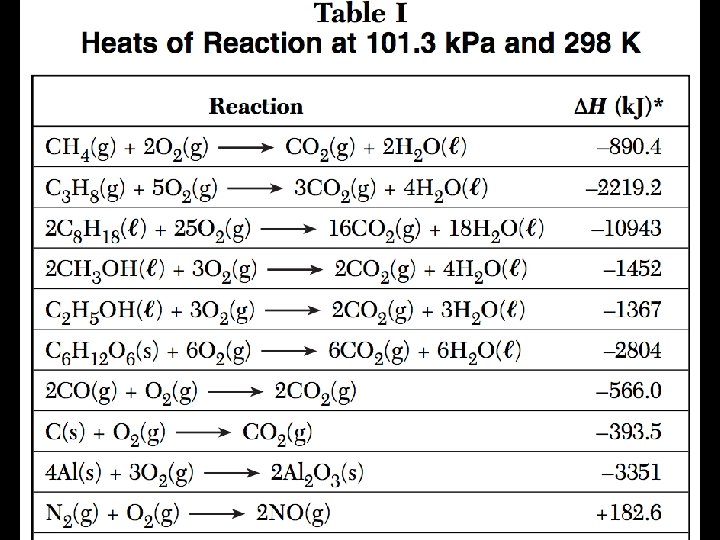
A. Exothermic Reaction • Heat is transferred from the system to the surroundings ΔH= + heat REACTANTS PRODUCTS
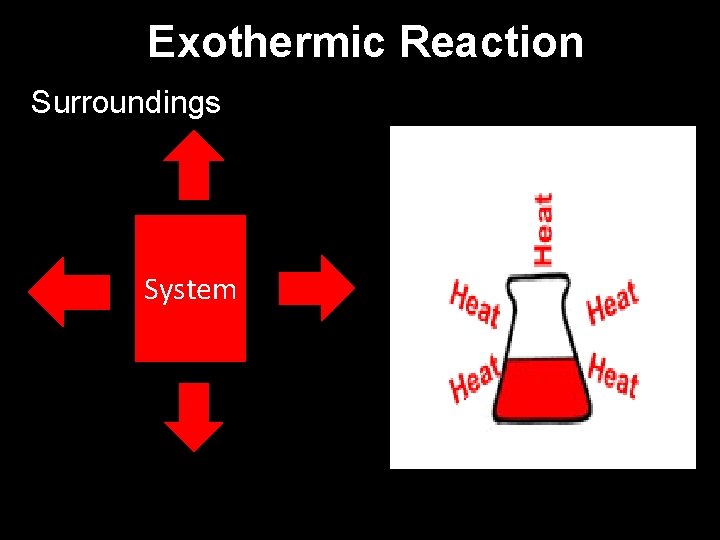
Exothermic Reaction Surroundings System
Exothermic: Bonds are formed P O T E N T I A L E N E R G Y
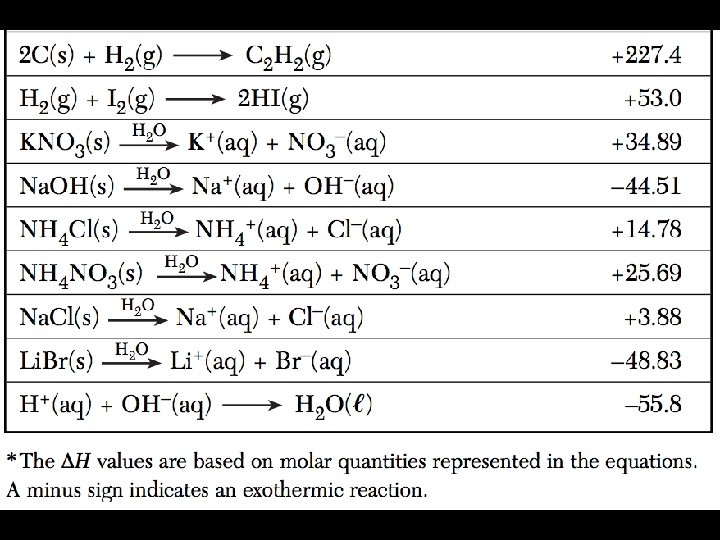
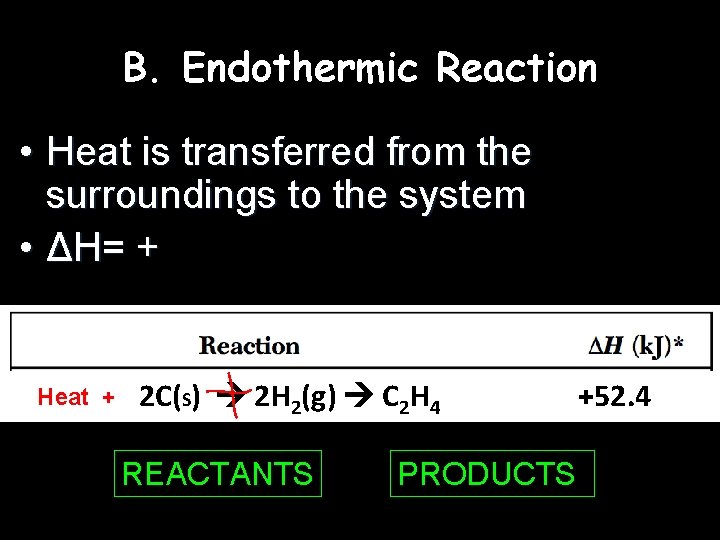
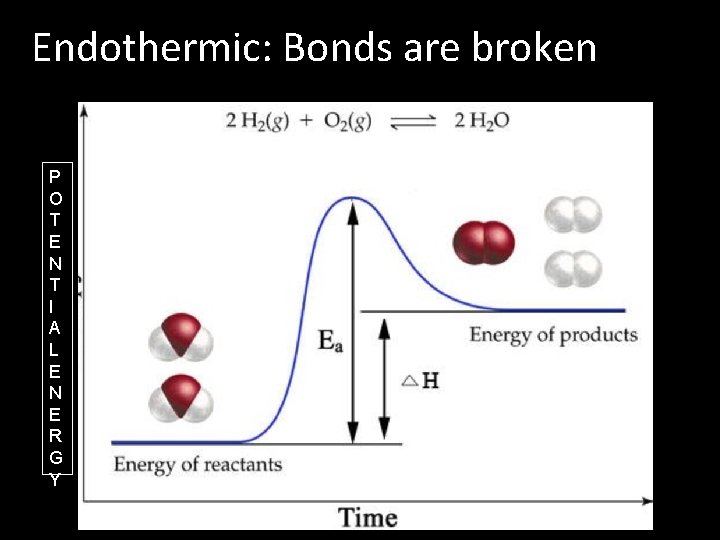
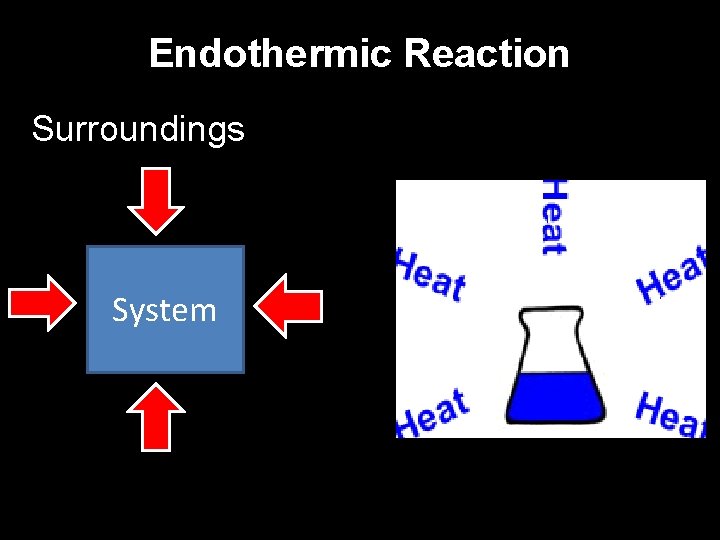
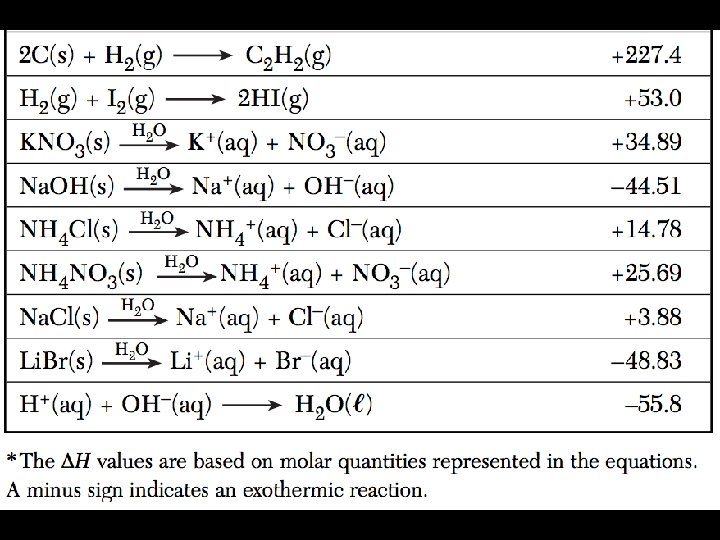
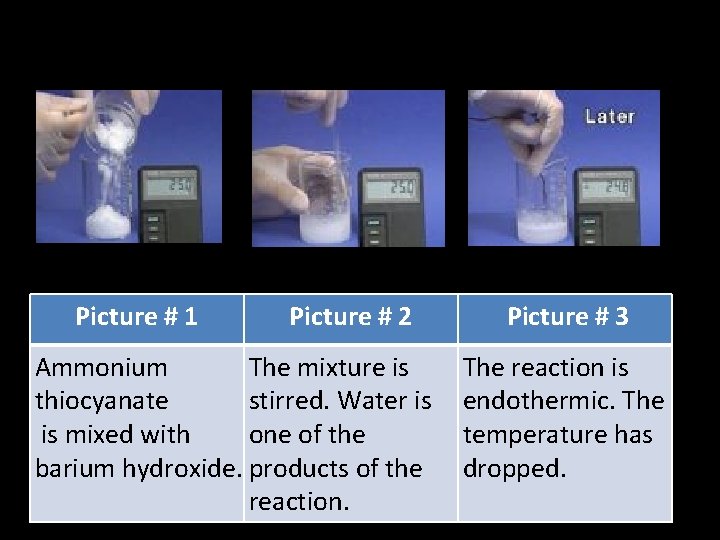
B. Endothermic Reaction • Heat is transferred from the surroundings to the system • ΔH= + Heat + 2 C(S) 2 H 2(g) C 2 H 4 REACTANTS +52. 4 PRODUCTS
Endothermic: Bonds are broken P O T E N T I A L E N E R G Y
Endothermic Reaction Surroundings System
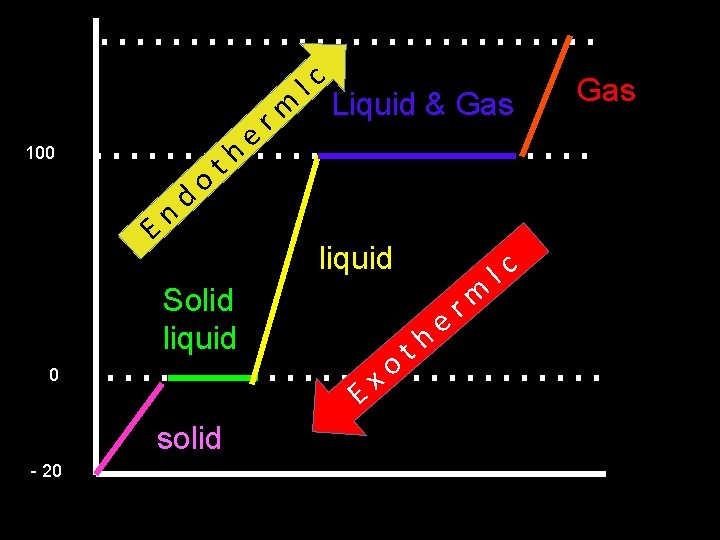
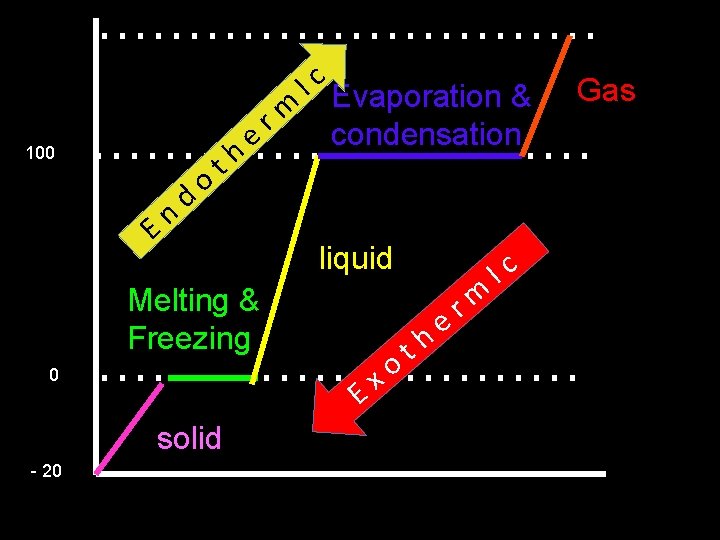
Heating and Cooling Curve • Is melting endothermic or exothermic? • Is boiling endothermic or exothermic?
Ic 100 n E d o th Liquid & Gas m er liquid Solid liquid x E 0 solid - 20 h t o m r e Ic Gas
100 n E d o th I c Evaporation & m condensation er liquid Melting & Freezing x E 0 solid - 20 h t o m r e Ic Gas
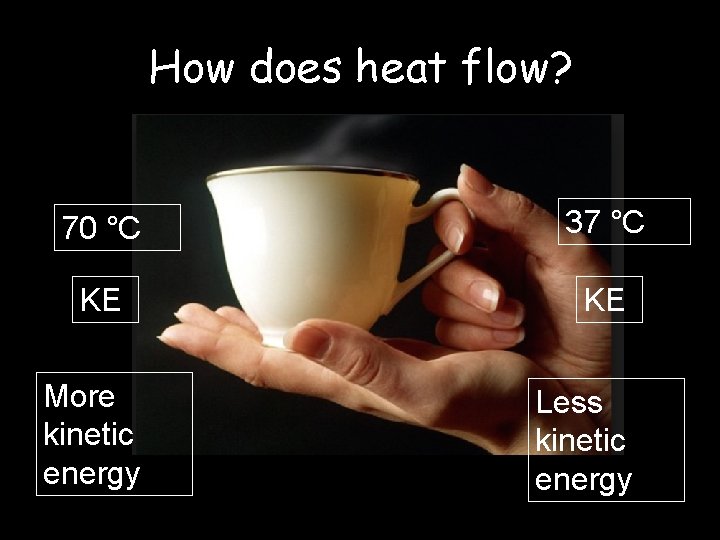
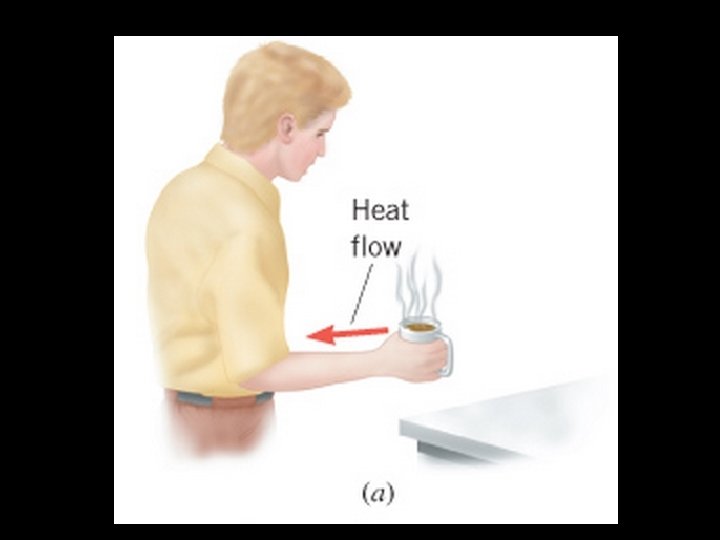
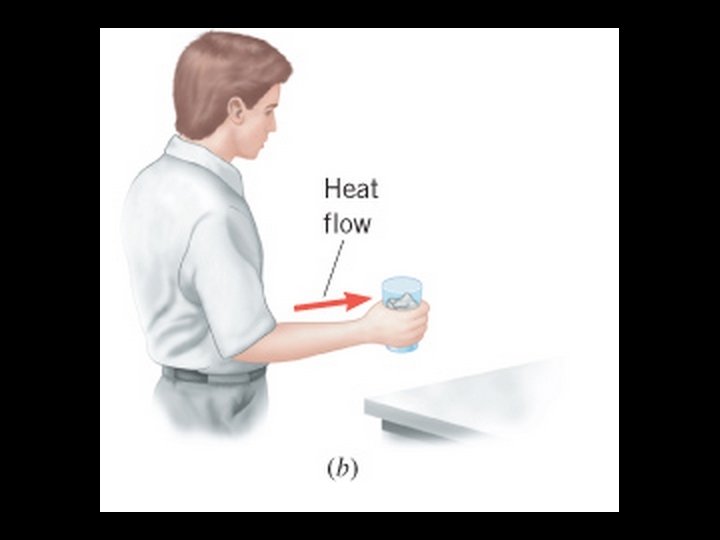
How does heat flow? 70 °C 37 °C KE KE More kinetic energy Less kinetic energy
6. How does heat flow? • Heat always flows spontaneously from a region of higher temperature to one of lower temperature.
7. Activation Energy • Minimum amount of energy needed to cause a chemical reaction. Example: bunsen burner, candle, spark, etc.
END OF THE SHOW!!
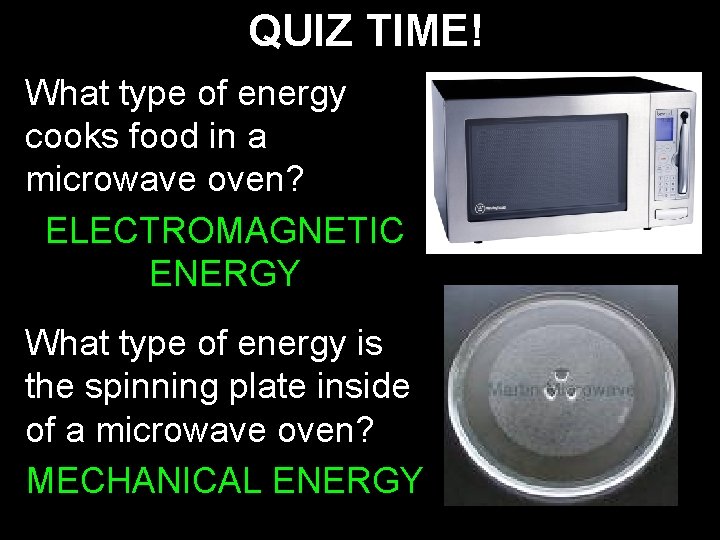
QUIZ TIME! What type of energy cooks food in a microwave oven? ELECTROMAGNETIC ENERGY What type of energy is the spinning plate inside of a microwave oven? MECHANICAL ENERGY
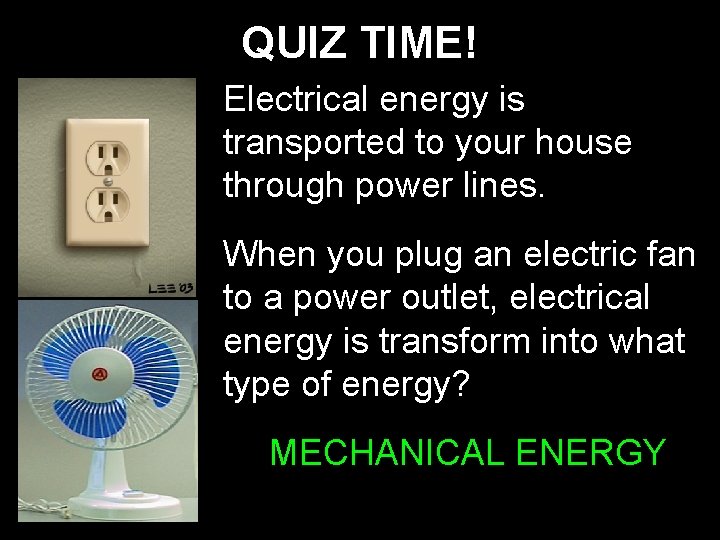
QUIZ TIME! Electrical energy is transported to your house through power lines. When you plug an electric fan to a power outlet, electrical energy is transform into what type of energy? MECHANICAL ENERGY
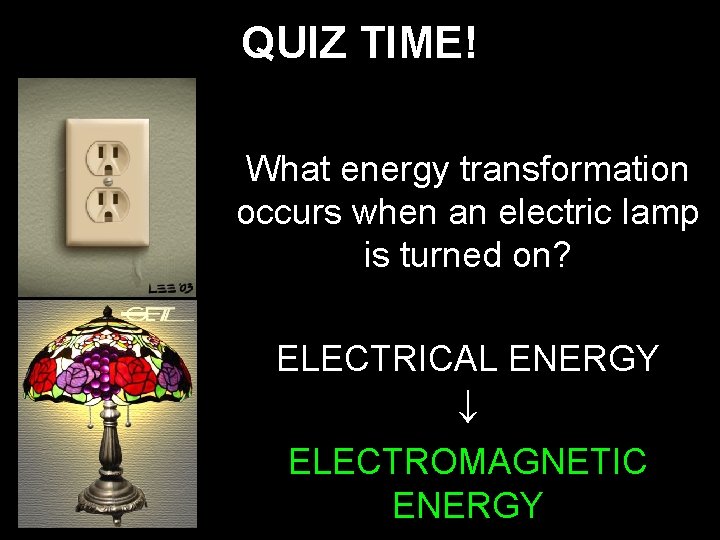
QUIZ TIME! What energy transformation occurs when an electric lamp is turned on? ELECTRICAL ENERGY ELECTROMAGNETIC ENERGY
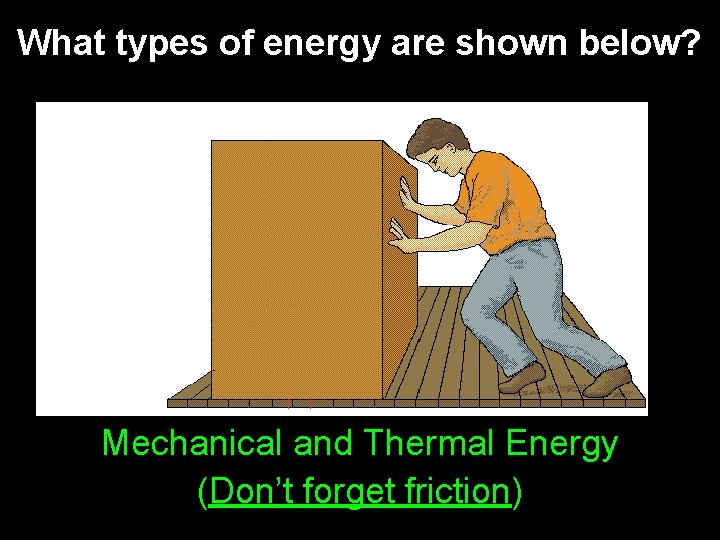
What types of energy are shown below? Mechanical and Thermal Energy (Don’t forget friction)
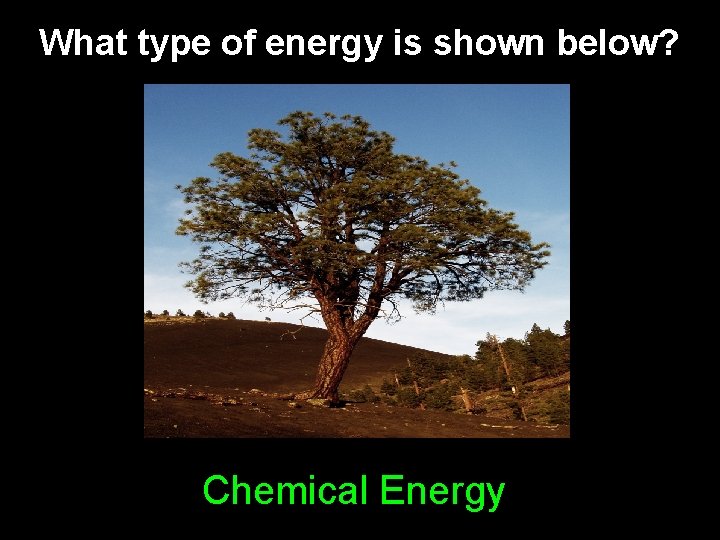
What type of energy is shown below? Chemical Energy
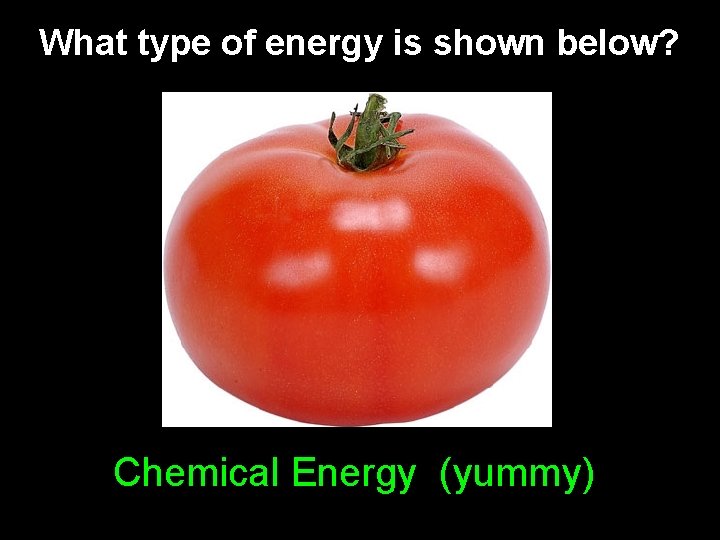
What type of energy is shown below? Chemical Energy (yummy)
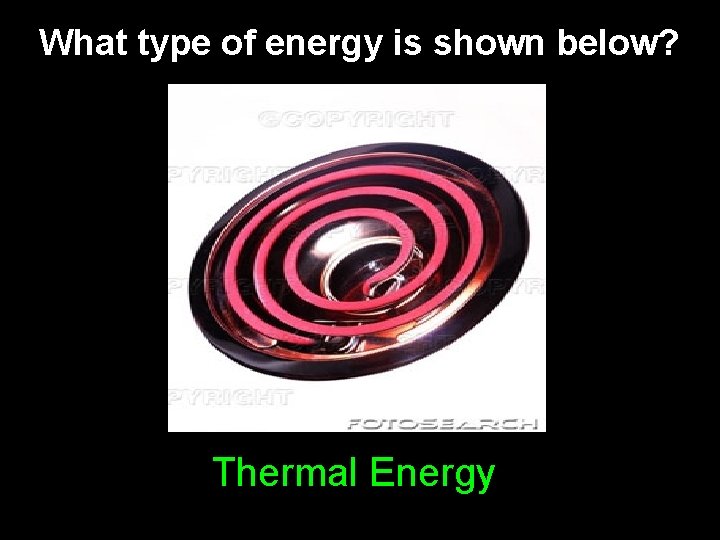
What type of energy is shown below? Thermal Energy
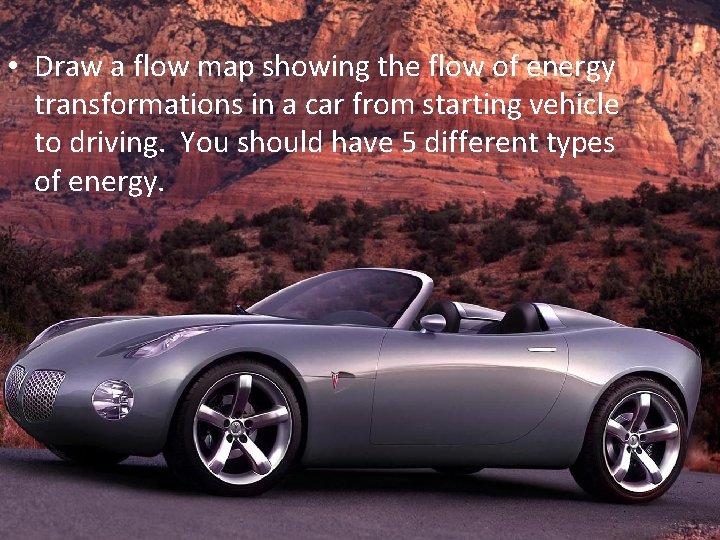
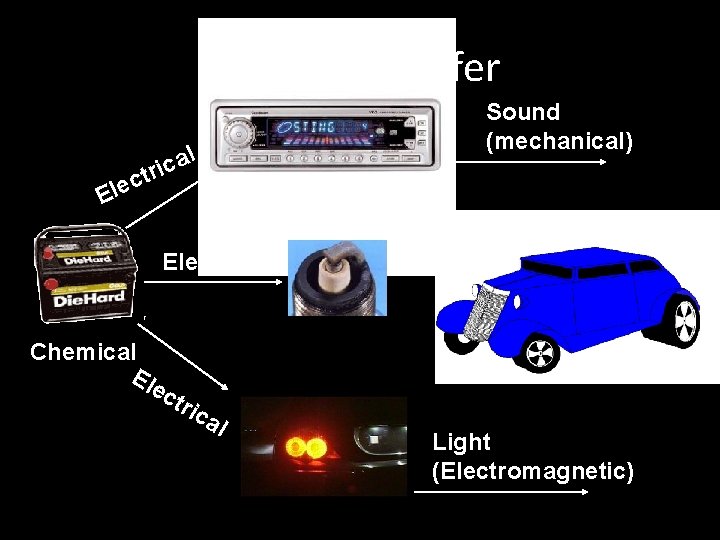
• Draw a flow map showing the flow of energy transformations in a car from starting vehicle to driving. You should have 5 different types of energy.
Energy Transfer c e l E Sound (mechanical) l a c tri Thermal Electrical Chemical Ele Mechanical ctr i ca l Light (Electromagnetic)
Picture # 1 Picture # 2 Ammonium The mixture is thiocyanate stirred. Water is is mixed with one of the barium hydroxide. products of the reaction. Picture # 3 The reaction is endothermic. The temperature has dropped.
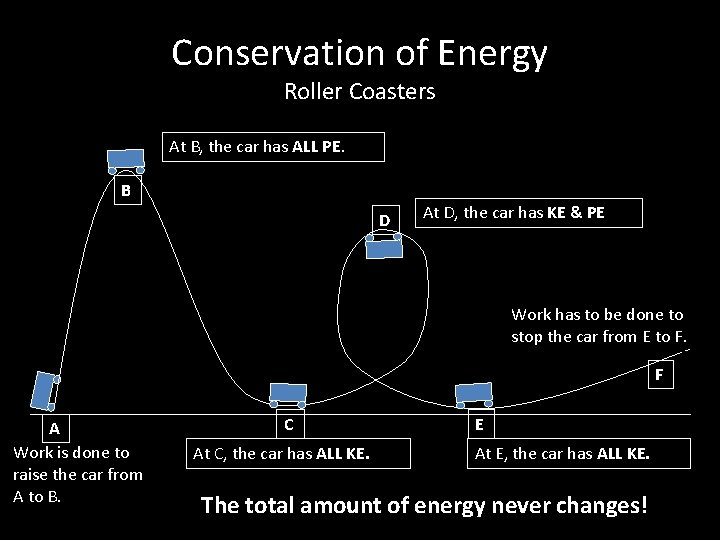
Conservation of Energy Roller Coasters At B, the car has ALL PE. B D At D, the car has KE & PE Work has to be done to stop the car from E to F. F A Work is done to raise the car from A to B. C At C, the car has ALL KE. E At E, the car has ALL KE. The total amount of energy never changes!