
Chapter 2 Fundamentals of Design Architecture and Design






- Slides: 33
Chapter 2 Fundamentals of Design Architecture and Design Louis Sullivan “Our architecture reflects us truly as a mirror” Form Follows Function – Mainly identified with the style of Frank Lloyd Wright – Any architectural form (shape, object) should have an intended practical purpose and should perform a function
Aesthetic value Appreciation of form, beauty, and uniqueness Functionalism Quality of being useful Lead to the development of the organic concept – All materials, functions, forms, and surroundings are coordinated in harmony with nature Interior design Furnishings should be closely related to exterior architecture for consistent design
Creativity Architects and interior designers apply the elements and principles of design
Elements of Design Line – Produces a sense of movement or produce a greater sense of length or height Color -Has influence on the final appearance of design Form -Lines joined together and create the shape of an area -Circles and ovals convey a feeling of completeness -Squares and rectangles produce a feeling of mathematical precision -Whether the form of an object is open, closed, solid, hollow, the form should be determined by it’s function
Light (value) – Reflects the surfaces of a form Space – Surrounds forn and is contained within it – Architectural Design includes the art of defining space and space relationships Texture – Refers to the surface finish of an object – Roughness, coarseness, or fineness Materials – Raw substances with which designers create
All Elements of Design Can strengthen or diminish interest
Designer must understand the nature and relationship of COLORS Divided into three categories Primary Secondary Tertiary
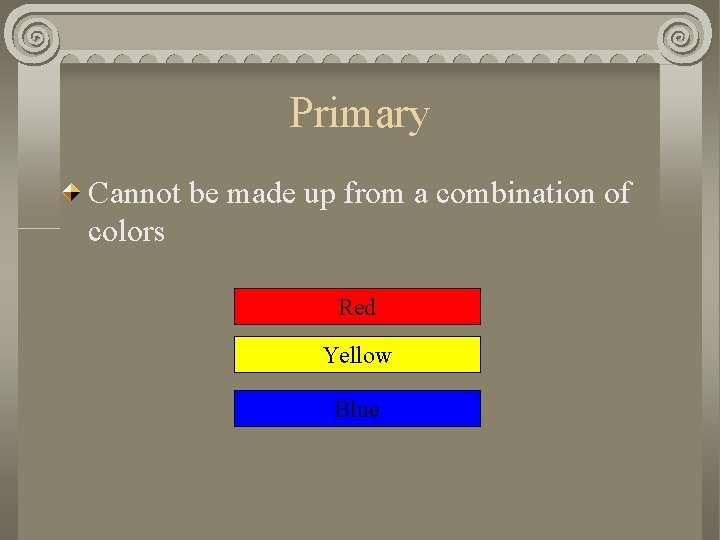
Primary Cannot be made up from a combination of colors Red Yellow Blue
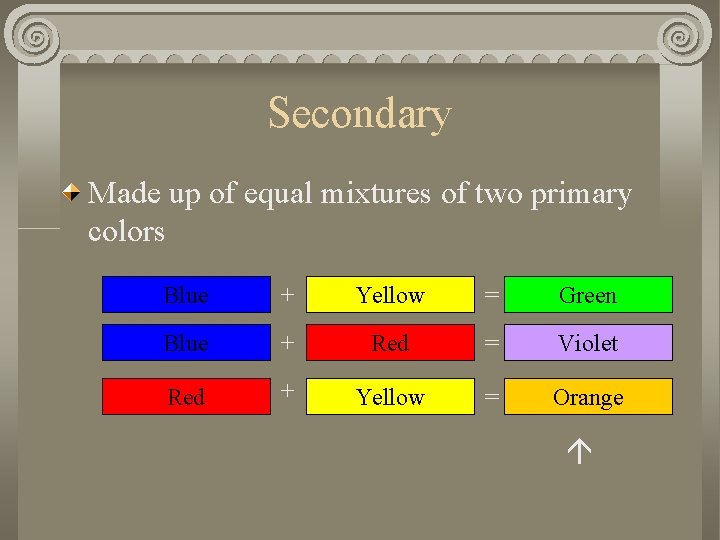
Secondary Made up of equal mixtures of two primary colors Blue + Yellow = Green Blue + Red = Violet Red + Yellow = Orange
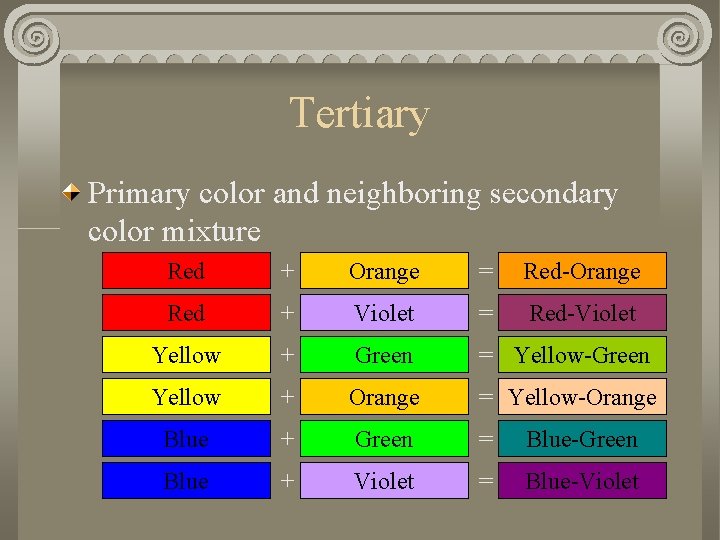
Tertiary Primary color and neighboring secondary color mixture Red + Orange = Red-Orange Red + Violet = Red-Violet Yellow + Green = Yellow-Green Yellow + Orange = Yellow-Orange Blue + Green = Blue-Green Blue + Violet = Blue-Violet
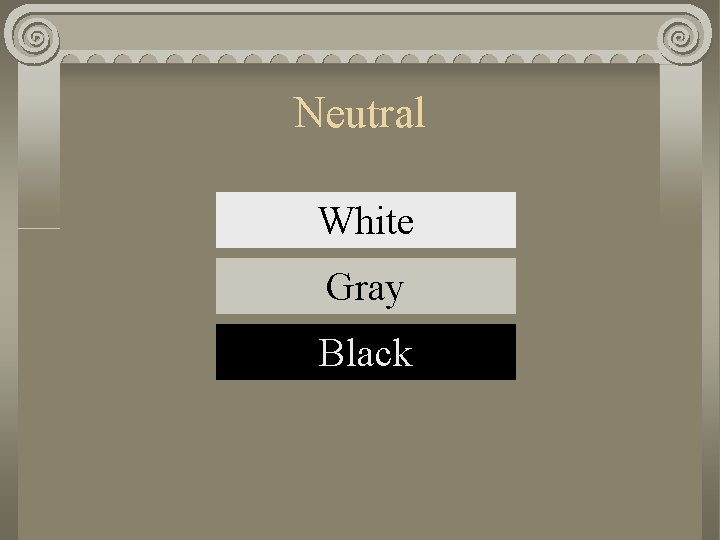
Neutral White Gray Black
Color Quality Distinguishing accuracy Hue Basic consistent identity – Ex: Blue, blue-green, yellow Lighter or darker does not matter, the hue stays the same Value Lightness or darkness of hue – Can dramatically change the mood of a room
Value Lightness or darkness of hue – Can dramatically change the mood of a room Tint Lighter(or higher) in value than the normal value Produced by adding white to a color Lighter tint of hue will make a room look larger in area Shade Darker (or lower) in value than the normal value Produced by adding black to a color Dark shade will make a room look smaller in area
Tone Produced by adding gray to the normal color Intensity Degree of purity (or brightness) of a color Free from neutralizing factors – Chroma
Principles of Design Guidelines for how to combine the elements of design Balance Equilibrium (feeling of stability) Informally balanced (asymmetrical) Formally balanced (symmetrical)
Rhythm and repetition Same pattern used over and over; creates a sense of motion Emphasis Draws a viewer’s attention to an area or subject Subordination Occurs when emphasis is achieved through design. Other features become less noticeable Proportion Assures appropriate sizing of components
Variety Also called contrast Do not create too much unity, rhythm, or repetition or you will lose variety Opposition Use of contrasting elements for variety Transition To change from one color to another or from a curved line to a straight line Must maintain the same unity
Unity Creates a sense of wholeness
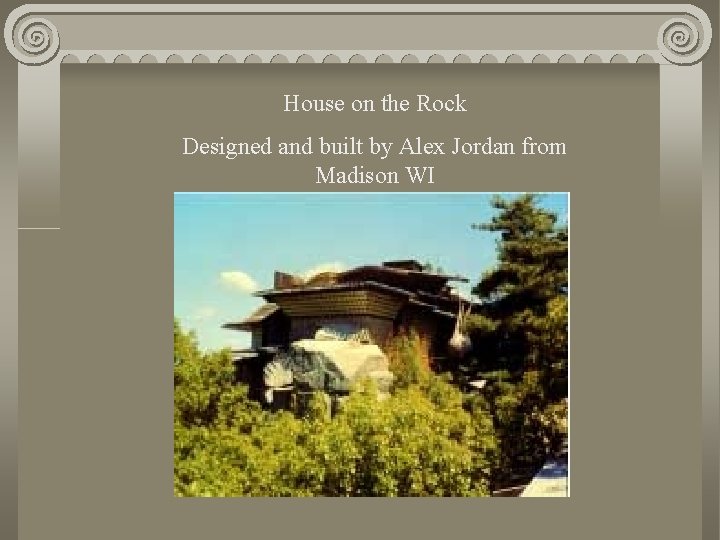
House on the Rock Designed and built by Alex Jordan from Madison WI
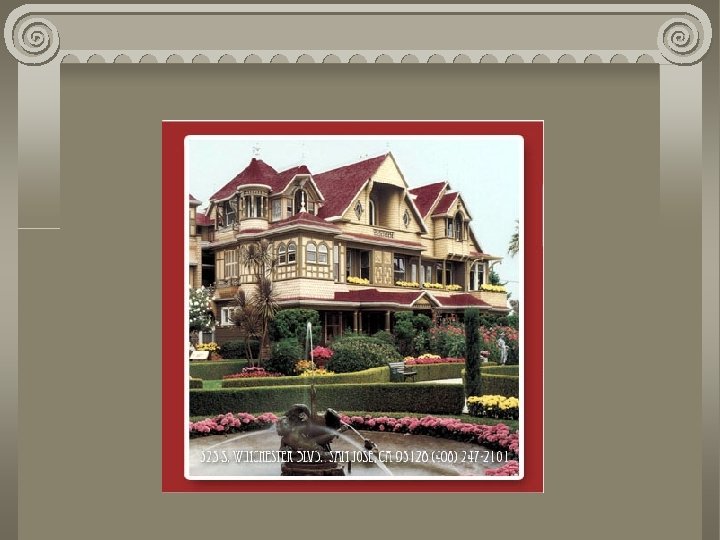
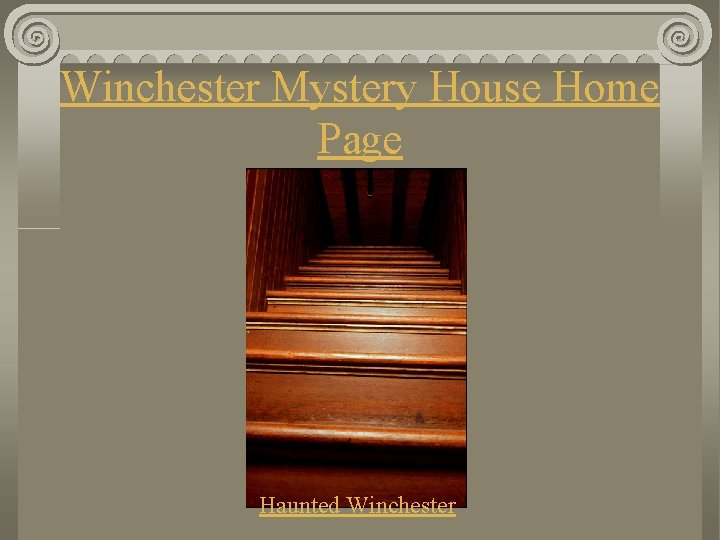
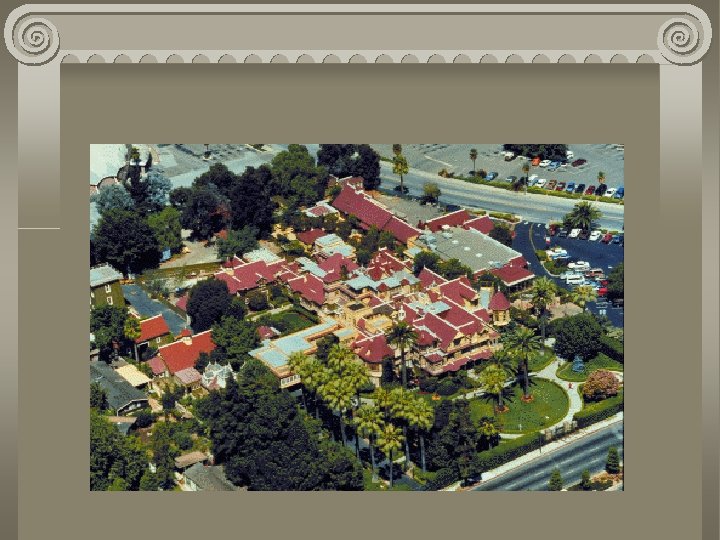
Winchester Mystery House Home Page Haunted Winchester
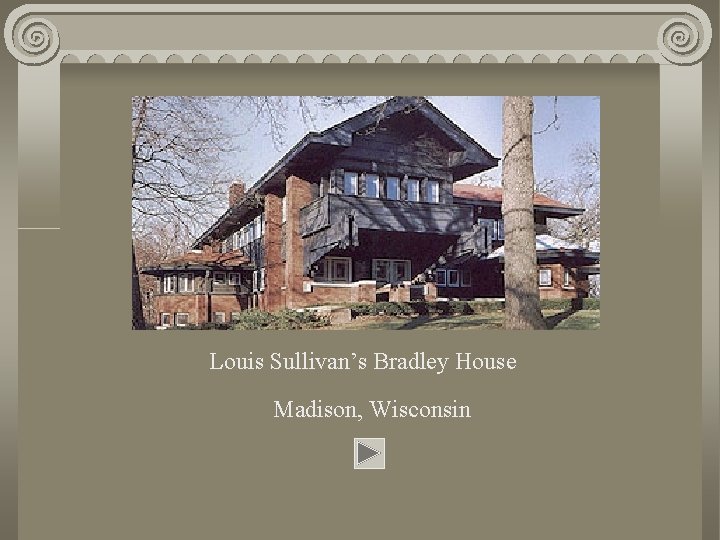
Louis Sullivan’s Bradley House Madison, Wisconsin
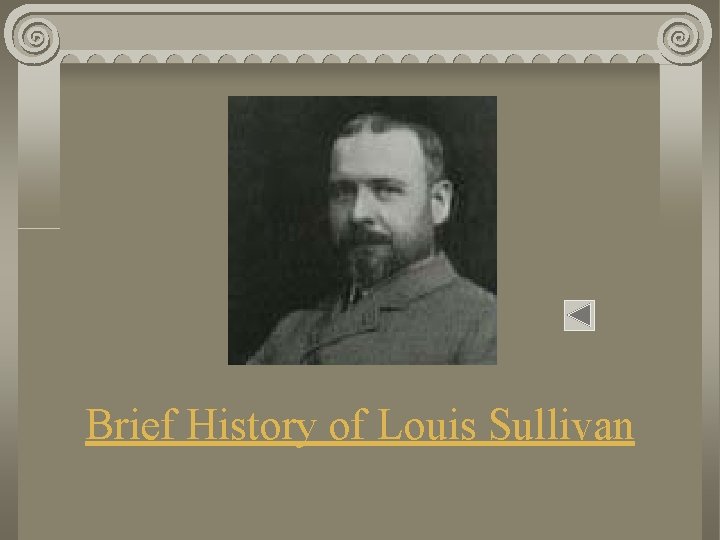
Brief History of Louis Sullivan
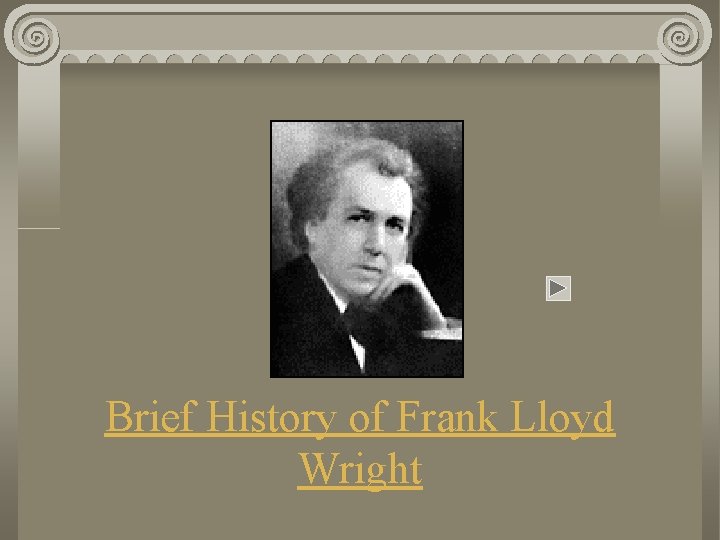
Brief History of Frank Lloyd Wright
Wingspread- Wind Point, Wisconsin
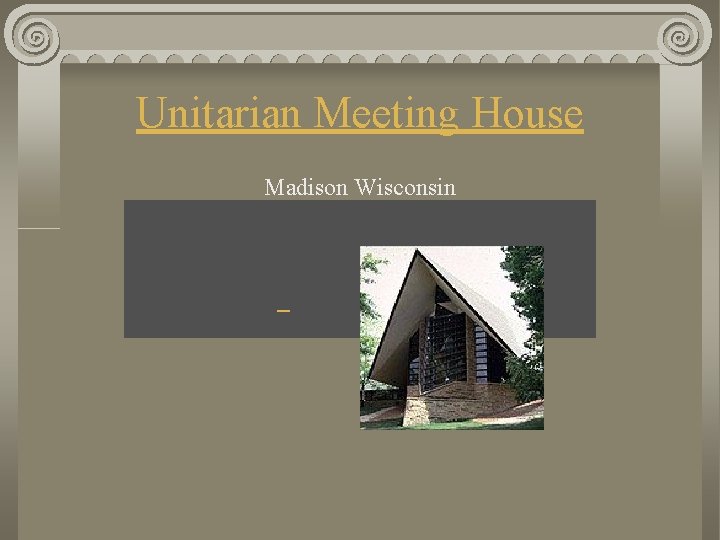
Unitarian Meeting House Madison Wisconsin
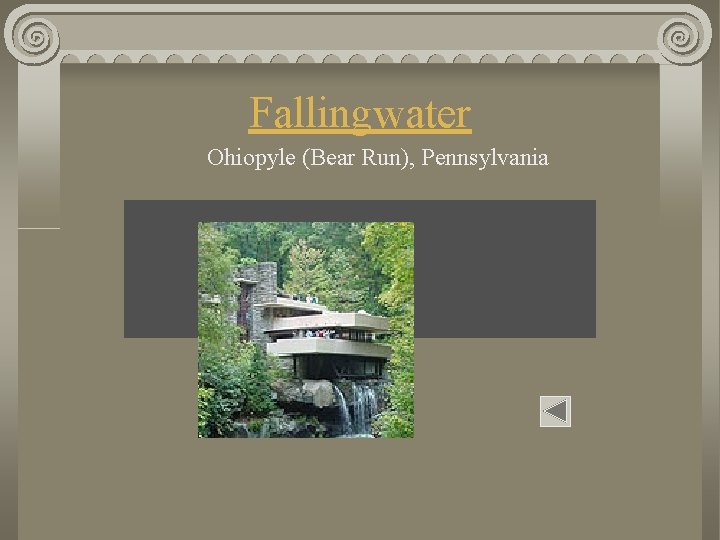
Fallingwater Ohiopyle (Bear Run), Pennsylvania