
Chapter 2 Frequency Distribution BS Psychology 2 nd
Chapter # 2: Frequency Distribution BS Psychology 2 nd Course: Introduction to Statistics Course Code: URCS-5108 Course Instructor: Kanwal Iqbal 1
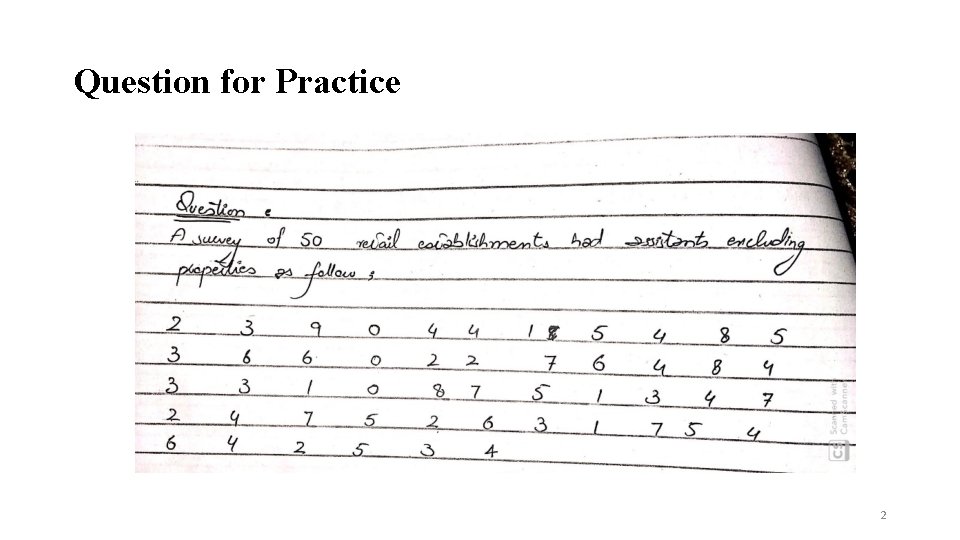
Question for Practice 2
Frequency Distribution Graph Histogram: To conduct a histogram, you 1 ist the numerical scores along x axis. You draw a bar above each x value so that a. The height of the bar corresponds to the frequency for that category. b. The width of the bar extends to the real limit of the category. group data = Class interval ungrouped data = same value 3
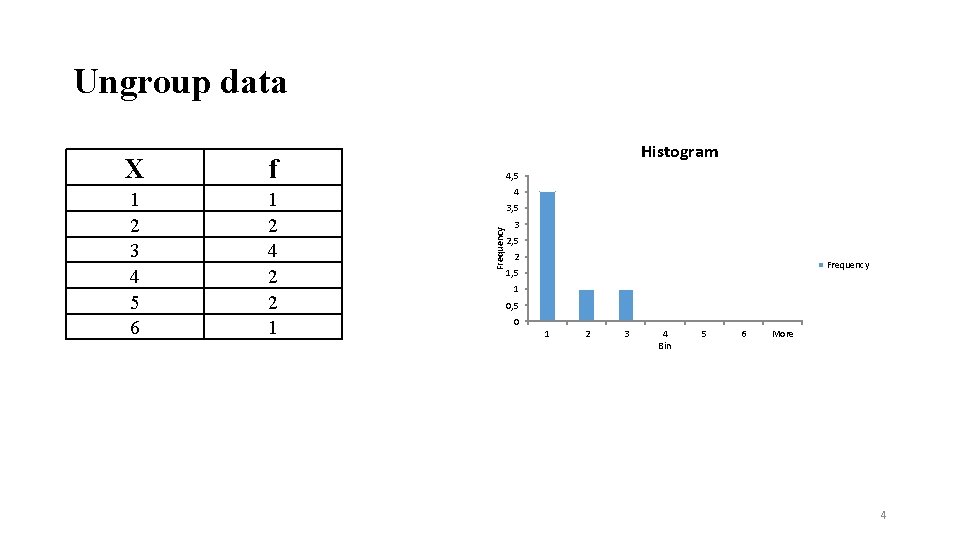
Ungroup data f 1 2 3 4 5 6 1 2 4 2 2 1 4, 5 4 3, 5 Frequency X Histogram 3 2, 5 2 Frequency 1, 5 1 0, 5 0 1 2 3 4 Bin 5 6 More 4
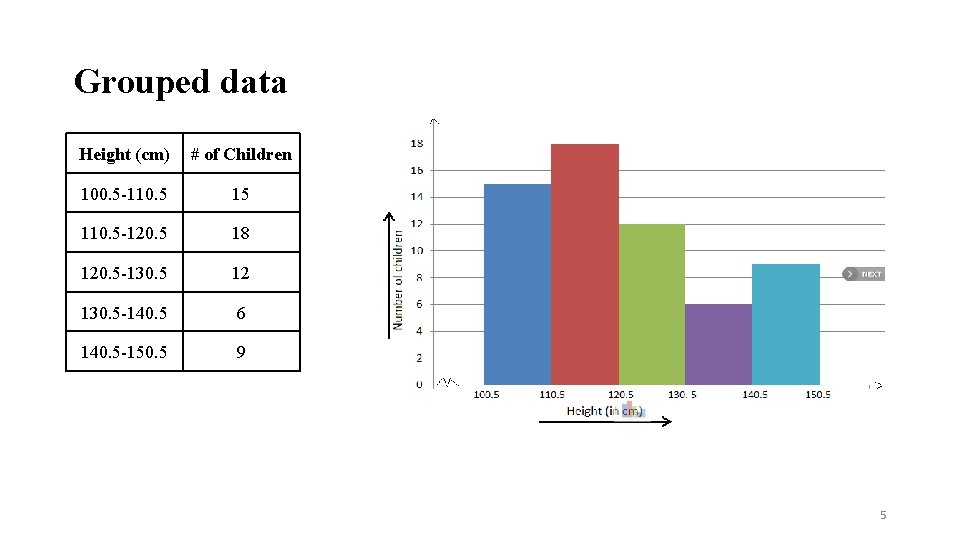
Grouped data Height (cm) # of Children 100. 5 -110. 5 15 110. 5 -120. 5 18 120. 5 -130. 5 12 130. 5 -140. 5 6 140. 5 -150. 5 9 5
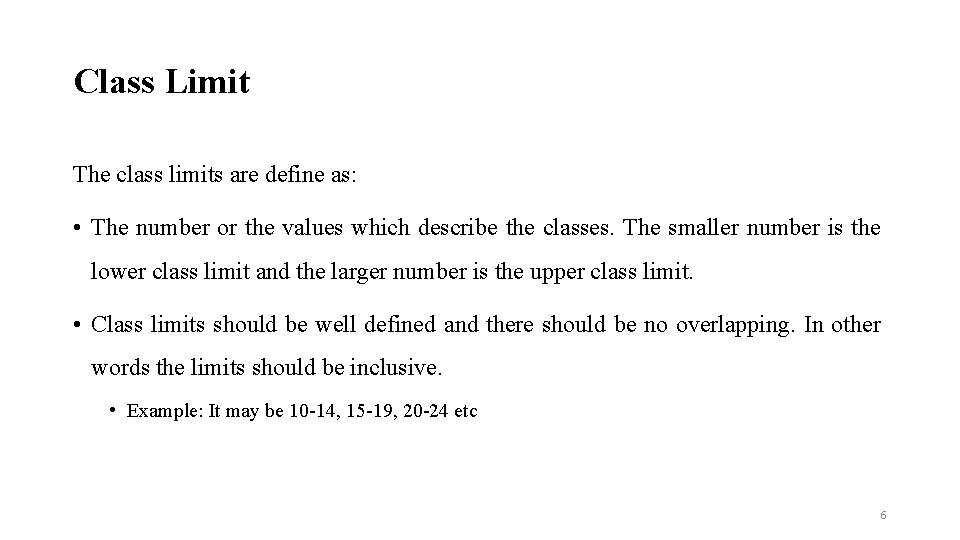
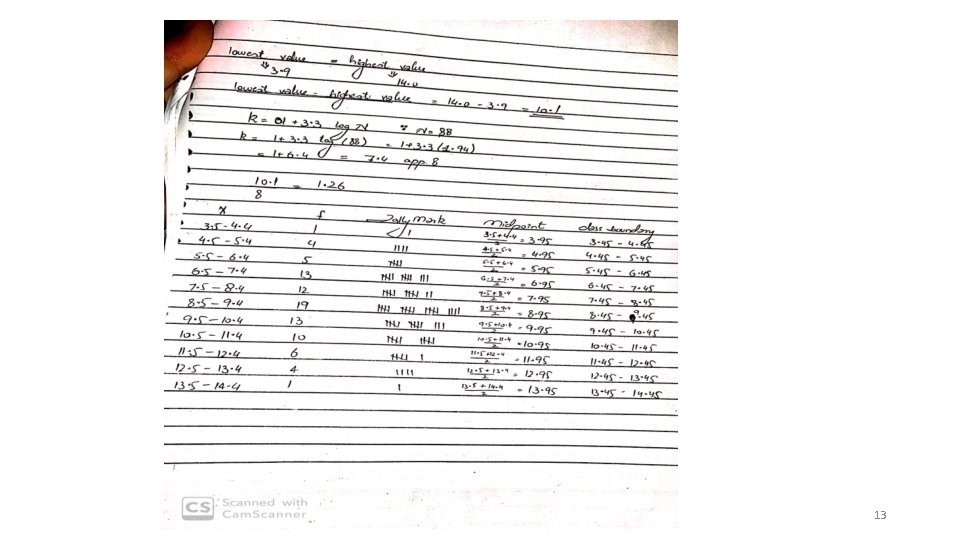
Class Limit The class limits are define as: • The number or the values which describe the classes. The smaller number is the lower class limit and the larger number is the upper class limit. • Class limits should be well defined and there should be no overlapping. In other words the limits should be inclusive. • Example: It may be 10 -14, 15 -19, 20 -24 etc 6
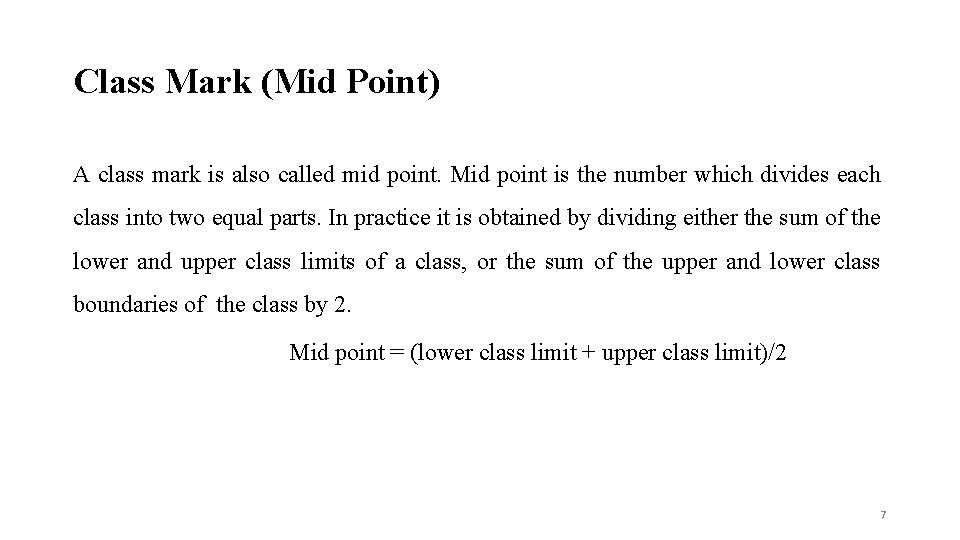
Class Mark (Mid Point) A class mark is also called mid point. Mid point is the number which divides each class into two equal parts. In practice it is obtained by dividing either the sum of the lower and upper class limits of a class, or the sum of the upper and lower class boundaries of the class by 2. Mid point = (lower class limit + upper class limit)/2 7
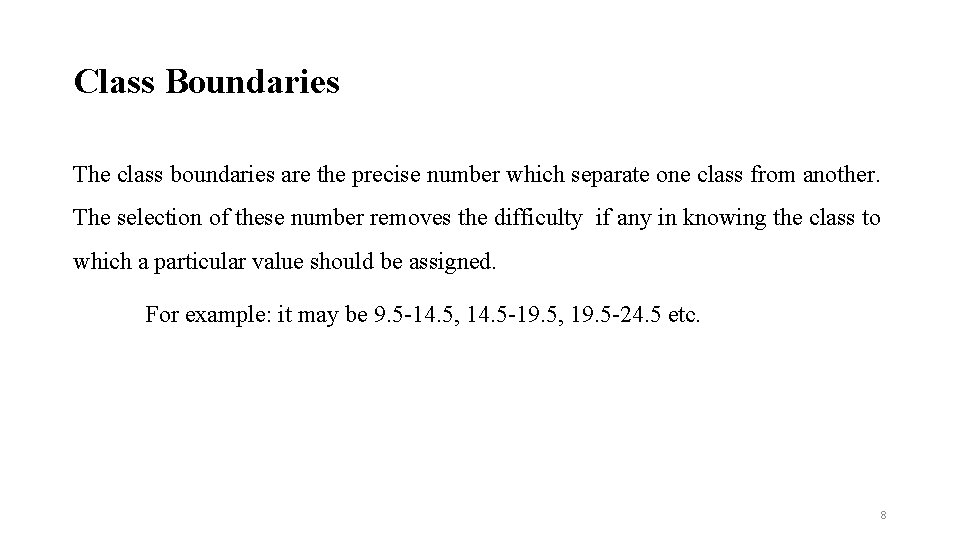
Class Boundaries The class boundaries are the precise number which separate one class from another. The selection of these number removes the difficulty if any in knowing the class to which a particular value should be assigned. For example: it may be 9. 5 -14. 5, 14. 5 -19. 5, 19. 5 -24. 5 etc. 8
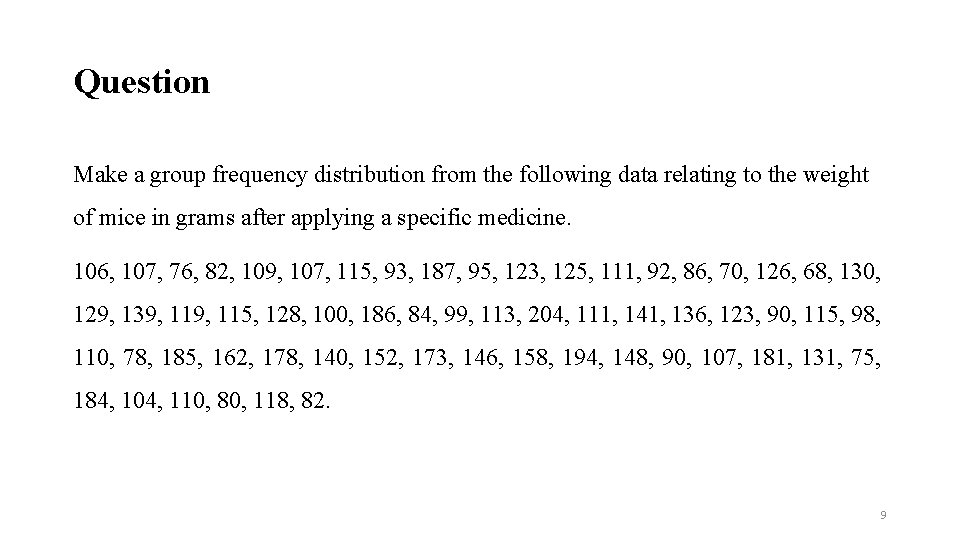
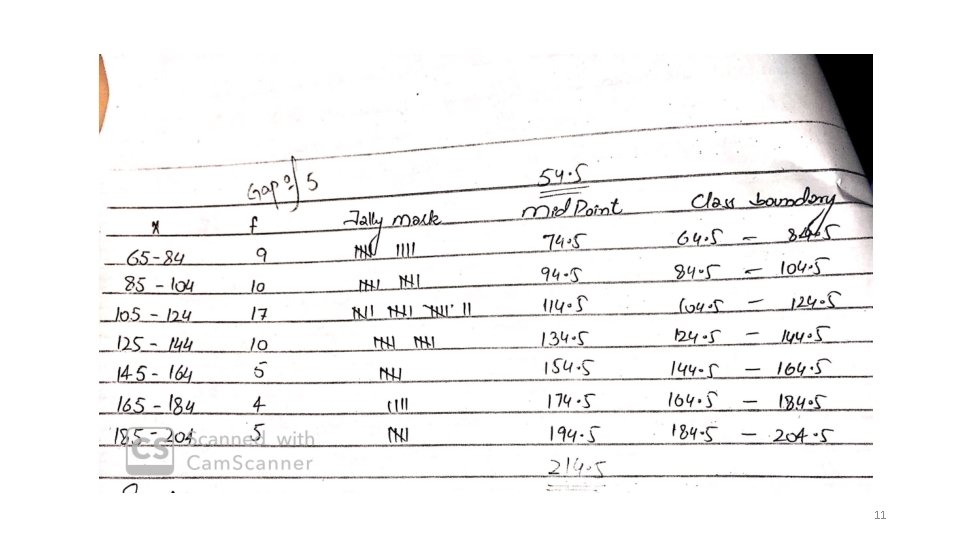
Question Make a group frequency distribution from the following data relating to the weight of mice in grams after applying a specific medicine. 106, 107, 76, 82, 109, 107, 115, 93, 187, 95, 123, 125, 111, 92, 86, 70, 126, 68, 130, 129, 139, 115, 128, 100, 186, 84, 99, 113, 204, 111, 141, 136, 123, 90, 115, 98, 110, 78, 185, 162, 178, 140, 152, 173, 146, 158, 194, 148, 90, 107, 181, 131, 75, 184, 104, 110, 80, 118, 82. 9
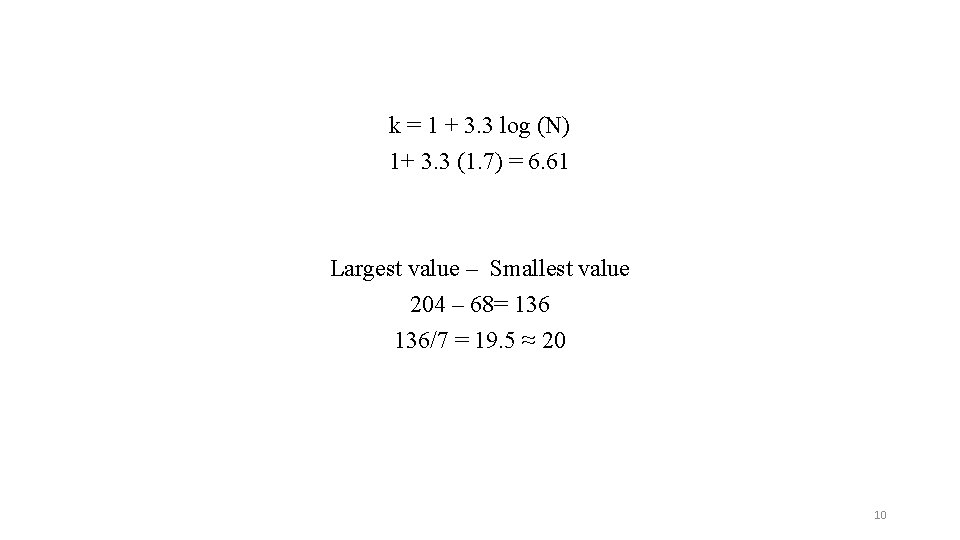
k = 1 + 3. 3 log (N) 1+ 3. 3 (1. 7) = 6. 61 Largest value – Smallest value 204 – 68= 136/7 = 19. 5 ≈ 20 10
11
12
13
- Slides: 13