
Chapter 2 Finances Career Planning Chapter 2 Finances




- Slides: 12
Chapter 2 Finances & Career Planning
Chapter 2 – Finances & Career Planning Section 1 – Planning Your Career Job vs. Career A job is something that you do mainly to earn money A career is a commitment to work in a field that you find interesting and fulfilling Career Decisions Trade-offs Your choice of career will affect The people you meet The money you make The amount of free time you have Standard of Living A term used to measure the quality of life based on what you can buy Goods, services, etc… Some careers may just pay for your hobbies, while others provide fulfillment on their own
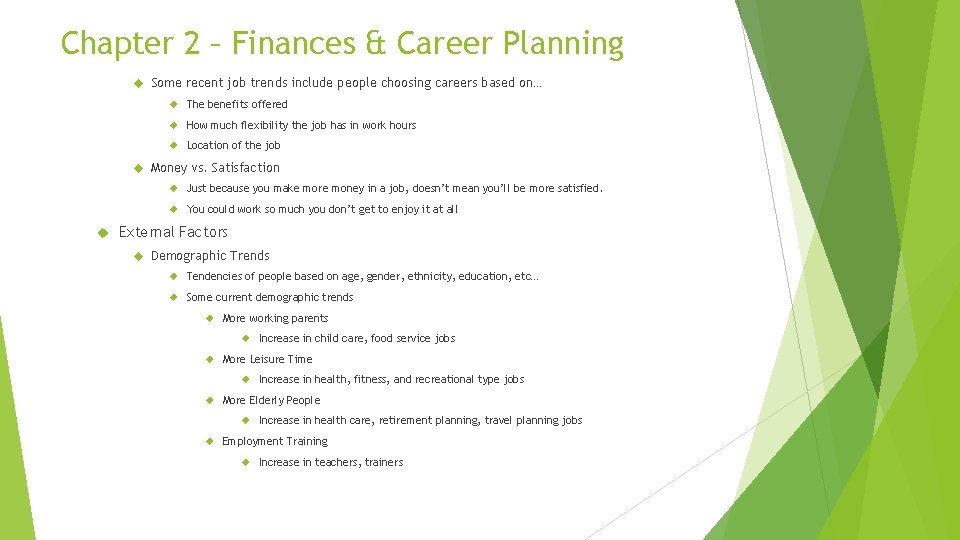
Chapter 2 – Finances & Career Planning Some recent job trends include people choosing careers based on… The benefits offered How much flexibility the job has in work hours Location of the job Money vs. Satisfaction Just because you make more money in a job, doesn’t mean you’ll be more satisfied. You could work so much you don’t get to enjoy it at all External Factors Demographic Trends Tendencies of people based on age, gender, ethnicity, education, etc… Some current demographic trends More working parents Increase in child care, food service jobs More Leisure Time Increase in health, fitness, and recreational type jobs More Elderly People Increase in health care, retirement planning, travel planning jobs Employment Training Increase in teachers, trainers
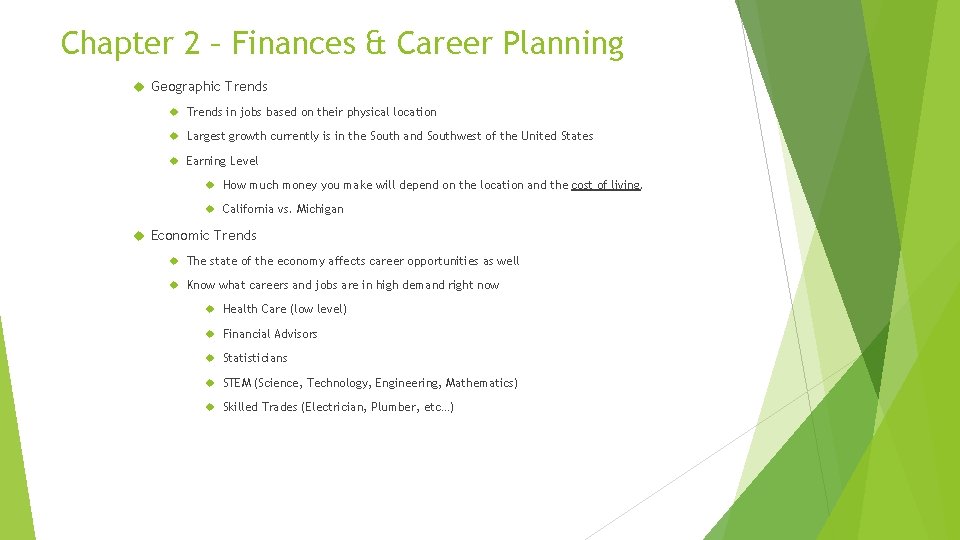
Chapter 2 – Finances & Career Planning Geographic Trends in jobs based on their physical location Largest growth currently is in the South and Southwest of the United States Earning Level How much money you make will depend on the location and the cost of living. California vs. Michigan Economic Trends The state of the economy affects career opportunities as well Know what careers and jobs are in high demand right now Health Care (low level) Financial Advisors Statisticians STEM (Science, Technology, Engineering, Mathematics) Skilled Trades (Electrician, Plumber, etc…)
Chapter 2 – Finances & Career Planning Career Training & Skill Development More Education tends to correspond to higher income. Potential Earning Power is the amount of money you could potentially earn over time The average high school graduate makes about $1, 000 more in their life than a non-HS graduate The average college graduate makes about $1, 000 more in their life than a HS graduate only Having good habits can make you more valuable to an employer People skills Technology Skills (Word/Power. Point/Excel) Creativity, Communicative, Organized Good work habits (show up on time, work hard, being respectful) Personal Factors Aptitudes – What are you good at? Don’t become a statistician if you are terrible at math! Interest Inventories – What do you enjoy doing? Just because you’re good at something doesn’t mean you enjoy it The ideal career will be something that you are both good at AND enjoy doing!
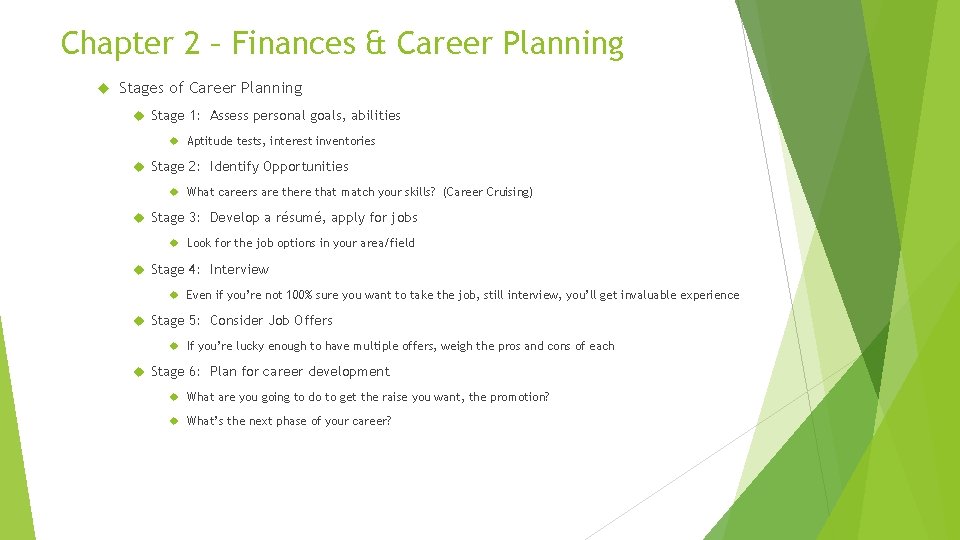
Chapter 2 – Finances & Career Planning Stages of Career Planning Stage 1: Assess personal goals, abilities Aptitude tests, interest inventories Stage 2: Identify Opportunities What careers are there that match your skills? (Career Cruising) Stage 3: Develop a résumé, apply for jobs Look for the job options in your area/field Stage 4: Interview Even if you’re not 100% sure you want to take the job, still interview, you’ll get invaluable experience Stage 5: Consider Job Offers If you’re lucky enough to have multiple offers, weigh the pros and cons of each Stage 6: Plan for career development What are you going to do to get the raise you want, the promotion? What’s the next phase of your career?
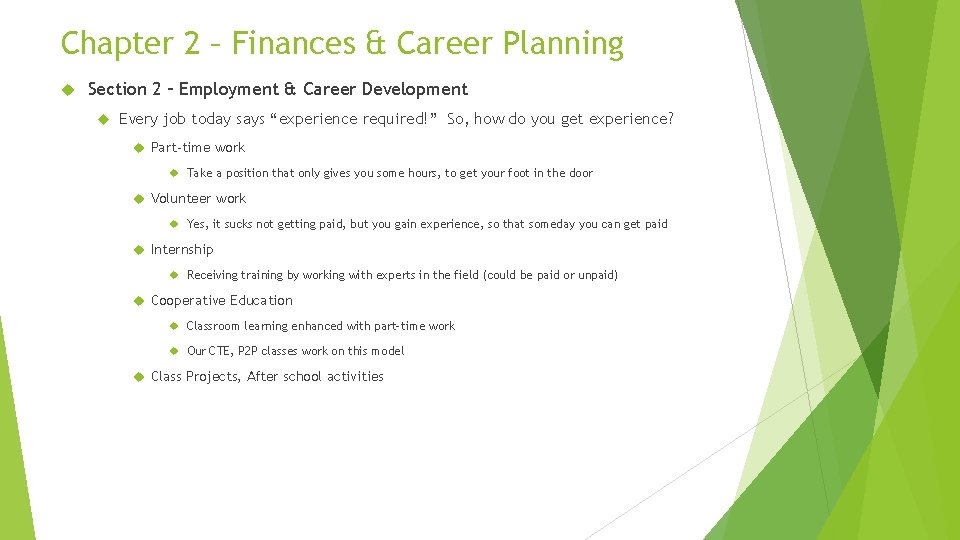
Chapter 2 – Finances & Career Planning Section 2 – Employment & Career Development Every job today says “experience required!” So, how do you get experience? Part-time work Take a position that only gives you some hours, to get your foot in the door Volunteer work Yes, it sucks not getting paid, but you gain experience, so that someday you can get paid Internship Receiving training by working with experts in the field (could be paid or unpaid) Cooperative Education Classroom learning enhanced with part-time work Our CTE, P 2 P classes work on this model Class Projects, After school activities
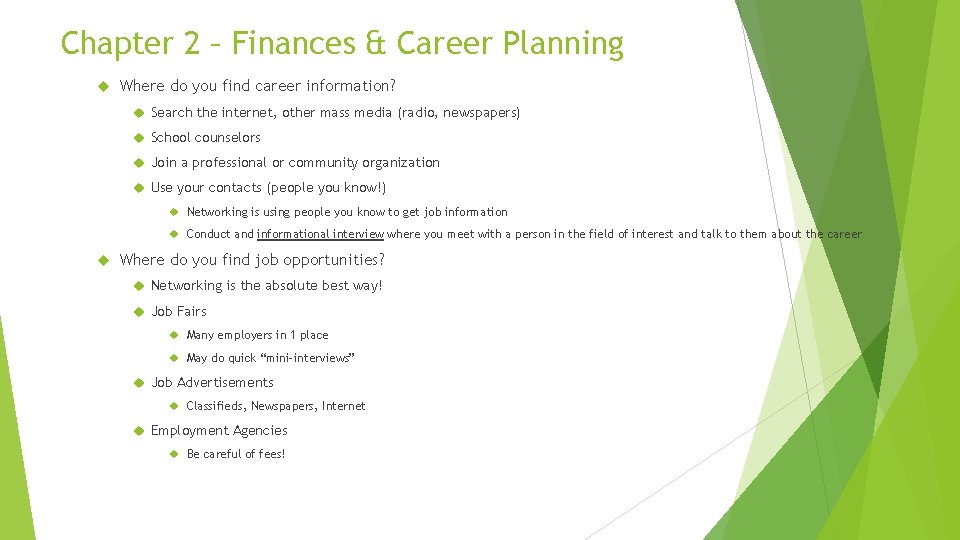
Chapter 2 – Finances & Career Planning Where do you find career information? Search the internet, other mass media (radio, newspapers) School counselors Join a professional or community organization Use your contacts (people you know!) Networking is using people you know to get job information Conduct and informational interview where you meet with a person in the field of interest and talk to them about the career Where do you find job opportunities? Networking is the absolute best way! Job Fairs Many employers in 1 place May do quick “mini-interviews” Job Advertisements Classifieds, Newspapers, Internet Employment Agencies Be careful of fees!
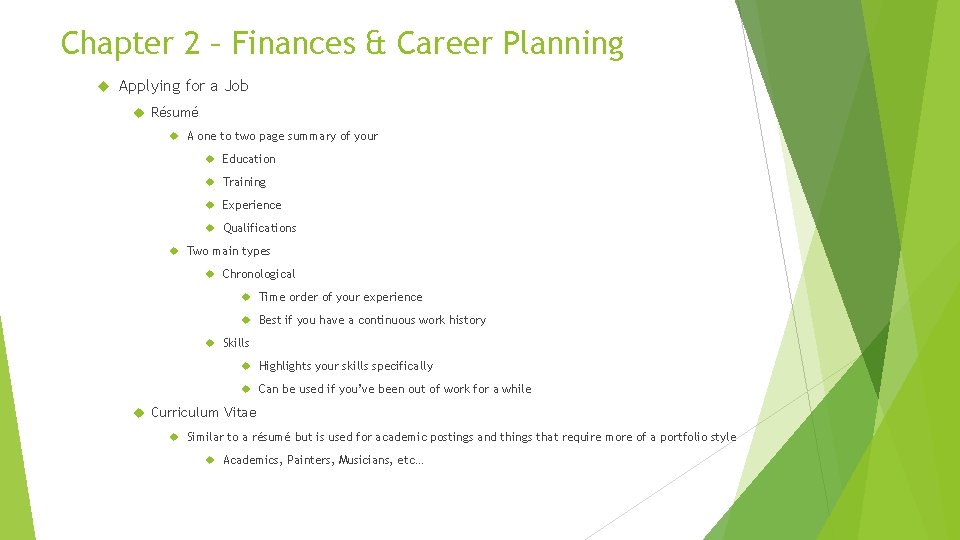
Chapter 2 – Finances & Career Planning Applying for a Job Résumé A one to two page summary of your Education Training Experience Qualifications Two main types Chronological Time order of your experience Best if you have a continuous work history Skills Highlights your skills specifically Can be used if you’ve been out of work for a while Curriculum Vitae Similar to a résumé but is used for academic postings and things that require more of a portfolio style Academics, Painters, Musicians, etc…
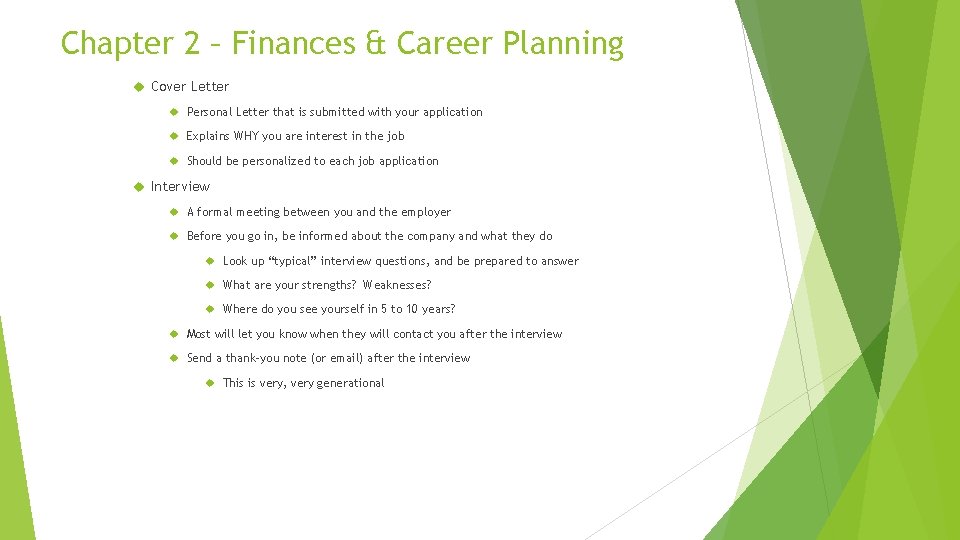
Chapter 2 – Finances & Career Planning Cover Letter Personal Letter that is submitted with your application Explains WHY you are interest in the job Should be personalized to each job application Interview A formal meeting between you and the employer Before you go in, be informed about the company and what they do Look up “typical” interview questions, and be prepared to answer What are your strengths? Weaknesses? Where do you see yourself in 5 to 10 years? Most will let you know when they will contact you after the interview Send a thank-you note (or email) after the interview This is very, very generational
Chapter 2 – Finances & Career Planning Considering Job Offers What do you look at when considering a job? Salary What is the compensation for this job? How are you paid? Hourly/Salary/Overtime? Work Environment High Stress/Low Stress? Company Policies, dress code, where can you work? Other Benefits Pension/401(k)/403(b) Health Insurance Coverage Tax-exempt benefits (No taxes paid) Free life insurance, child care, etc… Tax-deferred benefits (Taxes paid later) 401(k), pension Cafeteria Style Employee Benefits Allows you to pick and choose what is best for you and your family
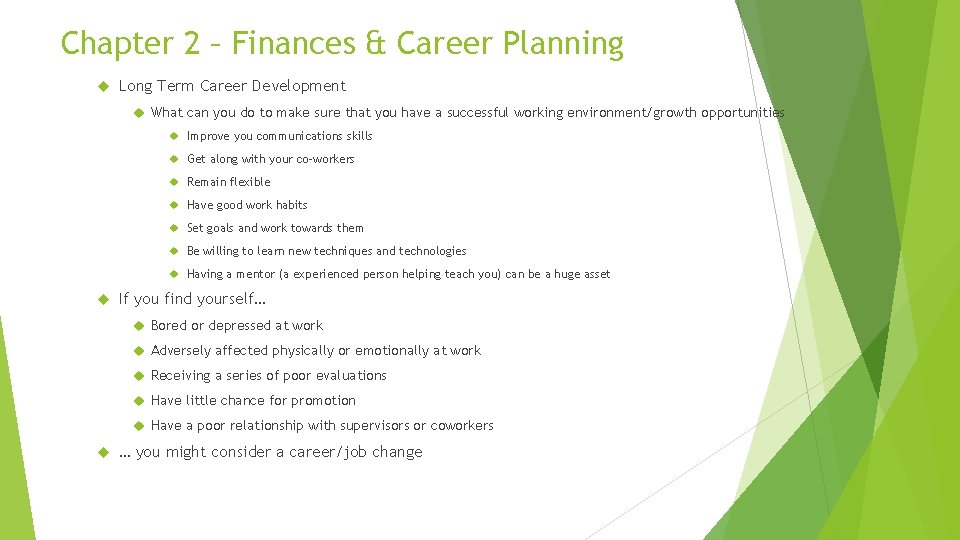
Chapter 2 – Finances & Career Planning Long Term Career Development What can you do to make sure that you have a successful working environment/growth opportunities Improve you communications skills Get along with your co-workers Remain flexible Have good work habits Set goals and work towards them Be willing to learn new techniques and technologies Having a mentor (a experienced person helping teach you) can be a huge asset If you find yourself… Bored or depressed at work Adversely affected physically or emotionally at work Receiving a series of poor evaluations Have little chance for promotion Have a poor relationship with supervisors or coworkers … you might consider a career/job change