
Chapter 2 Ethics and Public Speaking Introduction Public
Chapter 2 Ethics and Public Speaking
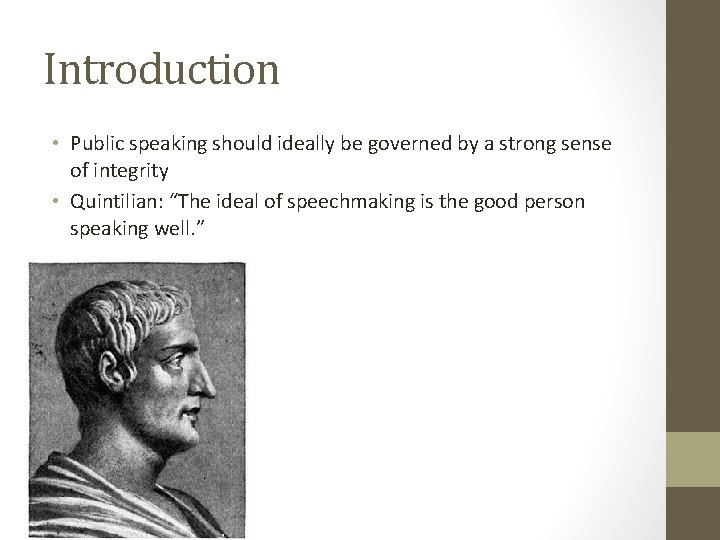
Introduction • Public speaking should ideally be governed by a strong sense of integrity • Quintilian: “The ideal of speechmaking is the good person speaking well. ”
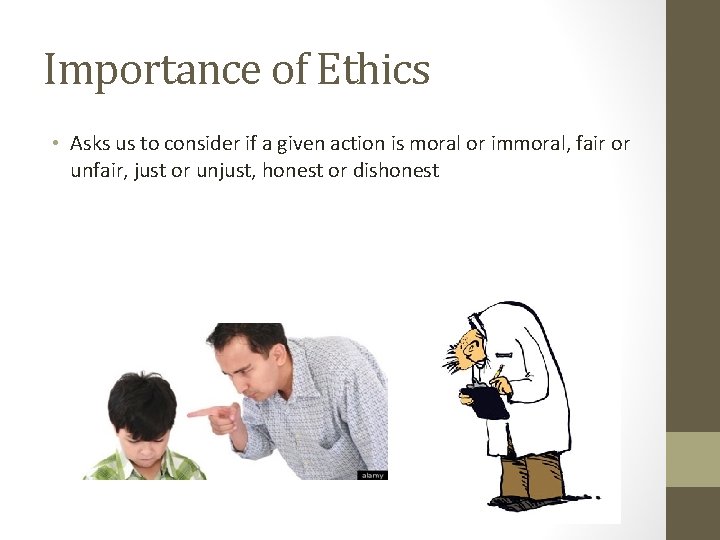
Importance of Ethics • Asks us to consider if a given action is moral or immoral, fair or unfair, just or unjust, honest or dishonest
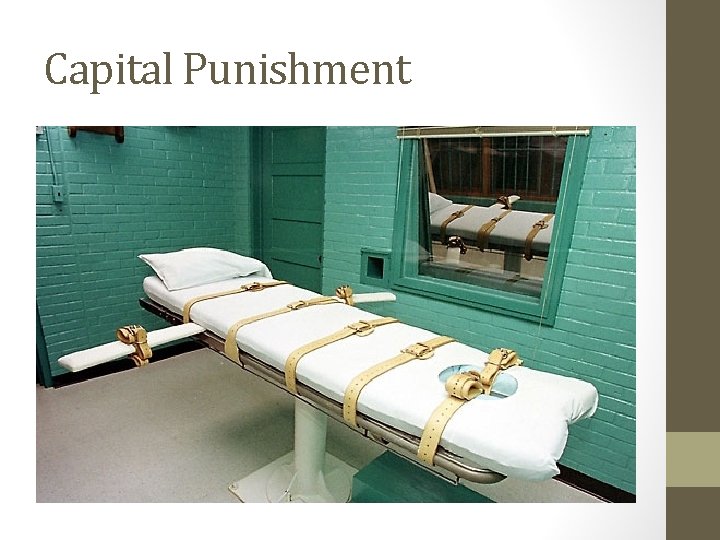
Capital Punishment
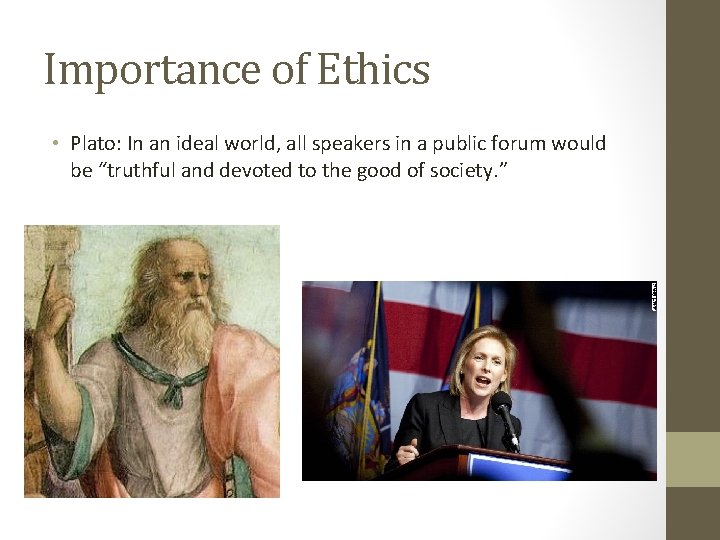
Importance of Ethics • Plato: In an ideal world, all speakers in a public forum would be “truthful and devoted to the good of society. ”

Guidelines for Ethical Speaking • Personal ethical frameworks
Implications for Speaking • Don’t overestimate how closely your “frameworks” match • Rhetorical strategies for communicating ethics • Be mindful of how you evaluate appeals to ethics
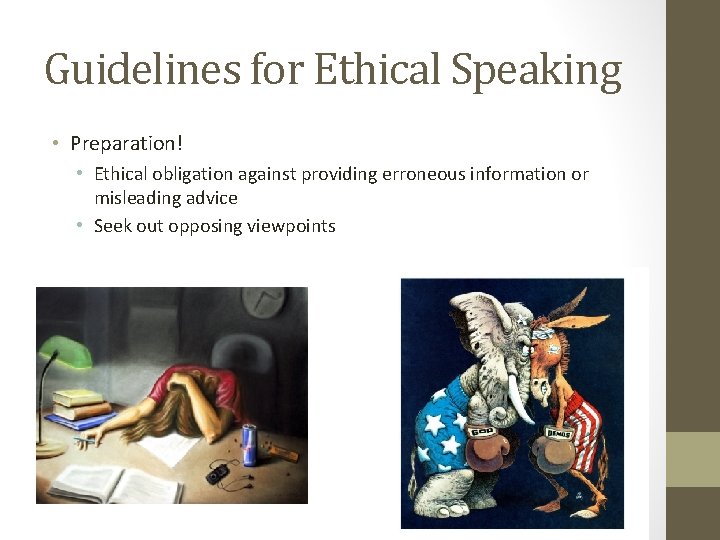
Guidelines for Ethical Speaking • Preparation! • Ethical obligation against providing erroneous information or misleading advice • Seek out opposing viewpoints
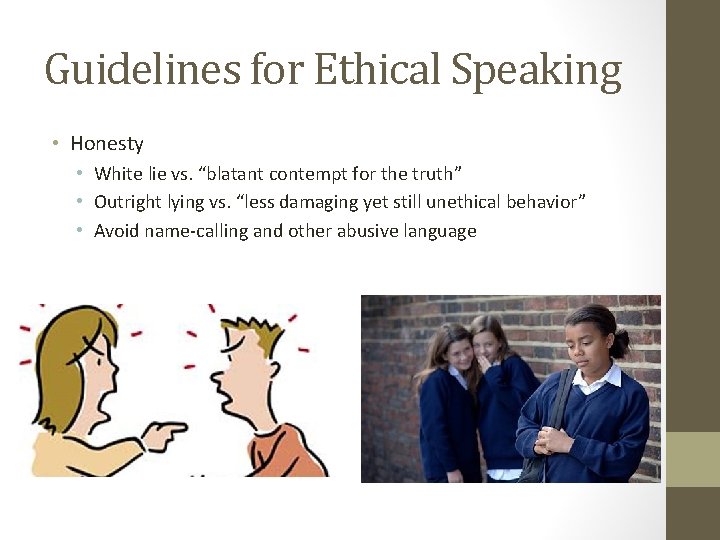
Guidelines for Ethical Speaking • Honesty • White lie vs. “blatant contempt for the truth” • Outright lying vs. “less damaging yet still unethical behavior” • Avoid name-calling and other abusive language
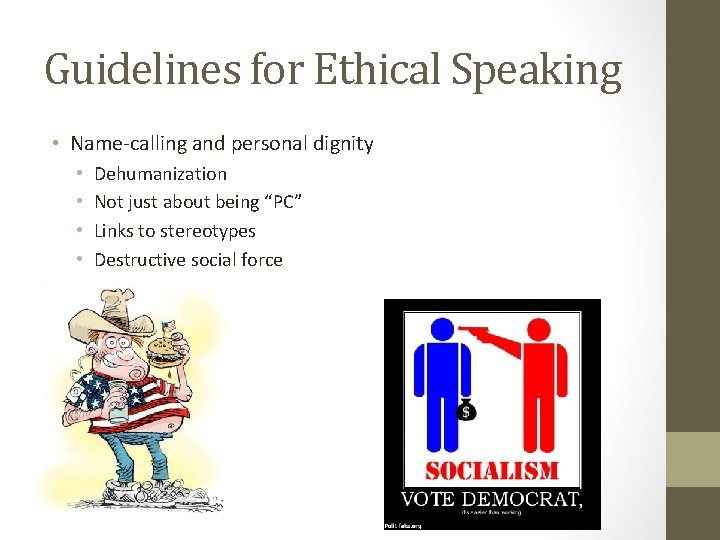
Guidelines for Ethical Speaking • Name-calling and personal dignity • • Dehumanization Not just about being “PC” Links to stereotypes Destructive social force
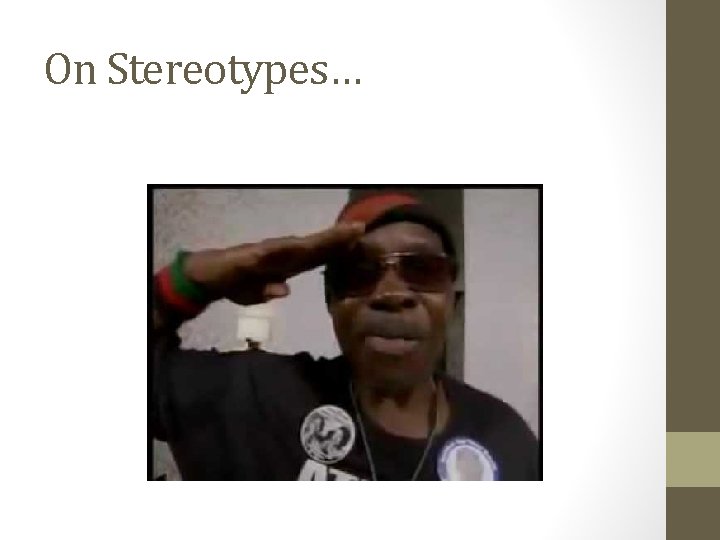
On Stereotypes…
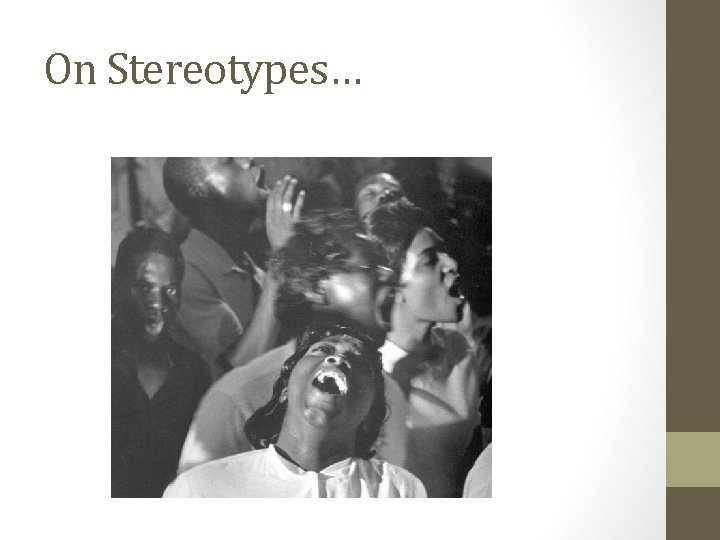
On Stereotypes…
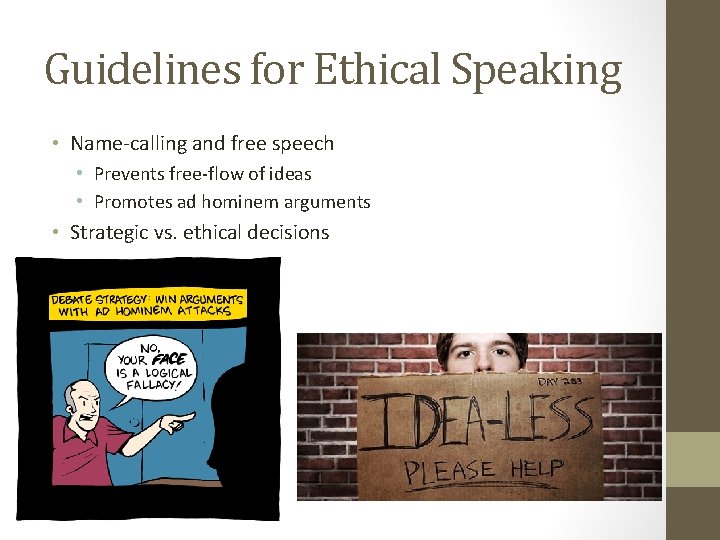
Guidelines for Ethical Speaking • Name-calling and free speech • Prevents free-flow of ideas • Promotes ad hominem arguments • Strategic vs. ethical decisions
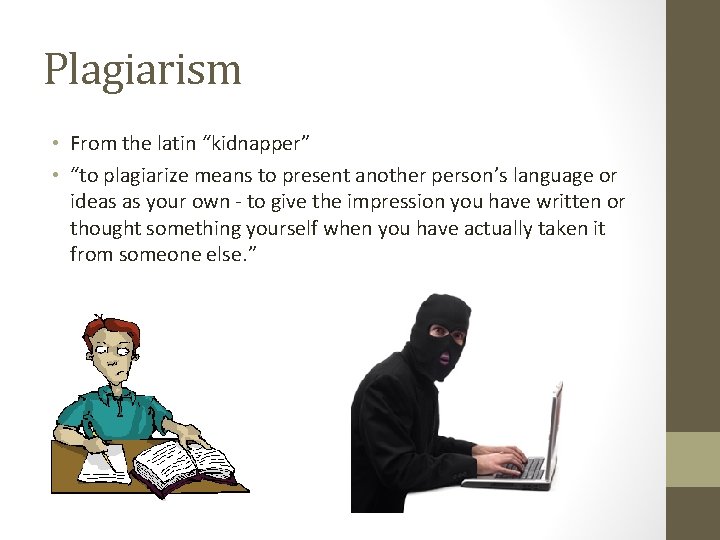
Plagiarism • From the latin “kidnapper” • “to plagiarize means to present another person’s language or ideas as your own - to give the impression you have written or thought something yourself when you have actually taken it from someone else. ”
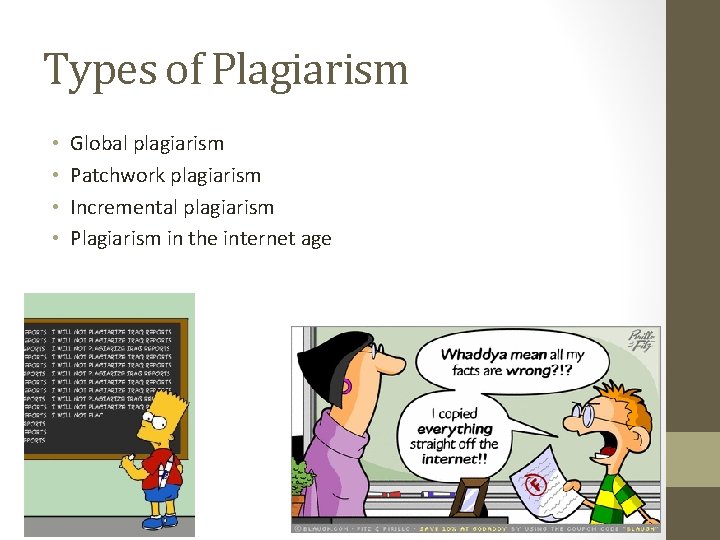
Types of Plagiarism • • Global plagiarism Patchwork plagiarism Incremental plagiarism Plagiarism in the internet age
- Slides: 15