
Chapter 2 Energy Flow and Nutrient Cycles Support

- Slides: 24
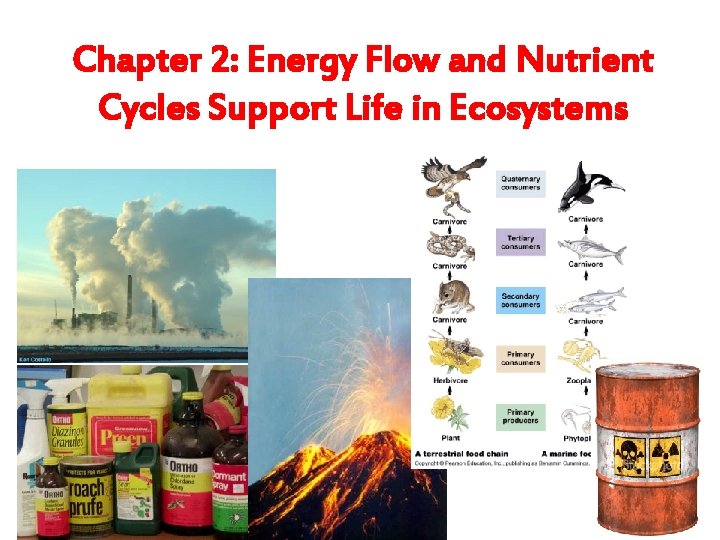
Chapter 2: Energy Flow and Nutrient Cycles Support Life in Ecosystems
Today q JAWS q Producers, Consumers, Detrivores, Decomposers q Trophic Levels q Food Chains q Food Webs q Pyramids (#, biomass, energy) q Workbook pages
JAWS! • http: //www. youtube. com/watch? v=pm. LP 0 QQ Pq. Fw
2. 1 Energy Flow in Ecosystems • Biomass: – refers to the total mass of living plants, animals, fungi, and bacteria in a given area (p. 57) – refers to the mass of particular types of organic matter (trees, plant crops, manures) that can be used to make biofuels
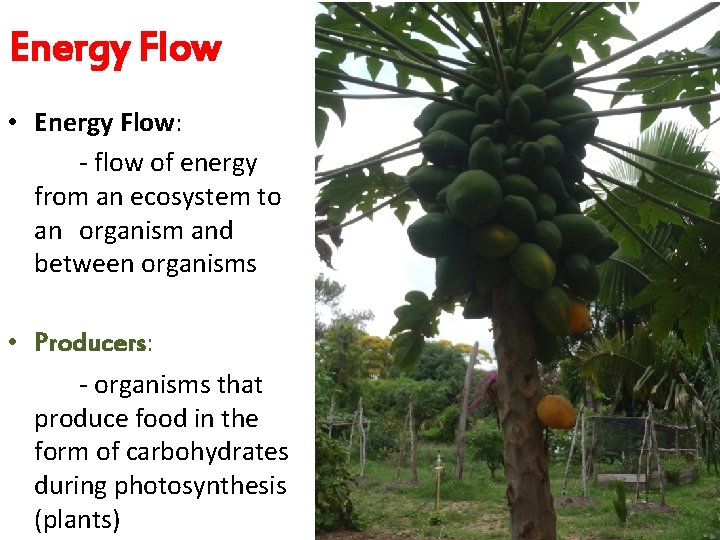
Energy Flow • Energy Flow: - flow of energy from an ecosystem to an organism and between organisms • Producers: - organisms that produce food in the form of carbohydrates during photosynthesis (plants)
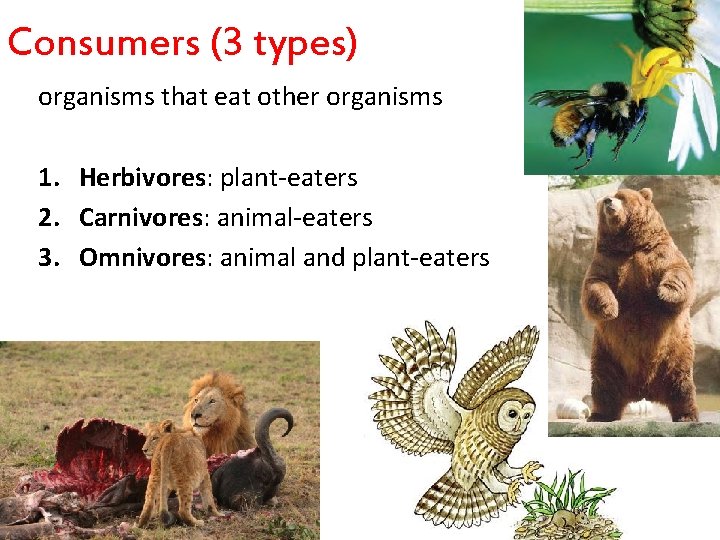
Consumers (3 types) organisms that eat other organisms 1. Herbivores: plant-eaters 2. Carnivores: animal-eaters 3. Omnivores: animal and plant-eaters
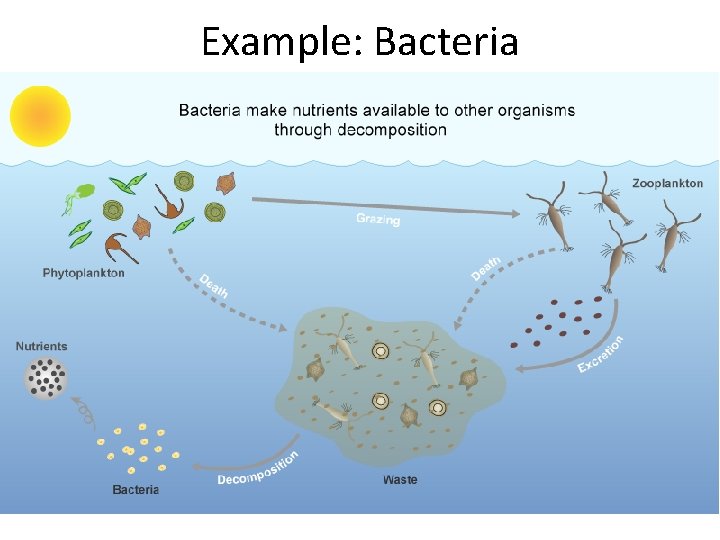
Decomposers • break down organic wastes and dead organisms and turn into usable nutrients (process = decomposition) • “action of living organisms such as bacteria to break down dead organic matter is called biodegredation. ” • Nutrients made available to other organisms in soil and water links biotic and abiotic components of an ecosystem
Example: Bacteria
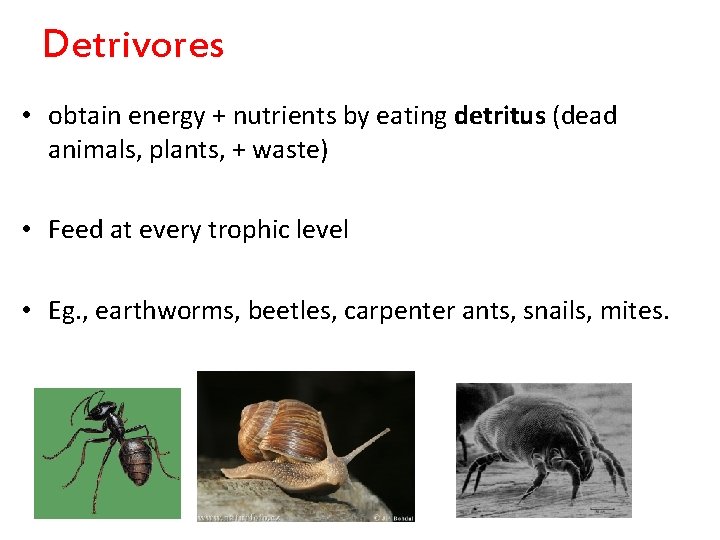
Detrivores • obtain energy + nutrients by eating detritus (dead animals, plants, + waste) • Feed at every trophic level • Eg. , earthworms, beetles, carpenter ants, snails, mites.
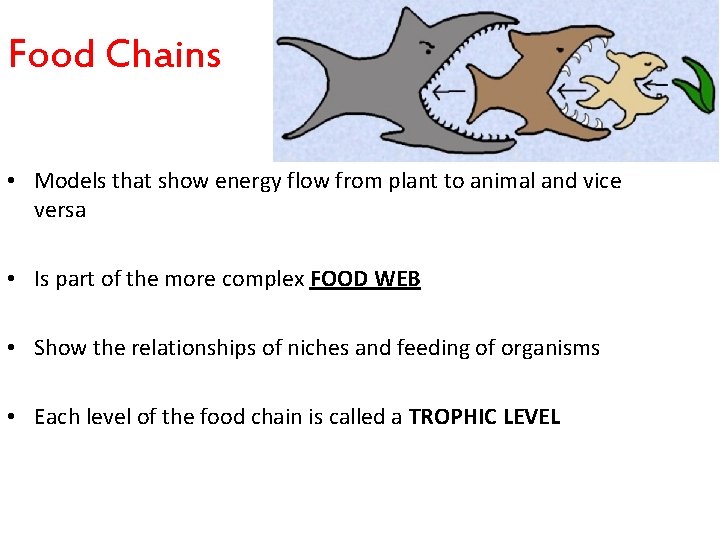
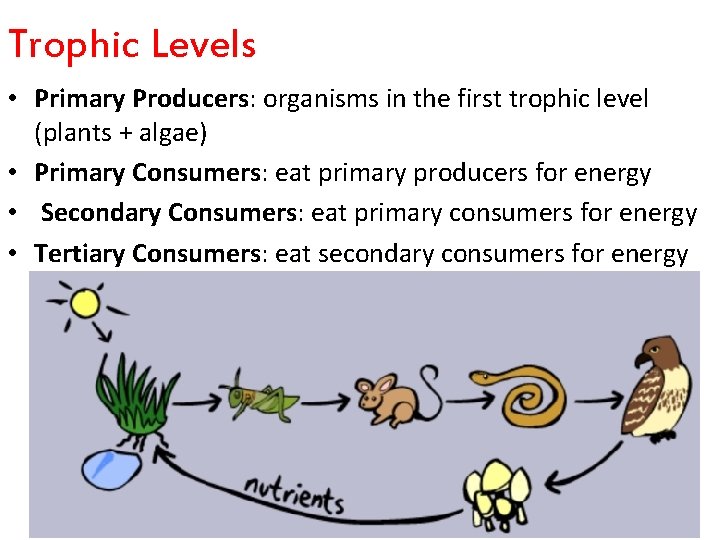
Food Chains • Models that show energy flow from plant to animal and vice versa • Is part of the more complex FOOD WEB • Show the relationships of niches and feeding of organisms • Each level of the food chain is called a TROPHIC LEVEL
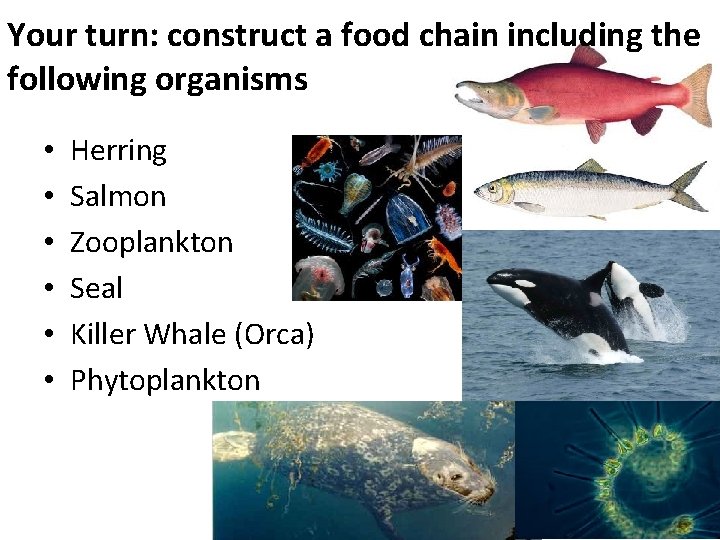
Your turn: construct a food chain including the following organisms • • • Herring Salmon Zooplankton Seal Killer Whale (Orca) Phytoplankton
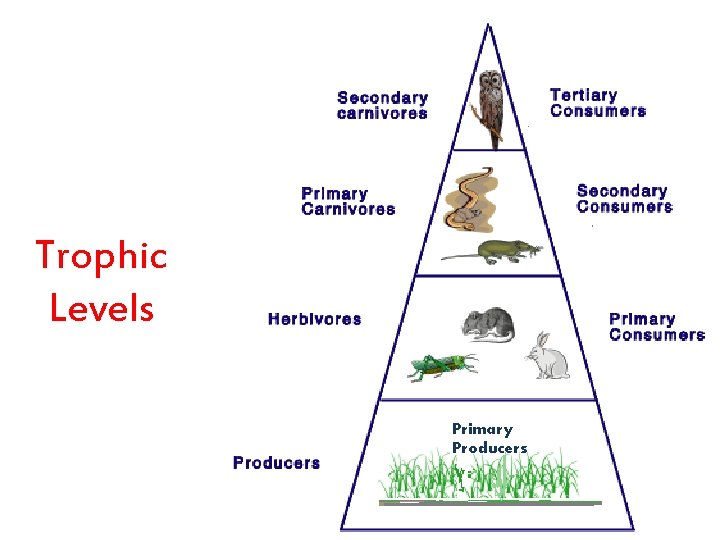
Trophic Levels Primary Producers
Trophic Levels • Primary Producers: organisms in the first trophic level (plants + algae) • Primary Consumers: eat primary producers for energy • Secondary Consumers: eat primary consumers for energy • Tertiary Consumers: eat secondary consumers for energy
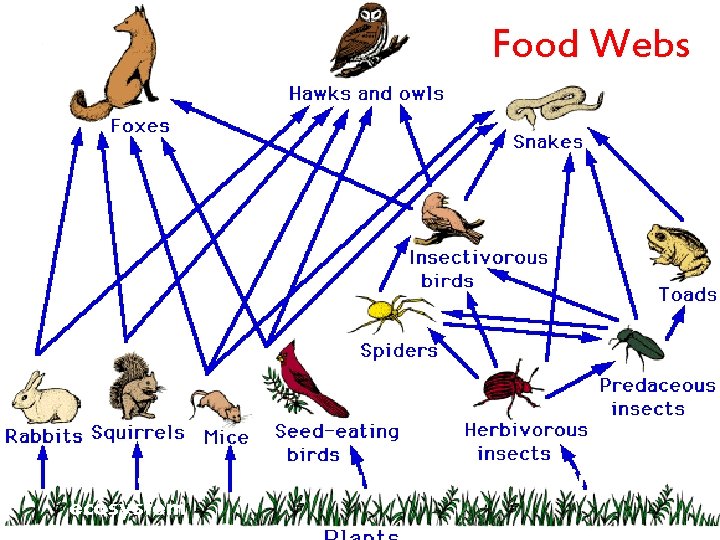
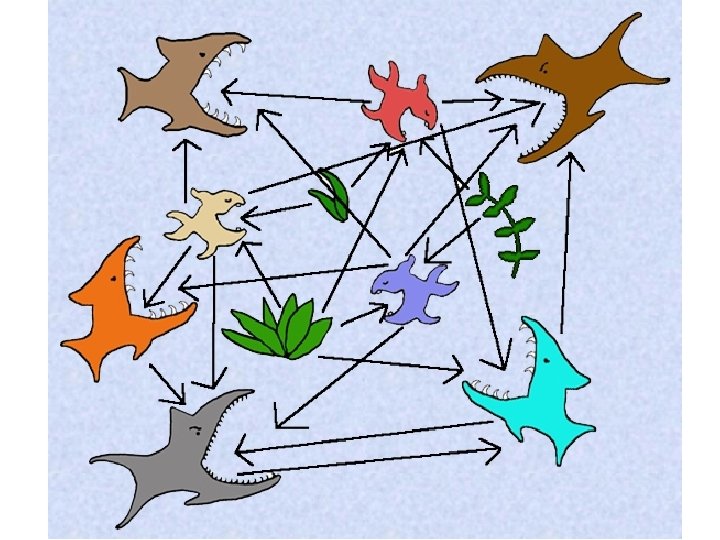
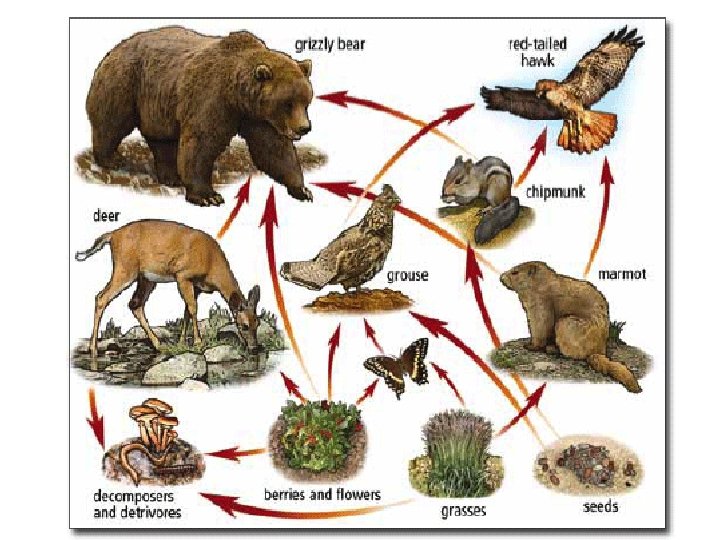
Food Webs Are models of the feeding relationships within an ecosystem
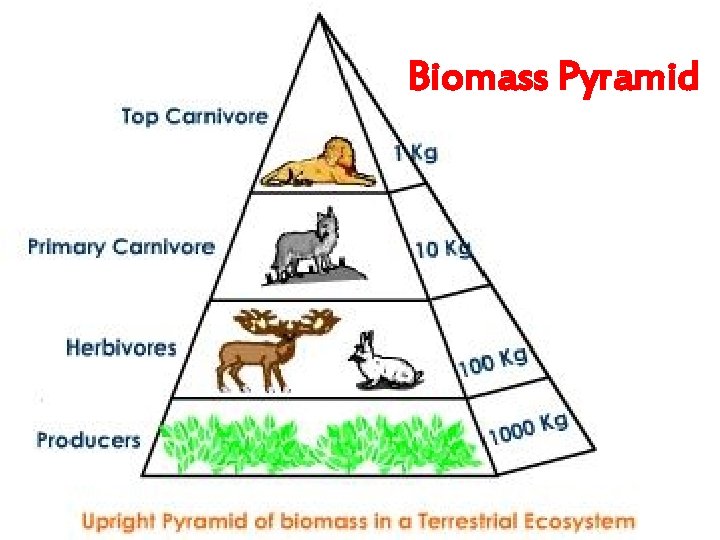
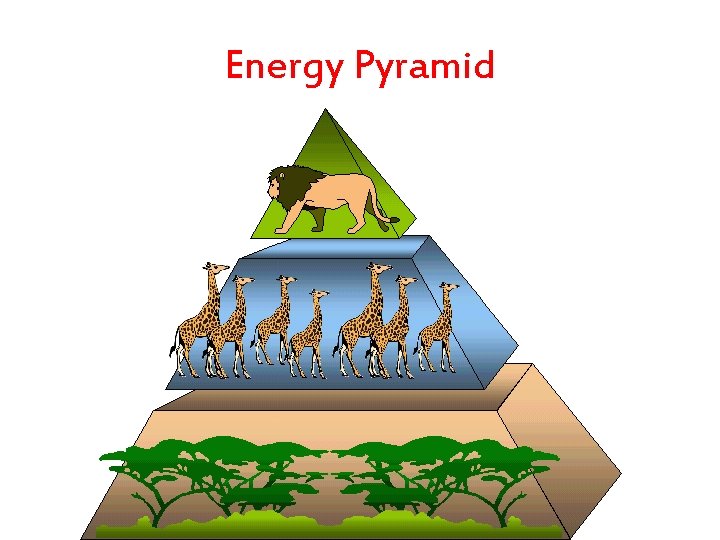
Food (Ecological) Pyramids • show the loss of energy from one trophic level to another. • There are several types of food pyramids such as: - biomass - numbers - energy
Biomass Pyramid
Energy Pyramid
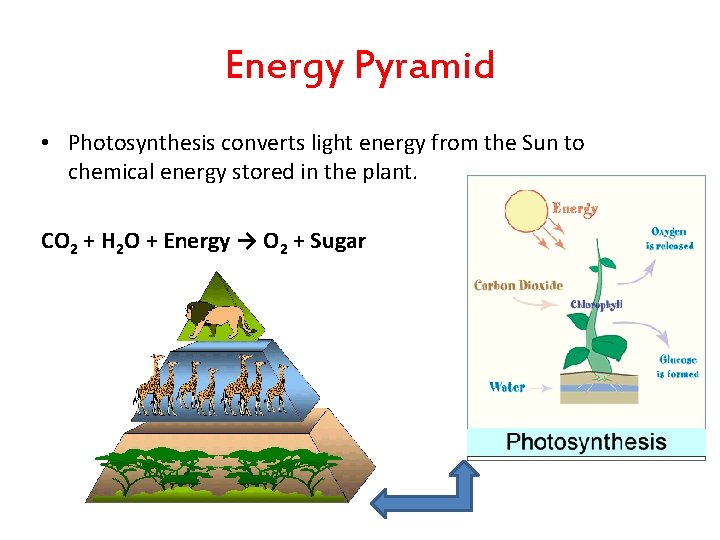
Energy Pyramid • Photosynthesis converts light energy from the Sun to chemical energy stored in the plant. CO 2 + H 2 O + Energy → O 2 + Sugar
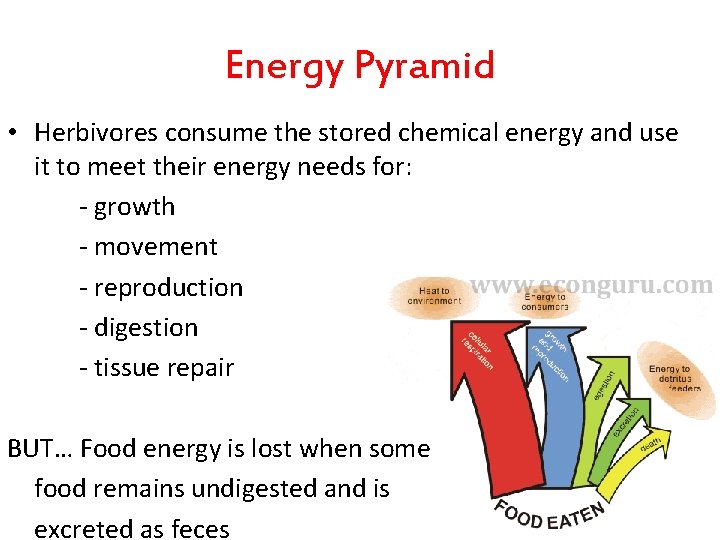
Energy Pyramid • Herbivores consume the stored chemical energy and use it to meet their energy needs for: - growth - movement - reproduction - digestion - tissue repair BUT… Food energy is lost when some food remains undigested and is excreted as feces
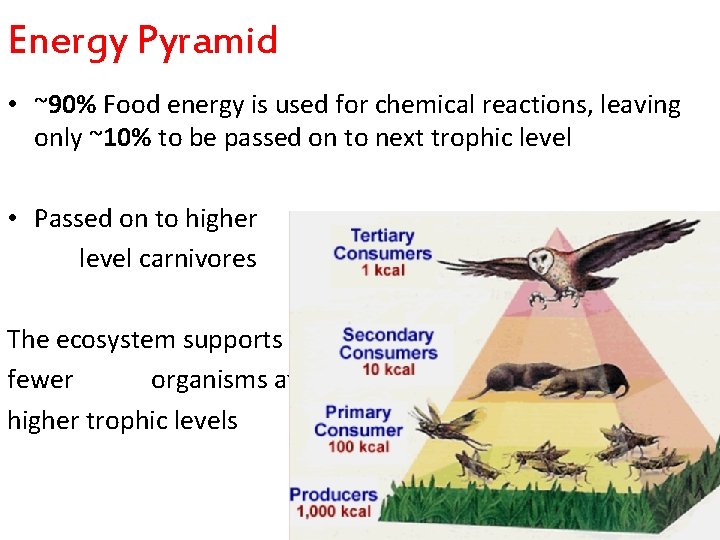
Energy Pyramid • ~90% Food energy is used for chemical reactions, leaving only ~10% to be passed on to next trophic level • Passed on to higher level carnivores The ecosystem supports fewer organisms at higher trophic levels
Numbers Pyramid The ecosystem supports fewer organisms at higher trophic levels
Today q JAWS q Producers, Consumers, Detrivores, Decomposers q Trophic Levels q Food Chains q Food Webs q Pyramids (#, biomass, energy) q Workbook pages 16 -18, 20 qhttp: //www. mhhe. com/biosci/genbio/virtual_la bs/BL_03. html