
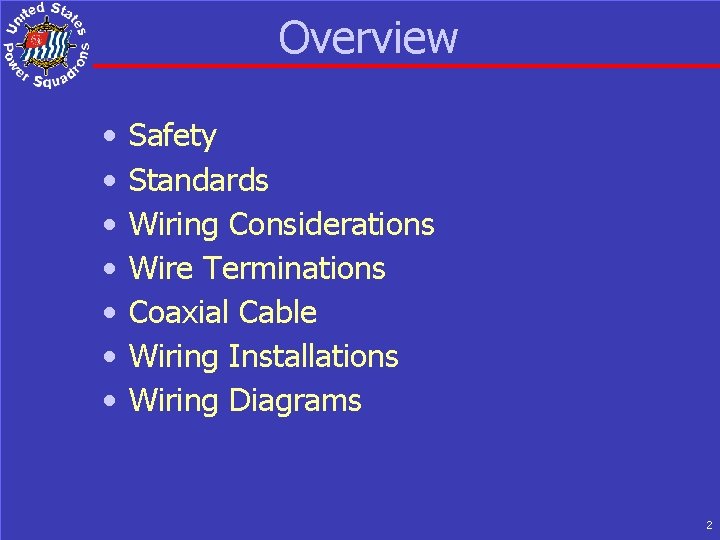
Chapter 2 Electrical Wiring Practices and Diagrams 1



- Slides: 50
Chapter 2 Electrical Wiring Practices and Diagrams 1
Overview • • Safety Standards Wiring Considerations Wire Terminations Coaxial Cable Wiring Installations Wiring Diagrams 2
Safety • Lethal Current • Safety Precautions 3
Lethal Current • Fundamental policy of the USPS is SAFETY • Human Body § Resistance – 4 KΩ (moist skin) to 24 KΩ (dry skin) § Safe current (through chest) – less than 20 milliamps § E = 120 VAC R = 4 KΩ § I = 30 milliamps - NOT SAFE I=? § Don’t want current through chest cavity (may be lethal) 4
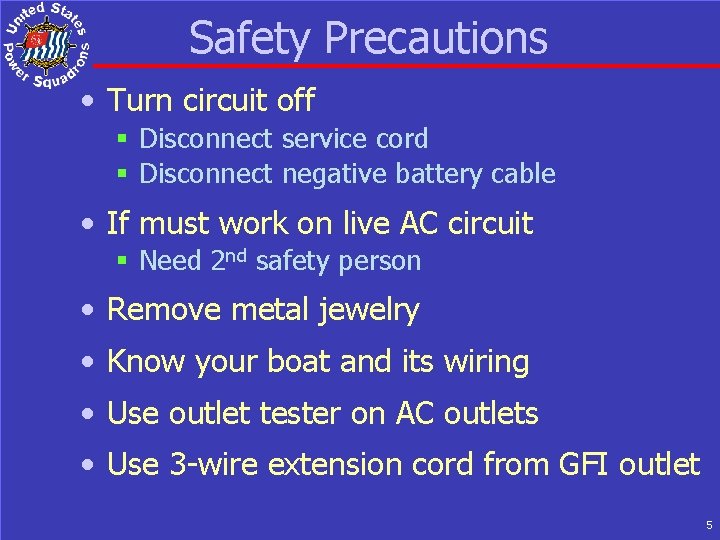
Safety Precautions • Turn circuit off § Disconnect service cord § Disconnect negative battery cable • If must work on live AC circuit § Need 2 nd safety person • Remove metal jewelry • Know your boat and its wiring • Use outlet tester on AC outlets • Use 3 -wire extension cord from GFI outlet 5
Standards • American Boat and Yacht Council (ABYC) § AC and DC Electrical Systems is E-11 § Minimum standards • Construction • Repair • Marine Dept. of Underwriters Laboratory § Test and certify commercial products § Safety, not function 6
Wiring Considerations • Conductors • Wire Types • Wire Size • Wire Insulation • Wire Color Code 7
Conductors • Connects power sources to power loads • Characteristics § Safe § Dependable § Efficient (minimal voltage drop) • Boat environment § § Worse than either house or car High humidity Vibration Corrosive conditions 8
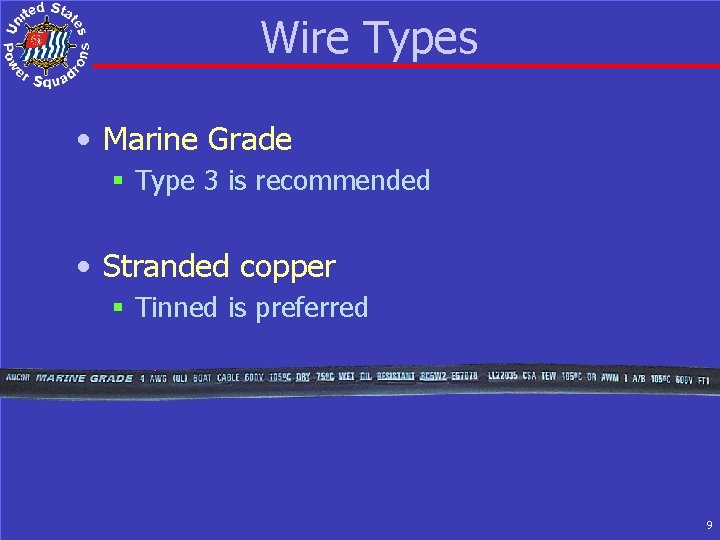
Wire Types • Marine Grade § Type 3 is recommended • Stranded copper § Tinned is preferred 9
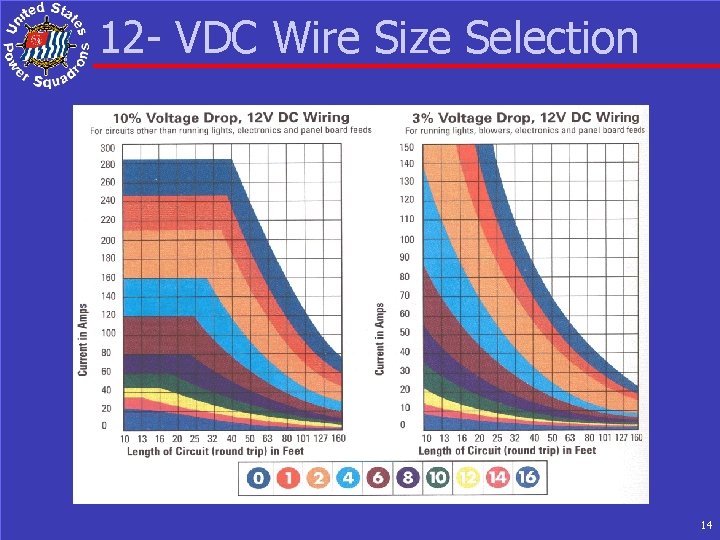
Wire Size • 3% voltage drop § Critical circuits (Nav lights) § Electronic Equipment • 10% voltage drop § Cabin lights § Motorized Equipment • Minimum size AWG # 16 10
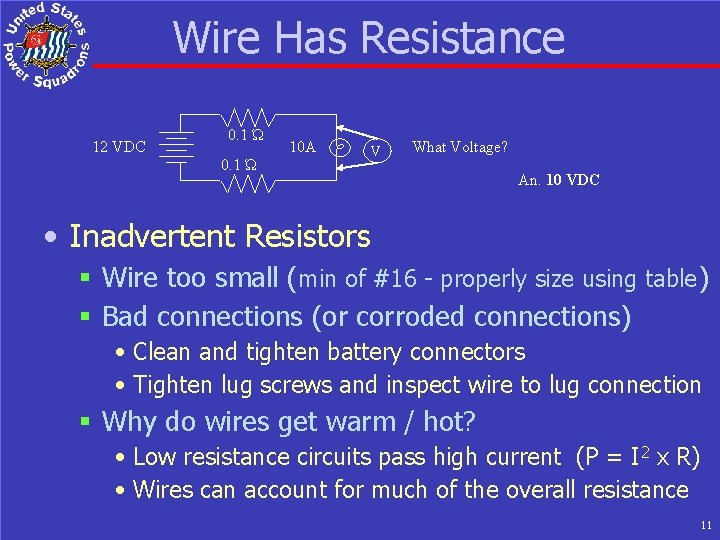
Wire Has Resistance 12 VDC 0. 1 Ώ 10 A V What Voltage? An. 10 VDC • Inadvertent Resistors § Wire too small (min of #16 - properly size using table) § Bad connections (or corroded connections) • Clean and tighten battery connectors • Tighten lug screws and inspect wire to lug connection § Why do wires get warm / hot? • Low resistance circuits pass high current (P = I 2 x R) • Wires can account for much of the overall resistance 11
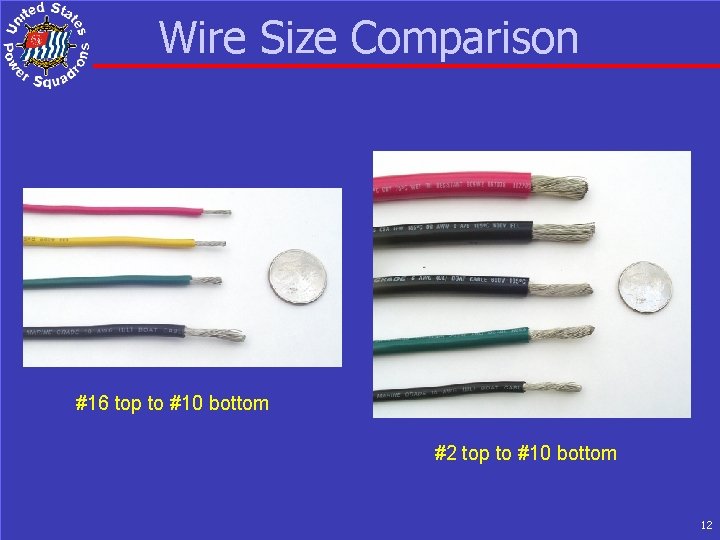
Wire Size Comparison #16 top to #10 bottom #2 top to #10 bottom 12
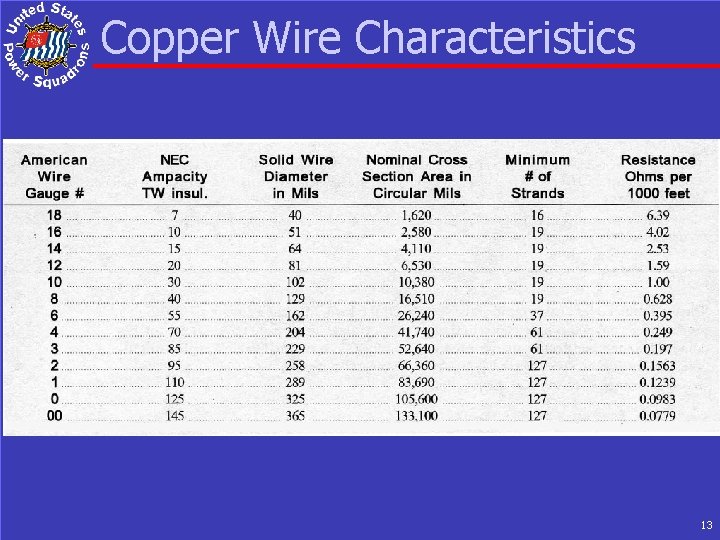
Copper Wire Characteristics 13
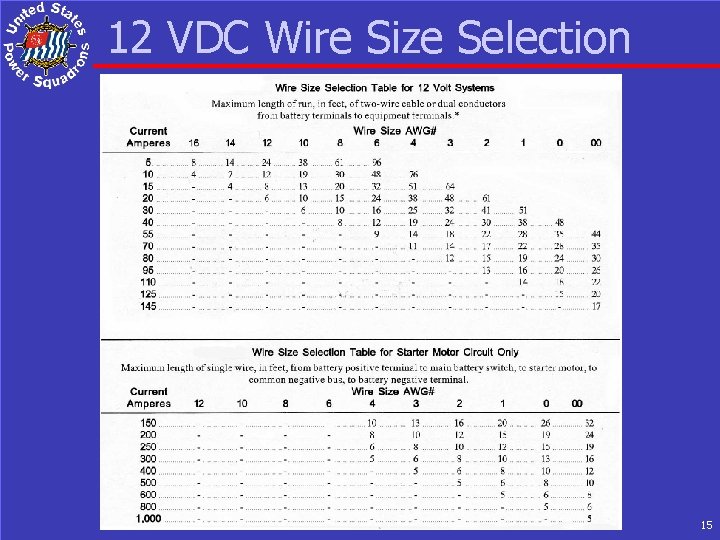
12 - VDC Wire Size Selection 14
12 VDC Wire Size Selection 15
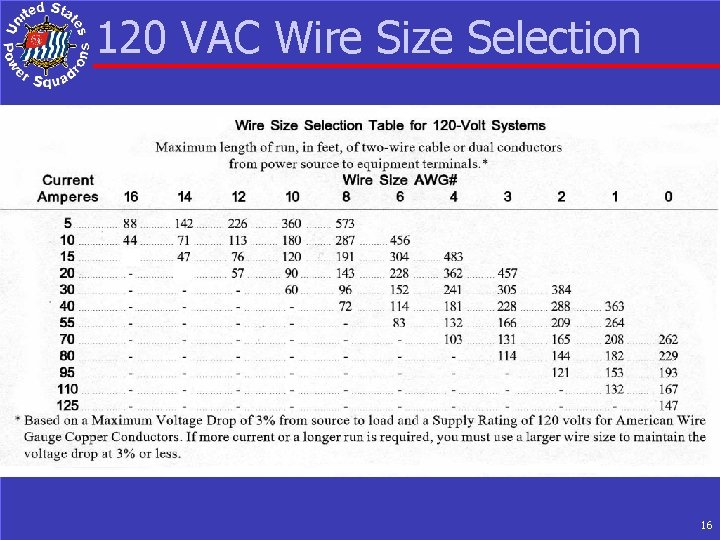
120 VAC Wire Size Selection 16
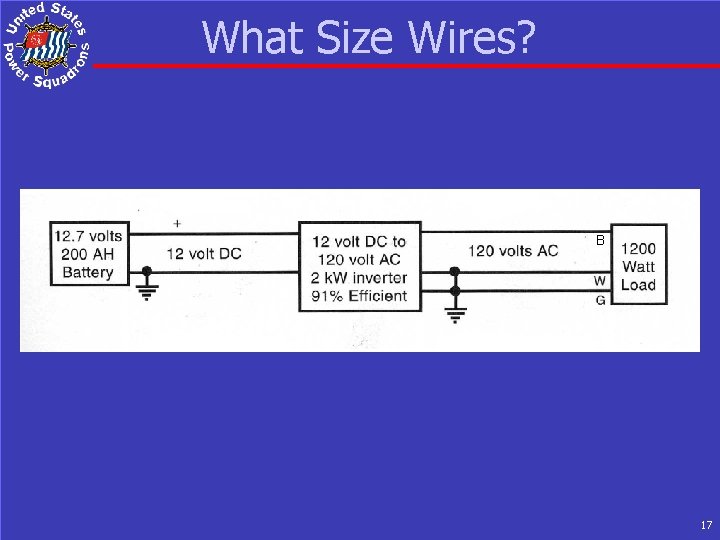
What Size Wires? B 17
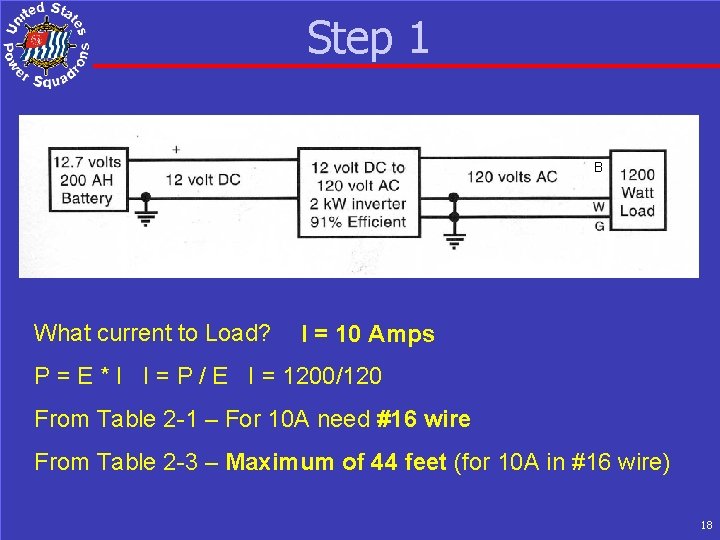
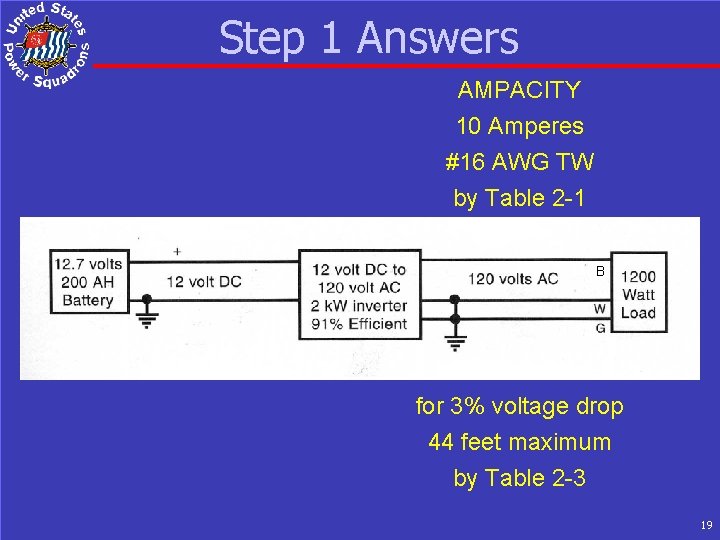
Step 1 B What current to Load? I = 10 Amps P = E * I I = P / E I = 1200/120 From Table 2 -1 – For 10 A need #16 wire From Table 2 -3 – Maximum of 44 feet (for 10 A in #16 wire) 18
Step 1 Answers AMPACITY 10 Amperes #16 AWG TW by Table 2 -1 B for 3% voltage drop 44 feet maximum by Table 2 -3 19
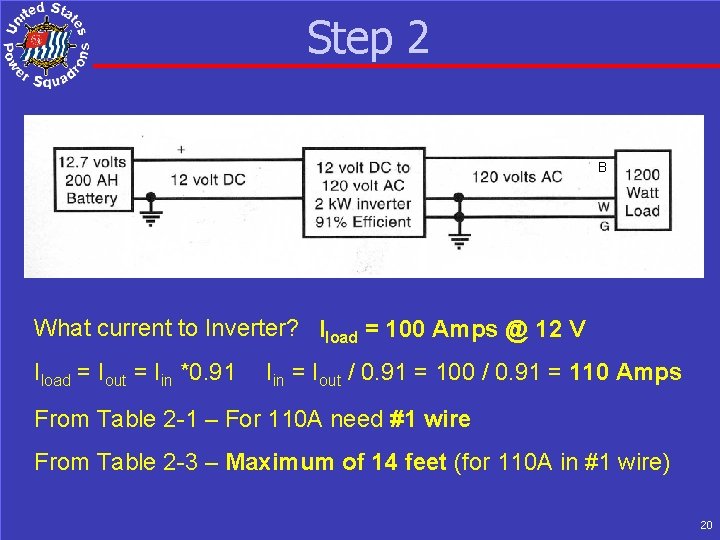
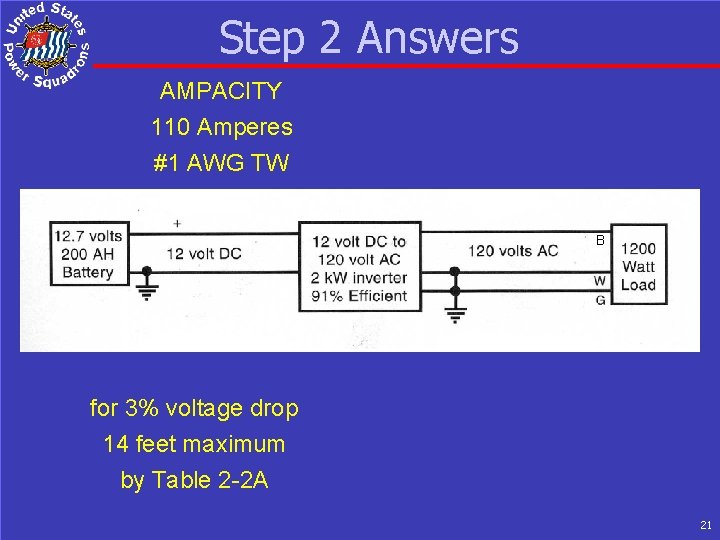
Step 2 B What current to Inverter? Iload = 100 Amps @ 12 V Iload = Iout = Iin *0. 91 Iin = Iout / 0. 91 = 100 / 0. 91 = 110 Amps From Table 2 -1 – For 110 A need #1 wire From Table 2 -3 – Maximum of 14 feet (for 110 A in #1 wire) 20
Step 2 Answers AMPACITY 110 Amperes #1 AWG TW by Table 1 B for 3% voltage drop 14 feet maximum by Table 2 -2 A 21
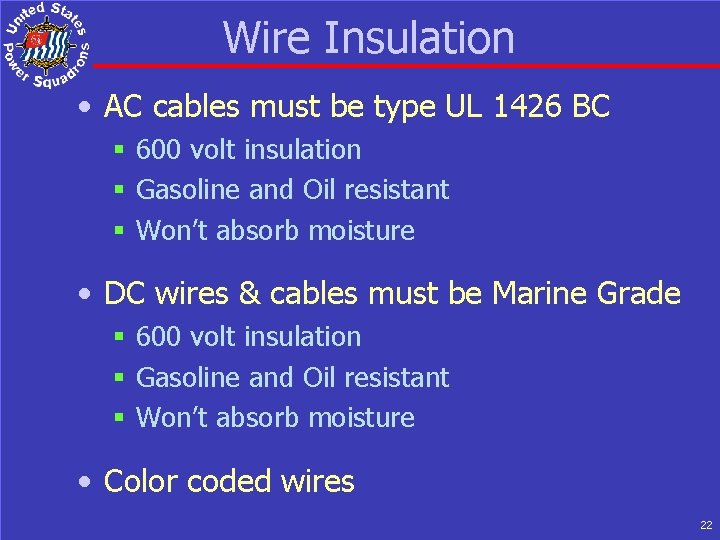
Wire Insulation • AC cables must be type UL 1426 BC § 600 volt insulation § Gasoline and Oil resistant § Won’t absorb moisture • DC wires & cables must be Marine Grade § 600 volt insulation § Gasoline and Oil resistant § Won’t absorb moisture • Color coded wires 22
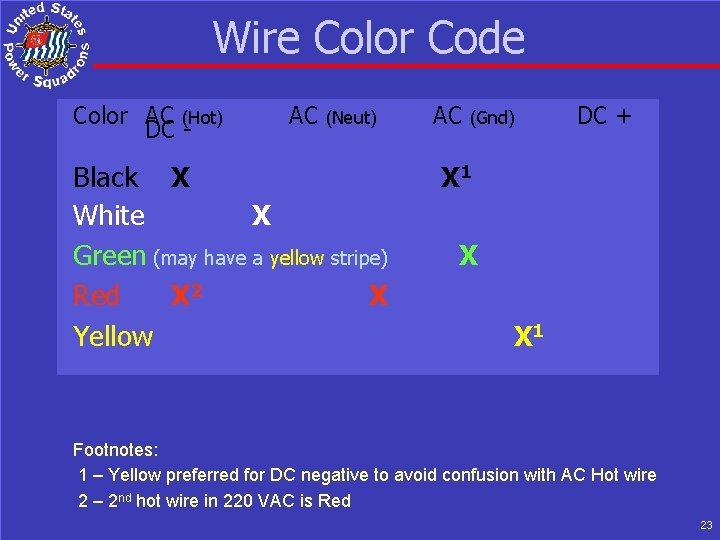
Wire Color Code Color AC (Hot) DC - AC (Neut) Black X White X Green (may have a yellow stripe) Red X 2 X Yellow AC (Gnd) DC + X 1 X X 1 Footnotes: 1 – Yellow preferred for DC negative to avoid confusion with AC Hot wire 2 – 2 nd hot wire in 220 VAC is Red 23
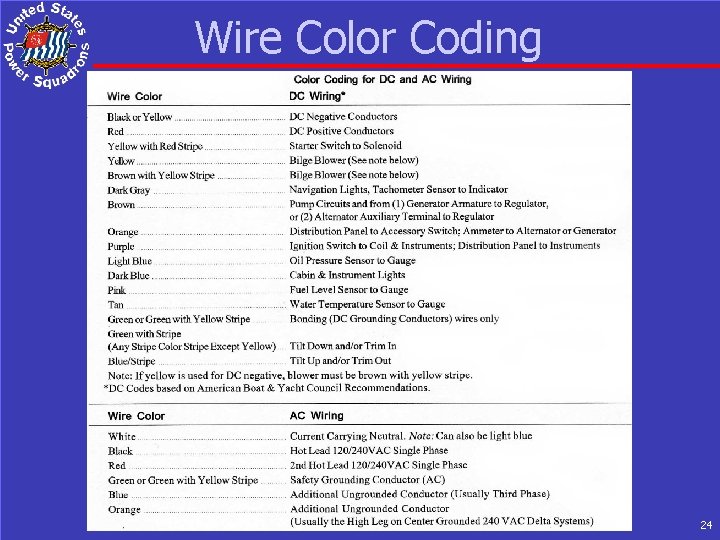
Wire Color Coding 24
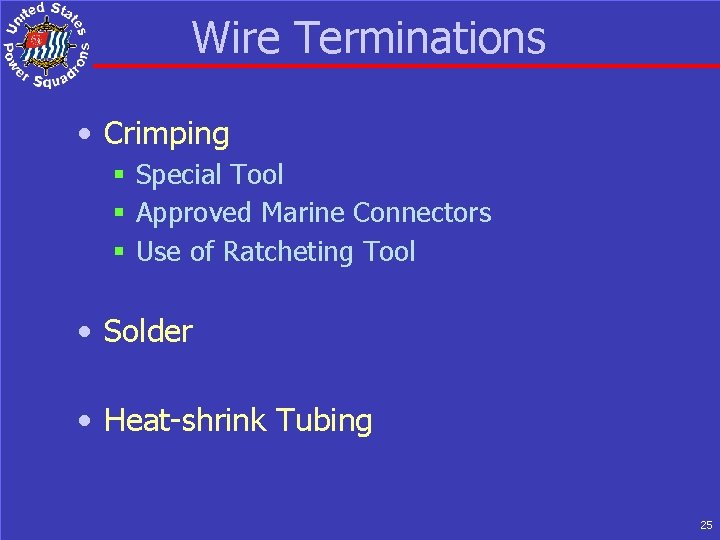
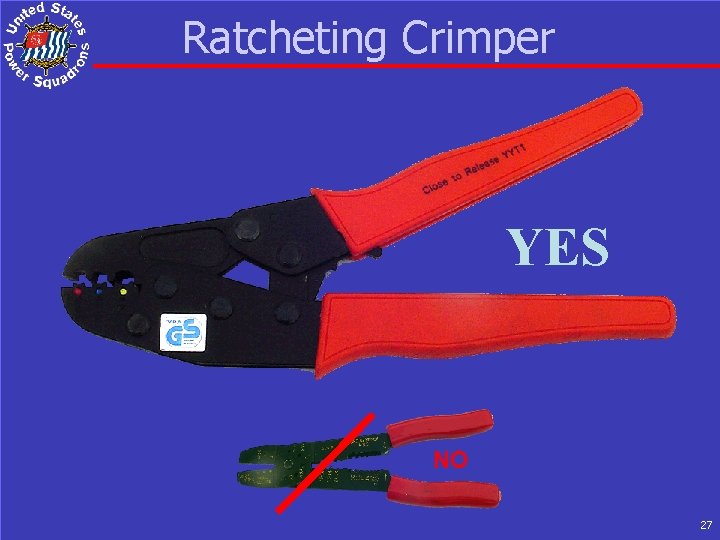
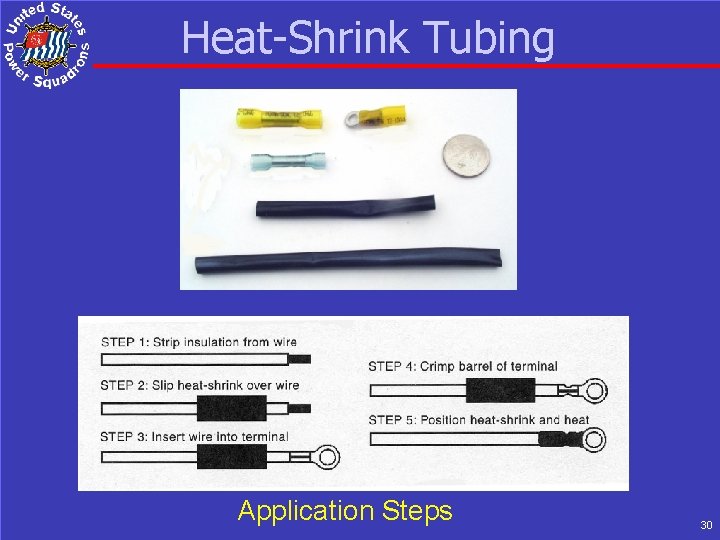
Wire Terminations • Crimping § Special Tool § Approved Marine Connectors § Use of Ratcheting Tool • Solder • Heat-shrink Tubing 25
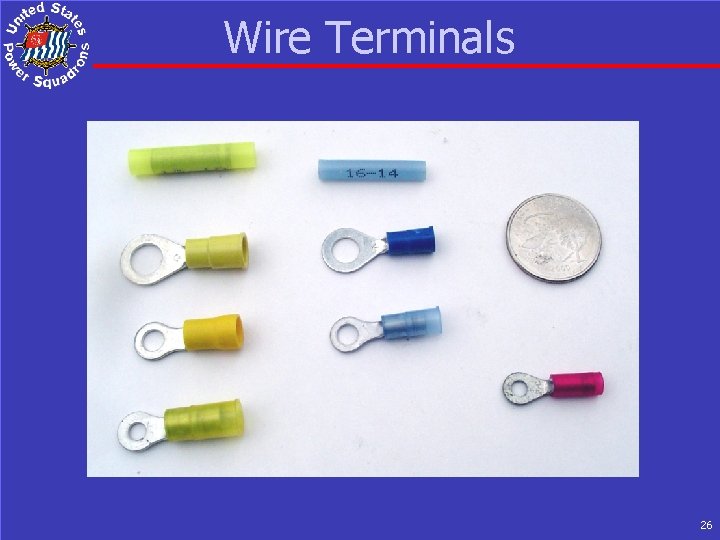
Wire Terminals 26
Ratcheting Crimper YES NO 27
Ratcheting Tool Use • First select appropriate connector • Strip insulation length of stem plus 1/16” • Insert stripped end all way into terminal § End should extend 1/16” • Place terminal in same color slot § First crimp end of terminal barrel nearest ring § Then crimp wire end of terminal barrel • Check the connection with a solid tug 28
Soldering • Terminal connection can’t be only soldered § Must also be crimped • Soldering is normally not required § Crimped connectors are acceptable to ABYC § If solder, apply only to ring end of terminal • Solder changes stranded wire into solid § Stranded wire is flexible • Use 40% lead / 60% tin, rosin core solder • Battery lugs may be only soldered 29
Heat-Shrink Tubing Application Steps 30
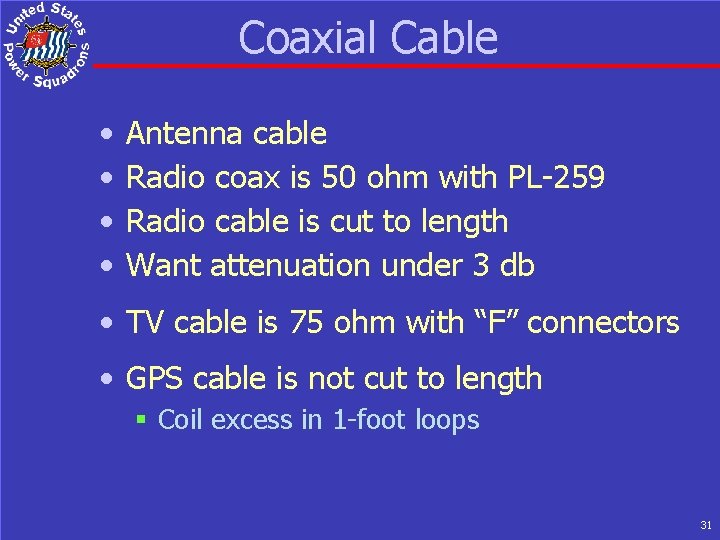
Coaxial Cable • • Antenna cable Radio coax is 50 ohm with PL-259 Radio cable is cut to length Want attenuation under 3 db • TV cable is 75 ohm with “F” connectors • GPS cable is not cut to length § Coil excess in 1 -foot loops 31
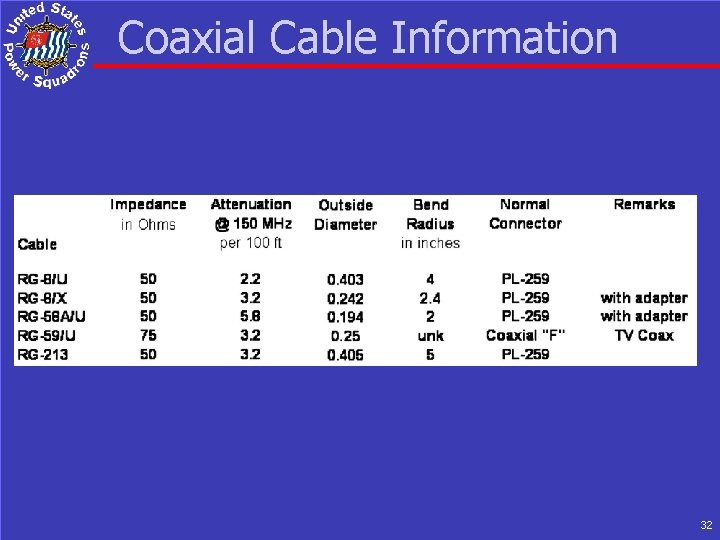
Coaxial Cable Information 32
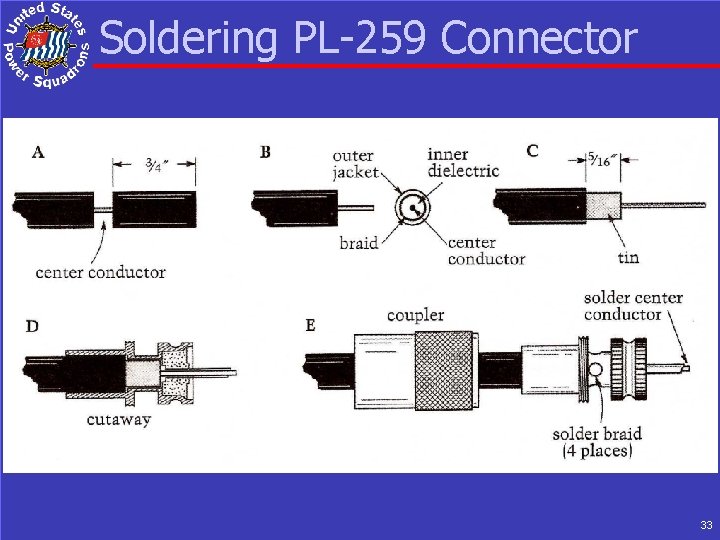
Soldering PL-259 Connector 33
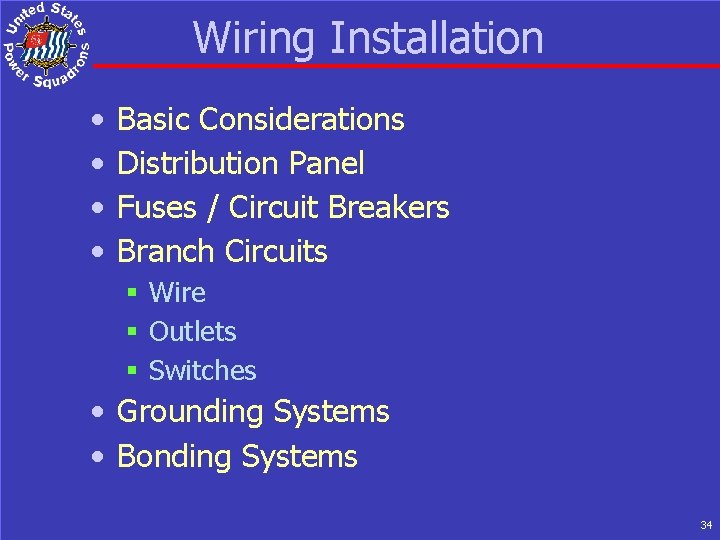
Wiring Installation • • Basic Considerations Distribution Panel Fuses / Circuit Breakers Branch Circuits § Wire § Outlets § Switches • Grounding Systems • Bonding Systems 34
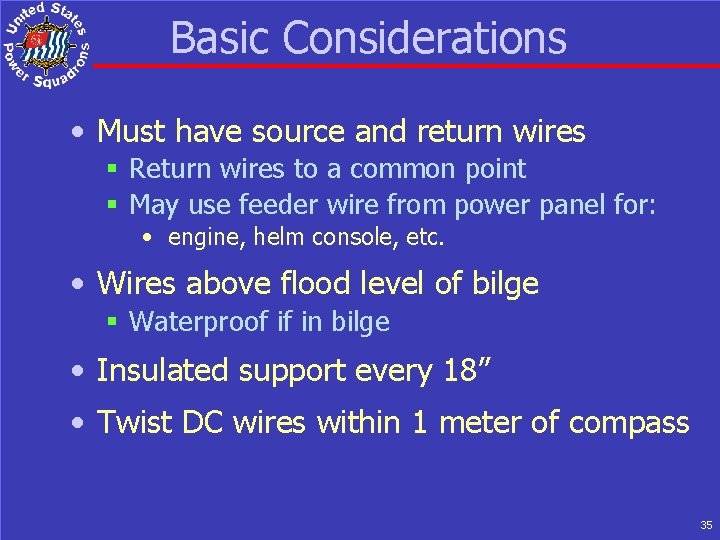
Basic Considerations • Must have source and return wires § Return wires to a common point § May use feeder wire from power panel for: • engine, helm console, etc. • Wires above flood level of bilge § Waterproof if in bilge • Insulated support every 18” • Twist DC wires within 1 meter of compass 35
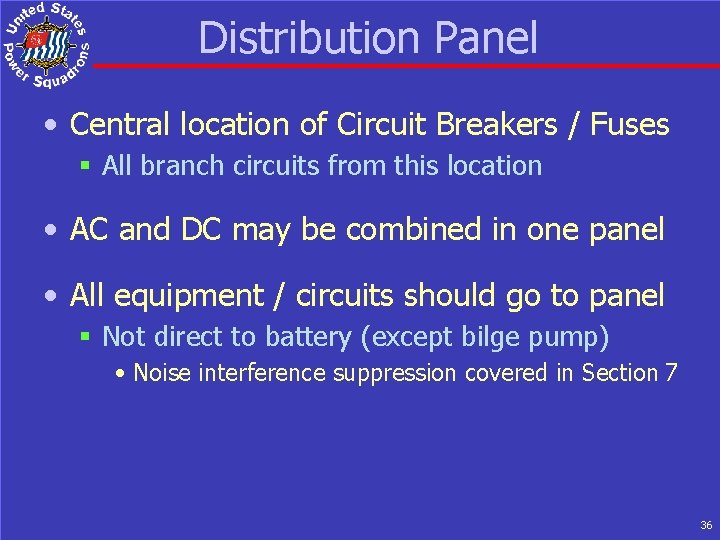
Distribution Panel • Central location of Circuit Breakers / Fuses § All branch circuits from this location • AC and DC may be combined in one panel • All equipment / circuits should go to panel § Not direct to battery (except bilge pump) • Noise interference suppression covered in Section 7 36
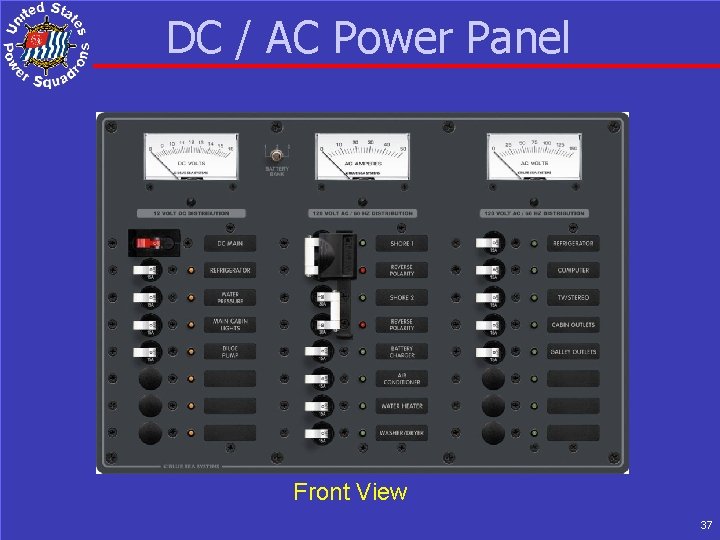
DC / AC Power Panel Front View 37
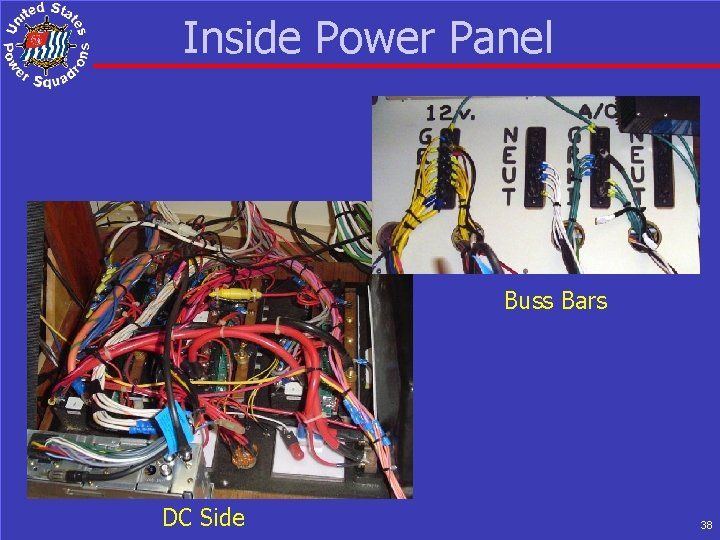
Inside Power Panel Buss Bars DC Side 38
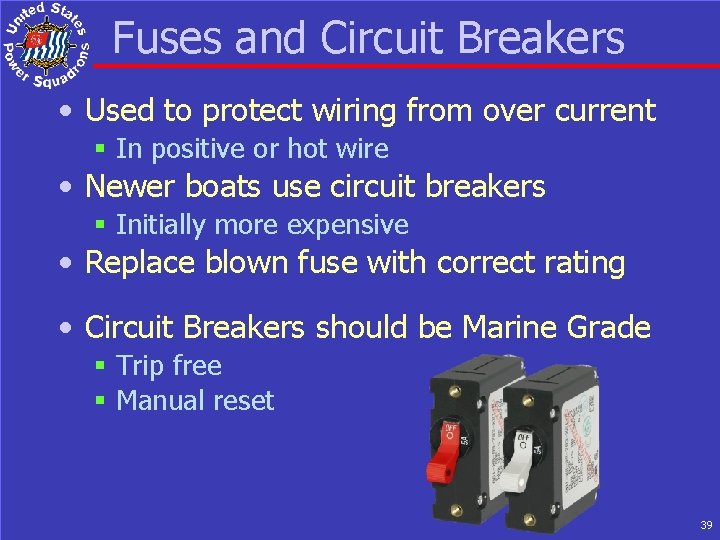
Fuses and Circuit Breakers • Used to protect wiring from over current § In positive or hot wire • Newer boats use circuit breakers § Initially more expensive • Replace blown fuse with correct rating • Circuit Breakers should be Marine Grade § Trip free § Manual reset 39
Branch Circuits - Wires • Minimum size is 16 AWG § See Wire Selection Tables § For AC normally #14 for 15 A and #12 for 20 A • Must terminate in closed electrical box • Of sufficient length • DC negative returned to DC Panel § May use several negative feeder terminals • AC neutrals returned to AC Panel • Bonding system never used as return wire 40
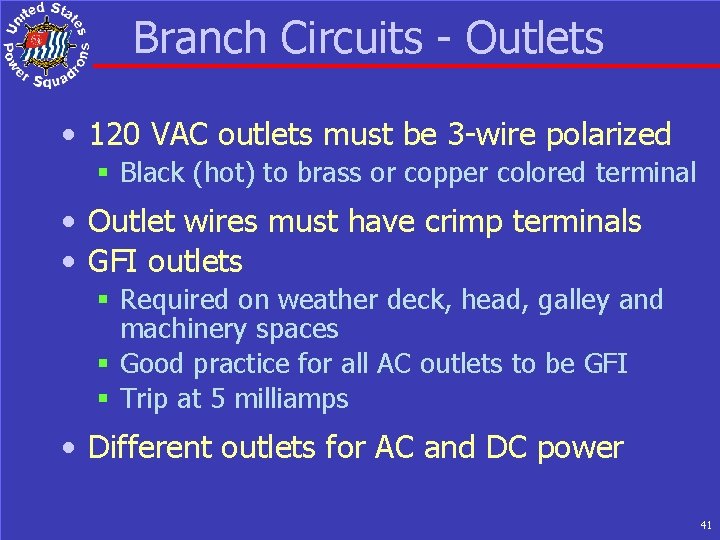
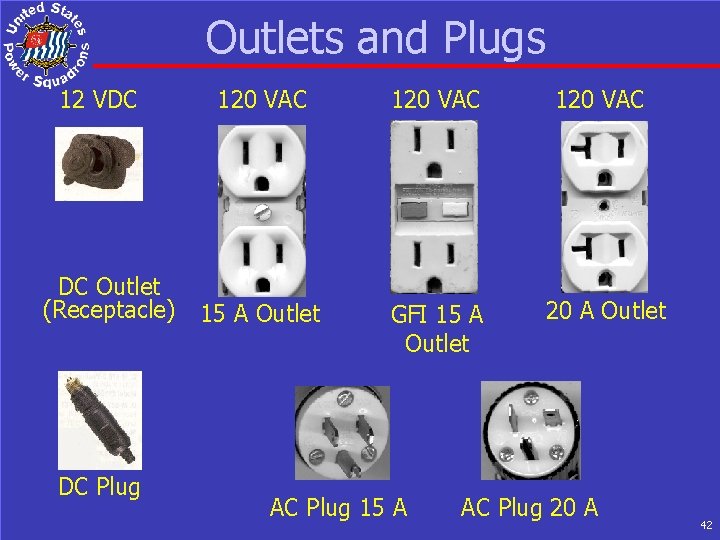
Branch Circuits - Outlets • 120 VAC outlets must be 3 -wire polarized § Black (hot) to brass or copper colored terminal • Outlet wires must have crimp terminals • GFI outlets § Required on weather deck, head, galley and machinery spaces § Good practice for all AC outlets to be GFI § Trip at 5 milliamps • Different outlets for AC and DC power 41
Outlets and Plugs 12 VDC DC Outlet (Receptacle) DC Plug 120 VAC 15 A Outlet GFI 15 A Outlet 20 A Outlet AC Plug 15 A AC Plug 20 A 42
Branch Circuits - Switches • Modern panels use Circuit Breakers § Which also double as switches • Switches / Circuit Breakers § Must be Marine Grade § Rated for the voltage and current controlled § Interrupt the positive (DC) or hot (AC) leg • Battery Switch § Designed for high current service § Not located in engine or fuel-tank compartments 43
Grounding System • Ground is potential of water around boat § Or potential of earth’s surface • DC – Ground Battery negative terminal(s) § Also engine block § Wire color is Yellow (or Black) • AC – Transformer center tap on shore § Also connected to ground rod at transformer § Wire color is Green and uninterrupted wire • Isolation transformers and galvanic isolators are exception and covered in Chapter 4 on AC • Engine, DC negative & AC ground connected 44
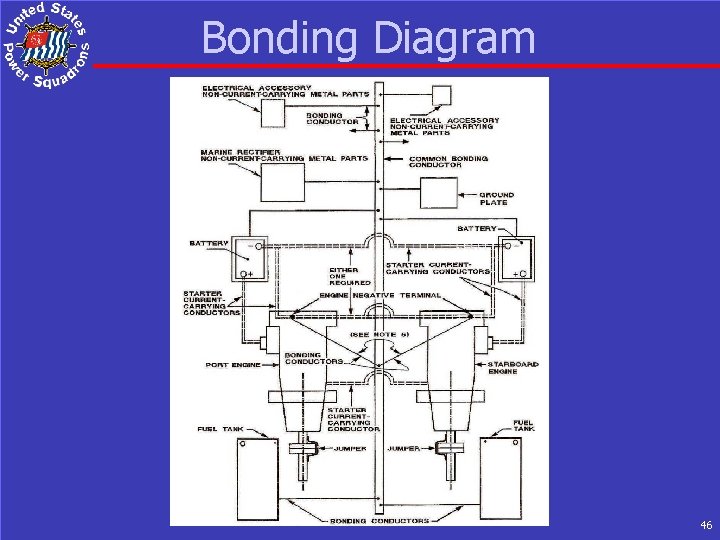
Bonding System • For lightning protection § More in Chapter 6 • All metal objects should be bonded § Keeps all metal at zero potential § Engine blocks § Battery negative terminals • Non-current carrying wire • Through-hull fittings § ABYC now recommends they be bonded § Electrically isolated from metal hull 45
Bonding Diagram 46
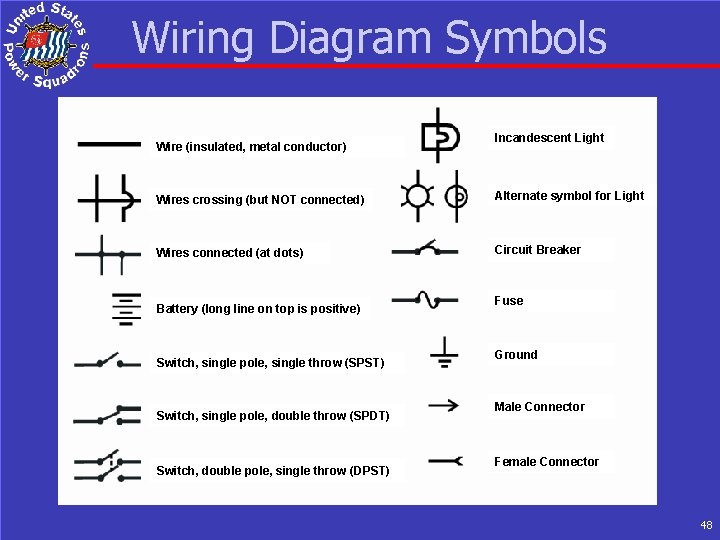
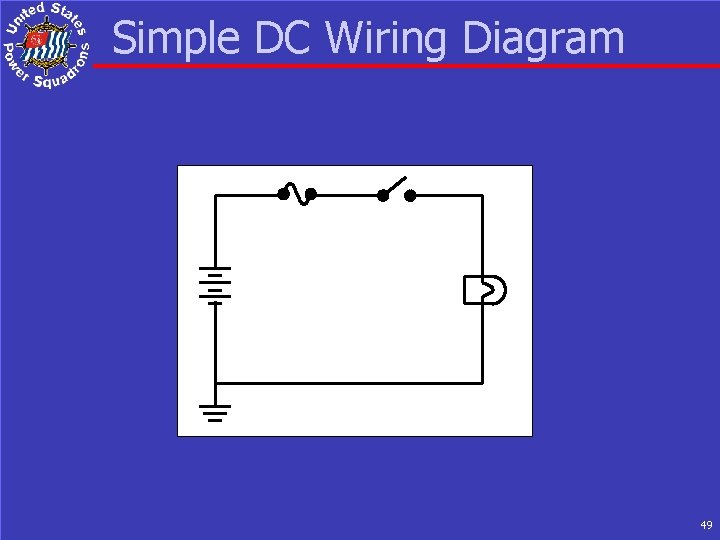
Wiring Diagrams • Elements of a Good Wiring Diagram § Documents boat’s electrical layout § Should be kept current § Used for troubleshooting • Component Identification § Physical objects to their symbol § Wires are color coded 47
Wiring Diagram Symbols Wire (insulated, metal conductor) Incandescent Light Wires crossing (but NOT connected) Alternate symbol for Light Wires connected (at dots) Circuit Breaker Battery (long line on top is positive) Switch, single pole, single throw (SPST) Switch, single pole, double throw (SPDT) Switch, double pole, single throw (DPST) Fuse Ground Male Connector Female Connector 48
Simple DC Wiring Diagram 49
Summary • Circuits should be off when working on them • Use only marine grade properly sized wires § Tables will help determine proper wire size § Minimum wire size is #16 AWG • Use wire terminations and ratcheting crimper • DC circuits are 2 dedicated wires § Waterproof wire connection in bilge • AC circuits are 3 dedicated wires § GFCI in galley, head, machine spaces & weather deck • Separate Grounding & Bonding systems required • Keep wiring diagram current 50