
Chapter 2 Economic Systems Section 1 Objectives 1
Chapter 2: Economic Systems Section 1
Objectives 1. Identify the three key economic questions that all societies must answer. 2. Analyze the societal values that determine how a country answers the three economic questions. 3. Define the characteristics of a traditional economy. Chapter 2, Section 1 Copyright © Pearson Education, Inc. Slide 2
Key Terms • economic system: the structure of methods and principles that a society uses to produce and distribute goods and services • factor payment: the income people receive in return for supplying factors of production • profit: the amount of money a business receives in excess of expenses • safety net: a set of government programs that protect people who face unfavorable economic conditions Chapter 2, Section 1 Copyright © Pearson Education, Inc. Slide 3
Key Terms, cont. • standard of living: level of economic prosperity • innovation: the process of bringing new methods, products, or ideas into use • traditional economy: an economic system that relies on habit, custom, or ritual to decide three key economic questions Chapter 2, Section 1 Copyright © Pearson Education, Inc. Slide 4
Chapter 2, Section 1 Copyright © Pearson Education, Inc. Slide 5
Introduction • What goals and values affect how a society answers the key economic questions? – Each society is guided by its economic system, affecting the way it does business internally and with other societies. – A society’s values, such as freedom or tradition, guide the type of economic system that society will have. Chapter 2, Section 1 Copyright © Pearson Education, Inc. Slide 6
3 Economic ? ? ? • As a result of scarce resources, societies must answer three key economic questions (3 EQs): – What goods and services should be produced? – How should these goods and services be produced? – Who consumes these goods and services? • The answers define the type of economic system that society has. Chapter 2, Section 1 Copyright © Pearson Education, Inc. Slide 7
Questions 1 and 2 • What goods and services should be produced? – What is produced to satisfy the needs/wants of its people. – Limited resources = production has an opportunity cost. • How should goods and services be produced? – As a society decides how to produce its goods and services, it must consider how best to use its land, labor, and capital. Chapter 2, Section 1 Copyright © Pearson Education, Inc. Slide 8
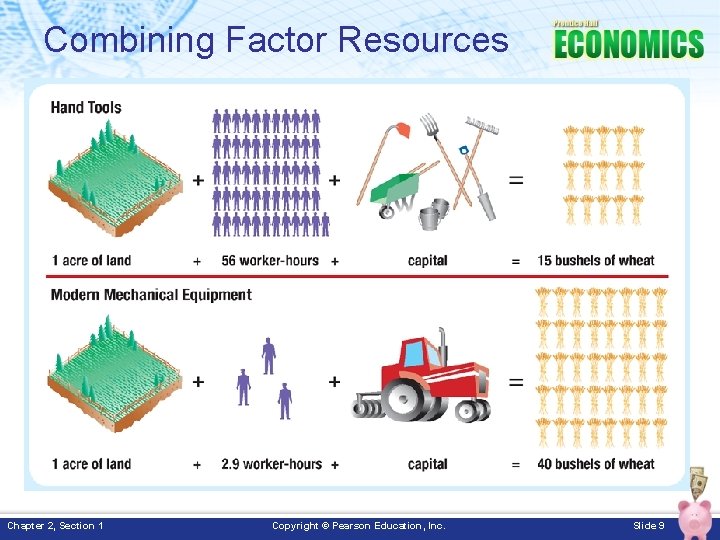
Combining Factor Resources Chapter 2, Section 1 Copyright © Pearson Education, Inc. Slide 9
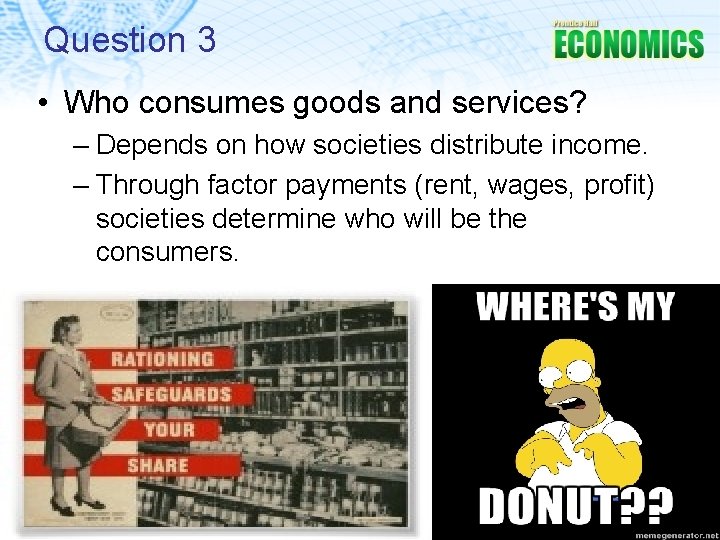
Question 3 • Who consumes goods and services? – Depends on how societies distribute income. – Through factor payments (rent, wages, profit) societies determine who will be the consumers. Chapter 2, Section 1 Copyright © Pearson Education, Inc. Slide 10
Five main economic goals • Societies answer the 3 EQs based on the importance they attach to economic goals. • Efficiency (Maximizing production) • Freedom (does the society limit economic freedoms) • Security(availability of goods and payments) • Equity (the haves and have nots) • Growth (innovation and standard of living) Chapter 2, Section 1 Copyright © Pearson Education, Inc. Slide 11
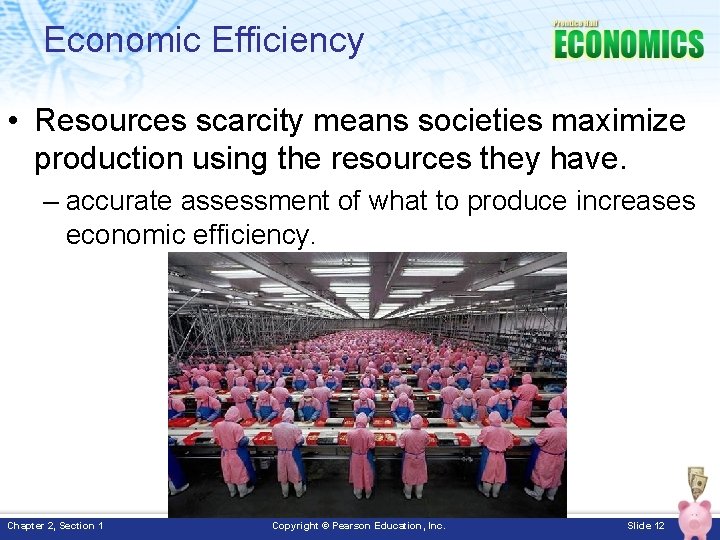
Economic Efficiency • Resources scarcity means societies maximize production using the resources they have. – accurate assessment of what to produce increases economic efficiency. Chapter 2, Section 1 Copyright © Pearson Education, Inc. Slide 12
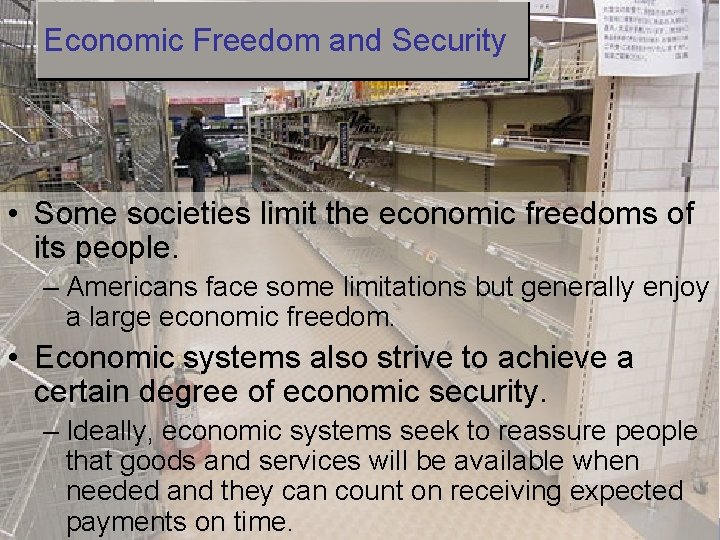
Economic Freedom and Security • Some societies limit the economic freedoms of its people. – Americans face some limitations but generally enjoy a large economic freedom. • Economic systems also strive to achieve a certain degree of economic security. – Ideally, economic systems seek to reassure people that goods and services will be available when needed and they can count on receiving expected payments on time. Chapter 2, Section 1 Copyright © Pearson Education, Inc. Slide 13
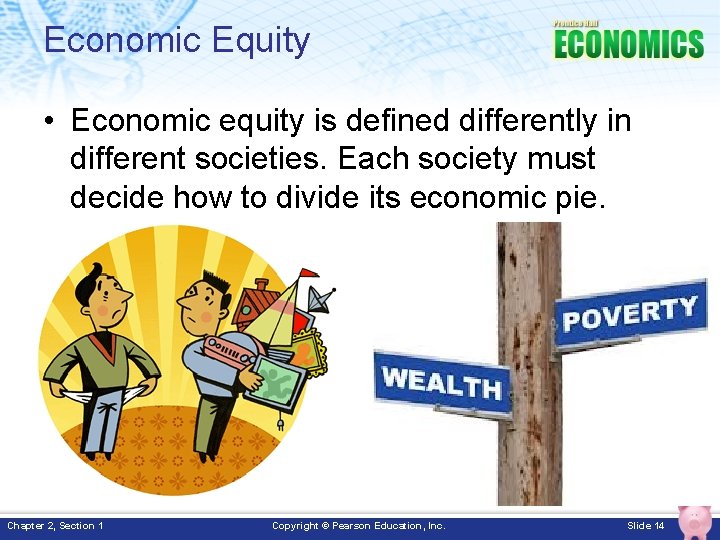
Economic Equity • Economic equity is defined differently in different societies. Each society must decide how to divide its economic pie. Chapter 2, Section 1 Copyright © Pearson Education, Inc. Slide 14
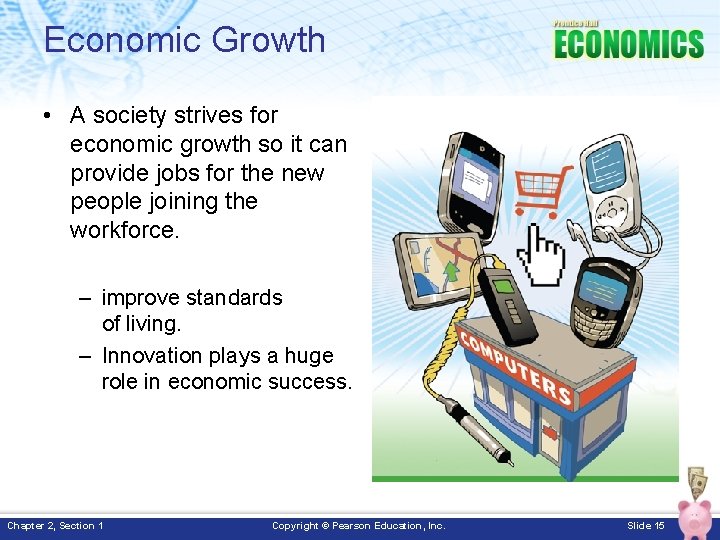
Economic Growth • A society strives for economic growth so it can provide jobs for the new people joining the workforce. – improve standards of living. – Innovation plays a huge role in economic success. Chapter 2, Section 1 Copyright © Pearson Education, Inc. Slide 15
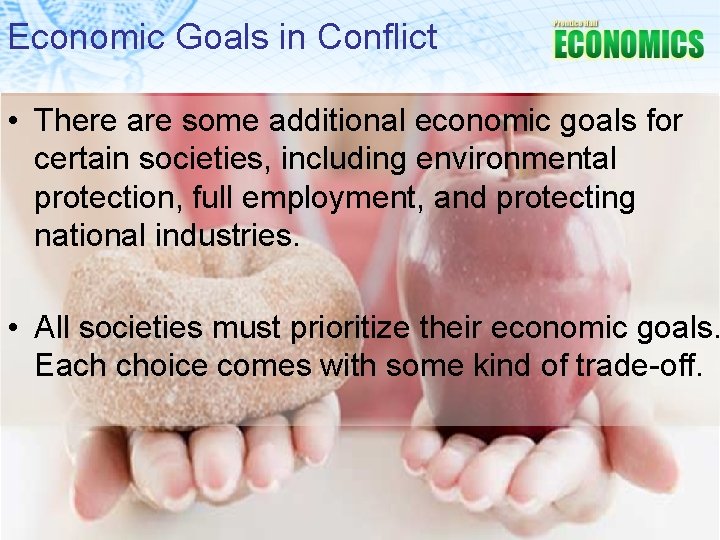
Economic Goals in Conflict • There are some additional economic goals for certain societies, including environmental protection, full employment, and protecting national industries. • All societies must prioritize their economic goals. Each choice comes with some kind of trade-off. Chapter 2, Section 1 Copyright © Pearson Education, Inc. Slide 16
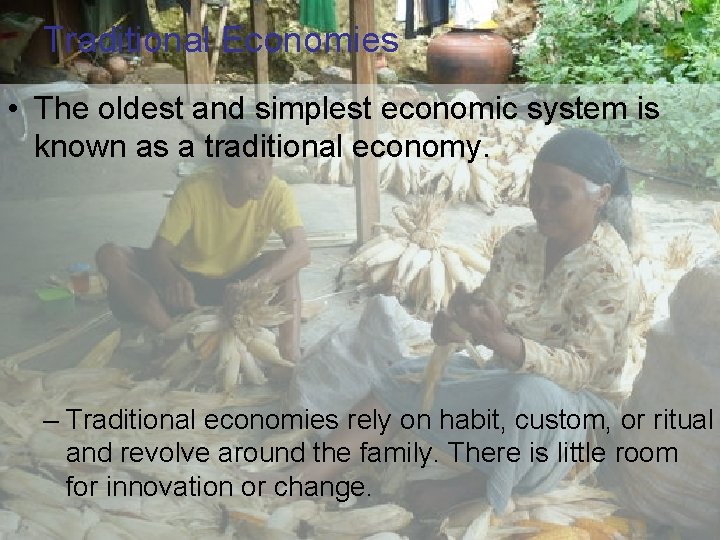
Traditional Economies • The oldest and simplest economic system is known as a traditional economy. – Traditional economies rely on habit, custom, or ritual and revolve around the family. There is little room for innovation or change. Chapter 2, Section 1 Copyright © Pearson Education, Inc. Slide 17
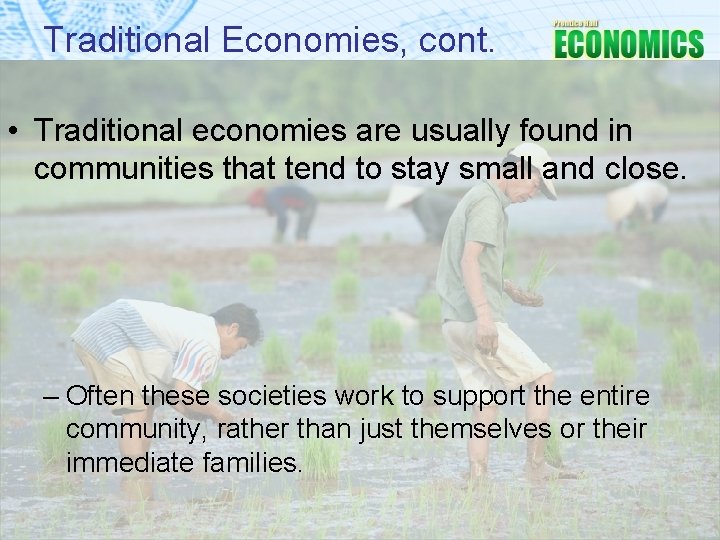
Traditional Economies, cont. • Traditional economies are usually found in communities that tend to stay small and close. – Often these societies work to support the entire community, rather than just themselves or their immediate families. Chapter 2, Section 1 Copyright © Pearson Education, Inc. Slide 18
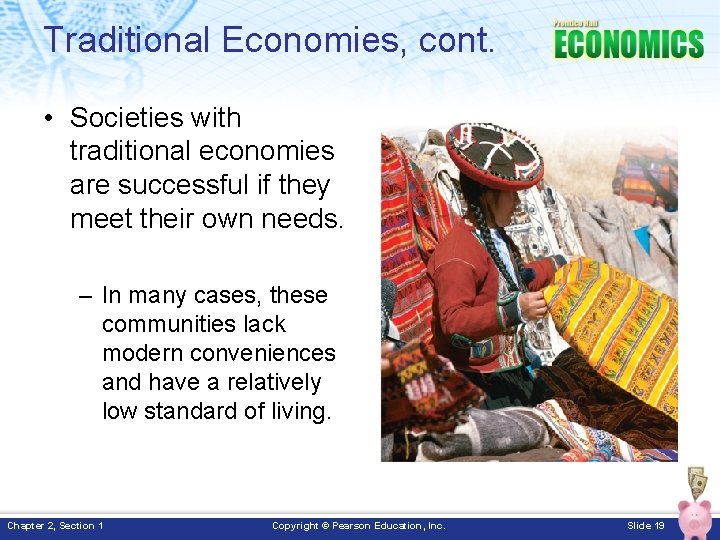
Traditional Economies, cont. • Societies with traditional economies are successful if they meet their own needs. – In many cases, these communities lack modern conveniences and have a relatively low standard of living. Chapter 2, Section 1 Copyright © Pearson Education, Inc. Slide 19
Review • Now that you have learned about the goals and values that affect how a society answers the key economic questions, go back and answer the Chapter Essential Question. – How does a society decide who gets what goods and services? Chapter 2, Section 1 Copyright © Pearson Education, Inc. Slide 20
- Slides: 20