
CHAPTER 2 Economic Models Tradeoffs and Trade What

- Slides: 36
CHAPTER 2 Economic Models: Trade-offs and Trade
What you will learn in this chapter: Three simple but important models: ØProduction possibility frontier ØComparative advantage ØCircular-flow diagram The difference between positive economics and normative economics. 2
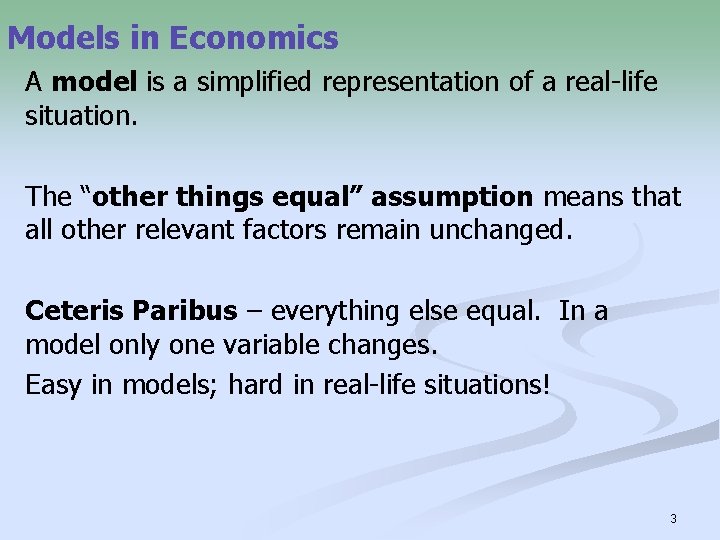
Models in Economics A model is a simplified representation of a real-life situation. The “other things equal” assumption means that all other relevant factors remain unchanged. Ceteris Paribus – everything else equal. In a model only one variable changes. Easy in models; hard in real-life situations! 3
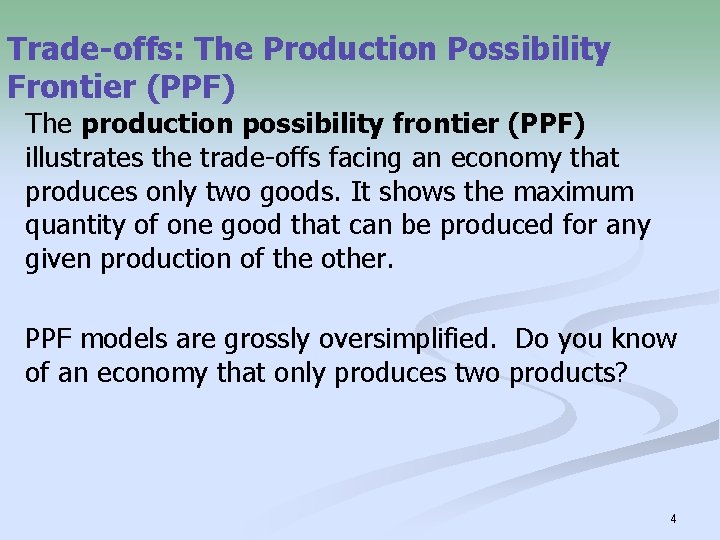
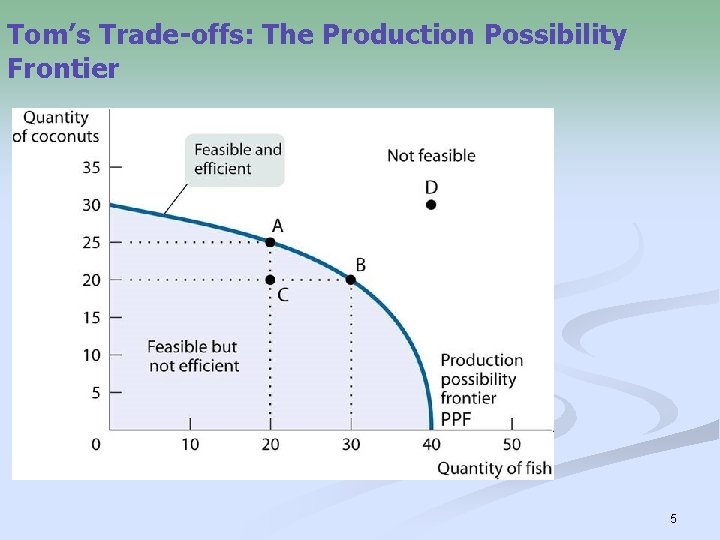
Trade-offs: The Production Possibility Frontier (PPF) The production possibility frontier (PPF) illustrates the trade-offs facing an economy that produces only two goods. It shows the maximum quantity of one good that can be produced for any given production of the other. PPF models are grossly oversimplified. Do you know of an economy that only produces two products? 4
Tom’s Trade-offs: The Production Possibility Frontier 5
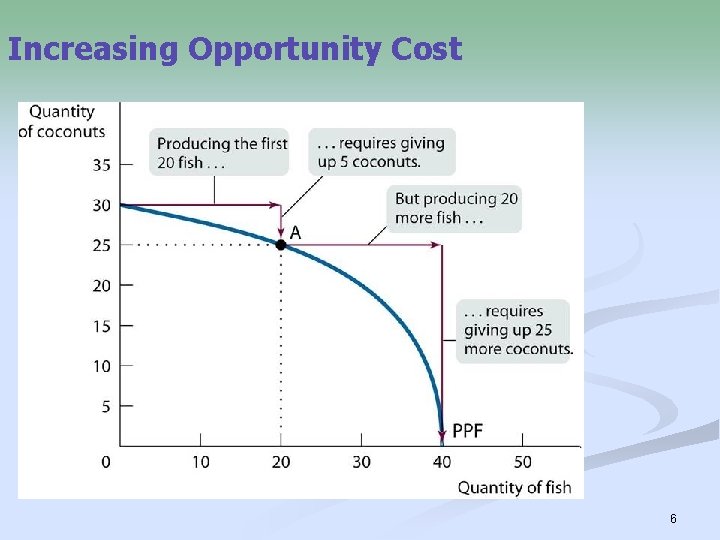
Increasing Opportunity Cost 6
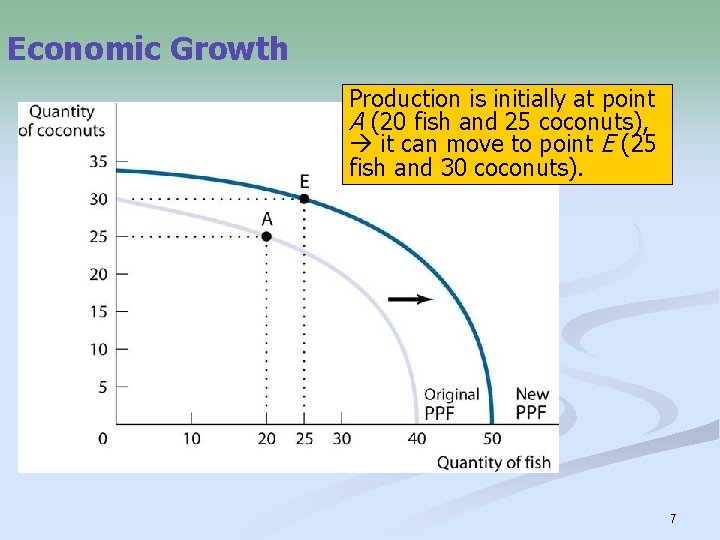
Economic Growth Production Economic The economy growth is initially can results now at point in an(20 produce A outward fishmore and shift of 25 of everything. coconuts), the PPF it can production move to point E (25 because possibilities fish and 30 coconuts). are expanded. 7
Comparative Advantage Two types of problems: output – how much is produced input- how much time is required to produce a product 8
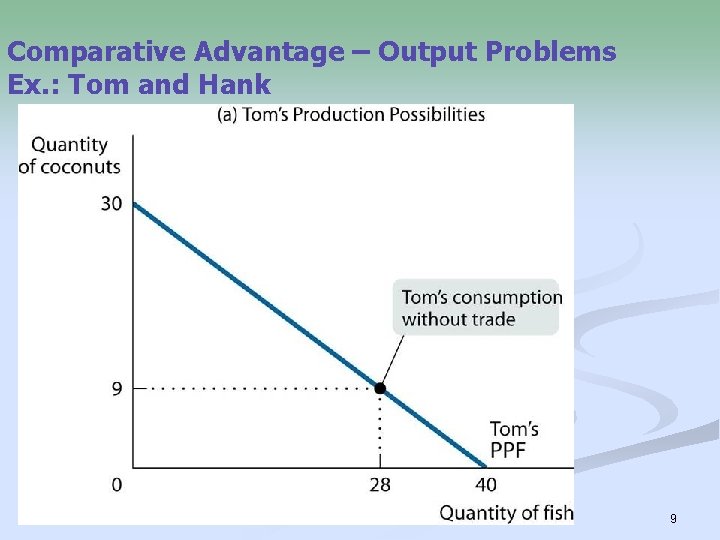
Comparative Advantage – Output Problems Ex. : Tom and Hank 9
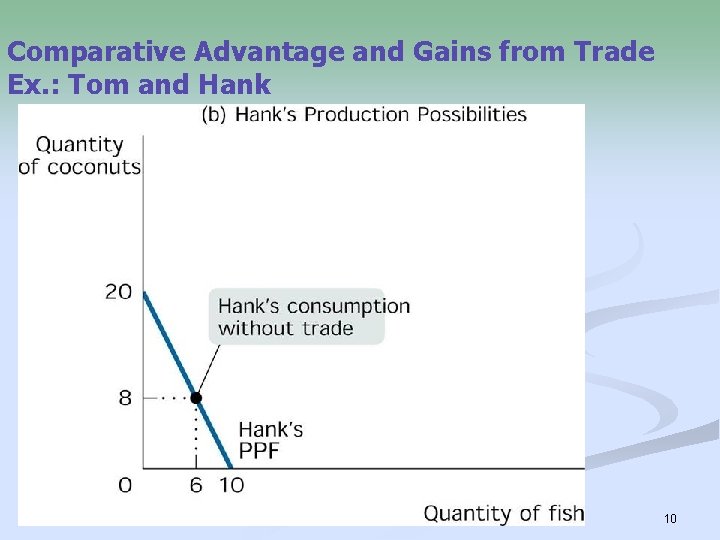
Comparative Advantage and Gains from Trade Ex. : Tom and Hank 10
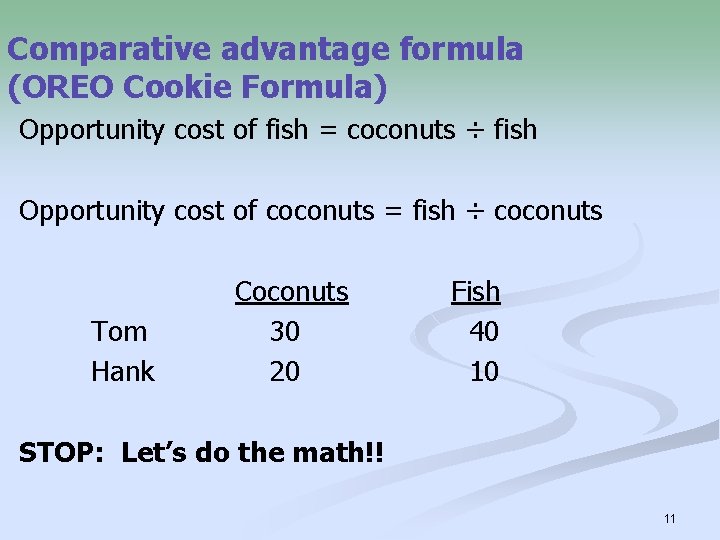
Comparative advantage formula (OREO Cookie Formula) Opportunity cost of fish = coconuts ÷ fish Opportunity cost of coconuts = fish ÷ coconuts Tom Hank Coconuts 30 20 Fish 40 10 STOP: Let’s do the math!! 11
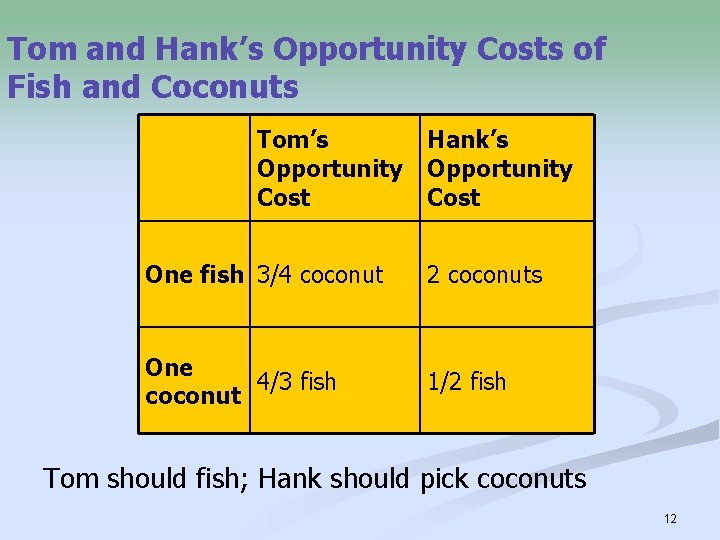
Tom and Hank’s Opportunity Costs of Fish and Coconuts Tom’s Opportunity Cost Hank’s Opportunity Cost One fish 3/4 coconut 2 coconuts One 4/3 fish coconut 1/2 fish Tom should fish; Hank should pick coconuts 12
Specialize and Trade Both castaways are better off when they each specialize in what they are good at and trade. It’s a good idea for Tom to catch the fish for both of them, because his opportunity cost of a fish in terms of coconuts not gathered is only 3⁄4 of a coconut, versus 2 coconuts for Hank. Correspondingly, it’s a good idea for Hank to gather coconuts for the both of them. 13
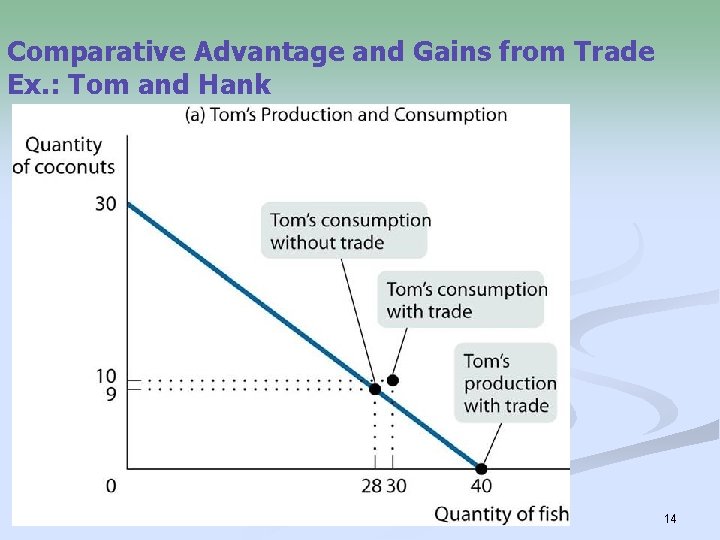
Comparative Advantage and Gains from Trade Ex. : Tom and Hank 14
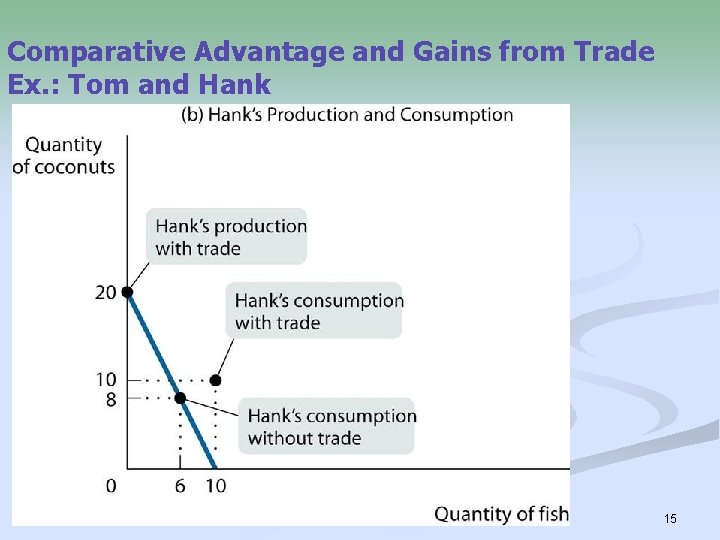
Comparative Advantage and Gains from Trade Ex. : Tom and Hank 15
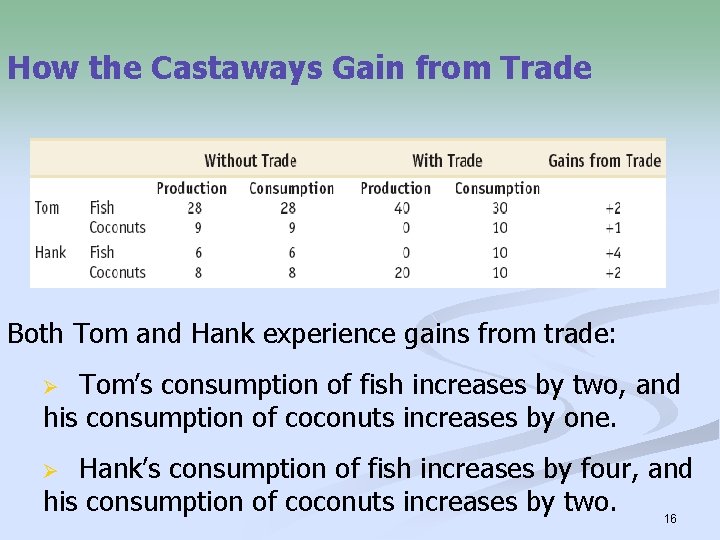
How the Castaways Gain from Trade Both Tom and Hank experience gains from trade: Tom’s consumption of fish increases by two, and his consumption of coconuts increases by one. Ø Hank’s consumption of fish increases by four, and his consumption of coconuts increases by two. 16 Ø
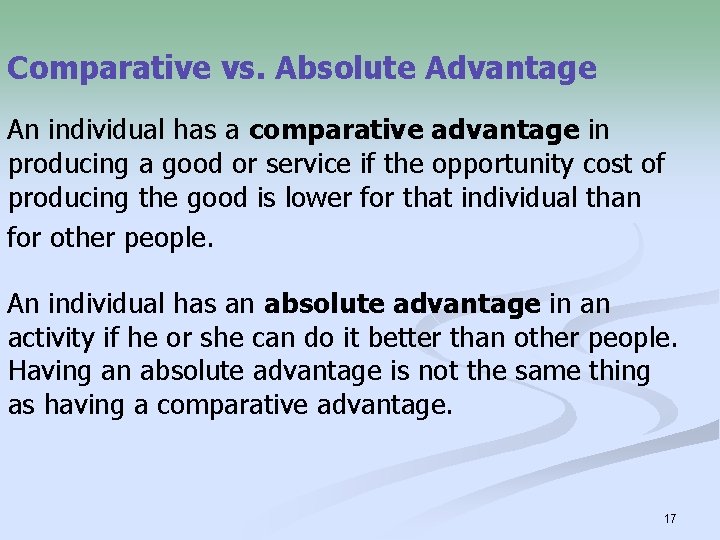
Comparative vs. Absolute Advantage An individual has a comparative advantage in producing a good or service if the opportunity cost of producing the good is lower for that individual than for other people. An individual has an absolute advantage in an activity if he or she can do it better than other people. Having an absolute advantage is not the same thing as having a comparative advantage. 17
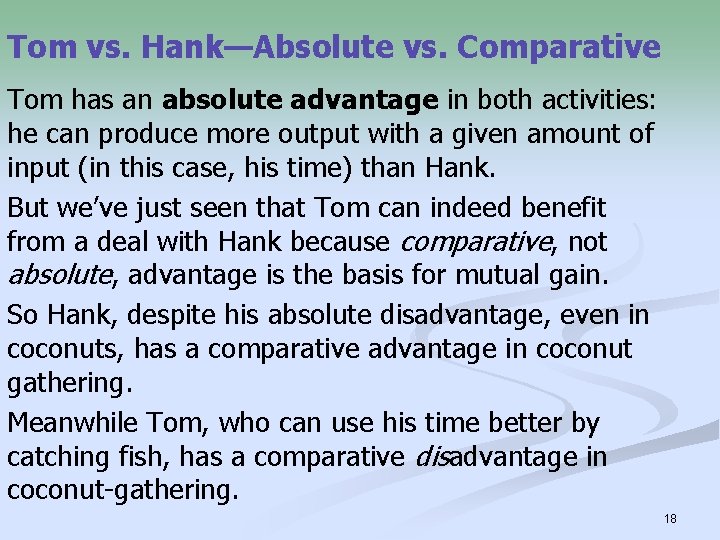
Tom vs. Hank—Absolute vs. Comparative Tom has an absolute advantage in both activities: he can produce more output with a given amount of input (in this case, his time) than Hank. But we’ve just seen that Tom can indeed benefit from a deal with Hank because comparative, not absolute, advantage is the basis for mutual gain. So Hank, despite his absolute disadvantage, even in coconuts, has a comparative advantage in coconut gathering. Meanwhile Tom, who can use his time better by catching fish, has a comparative disadvantage in coconut-gathering. 18
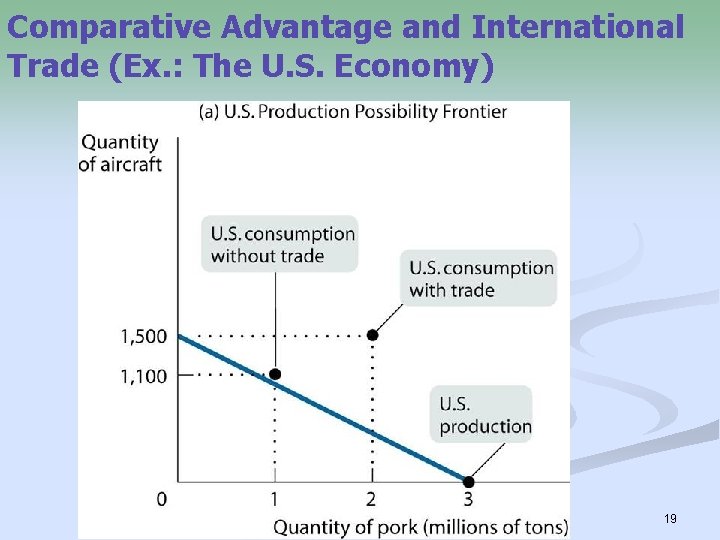
Comparative Advantage and International Trade (Ex. : The U. S. Economy) 19
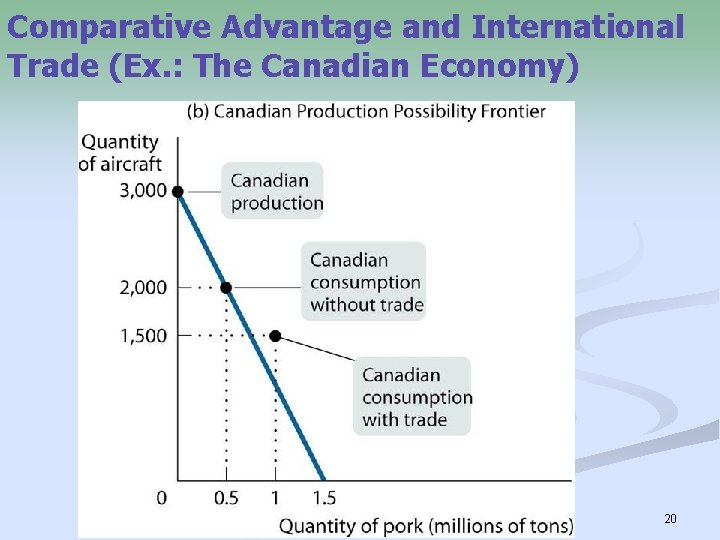
Comparative Advantage and International Trade (Ex. : The Canadian Economy) 20
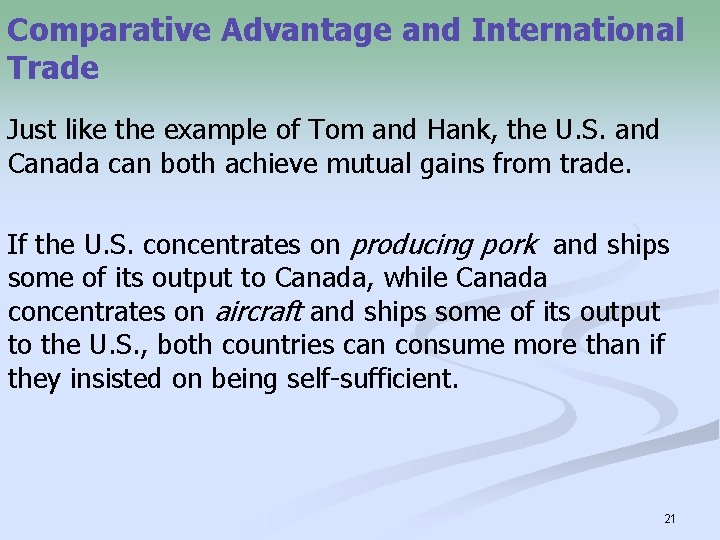
Comparative Advantage and International Trade Just like the example of Tom and Hank, the U. S. and Canada can both achieve mutual gains from trade. If the U. S. concentrates on producing pork and ships some of its output to Canada, while Canada concentrates on aircraft and ships some of its output to the U. S. , both countries can consume more than if they insisted on being self-sufficient. 21
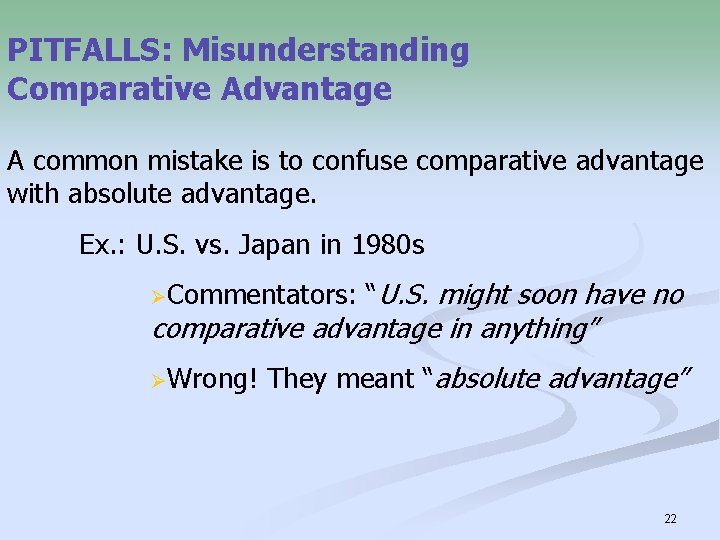
PITFALLS: Misunderstanding Comparative Advantage A common mistake is to confuse comparative advantage with absolute advantage. Ex. : U. S. vs. Japan in 1980 s ØCommentators: “U. S. might soon have no comparative advantage in anything” ØWrong! They meant “absolute advantage” 22
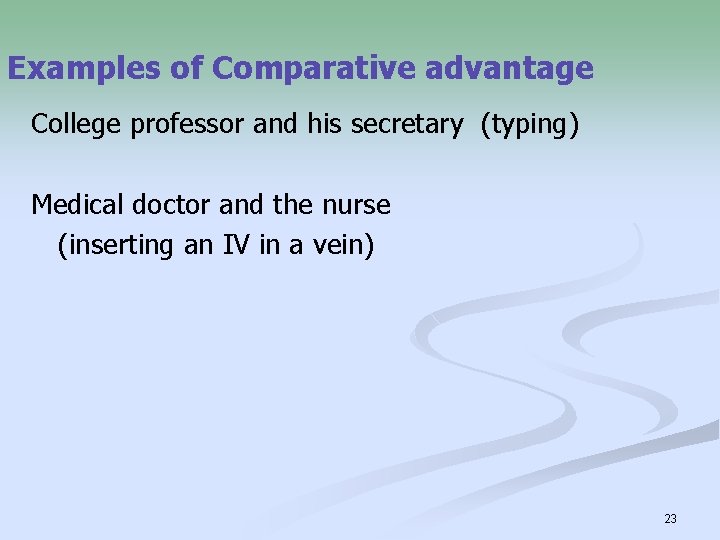
Examples of Comparative advantage College professor and his secretary (typing) Medical doctor and the nurse (inserting an IV in a vein) 23
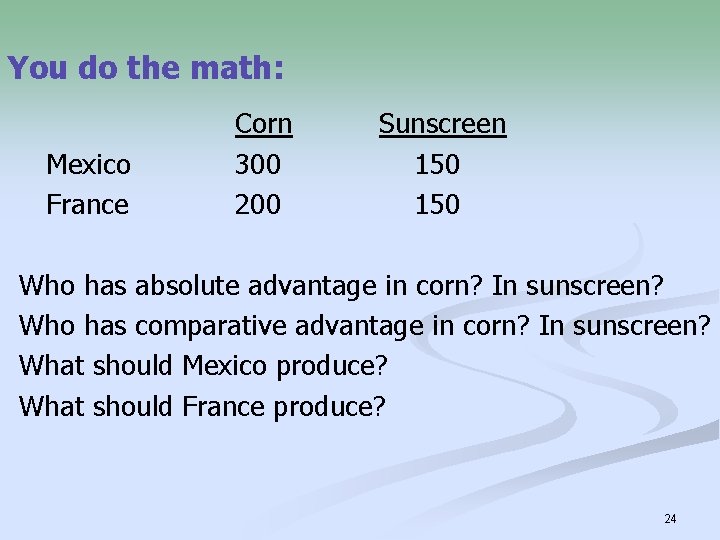
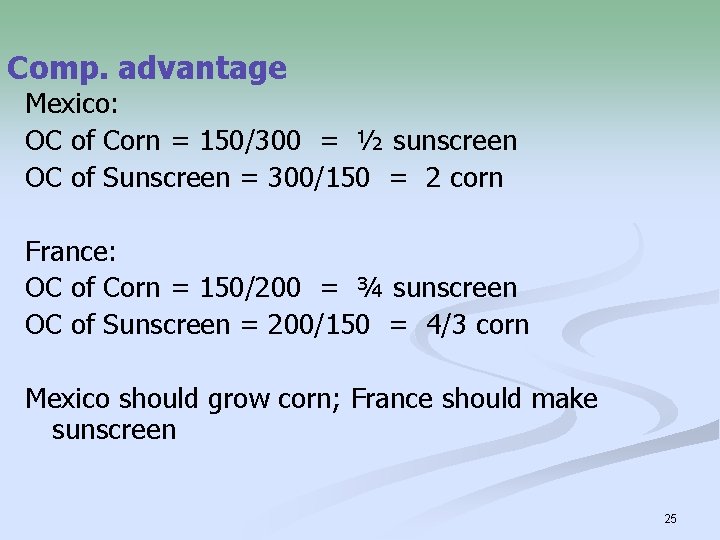
You do the math: Mexico France Corn 300 200 Sunscreen 150 Who has absolute advantage in corn? In sunscreen? Who has comparative advantage in corn? In sunscreen? What should Mexico produce? What should France produce? 24
Comp. advantage Mexico: OC of Corn = 150/300 = ½ sunscreen OC of Sunscreen = 300/150 = 2 corn France: OC of Corn = 150/200 = ¾ sunscreen OC of Sunscreen = 200/150 = 4/3 corn Mexico should grow corn; France should make sunscreen 25
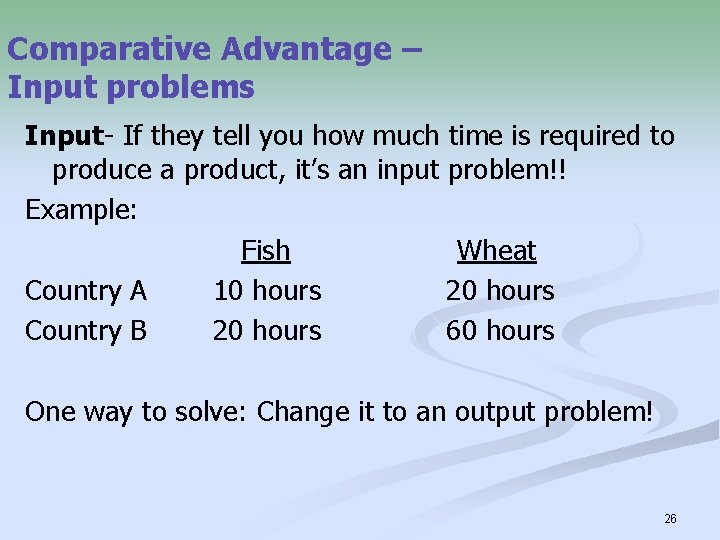
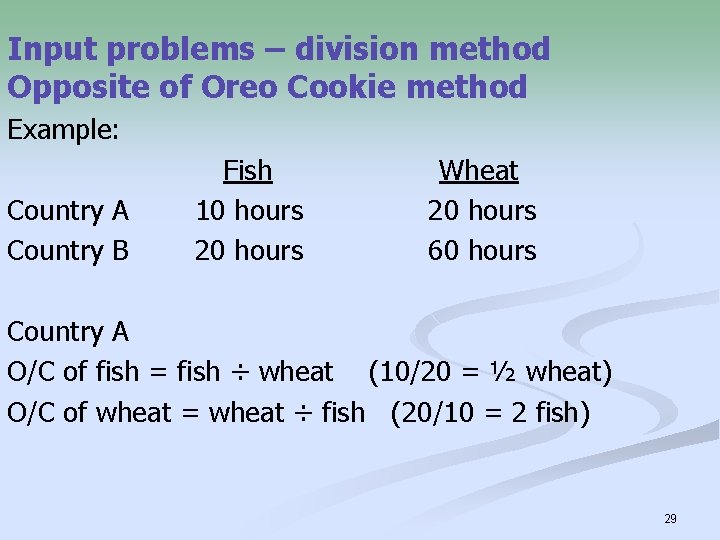
Comparative Advantage – Input problems Input- If they tell you how much time is required to produce a product, it’s an input problem!! Example: Fish Wheat Country A 10 hours 20 hours Country B 20 hours 60 hours One way to solve: Change it to an output problem! 26
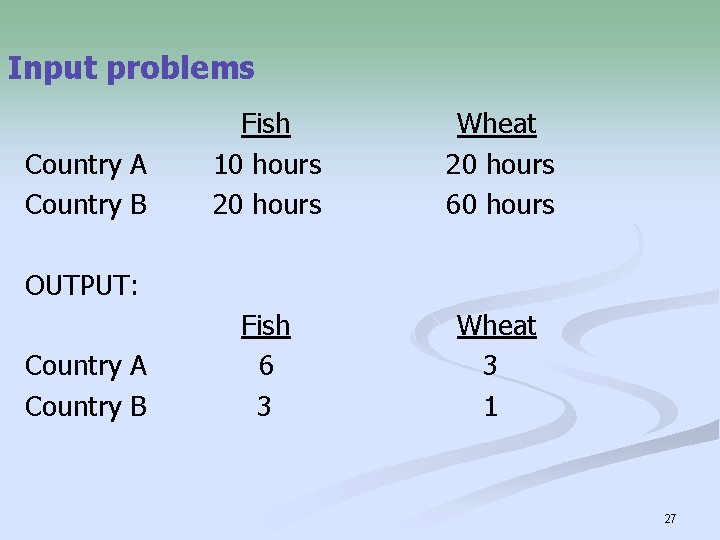
Input problems Country A Country B Fish 10 hours 20 hours Wheat 20 hours 60 hours Fish 6 3 Wheat 3 1 OUTPUT: Country A Country B 27
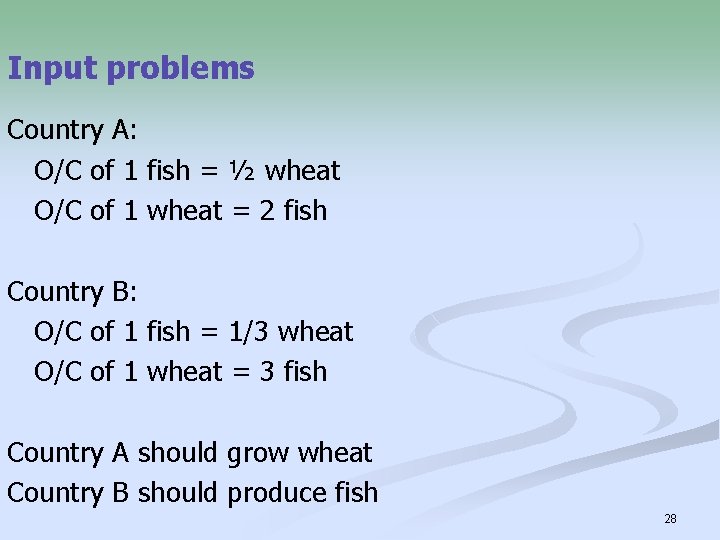
Input problems Country A: O/C of 1 fish = ½ wheat O/C of 1 wheat = 2 fish Country B: O/C of 1 fish = 1/3 wheat O/C of 1 wheat = 3 fish Country A should grow wheat Country B should produce fish 28
Input problems – division method Opposite of Oreo Cookie method Example: Country A Country B Fish 10 hours 20 hours Wheat 20 hours 60 hours Country A O/C of fish = fish ÷ wheat (10/20 = ½ wheat) O/C of wheat = wheat ÷ fish (20/10 = 2 fish) 29
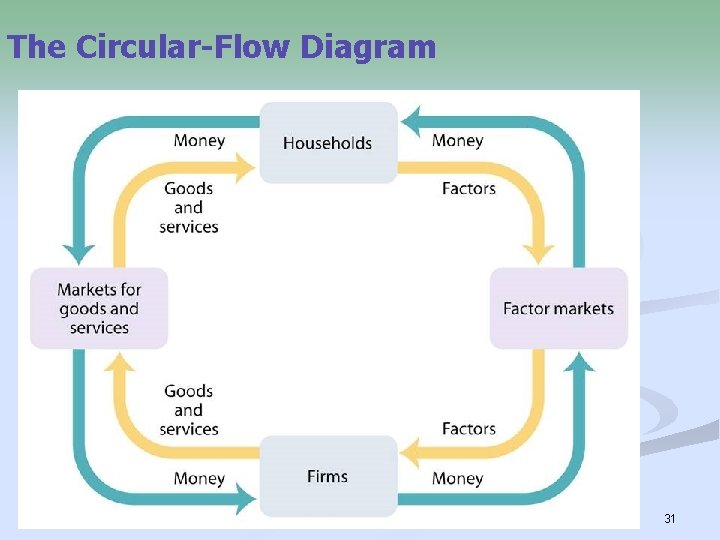
Transactions: The Circular-Flow Diagram Trade takes the form of barter when people directly exchange goods or services that they have for goods or services that they want. The circular-flow diagram is a model that represents the transactions in an economy by flows around a circle. 30
The Circular-Flow Diagram 31
Circular-Flow of Economic Activities A household is a person or a group of people that share their income. A firm is an organization that produces goods and services for sale. Firms sell goods and services that they produce to households in markets for goods and services. Firms buy the resources they need to produce— factors of production—in factor markets. 32
Using Models Positive economics is the branch of economic analysis that describes the way the economy actually works. Normative economics makes prescriptions about the way the economy should work. A forecast is a simple prediction of the future. 33
Using Models Economists can determine correct answers for positive questions, but typically not for normative questions, which involve value judgments. 34
When and Why Economists Disagree There are two main reasons economists disagree: Ø They may disagree about which simplifications to make in a model. Ø They may disagree about values. 35
The End of Chapter 2 36