
Chapter 2 ECommerce Mechanisms Platforms and Tools 1
- Slides: 27
Chapter 2 E-Commerce: Mechanisms, Platforms, and Tools
1. Learning Objectives Describe the major electronic commerce (EC) activities and processes and the mechanisms that support them. 2. Define e-marketplaces and list their components. 3. List the major types of e-marketplaces and describe their features. 4. Describe electronic catalogs, search engines, and shopping carts. 5. Describe the major types of auctions and list their characteristics. 6. Discuss the benefits and limitations of e-auctions. 7. Describe bartering and negotiating online. 8. Describe virtual communities. 9. Describe social networks as EC mechanisms. 10. Describe the emerging technologies of augmented reality and crowdsourcing. 11. Describe Web 3. 0 and define Web 4. 0 and Web 5. 0.
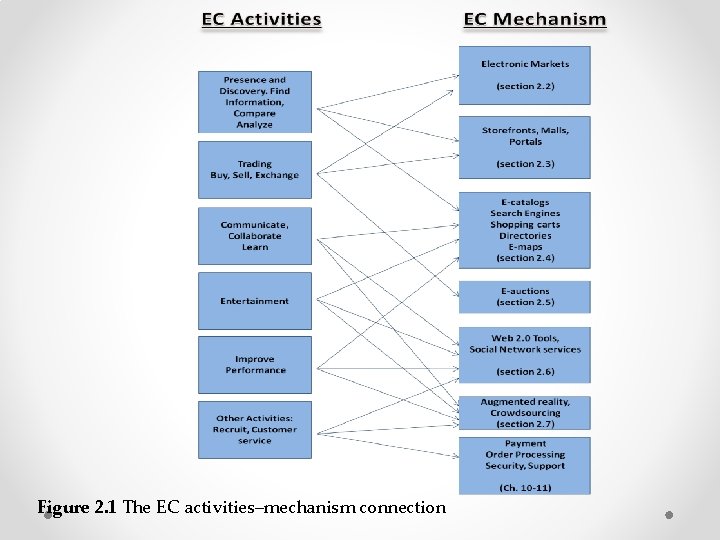
Electronic Commerce Mechanisms: An Overview • EC Activities and Support Mechanisms • The Online Purchasing Process
Figure 2. 1 The EC activities–mechanism connection
E-Marketplaces • *E-Marketplace • Components of and the Participants in E-Marketplaces o Customers o Sellers o Products and services • * Digital Products o Infrastructure o *Front end o * Back end o * Intermediaries
E-Marketplaces • *Disintermediation and Reintermediation • Types of E-Marketplaces o Private E-Marketplaces o Public E-Marketplaces
Customer Shopping Mechanisms: Webstores, Malls, And Portals • *Webstore o Microsites • Electronic Malls • Web (Information) Portals o Types of Portals • • Commercial (public) portals Corporate (private) portals Publishing portals *Mobile portals *Voice portals Knowledge portals Communities' portals
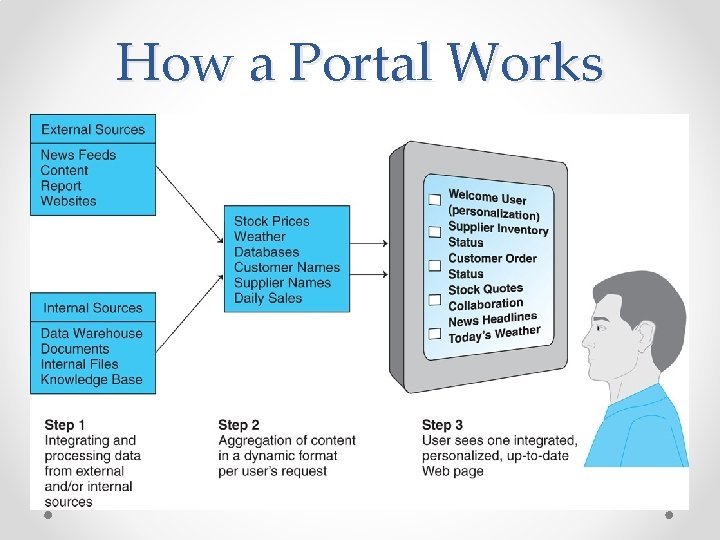
How a Portal Works
Customer Shopping Mechanisms: Webstores, Malls, And Portals • The Roles and Value of Intermediaries in E-Marketplaces o Brokers o Distributors in B 2 B
Merchant Solutions: Electronic Catalogs, Search Engines, and Shopping Carts • *Electronic catalogs (e-catalogs) • EC Search Activities, Types, and Engines o Types of EC Searches • Internet/Web Search o *Enterprise Search • *Desktop Search
Merchant Solutions: Electronic Catalogs, Search Engines, and Shopping Carts o *Search Engines o Voice-Powered Search o Video and Mobile Search • Mobile Search o Visual Shopping Search Engine o Social Network Search Engines • *Shopping Carts o Product Configuration (Self Customization) o Questions and Answers Online
Auctions, Bartering, and Negotiating Online • Definition and Characteristics • *Dynamic Pricing • Traditional Auctions Versus E-Auctions o Limitations of Traditional Offline Auctions o *Electronic Auctions (e-auctions)
Auctions, Bartering, and Negotiating Online • Types of Auctions o One Buyer, One Seller o One Seller, Many Potential Buyers • *Forward Auction o One Buyer, Many Potential Sellers • Reverse Auctions (bidding or tendering system • The Name-Your-Own-Price Model o Many Sellers, Many Buyers o Penny Auctions o Benefits of E-Auctions o Limitations of E-Auctions • Minimal Security • Possibility of Fraud • Limited Participation
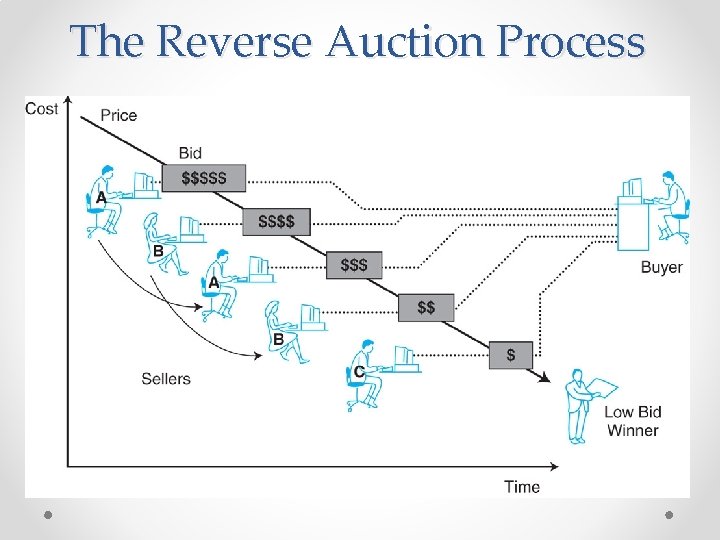
The Reverse Auction Process
Auctions, Bartering, and Negotiating Online • Impacts of Auctions o Auctions as a Mechanism to Determine a Price o Auctions and Social Networks • *Bartering o *E-bartering (electronic bartering) o *Bartering exchange • Online Negotiating
Virtual Communities and Social Networks • *Virtual Community • Characteristics of Traditional Online Communities and Their Classifications of Virtual Communities • Public Versus Private Communities • Classification Categories • Online Social Networks and Social Network Sites o A Definition and Basic Information
Virtual Communities and Social Networks • Social Network Services o The Size of Social Network Sites o A Global Phenomenon o Representative Capabilities and Services Provided by Social Network Sites • Business-Oriented Public Social Networks o *Business-oriented social networks o Example of a Business-Oriented Social Network o Some Capabilities of Business-Oriented Networks • Private (or Enterprise) Social Networks
Virtual Communities and Social Networks • Business Models And Services Related To Social Networking • Mobile Social Commerce • *Mobile Social Networking • Mobile Enterprise Networks o Examples of Social Mobile Commerce Applications • Recent Innovative Tools And Platforms For Social Networking o Mobile Community Activities
Virtual Worlds As an Electronic Commerce Platform • • *Virtual World Major Features *Avatars Business Activities and Value in Virtual Worlds o Virtual Shopping o Trading Virtual Properties
Emerging EC Platforms: Augmented Reality And Crowdsourcing • *Augmented Reality • Applications in E-Commerce • *Crowdsourcing o Definitions and Major Concepts o The Process of Crowdsourcing o Benefits of Crowdsourcing o Uses of Crowdsourcing in E-Commerce
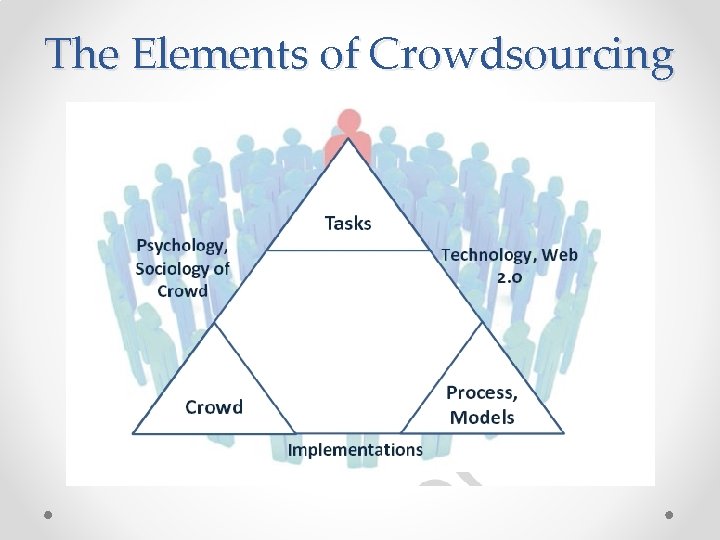
The Elements of Crowdsourcing
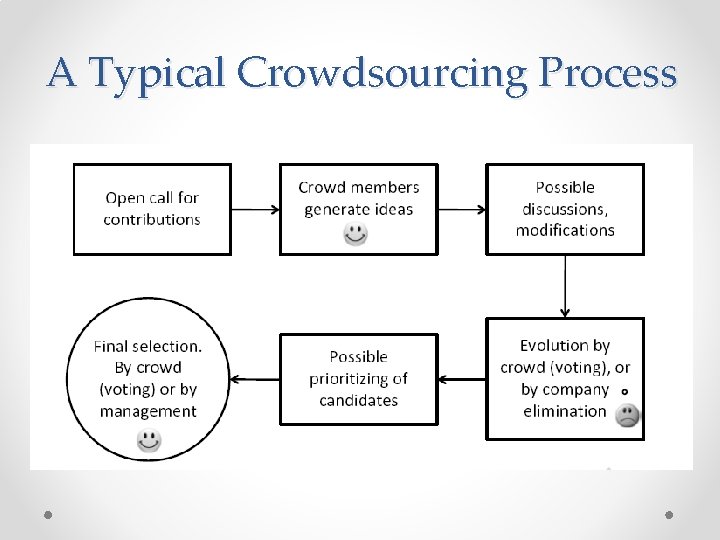
A Typical Crowdsourcing Process
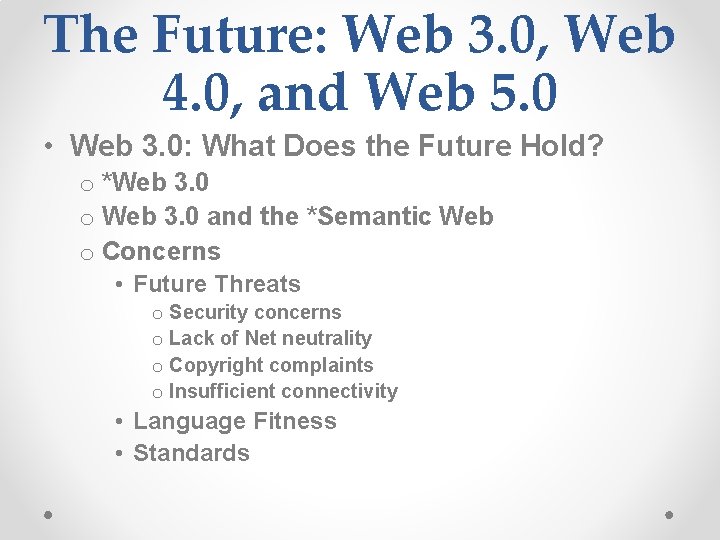
The Future: Web 3. 0, Web 4. 0, and Web 5. 0 • Web 3. 0: What Does the Future Hold? o *Web 3. 0 o Web 3. 0 and the *Semantic Web o Concerns • Future Threats o Security concerns o Lack of Net neutrality o Copyright complaints o Insufficient connectivity • Language Fitness • Standards
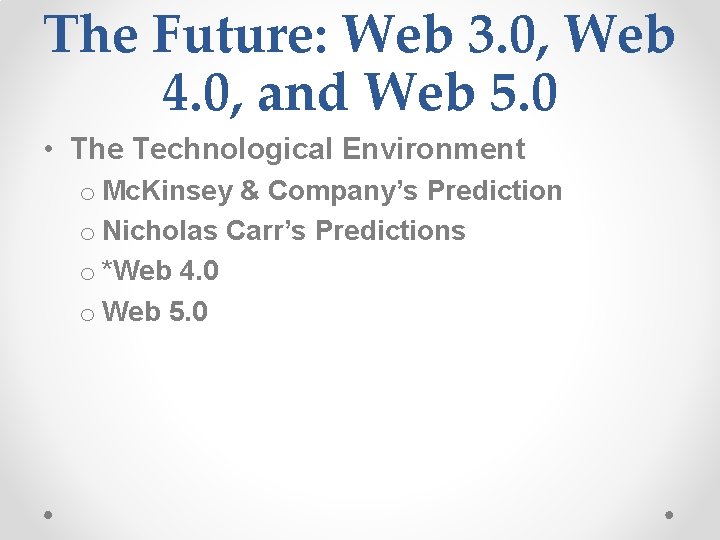
The Future: Web 3. 0, Web 4. 0, and Web 5. 0 • The Technological Environment o Mc. Kinsey & Company’s Prediction o Nicholas Carr’s Predictions o *Web 4. 0 o Web 5. 0
Managerial Issues 1. 2. 3. 4. Should we use auctions for selling? Should we barter? How do we select merchant software? How can we use Facebook and other social networks in our business?
Summary 1. 2. 3. 4. Activities and mechanisms. E-marketplaces and their components. The major types of e-marketplaces. Electronic catalogs, search engines, and shopping carts. 5. Types of auctions and their characteristics. 6. The benefits and limitations of auctions.
Summary 7. Bartering and negotiating. 8. The structure and role of virtual communities. 9. Social networks as EC mechanisms. 10. Virtual worlds. 11. Augmented Reality (AR) and crowdsourcing. 12. Web 3. 0 and Web 4. 0.