
CHAPTER 2 DEVELOPING MARKETING STRATEGIES AND PLANS MARKETING

- Slides: 27
CHAPTER 2 DEVELOPING MARKETING STRATEGIES AND PLANS
MARKETING & CUSTOMER VALUE
THE VALUE DELIVERY PROCESS Make the product Design Product Procure Make Sell the product Price Sell Advertise/ promote Distribute Traditional physical process sequence Service
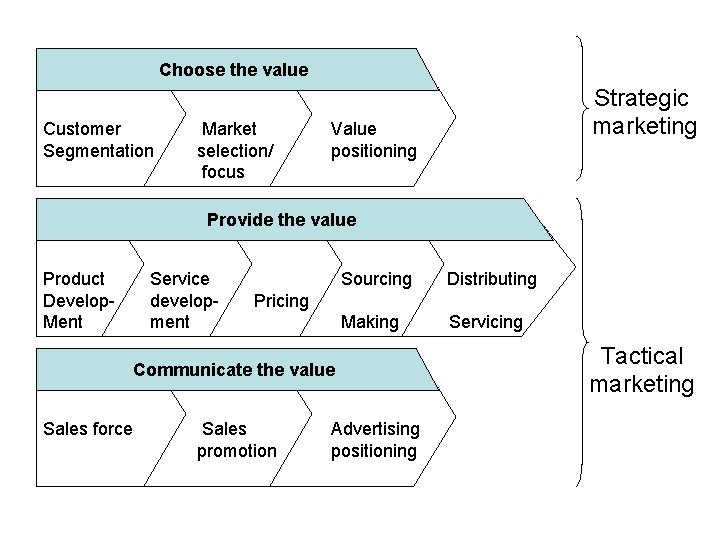
Choose the value Customer Segmentation Market selection/ focus Strategic marketing Value positioning Provide the value Product Develop. Ment Service development Sourcing Distributing Making Servicing Pricing Communicate the value Sales force Sales promotion Advertising positioning Tactical marketing
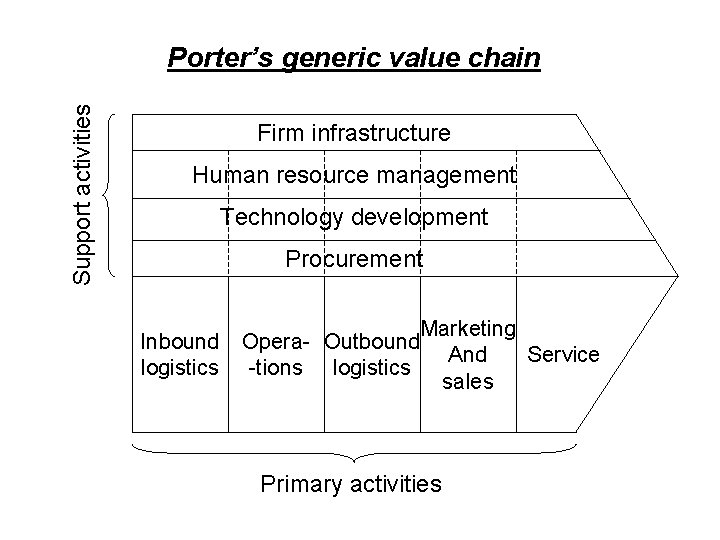
THE VALUE CHAIN The value chain is a tool for identifying ways to create more customer value. The value chain identifies nine strategically relevant activities (5 primary activities and 4 support activities) that create value and cost in a specific business.
Support activities Porter’s generic value chain Firm infrastructure Human resource management Technology development Procurement Inbound logistics Marketing Opera- Outbound And Service -tions logistics sales Primary activities
CORPORATE AND DIVISION STRATEGIC PLANNING
1. DEFINING THE CORPORATE MISSION Organizations develop clear, thoughtful mission statements to share with managers, employees and customers which provide employees with a shared sense of purpose, direction and opportunity.
2. DEFINING THE BUSINESS A business must be viewed as a customersatisfying process, not a goods-producing process. The purpose of identifying the company’s SBU is to develop separate strategies and assign appropriate funding.
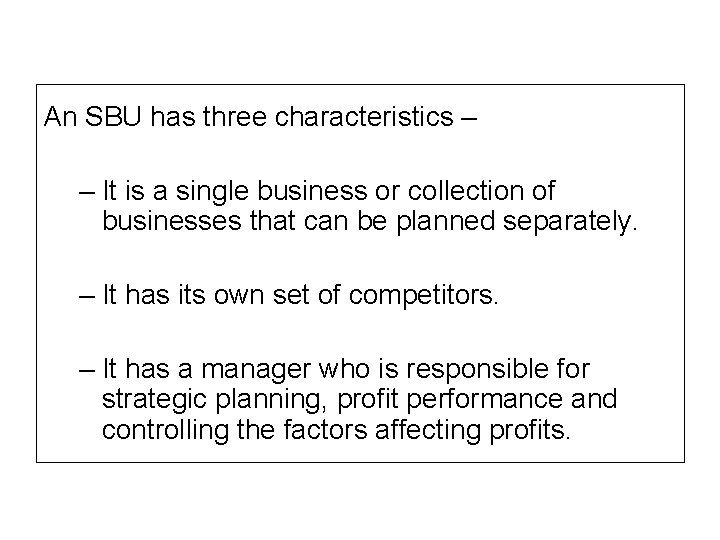
An SBU has three characteristics – – It is a single business or collection of businesses that can be planned separately. – It has its own set of competitors. – It has a manager who is responsible for strategic planning, profit performance and controlling the factors affecting profits.
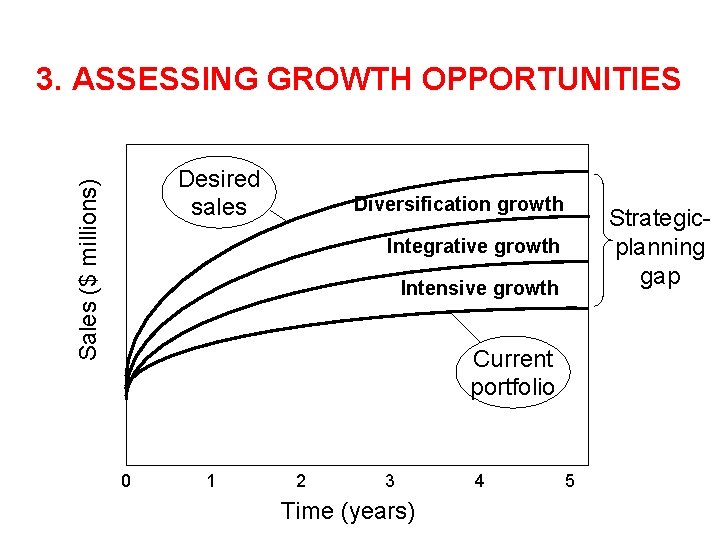
3. ASSESSING GROWTH OPPORTUNITIES Sales ($ millions) Desired sales Diversification growth Strategicplanning gap Integrative growth Intensive growth Current portfolio 0 1 2 3 Time (years) 4 5
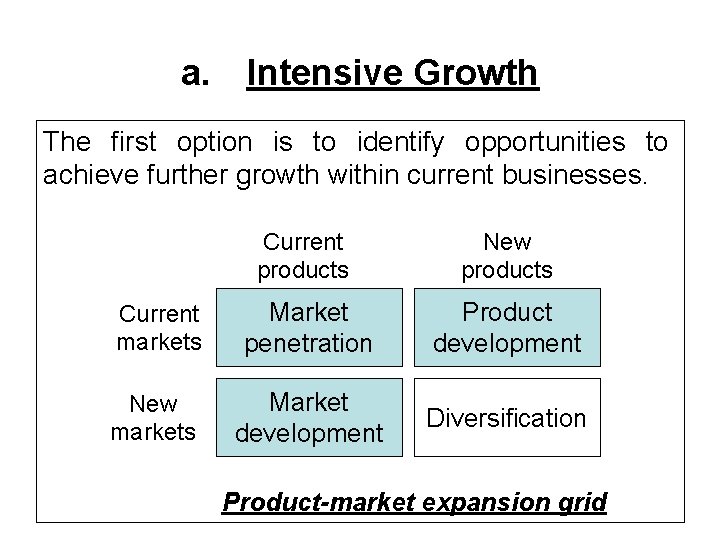
a. Intensive Growth The first option is to identify opportunities to achieve further growth within current businesses. Current products New products Current markets Market penetration Product development New markets Market development Diversification Product-market expansion grid
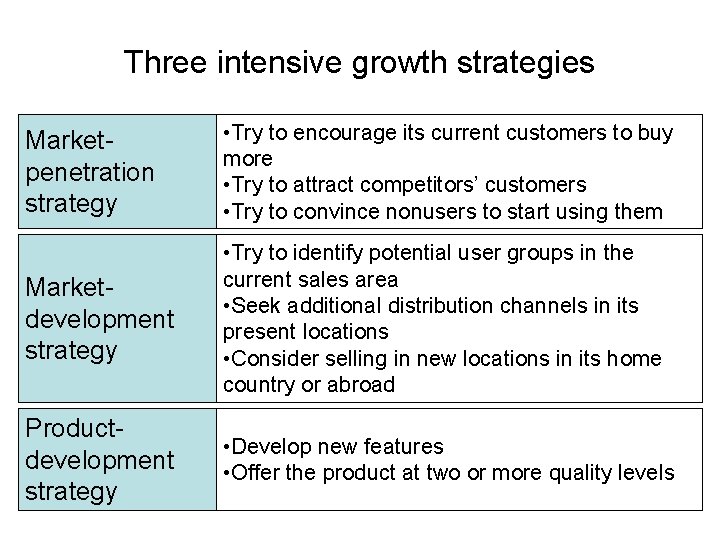
Three intensive growth strategies Marketpenetration strategy • Try to encourage its current customers to buy more • Try to attract competitors’ customers • Try to convince nonusers to start using them Marketdevelopment strategy • Try to identify potential user groups in the current sales area • Seek additional distribution channels in its present locations • Consider selling in new locations in its home country or abroad Productdevelopment strategy • Develop new features • Offer the product at two or more quality levels
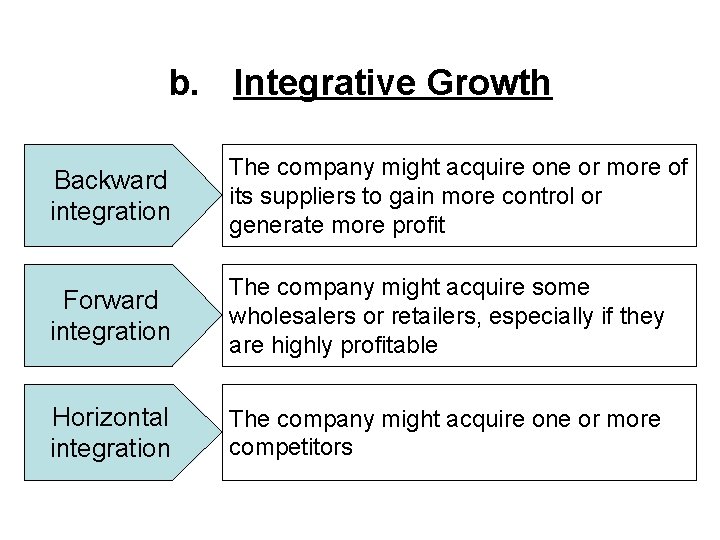
b. Integrative Growth Backward integration The company might acquire one or more of its suppliers to gain more control or generate more profit Forward integration The company might acquire some wholesalers or retailers, especially if they are highly profitable Horizontal integration The company might acquire one or more competitors
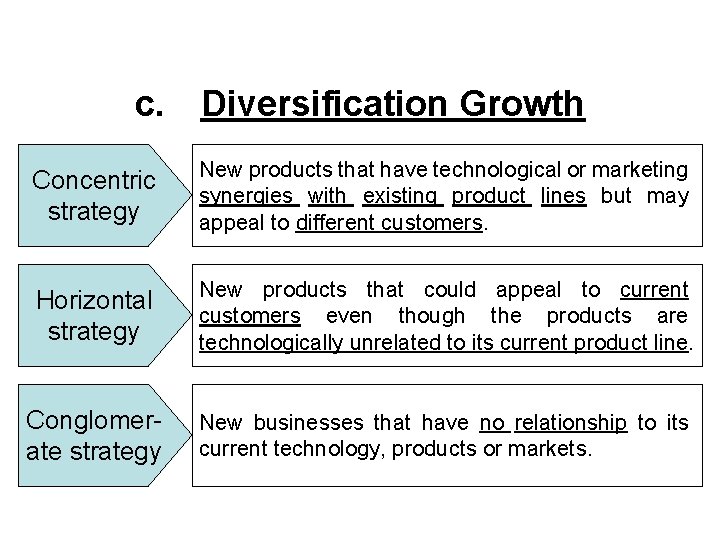
c. Diversification Growth Concentric strategy New products that have technological or marketing synergies with existing product lines but may appeal to different customers. Horizontal strategy New products that could appeal to current customers even though the products are technologically unrelated to its current product line. Conglomerate strategy New businesses that have no relationship to its current technology, products or markets.
BUSINESS UNIT STRATEGIC PLANNING
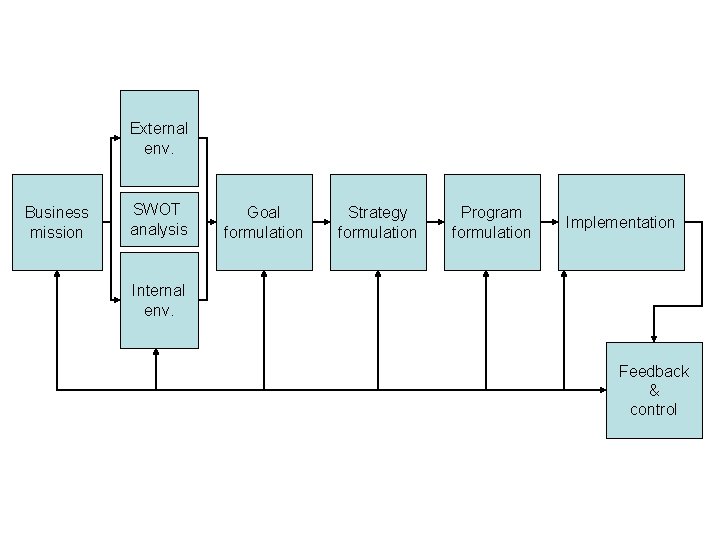
External env. Business mission SWOT analysis Goal formulation Strategy formulation Program formulation Implementation Internal env. Feedback & control
1. THE BUSINESS MISSION Each business unit needs to define its specific mission within the broader company mission.
2. SWOT ANALYSIS • External environment (opportunity - threat) analysis A marketing opportunity is an area of buyer need and interest in which there is a high probability that a company can profitably satisfy that need. An environmental threat is a challenge posed by an unfavorable trend or development that would lead to lower sales and profit in the absence of defensive marketing action. • Internal environment (strength - weakness) analysis
3. GOAL FORMULATION a. Objectives must be arranged hierarchically, from the most to the least important. b. Objectives should be stated quantitatively whenever possible. c. Goals should be realistic. d. Objectives must be consistent.
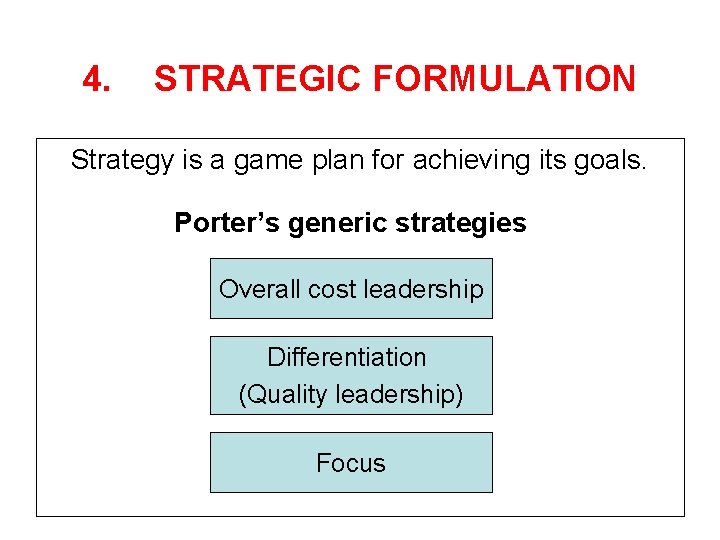
4. STRATEGIC FORMULATION Strategy is a game plan for achieving its goals. Porter’s generic strategies Overall cost leadership Differentiation (Quality leadership) Focus
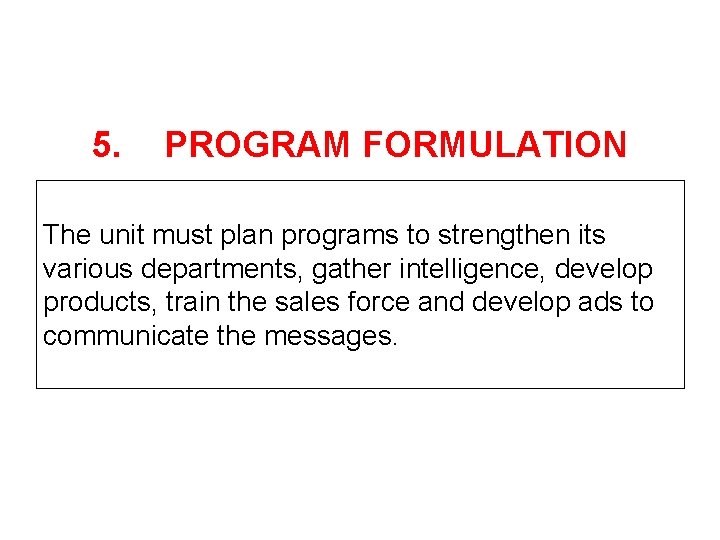
5. PROGRAM FORMULATION The unit must plan programs to strengthen its various departments, gather intelligence, develop products, train the sales force and develop ads to communicate the messages.
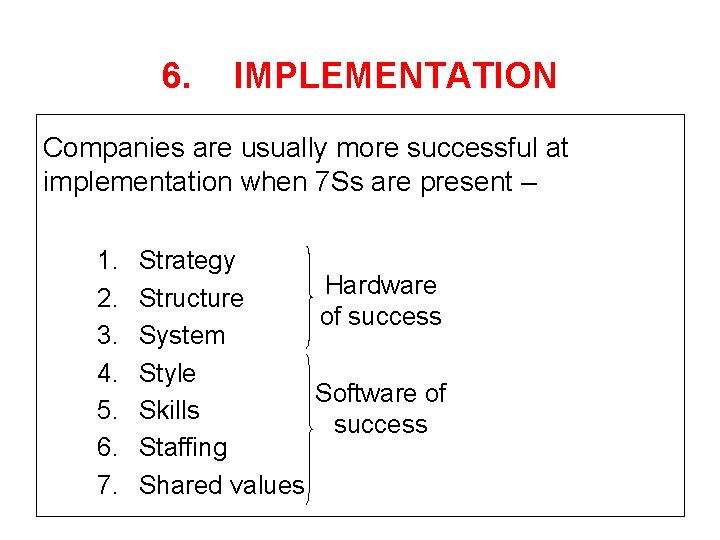
6. IMPLEMENTATION Companies are usually more successful at implementation when 7 Ss are present – 1. 2. 3. 4. 5. 6. 7. Strategy Hardware Structure of success System Style Software of Skills success Staffing Shared values
7. FEEDBACK AND CONTROL A firm needs to track the results and monitor new developments. The marketplace will change; and when it does, the company will need to review and revise its implementation, programs, strategies or even objectives.
PRODUCT PLANNING
MARKETING PLAN A marketing plan is a written document that summarizes what the marketer has learned about the marketplace and indicates how the firm plans to reach its marketing objectives.
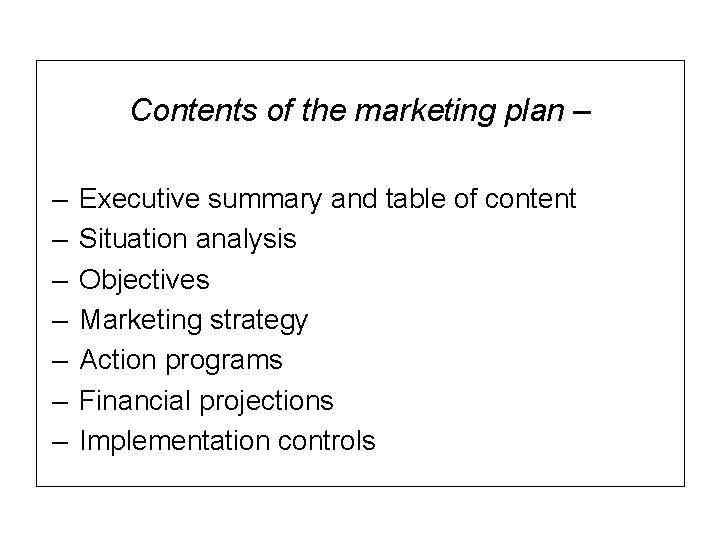
Contents of the marketing plan – – – – Executive summary and table of content Situation analysis Objectives Marketing strategy Action programs Financial projections Implementation controls