
chapter 2 Developing a Professional Perspective Kathryn S
- Slides: 38
chapter 2 Developing a Professional Perspective Kathryn S. Hoff, Jo. Ann Kroll, Carol Fletcher
Introduction • Achieving success • Acquiring requisites • Being a professional rather than a student • Components of a professional perspective – Professional preparation – Professional development
Professional Preparation • General education • Major courses in sport management • Field experiences
General Education • Expected to express yourself well in – writing – speaking (continued)
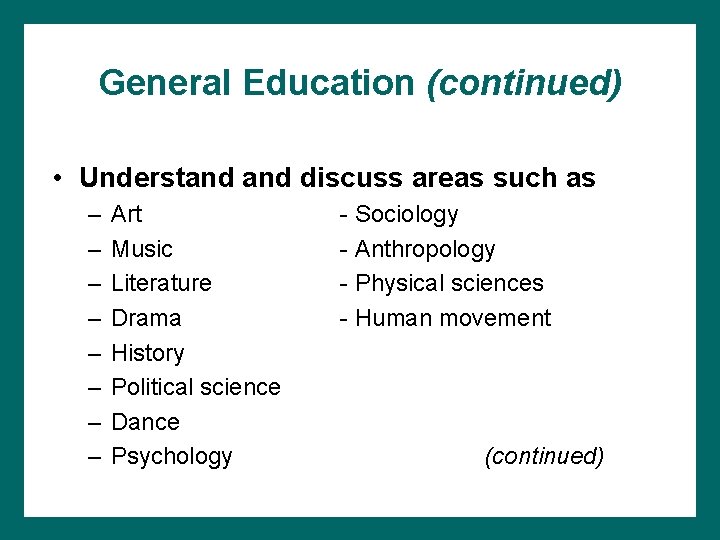
General Education (continued) • Understand discuss areas such as – – – – Art Music Literature Drama History Political science Dance Psychology - Sociology - Anthropology - Physical sciences - Human movement (continued)
General Education (continued) • Expected to use critical thinking skills – In generating ideas – In creative solutions – In societal and global concerns
Major Courses (NASPE–NASSM Standards) • Sociocultural dimensions in sport • Management and leadership in sport • Ethics in sport management • Marketing in sport (continued)
Major Courses (NASPE–NASSM Standards) (continued) • Communication in sport • Budget and finance in sport • Legal aspects of sport • Economics in sport (continued)
Major Courses (NASPE–NASSM Standards) (continued) • Governance in sport • Field experiences in sport management
Field Experiences • 400 hours of hands-on experience • Called either – Practicum or – Internship • Learn about managerial responsibilities • Connect theory with practice
Professional Attitude • Professional image • Work transition and adjustment • Business etiquette • Academic preparation
Professional Image • Grooming • Attire and accessories • Posture
Work Transition and Adjustment • • Your success Twelve essential steps Learn your job Understand organizational culture Demonstrate your work ethic Develop your written skills Refine your teamwork skills Continue your professional development
Your Success Your success depends on how you • Enter a new organization • Approach the challenges of your new position • Learn the organizational culture • Develop positive relationships • Participate in meetings • Communicate your ideas to others • Establish your reputation
Twelve Essential Steps • • • Adopt the right attitudes Adjust your expectations Master breaking-in skills Manage impressions that you make Build effective relationships Become a good follower (continued)
Twelve Essential Steps (continued) • • • Understand organization’s culture Develop organizational savvy Understand the new-hire role Develop work savvy Master the tasks in your job Acquire knowledge, skills, abilities
Learn Your Job • • Understand your specific duties Know what is expected of you Know how to proceed Set periodic meetings with supervisor – Confirm progress – Clarify progress
Understand Organizational Culture • • Mission of the organization Guiding philosophies Basic values and norms Behavioral expectations Work ethic What gets rewarded Social norms (continued)
Understand Organizational Culture (continued) • • Management philosophies Ethical standards Sacred beliefs and events General atmosphere Attitude of employees Communication norms Work norms Office climate
Demonstrate Your Work Ethic • Demonstrate your work ethic to – The organization – Supervisors – Colleagues • • Complete all job assignments Keep your word Offer assistance Support others
Develop Your Written Communication Skills • One of the most important competencies – Business correspondence – Reports – Technical documents • Invest time and energy to write well
Refine Your Teamwork Skills • Learn to manage conflict • Embrace diversity • Performance appraisals
Continue Your Professional Development • Participate in associations • Networking is vital to your advancement • Interaction allows you to grow
Business Etiquette Reminders: • • • Telephone Voice mail or answering machine messages Language Meeting participation Dining etiquette (continued)
Business Etiquette (continued) • • • Travel International experiences Greeting and introductions Office etiquette Romantic relationships
Academic Preparation and Professional Development • • • Study hard Acquire knowledge and skills Keep up with the literature in field Acquire association memberships Engage in relevant activities to the field Consider pursuing a graduate degree
Career Planning and Management • • • Values Interests Skills Occupational Information Career Implementation
Values • Fundamental to career planning • What you consider most important – – – Qualities Attitudes Beliefs Traits Concepts of special significance (continued)
Values (continued) • Ultimately, seek an occupation that will – Enhance your values – Strengthen your values – Support your values
Interests • What you engage in and enjoy • Integral part of your personality • Related to your values • Career counselors can help you assess
Skills • Job content skills • Functional skills • Adaptive skills
Job Content Skills Specialized knowledge or abilities needed to fulfill a specific job responsibility
Functional Skills General abilities that transfer to many jobs or situations
Adaptive Skills Personal attributes or personality traits
Career Skills Needed to Succeed Note skills in the textbook identified by Patterson and Allen (1996) needed to succeed in careers of the 21 st century
Top 20 Skills and Qualities Note skills and qualities in the textbook identified by NACE (2005) sought in new college hires
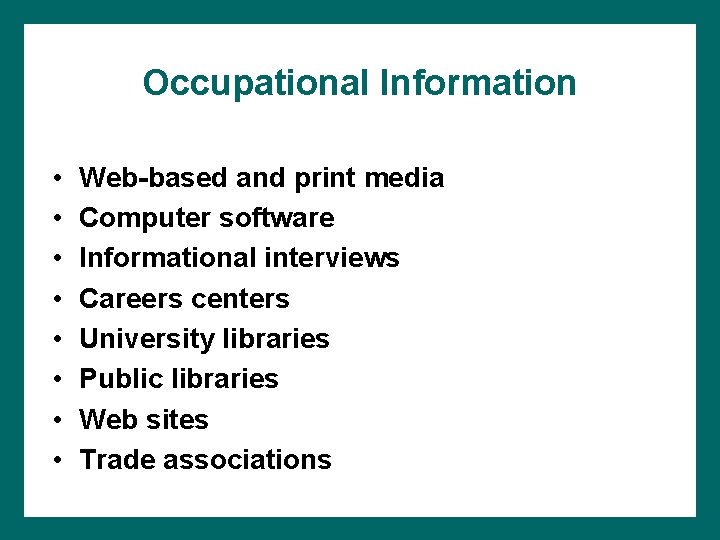
Occupational Information • • Web-based and print media Computer software Informational interviews Careers centers University libraries Public libraries Web sites Trade associations
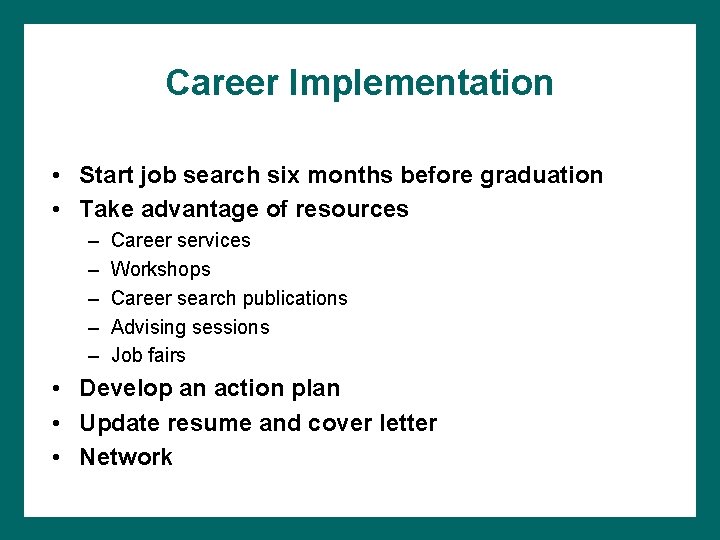
Career Implementation • Start job search six months before graduation • Take advantage of resources – – – Career services Workshops Career search publications Advising sessions Job fairs • Develop an action plan • Update resume and cover letter • Network