
CHAPTER 2 CUSTOMERBASED BRAND EQUITY Krishna Unadkat MEFGI
CHAPTER 2: CUSTOMER-BASED BRAND EQUITY Krishna Unadkat MEFGI 2. 1
Customer-Based Brand Equity �“The differential effect that brand knowledge has on consumer response to the marketing of that brand. ” Keller, 1993 2. 2
�Differential effect �Differences in consumer response �Brand knowledge �A result of consumers’ knowledge about the brand �Consumer response to marketing �Choice of a brand �Response to a sales promotion �Evaluations of a proposed brand extension 2. 3
Brand Equity as a “Bridge” �Reflection of past investments in the marketing of a brand �Direction for future marketing actions or programs 2. 4
Making a Brand Strong: Brand Knowledge �Brand knowledge is the key to creating brand equity. �Brand knowledge consists of a brand node in memory with a variety of associations linked to it. �Brand knowledge has two components: brand awareness and brand image. 2. 5
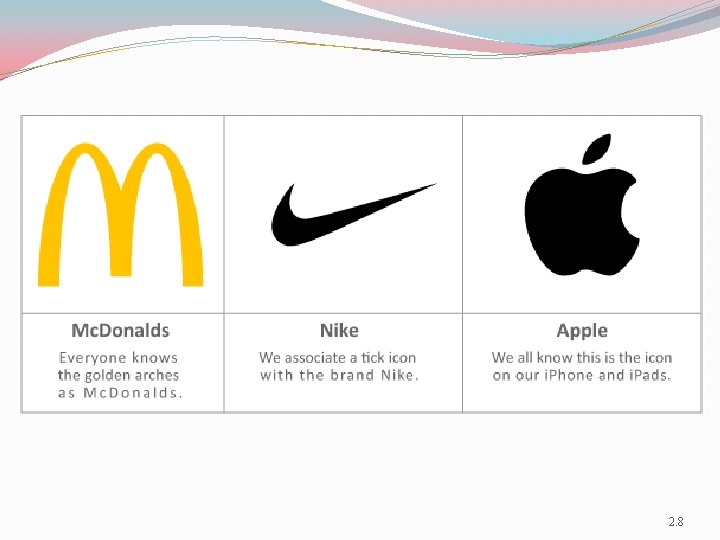
Brand awareness �Brand recognition : Can you distinguish the brand from its competitors ? �Brand recall : If the product category is mentioned, do you think of the brand ? 2. 6
Brand Image �Brand Image – The customer’s net extract from the brand �Brand Associations Anything which is deep seated about the brand in the minds of consumers �Need to be favorable, strong, and unique 2. 7
2. 8
Brand Awareness Advantages �Learning advantages �Register the brand in the minds of consumers �Consideration advantages �Likelihood that the brand will be a member of the consideration set �Choice advantages �Affect choices among brands in the consideration set 2. 9
Customer Equity �Customer lifetime value (CLV) : The sum of lifetime values of all customer is affected by revenue and by the cost of customer acquisition, retention, and cross-selling. �Brand Equity is defined as value and strength of the Brand that decides its worth whereas Customer Equity is defined in terms of lifetime values of all customers. 2. 10
Is a company consumer-centric? 1. 2. 3. 4. 5. Is the company looking for ways to take care of you? Does the company know its customers well enough to differentiate between them? Is someone accountable for customers? Is the company managed for shareholder value? Is the company testing new customer offers and learning from the results? Sources: Larry Selden and Geoffrey Colvin, 2004. 2. 11
The Four Steps of Brand Building 1. Identity 2. Meaning 3. Response 4. Relationship 2. 12
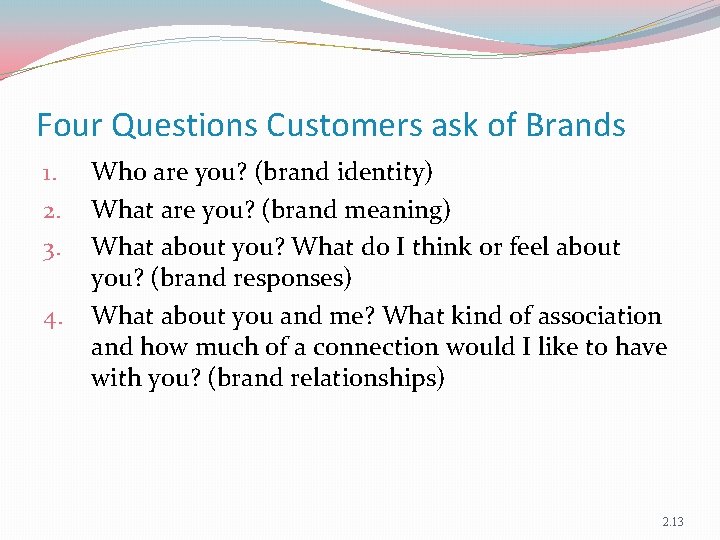
Four Questions Customers ask of Brands 1. 2. 3. 4. Who are you? (brand identity) What are you? (brand meaning) What about you? What do I think or feel about you? (brand responses) What about you and me? What kind of association and how much of a connection would I like to have with you? (brand relationships) 2. 13
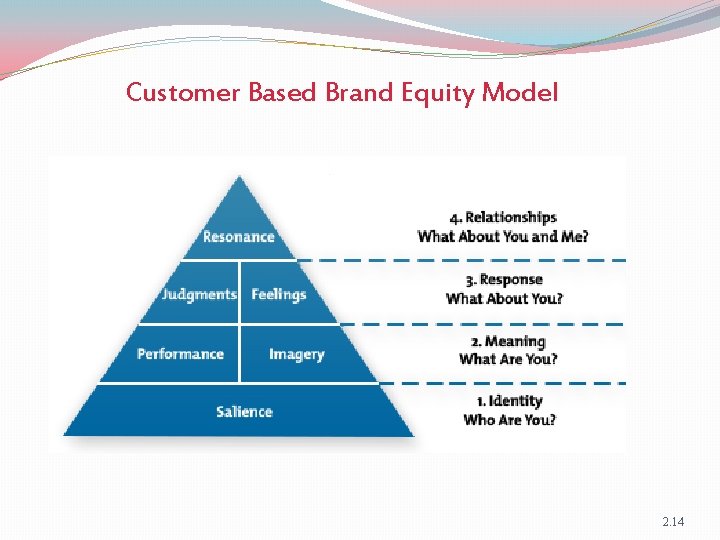
Customer Based Brand Equity Model 2. 14
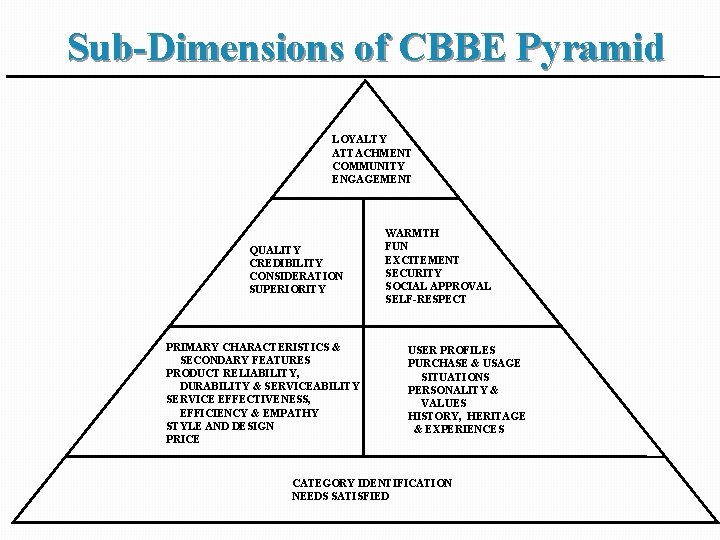
Sub-Dimensions of CBBE Pyramid LOYALTY ATTACHMENT COMMUNITY ENGAGEMENT QUALITY CREDIBILITY CONSIDERATION SUPERIORITY PRIMARY CHARACTERISTICS & SECONDARY FEATURES PRODUCT RELIABILITY, DURABILITY & SERVICEABILITY SERVICE EFFECTIVENESS, EFFICIENCY & EMPATHY STYLE AND DESIGN PRICE WARMTH FUN EXCITEMENT SECURITY SOCIAL APPROVAL SELF-RESPECT USER PROFILES PURCHASE & USAGE SITUATIONS PERSONALITY & VALUES HISTORY, HERITAGE & EXPERIENCES CATEGORY IDENTIFICATION NEEDS SATISFIED
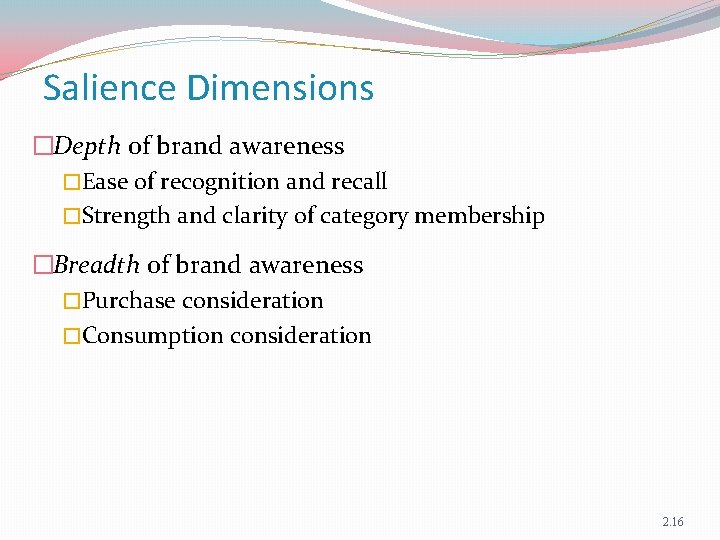
Salience Dimensions �Depth of brand awareness �Ease of recognition and recall �Strength and clarity of category membership �Breadth of brand awareness �Purchase consideration �Consumption consideration 2. 16
Performance Dimensions �Primary characteristics and supplementary features �Product reliability �Service effectiveness �Style and design �Price 2. 17
Imagery Dimensions �User profiles �Purchase and usage situations �Personality and values �History, heritage, and experiences 2. 18
Judgment Dimensions �Brand quality �Brand consideration �Brand credibility �Brand superiority 2. 19
Feelings Dimensions �Warmth �Fun �Excitement �Security �Social Approval �Self-respect 2. 20
Resonance Dimensions �Behavioral loyalty �Attitudinal attachment �Sense of community �Active engagement 2. 21
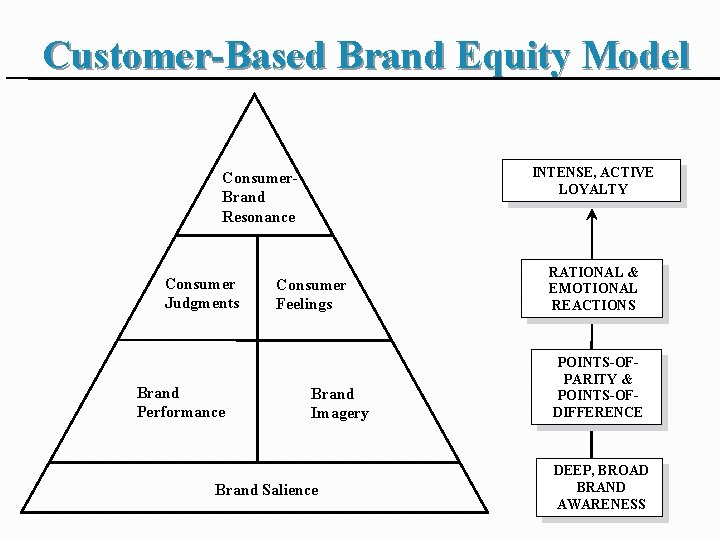
Customer-Based Brand Equity Model INTENSE, ACTIVE LOYALTY Consumer. Brand Resonance Consumer Judgments Brand Performance Consumer Feelings Brand Imagery Brand Salience RATIONAL & EMOTIONAL REACTIONS POINTS-OFPARITY & POINTS-OFDIFFERENCE DEEP, BROAD BRAND AWARENESS
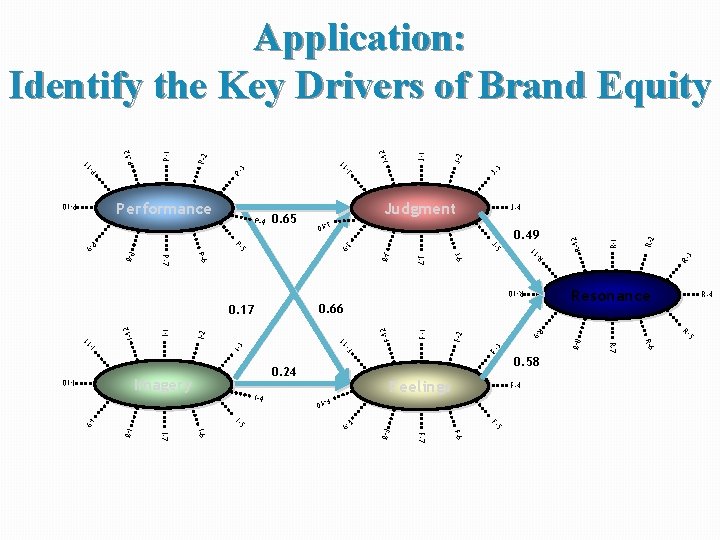
J-2 J-12 Judgment R-10 F-2 F-1 2 3 F- I-3 F- 11 I-2 I-12 R- 3 R-2 P-10 F-1 0 1 5 I-1 R-4 R- F-4 R-6 Feelings R-7 I-4 R-8 Imagery R 9 0. 58 0. 24 R-1 5 J-6 J-7 J-8 P-6 P-7 P-8 Resonance 0. 66 0. 17 R-1 9 J- J- 9 5 P- P- 0. 49 2 J-4 1 0. 65 1 R- P-4 J 3 P- 3 J- 11 P-2 P-1 1 P- Performance J-10 1 2 Application: Identify the Key Drivers of Brand Equity 9 F- F- F-6 F-7 F-8 I-6 I-7 I-8 5 I-10 I-9
Brand Building Implications �Customers own brands. �Don’t take shortcuts with brands. �Brands should have a duality. �Brands should have richness. �Brand resonance provides important focus. 2. 24
- Slides: 24