
Chapter 2 Circuit element 1 Voltage and current
- Slides: 21
Chapter 2 Circuit element 1. Voltage and current sources. 2. Electrical resistance (Ohm’s law). 3. Construction of a circuit model. 4. Kirchhoff’s laws. 5. Analysis of a circuit containing dependent sources. 1
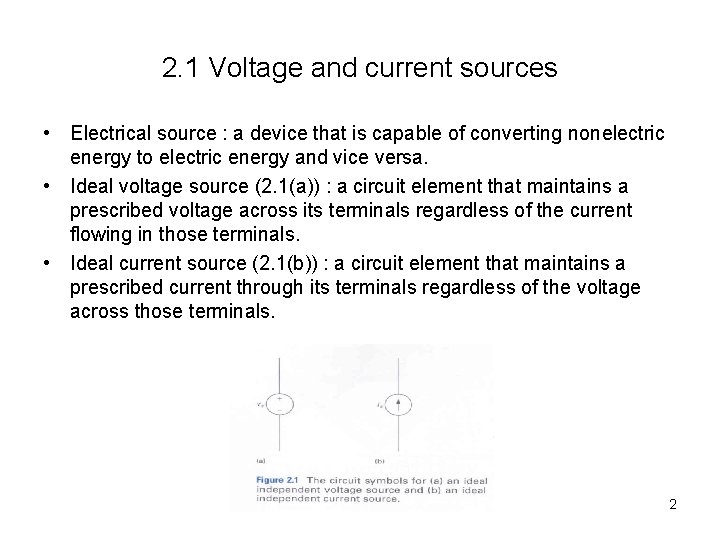
2. 1 Voltage and current sources • Electrical source : a device that is capable of converting nonelectric energy to electric energy and vice versa. • Ideal voltage source (2. 1(a)) : a circuit element that maintains a prescribed voltage across its terminals regardless of the current flowing in those terminals. • Ideal current source (2. 1(b)) : a circuit element that maintains a prescribed current through its terminals regardless of the voltage across those terminals. 2
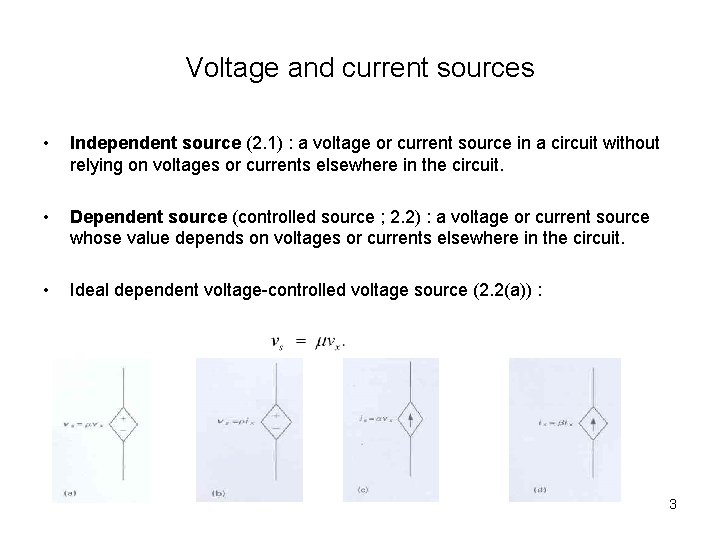
Voltage and current sources • Independent source (2. 1) : a voltage or current source in a circuit without relying on voltages or currents elsewhere in the circuit. • Dependent source (controlled source ; 2. 2) : a voltage or current source whose value depends on voltages or currents elsewhere in the circuit. • Ideal dependent voltage-controlled voltage source (2. 2(a)) : 3
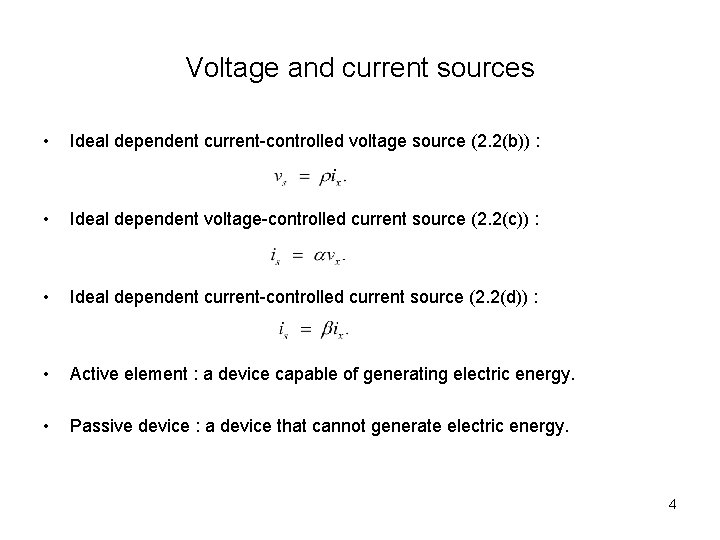
Voltage and current sources • Ideal dependent current-controlled voltage source (2. 2(b)) : • Ideal dependent voltage-controlled current source (2. 2(c)) : • Ideal dependent current-controlled current source (2. 2(d)) : • Active element : a device capable of generating electric energy. • Passive device : a device that cannot generate electric energy. 4
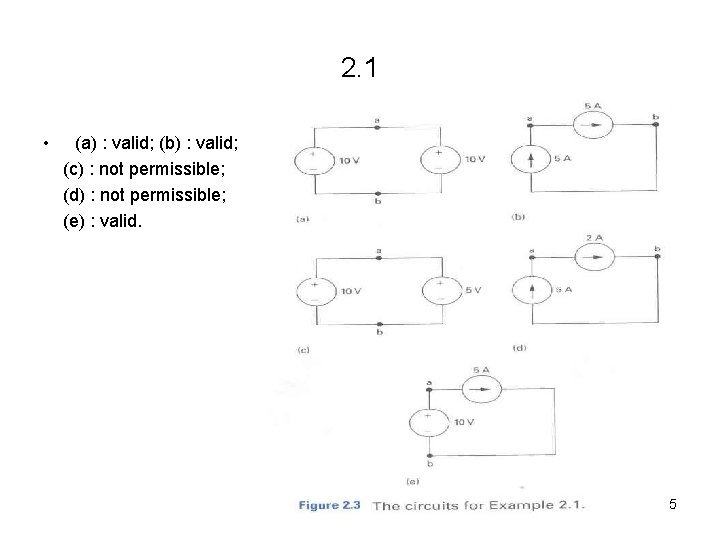
2. 1 • (a) : valid; (b) : valid; (c) : not permissible; (d) : not permissible; (e) : valid. 5
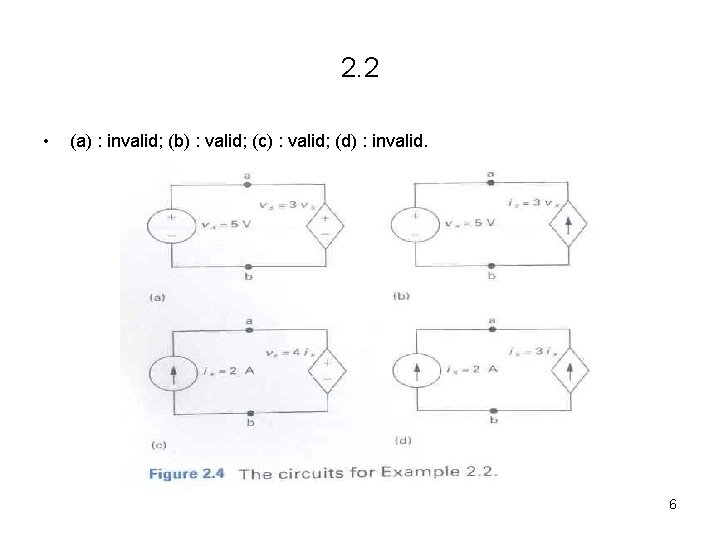
2. 2 • (a) : invalid; (b) : valid; (c) : valid; (d) : invalid. 6
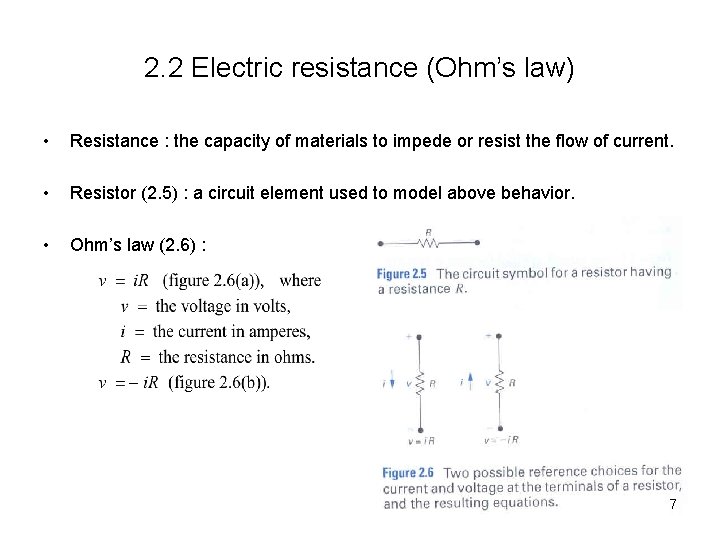
2. 2 Electric resistance (Ohm’s law) • Resistance : the capacity of materials to impede or resist the flow of current. • Resistor (2. 5) : a circuit element used to model above behavior. • Ohm’s law (2. 6) : 7
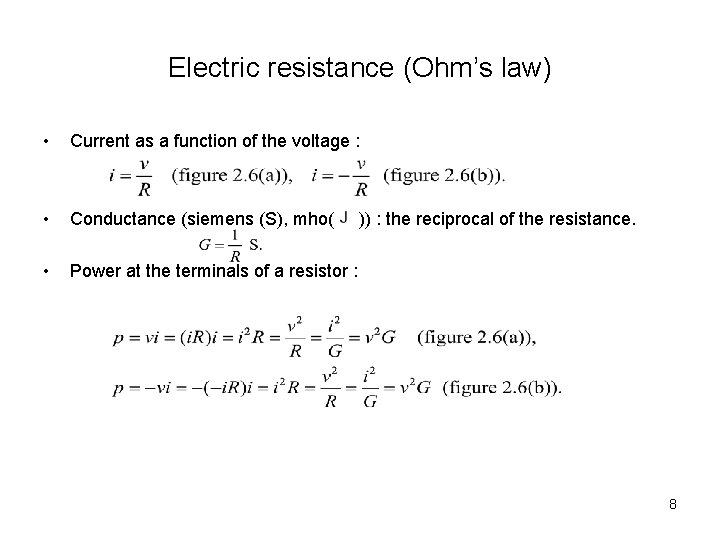
Electric resistance (Ohm’s law) • Current as a function of the voltage : • Conductance (siemens (S), mho( • Power at the terminals of a resistor : )) : the reciprocal of the resistance. 8
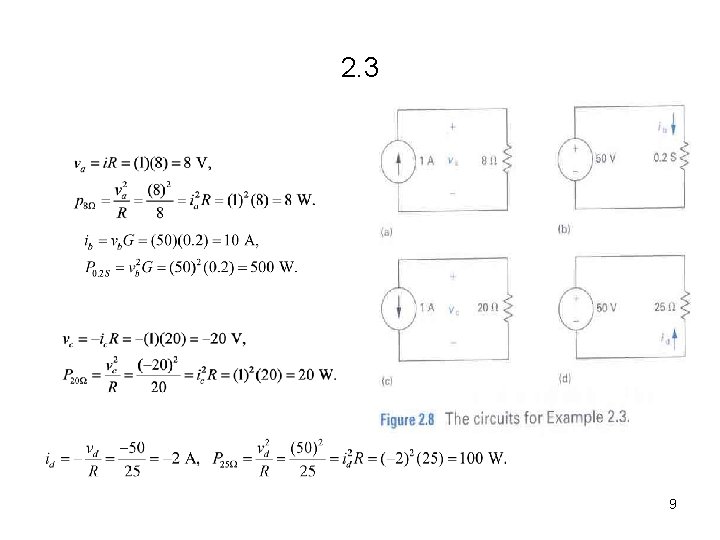
2. 3 9
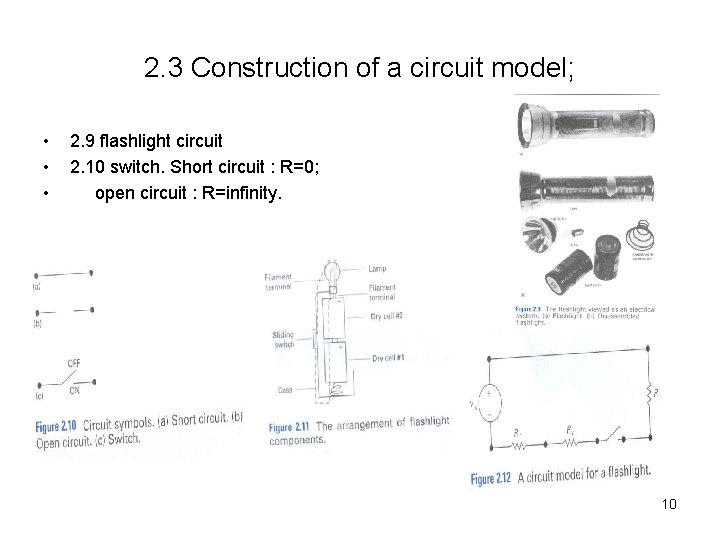
2. 3 Construction of a circuit model; • • • 2. 9 flashlight circuit 2. 10 switch. Short circuit : R=0; open circuit : R=infinity. 10
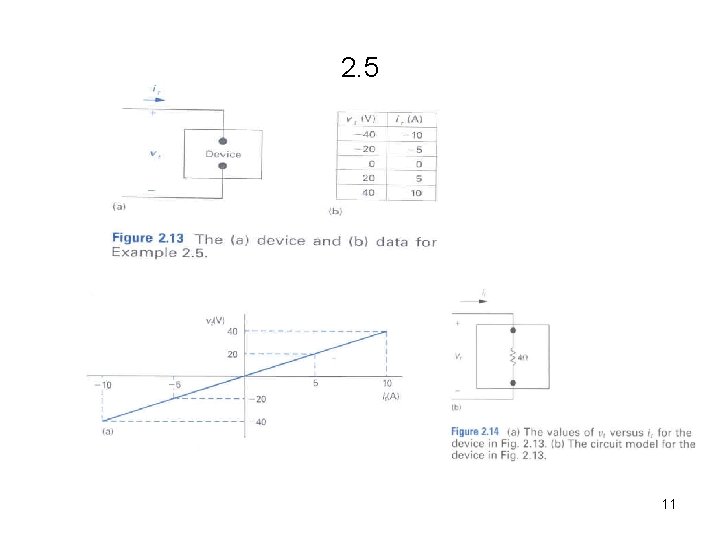
2. 5 11
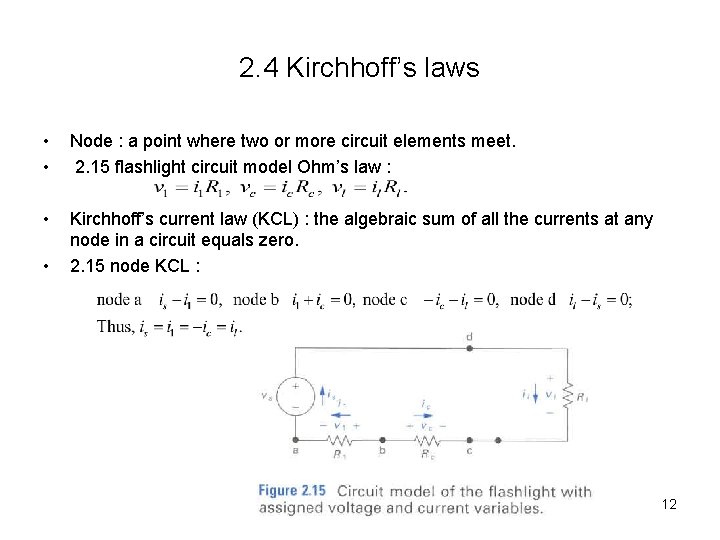
2. 4 Kirchhoff’s laws • • Node : a point where two or more circuit elements meet. 2. 15 flashlight circuit model Ohm’s law : • Kirchhoff’s current law (KCL) : the algebraic sum of all the currents at any node in a circuit equals zero. 2. 15 node KCL : • 12
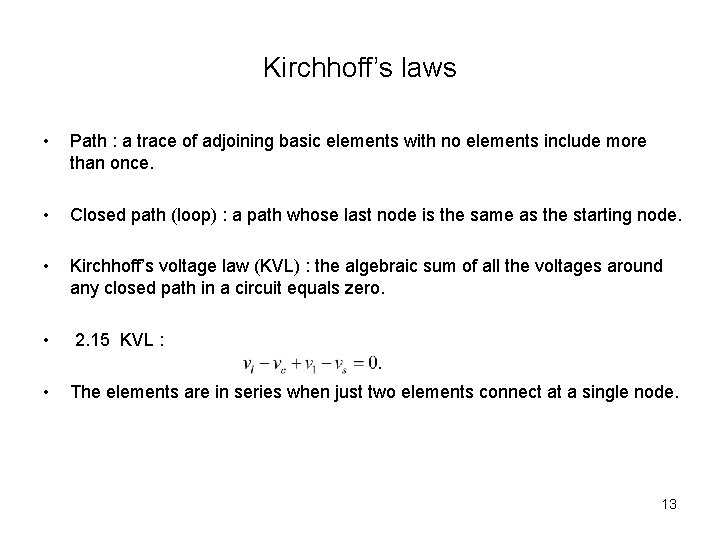
Kirchhoff’s laws • Path : a trace of adjoining basic elements with no elements include more than once. • Closed path (loop) : a path whose last node is the same as the starting node. • Kirchhoff’s voltage law (KVL) : the algebraic sum of all the voltages around any closed path in a circuit equals zero. • 2. 15 KVL : • The elements are in series when just two elements connect at a single node. 13
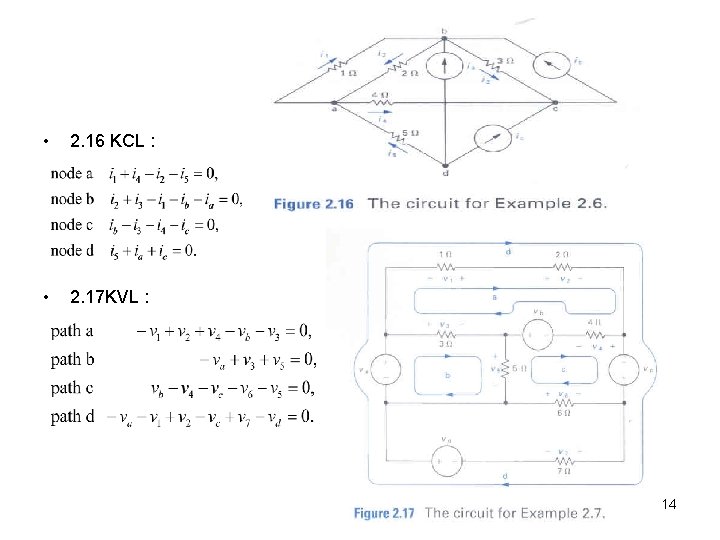
• 2. 16 KCL : • 2. 17 KVL : 14
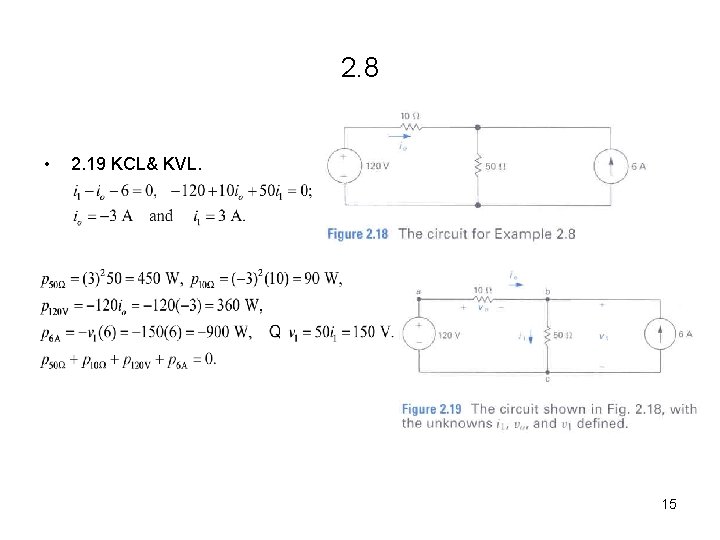
2. 8 • 2. 19 KCL& KVL. 15
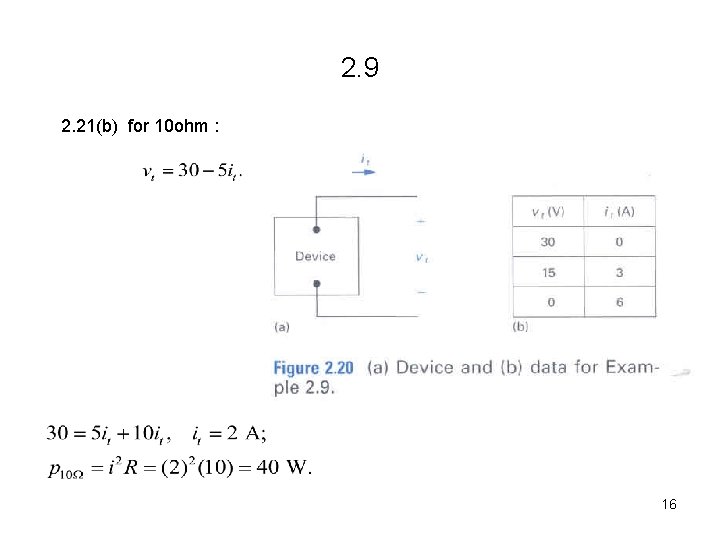
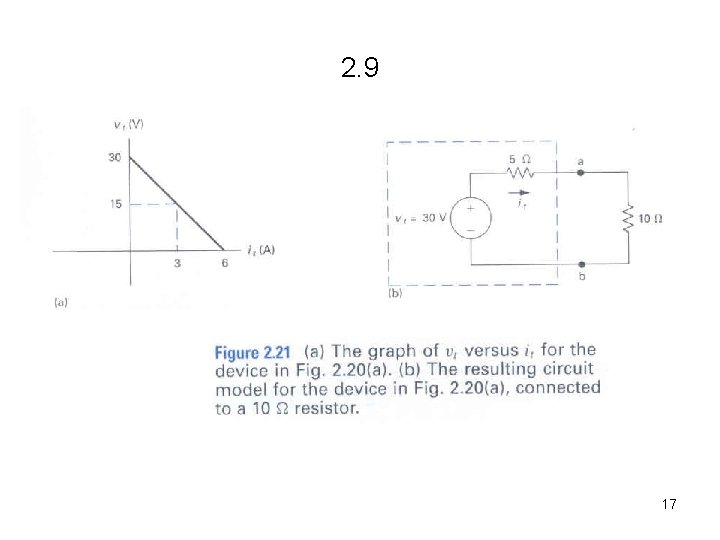
2. 9 2. 21(b) for 10 ohm : 16
2. 9 17
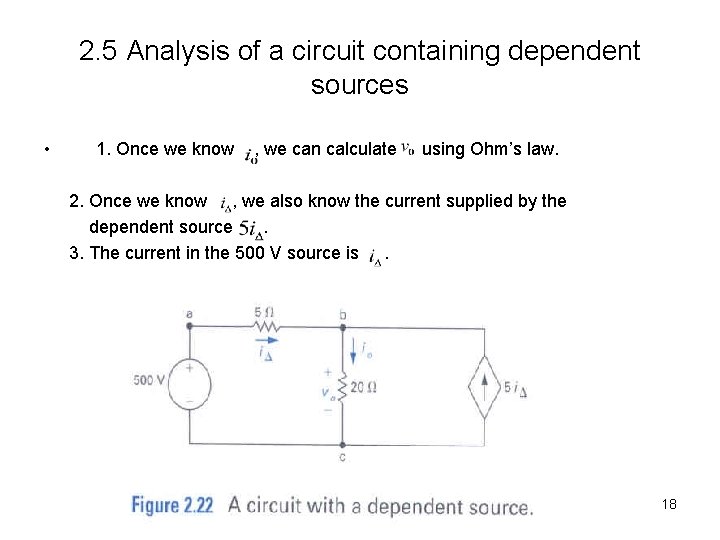
2. 5 Analysis of a circuit containing dependent sources • 1. Once we know , we can calculate using Ohm’s law. 2. Once we know , we also know the current supplied by the dependent source. 3. The current in the 500 V source is. 18
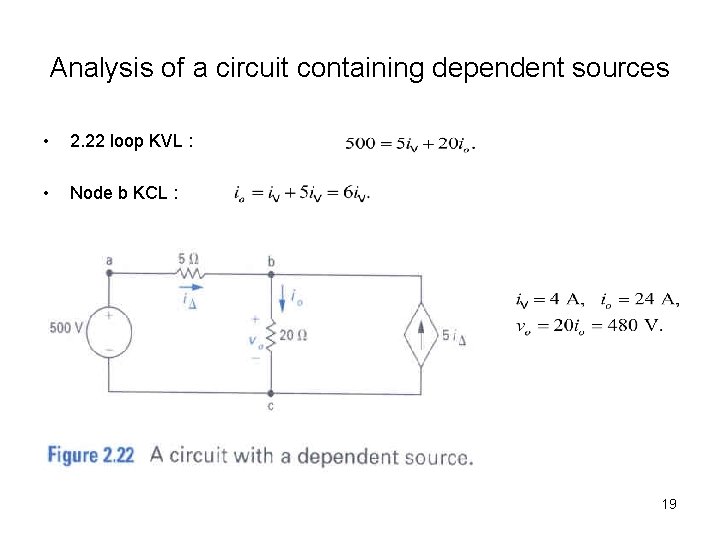
Analysis of a circuit containing dependent sources • 2. 22 loop KVL : • Node b KCL : 19
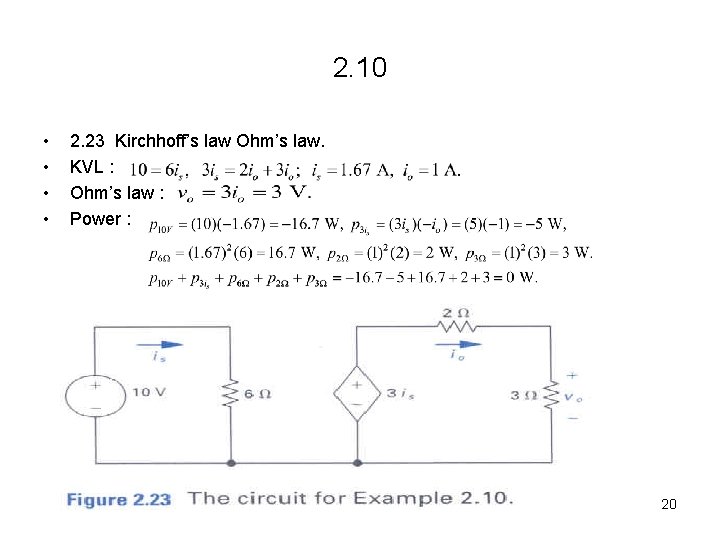
2. 10 • • 2. 23 Kirchhoff’s law Ohm’s law. KVL : Ohm’s law : Power : 20
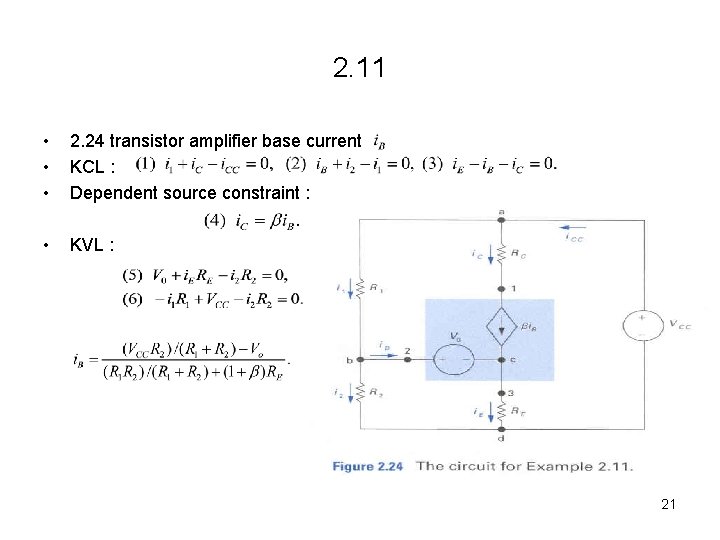
2. 11 • • • 2. 24 transistor amplifier base current KCL : Dependent source constraint : • KVL : 21