
Chapter 2 Chemistry of Life 2 3 Water

- Slides: 8
Chapter 2 Chemistry of Life 2. 3 Water, Acids, and Bases Learning Objectives for section 2. 3: a. Describe the distribution of Earth’s water b. Identify water’s structure and properties c. Define acids, bases, and p. H. d. Explain why water is essential for life.
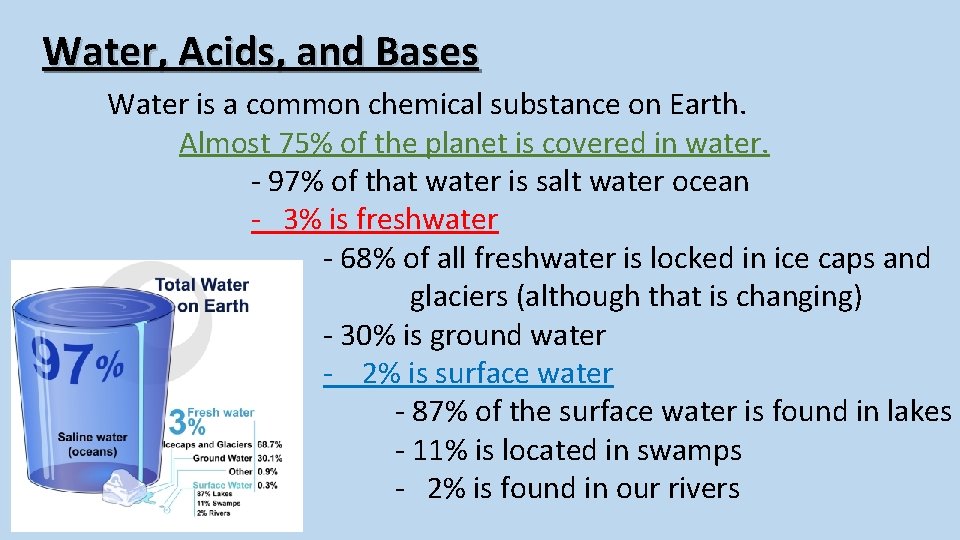
Water, Acids, and Bases Water is a common chemical substance on Earth. Almost 75% of the planet is covered in water. - 97% of that water is salt water ocean - 3% is freshwater - 68% of all freshwater is locked in ice caps and glaciers (although that is changing) - 30% is ground water - 2% is surface water - 87% of the surface water is found in lakes - 11% is located in swamps - 2% is found in our rivers
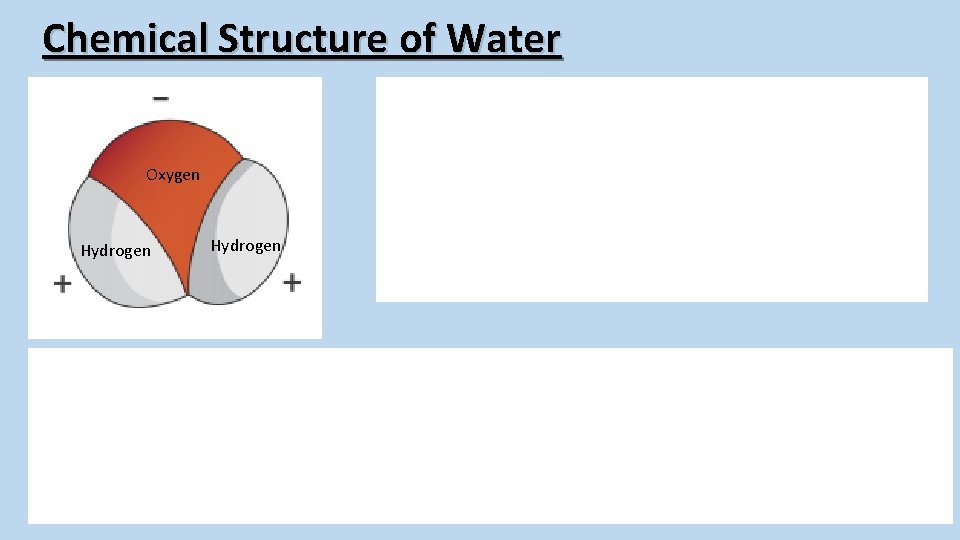
Chemical Structure of Water is made up of one atom of oxygen and two atoms of hydrogen. Oxygen Hydrogen The oxygen atom in a water molecule attracts electrons more strongly than the hydrogen atoms. The result is that the oxygen side of the molecule is slightly negative while the hydrogen side is more positive. The difference in electrical charges on different sides of a molecule is called polarity. Water is a polar molecule.
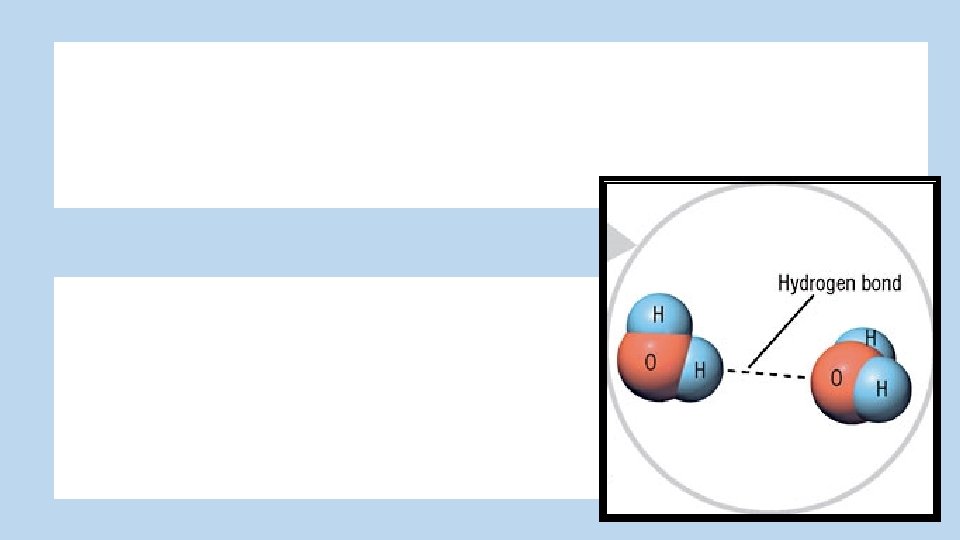
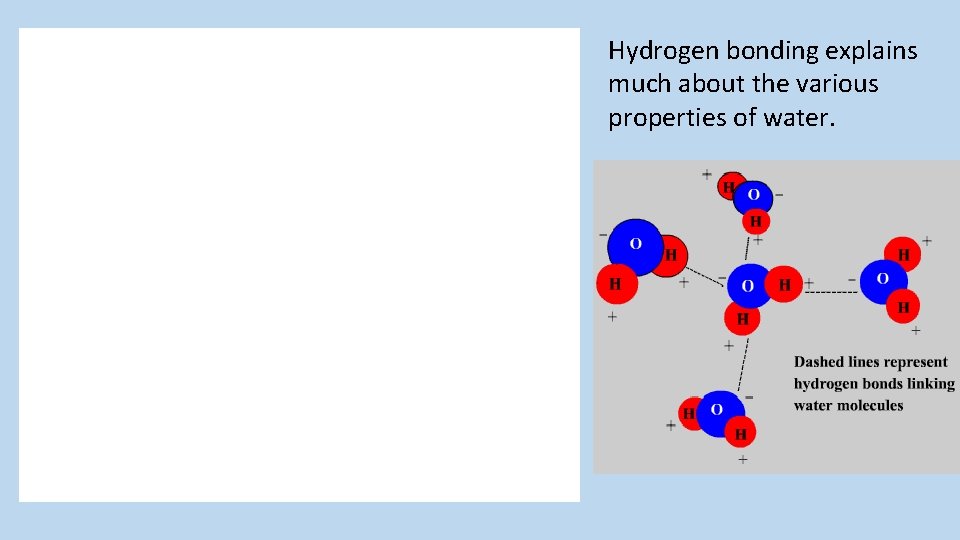
Hydrogen bonding explains much about the various properties of water.
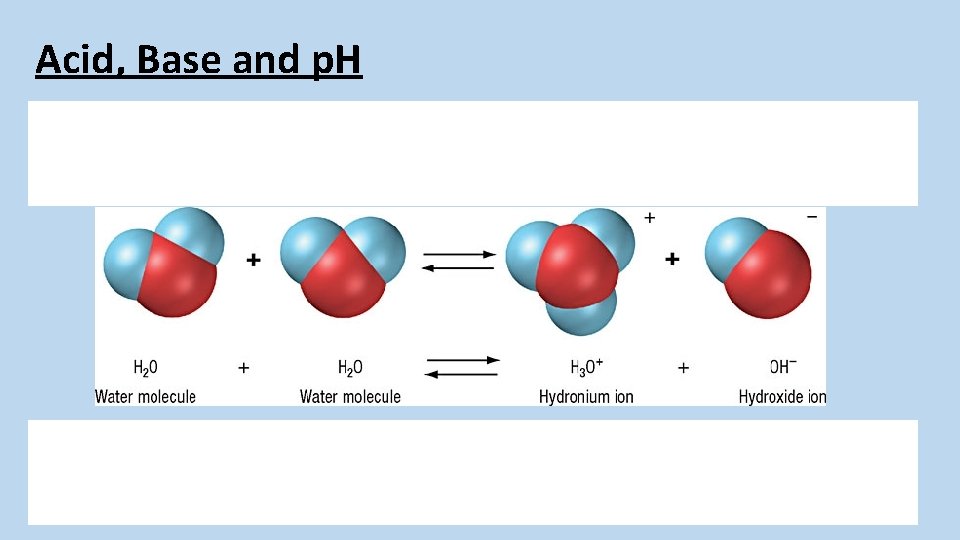
Acid, Base and p. H
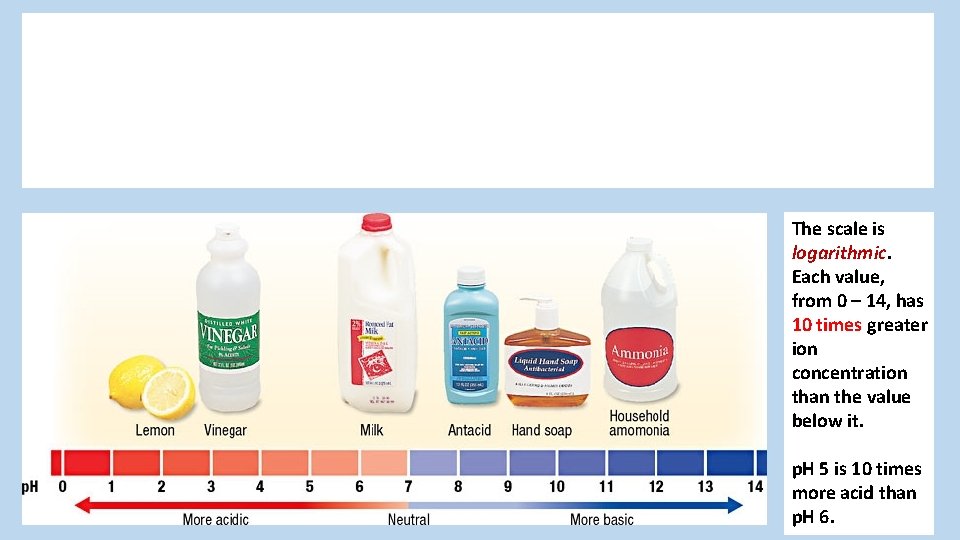
The scale is logarithmic. Each value, from 0 – 14, has 10 times greater ion concentration than the value below it. p. H 5 is 10 times more acid than p. H 6.