
CHAPTER 2 CHEMICAL REACTIONS 2 1 OBSERVING CHEMICAL
CHAPTER 2: CHEMICAL REACTIONS 2 -1: OBSERVING CHEMICAL CHANGE
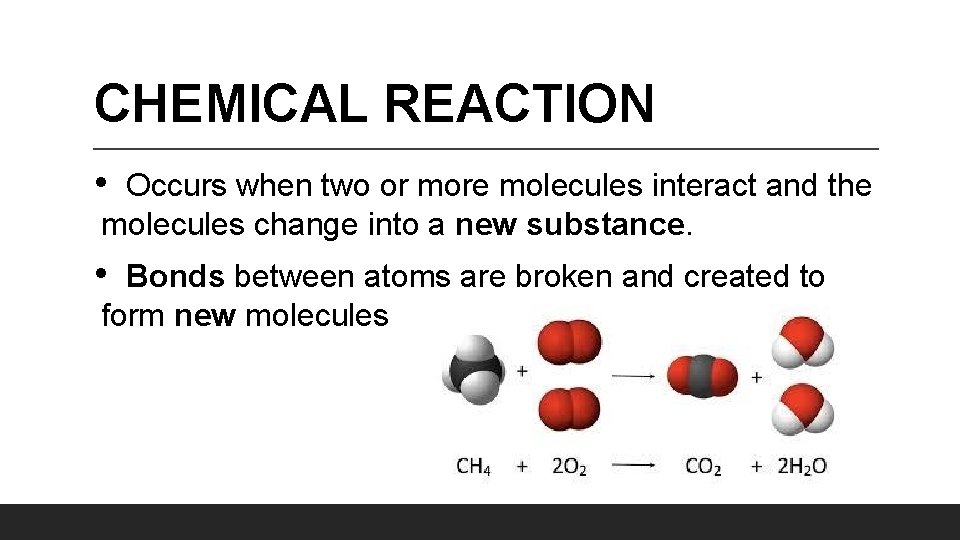
CHEMICAL REACTION • Occurs when two or more molecules interact and the molecules change into a new substance. • Bonds between atoms are broken and created to form new molecules
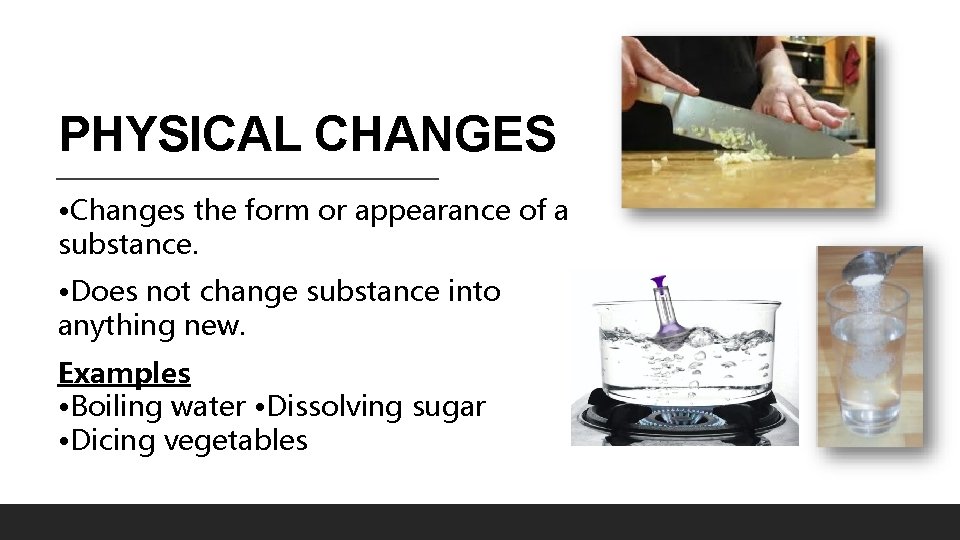
PHYSICAL CHANGES • Changes the form or appearance of a substance. • Does not change substance into anything new. Examples • Boiling water • Dissolving sugar • Dicing vegetables
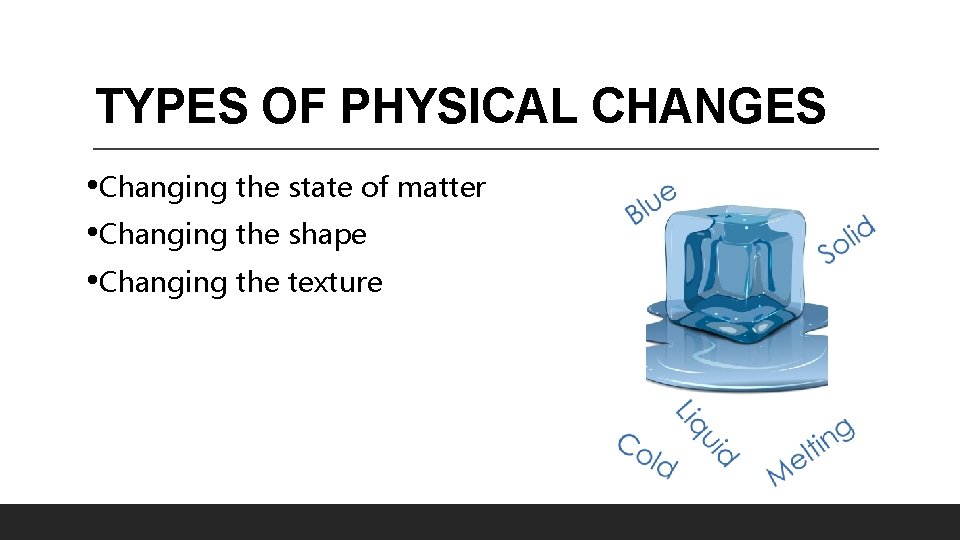
TYPES OF PHYSICAL CHANGES • Changing the state of matter • Changing the shape • Changing the texture
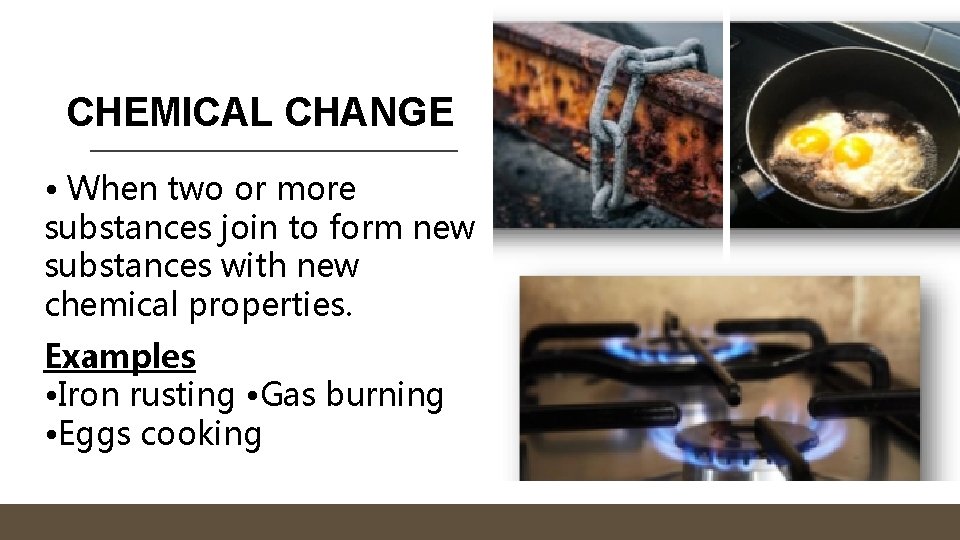
CHEMICAL CHANGE • When two or more substances join to form new substances with new chemical properties. Examples • Iron rusting • Gas burning • Eggs cooking

EVIDENCE OF A CHEMICAL CHANGE 1) Unexpected Color Change New molecules created in a chemical reaction radiate light differently producing new colors. Examples: • Fireworks • Leaves a change color
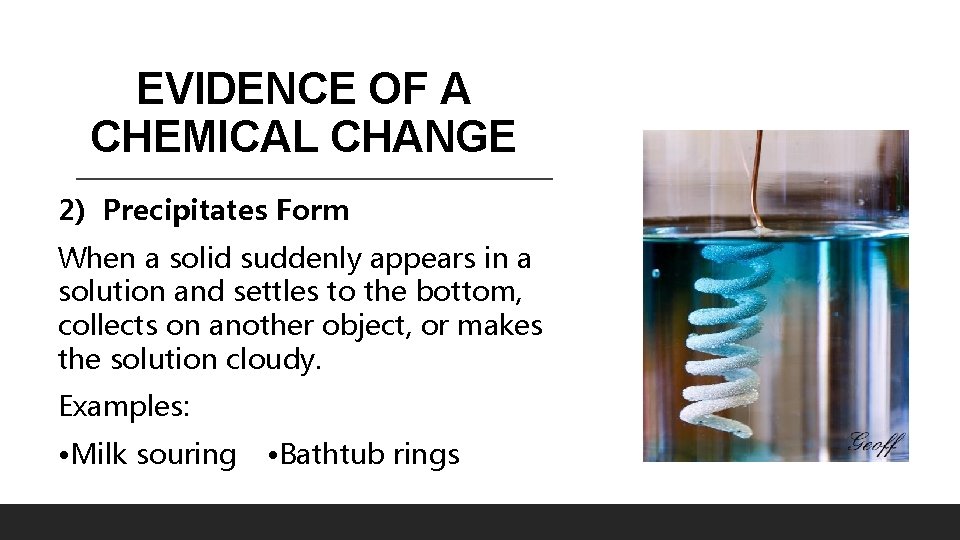
EVIDENCE OF A CHEMICAL CHANGE 2) Precipitates Form When a solid suddenly appears in a solution and settles to the bottom, collects on another object, or makes the solution cloudy. Examples: • Milk souring • Bathtub rings
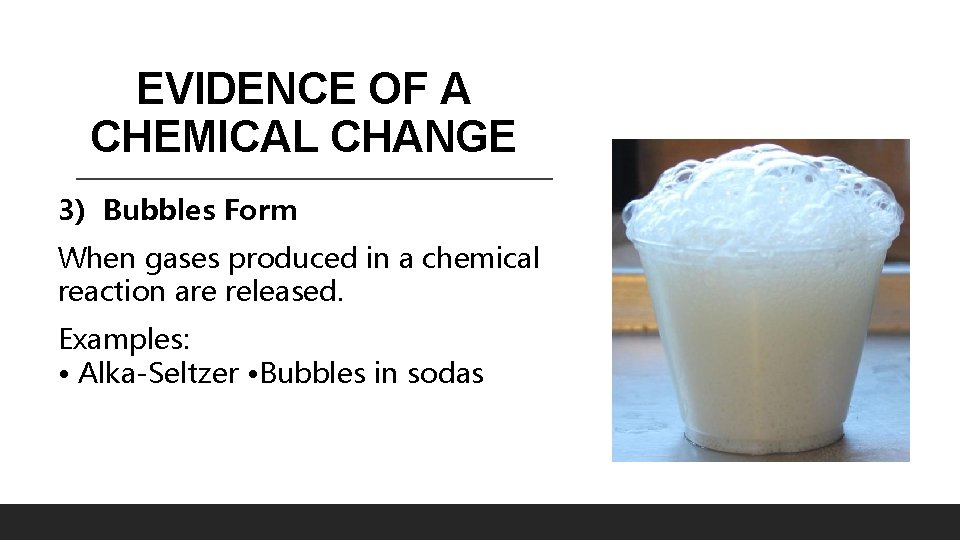
EVIDENCE OF A CHEMICAL CHANGE 3) Bubbles Form When gases produced in a chemical reaction are released. Examples: • Alka-Seltzer • Bubbles in sodas
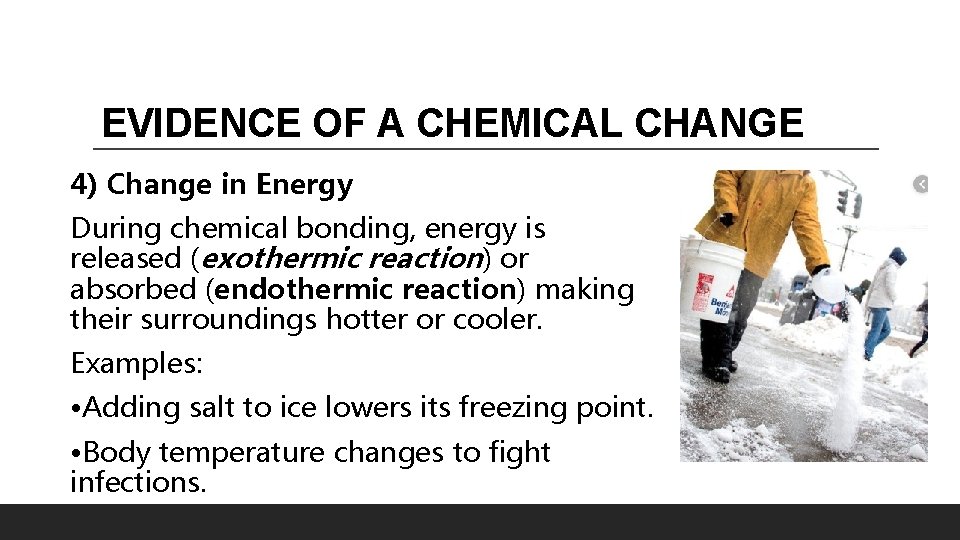
EVIDENCE OF A CHEMICAL CHANGE 4) Change in Energy During chemical bonding, energy is released (exothermic reaction) or absorbed (endothermic reaction) making their surroundings hotter or cooler. Examples: • Adding salt to ice lowers its freezing point. • Body temperature changes to fight infections.
- Slides: 9