
CHAPTER 2 Chapter 2 How to Make Moral
- Slides: 19
CHAPTER 2
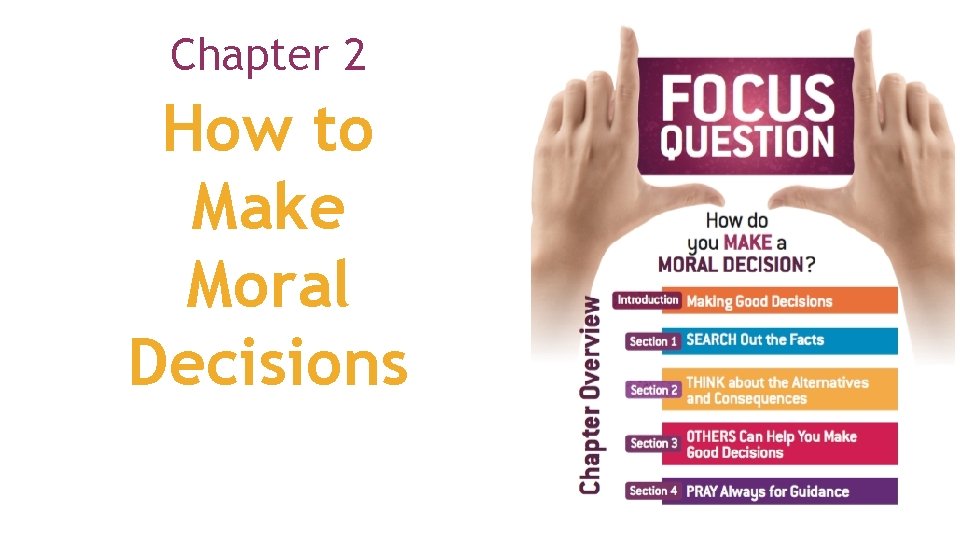
Chapter 2 How to Make Moral Decisions
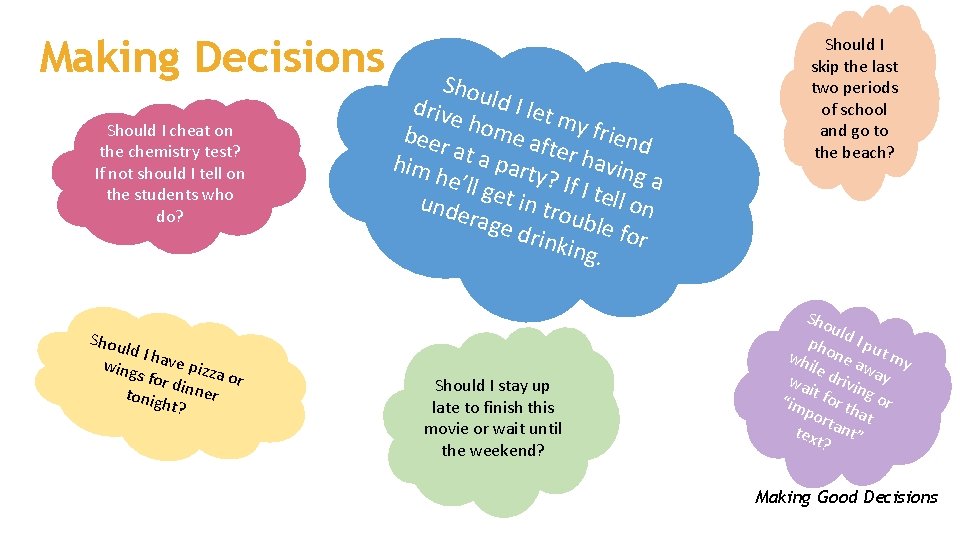
Making Decisions Should I cheat on the chemistry test? If not should I tell on the students who do? Shou ld I h wing ave pizza s for dinne or tonig r ht? Shou drive ld I let my f h o m riend beer e aft a him t a part er having y? If he’ll a I g unde et in tro tell on rage u drink ble for ing. Should I stay up late to finish this movie or wait until the weekend? Should I skip the last two periods of school and go to the beach? Sho ul pho d I pu wh ne a t my ile w wa drivin ay i “im t for th g or por at t a tex nt” t? Making Good Decisions
Discernment A decision-making process that attends to the implications and consequences of an action or choice. The Holy Spirit aids you in distinguishing between trials (which are necessary for your inner growth in virtue) and temptations (which lead to sin and death). Making Good Decisions
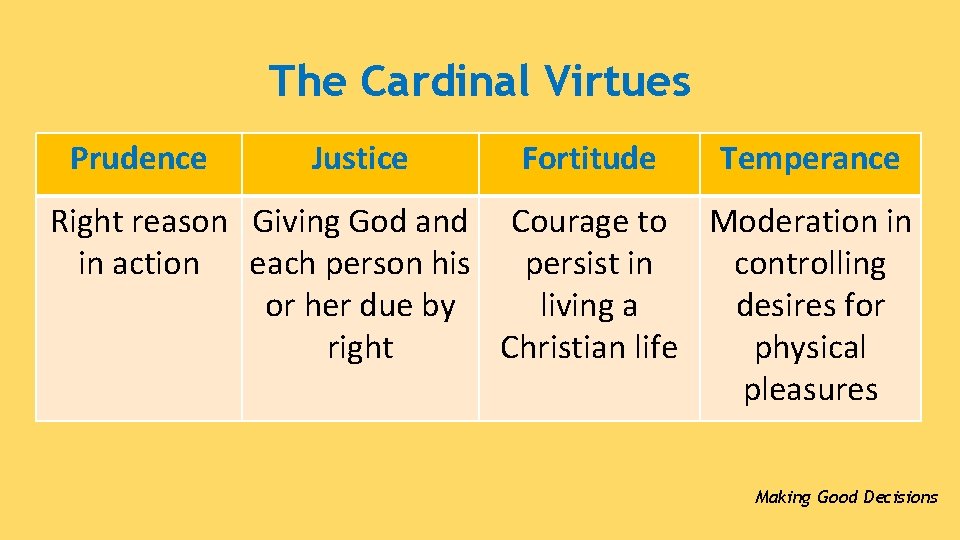
The Cardinal Virtues Prudence Justice Fortitude Temperance Right reason Giving God and Courage to Moderation in in action each person his persist in controlling or her due by living a desires for right Christian life physical pleasures Making Good Decisions
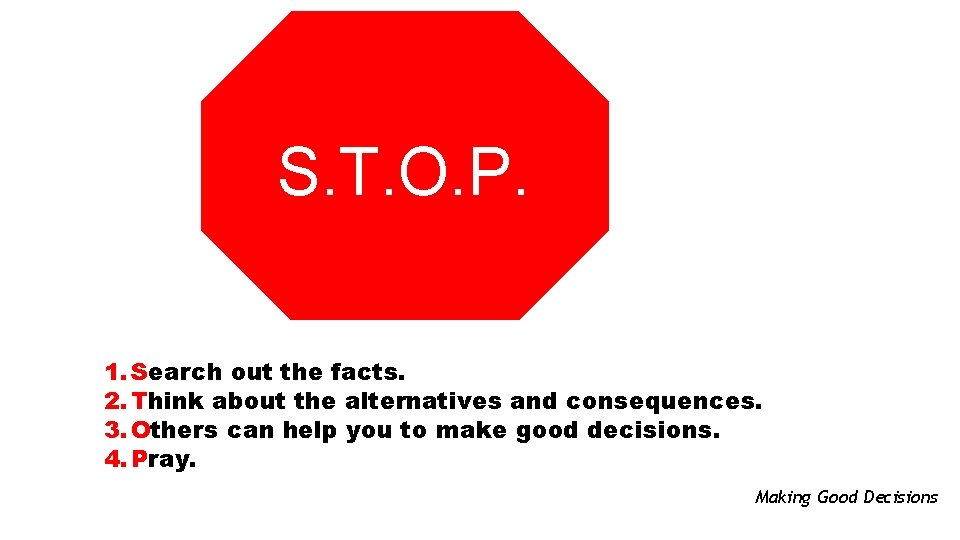
S. T. O. P. 1. Search out the facts. 2. Think about the alternatives and consequences. 3. Others can help you to make good decisions. 4. Pray. Making Good Decisions 1. s Se a
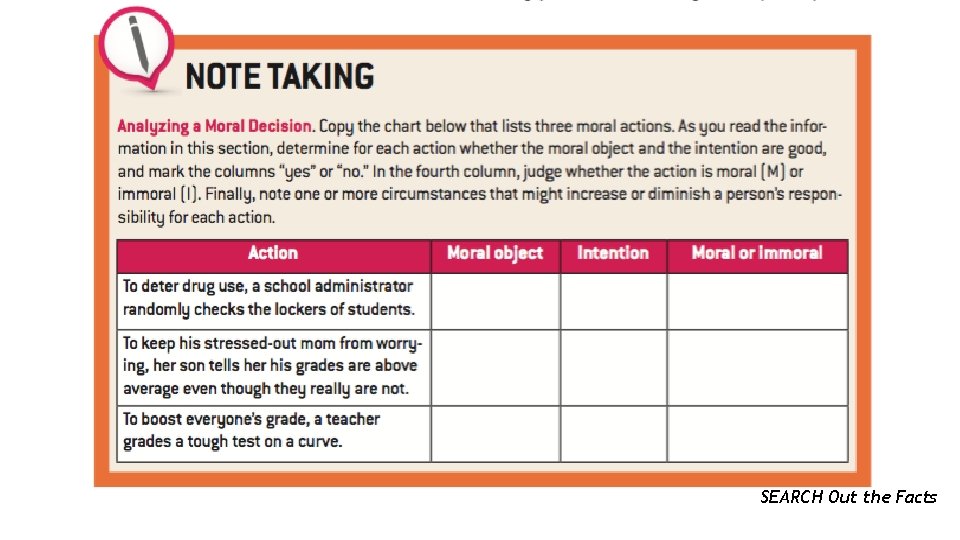
SEARCH Out the Facts
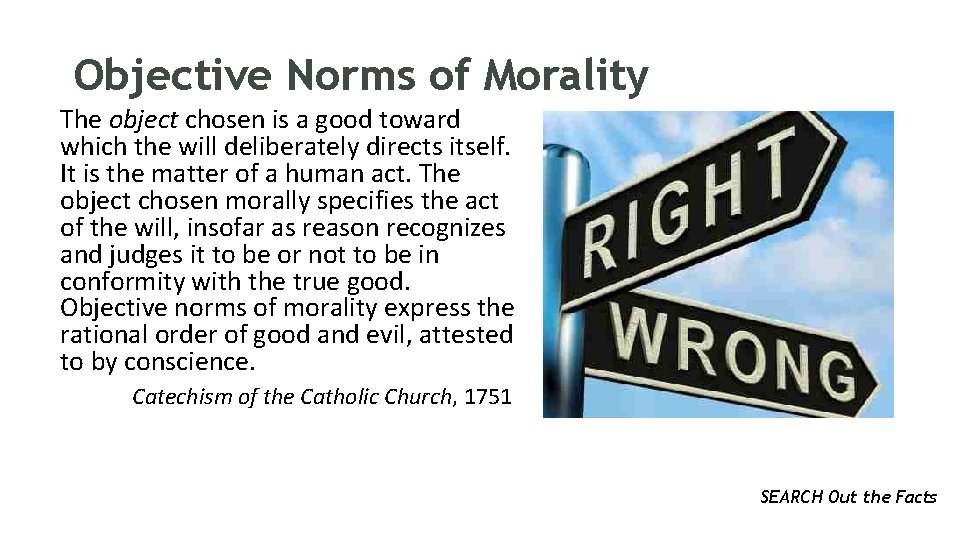
Objective Norms of Morality The object chosen is a good toward which the will deliberately directs itself. It is the matter of a human act. The object chosen morally specifies the act of the will, insofar as reason recognizes and judges it to be or not to be in conformity with the true good. Objective norms of morality express the rational order of good and evil, attested to by conscience. Catechism of the Catholic Church, 1751 SEARCH Out the Facts
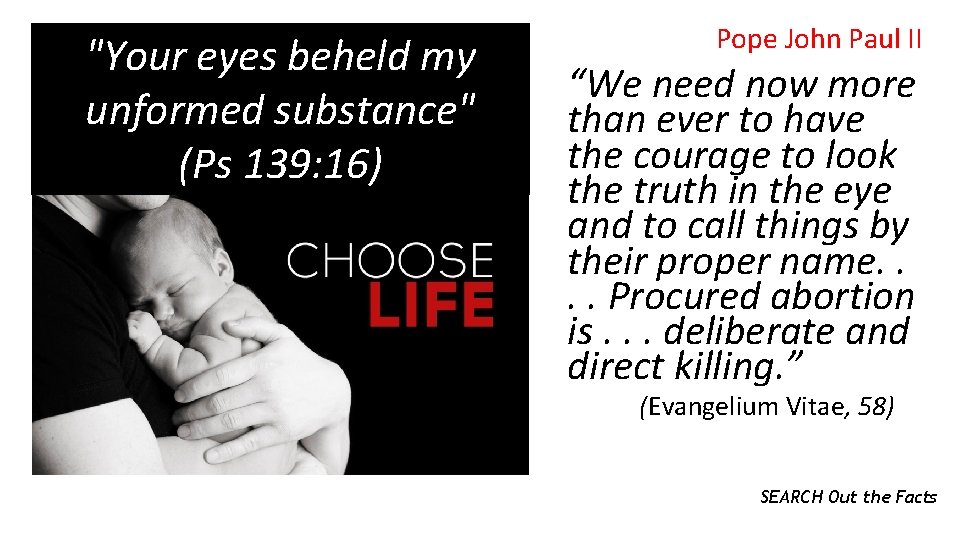
"Your eyes beheld my unformed substance" (Ps 139: 16) Pope John Paul II “We need now more than ever to have the courage to look the truth in the eye and to call things by their proper name. . Procured abortion is. . . deliberate and direct killing. ” (Evangelium Vitae, 58) SEARCH Out the Facts
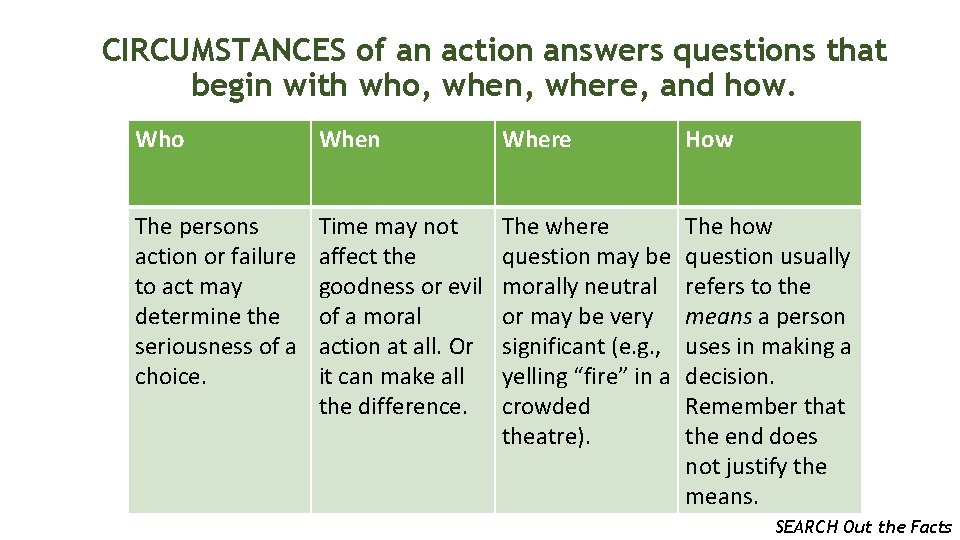
CIRCUMSTANCES of an action answers questions that begin with who, when, where, and how. Who When Where How The persons action or failure to act may determine the seriousness of a choice. Time may not affect the goodness or evil of a moral action at all. Or it can make all the difference. The where question may be morally neutral or may be very significant (e. g. , yelling “fire” in a crowded theatre). The how question usually refers to the means a person uses in making a decision. Remember that the end does not justify the means. SEARCH Out the Facts
Keeping a Good Intention in Moral Decisions • Intention has to do with the subjective dimension of morality. • Jesus insisted on good intentions for all actions. • Your motive or intention is a significant factor in judging the morality of an action. • The end does not justify the means. SEARCH Out the Facts
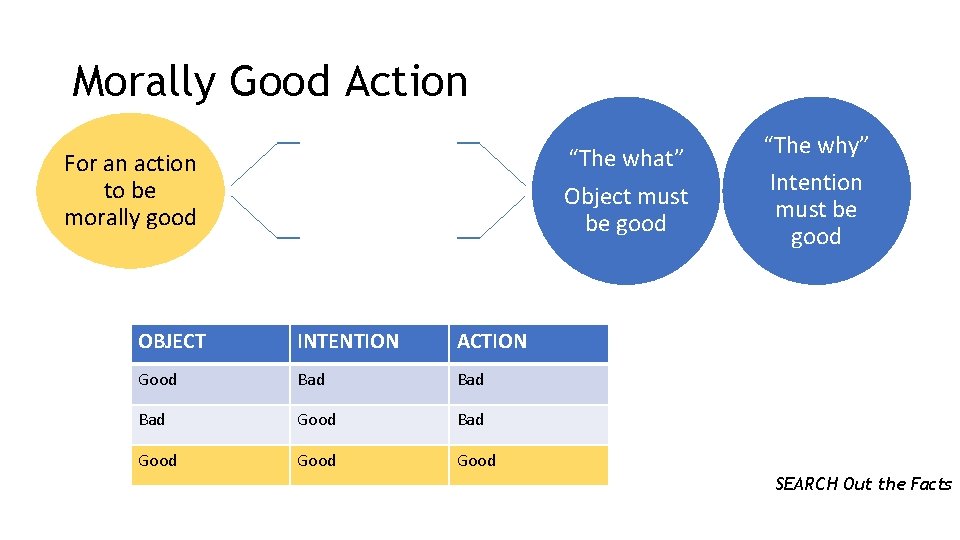
Morally Good Action “The what” Object must be good For an action to be morally good OBJECT INTENTION ACTION Good Bad Bad Good “The why” Intention must be good SEARCH Out the Facts
Assignment How can the circumstance of an action determine the level of wrong in an action? SEARCH Out the Facts
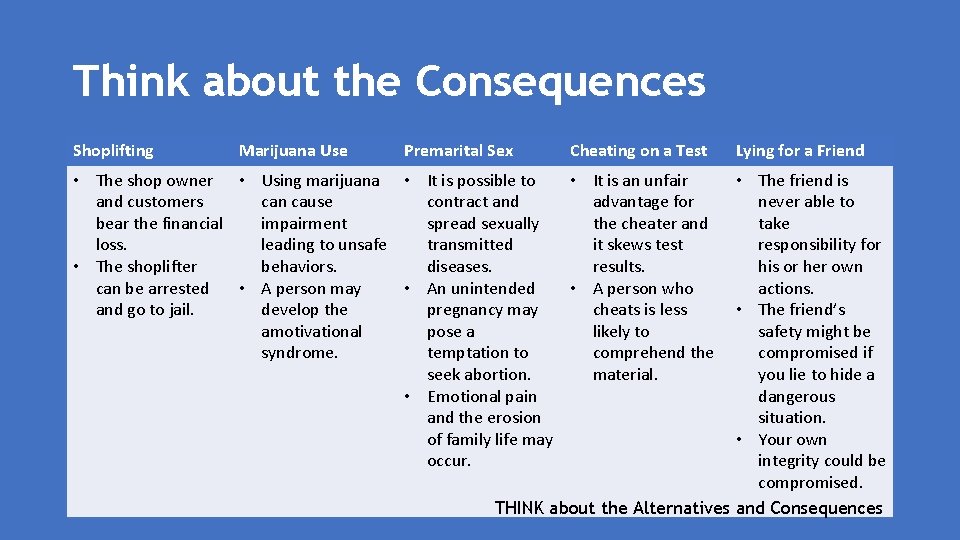
Think about the Consequences Shoplifting Marijuana Use Premarital Sex Cheating on a Test • The shop owner • Using marijuana • It is possible to • It is an unfair and customers can cause contract and advantage for bear the financial impairment spread sexually the cheater and loss. leading to unsafe transmitted it skews test • The shoplifter behaviors. diseases. results. can be arrested • A person may • An unintended • A person who and go to jail. develop the pregnancy may cheats is less amotivational pose a likely to syndrome. temptation to comprehend the seek abortion. material. • Emotional pain and the erosion of family life may occur. Lying for a Friend • The friend is never able to take responsibility for his or her own actions. • The friend’s safety might be compromised if you lie to hide a dangerous situation. • Your own integrity could be compromised. THINK about the Alternatives and Consequences
Sources of Wisdom in the Moral Life • Elders • Grandparents • Teachers • Counselors • Close friends • JESUS: Sermon on the Mount OTHERS Can Help You Make Good Decisions
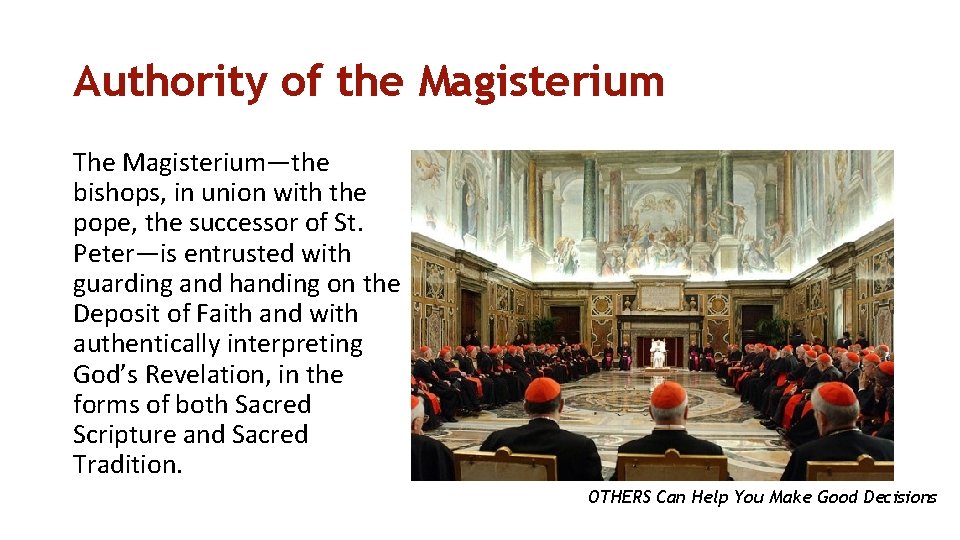
Authority of the Magisterium The Magisterium—the bishops, in union with the pope, the successor of St. Peter—is entrusted with guarding and handing on the Deposit of Faith and with authentically interpreting God’s Revelation, in the forms of both Sacred Scripture and Sacred Tradition. OTHERS Can Help You Make Good Decisions
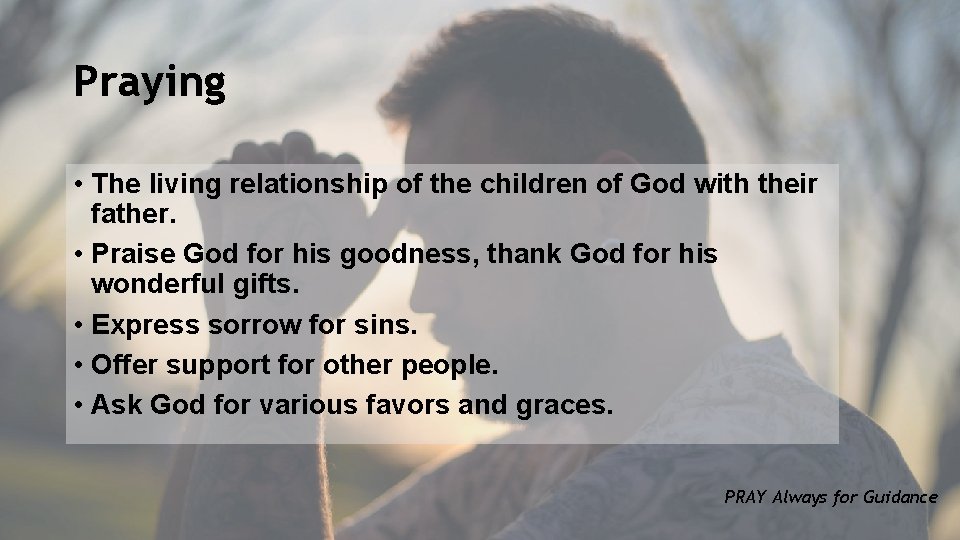
Praying • The living relationship of the children of God with their father. • Praise God for his goodness, thank God for his wonderful gifts. • Express sorrow for sins. • Offer support for other people. • Ask God for various favors and graces. PRAY Always for Guidance
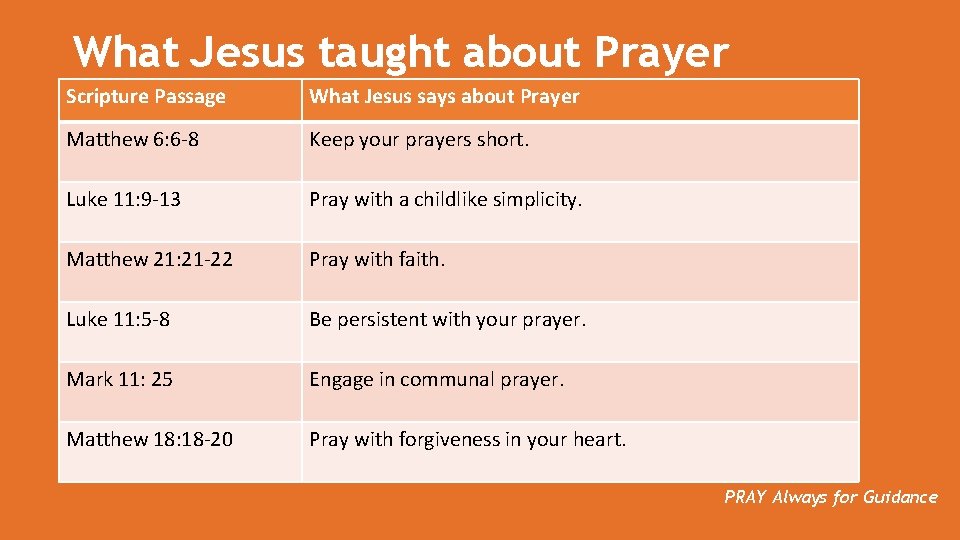
What Jesus taught about Prayer Scripture Passage What Jesus says about Prayer Matthew 6: 6 -8 Keep your prayers short. Luke 11: 9 -13 Pray with a childlike simplicity. Matthew 21: 21 -22 Pray with faith. Luke 11: 5 -8 Be persistent with your prayer. Mark 11: 25 Engage in communal prayer. Matthew 18: 18 -20 Pray with forgiveness in your heart. PRAY Always for Guidance
References • Discernment: https: //www. youtube. com/watch? v=Ne 8 n 1 ATd 1 s&vl=en • Prayer: https: //www. avemariapress. com/engagingfaith/2013/11/jesusteaches-about-prayer/