
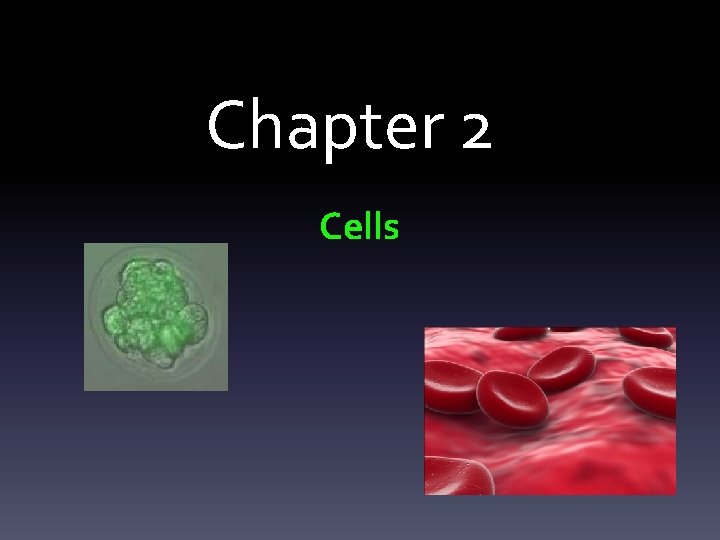
Chapter 2 Cells Section 1 Cell Structure and
- Slides: 30
Chapter 2 Cells
Section 1: Cell Structure and Organization
What is a cell? • cell: smallest unit that is capable of performing life functions • Every cell has two things – 1. ) cell membrane – 2. ) cytoplasm • cell membrane is the OUTER LAYER in animals and the INNER LAYER in plants • cytoplasm: a gelatin-like material that fills the inside of the cell
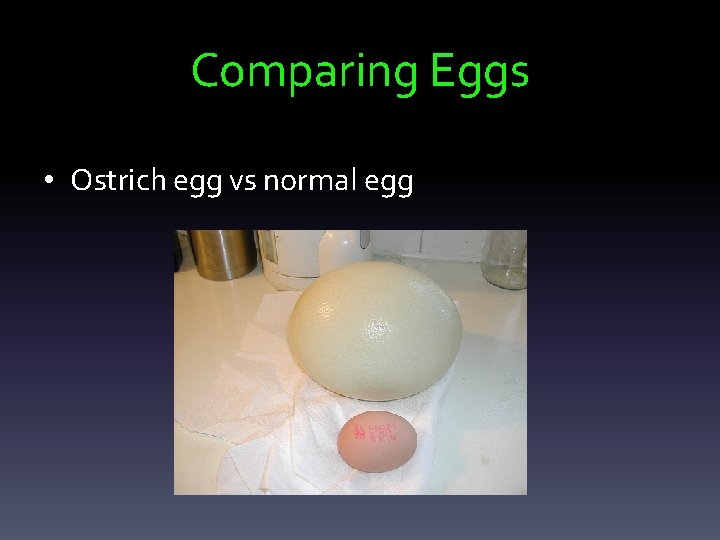
Cell Sizes • Cells come in many sizes. • Example of cells: – nerve cells: up to a meter long – human egg cell: size of the dot of this “i” – human red blood cell: 1/10 th the size of that “i” dot – bacterial cell: The smallest known cell. 8000 will fit inside the dot on the “i” – ostrich egg yolk: largest know cell
Comparing Eggs • Ostrich egg vs normal egg
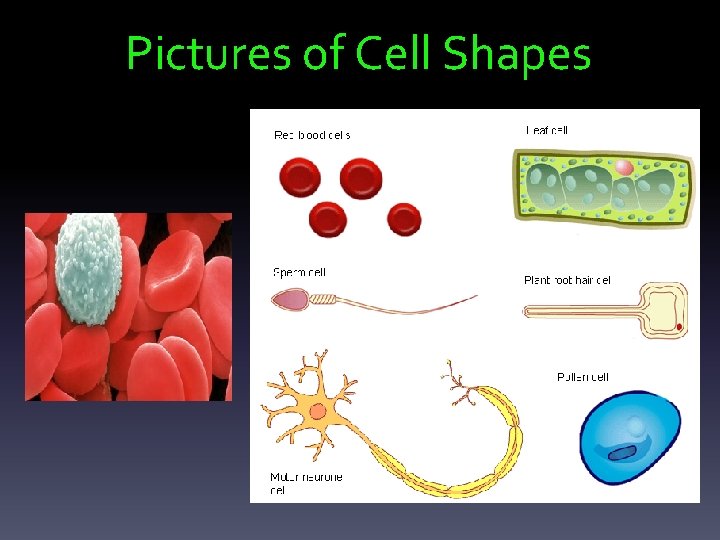
Cell Shapes • Cells vary in shape. • Their shape is normally determined by the job it’s doing. • Examples: – Nerve Cells– Have many extensions in order to send signals faster and over large distances – Muscle Cells– Can be long and skinny when relaxed and short and fat when tightened. – Red Blood Cells– Small and round in order to easily flow through all the blood vessels to deliver oxygen to all cells – White Blood Cells- Can change shape easily because they eat and devour any harmful object
Pictures of Cell Shapes
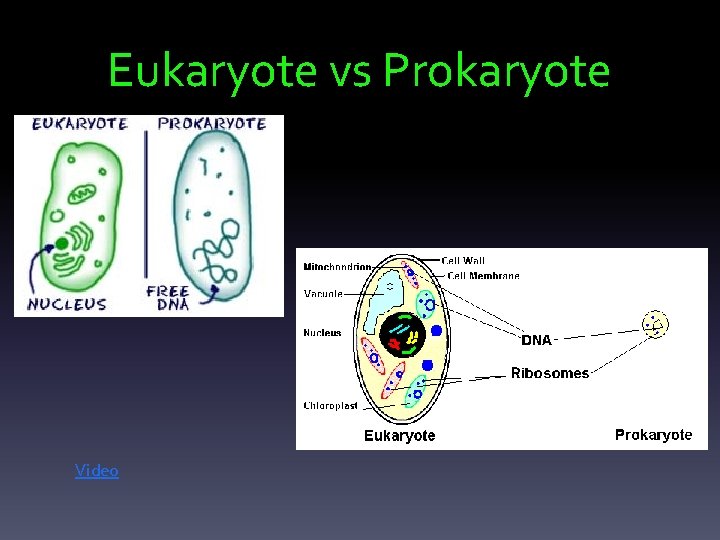
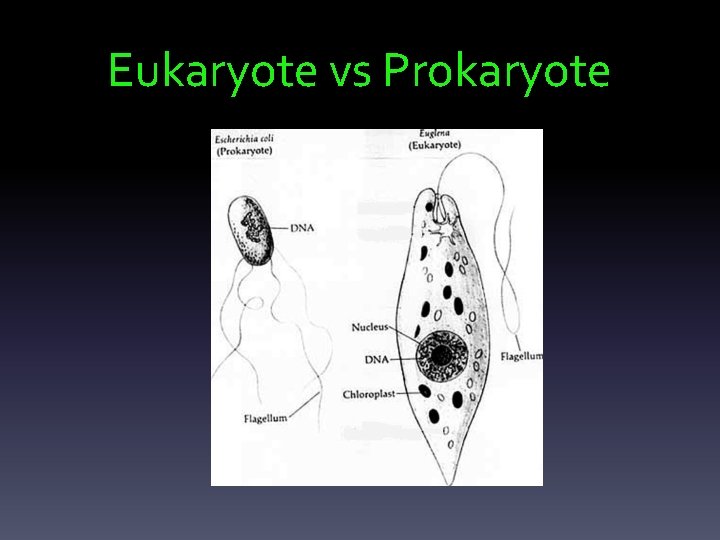
Two Types of Cells Prokaryote vs. Eukaryote • Prokaryote: cells without a membrane around all the cell parts – they lack a nuclear membrane around their DNA – ex. eubacteria & archaebacteria • Eukaryote: cells with membranes around their cell parts – they have a nuclear membrane around their DNA – animals, plants, fungi, protists
Eukaryote vs Prokaryote Video
Eukaryote vs Prokaryote
Cell Organization • Each cell in your body has a specific job to do • Organelles: cell parts • REMEMBER THIS: CELLS! THEY ARE MADE OF ORGANELLES!
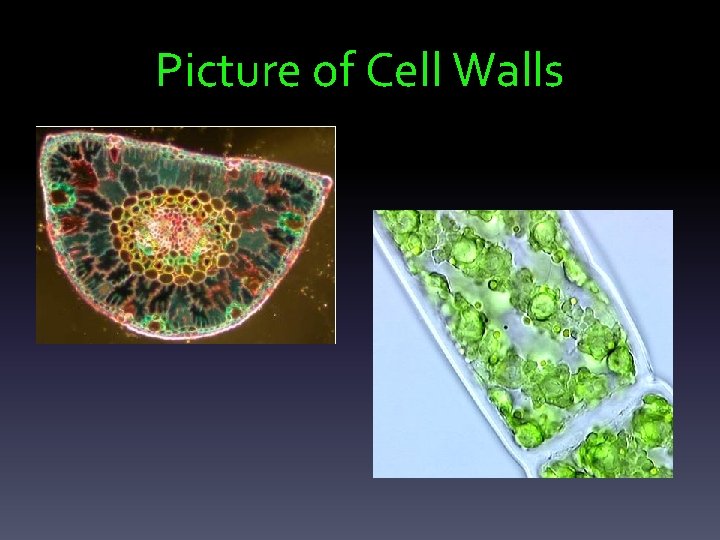
Organelle: Cell Wall • cell wall: The outer layer of plants, bacteria, some protists’ and fungi – its tough and rigid – job: to protect, give cell its shape and allow materials into and out of the cell • Water, food and Oxygen/CO 2 need to get in • CO 2/ Oxygen and wastes need to get out. – Plant cell walls are made up of a carbohydrate called cellulose. • This makes plants tougher than animal cells.
Picture of Cell Walls
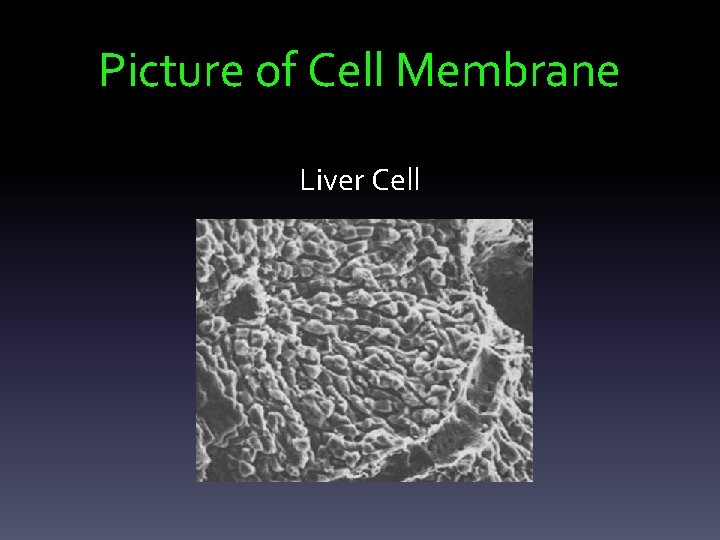
Organelle: Cell Membrane • cell membrane: the outer layer in all animal cells and some protists – job: To allow materials into and out of the cell and to protect • Water, Oxygen and Food enter • Wastes and CO 2 exit – Cell membranes are less rigid and softer than cell walls
Picture of Cell Membrane Liver Cell
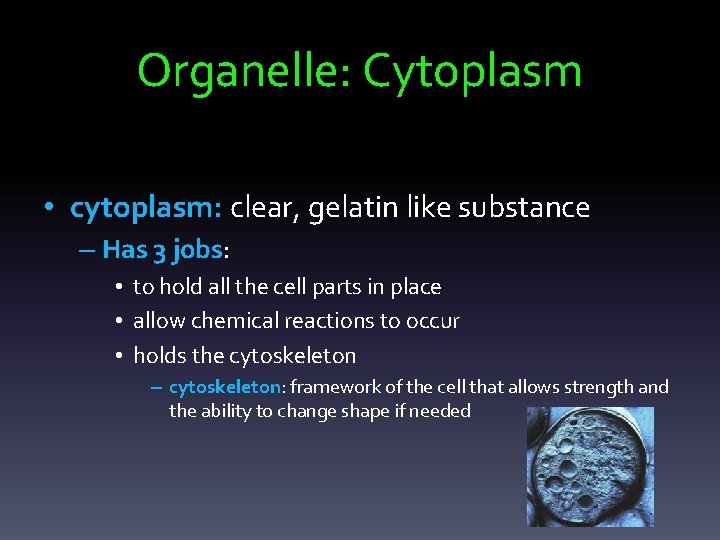
Organelle: Cytoplasm • cytoplasm: clear, gelatin like substance – Has 3 jobs: • to hold all the cell parts in place • allow chemical reactions to occur • holds the cytoskeleton – cytoskeleton: framework of the cell that allows strength and the ability to change shape if needed
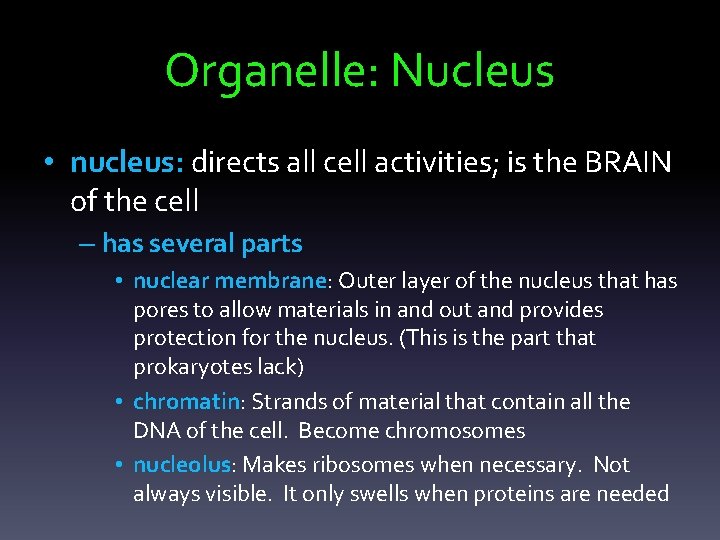
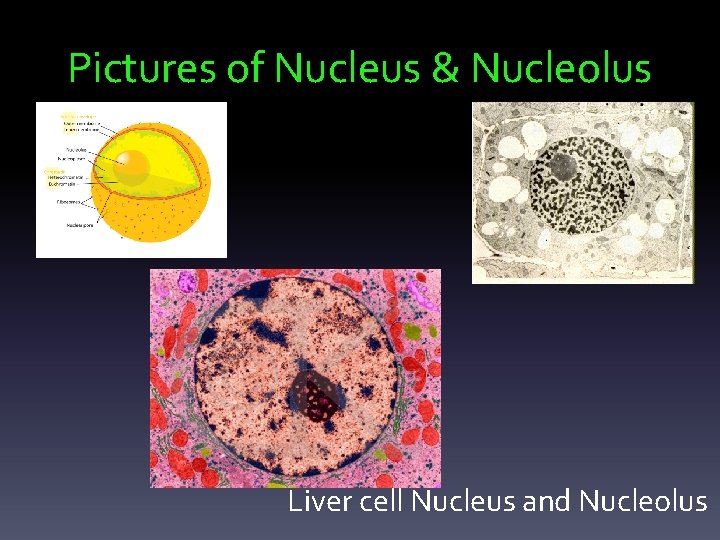
Organelle: Nucleus • nucleus: directs all cell activities; is the BRAIN of the cell – has several parts • nuclear membrane: Outer layer of the nucleus that has pores to allow materials in and out and provides protection for the nucleus. (This is the part that prokaryotes lack) • chromatin: Strands of material that contain all the DNA of the cell. Become chromosomes • nucleolus: Makes ribosomes when necessary. Not always visible. It only swells when proteins are needed
Pictures of Nucleus & Nucleolus Liver cell Nucleus and Nucleolus
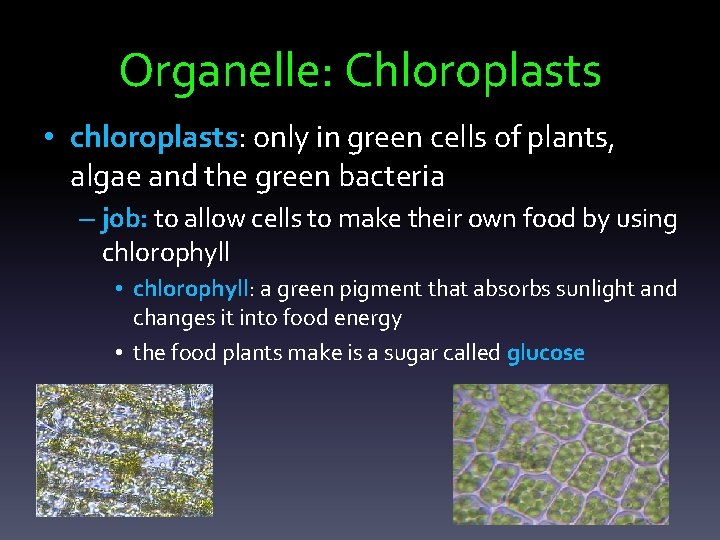
Organelle: Chloroplasts • chloroplasts: only in green cells of plants, algae and the green bacteria – job: to allow cells to make their own food by using chlorophyll • chlorophyll: a green pigment that absorbs sunlight and changes it into food energy • the food plants make is a sugar called glucose
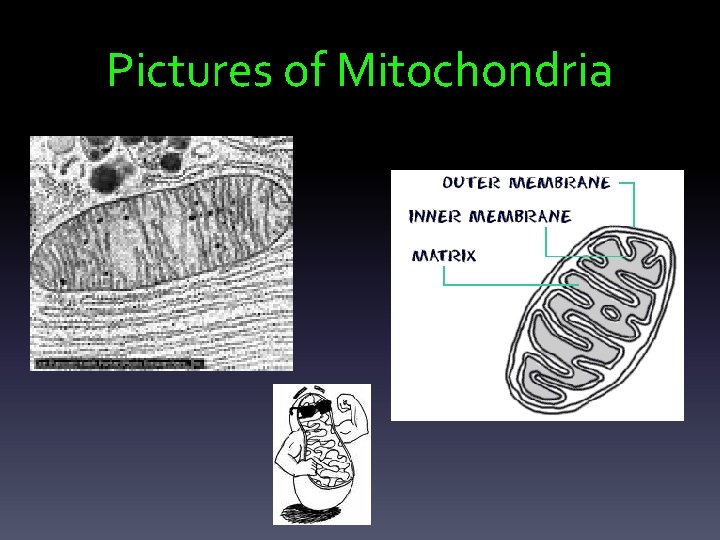
Organelle: Mitochondria • mitochondria: The POWERHOUSE of the cell! – job: take in the food and pull out the energy inside – The number of mitochondria inside a cell varies depending on level of activity • The more active a cell the more mitochondria – HEART and MUSCLE cells will have many more mitochondria than say cells of your ear lobe
Pictures of Mitochondria
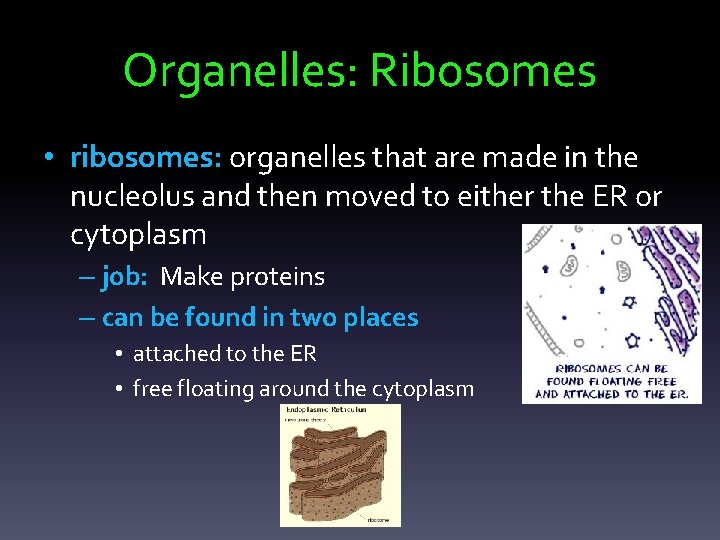
Organelles: Ribosomes • ribosomes: organelles that are made in the nucleolus and then moved to either the ER or cytoplasm – job: Make proteins – can be found in two places • attached to the ER • free floating around the cytoplasm
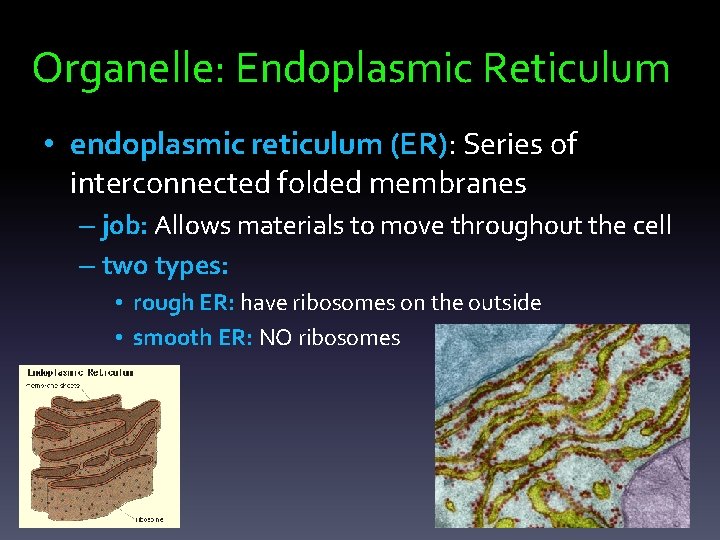
Organelle: Endoplasmic Reticulum • endoplasmic reticulum (ER): Series of interconnected folded membranes – job: Allows materials to move throughout the cell – two types: • rough ER: have ribosomes on the outside • smooth ER: NO ribosomes
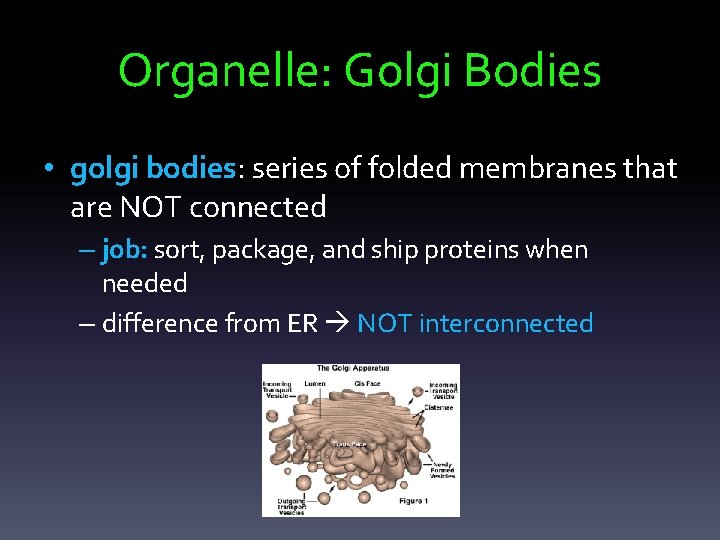
Organelle: Golgi Bodies • golgi bodies: series of folded membranes that are NOT connected – job: sort, package, and ship proteins when needed – difference from ER NOT interconnected
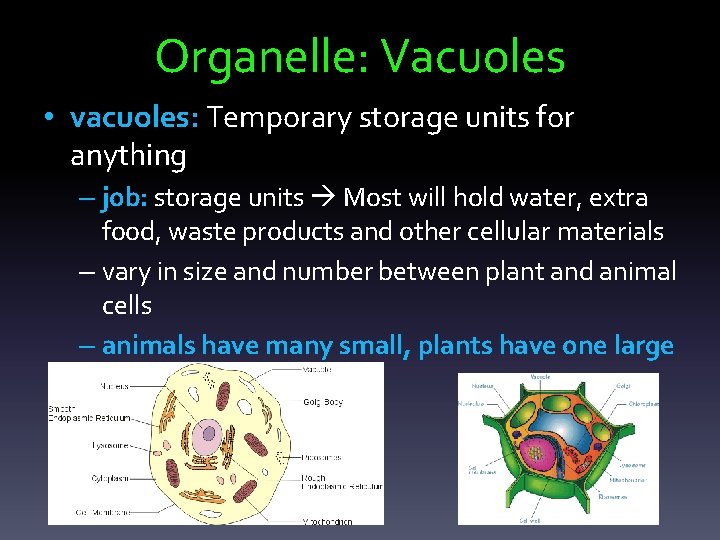
Organelle: Vacuoles • vacuoles: Temporary storage units for anything – job: storage units Most will hold water, extra food, waste products and other cellular materials – vary in size and number between plant and animal cells – animals have many small, plants have one large
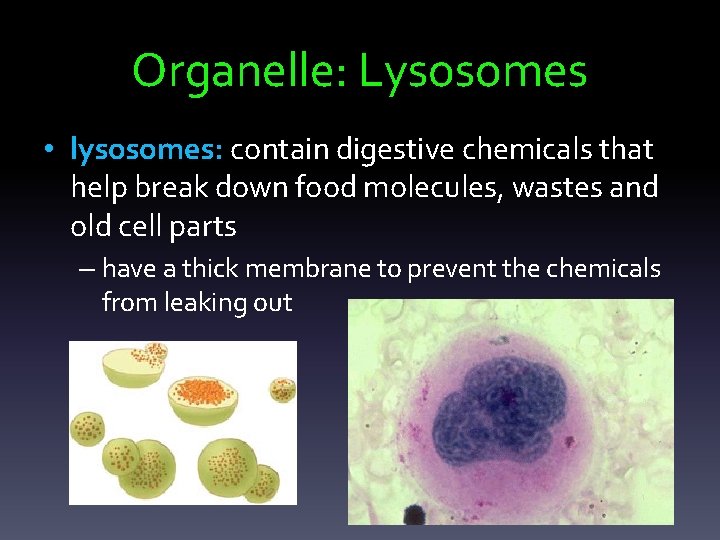
Organelle: Lysosomes • lysosomes: contain digestive chemicals that help break down food molecules, wastes and old cell parts – have a thick membrane to prevent the chemicals from leaking out
Here’s another rap! • CELL RAP! • CELLS! CELLS ARE MADE OF ORGANELLES!
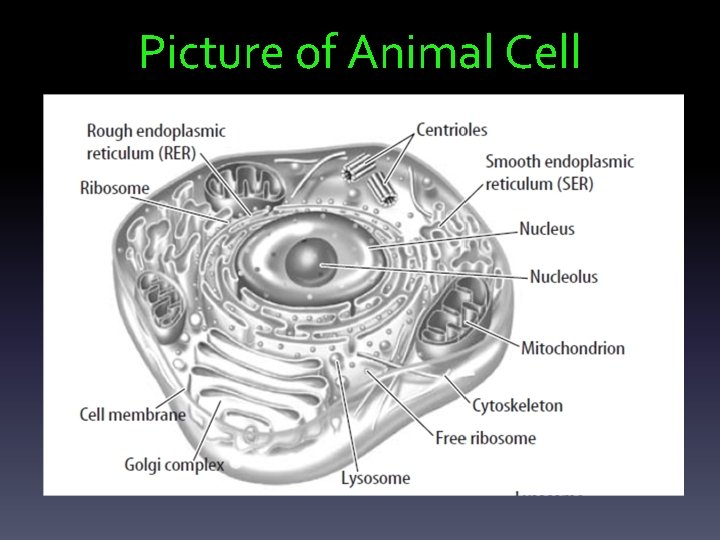
Picture of Animal Cell
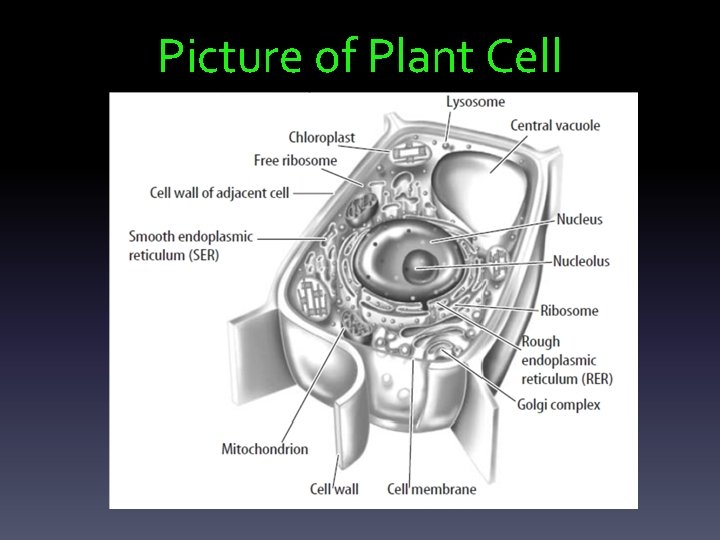
Picture of Plant Cell
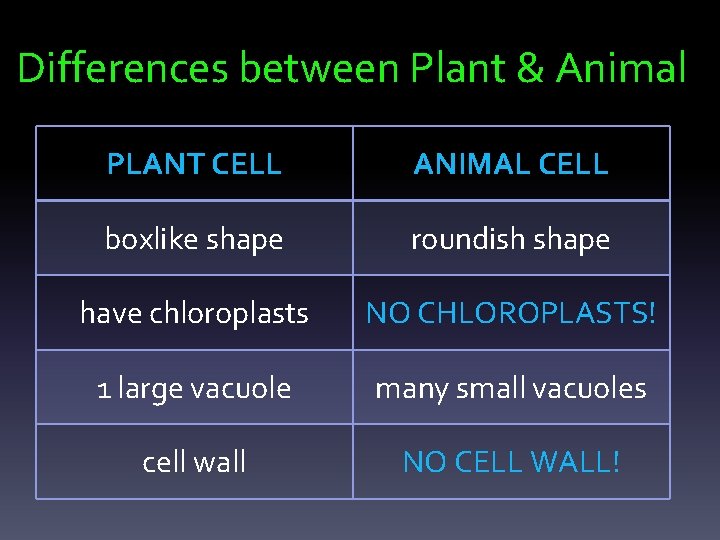
Differences between Plant & Animal PLANT CELL ANIMAL CELL boxlike shape roundish shape have chloroplasts NO CHLOROPLASTS! 1 large vacuole many small vacuoles cell wall NO CELL WALL!