
Chapter 2 Biochemistry Cooperative Activity Work together to
Chapter 2 Biochemistry
Cooperative Activity: Work together to write what you know about the terms: Group 1: Enzyme Proton Electron Group 2: Neutron Element Compound Group 3: Atom Molecule Bond Group 4: Reactant Product Chemical Reaction
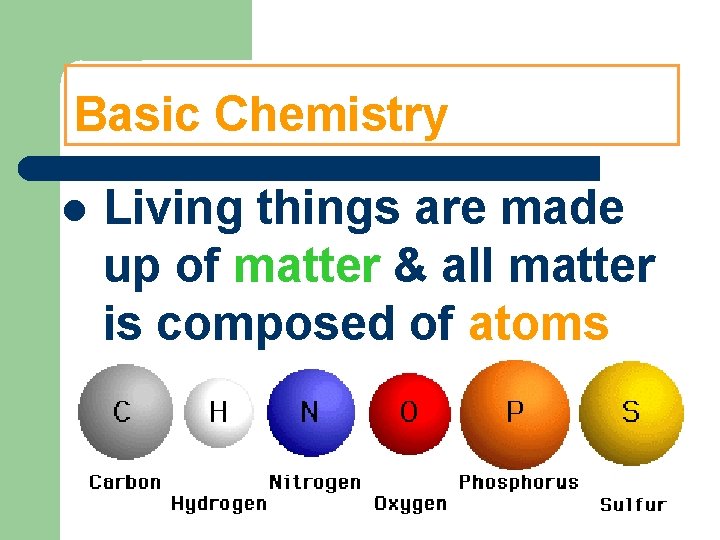
Basic Chemistry Living things are made up of matter & all matter is composed of atoms
Composition of Matter Elements are made of atoms Elements bond to make compounds
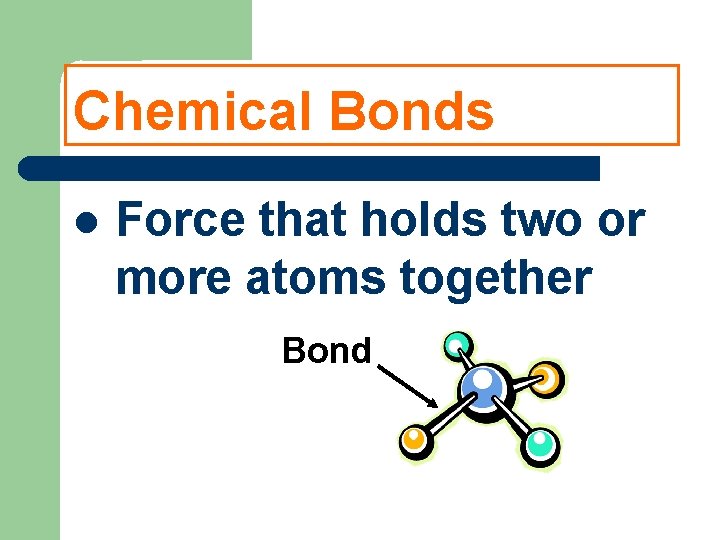
Chemical Bonds Force that holds two or more atoms together Bond
Types of Bonds 1)Ionic: Holds ions together (salt) 2)Covalent: Holds molecules together (water) 3)Van der Wall FORCE: NOT a bond, weak force (Gecko feet)
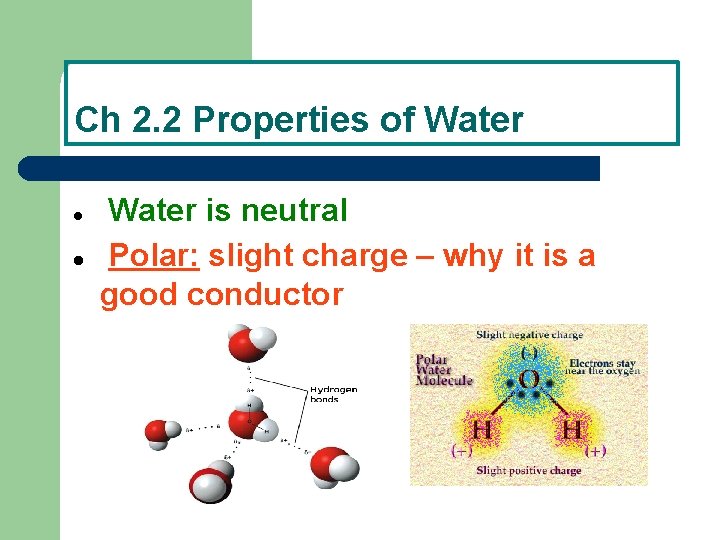
Ch 2. 2 Properties of Water is neutral Polar: slight charge – why it is a good conductor
Water Bonding Polarity makes water bond with itself → Hydrogen Bond Cohesion: How it bonds w/same substance (water strider) Adhesion: How it bonds w/different substances (capillary action) – H 2 O is VERY cohesive & adhesive!

Cohesion Adhesion
Mixtures Solution = Solute (What's dissolved) Solvent (what's doing the dissolving - typically Water) Suspension = mixture where parts aren't completely dissolved
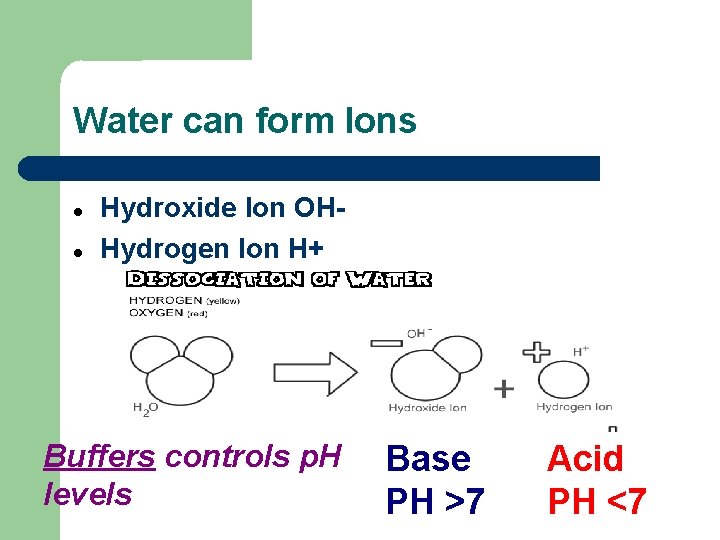
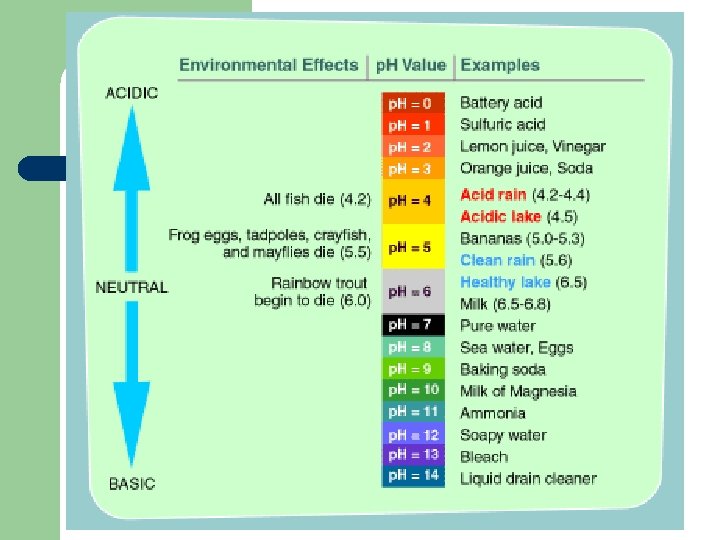
Water can form Ions Hydroxide Ion OHHydrogen Ion H+ Buffers controls p. H levels Base PH >7 Acid PH <7
Ch 2. 3 Molecules of Life
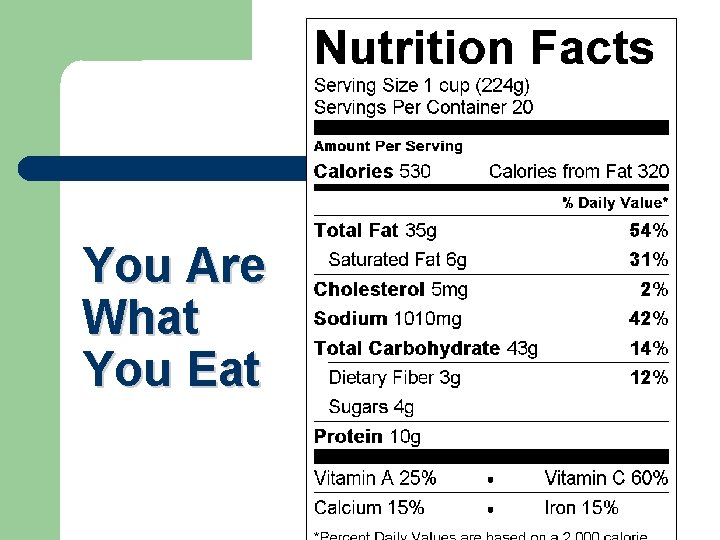
You Are What You Eat
“You Are What You Eat” Nutrition Facts label – a summary of our basic biochemistry – Why do we need to eat these?
Organic Molecules Contain carbon Macromolecules: large molecules Held together with covalent bonds
Macromolecules are Polymers are molecules held together by covalent bonds Made of monomers

Four categories of macromolecules Proteins Carbohydrates Lipids Nucleic Acids
Proteins Subunits = amino acids Proteins differ in: – #, type & arrangement of amino acids
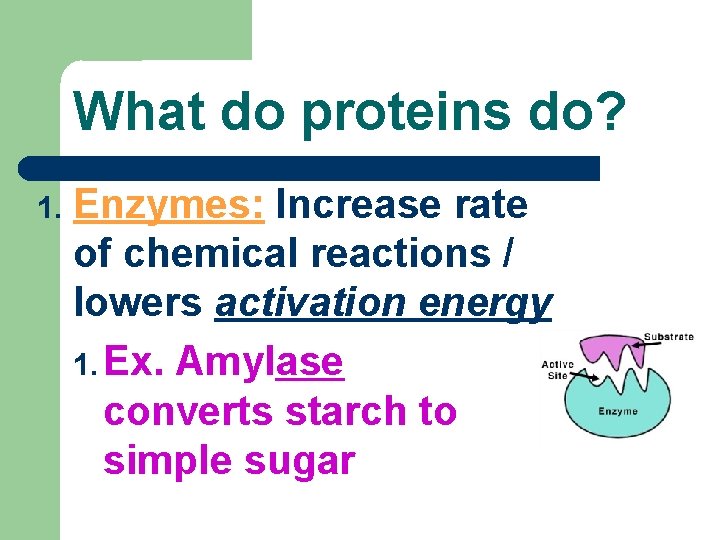
What do proteins do? 1. Enzymes: Increase rate of chemical reactions / lowers activation energy 1. Ex. Amylase converts starch to simple sugar
What do proteins do? (cont. ) Transport: Hemoglobin (red blood cell protein) 3. Defense: Antibodies 2.
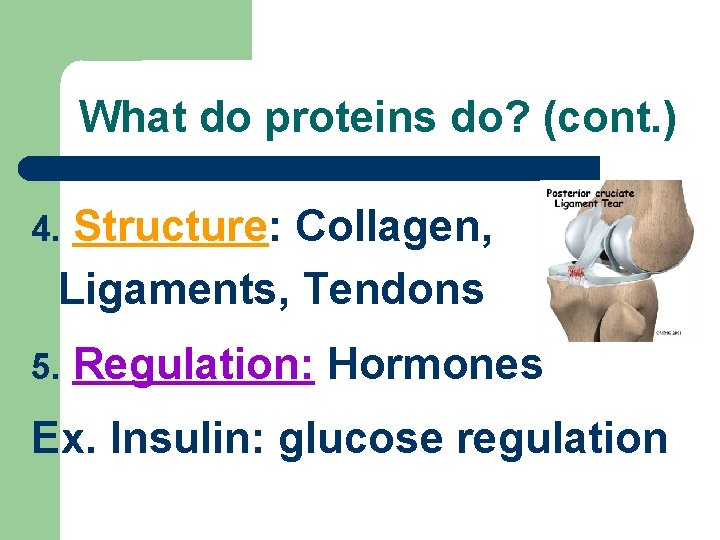
What do proteins do? (cont. ) Structure: Collagen, Ligaments, Tendons 4. 5. Regulation: Hormones Ex. Insulin: glucose regulation

What do proteins do? (cont. ) 6. Motion: muscle protein
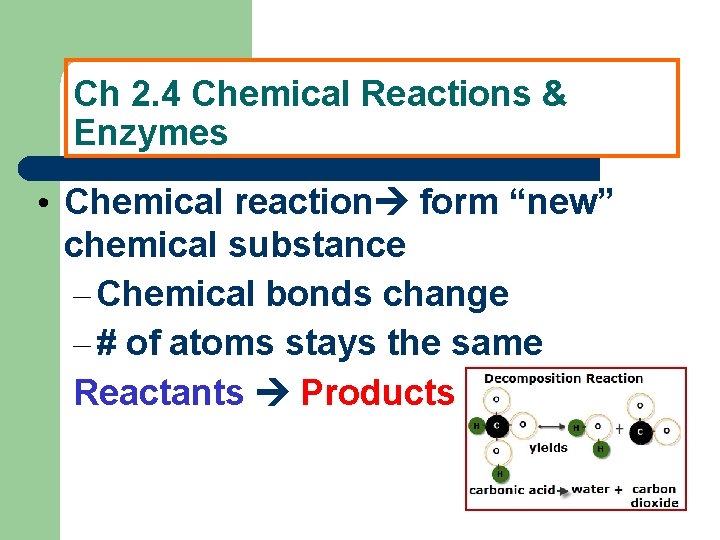
Ch 2. 4 Chemical Reactions & Enzymes • Chemical reaction form “new” chemical substance – Chemical bonds change – # of atoms stays the same Reactants Products
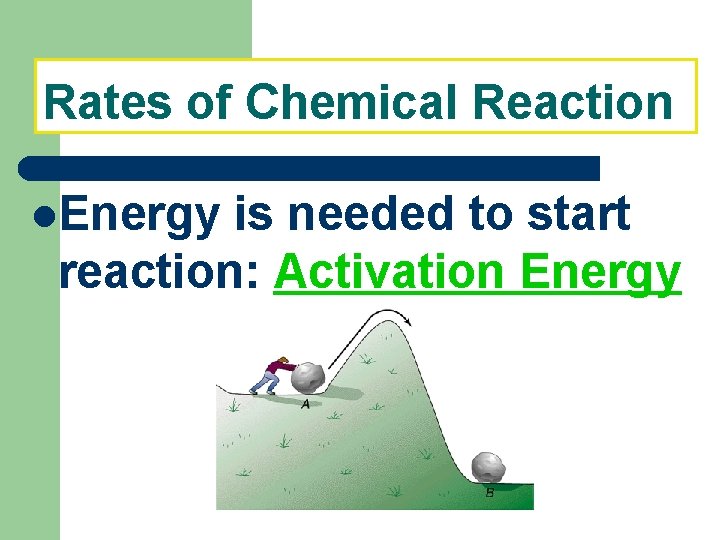
Rates of Chemical Reaction Energy is needed to start reaction: Activation Energy
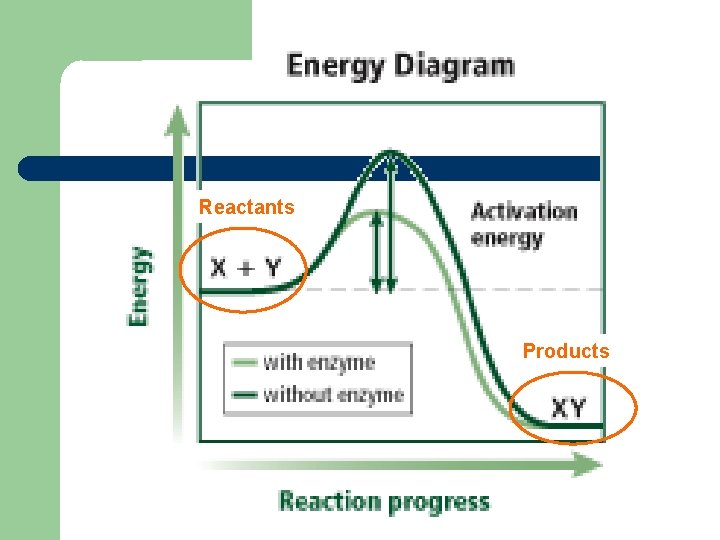
Reactants Products
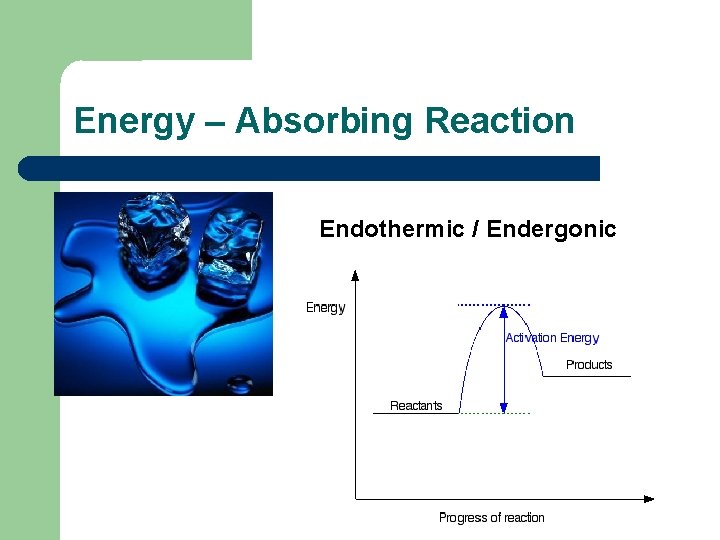
Energy – Absorbing Reaction Endothermic / Endergonic
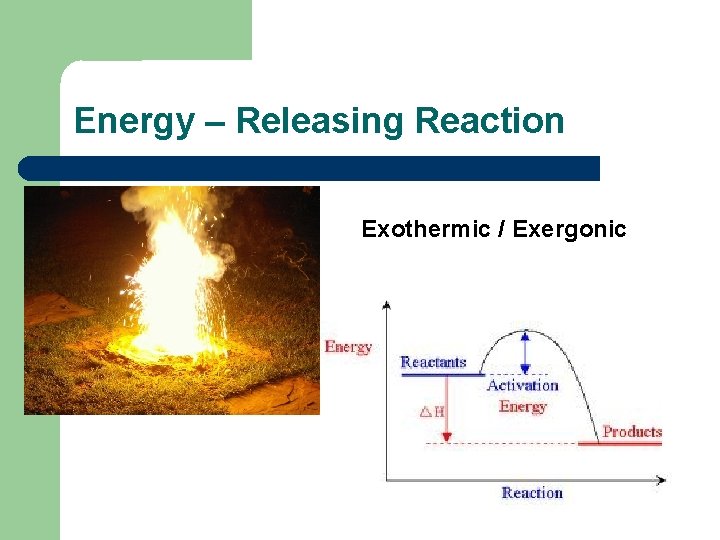
Energy – Releasing Reaction Exothermic / Exergonic
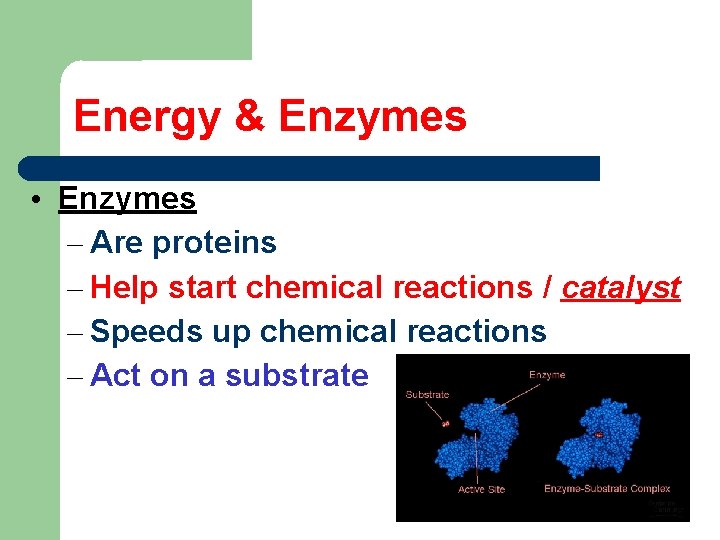
Energy & Enzymes • Enzymes – Are proteins – Help start chemical reactions / catalyst – Speeds up chemical reactions – Act on a substrate
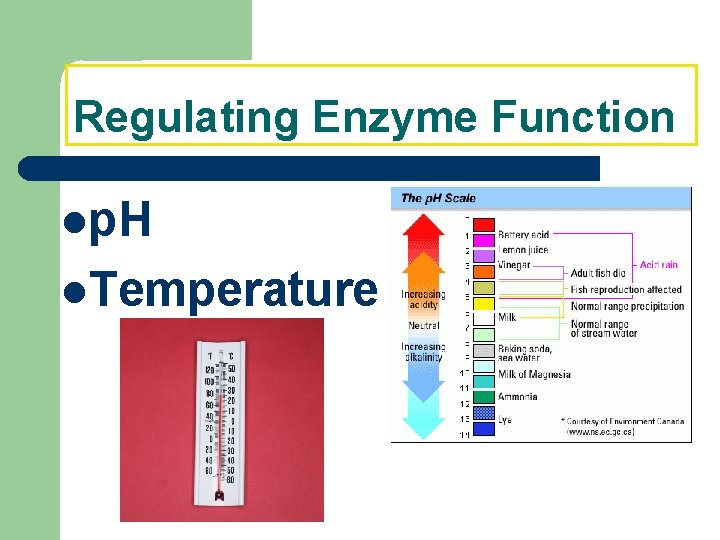
Regulating Enzyme Function p. H Temperature
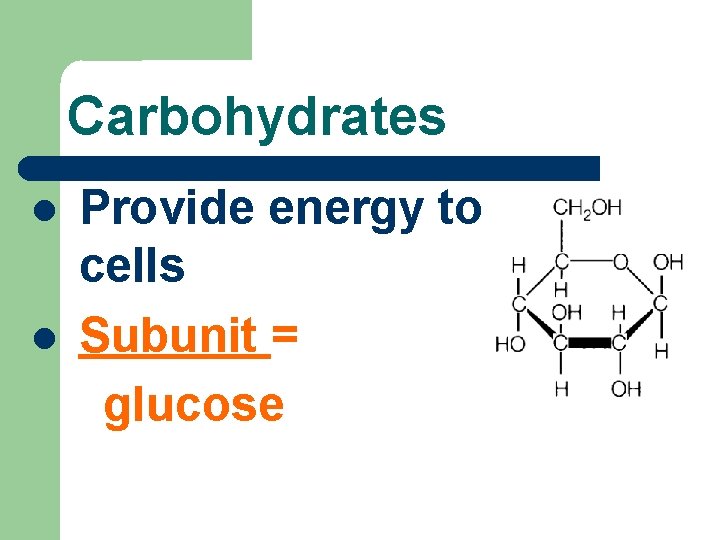
Carbohydrates Provide energy to cells Subunit = glucose
Types of Carbohydrates 1. Simple carbohydrates 1. mono- & disaccharides 2. Complex carbohydrates 1. polysaccharides
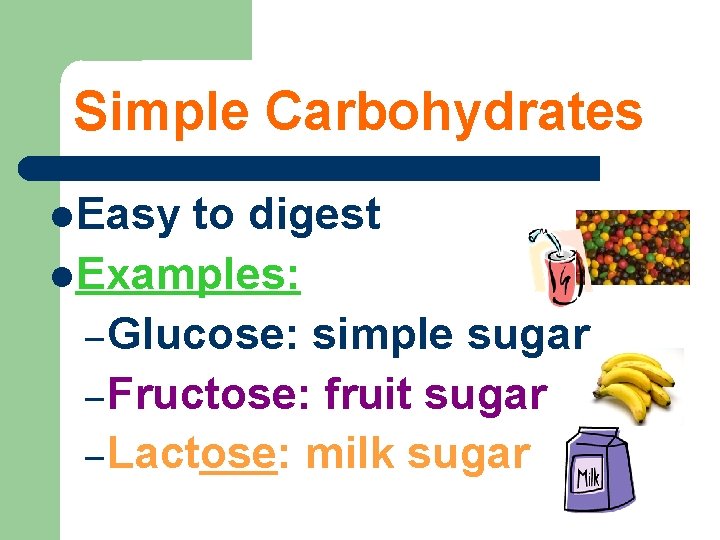
Simple Carbohydrates Easy to digest Examples: – Glucose: simple sugar – Fructose: fruit sugar – Lactose: milk sugar
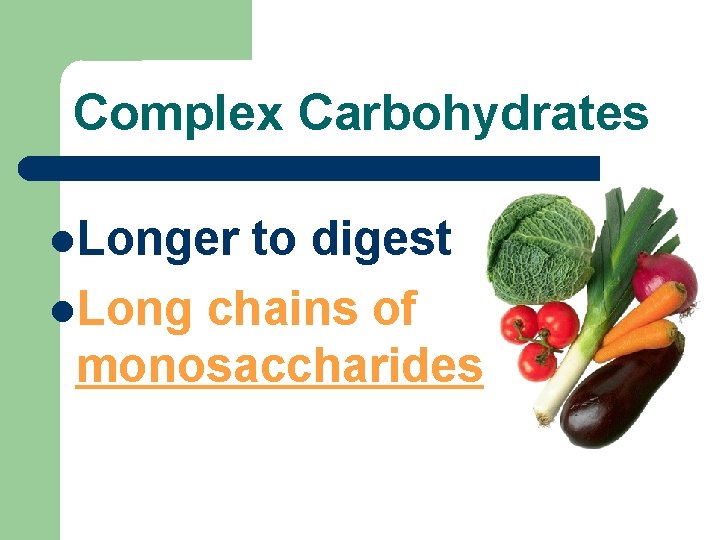
Complex Carbohydrates Longer to digest Long chains of monosaccharides
Complex Carbohydrates (cont. ) Starch Glycogen: energy storage Cellulose: plant structure
Discussion Questions: 1. Why should we limit some simple sugars? 2. Why do athletes eat complex carbohydrates before a long run / game?
White Boarding – What type of carb is each statement? 1. 2. 3. 4. 5. 6. 7. 8. 9. Provide longer amounts of energy Provide shorter amounts of energy Subunit is glucose (sugar) Easier to breakdown / shorter to digest Harder to break down / longer to digest Can end in –ose suffix Examples are starch, cellulose & glycogen Examples are fruits, milk and candy Provide energy to the cell
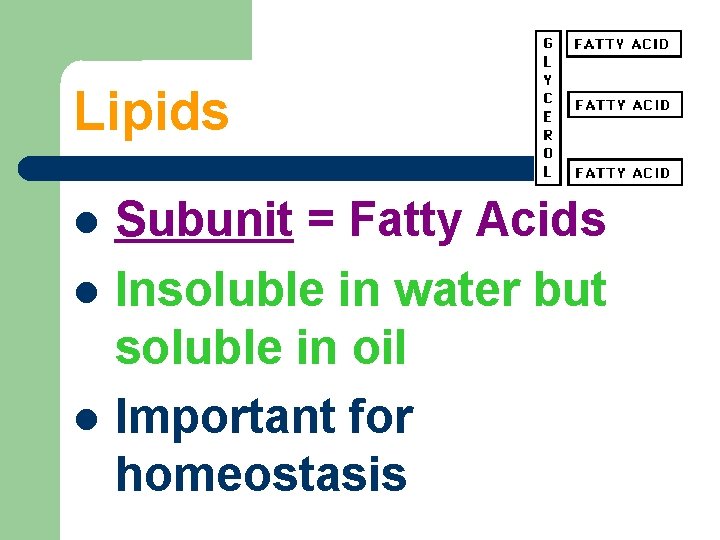
Lipids Subunit = Fatty Acids Insoluble in water but soluble in oil Important for homeostasis
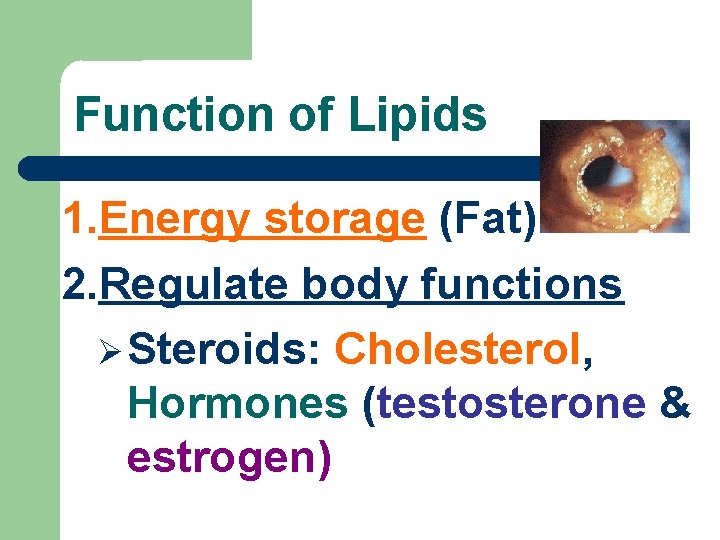
Function of Lipids 1. Energy storage (Fat) 2. Regulate body functions Steroids: Cholesterol, Hormones (testosterone & estrogen)
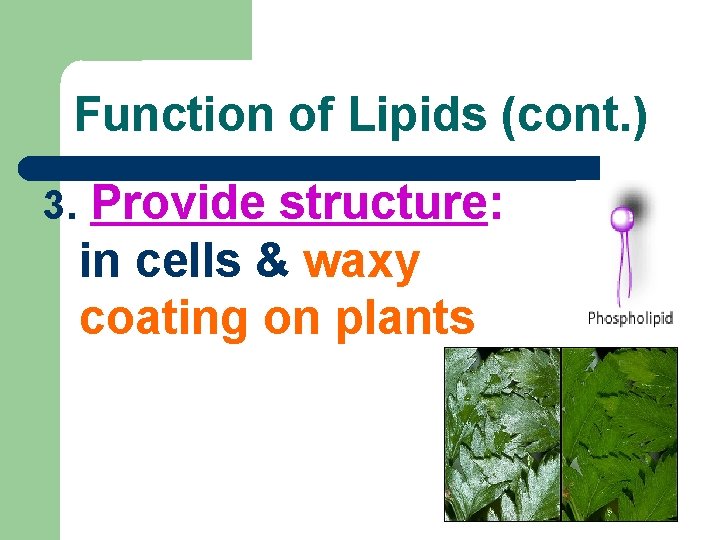
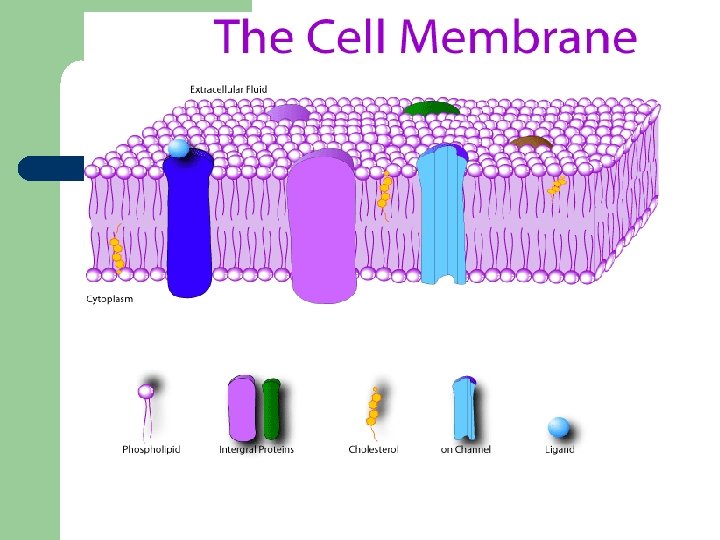
Function of Lipids (cont. ) 3. Provide structure: in cells & waxy coating on plants
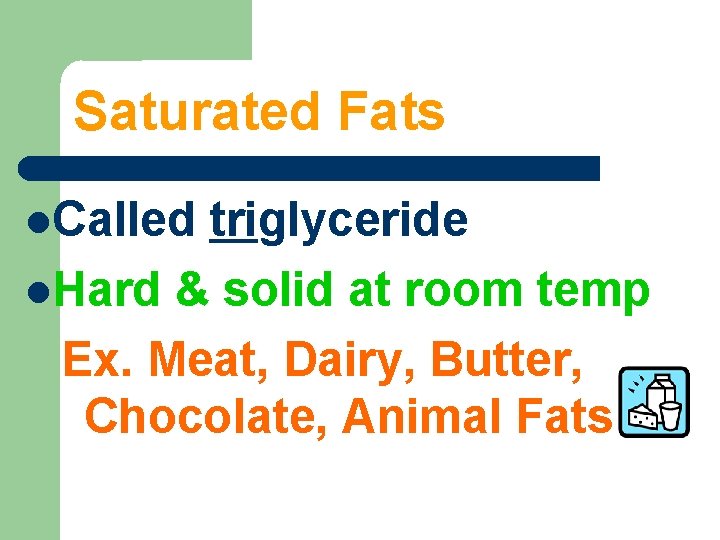
Saturated Fats Called triglyceride Hard & solid at room temp Ex. Meat, Dairy, Butter, Chocolate, Animal Fats

Unsaturated Fats “Kinked” carbon chain Liquids at room temp Ex. Peanuts, Fish, Olive Oil
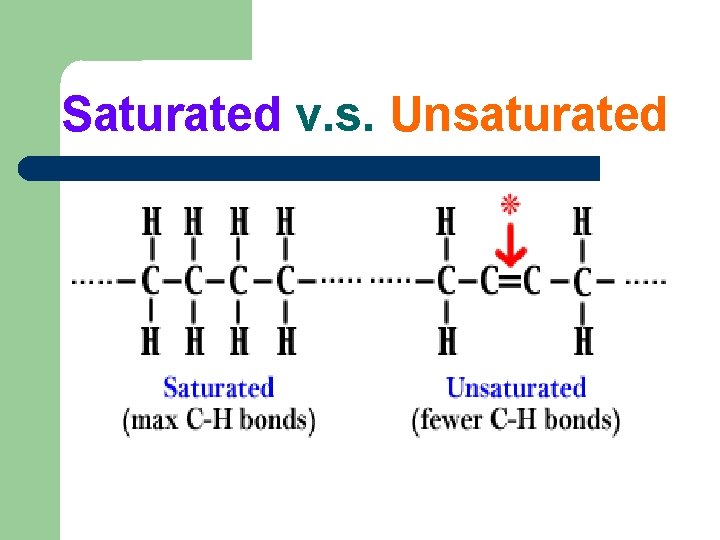
Saturated v. s. Unsaturated
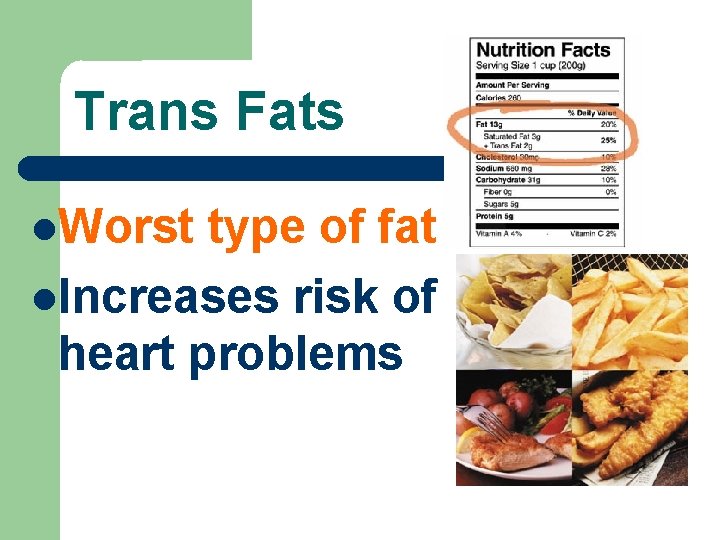
Trans Fats Worst type of fat Increases risk of heart problems
Discussion Questions Which type of fats should we eat less of? 2. How many calories must you burn to lose 1 lb of fat? 1.
Question Answers 1. Saturated & trans fats: linked to heart disease 2. 3, 500 calories!!!
White Boarding – What type of fat is each statement 1. Stores energy 2. Solid at room temperature 3. Liquid at room temperature 4. Helps maintain homeostasis 5. Key part of cell membrane 6. Ex: animal fat, butter, chocolate, 1. Ex: fish, olive oil, nuts 2. “Full” of c–h bonds 3. Double bond so it is “kinked” 4. Linked to heart disease 5. “Better” type of fat 6. Aka “triglyceride”
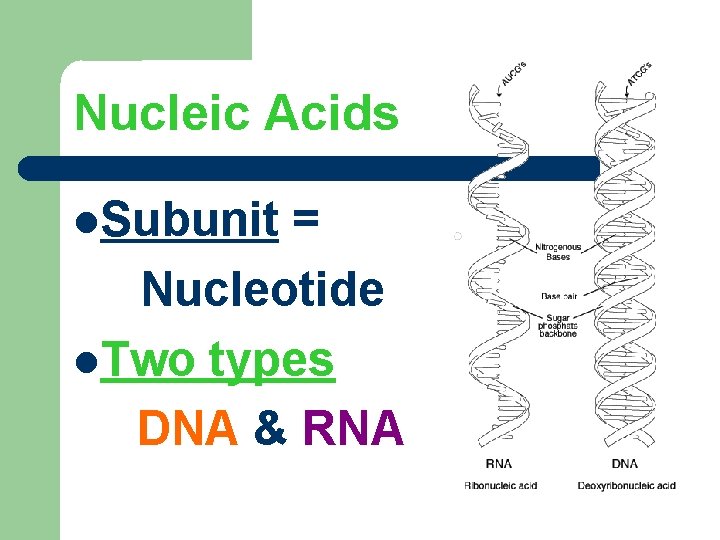
Nucleic Acids Subunit = Nucleotide Two types DNA & RNA
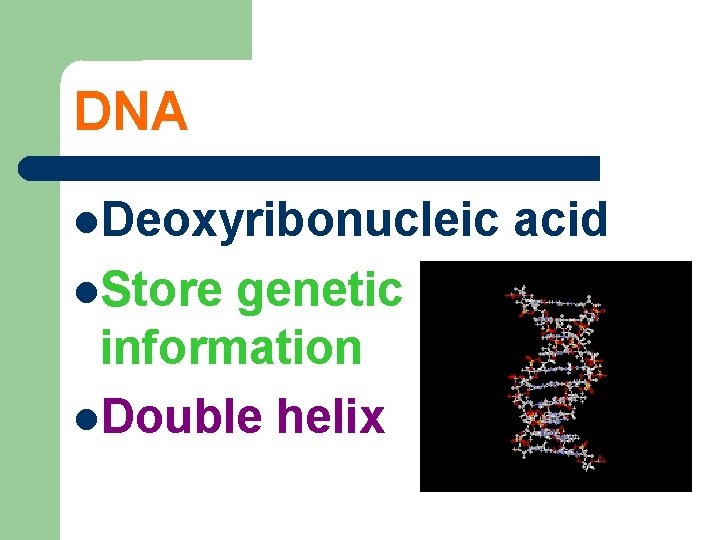
DNA Deoxyribonucleic Store genetic information Double helix acid
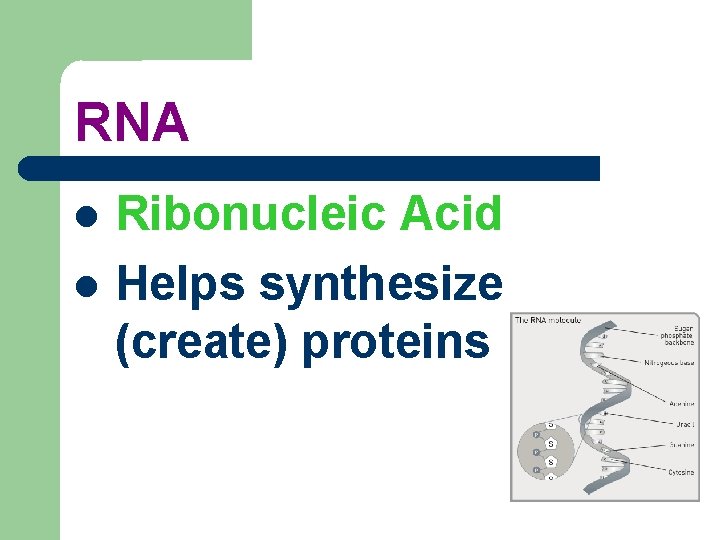
RNA Ribonucleic Acid Helps synthesize (create) proteins
Concept Map: Link these words together Carbohydrates Proteins Nucleic Acids Lipids Fatty Acids Glucose Amino Acids Nucleotides Store energy Useable energy Polymers Saturated Unsaturated Covalent Bonds Simple DNA, RNA Carries hereditary information Fructose, Starch, Gylcogen, Cellulose Butter, Fish, Oils Complex Make Enzymes, Muscles, Hemoglobin, Etc
- Slides: 52