
Chapter 2 Basic Geographic Techniques What is a
Chapter 2 Basic Geographic Techniques
What is a Map? According to the International Cartographic Association, a map is: a representation, normally to scale and on a flat medium, a selection of material or abstract features on, or in relation to, the surface of Earth. Map is the most powerful visualization tool for any implementation and monitoring process.
Types of Maps are usually classified in two types:
1 -Topographic map Is a reference tool, showing the outlines of selected natural and represented by contours and/or shading, but topographic maps also shows roads, rivers, contours and other prominent features (Figure 1. 1).
2 -Thematic map Is a tool to communicate geographical concepts such as the distribution of population densities, climate, movement of goods, land use etc. (Figure 1. 1)
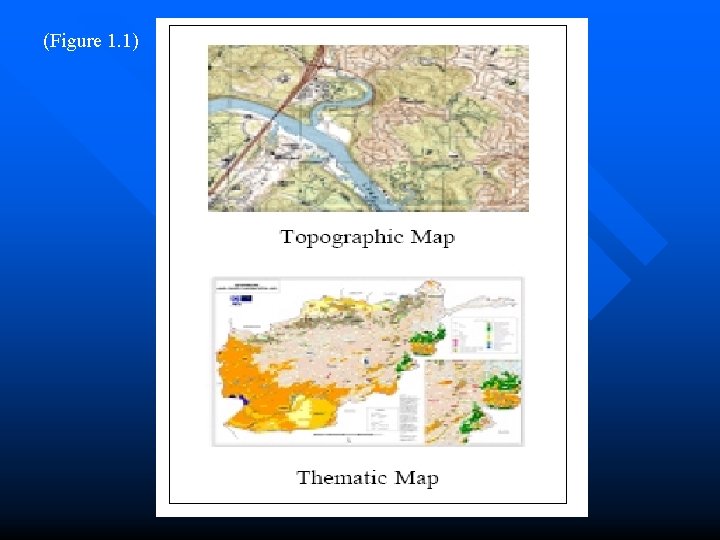
(Figure 1. 1)
Coordinate System
Map Projection is a fundamental component of mapmaking. A projection is a mathematical means of transferring information from the Earth's three-dimensional, curved surface to a twodimensional medium—paper or a computer screen. Different projections are used for different types of maps because each projection is particularly appropriate for certain uses. For example, a projection that accurately represents the shapes of the continents will distort their relative sizes.
A projection is a method by which the curved surface of the earth is represented on a flat surface. The Earth’s surface is curved but it must be shown on a flat sheet, some distortion is inevitable. Distortion is least for when the map only shows small areas, and greatest when a map attempts to show the entire surface of the Earth. A complex mathematical transformation is involved in representing three dimensional earth surfaces to a two-dimension paper map.
Concept of Map Scale The scale of the map is the ration between distances on the map and corresponding distances in the real world. If a map has a scale of 1: 50, 000, then 1 cm on the map equals 50, 000 cm or 0, 5 km on the Earth’s surface. The most popular way of defining maps scales are the terms “small scale” and “large scale” map. The easiest ways to remember a large scale map that shows great detail, small features representative fraction is large, e. g. 1: 10, 000 and a small scale map shows only large features representative fraction is small, e. g. 1: 250, 000.
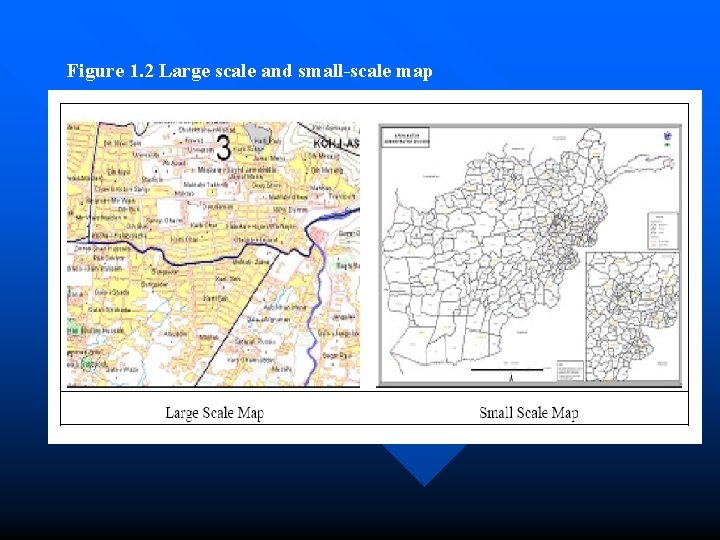
Figure 1. 2 Large scale and small-scale map
A Geographic Information System (GIS) is a tool designed to work with spatial data or data referenced by geographic coordinates. It generally contains a database system for most cases, GIS can be thought as a computerized map. The map often contains various layers, or “themes, ” (e. g. , forest locations, roads, rivers, etc. ). These thematic layers are all linked together by their geographic location or coordinates. GIS has been called an “enabling technology” because of the potential it offers for the wide variety of disciplines.
Components of GIS is still not user-friendly. Formal training and regular use is prerequisites for effective use of GIS. Currently the GIS software vendors started to develop more intuitive software interface that permits nonspecialists to operate GIS. Geographic information systems encompass (Figure 2. 1).
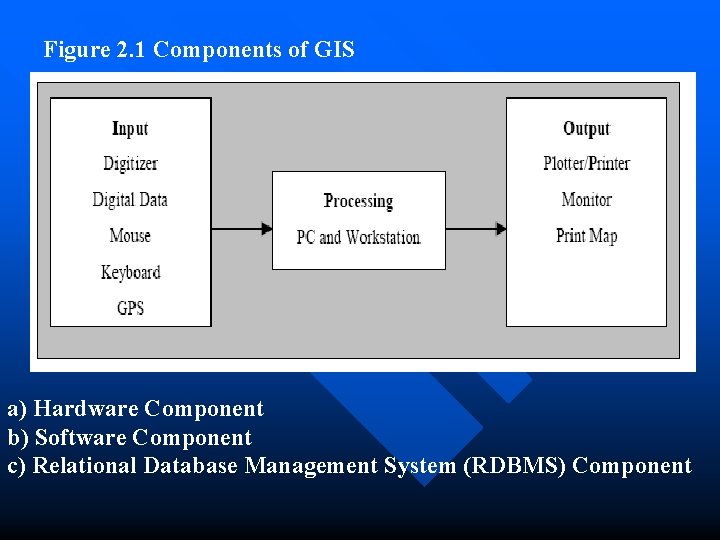
Figure 2. 1 Components of GIS a) Hardware Component b) Software Component c) Relational Database Management System (RDBMS) Component
Computer Hardware: The environment in which a GIS operates is defined by several different hardware components: a) The central processing unit (CPU) is the essential component of a computer because it is the part that executes the programs and controls the operations. The data is access by the processor from the data storage unit. b) A data entry device – digitizer or scanner. A wide range of digitizer is now available commercially and they have direct interfaces to GIS packages. However, the difference is in the costs and size.
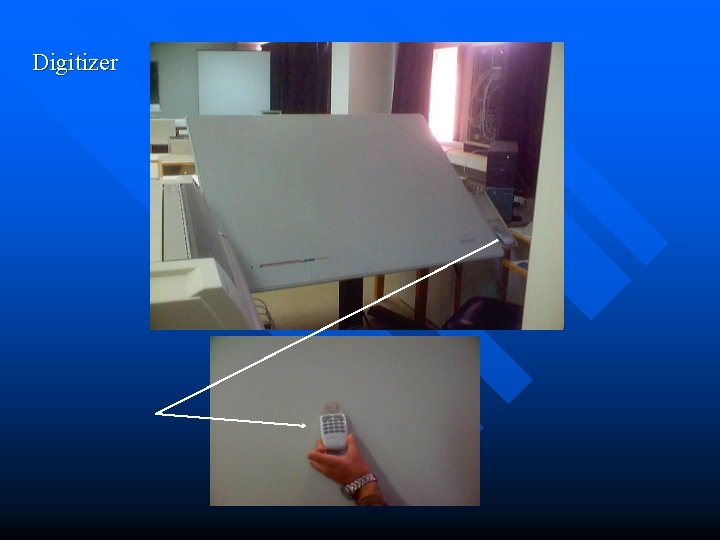
Digitizer
c) A graphic display system on which the map can be displayed either while entering and editing or after analysis. Usually monitor is the display device for the GIS maps. d) Output generation device they are used for cartographic quality paper map production. Desktop color bubble jet printers are now a days very handy for good quality color print production to large size map plotter’s are used as output device for printing. e) GIS projects generally require large amounts of storage. Adding extra hard disk is recommended for data storage in PC. In network environment regular backups in DVD, CD-ROM is the best backup media now a day.
Software: Software is the program that tells the computer what to do and how to process the map. A number of private companies produce and market a wide range of GIS software packages. There are quite a few different kinds of GIS packages are for sale in the commercial market. Some are highly specialized, designed to support a single, narrowly targeted application. Others are more generic and enable the user to use spatial data for almost any type of spatial analysis. Many, including internal program languages that allow the user to customize the software for specific purposes. The most common program is Arc. View. Data developed for a particular GIS software package is stored in a format or structure that is unique to that software package.
RDBMS: The database management systems were designed to facilitate storage and retrieval of large data collections. Relational database system is the most popular model for GIS. The RDBMS represents a database as a collection of tables, which can be join together to provide flexibility to linkages between records and translate them into thematic maps.
GIS data model Traditional databases are organized by fields, records, and files. A field is a single piece of information; a record is one complete set of fields; and a file is a collection of records. For example, a telephone book is analogous to a file. It contains a list of records, each of which consists of three fields: name, address, and telephone number. Generally, a proper database organization needs to ensure the following steps:
• Flexibility in the design to adopt to needs of different users; • A controlled and standardized approach to data input and updating; • A system of validation checks to maintain the integrity and consistency of the data elements; • A level of security for minimizing damage to the data; • A way to minimize redundancy in data storage. In the GIS domain, the spatial part of a geographical feature is known as spatial data and the attribute parts are known as non-spatial or attribute data. They are broadly categorized as spatial data and nonspatial data.
Data Types and Models Data for GIS comes in three basic forms • Spatial data - What Maps are made of • Tabular data - Adding Information to Geography • Image data - Using images to build Maps In addition to these three basic forms, data can be further classified into two types of data models: Vector data model: Vector model uses discrete points, lines and/or areas corresponding to discrete objects with name or code number of attributes. Discrete features, such as customer locations and data summarized by area, are usually represented using the vector model (Figure 2. 2).
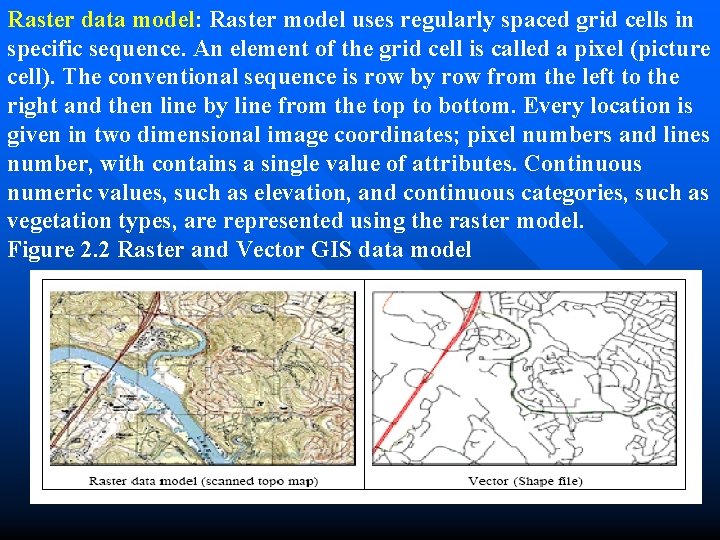
Raster data model: Raster model uses regularly spaced grid cells in specific sequence. An element of the grid cell is called a pixel (picture cell). The conventional sequence is row by row from the left to the right and then line by line from the top to bottom. Every location is given in two dimensional image coordinates; pixel numbers and lines number, with contains a single value of attributes. Continuous numeric values, such as elevation, and continuous categories, such as vegetation types, are represented using the raster model. Figure 2. 2 Raster and Vector GIS data model
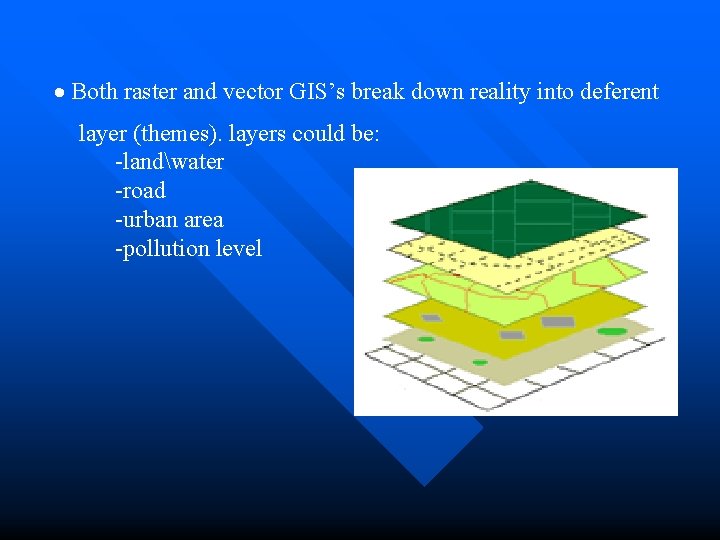
Both raster and vector GIS’s break down reality into deferent layer (themes). layers could be: -landwater -road -urban area -pollution level
Spatial Data: Spatial data consist of maps and which have been prepared either by field surveys or by the interpretation of remotely sensed data. Land Cover map, Geological map, forest type map, village maps are the examples of spatial data. Much of this data are available in analog (paper map) format. Spatial data model requires the transformation of analog map into digital format. Digitization process can be done from a Digitizer or screen digitization process. Spatial data, made up of points, lines, and areas, is at the heart of every GIS. Spatial data forms the locations and shapes of map features such as buildings, streets, or cities (Figure 2. 3).
1. Point data – Points are the features having specific location but without extent in any direction and are represented by a pair of coordinates. Village locations, salt licks location and location of the species sightings are examples of point data. On map point data are represented buy specific symbols. 2. Line data – Line features represent linear features and consist of a series of x y coordinate pairs with discrete beginning and ending points. Line features have length attributers. Rivers, streams, road networks are examples of line data. 3. Polygon data – Polygons are closed features defined by a set of linked lines enclosing an area. Polygons are characterized by area and perimeter. Administrative boundaries, protected area boundaries are examples of polygon data.
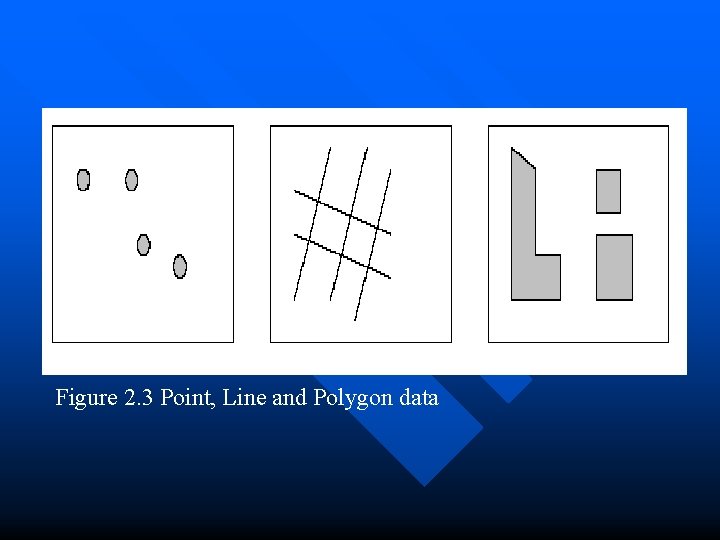
Figure 2. 3 Point, Line and Polygon data
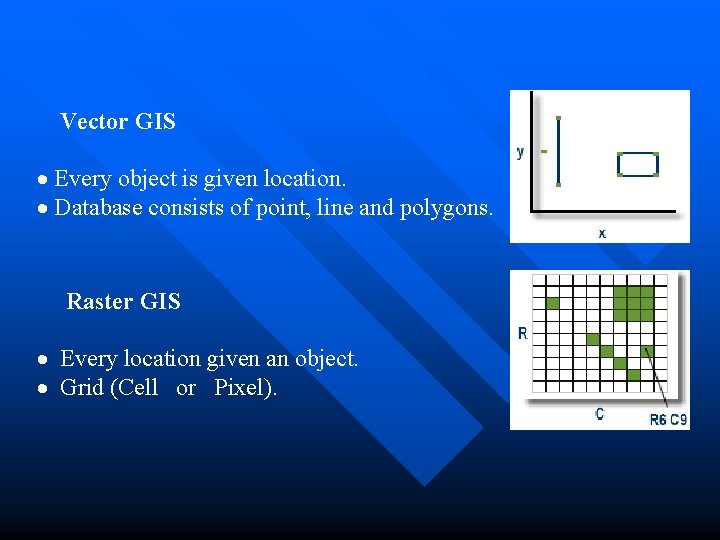
Vector GIS Every object is given location. Database consists of point, line and polygons. Raster GIS Every location given an object. Grid (Cell or Pixel).
GIS Data Sources Before any data are collected, decision must be made about the scale of the study. This decision has important implications for the potential sources of data and collection process. Data for GIS comes from different sources mainly characterized by the type of data that includes; Map Data: The most important data source for GIS application is available maps. Maps of different scales, size, formats, time period and different features (soil, geology, hydrology, physical etc. ) are the major source of GIS database. Generally paper maps are published by a certain agency in every country.
Satellite Images: A classic source of data on natural resources for a region that is remotely sensed data in the form of satellite imageries. This can be used in study and monitor land features, natural resources and dynamic aspects of human activities. Remote sensing data are used to generate thematic information to spatial database in GIS application. (finger 2. 4) Aerial Photography: Aerial photographs are acquired from aerial platforms and another source of GIS database. This data need to be digitally converted into thematic maps and the conversion steps are similar like satellite images. Tabular Data: Attribute data in GIS are mainly tabular data like census records, which are in rows and columns and incorporated as relational table.
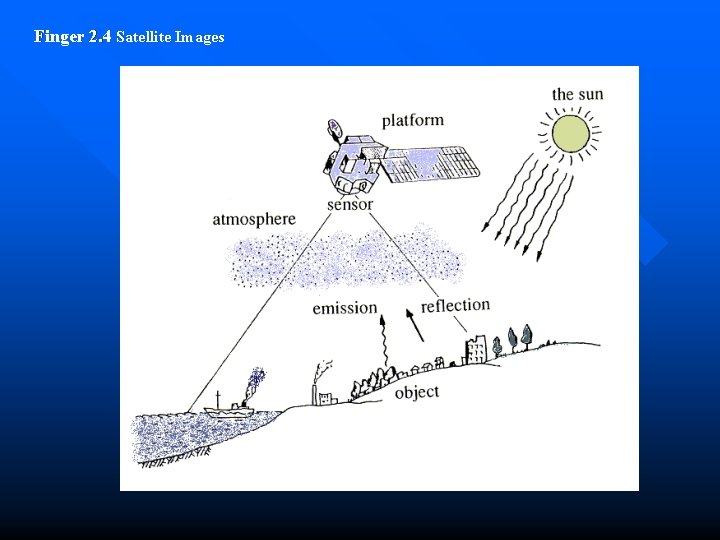
Finger 2. 4 Satellite Images
Survey data and record: The survey is generally carried out to record the status of a resource, like biological survey, soil survey, GPS survey and topographic survey to collect data. Survey data can be incorporated in GIS application for spatial analysis.
- Slides: 32