
CHAPTER 2 BASIC BIOLOGICAL PRINCIPLES LESSON 1 Characteristics
CHAPTER 2 BASIC BIOLOGICAL PRINCIPLES LESSON 1: Characteristics of Life
Lesson Objectives � � � Explain the characteristics o life common to all organisms. Identify the parts that all cells have in common. Compare and contrast prokaryotic and eukaryotic cells.
Introduction � Biology is the branch of science that studies life. � Do you know what life is? � Can you define it? � Do you know the characteristics of life common to all organisms? � Can you describe the characteristics of life that are shared by prokaryotes and eukaryotes?
Characteristics of Life � To be classified as a living thing, an object must have all of the following characteristics: � It consists of cell(s) that are organized. � It grows and develops. � It obtains and uses energy to power all life processes through metabolism. � It goes through reproduction: produces offspring (asexually or sexually). � It has a universal genetic code (DNA). � It has the ability to change over time (evolution). � It maintains homeostasis.
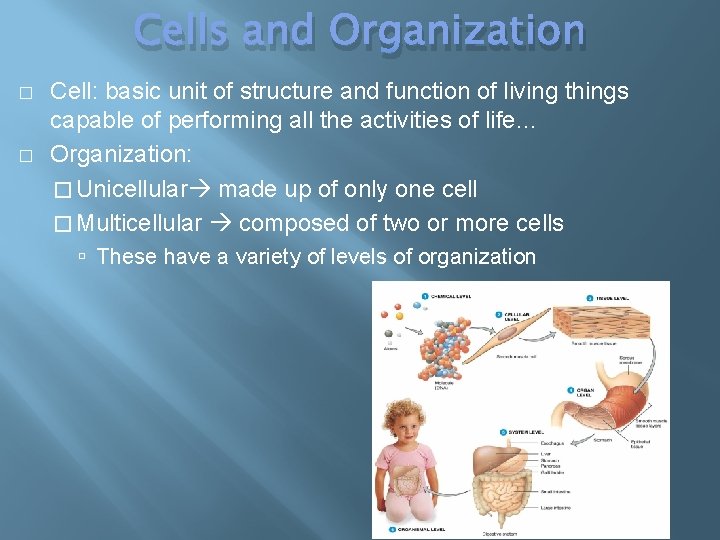
Cells and Organization � � Cell: basic unit of structure and function of living things capable of performing all the activities of life… Organization: � Unicellular made up of only one cell � Multicellular composed of two or more cells These have a variety of levels of organization
Cells and Organization � � Cell: basic unit of structure and function of living things capable of performing all the activities of life… Organization: Unicellular made up of only one cell � Multicellular composed of two or more cells � These have a variety of levels of organization �Organism: highest level; made up of organ systems �Organ systems: made up of organs; groups of specialized parts that carry out a certain function in an organism �Organ: made up of tissues �Tissue: groups of cells that have similar abilities �Cell: covered by membranes, contain genetic information needed for replication, and carry out all cell functions, contain organelles �Organelles: tiny structures that carry out functions necessary for a cell to stay alive; contain biological molecules �Molecules: chemical compounds that provide physical structure, fuel movement, organize energy use, and other cellular functions �Atoms: simplest particle of an element
Growth and Development � Growth: physical change in an organism’s size and weight � � Through cell division and enlargement of cells Development: gene-directed process by which an organism matures � Through cell differentiation (cell becoming different from each other) and specialization (adaptation of a cell to perform a specific function) � Egg to tadpole: http: //www. watchknowlearn. org/Video. aspx? Video. ID=46507&Ca tegory. ID=7633 � Tadpole to Frog: http: //vimeo. com/15865347
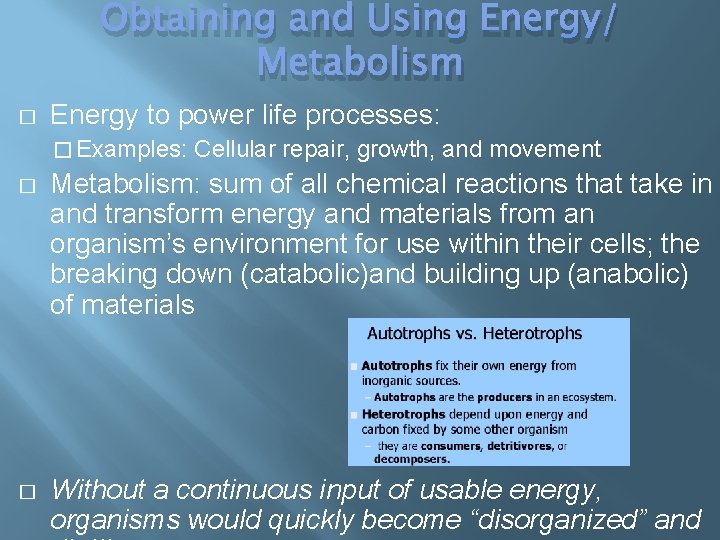
Obtaining and Using Energy/ Metabolism � Energy to power life processes: � Examples: Cellular repair, growth, and movement � Metabolism: sum of all chemical reactions that take in and transform energy and materials from an organism’s environment for use within their cells; the breaking down (catabolic)and building up (anabolic) of materials � Without a continuous input of usable energy, organisms would quickly become “disorganized” and
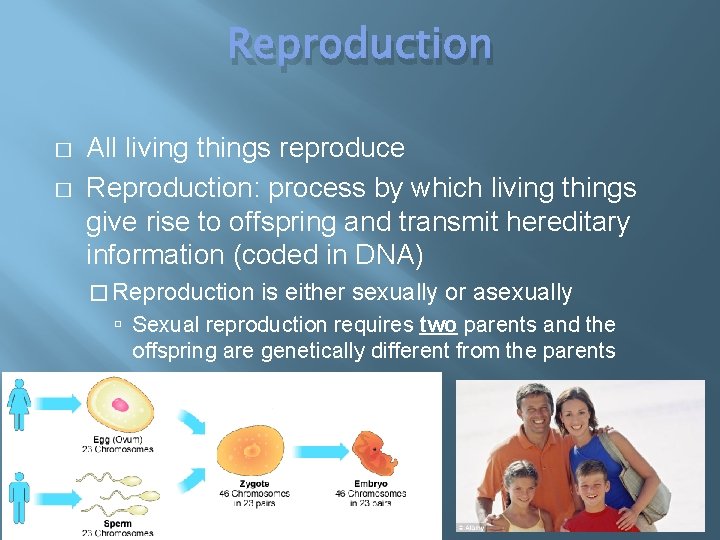
Reproduction � � All living things reproduce Reproduction: process by which living things give rise to offspring and transmit hereditary information (coded in DNA) � Reproduction is either sexually or asexually Sexual reproduction requires two parents and the offspring are genetically different from the parents
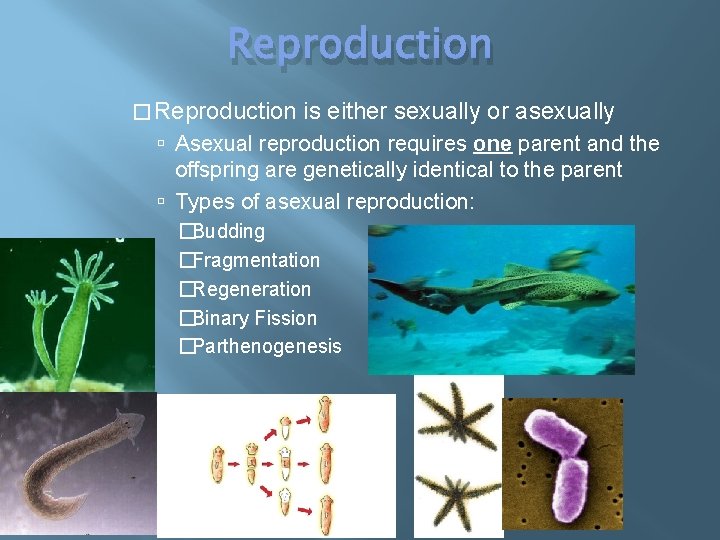
Reproduction � Reproduction is either sexually or asexually Asexual reproduction requires one parent and the offspring are genetically identical to the parent Types of asexual reproduction: �Budding �Fragmentation �Regeneration �Binary Fission �Parthenogenesis
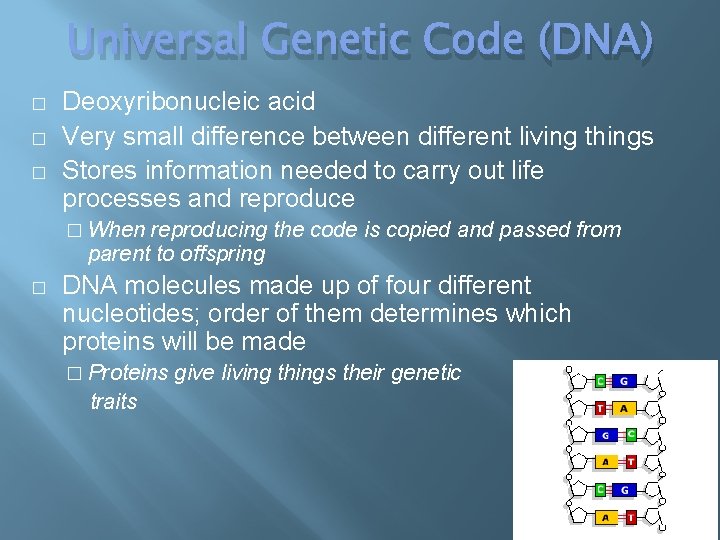
Universal Genetic Code (DNA) � � � Deoxyribonucleic acid Very small difference between different living things Stores information needed to carry out life processes and reproduce � When reproducing the code is copied and passed from parent to offspring � DNA molecules made up of four different nucleotides; order of them determines which proteins will be made � Proteins traits give living things their genetic
Ability to Change Over Time (Evolution) � Evolution occurs through a process called natural selection � Natural selection: some populations of living things produce more offspring than others, so they pass more genes to the next generation than others do Genes carry a variety of characteristics Variety can lead to evolution � Evolution: change in the characteristics of populations of living things over time � Changes arise from genetic mutations which create genetic variations Genetic variations allow a population to adapt Adaptations are characteristics that help a population survive and reproduce (fertile offspring) in a given environment Ability to adapt and survive is known as an organism’s ‘fitness’
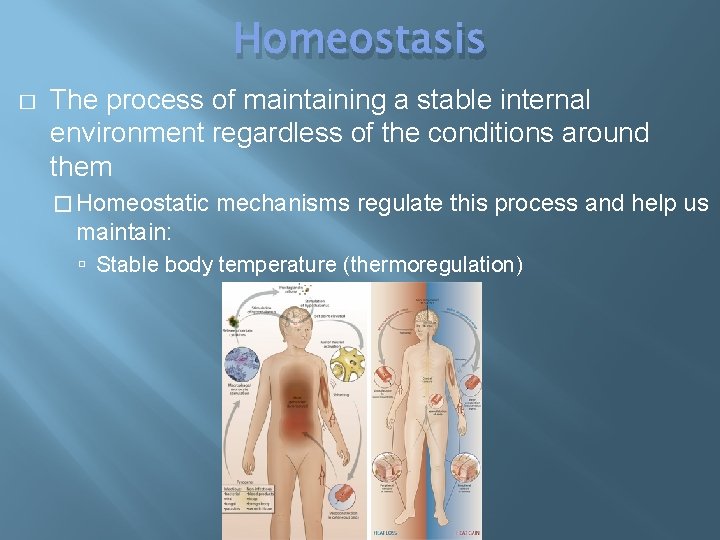
Homeostasis � The process of maintaining a stable internal environment regardless of the conditions around them � Homeostatic mechanisms regulate this process and help us maintain: Stable body temperature (thermoregulation)
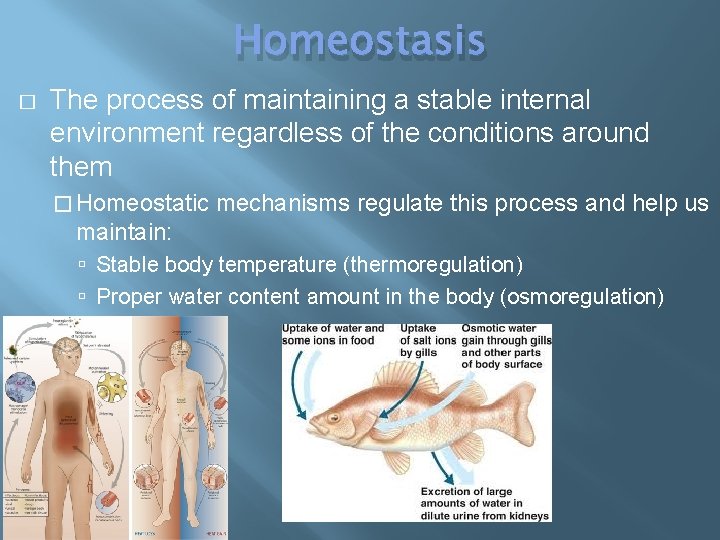
Homeostasis � The process of maintaining a stable internal environment regardless of the conditions around them � Homeostatic mechanisms regulate this process and help us maintain: Stable body temperature (thermoregulation) Proper water content amount in the body (osmoregulation)
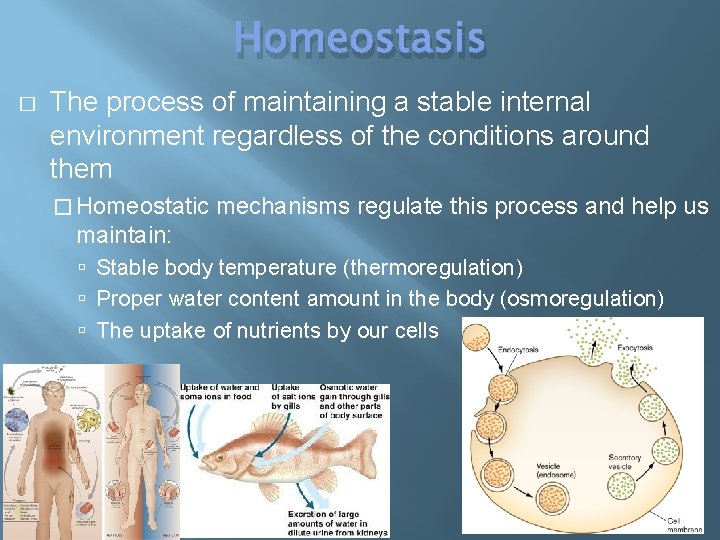
Homeostasis � The process of maintaining a stable internal environment regardless of the conditions around them � Homeostatic mechanisms regulate this process and help us maintain: Stable body temperature (thermoregulation) Proper water content amount in the body (osmoregulation) The uptake of nutrients by our cells
Homeostatic Mechanism’s Feedback Loop � � Feedback loops regulate physiological and behavioral responses. Have three components: receptor, control center, effector � Receptor: monitors and responds to changes in an organism’s environment � Control center: receives information from the receptor, determines if the variable sent by the receptors needs to monitored and adjustments made In humans, the brain is the control center � Effector: receives information from the control center and corrects or made adjustments to maintain homeostasis using either positive or negative feedback loops

Negative Feedback Loop � Reverses a condition
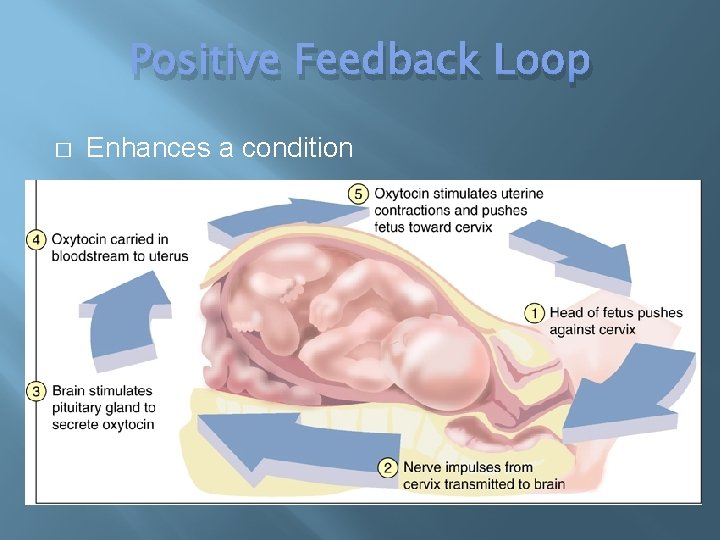
Positive Feedback Loop � Enhances a condition
Lesson Summary � � � � Living things are distinguished from nonliving things on the basis of seven characteristics: cells and organization, growth and development, obtains and use energy (metabolism), reproduction, universal genetic code, ability to change over time (evolution), and homeostasis. A cell is the basic unit of the structure and function of living things capable of performing all the activities of life. Growth is the physical change in an organism’s size and weight, while development is the gene-directed process by which an organism matures. Metabolic processes are the sum of all chemical reactions that take in and transform energy and materials from an organism’s environment. Reproduction is the process by which living things give rise to offspring and transmit hereditary information (coded in DNA, deoxyribonucleic acid). In sexually reproducing organisms hereditary information recombines from two organisms of the same species, producing genetically different offspring. In asexually reproducing organisms hereditary information does not come from different organisms to the offspring, the offspring is genetically identical to the parent. Living things are based on a universal genetic code. Evolution is a change in the characteristics of populations of living things over time; which creates genetic variations enabling a population to adapt to changes in their environments and survive. All living things detect changes in their environment and respond to them. Maintaining stable internal conditions through homeostatic mechanisms is a matter of life or death for living organisms.
LESSON 2: Structural & Functional Relationships at Biological Levels of Organization Lesson Objectives � � � � Describe the diversity of cell shapes, and explain why cells are so small. Identify the parts that all cells have in common. Describe the structure and function of the plasma membrane. Outline the form and function of the nucleus and other organelles. Compare and contrast prokaryotic and eukaryotic cells. Explain how cells are organized in living things. Describe the relationship between structure and function at various levels of biological organization.
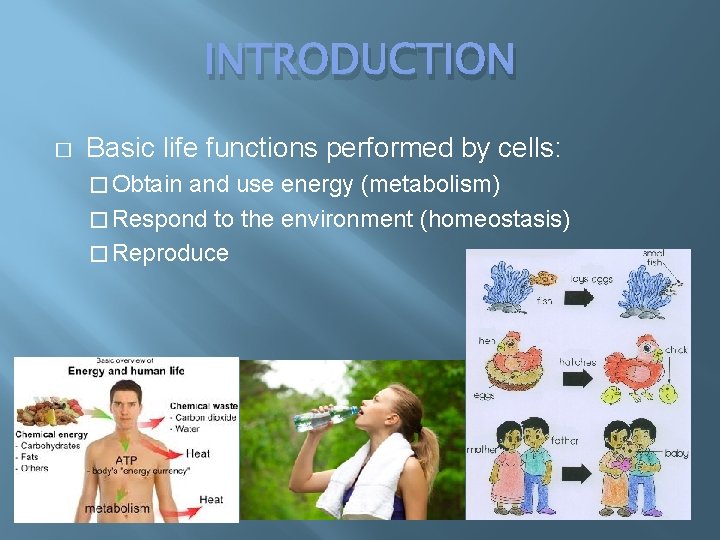
INTRODUCTION � Basic life functions performed by cells: � Obtain and use energy (metabolism) � Respond to the environment (homeostasis) � Reproduce
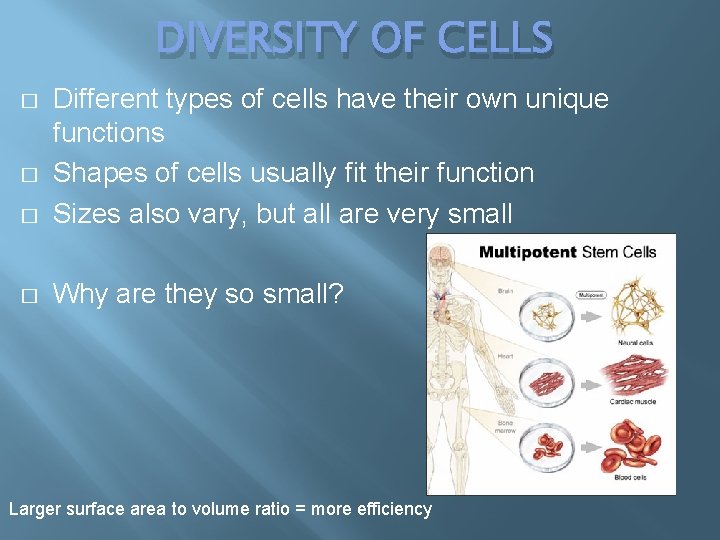
DIVERSITY OF CELLS � Different types of cells have their own unique functions Shapes of cells usually fit their function Sizes also vary, but all are very small � Why are they so small? � � Larger surface area to volume ratio = more efficiency
Cell Size � � � Important aspect cells must be able to quickly pass substances in and out of the cell Need to pass substance limits size of cell Large cells need more nutrients, produce more waste: surface area limits exchange functionality � Large SA: Vol = smaller cell Less volume needs less nutrients, produces less waste; surface area efficient for movement � Small SA: Vol = larger cell More volume needs more nutrients, produce more waste; surface area limits movement, needs not met

Cell Shape � Different functions necessitate different shapes
PARTS OF THE CELL COMMON TO ALL ORGANISMS � Plasma membrane (cell membrane) � Thin coat of phospholipids and protein molecule bilayer � Cytoplasm � All the cellular material inside the plasma membrane; except the nucleus � Ribosomes � Attached to rough ER or free in cytoplasm; site of protein synthesis � DNA � Nucleic acid molecule; contains genetic information to make proteins, carry out life processes, and pass on inheritable traits Commonality shows common evolutionary history…
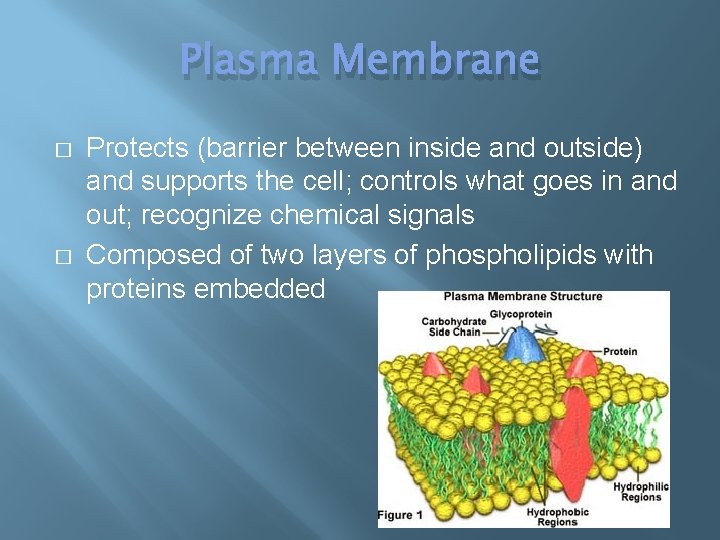
Plasma Membrane � � Protects (barrier between inside and outside) and supports the cell; controls what goes in and out; recognize chemical signals Composed of two layers of phospholipids with proteins embedded
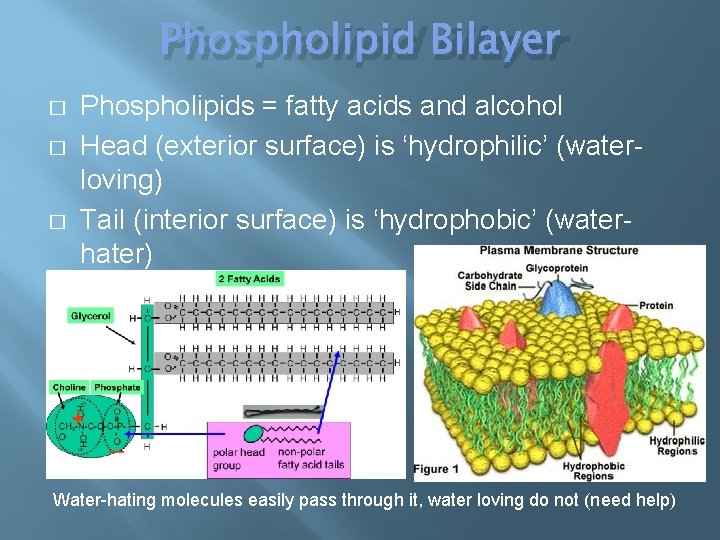
Phospholipid Bilayer � � � Phospholipids = fatty acids and alcohol Head (exterior surface) is ‘hydrophilic’ (waterloving) Tail (interior surface) is ‘hydrophobic’ (waterhater) Water-hating molecules easily pass through it, water loving do not (need help)
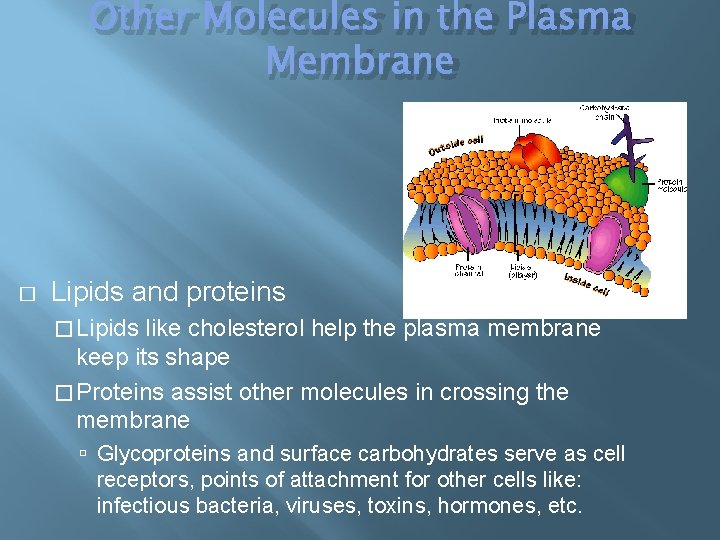
Other Molecules in the Plasma Membrane � Lipids and proteins � Lipids like cholesterol help the plasma membrane keep its shape � Proteins assist other molecules in crossing the membrane Glycoproteins and surface carbohydrates serve as cell receptors, points of attachment for other cells like: infectious bacteria, viruses, toxins, hormones, etc.
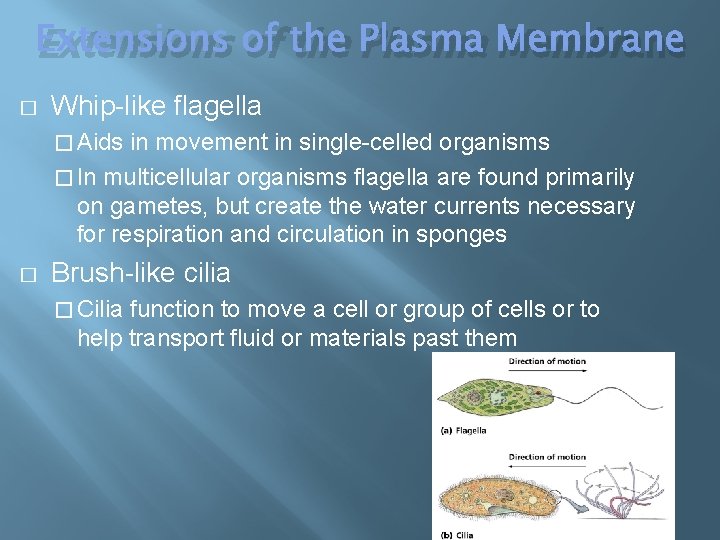
Extensions of the Plasma Membrane � Whip-like flagella � Aids in movement in single-celled organisms � In multicellular organisms flagella are found primarily on gametes, but create the water currents necessary for respiration and circulation in sponges � Brush-like cilia � Cilia function to move a cell or group of cells or to help transport fluid or materials past them
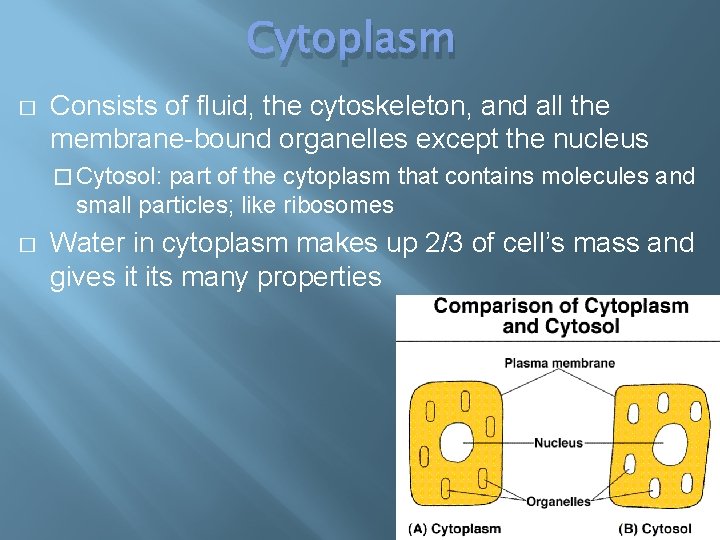
Cytoplasm � Consists of fluid, the cytoskeleton, and all the membrane-bound organelles except the nucleus � Cytosol: part of the cytoplasm that contains molecules and small particles; like ribosomes � Water in cytoplasm makes up 2/3 of cell’s mass and gives it its many properties
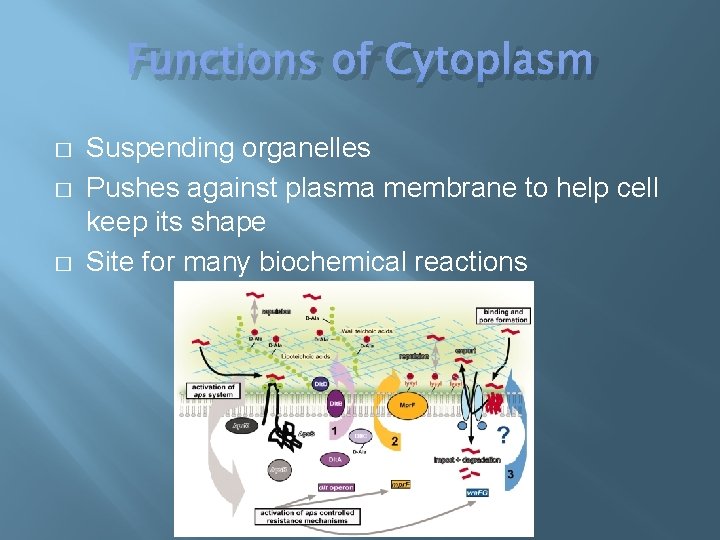
Functions of Cytoplasm � � � Suspending organelles Pushes against plasma membrane to help cell keep its shape Site for many biochemical reactions
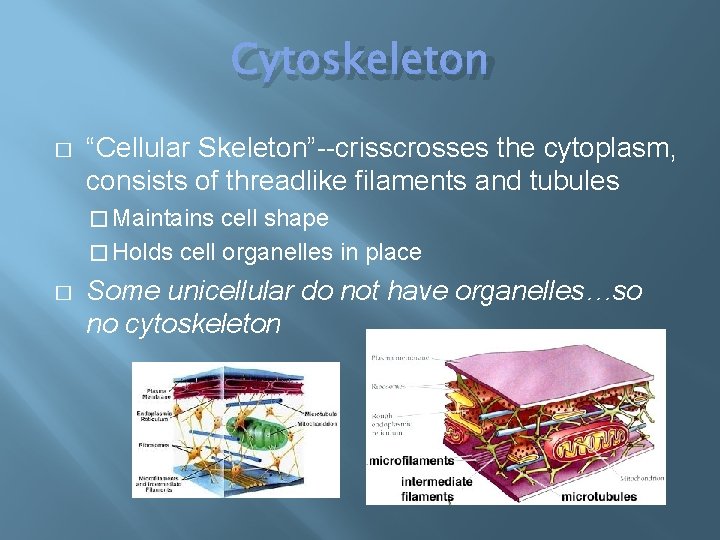
Cytoskeleton � “Cellular Skeleton”--crisscrosses the cytoplasm, consists of threadlike filaments and tubules � Maintains cell shape � Holds cell organelles in place � Some unicellular do not have organelles…so no cytoskeleton
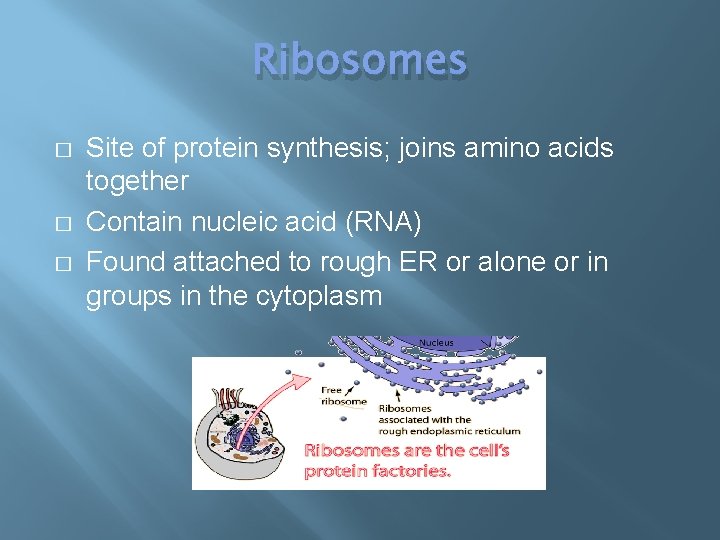
Ribosomes � � � Site of protein synthesis; joins amino acids together Contain nucleic acid (RNA) Found attached to rough ER or alone or in groups in the cytoplasm
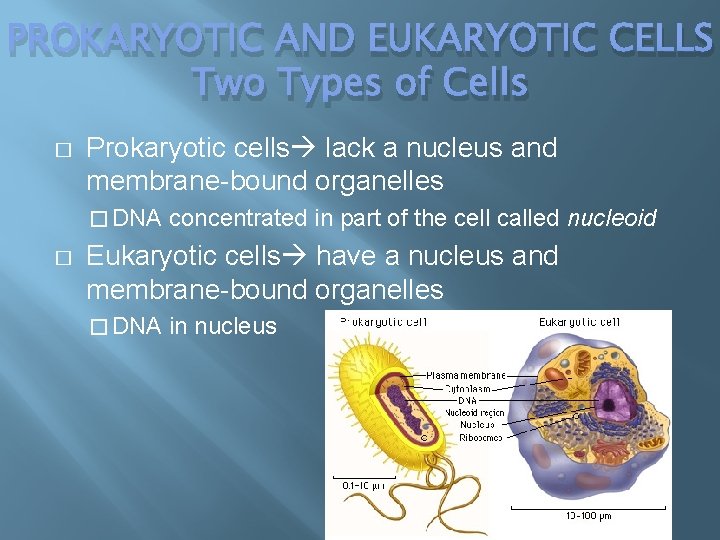
PROKARYOTIC AND EUKARYOTIC CELLS Two Types of Cells � Prokaryotic cells lack a nucleus and membrane-bound organelles � DNA concentrated in part of the cell called nucleoid � Eukaryotic cells have a nucleus and membrane-bound organelles � DNA in nucleus
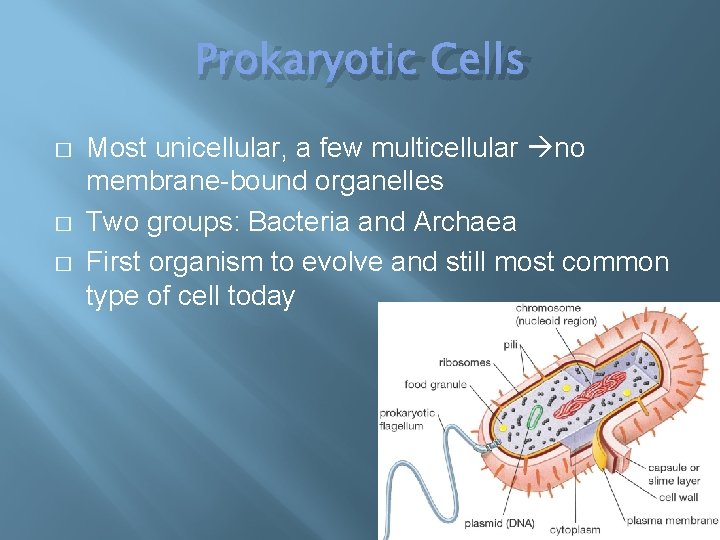
Prokaryotic Cells � � � Most unicellular, a few multicellular no membrane-bound organelles Two groups: Bacteria and Archaea First organism to evolve and still most common type of cell today

Eukaryotic Cells � � Can be unicellular, most multicellular Contain a nucleus, membrane-bound organelles � Organelles allow them to carry out more functions than prokaryotic cells � Larger than prokaryotic cells
Compare and Contrast Prokaryotes versus Eukaryotes � Take a few moments work together on complete the chart on page 7 of your packet…

Characteristic Prokaryote Eukaryote Cells are enclosed by a plasma (cell) membrane Membrane-bound organelles Cells contain DNA Cells contain ribosomes Plants, most fungi, and some protists Have a cell wall Cells contain a nucleus Includes unicellular organisms Includes multicellular organisms All cells are able to perform all functions necessary for life Cells reproduce by binary fission Cells reproduce through the cell cycle (mitosis) and meiosis

Viruses: Prokaryotes or Eukaryotes � What is a virus? � � Is it a cell? � � Tiny particles that may cause disease; like the common cold or the flu No they are not Is it even alive? They contain DNA and not much else, lack parts shared by all cells not considered a living thing � They need a host to reproduce, cannot obtain energy on their own � Scanning electron micrograph of HIV viruses (green) budding from a cultured T-lymphocyte.
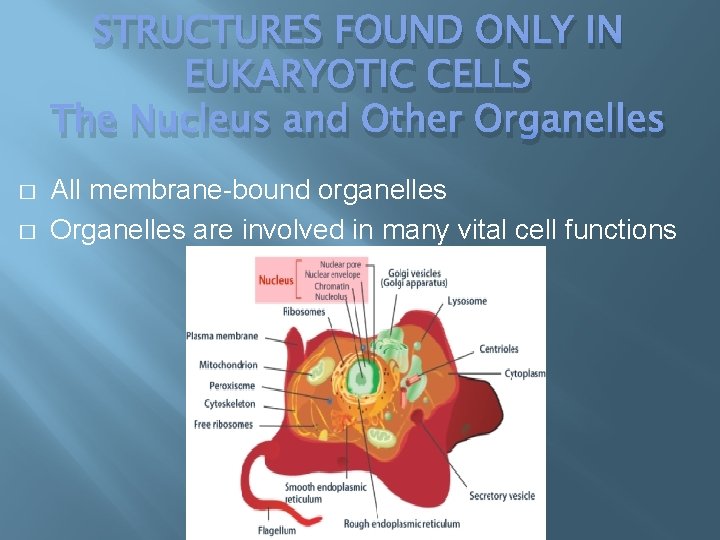
STRUCTURES FOUND ONLY IN EUKARYOTIC CELLS The Nucleus and Other Organelles � � All membrane-bound organelles Organelles are involved in many vital cell functions
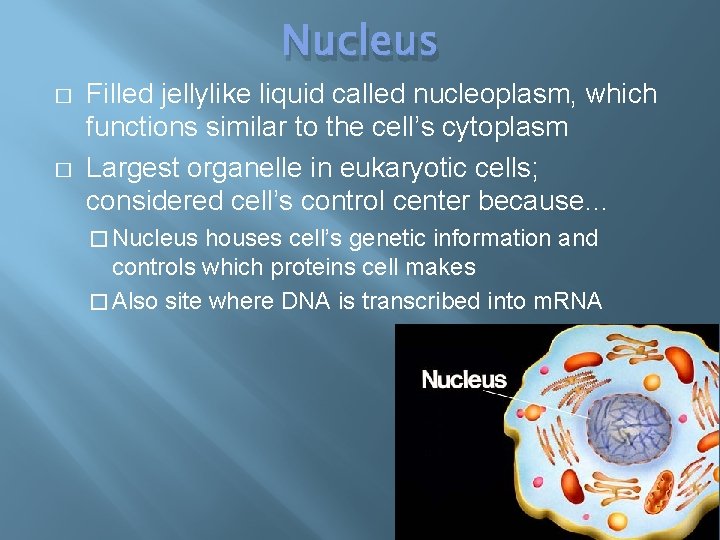
Nucleus � � Filled jellylike liquid called nucleoplasm, which functions similar to the cell’s cytoplasm Largest organelle in eukaryotic cells; considered cell’s control center because… � Nucleus houses cell’s genetic information and controls which proteins cell makes � Also site where DNA is transcribed into m. RNA
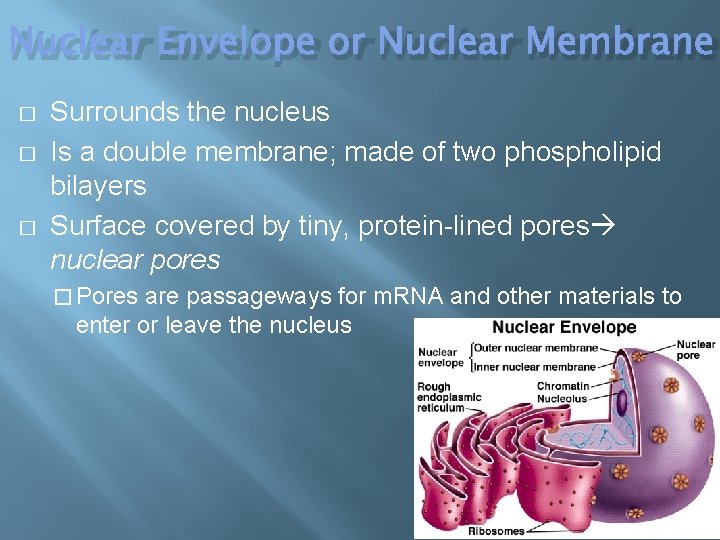
Nuclear Envelope or Nuclear Membrane � � � Surrounds the nucleus Is a double membrane; made of two phospholipid bilayers Surface covered by tiny, protein-lined pores nuclear pores � Pores are passageways for m. RNA and other materials to enter or leave the nucleus
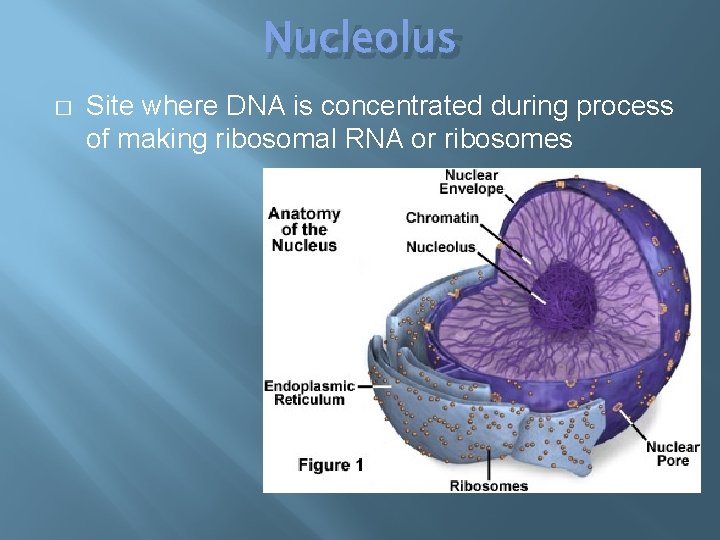
Nucleolus � Site where DNA is concentrated during process of making ribosomal RNA or ribosomes
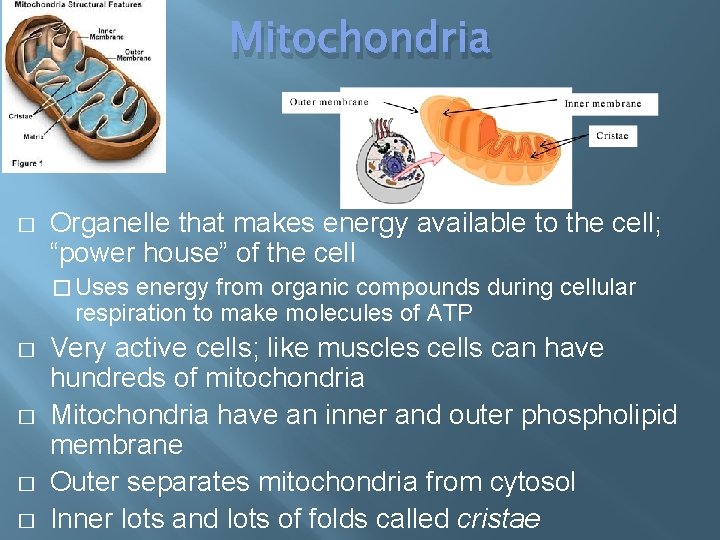
Mitochondria � Organelle that makes energy available to the cell; “power house” of the cell � Uses energy from organic compounds during cellular respiration to make molecules of ATP � � Very active cells; like muscles cells can have hundreds of mitochondria Mitochondria have an inner and outer phospholipid membrane Outer separates mitochondria from cytosol Inner lots and lots of folds called cristae

Mitochondrial DNA � � � Mitochondria have their own DNA Can reproduce through division of preexisting mitochondria Thus theory developed… � Endosymbiotic theory: ancient prokaryotes were engulfed by larger prokaryotic cells, and the two organisms evolved a mutually beneficial endosymbiotic relationship. Smaller prokaryotes got a place to live. Larger prokaryotes got extra energy from the smaller prokaryotes. Smaller prokaryotes became permanent guests of the larger ones as organelles inside them (mitochonria and chloroplast).

ENDOSYMBIOTIC THEORY
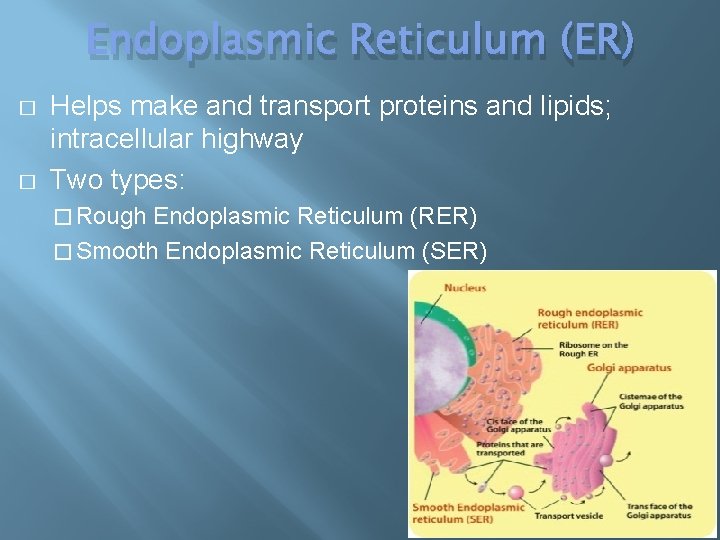
Endoplasmic Reticulum (ER) � � Helps make and transport proteins and lipids; intracellular highway Two types: � Rough Endoplasmic Reticulum (RER) � Smooth Endoplasmic Reticulum (SER)

Rough Endoplasmic Reticulum (RER) � � Studded with ribosomes Produces phospholipids and proteins � Proteins are exported out in tiny vesicles from pinched off ends of RER to their next destination
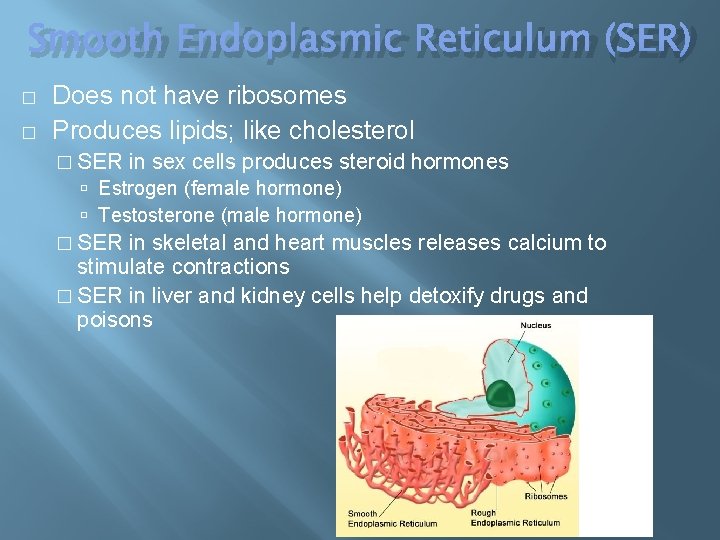
Smooth Endoplasmic Reticulum (SER) � � Does not have ribosomes Produces lipids; like cholesterol � SER in sex cells produces steroid hormones Estrogen (female hormone) Testosterone (male hormone) � SER in skeletal and heart muscles releases calcium to stimulate contractions � SER in liver and kidney cells help detoxify drugs and poisons
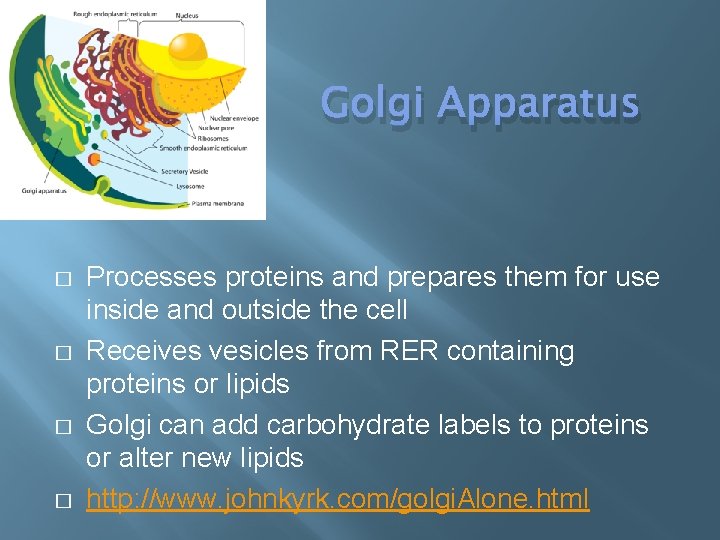
Golgi Apparatus � � Processes proteins and prepares them for use inside and outside the cell Receives vesicles from RER containing proteins or lipids Golgi can add carbohydrate labels to proteins or alter new lipids http: //www. johnkyrk. com/golgi. Alone. html
Vesicles � � Small spherical shaped sacs surrounded by a single membrane; classified by their contents Transport vesicles (eukaryotes only) � Pinch off from membranes of ER and Golgi � Store and transport proteins and lipids to plasma membrane merge point then release them outside the cell � Other vesicles: lysosomes, peroxisomes, glyoxysomes, endosomes, food vacuoles, contractile vesicles
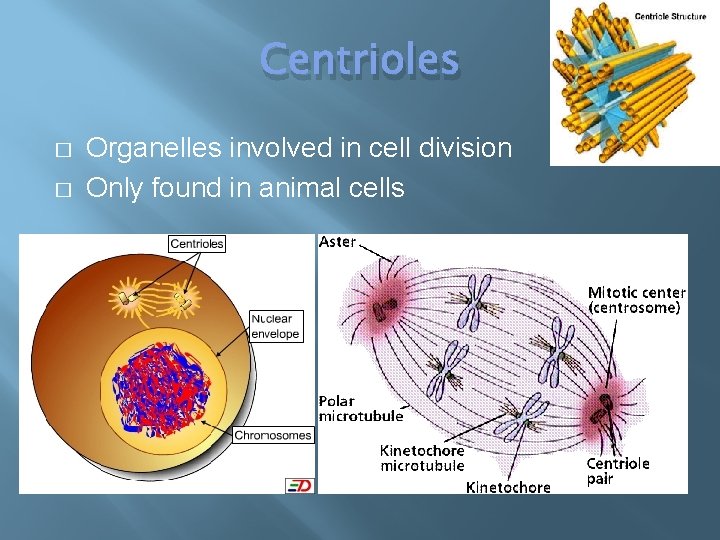
Centrioles � � Organelles involved in cell division Only found in animal cells
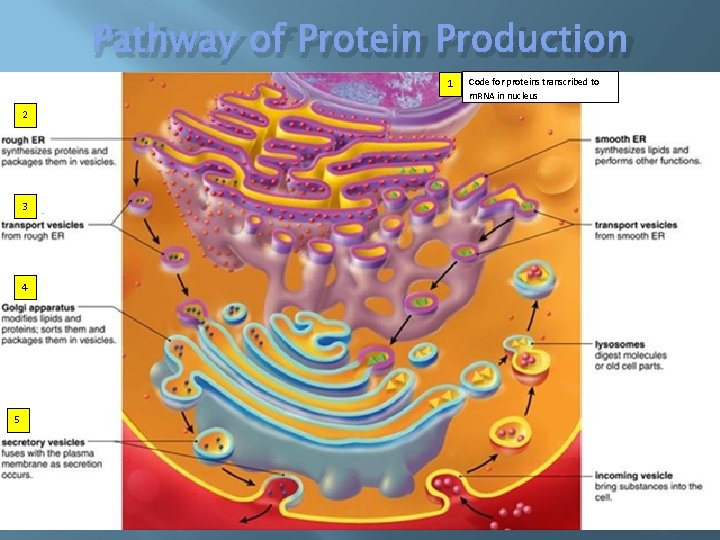
Pathway of Protein Production 1 2 3 4 5 Code for proteins transcribed to m. RNA in nucleus
SPECIAL STUCTURES IN EUKARYOTIC PLANT CELLS � Cell wall: supports and protects the cell � Composed mainly of complex carbohydrates, called cellulose � � Central Vacuole: stores water, enzymes, plant pigments, and salts; maintains plant rigidity Plastids: carry out a variety of functions Chloroplasts: capture sunlight � Chromoplasts: store other pigments � Leucoplasts: store starches; make amino acids �
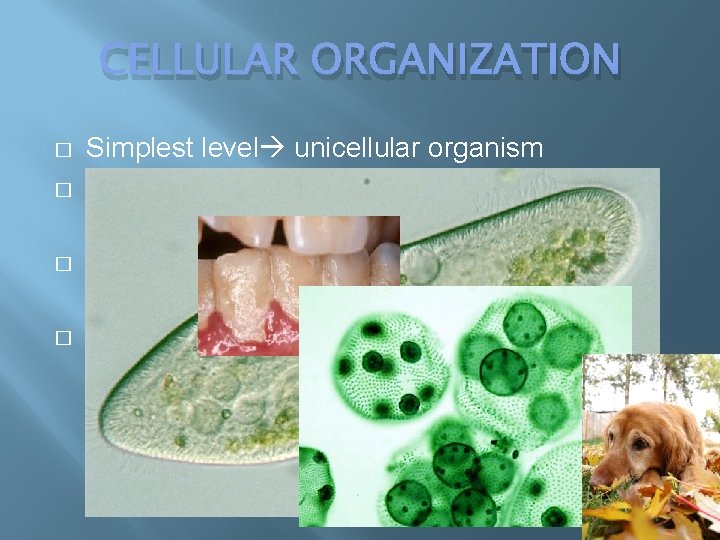
CELLULAR ORGANIZATION � � Simplest level unicellular organism Biofilms thin layer of bacteria that sticks to a surface Colonies organized structure composed of many cells Most complex level multicellular organism
Levels of Organization in Multicellular Organisms � Cell-level: cells are like body systems, have particular structures, perform particular functions � Made up of organelles Organelles are formed from many different molecules � � � Tissue-level Organ system-level Whole organism-level Organelles in unicellular organisms perform all life processes needed to maintain homeostasis
Life Functions of Organ Systems � Nervous and endocrine systems main systems that maintain homeostasis � CELLULAR COMMUNICATION Necessary for maintenance of homeostasis; disruption adversely affects cells HORMONAL REGULATION Hormones are chemical messengers that set off triggers for the production of necessary compounds NERVOUS REGULATION Deduct and respond to stimuli in order to maintain homeostasis � � �
Lesson Summary • All cells are very small because they need to pass substances across their surface. Their small size gives them a relatively large ratio of surface area to volume, facilitating the transfer of substances. The shapes of cells may vary, and a cell’s shape generally suits function. • Cells are diverse, but all cells contain a plasma membrane, cytoplasm, ribosomes, and DNA. • Prokaryotic cells are cells without a nucleus. They are found in single-celled organisms. Eukaryotic cells are cells with a nucleus and other organelles. They are found mainly in multicellular organisms. • The plasma membrane is a phospholipid bilayer that supports and protects a cell and controls what enters and leaves it. • The cytoplasm consists of everything inside the plasma membrane, including watery cytosol and organelles. The cytoplasm suspends the organelles and does other jobs. The cytoskeleton crisscrosses the cytoplasm and gives the cell an internal framework.
Lesson Summary • The nucleus is the largest organelle in a eukaryotic cell and contains most of the cell’s DNA. Other organelles in eukaryotic cells include the mitochondria, endoplasmic reticulum, ribosomes, Golgi apparatus, vesicles, vacuoles, and centrioles (in animal cells only). Each type of organelle has important functions in the cell. • Plant cells have special structures that are not found in animal cells, including a cell wall, a large central vacuole, and organelles called plastids. • Cells can exist independently as single-celled organisms or with other cells as multicellular organisms. Cells of a multicellular organism can be organized at the level of organelles, cells, tissues, organ systems, and organisms. • The biological levels of organization found in multi-cellular organisms work together to maintain homeostasis in living things. • Organelles present in unicellular organisms often act in the same manner as the tissues and systems found in multi-cellular organisms. The organelles in unicellular organisms perform all of the life processes needed to maintain homeostasis, by using specialized cell organelles.
- Slides: 59