
Chapter 2 B Chemical Processes of Life Physical
Chapter 2 B: Chemical Processes of Life
Physical Changes • First- what is a solution? – A homogenous mixture of one or more substances within another substance – Examples? • Salt water • Tea • Coffee
Parts of a Solution • What are the parts of a solution? – 2 parts: – Solute • Substance that is dissolved – Solvent • Substance the solute is dissolved in • How do we know how much is in it? – This is called the concentration- the ratio of the solute to the solvent! • Example- 10% saline= 10 g of salt to 100 m. L of water
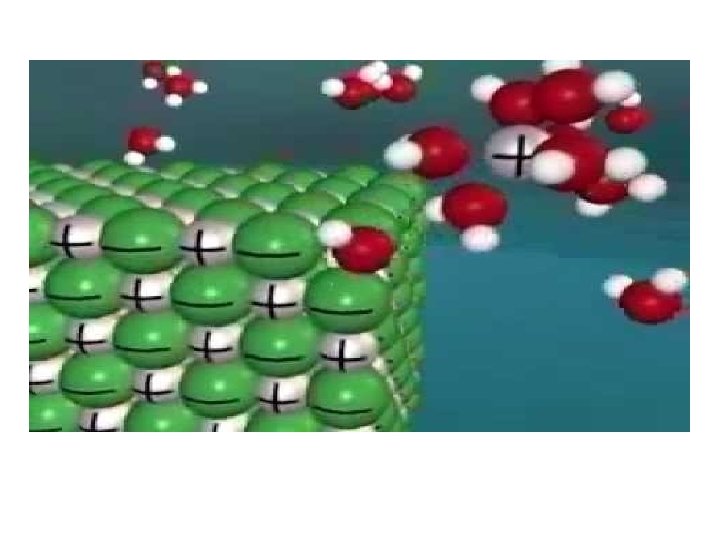
Water- the universal solvent • Water is the universal solvent because almost everything can be dissolved in it • Why? – Water is a polar molecule - it has hydrogen and oxygen. The hydrogens have a small positive charge while the oxygen has a small negative charge, so it pulls other molecules apart easily – Hydrogen Bonding- NOT a hydrogen bonding with something else! This is a hydrogen being attracted to another water molecule that has a negative charge.
Diffusion • Both are important processes • What is diffusion? – It is the movement of molecules from higher concentration of a substance to lower concentration of a substance – When does it stop? • When equilibrium (there is no higher or lower concentrations) is reached
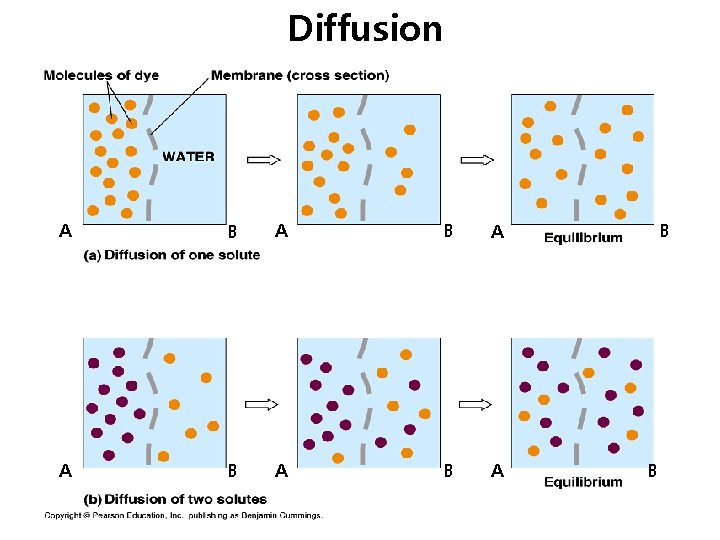
Diffusion A B A B A B B
Diffusion • Two special terms are needed to understand diffusion: – Concentration gradient • Difference between the numbers of molecules of one substance in 2 places • Example- in the middle picture, there is more dye in A then B, so A has a high concentration gradient • Example 2 - in the middle picture, which side has a high orange concentration gradient? purple concentration gradient? – Orange: right, Purple: Left
Diffusion – Diffusion Pressure • based on the concentration gradient • If the concentration gradient is high (far from 0), then the diffusion pressure is high. • The higher the diffusion pressure, the faster diffusion happens
- Slides: 9