
Chapter 2 Atoms and Elements The Atomic Number
Chapter 2 Atoms and Elements The Atomic Number and Mass Number Isotopes Visit www. worldofteaching. com Lecture. PLUS Timberlake For 100’s of free powerpoints 1

Atomic Theory l Atoms are building blocks of elements l Similar atoms in each element l Different from atoms of other elements l Two or more different atoms bond in simple ratios to form compounds Lecture. PLUS Timberlake 2
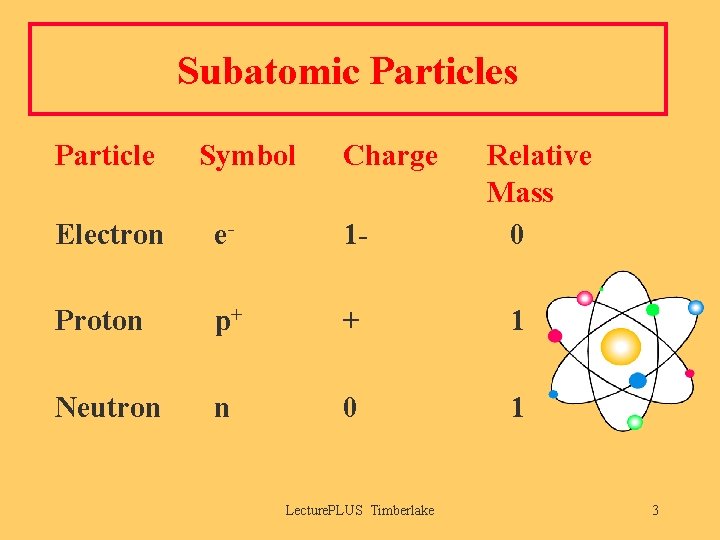
Subatomic Particles Particle Symbol Charge Relative Mass 0 Electron e- 1 - Proton p+ + 1 Neutron n 0 1 Lecture. PLUS Timberlake 3
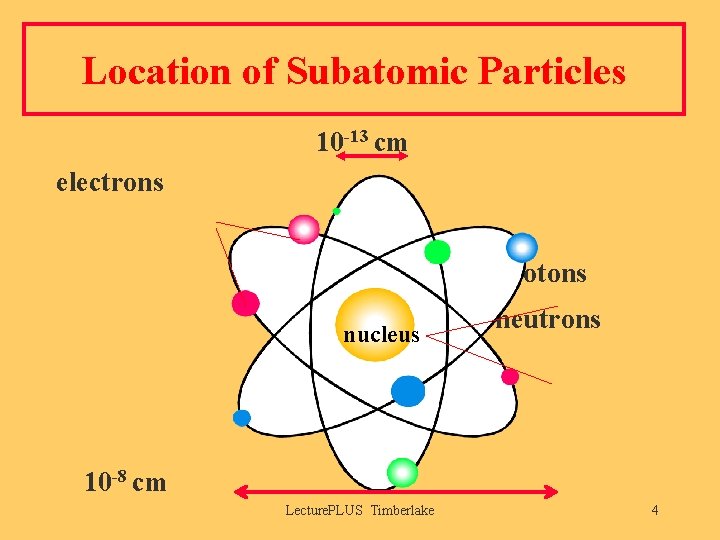
Location of Subatomic Particles 10 -13 cm electrons protons nucleus neutrons 10 -8 cm Lecture. PLUS Timberlake 4
Atomic Number Counts the number of protons in an atom Lecture. PLUS Timberlake 5
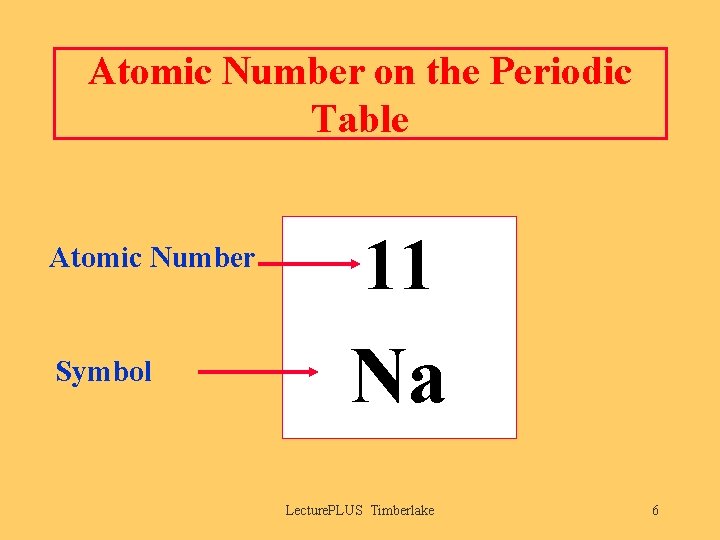
Atomic Number on the Periodic Table Atomic Number Symbol 11 Na Lecture. PLUS Timberlake 6
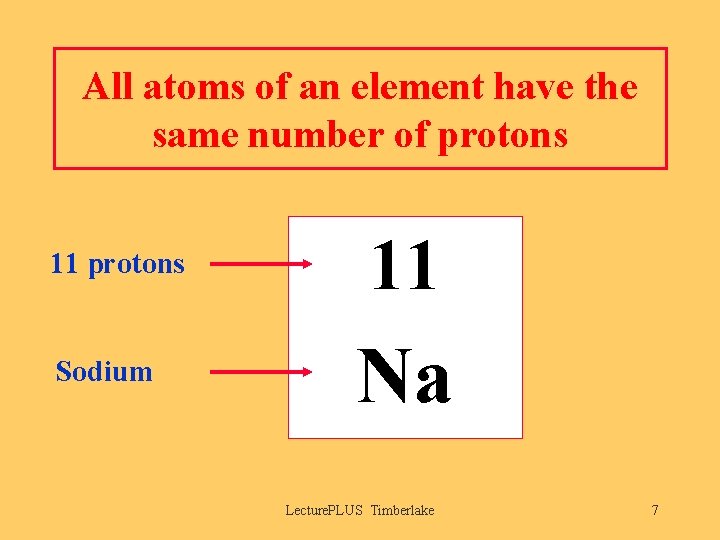
All atoms of an element have the same number of protons 11 protons Sodium 11 Na Lecture. PLUS Timberlake 7
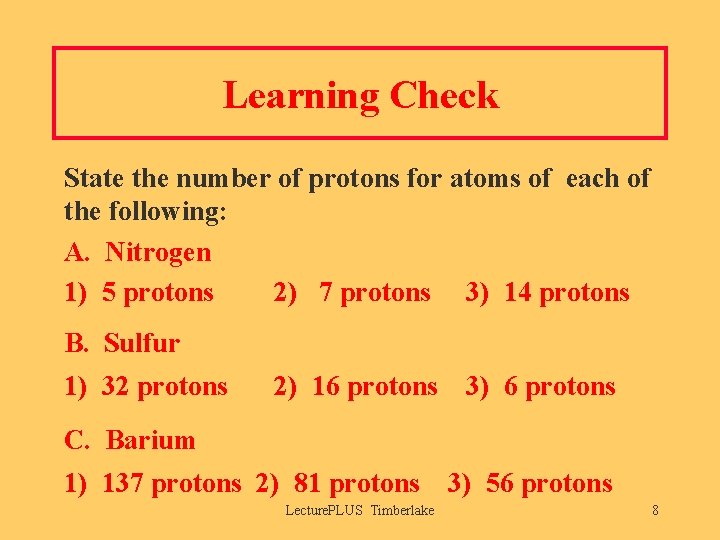
Learning Check State the number of protons for atoms of each of the following: A. Nitrogen 1) 5 protons 2) 7 protons 3) 14 protons B. Sulfur 1) 32 protons 2) 16 protons 3) 6 protons C. Barium 1) 137 protons 2) 81 protons Lecture. PLUS Timberlake 3) 56 protons 8
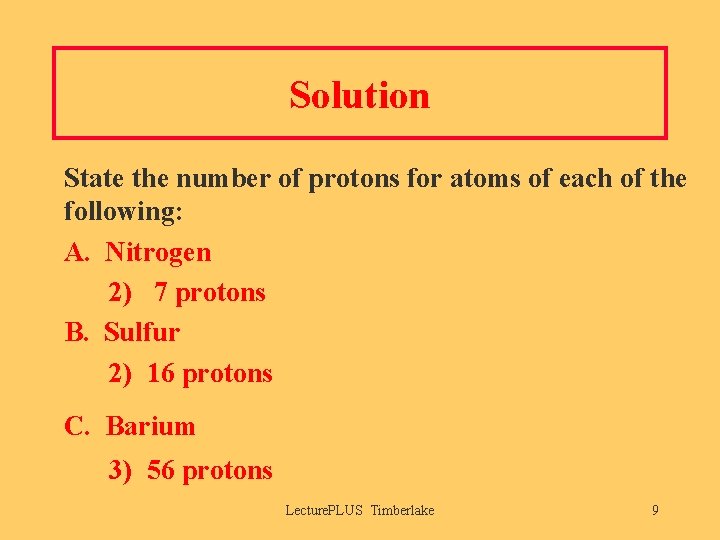
Solution State the number of protons for atoms of each of the following: A. Nitrogen 2) 7 protons B. Sulfur 2) 16 protons C. Barium 3) 56 protons Lecture. PLUS Timberlake 9
Mass Number Counts the number of protons and neutrons in an atom Lecture. PLUS Timberlake 10

Atomic Symbols l Show the mass number and atomic number l Give the symbol of the element mass number 23 Na sodium-23 atomic number 11 Lecture. PLUS Timberlake 11
Number of Electrons l An atom is neutral l The net charge is zero l Number of protons = Number of electrons l Atomic number = Number of electrons Lecture. PLUS Timberlake 12
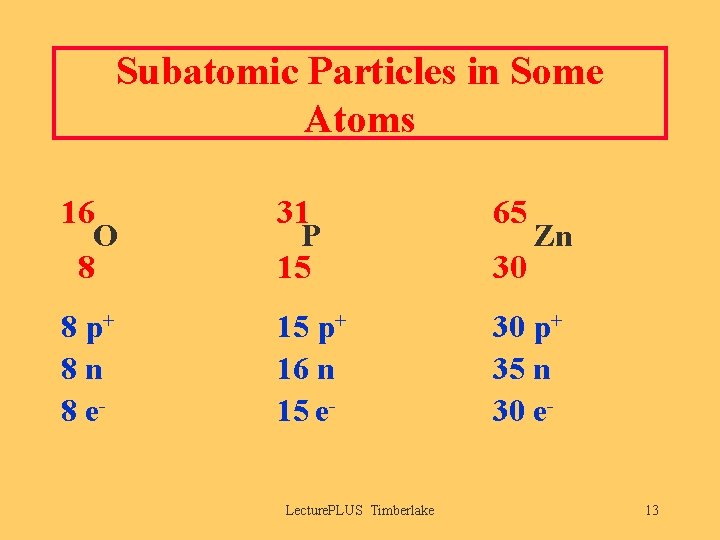
Subatomic Particles in Some Atoms 16 O 8 31 P 15 65 8 p+ 8 n 8 e- 15 p+ 16 n 15 e- 30 p+ 35 n 30 e- Lecture. PLUS Timberlake 30 Zn 13
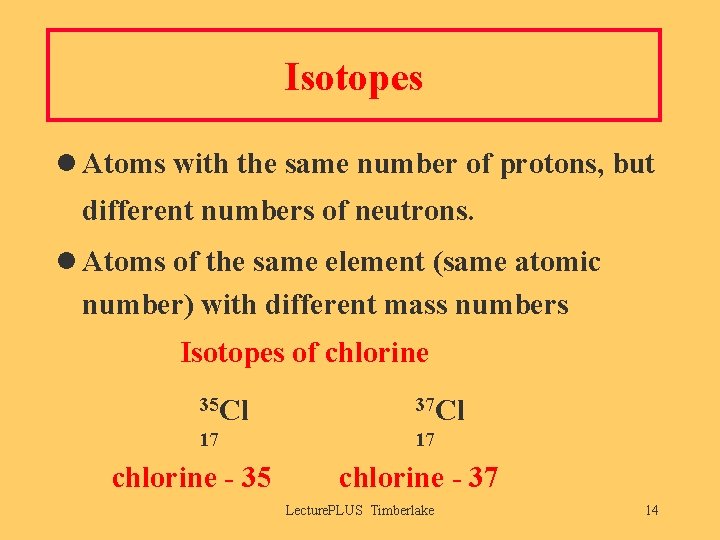
Isotopes l Atoms with the same number of protons, but different numbers of neutrons. l Atoms of the same element (same atomic number) with different mass numbers Isotopes of chlorine 35 Cl 37 Cl 17 17 chlorine - 35 chlorine - 37 Lecture. PLUS Timberlake 14
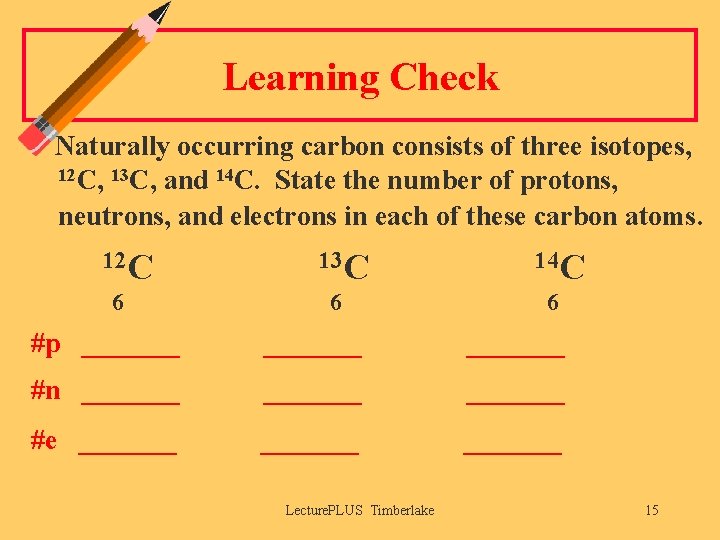
Learning Check Naturally occurring carbon consists of three isotopes, 12 C, 13 C, and 14 C. State the number of protons, neutrons, and electrons in each of these carbon atoms. 12 C 6 13 C 6 14 C 6 #p _______ #n _______ #e _______ Lecture. PLUS Timberlake 15
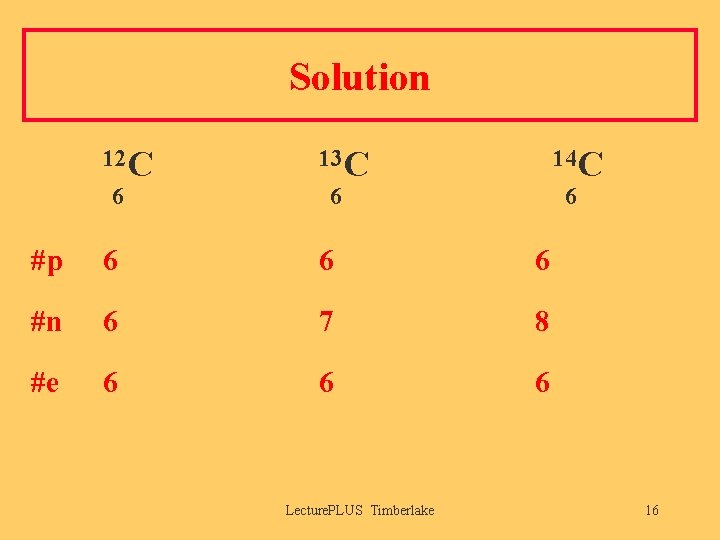
Solution 12 C 13 C #p 6 6 6 #n 6 7 8 #e 6 6 14 C 6 Lecture. PLUS Timberlake 6 16
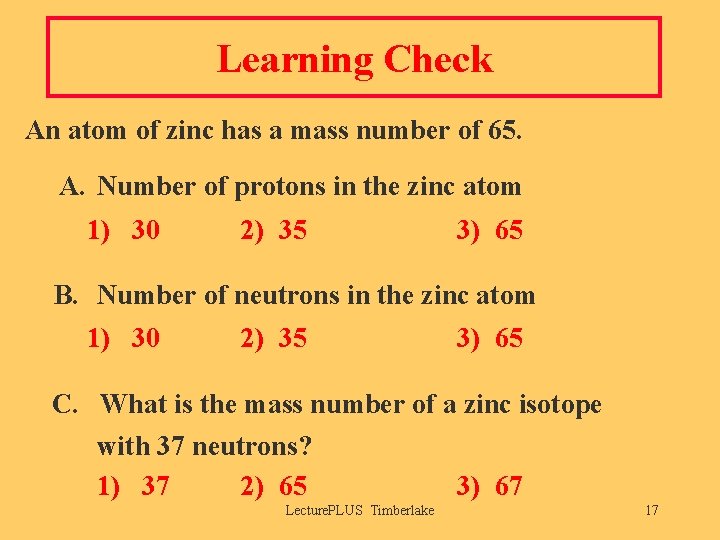
Learning Check An atom of zinc has a mass number of 65. A. Number of protons in the zinc atom 1) 30 2) 35 3) 65 B. Number of neutrons in the zinc atom 1) 30 2) 35 3) 65 C. What is the mass number of a zinc isotope with 37 neutrons? 1) 37 2) 65 3) 67 Lecture. PLUS Timberlake 17
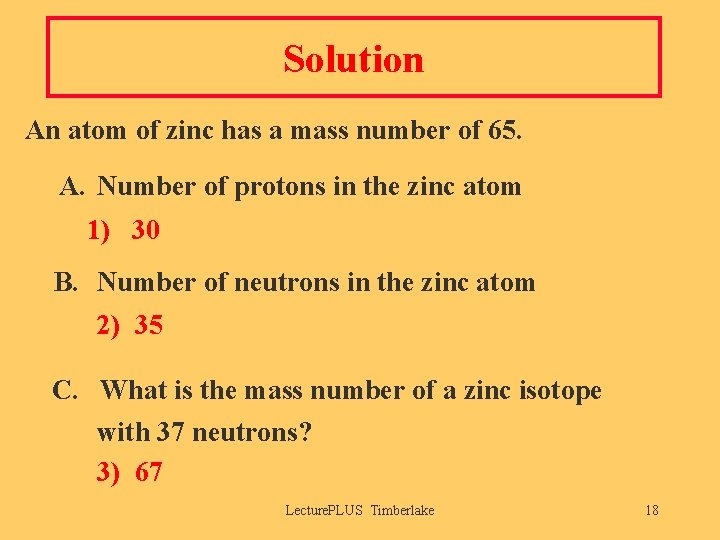
Solution An atom of zinc has a mass number of 65. A. Number of protons in the zinc atom 1) 30 B. Number of neutrons in the zinc atom 2) 35 C. What is the mass number of a zinc isotope with 37 neutrons? 3) 67 Lecture. PLUS Timberlake 18
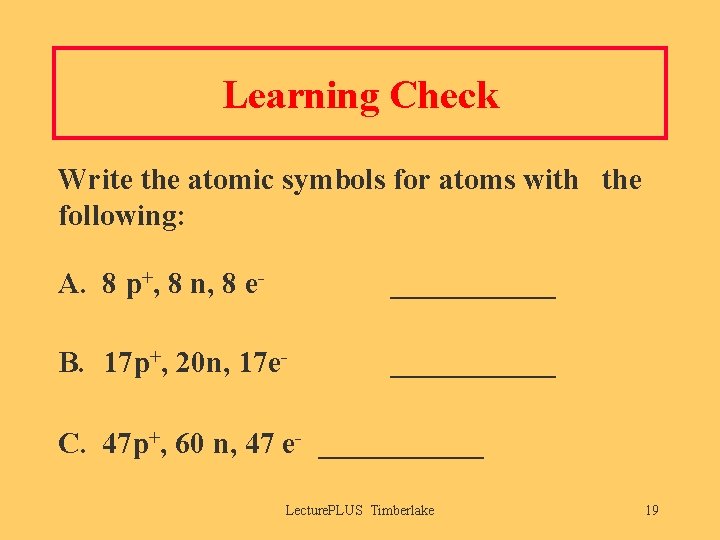
Learning Check Write the atomic symbols for atoms with the following: A. 8 p+, 8 n, 8 e- ______ B. 17 p+, 20 n, 17 e- ______ C. 47 p+, 60 n, 47 e- ______ Lecture. PLUS Timberlake 19
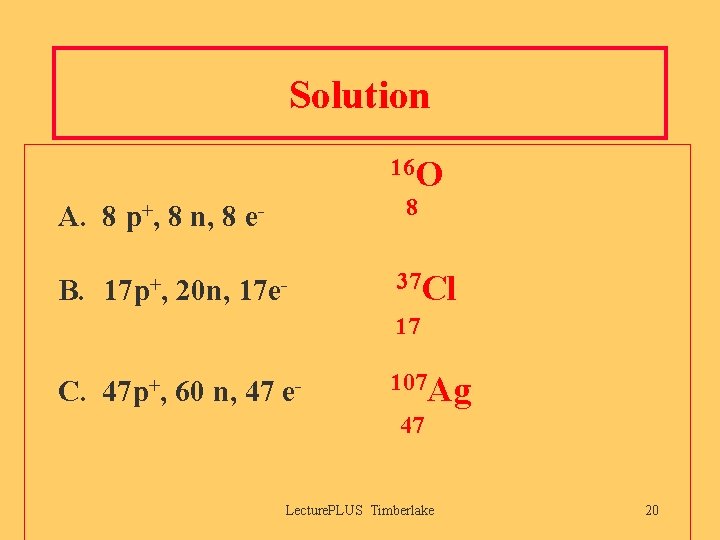
Solution 16 O 8 A. 8 p+, 8 n, 8 e. B. 17 p+, 20 n, 17 e- 37 Cl 17 C. 47 p+, 60 n, 47 e- 107 Ag 47 Lecture. PLUS Timberlake 20

Atomic Mass on the Periodic Table Atomic Number Symbol Atomic Mass 11 Na 22. 99 Lecture. PLUS Timberlake 21
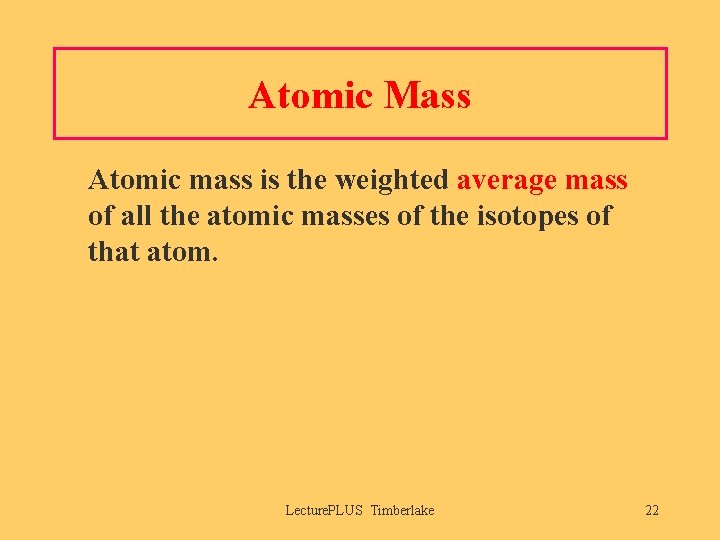
Atomic Mass Atomic mass is the weighted average mass of all the atomic masses of the isotopes of that atom. Lecture. PLUS Timberlake 22
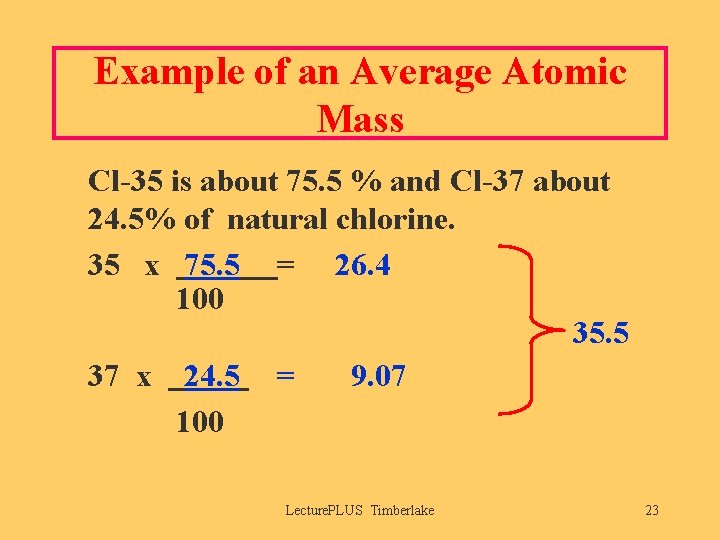
Example of an Average Atomic Mass Cl-35 is about 75. 5 % and Cl-37 about 24. 5% of natural chlorine. 35 x 75. 5 = 26. 4 100 35. 5 37 x 24. 5 = 9. 07 100 Lecture. PLUS Timberlake 23
- Slides: 23