
Chapter 2 An Introduction to Organic Compounds Functions
- Slides: 24
Chapter 2 An Introduction to Organic Compounds Functions, Nomenclature, Physical Properties, and Conformations Adapted from Profs. Turro & Breslow, Columbia University and Prof. Irene Lee, Case Western Reserve University
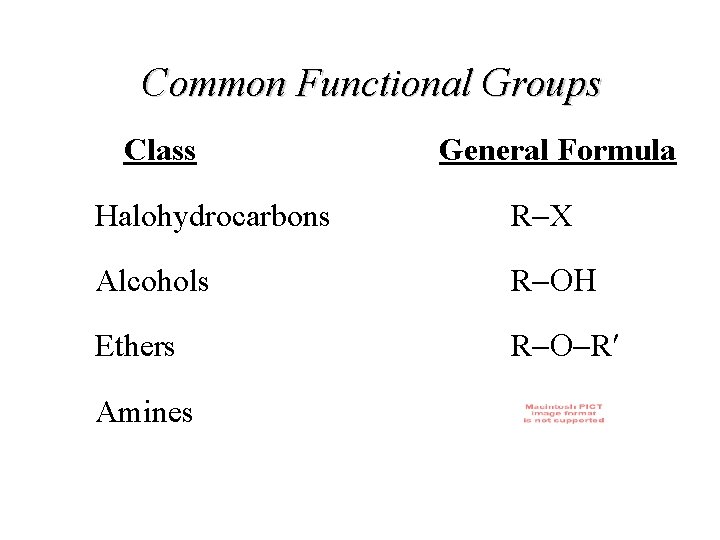
Common Functional Groups Class General Formula Halohydrocarbons R X Alcohols R Ethers R R Amines
Nomenclature of Alkyl Halides In the IUPAC system, alkyl halides are named as substituted alkanes
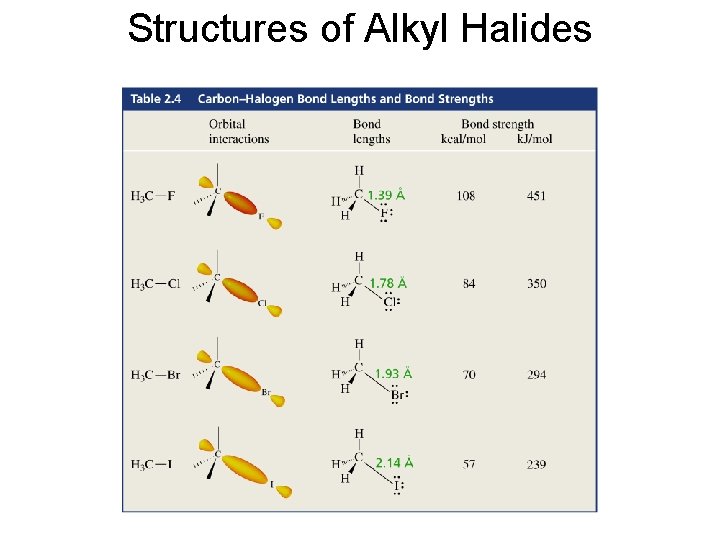
Structures of Alkyl Halides
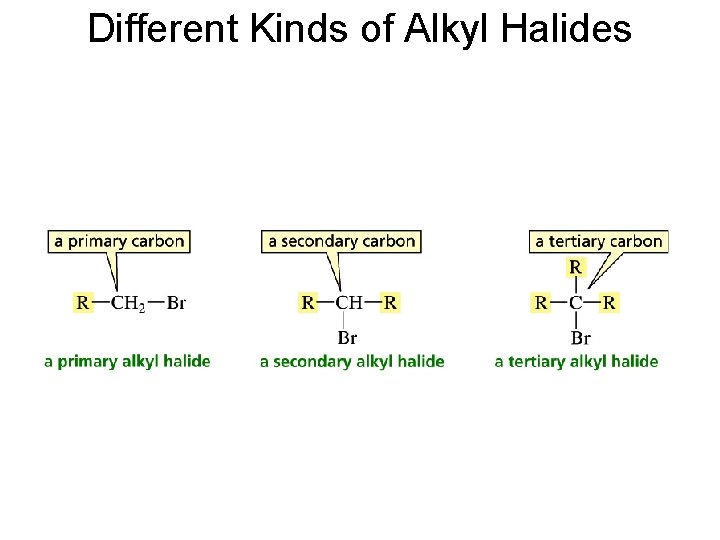
Different Kinds of Alkyl Halides
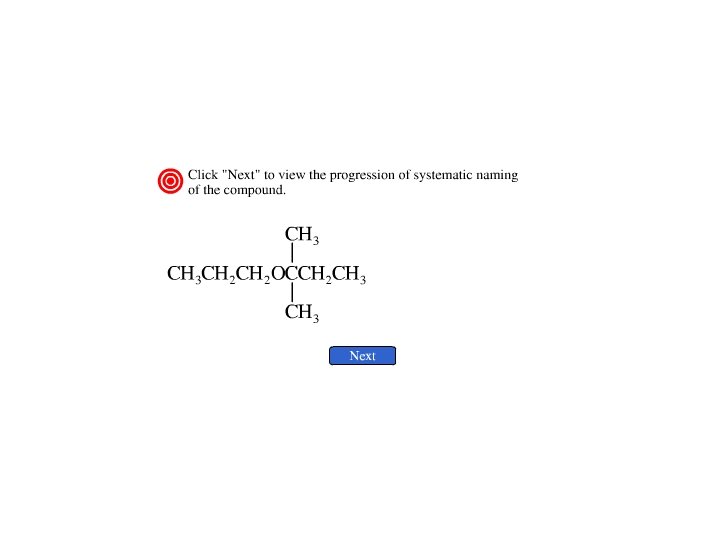
Nomenclature of Ethers ? ? ? As substituents:
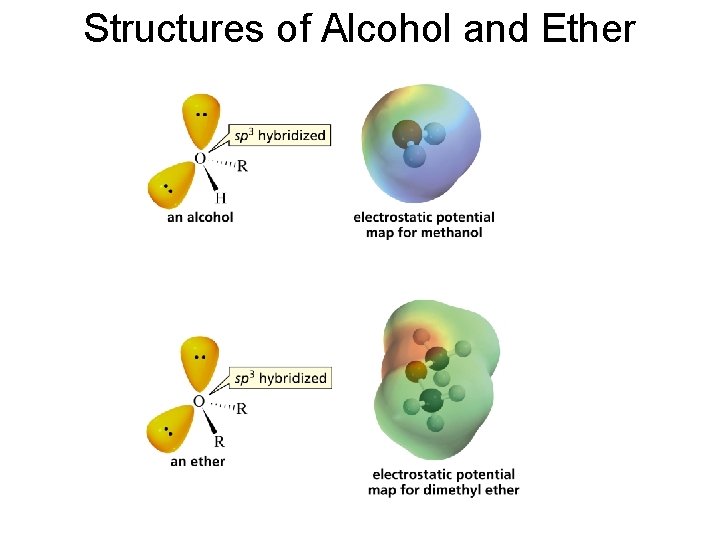
Structures of Alcohol and Ether
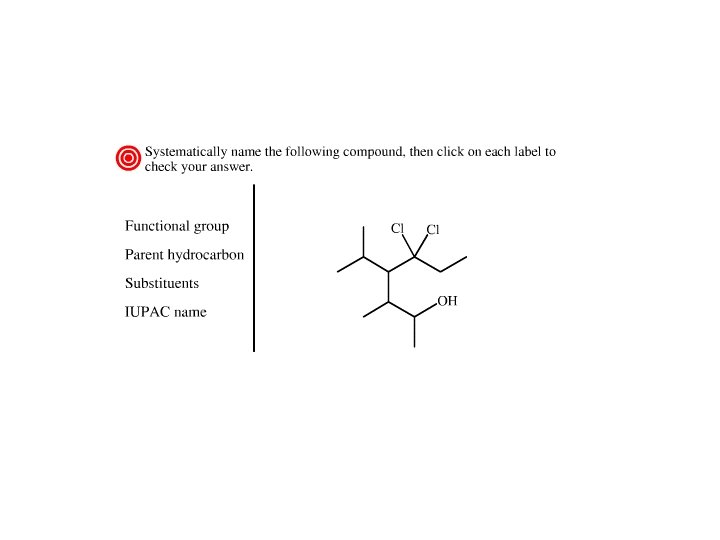
Nomenclature of Alcohols • In an alcohol, the OH is a functional group • A functional group is the center of reactivity in a molecule 1. Determine the parent hydrocarbon containing the functional group
2. The functional group suffix should get the lowest number 3. When there is both a functional group suffix and a substituent, the functional group suffix gets the lowest number
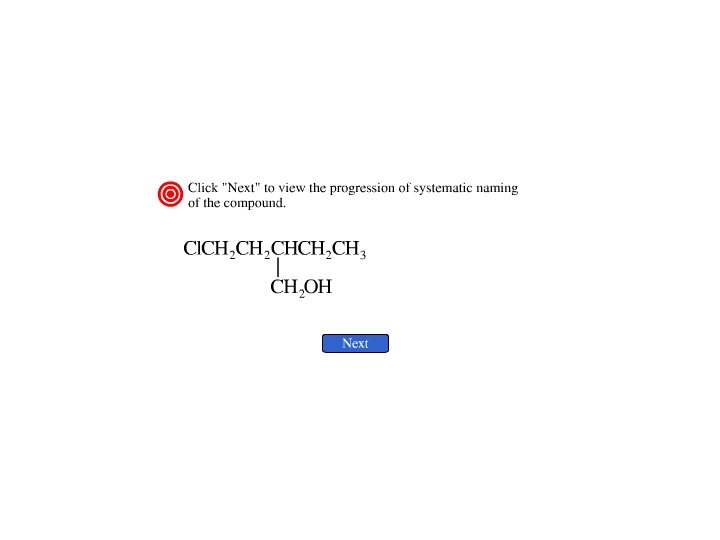
4. If there is more than one substituent, the substituents are cited in alphabetical order
Nomenclature of Amines • The substituents are listed in alphabetical order and a number or an “N” is assigned to each one
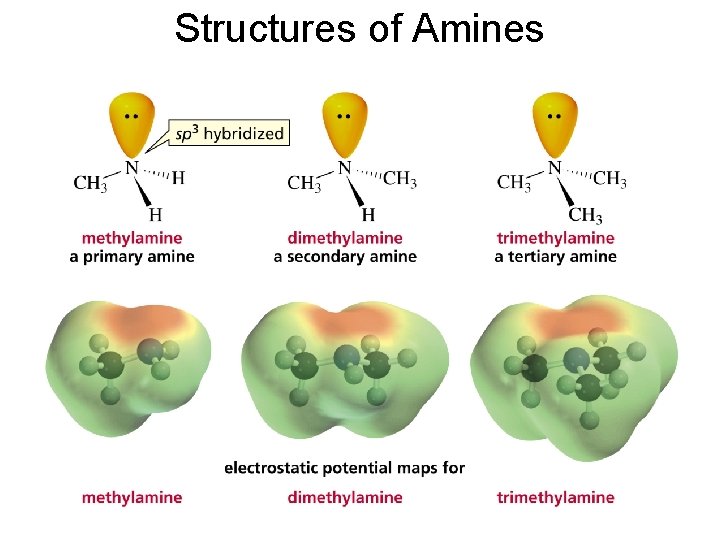
Structures of Amines
Naming Quaternary Ammonium Salts
Other Common Functional Groups Class Aldehydes Ketones Carboxylic Acids Esters Amides General Formula
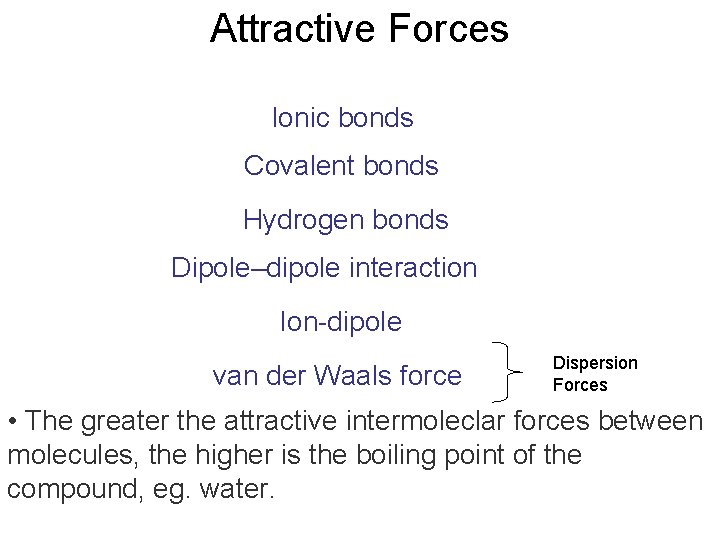
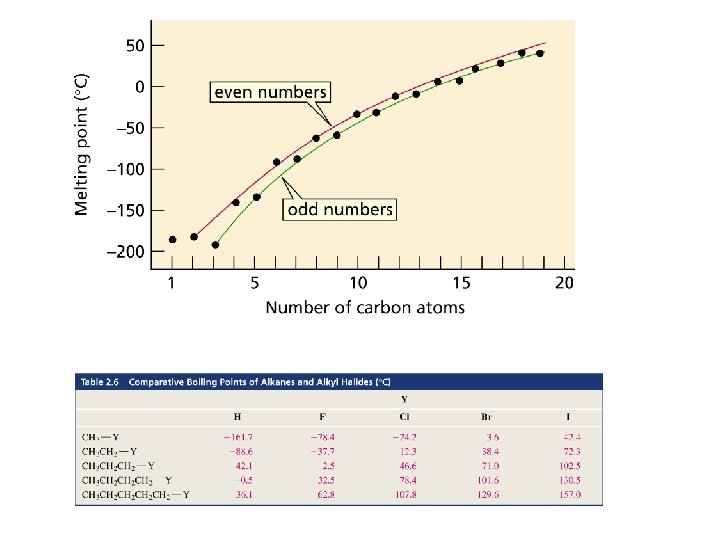
Attractive Forces Ionic bonds Covalent bonds Hydrogen bonds Dipole–dipole interaction Ion-dipole van der Waals force Dispersion Forces • The greater the attractive intermoleclar forces between molecules, the higher is the boiling point of the compound, eg. water.
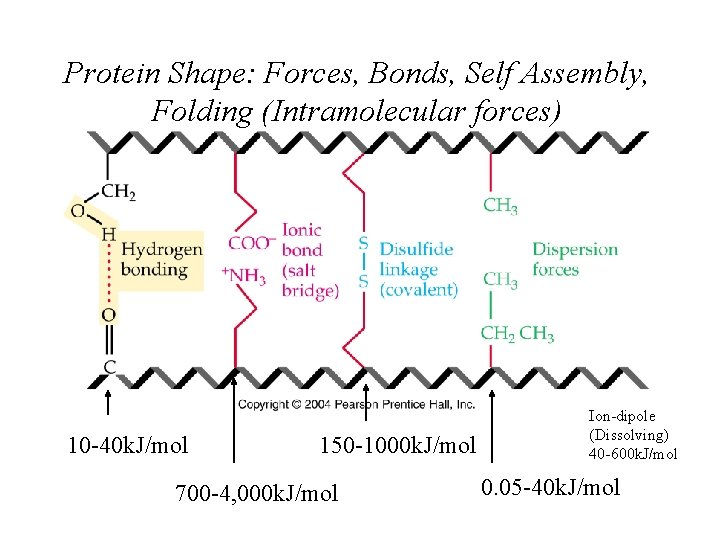
Protein Shape: Forces, Bonds, Self Assembly, Folding (Intramolecular forces) 10 -40 k. J/mol 150 -1000 k. J/mol 700 -4, 000 k. J/mol Ion-dipole (Dissolving) 40 -600 k. J/mol 0. 05 -40 k. J/mol
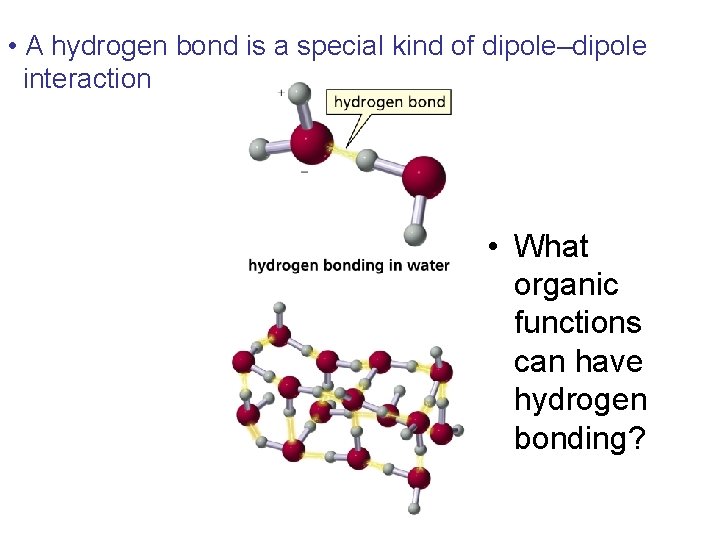
• A hydrogen bond is a special kind of dipole–dipole interaction • What organic functions can have hydrogen bonding?
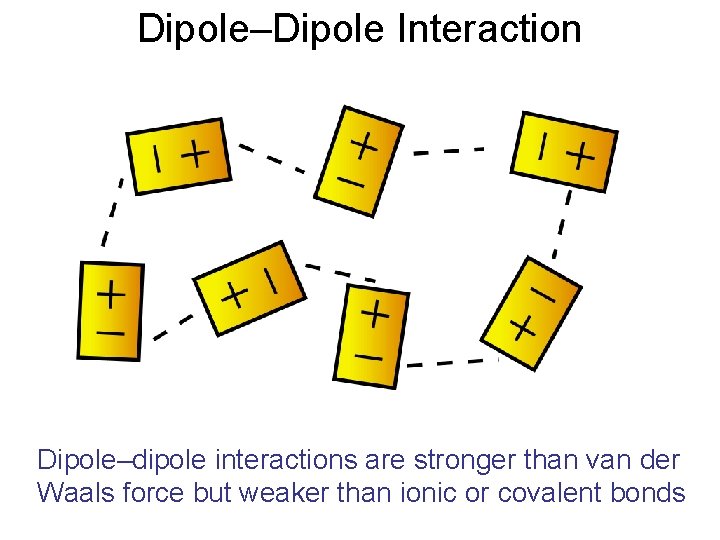
Dipole–Dipole Interaction Dipole–dipole interactions are stronger than van der Waals force but weaker than ionic or covalent bonds
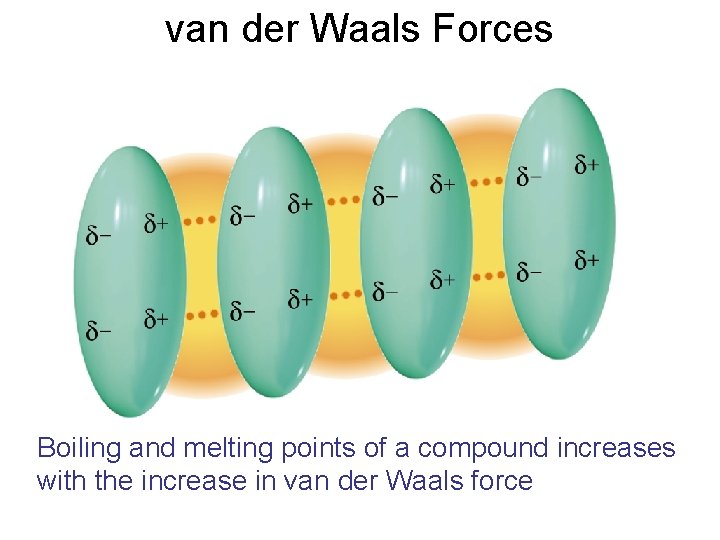
van der Waals Forces Boiling and melting points of a compound increases with the increase in van der Waals force
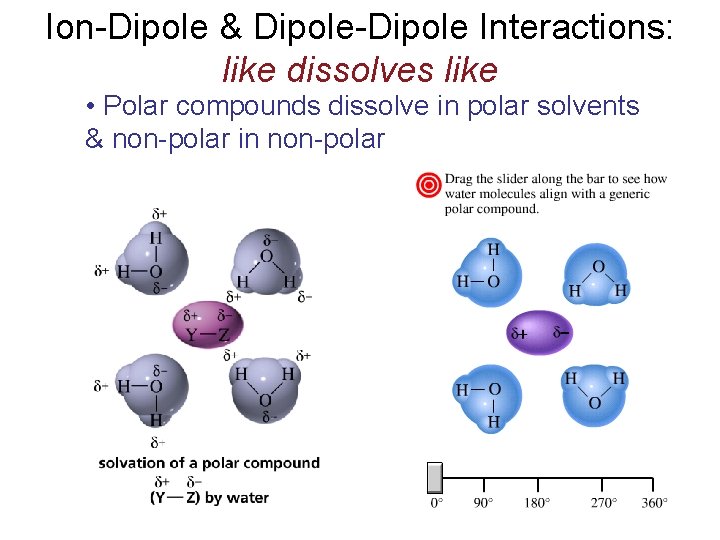
Ion-Dipole & Dipole-Dipole Interactions: like dissolves like • Polar compounds dissolve in polar solvents & non-polar in non-polar