
Chapter 2 Acids and Bases Central to Understanding
Chapter 2 Acids and Bases: Central to Understanding Organic Chemistry Paula Yurkanis Bruice University of California, Santa Barbara © 2017 Pearson Education, Inc.
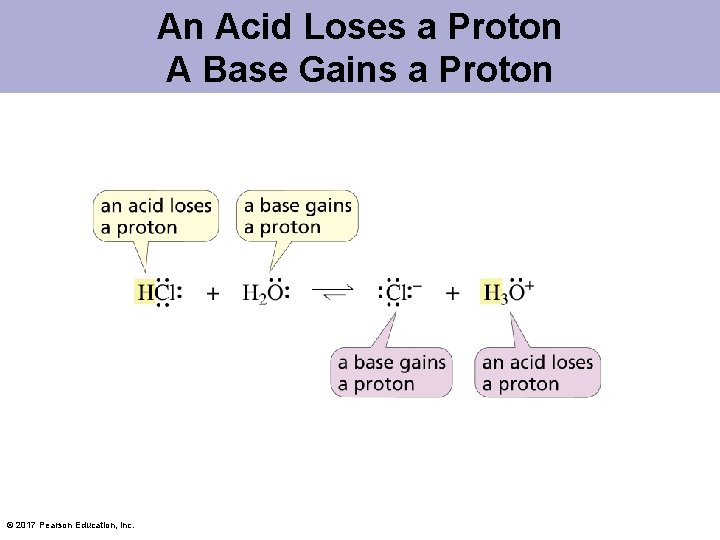
An Acid Loses a Proton A Base Gains a Proton © 2017 Pearson Education, Inc.
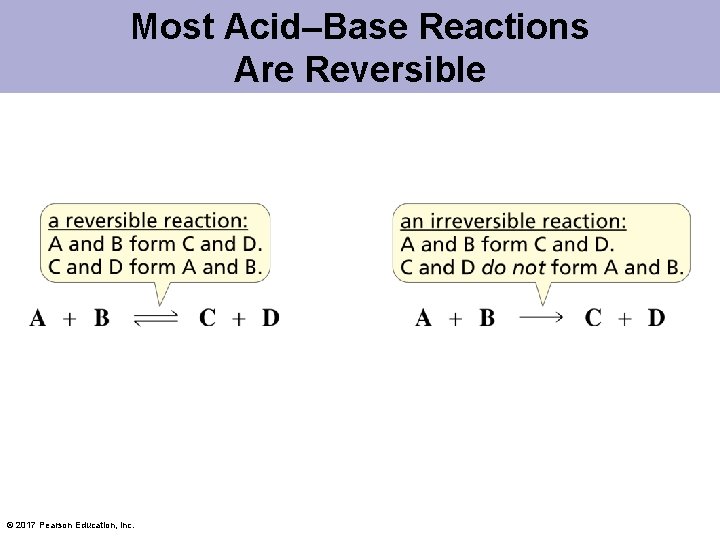
Most Acid–Base Reactions Are Reversible © 2017 Pearson Education, Inc.
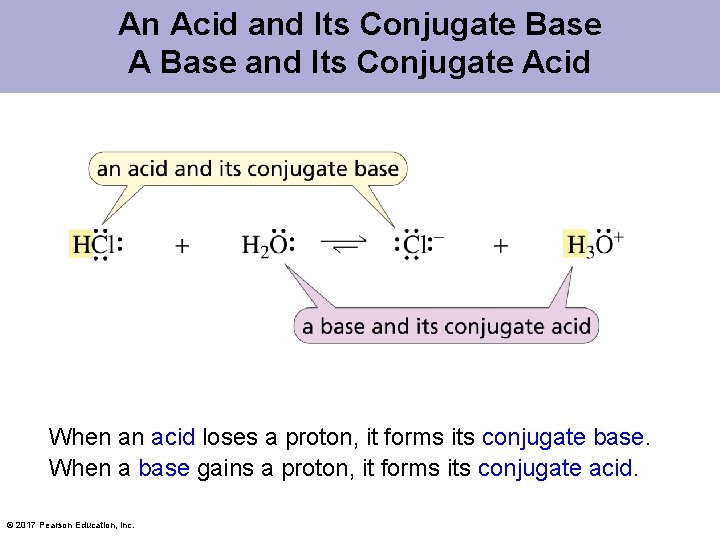
An Acid and Its Conjugate Base A Base and Its Conjugate Acid When an acid loses a proton, it forms its conjugate base. When a base gains a proton, it forms its conjugate acid. © 2017 Pearson Education, Inc.
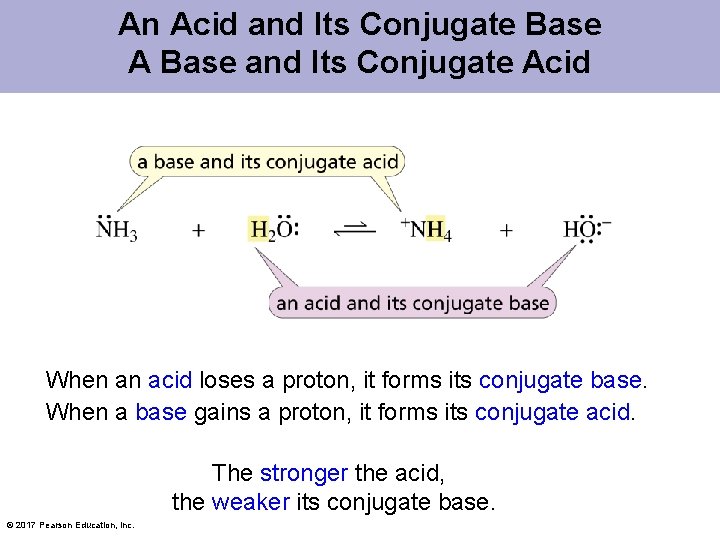
An Acid and Its Conjugate Base A Base and Its Conjugate Acid When an acid loses a proton, it forms its conjugate base. When a base gains a proton, it forms its conjugate acid. The stronger the acid, the weaker its conjugate base. © 2017 Pearson Education, Inc.

Acids Have Different Strengths Strong acid: products are favored at equilibrium Weak acid: reactants are favored at equilibrium © 2017 Pearson Education, Inc.
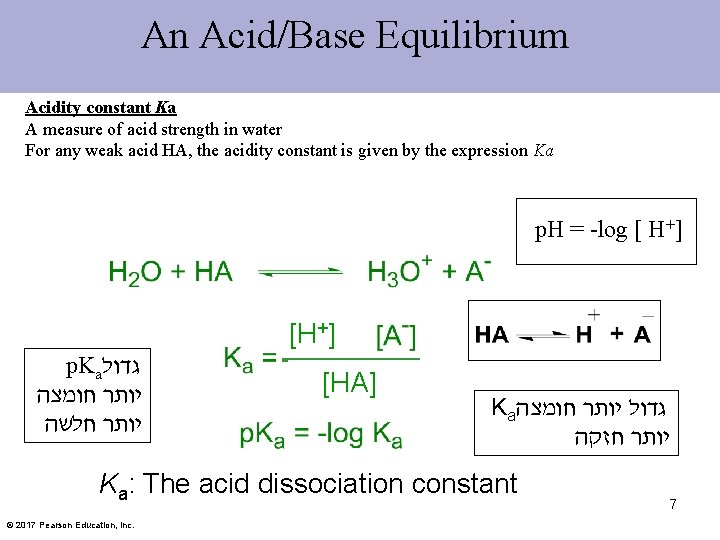
An Acid/Base Equilibrium Acidity constant Ka A measure of acid strength in water For any weak acid HA, the acidity constant is given by the expression Ka p. H = -log [ H+] [H+] p. Ka גדול יותר חומצה יותר חלשה [HA] Ka גדול יותר חומצה יותר חזקה Ka: The acid dissociation constant © 2017 Pearson Education, Inc. 7
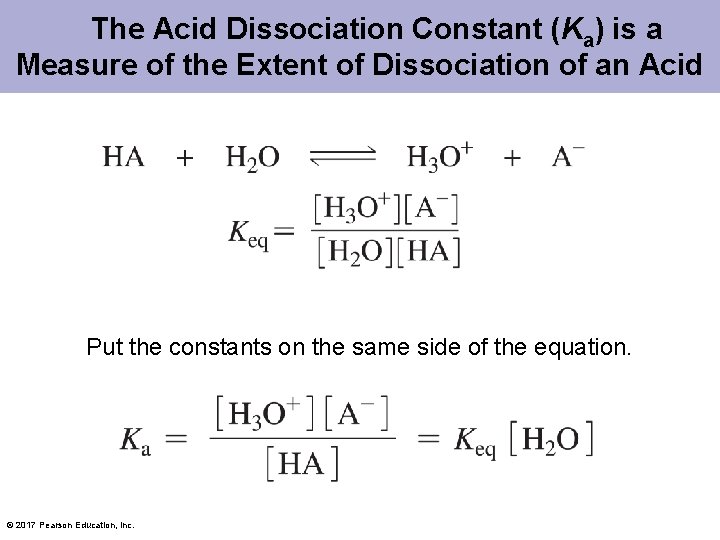
The Acid Dissociation Constant (Ka) is a Measure of the Extent of Dissociation of an Acid Put the constants on the same side of the equation. © 2017 Pearson Education, Inc.
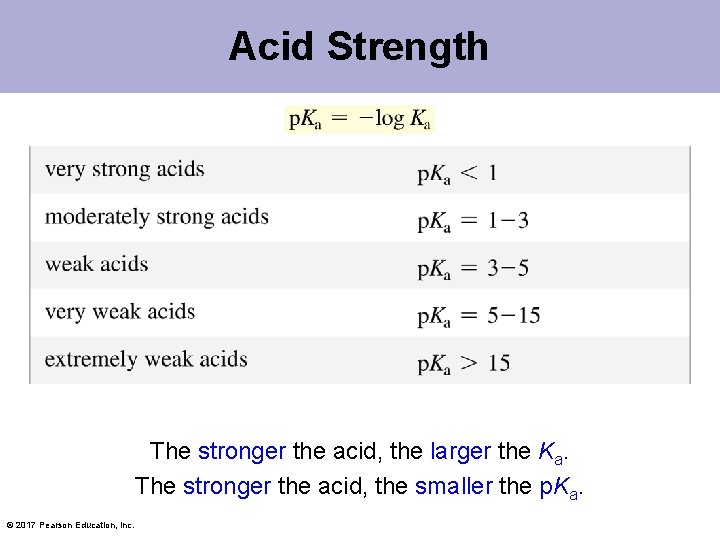
Acid Strength The stronger the acid, the larger the Ka. The stronger the acid, the smaller the p. Ka. © 2017 Pearson Education, Inc.
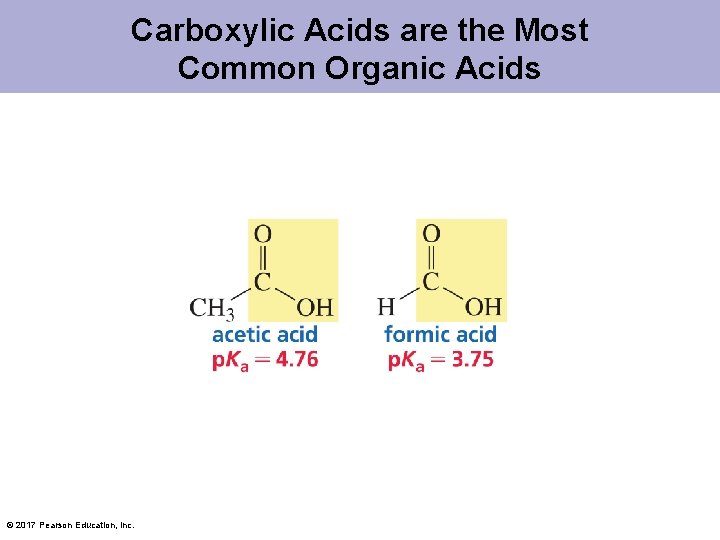
Carboxylic Acids are the Most Common Organic Acids © 2017 Pearson Education, Inc.

Alcohols © 2017 Pearson Education, Inc.

Amines © 2017 Pearson Education, Inc.

Protonated Amines © 2017 Pearson Education, Inc.

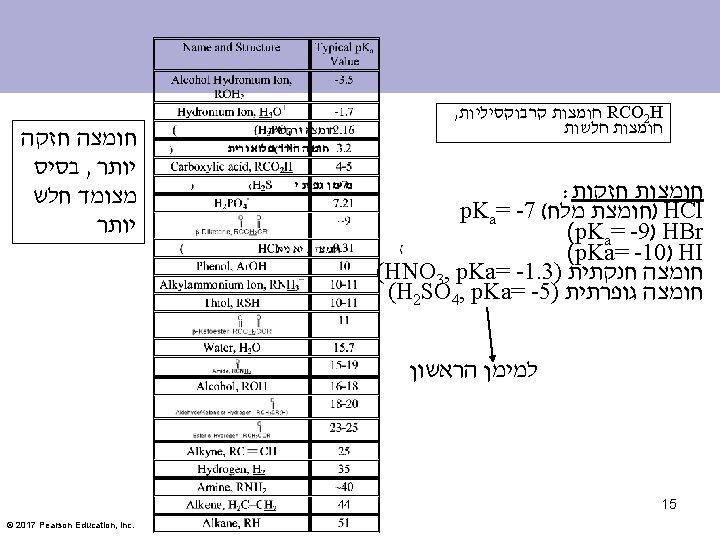
Approximate p. Ka Values © 2017 Pearson Education, Inc.
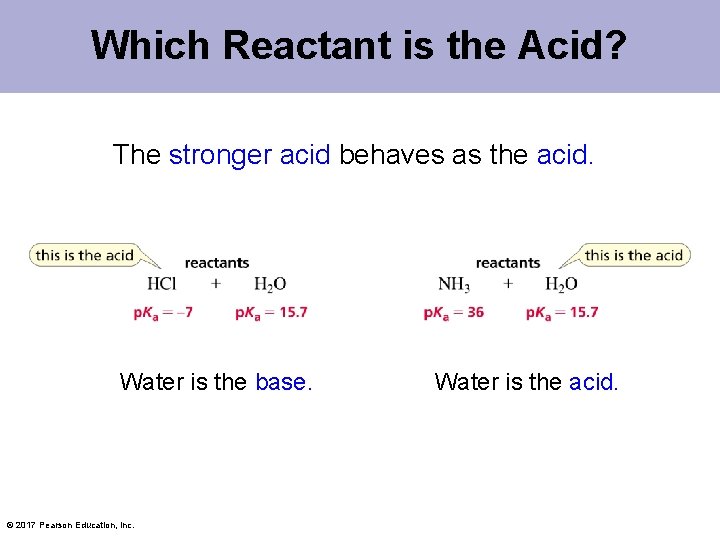
Which Reactant is the Acid? The stronger acid behaves as the acid. Water is the base. © 2017 Pearson Education, Inc. Water is the acid.

The Position of Equilibrium The equilibrium favors formation of the weaker acid. © 2017 Pearson Education, Inc.
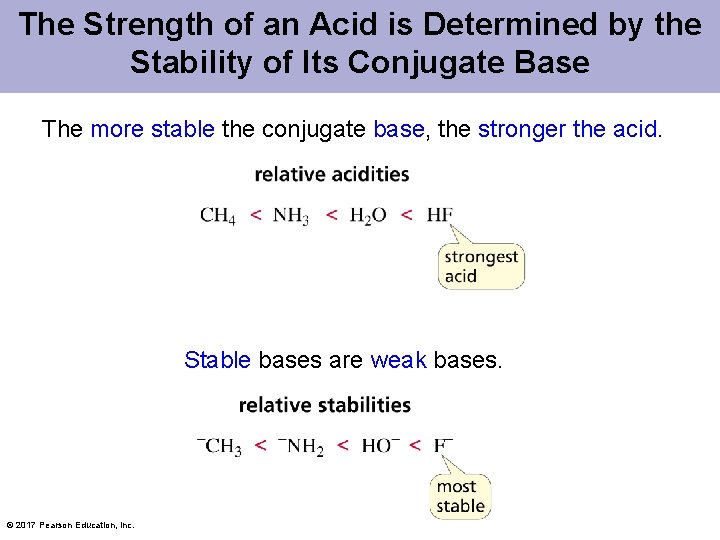
The Strength of an Acid is Determined by the Stability of Its Conjugate Base The more stable the conjugate base, the stronger the acid. Stable bases are weak bases. © 2017 Pearson Education, Inc.
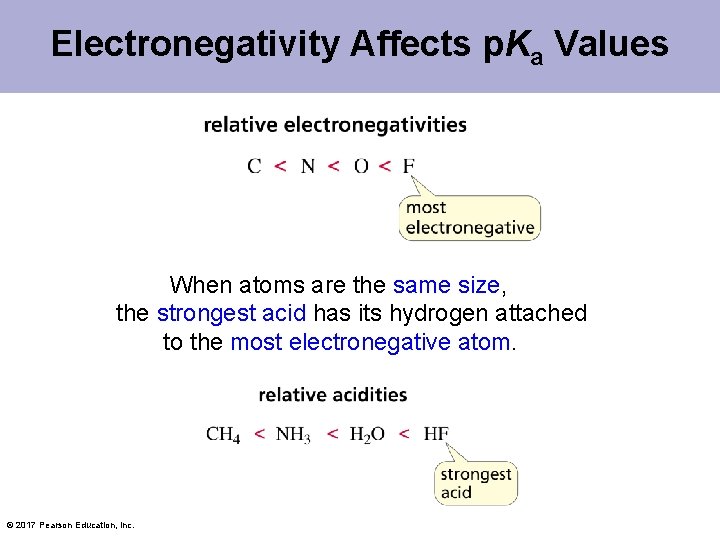
Electronegativity Affects p. Ka Values When atoms are the same size, the strongest acid has its hydrogen attached to the most electronegative atom. © 2017 Pearson Education, Inc.
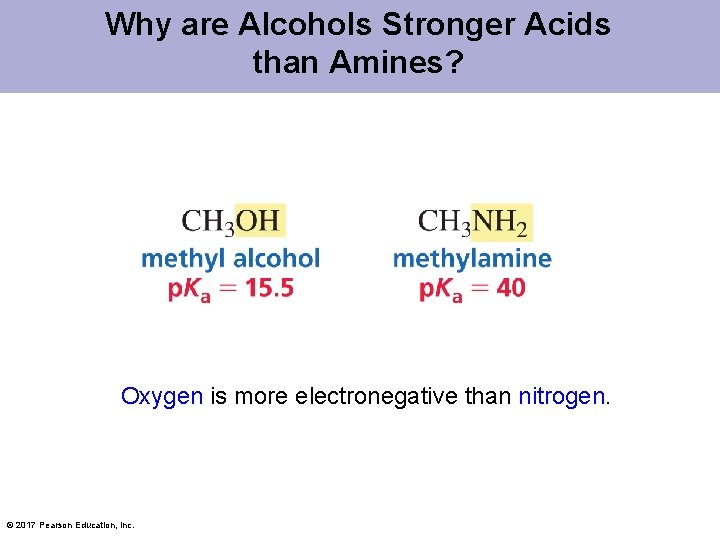
Why are Alcohols Stronger Acids than Amines? Oxygen is more electronegative than nitrogen. © 2017 Pearson Education, Inc.

Why are Protonated Alcohols Stronger Acids than Protonated Amines? Oxygen is more electronegative than nitrogen. © 2017 Pearson Education, Inc.
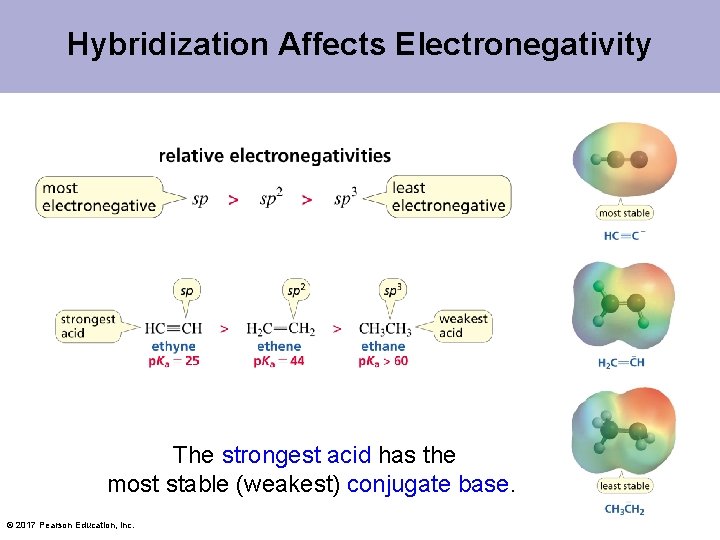
Hybridization Affects Electronegativity The strongest acid has the most stable (weakest) conjugate base. © 2017 Pearson Education, Inc.
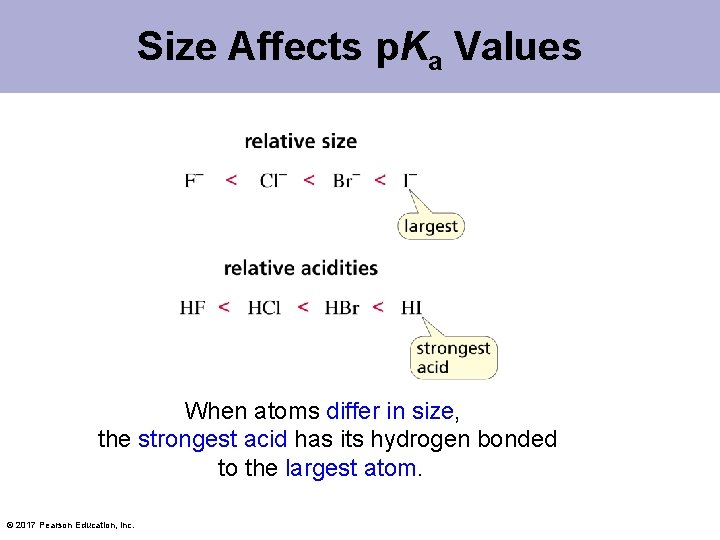
Size Affects p. Ka Values When atoms differ in size, the strongest acid has its hydrogen bonded to the largest atom. © 2017 Pearson Education, Inc.
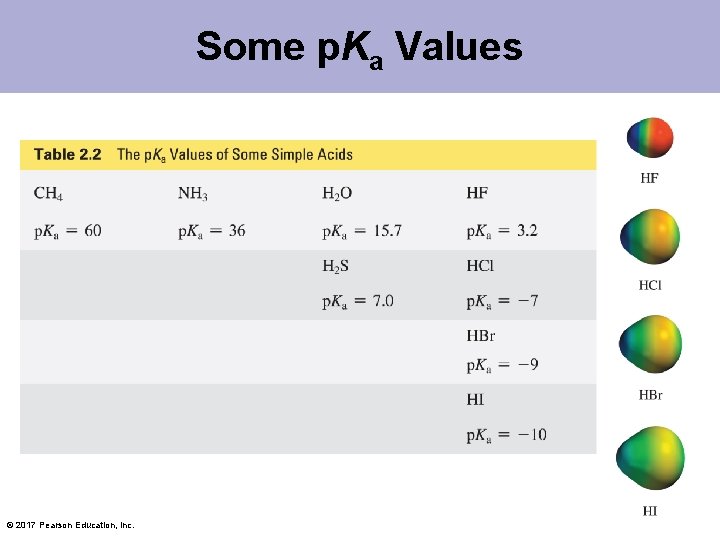
Some p. Ka Values © 2017 Pearson Education, Inc.

Substituents Affect the Strength of an Acid inductive electron withdrawal © 2017 Pearson Education, Inc.

A Substituent’s Effect on p. Ka Depends on Distance © 2017 Pearson Education, Inc.

Why is a Carboxylic Acid a Stronger Acid than an Alcohol? 1. Inductive electron withdrawal © 2017 Pearson Education, Inc.
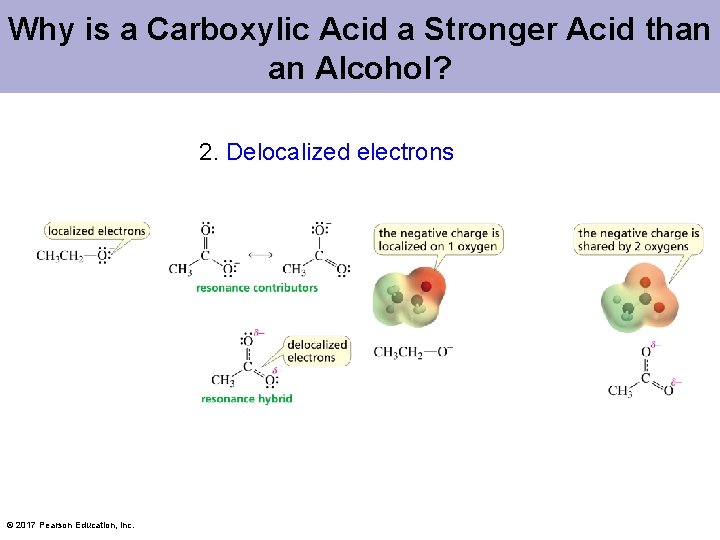
Why is a Carboxylic Acid a Stronger Acid than an Alcohol? 2. Delocalized electrons © 2017 Pearson Education, Inc.
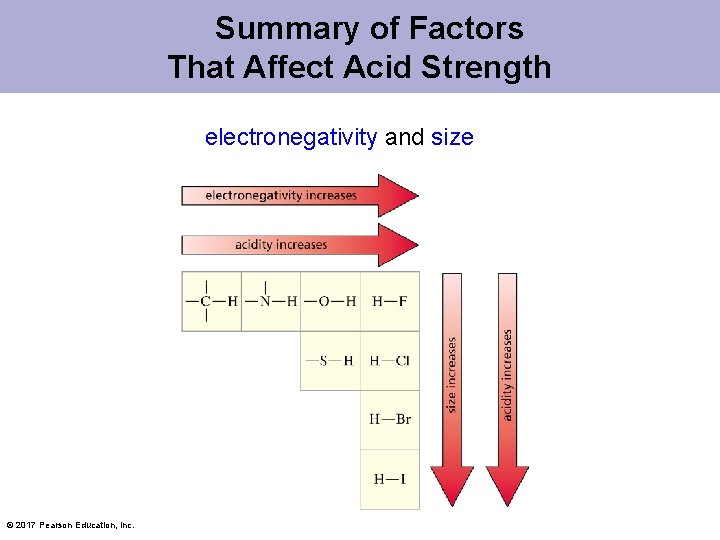
Summary of Factors That Affect Acid Strength electronegativity and size © 2017 Pearson Education, Inc.
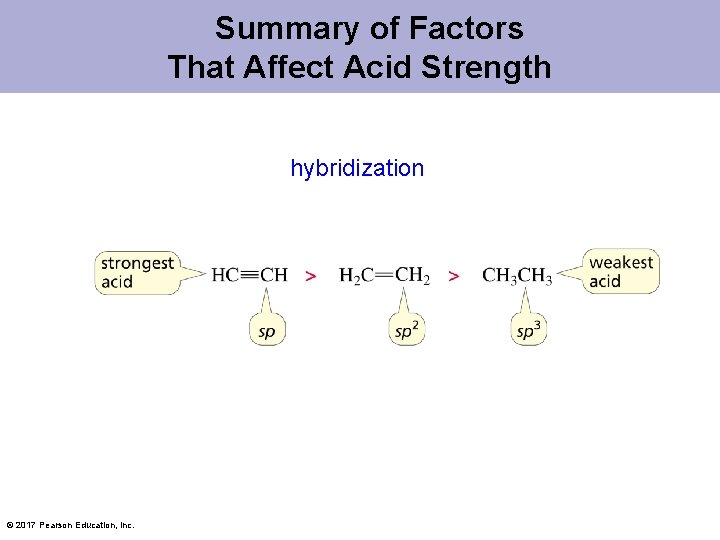
Summary of Factors That Affect Acid Strength hybridization © 2017 Pearson Education, Inc.

Summary of Factors That Affect Acid Strength inductive electron withdrawal © 2017 Pearson Education, Inc.
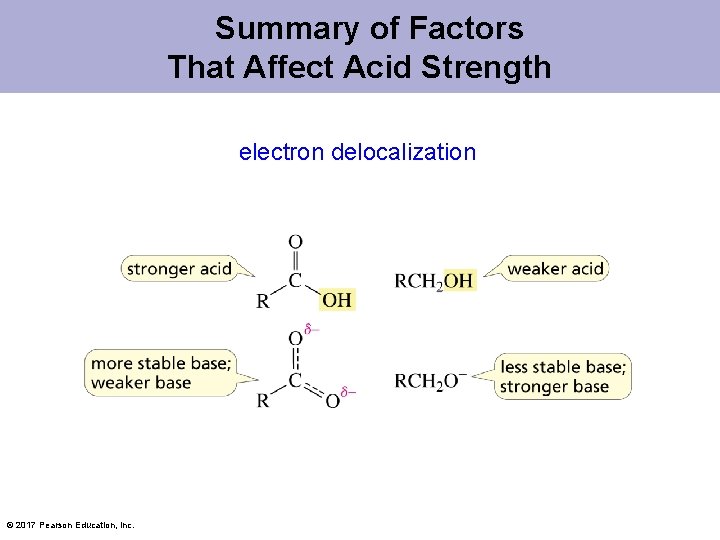
Summary of Factors That Affect Acid Strength electron delocalization © 2017 Pearson Education, Inc.
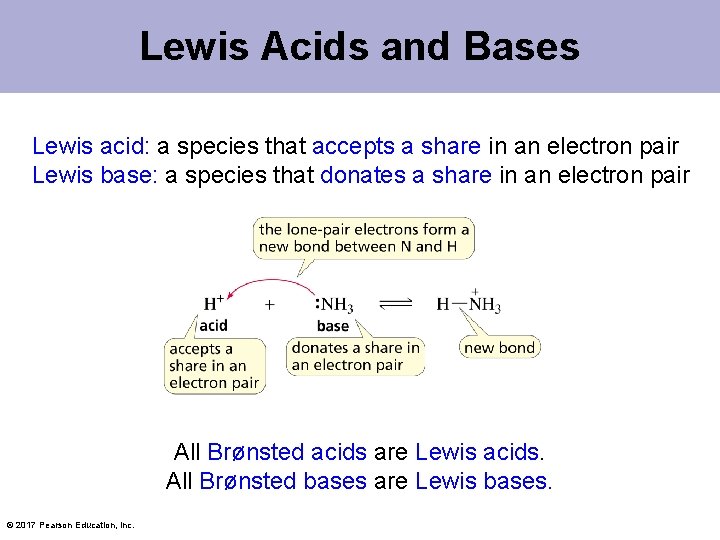
Lewis Acids and Bases Lewis acid: a species that accepts a share in an electron pair Lewis base: a species that donates a share in an electron pair All Brønsted acids are Lewis acids. All Brønsted bases are Lewis bases. © 2017 Pearson Education, Inc.
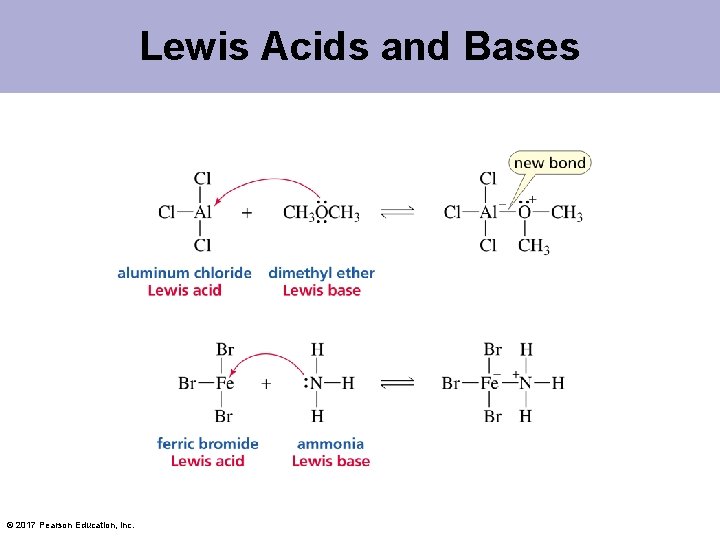
Lewis Acids and Bases © 2017 Pearson Education, Inc.
How Chemists Use the Terms “acid” = a proton-donating acid “Lewis acid” = a non-proton-donating acid All bases are Lewis bases because they have a pair of electrons they can share. © 2017 Pearson Education, Inc.
- Slides: 35