
Chapter 19 Viruses and Bacteria High School Biology

Chapter 19 Viruses and Bacteria High School Biology Class
Kingdom Monera • Bacteria are classified into two kingdoms: 1) Eubacteria 2) Archeabacteria • Virus are NOT in any kingdom because most scientists do not consider them to be living organisms.
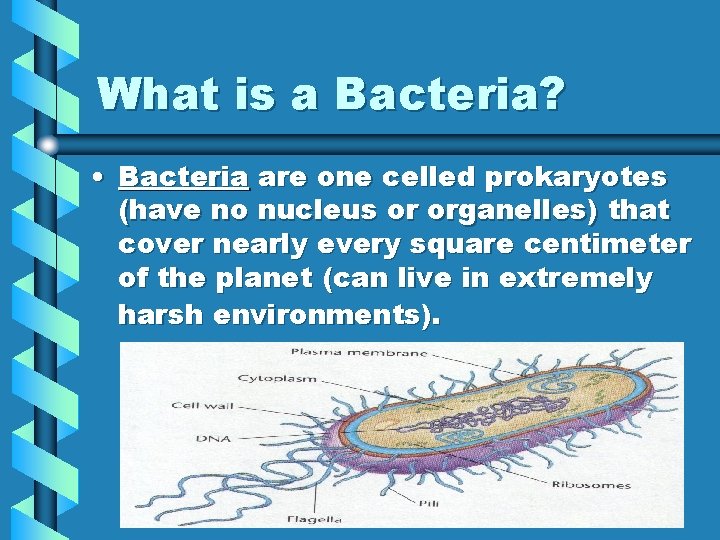
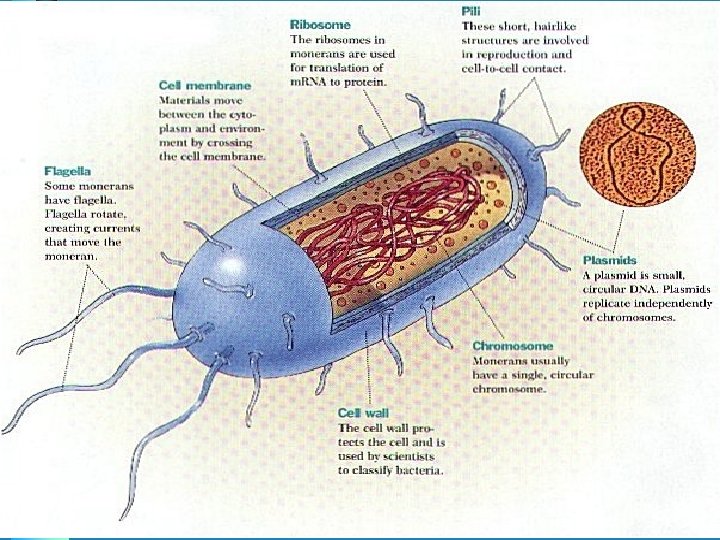
What is a Bacteria? • Bacteria are one celled prokaryotes (have no nucleus or organelles) that cover nearly every square centimeter of the planet (can live in extremely harsh environments).
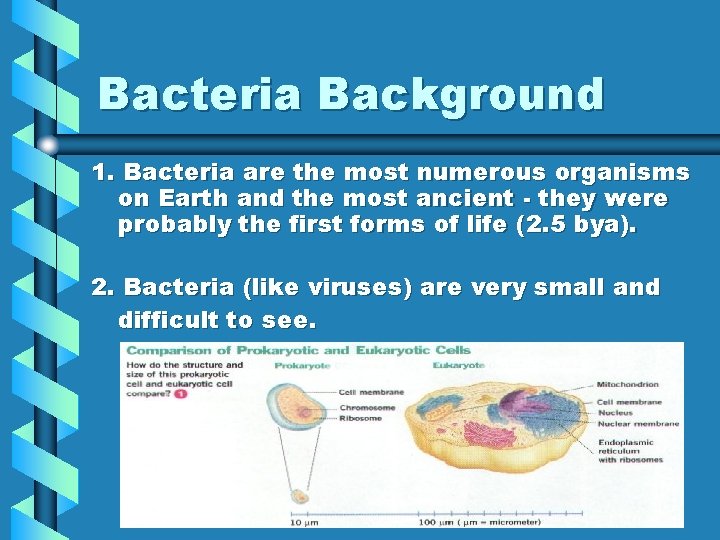
Bacteria Background 1. Bacteria are the most numerous organisms on Earth and the most ancient - they were probably the first forms of life (2. 5 bya). 2. Bacteria (like viruses) are very small and difficult to see.
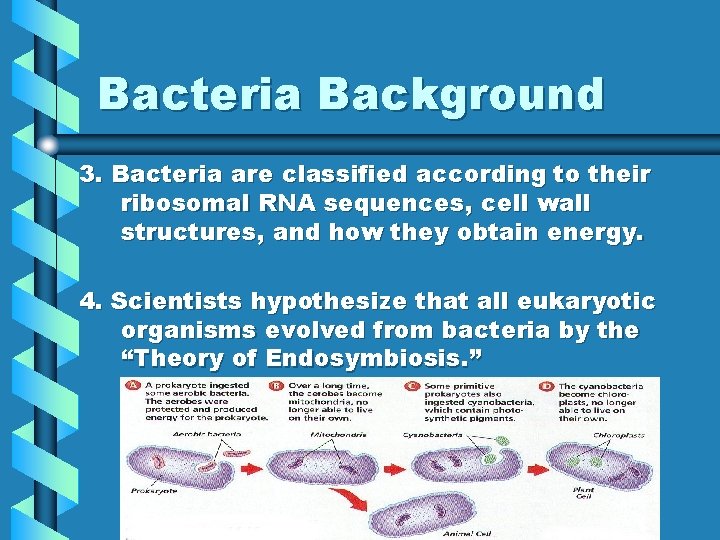
Bacteria Background 3. Bacteria are classified according to their ribosomal RNA sequences, cell wall structures, and how they obtain energy. 4. Scientists hypothesize that all eukaryotic organisms evolved from bacteria by the “Theory of Endosymbiosis. ”
Types of Bacteria • Scientists have found that there are two vastly different types of bacteria: A. The more ancient bacteria are classified in the Kingdom Archaebacteria. B. The bacteria that we refer to as “germs" are classified in the Kingdom Eubacteria.
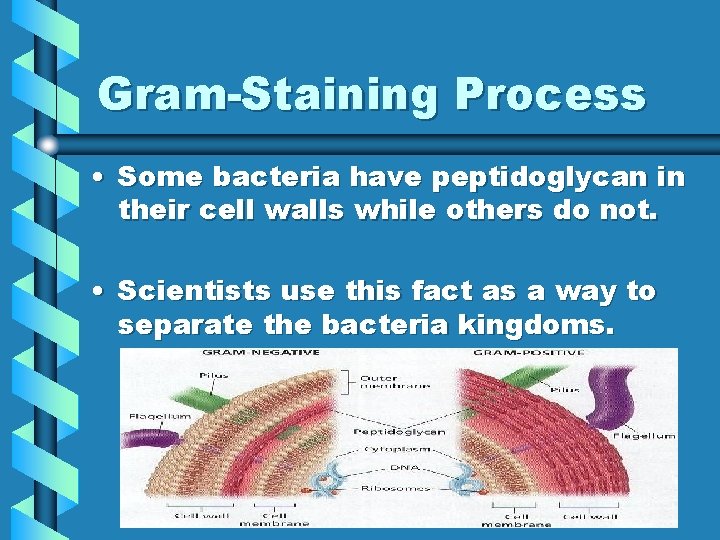
Gram-Staining Process • Some bacteria have peptidoglycan in their cell walls while others do not. • Scientists use this fact as a way to separate the bacteria kingdoms.
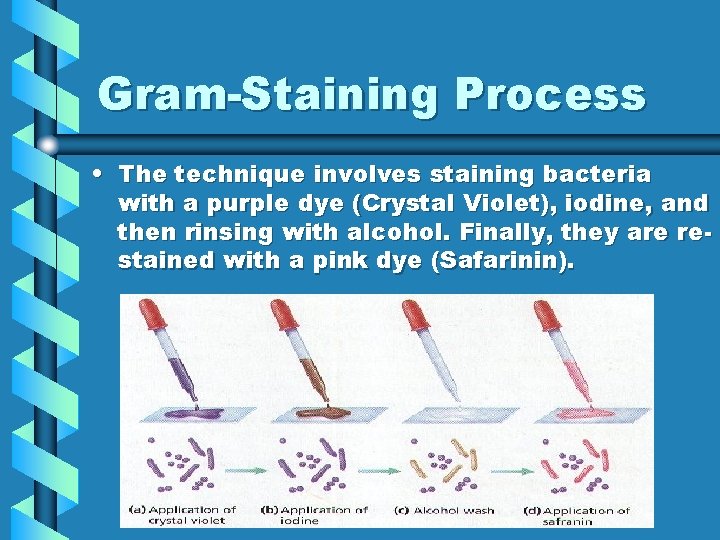
Gram-Staining Process • The technique involves staining bacteria with a purple dye (Crystal Violet), iodine, and then rinsing with alcohol. Finally, they are restained with a pink dye (Safarinin).
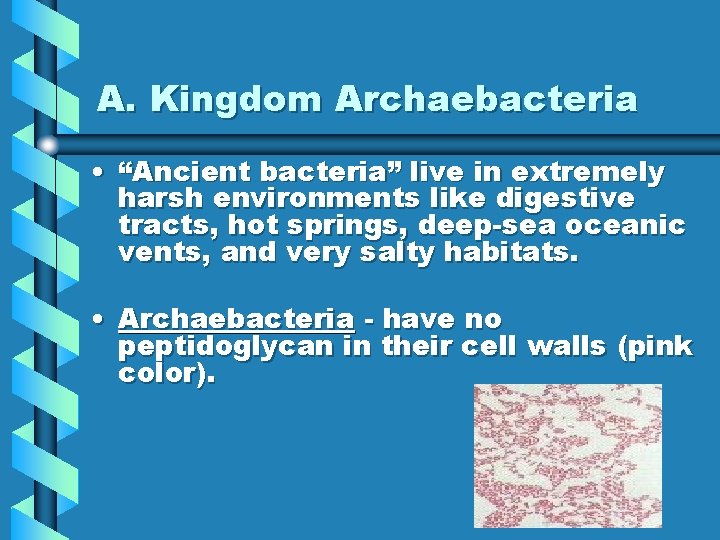
A. Kingdom Archaebacteria • “Ancient bacteria” live in extremely harsh environments like digestive tracts, hot springs, deep-sea oceanic vents, and very salty habitats. • Archaebacteria - have no peptidoglycan in their cell walls (pink color).
A. Kingdom Archaebacteria • Archaebacteria are divided into three groups: – Methanogens (convert H 2 and CO 2 into methane) – Thermoacidophiles (convert hot, acidic gases into energy) – Halophiles (convert salty water into ATP)
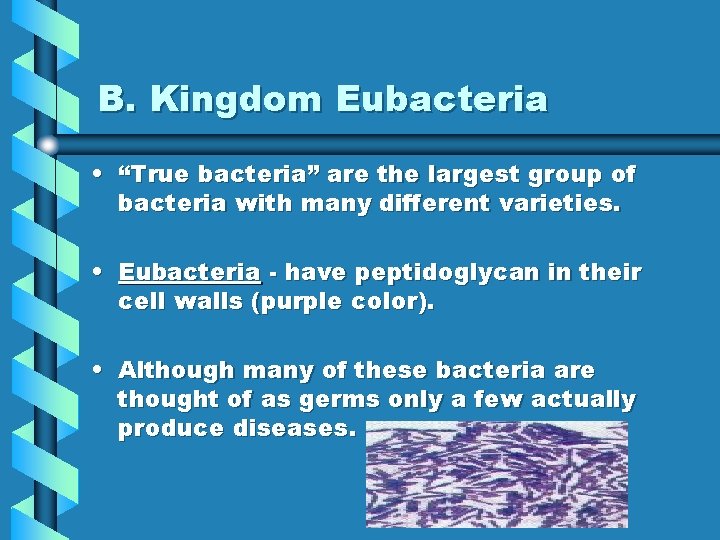
B. Kingdom Eubacteria • “True bacteria” are the largest group of bacteria with many different varieties. • Eubacteria - have peptidoglycan in their cell walls (purple color). • Although many of these bacteria are thought of as germs only a few actually produce diseases.
B. Kingdom Eubacteria • Eubacteria are divided into five groups: – – – Proteobacteria Gram-positive Eubacteria Cyanobacteria (made the Earth’s oxygen) Spirochetes Chlamydias
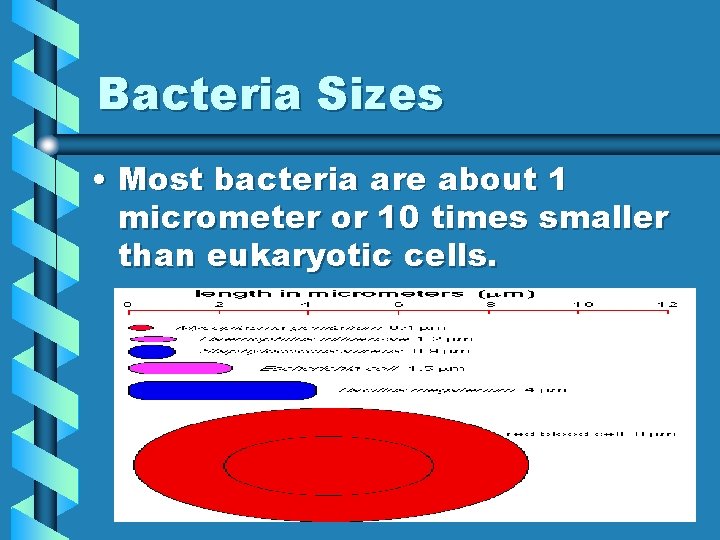
Bacteria Sizes • Most bacteria are about 1 micrometer or 10 times smaller than eukaryotic cells.
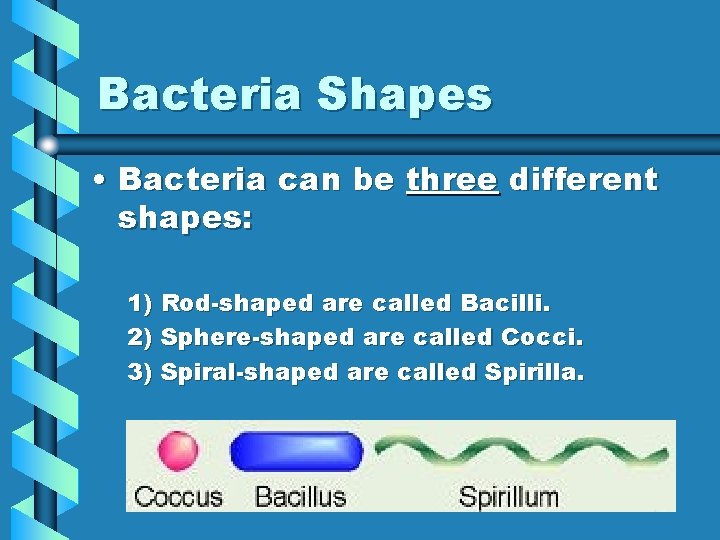
Bacteria Shapes • Bacteria can be three different shapes: 1) Rod-shaped are called Bacilli. 2) Sphere-shaped are called Cocci. 3) Spiral-shaped are called Spirilla.
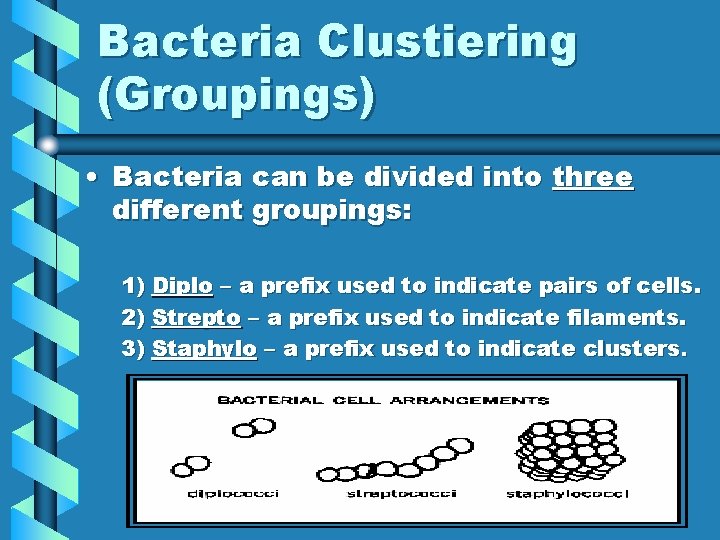
Bacteria Clustiering (Groupings) • Bacteria can be divided into three different groupings: 1) Diplo – a prefix used to indicate pairs of cells. 2) Strepto – a prefix used to indicate filaments. 3) Staphylo – a prefix used to indicate clusters.
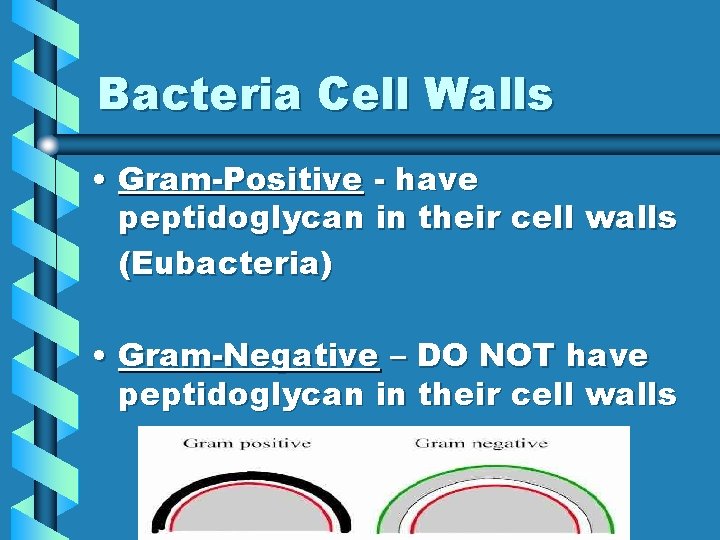
Bacteria Cell Walls • Gram-Positive - have peptidoglycan in their cell walls (Eubacteria) • Gram-Negative – DO NOT have peptidoglycan in their cell walls
Bacteria Movements • Flagella – long whiplike structure to help move the bacteria. • Pili – short, thick hair that can attach to surfaces. • Slimelike Fluids – Myxobacteria produce a layer of slime and then glide through it. • Nonmotile – stay in one place and do not move on their own.
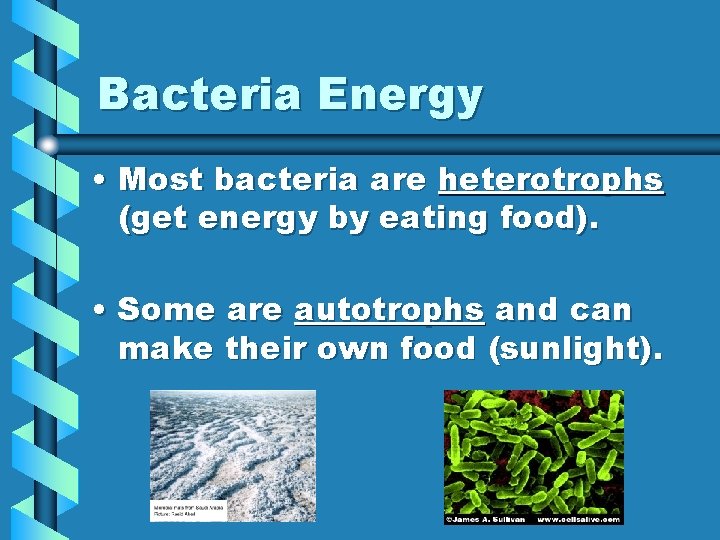
Bacteria Energy • Most bacteria are heterotrophs (get energy by eating food). • Some are autotrophs and can make their own food (sunlight).
Bacteria Energy • Most bacteria are obligate aerobes (need oxygen to live). • Some are obligate anaerobes (cannot live in the presence of oxygen). • Few are facultative anaerobes (do not need oxygen but can live in it. )
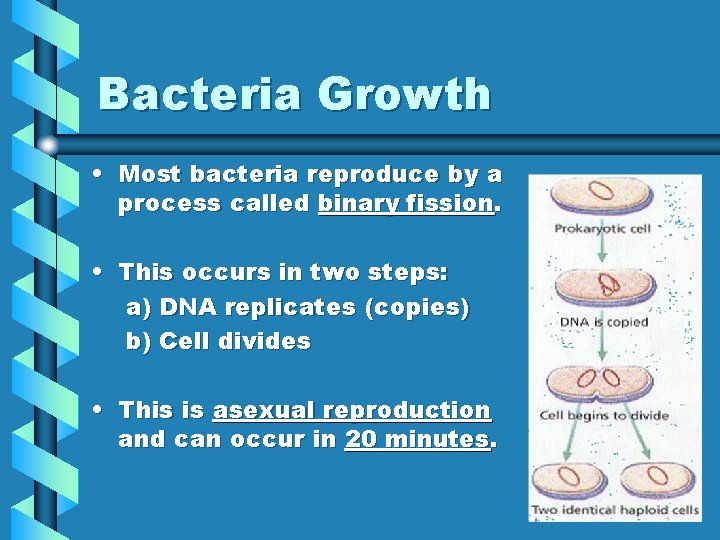
Bacteria Growth • Most bacteria reproduce by a process called binary fission. • This occurs in two steps: a) DNA replicates (copies) b) Cell divides • This is asexual reproduction and can occur in 20 minutes.
Bacteria Diseases • There are two ways bacteria can cause diseases: 1) Breakdown and destroy living cells. 2) Release toxins (poisons) in cells that cause them to malfunction.
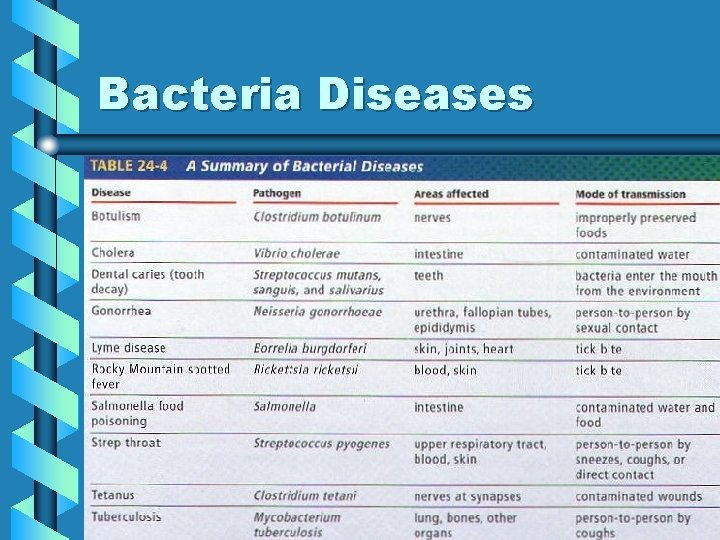
Bacteria Diseases
Bacteria Prevention • Once again the best defense against bacteria is to prevent their infection. • The best way to do this is to stimulate the bodies immune system by using a vaccine.
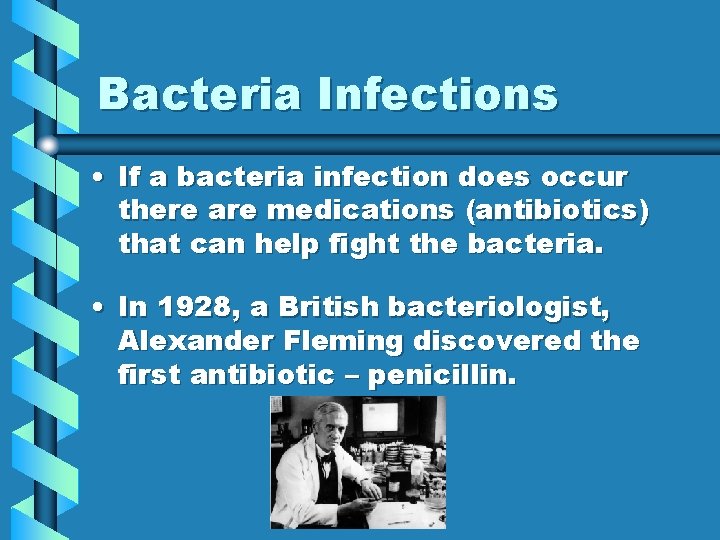
Bacteria Infections • If a bacteria infection does occur there are medications (antibiotics) that can help fight the bacteria. • In 1928, a British bacteriologist, Alexander Fleming discovered the first antibiotic – penicillin.
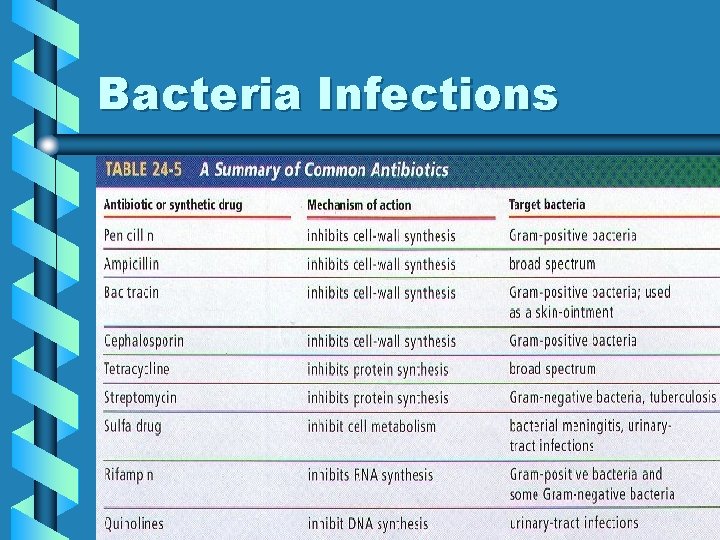
Bacteria Infections
Antibiotic Concerns 1. When a population of bacteria is exposed to an antibiotic, the most susceptible bacteria die. A few mutant bacteria that are resistant to the antibiotic may continue to grow. 2. A resistant population then grows from these mutant bacteria. - (natural selection? )
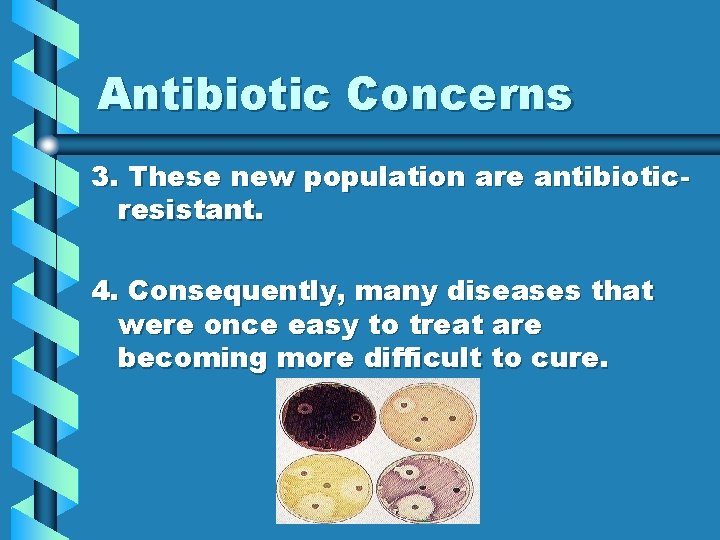
Antibiotic Concerns 3. These new population are antibioticresistant. 4. Consequently, many diseases that were once easy to treat are becoming more difficult to cure.
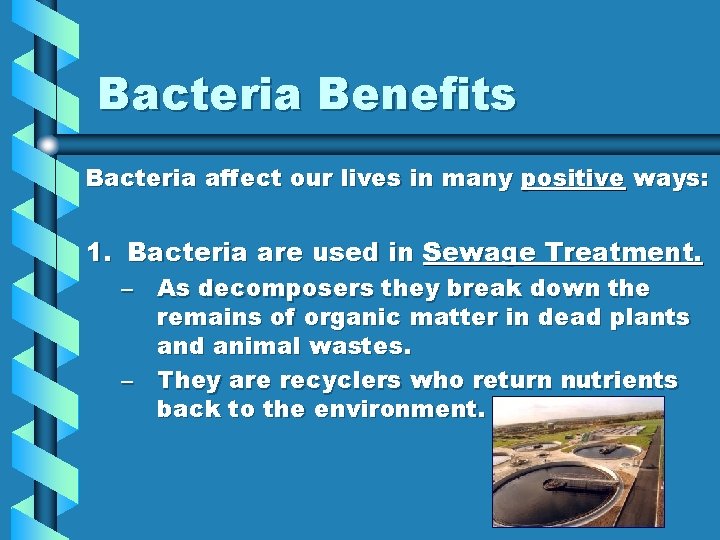
Bacteria Benefits Bacteria affect our lives in many positive ways: 1. Bacteria are used in Sewage Treatment. – As decomposers they break down the remains of organic matter in dead plants and animal wastes. – They are recyclers who return nutrients back to the environment.
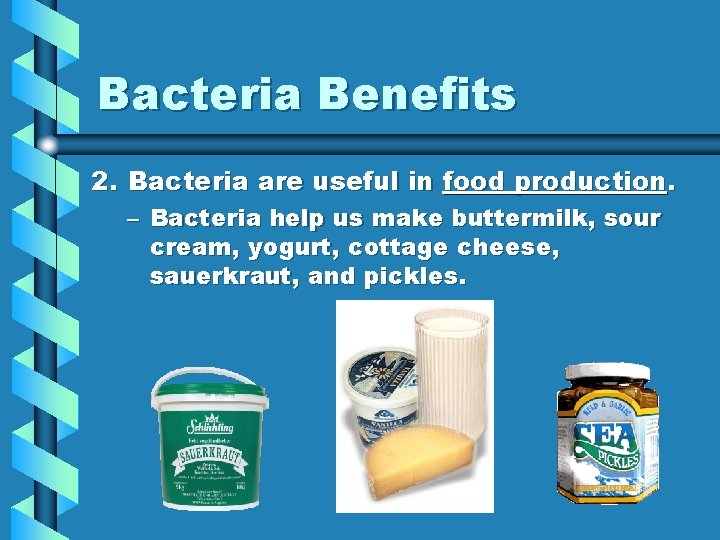
Bacteria Benefits 2. Bacteria are useful in food production. – Bacteria help us make buttermilk, sour cream, yogurt, cottage cheese, sauerkraut, and pickles.
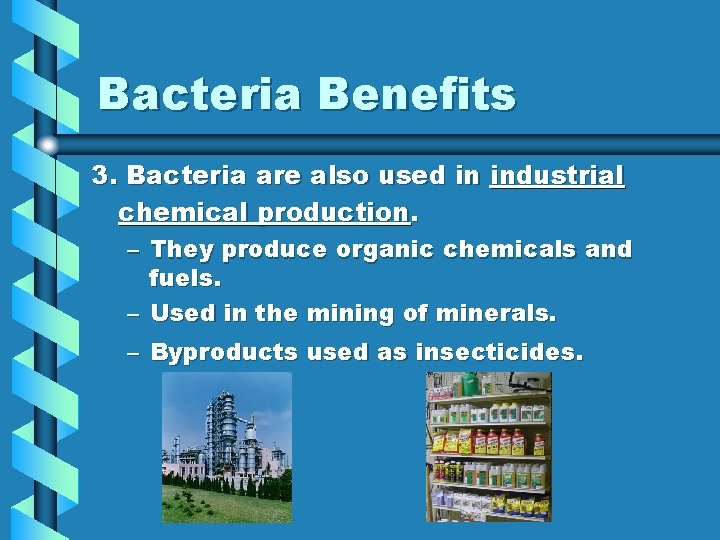
Bacteria Benefits 3. Bacteria are also used in industrial chemical production. – They produce organic chemicals and fuels. – Used in the mining of minerals. – Byproducts used as insecticides.
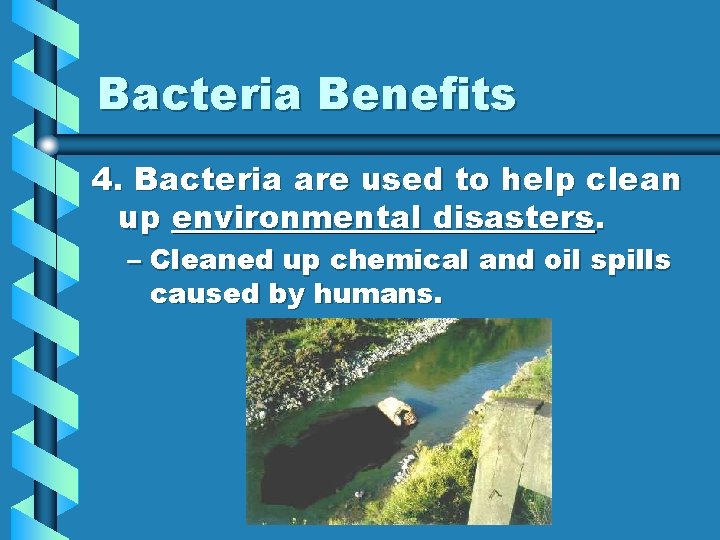
Bacteria Benefits 4. Bacteria are used to help clean up environmental disasters. – Cleaned up chemical and oil spills caused by humans.

Any Questions? • “I don't know everything. I just do everything. ” --Toni Morrison • “I have no riches but my thoughts. Yet these are wealth enough for me. ” --Sara Teasdale
- Slides: 33