
Chapter 19 Vibrations Waves Vibration Wiggle in time
Chapter 19 Vibrations & Waves
Vibration � Wiggle in time ◦ Anything that moves: �Back and forth �To and fro �Side to side �In or out �Up and down
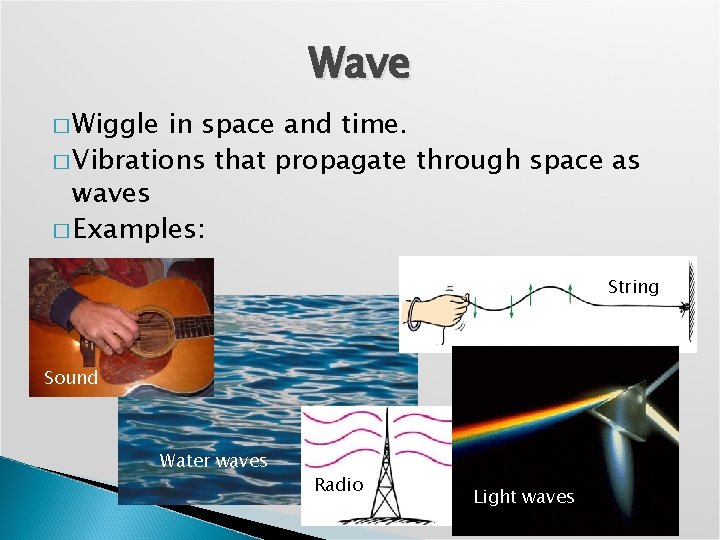
Wave � Wiggle in space and time. � Vibrations that propagate through space as waves � Examples: String Sound Water waves Radio Light waves
Wave Motion � Energy can be transferred from a source to a receiver without the transfer of matter between the two points. � Most of our information comes through waves ◦ Sound, light, electromagnetic signal: radio/TV
Sound � Must have a medium in order to propagate the vibrations (sound) � Medium � Can – solid, liquid, or gas not travel in a vacuum
Light � Vibration of electric and magnetic fields � Vibration of pure energy � Characteristics: ◦ Doesn’t need a medium ◦ Can travel through a vacuum ◦ Can pass through many materials
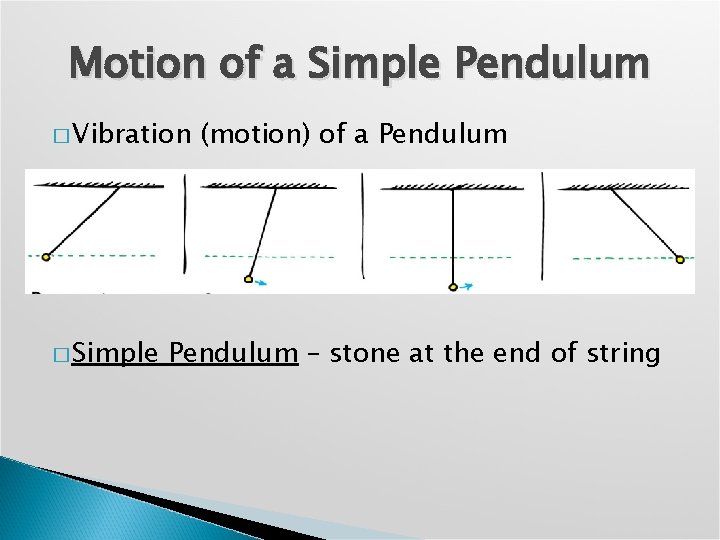
Motion of a Simple Pendulum � Vibration � Simple (motion) of a Pendulum – stone at the end of string
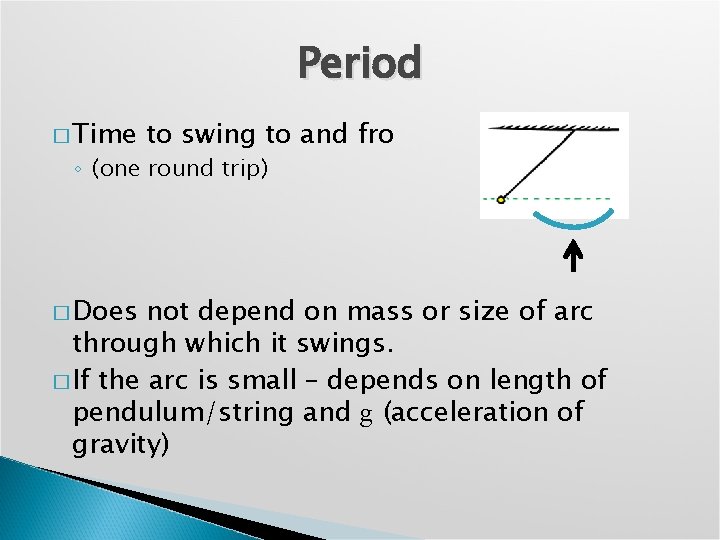
Period � Time to swing to and fro ◦ (one round trip) � Does not depend on mass or size of arc through which it swings. � If the arc is small – depends on length of pendulum/string and g (acceleration of gravity)
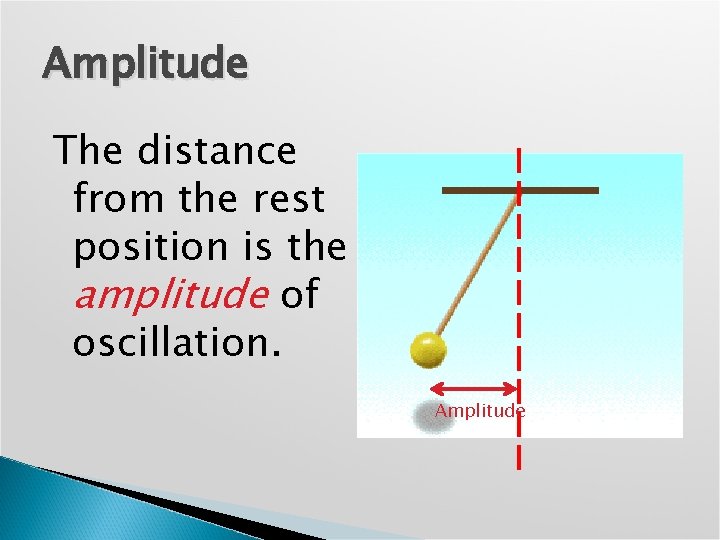
Amplitude The distance from the rest position is the amplitude of oscillation. Amplitude
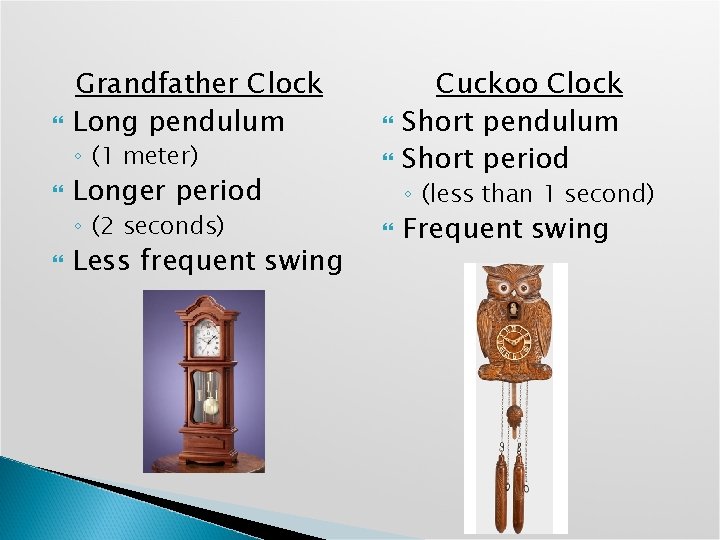
Grandfather Clock Long pendulum ◦ (1 meter) Longer period ◦ (2 seconds) Less frequent swing Cuckoo Clock Short pendulum Short period ◦ (less than 1 second) Frequent swing
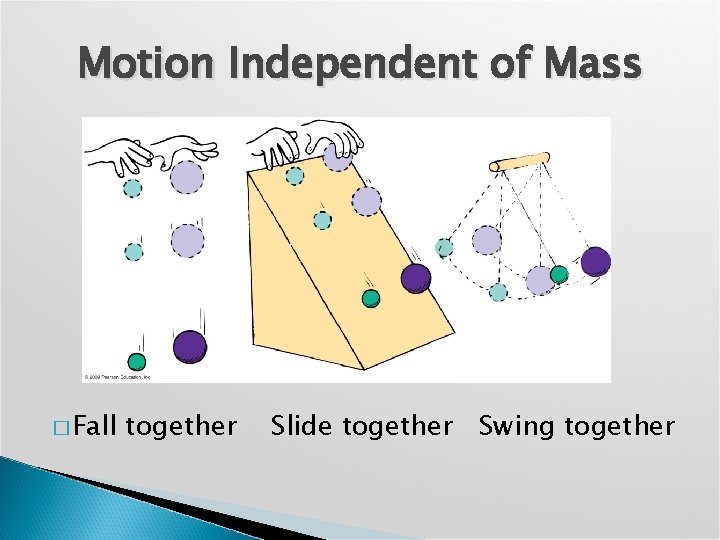
Motion Independent of Mass � Fall together Slide together Swing together
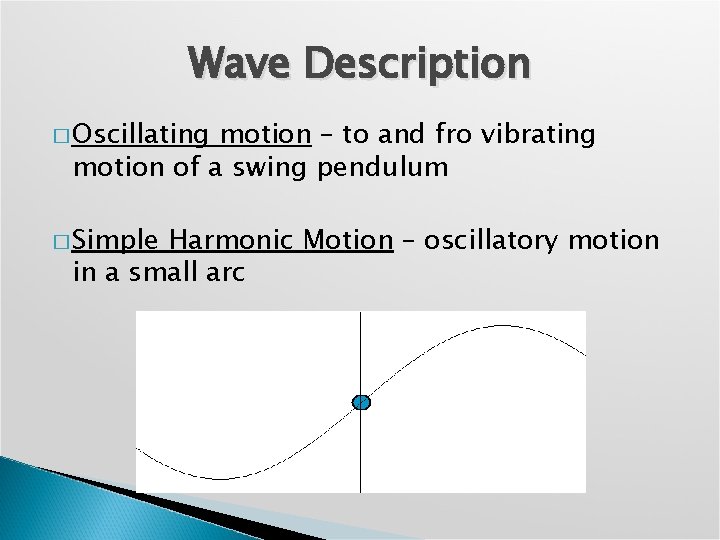
Wave Description � Oscillating motion – to and fro vibrating motion of a swing pendulum � Simple Harmonic Motion – oscillatory motion in a small arc
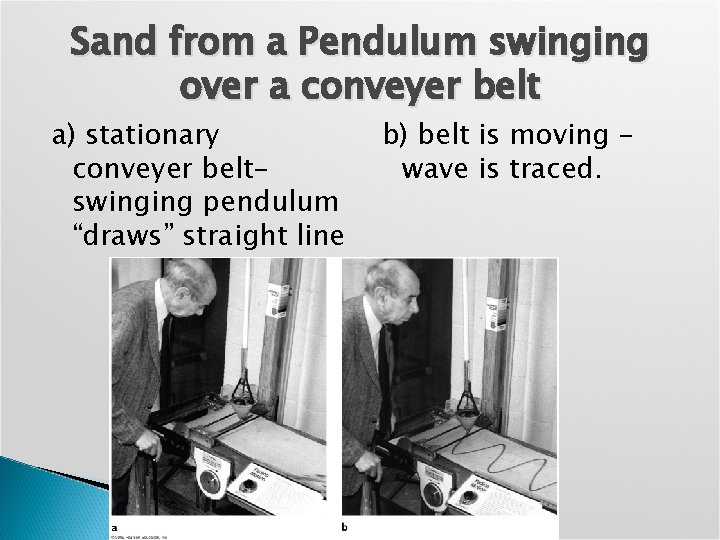
Sand from a Pendulum swinging over a conveyer belt a) stationary conveyer beltswinging pendulum “draws” straight line b) belt is moving – wave is traced.
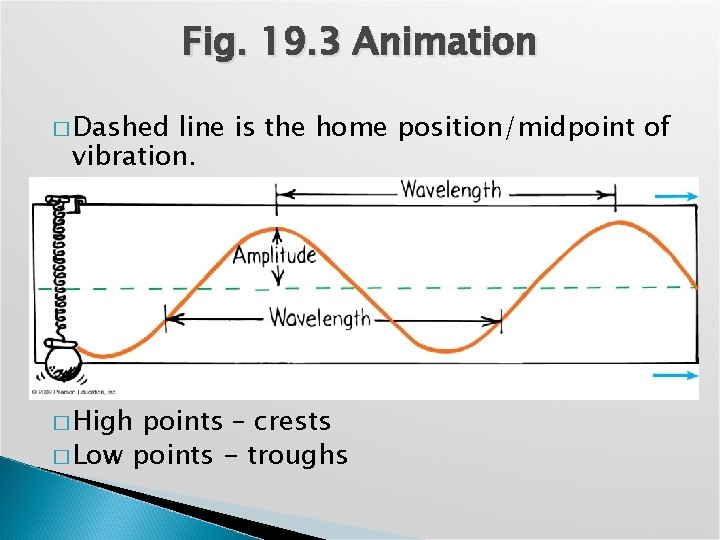
Fig. 19. 3 Animation � Dashed line is the home position/midpoint of vibration. � High points – crests � Low points - troughs
Wave Characteristics � Amplitude – distance from the midpoint to the crest (or trough) ◦ Maximum displacement (up or down) from equilibrium. � Wavelength – distance from the top of one crest to the top of the next one. (or any two identical successive parts of the wave) ◦ Beach – measured in meters ◦ Pond ripples – centimeters ◦ Light – nanometers
Frequency � How frequent a vibration occurs � Number of two and fro vibrations it makes during a given time (usually one second) � A complete to and fro oscillation is one vibration. � Ex. � 1 vibration in 1 second, ◦ Frequency = 1 vibration per second = 1 Hz � 2 vibrations in 2 seconds, ◦ Frequency = 2 vibrations per second = 2 Hz
Units of Frequency � Hertz � k. Hz (Hz) – thousands of Hz (AM radio station) � MHz – million of Hz (FM radio station) � GHz – billions of Hz (radar, microwave)
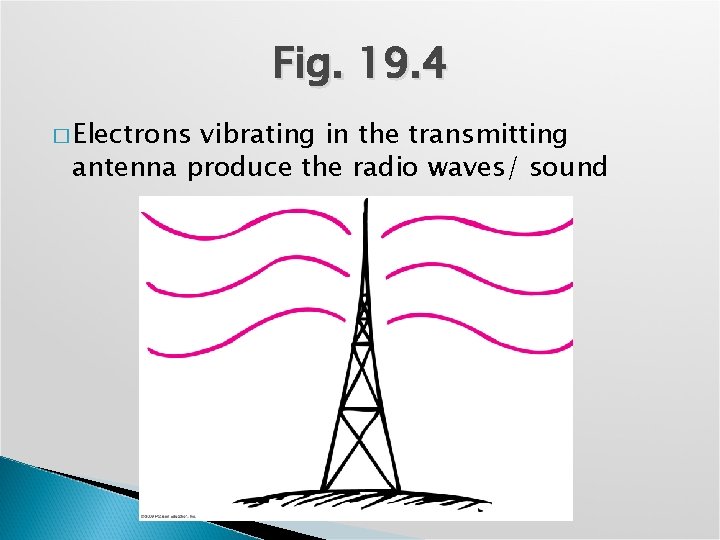
Fig. 19. 4 � Electrons vibrating in the transmitting antenna produce the radio waves/ sound

Period of time for one complete vibration � Frequency and period are the inverse of each other � Amount
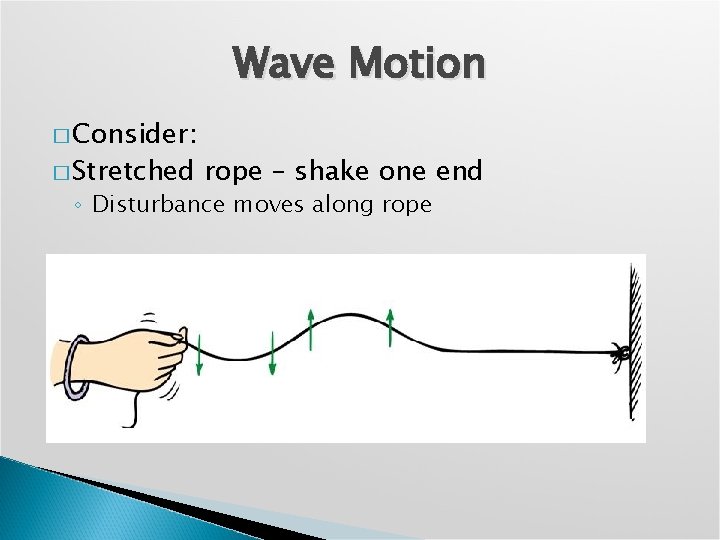
Wave Motion � Consider: � Stretched rope – shake one end ◦ Disturbance moves along rope
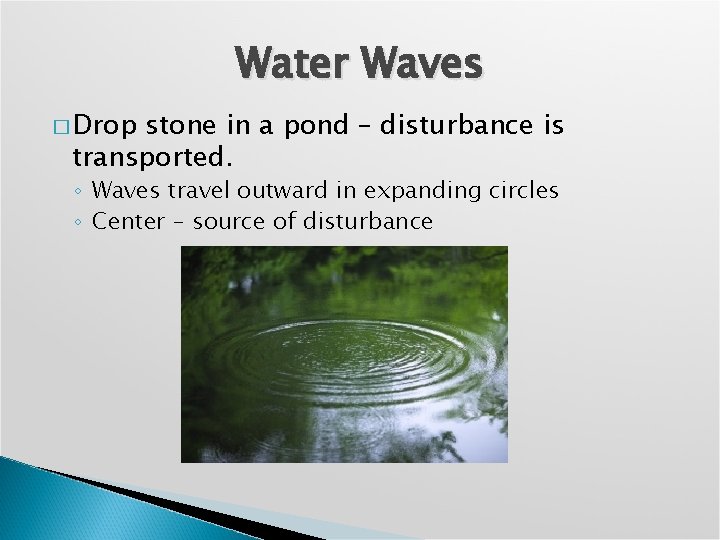
Water Waves � Drop stone in a pond – disturbance is transported. ◦ Waves travel outward in expanding circles ◦ Center – source of disturbance
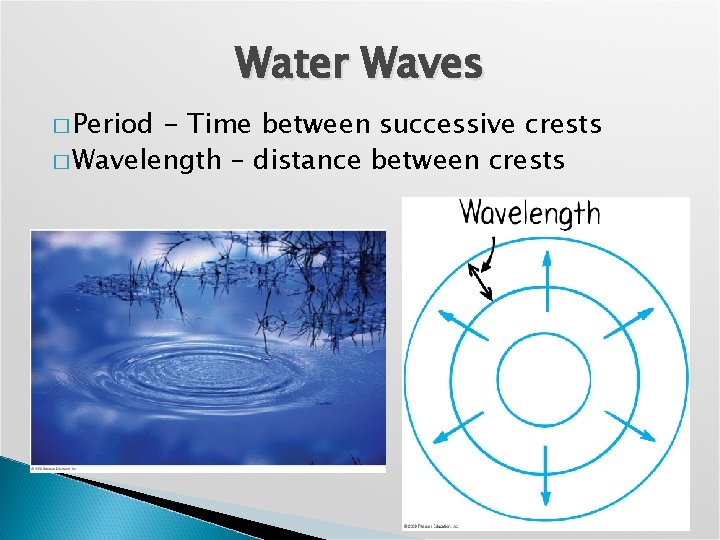
Water Waves � Period - Time between successive crests � Wavelength – distance between crests
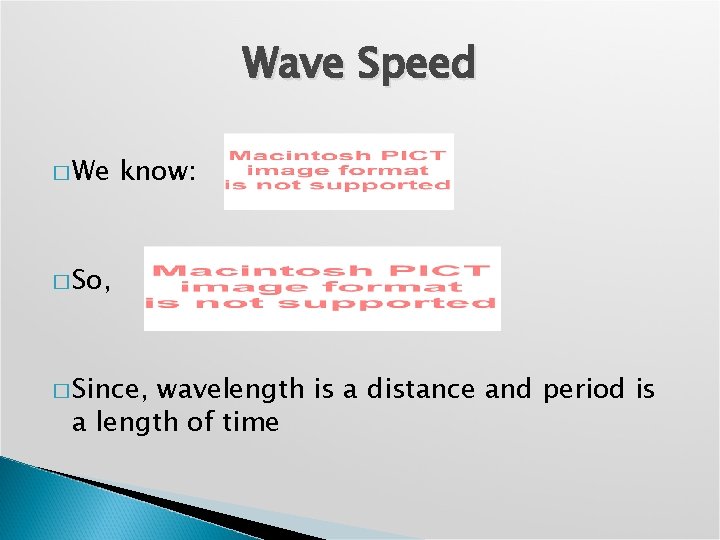
Wave Speed � We know: � So, � Since, wavelength is a distance and period is a length of time
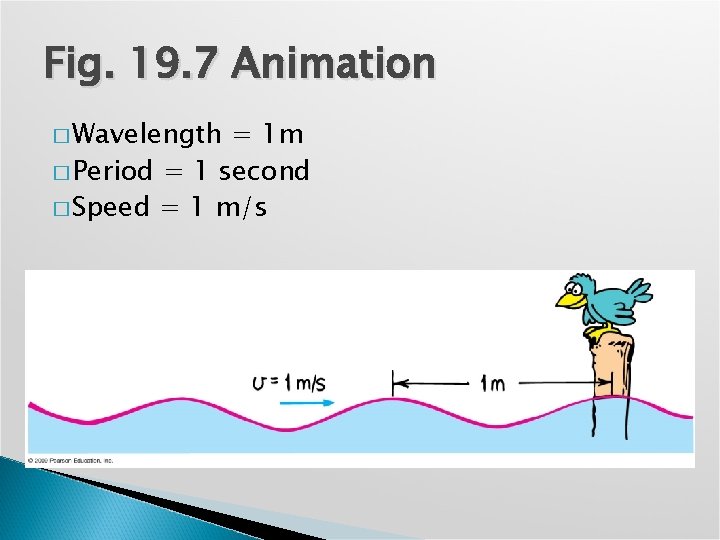
Fig. 19. 7 Animation � Wavelength = 1 m � Period = 1 second � Speed = 1 m/s
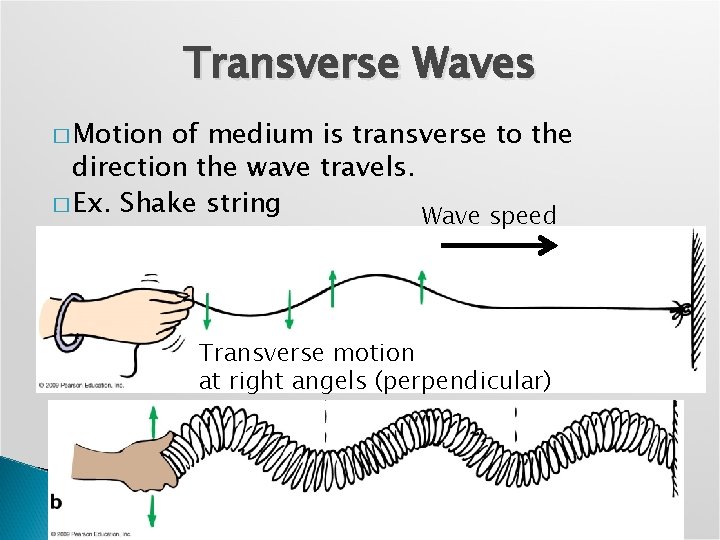
Transverse Waves � Motion of medium is transverse to the direction the wave travels. � Ex. Shake string Wave speed Transverse motion at right angels (perpendicular)
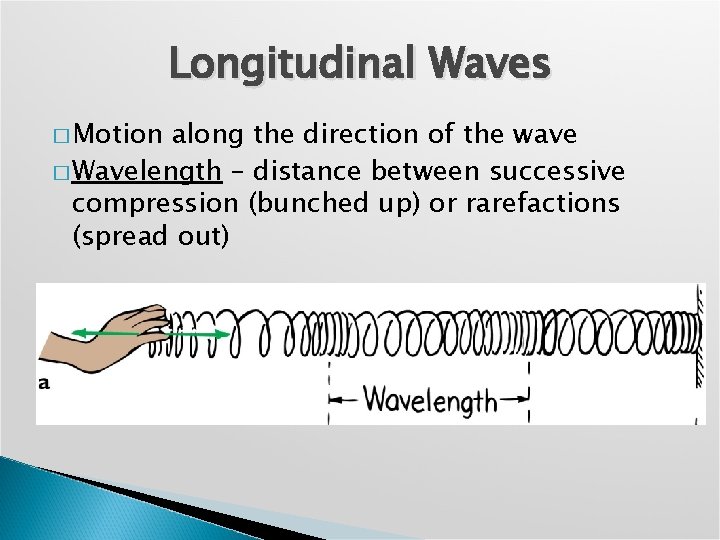
Longitudinal Waves � Motion along the direction of the wave � Wavelength – distance between successive compression (bunched up) or rarefactions (spread out)
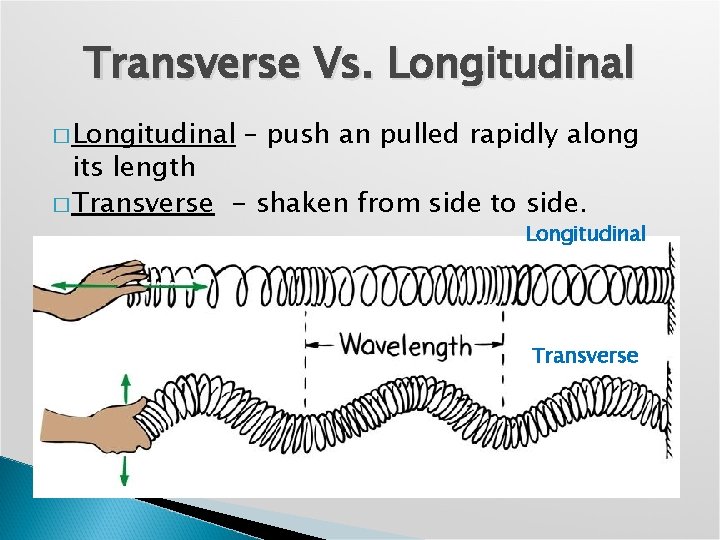
Transverse Vs. Longitudinal � Longitudinal – push an pulled rapidly along its length � Transverse - shaken from side to side. Longitudinal Transverse
Video: Transverse Vs. Longitudinal Fig. 19. 9 Animation
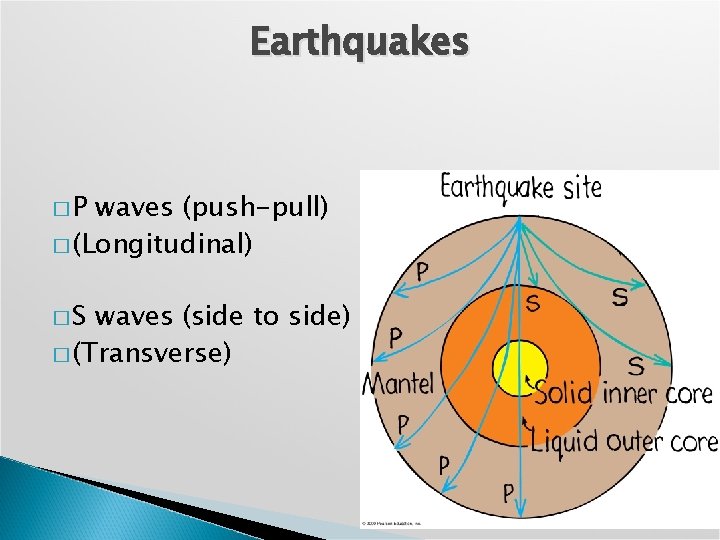
Earthquakes �P waves (push-pull) � (Longitudinal) �S waves (side to side) � (Transverse)
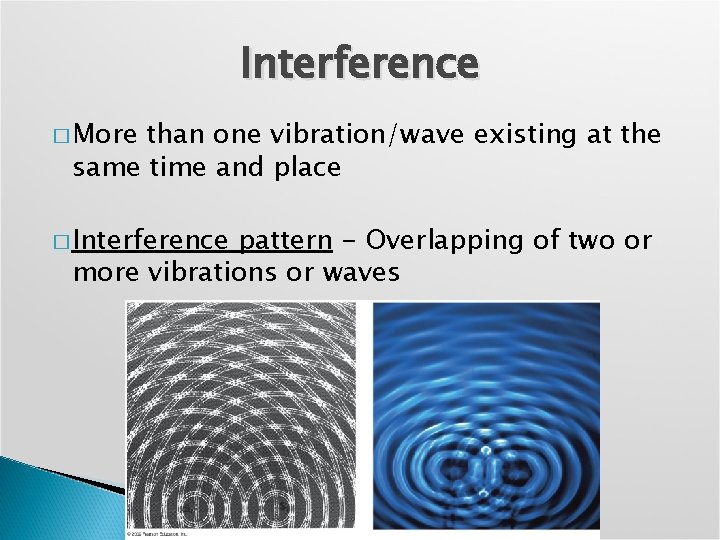
Interference � More than one vibration/wave existing at the same time and place � Interference pattern - Overlapping of two or more vibrations or waves
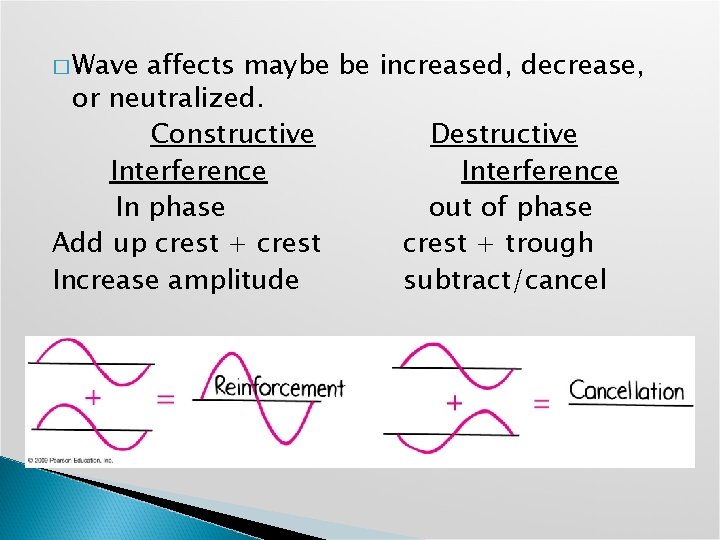
� Wave affects maybe be increased, decrease, or neutralized. Constructive Destructive Interference In phase out of phase Add up crest + trough Increase amplitude subtract/cancel
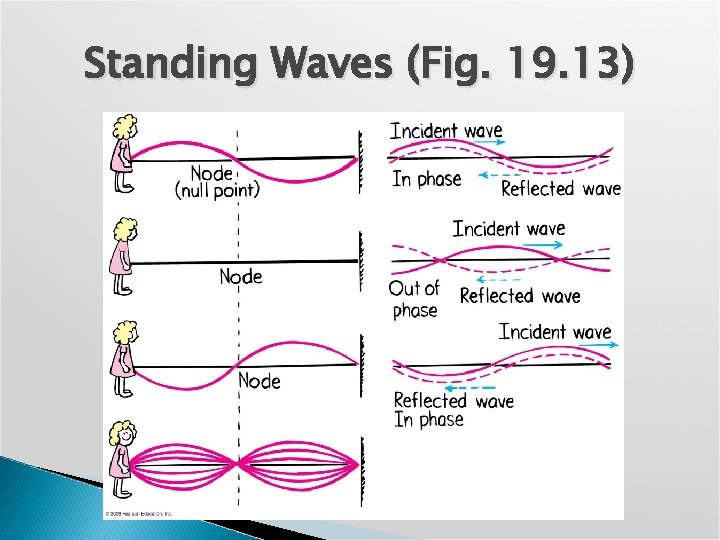
Standing Waves (Fig. 19. 13)
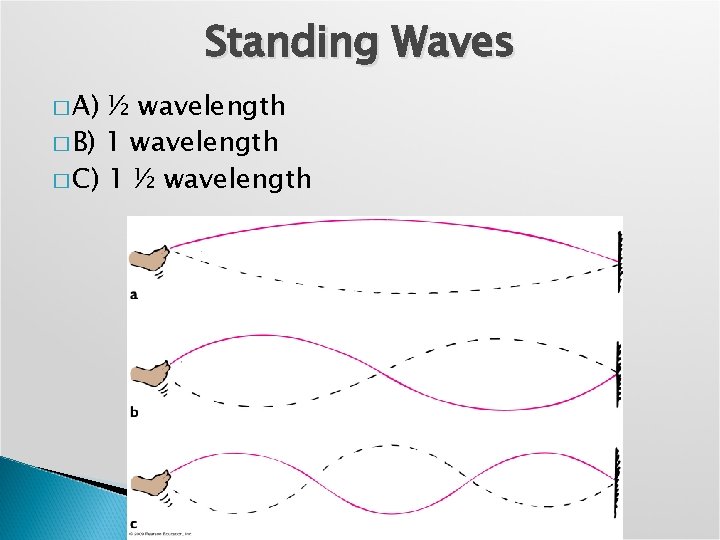
Standing Waves � A) ½ wavelength � B) 1 wavelength � C) 1 ½ wavelength
Standing Waves � Examples: ◦ Musical instruments : �Puck Strings and air/wind instruments ◦ Tub of water: �Slosh back and forth with right frequency �Either transverse or longitudinal waves
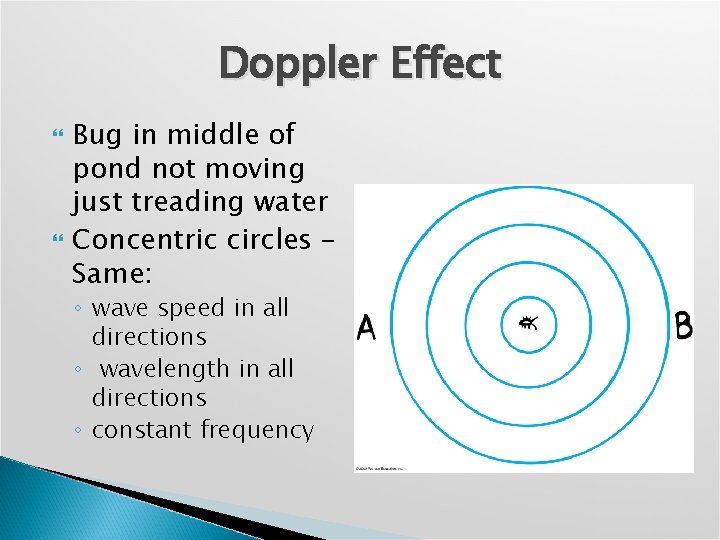
Doppler Effect Bug in middle of pond not moving just treading water Concentric circles – Same: ◦ wave speed in all directions ◦ wavelength in all directions ◦ constant frequency
Video: Doppler Effect Change in frequency due to motion of the source of the waves
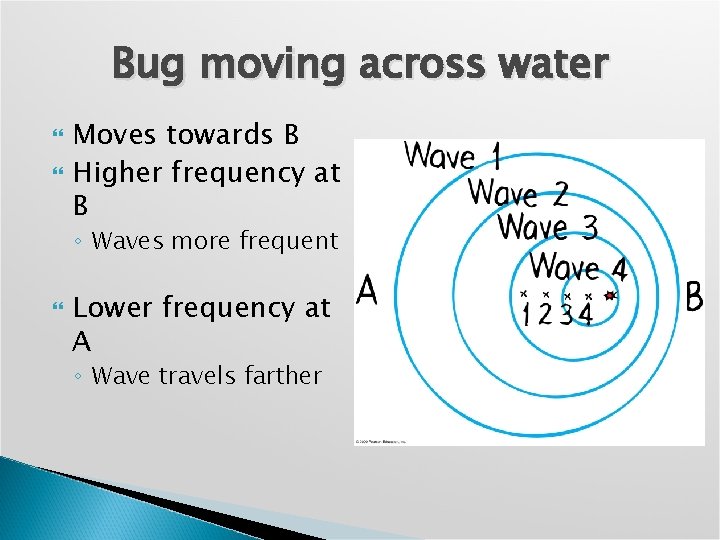
Bug moving across water Moves towards B Higher frequency at B ◦ Waves more frequent Lower frequency at A ◦ Wave travels farther
Sound and Light Waves � 3 -D space like an expanding balloon � Sound: ◦ Ex. Ambulance siren pass you �Close to you – pitch is higher (higher frequency) �Far away – drop in pitch (lower frequency) � Light: ◦ Approaching – higher frequency (blue shift) ◦ Recedes – decrease in frequency (red shift)
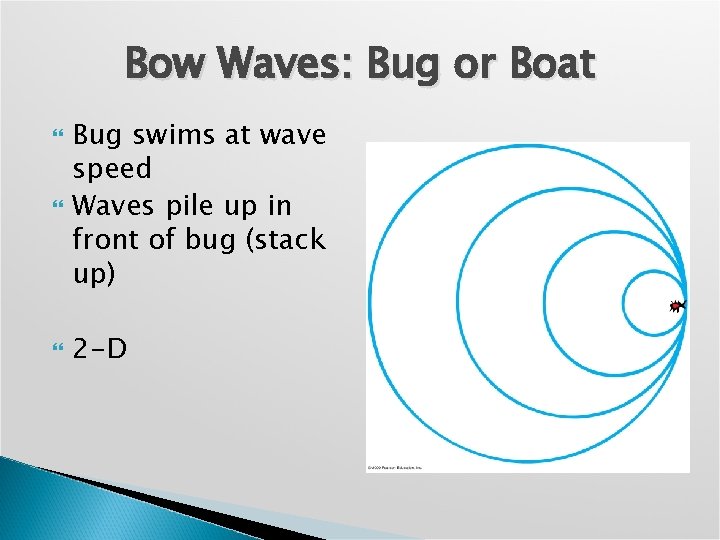
Bow Waves: Bug or Boat Bug swims at wave speed Waves pile up in front of bug (stack up) 2 -D
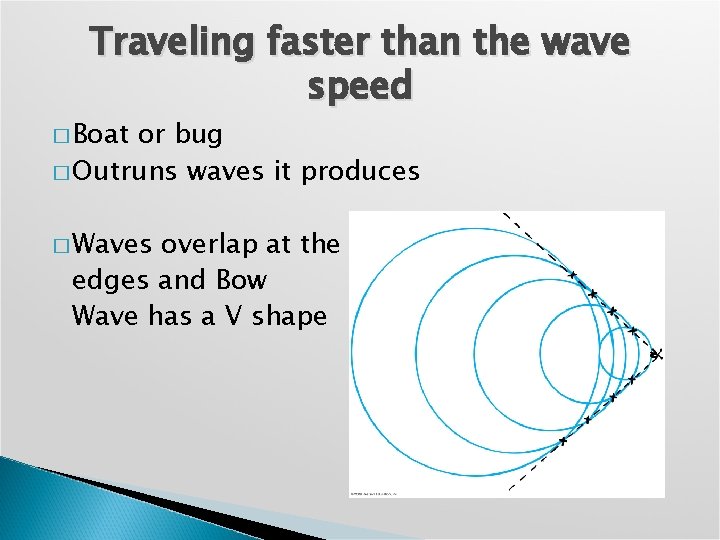
Traveling faster than the wave speed � Boat or bug � Outruns waves it produces � Waves overlap at the edges and Bow Wave has a V shape
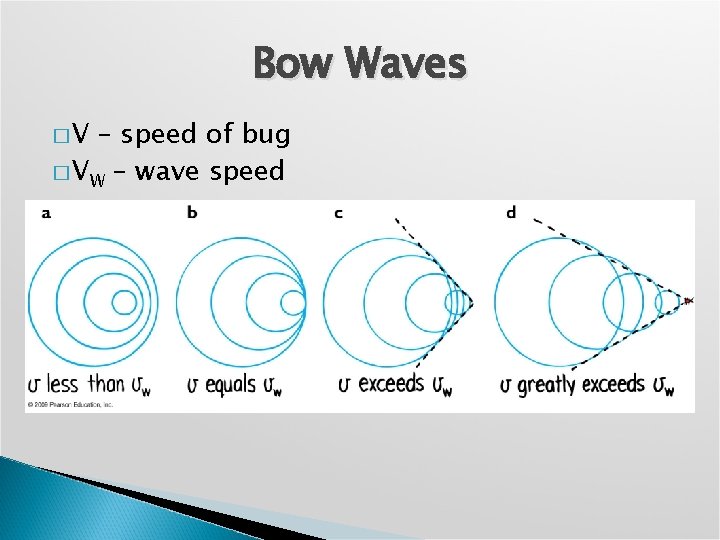
Bow Waves �V – speed of bug � VW – wave speed
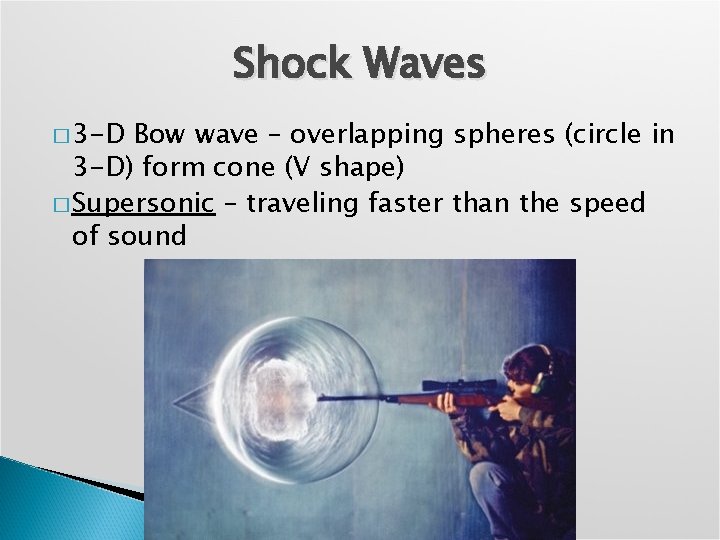
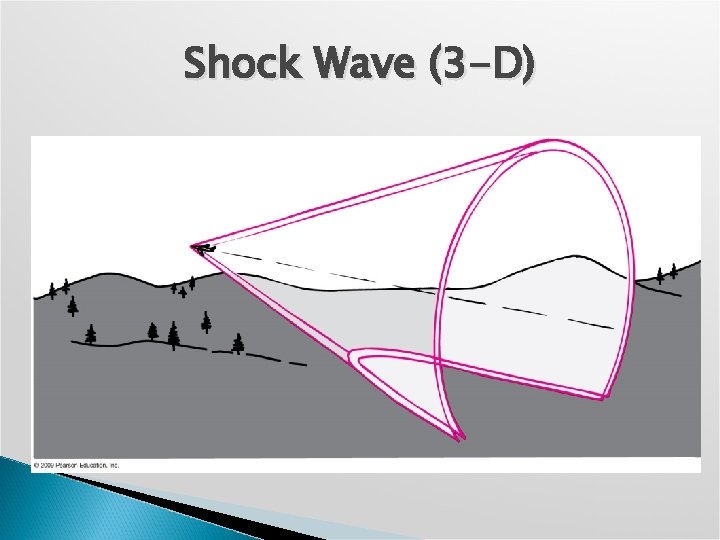
Shock Waves � 3 -D Bow wave – overlapping spheres (circle in 3 -D) form cone (V shape) � Supersonic – traveling faster than the speed of sound
Sonic Boom � Conical shell of compressed air that sweeps behind a supersonic aircraft. � Move at supersonic speed you will make sound. � Examples (small sonic boom): ◦ Bullet – crack ◦ Whip – crack a whip – tip going faster than speed of sound
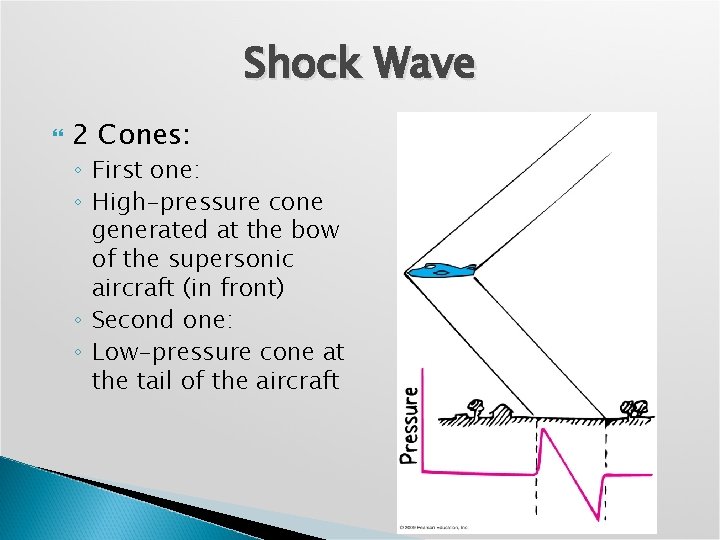
Shock Wave 2 Cones: ◦ First one: ◦ High-pressure cone generated at the bow of the supersonic aircraft (in front) ◦ Second one: ◦ Low-pressure cone at the tail of the aircraft
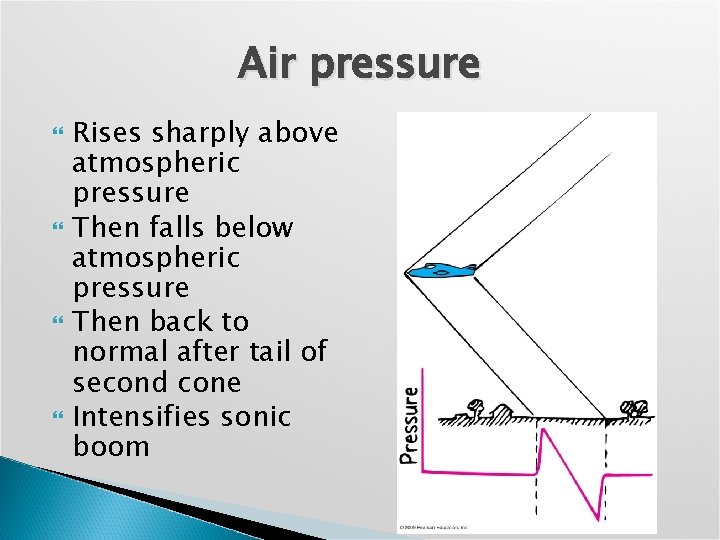
Air pressure Rises sharply above atmospheric pressure Then falls below atmospheric pressure Then back to normal after tail of second cone Intensifies sonic boom
Shock Wave (3 -D)
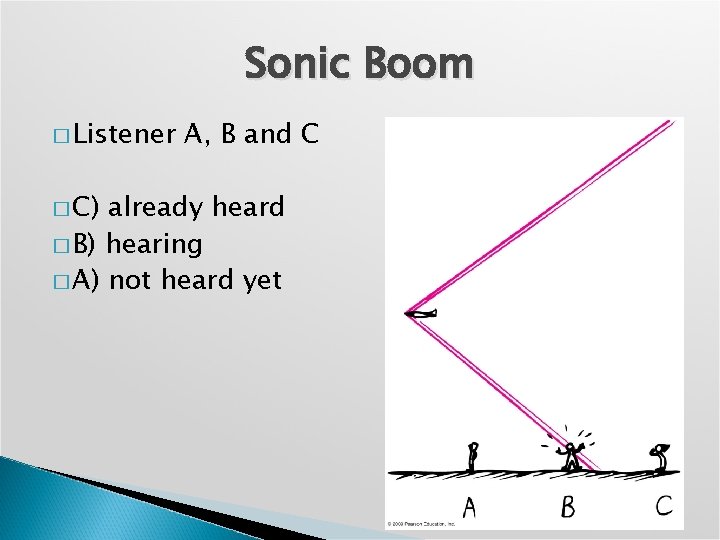
Sonic Boom � Listener � C) A, B and C already heard � B) hearing � A) not heard yet
Homework � Read last two paragraph on pg. 372 (Doppler effect) (stars spin rate) � Review Questions: 1, 3, 6, 9, 11, 12, 13, 16, 26 � Exercises: 1, 4, 8, 9, 10, 11, 14, 16, 17, 19, 25, 26, 27, 28, 30, 37, 43, 47, 48 � Problems: 1, 2, 3
Exam 1: Announcements � Number 2 was thrown out � Number 6 can have two answers
- Slides: 49