
Chapter 19 Vegetables Classification Grouped according to part
Chapter 19: Vegetables Classification: Grouped according to part of plant from which they come • Bulb: Garlic and Onion • Flower: Artichoke, broccoli, cauliflower • Fruits: tomatoes, cucumbers, eggplant, okra, peppers, pumpkin, squash • Stems: asparagus, celery • Leaves: Brussels sprout, cabbage, lettuce, spinach • Seeds: pea, corn, bean • Tubers: potatoes, Jerusalem artichoke • Roots: beets, carrots, parsnip, radish, rutabaga, sweet potato, turnip
Nutritional Value • Vitamin A= leafy green, deep yellow • Vitamin C=Broccoli, green peppers, raw cabbage • Vitamin B=All vegetables, especially seed vegetables • Calcium and Iron=leafy Green • Fiber=Skin and pulp of vegetable • -Helps with digestion • Carbohydrates=seeds, roots, tubers (starchy vegetable) • Most vegetables are low in calories
Storing Fresh Veggies • • Use as soon as possible Store in plastic bag or container Sweet Corn=Husks Tomatoes=Uncovered Lettuce=care before storing Onions=at room temp in open container Potatoes, squash, eggplant, rutabaga=in cool, dry, dark place use with in 1 week, when exposed to light they will turn green and develop bitter flavor ~Cost of Fresh Vegetables • Depends on time of year
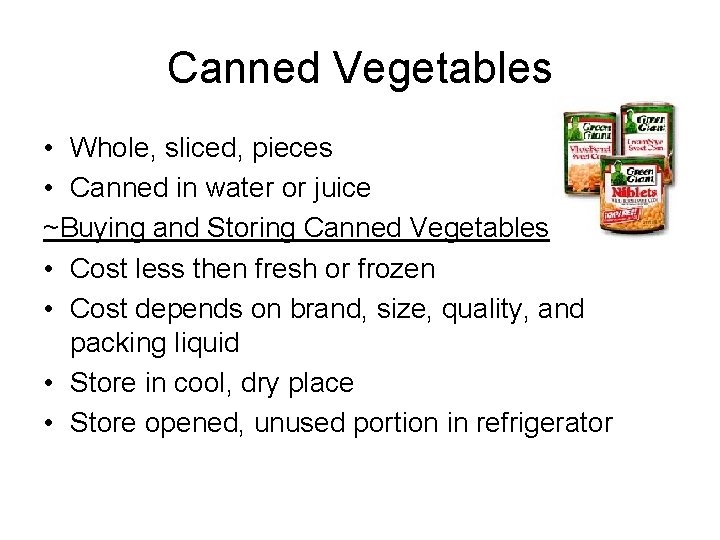
Canned Vegetables • Whole, sliced, pieces • Canned in water or juice ~Buying and Storing Canned Vegetables • Cost less then fresh or frozen • Cost depends on brand, size, quality, and packing liquid • Store in cool, dry place • Store opened, unused portion in refrigerator
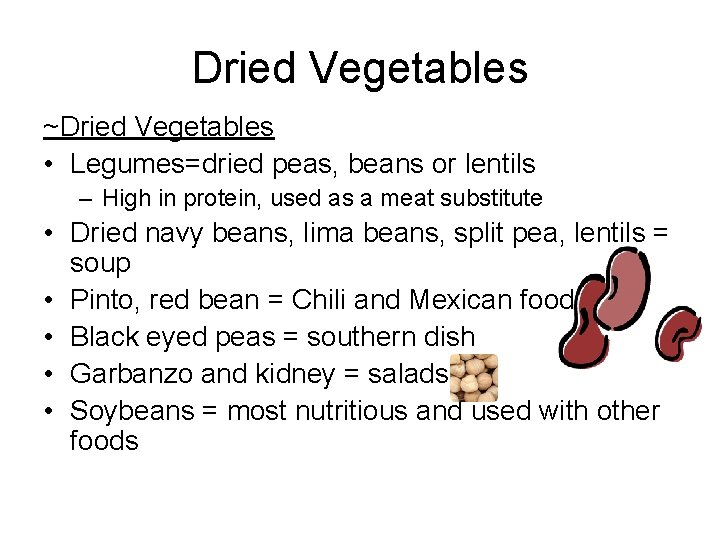
Dried Vegetables ~Dried Vegetables • Legumes=dried peas, beans or lentils – High in protein, used as a meat substitute • Dried navy beans, lima beans, split pea, lentils = soup • Pinto, red bean = Chili and Mexican food • Black eyed peas = southern dish • Garbanzo and kidney = salads • Soybeans = most nutritious and used with other foods
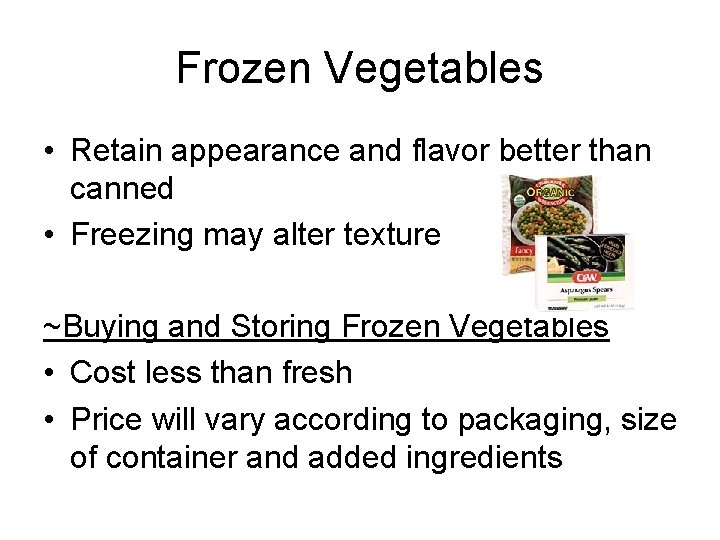
Frozen Vegetables • Retain appearance and flavor better than canned • Freezing may alter texture ~Buying and Storing Frozen Vegetables • Cost less than fresh • Price will vary according to packaging, size of container and added ingredients
Preparing Veggies • • Wash trim under cool running water Do not let them soak Use a peeler rather than a knife Raw taste best when cold
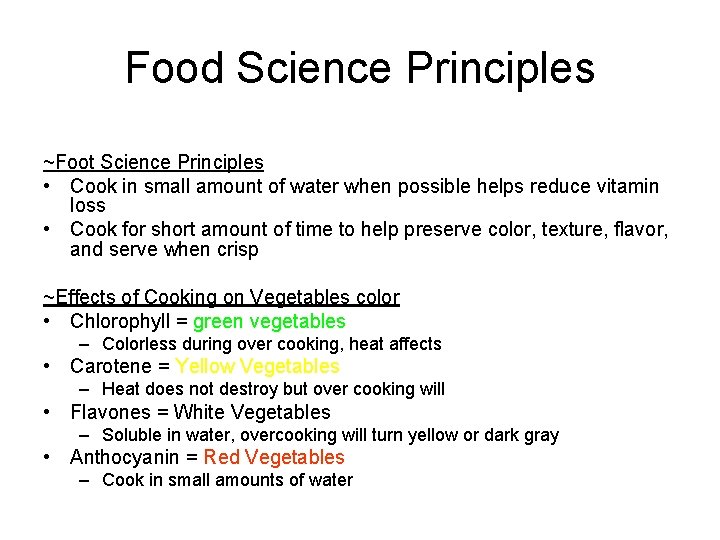
Food Science Principles ~Foot Science Principles • Cook in small amount of water when possible helps reduce vitamin loss • Cook for short amount of time to help preserve color, texture, flavor, and serve when crisp ~Effects of Cooking on Vegetables color • Chlorophyll = green vegetables – Colorless during over cooking, heat affects • Carotene = Yellow Vegetables – Heat does not destroy but over cooking will • Flavones = White Vegetables – Soluble in water, overcooking will turn yellow or dark gray • Anthocyanin = Red Vegetables – Cook in small amounts of water
Methods for Cooking Veggies • • Cooking in water Steaming Pressure cooking Baking Frying Broiling Microwaving
Potatoes • Different varieties – All purpose – work well for baking and boiling – Baking – New – sent to the market right after harvesting • New and round red are best for boiling, frying and making potato salad because they hold their shape • Baking and Russet are best for baking and mashing because they have a mealy texture ~Preparing potatoes – Most popular preparations are: boiling, mashed, frying and baking – Make sure to scrub potatoes to get any extra dirt off and prick with a fork or knife
- Slides: 10