
Chapter 19 The Lymphatic System Resistance is the
- Slides: 14
Chapter 19 The Lymphatic System • Resistance is the ability to ward off disease – lack of resistance is termed susceptibility • Nonspecific resistance to disease – general defensive mechanisms effective on a wide range of pathogens (disease producing microbes) • Specific resistance or immunity is ability to fight a specific pathogen – cell-mediated immunity – antibody-mediated immunity 1
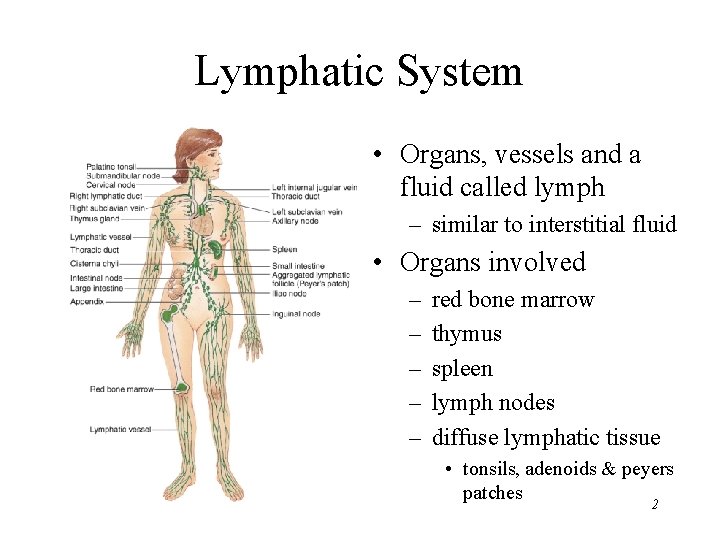
Lymphatic System • Organs, vessels and a fluid called lymph – similar to interstitial fluid • Organs involved – – – red bone marrow thymus spleen lymph nodes diffuse lymphatic tissue • tonsils, adenoids & peyers patches 2
Functions of the Lymphatic System • Draining excess interstitial fluid & plasma proteins from tissue spaces • Transporting dietary lipids & vitamins from GI tract to the blood • Facilitating immune responses – recognize microbes or abnormal cells & responding by killing them directly or secreting antibodies that cause their destruction 3
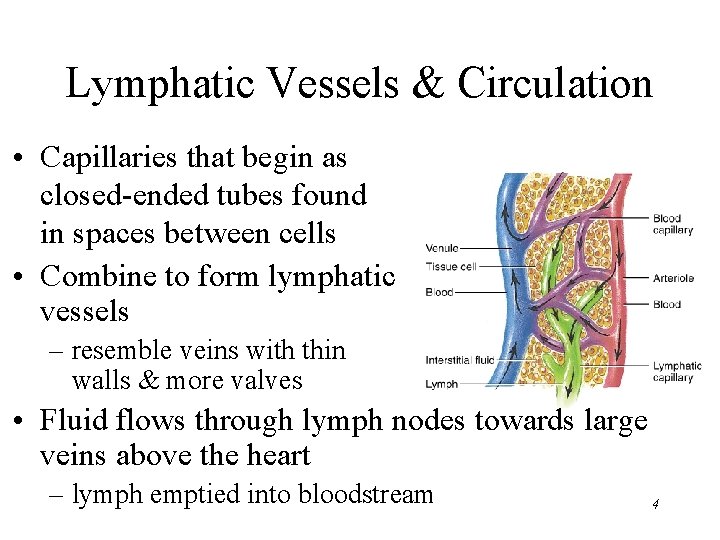
Lymphatic Vessels & Circulation • Capillaries that begin as closed-ended tubes found in spaces between cells • Combine to form lymphatic vessels – resemble veins with thin walls & more valves • Fluid flows through lymph nodes towards large veins above the heart – lymph emptied into bloodstream 4
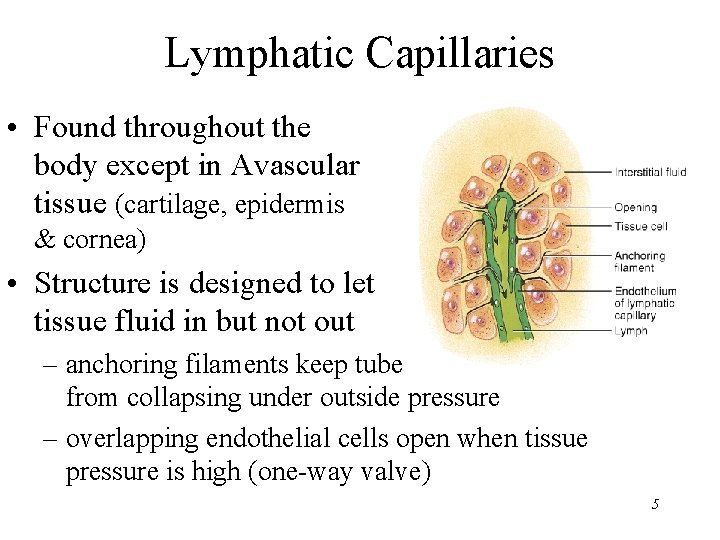
Lymphatic Capillaries • Found throughout the body except in Avascular tissue (cartilage, epidermis & cornea) • Structure is designed to let tissue fluid in but not out – anchoring filaments keep tube from collapsing under outside pressure – overlapping endothelial cells open when tissue pressure is high (one-way valve) 5
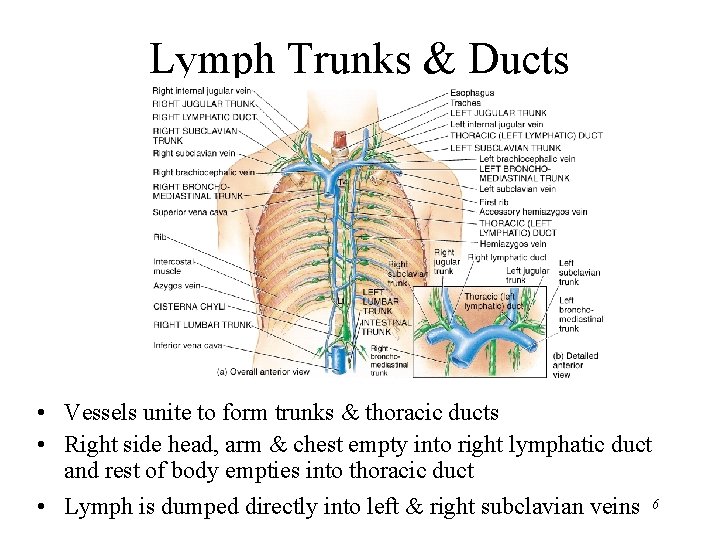
Lymph Trunks & Ducts • Vessels unite to form trunks & thoracic ducts • Right side head, arm & chest empty into right lymphatic duct and rest of body empties into thoracic duct • Lymph is dumped directly into left & right subclavian veins 6
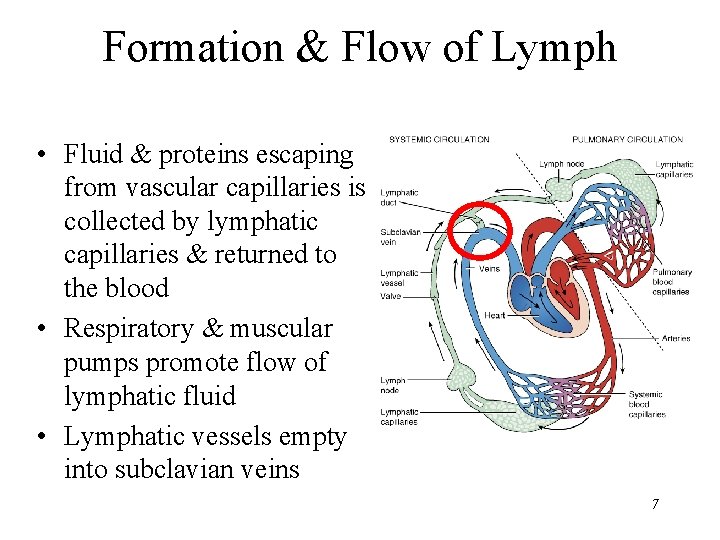
Formation & Flow of Lymph • Fluid & proteins escaping from vascular capillaries is collected by lymphatic capillaries & returned to the blood • Respiratory & muscular pumps promote flow of lymphatic fluid • Lymphatic vessels empty into subclavian veins 7
Lymphatic Organs & Tissues • Widely distributed throughout the body • Primary lymphatic organs – provide environment for stem cells to divide & mature into B and T lymphocytes • red bone marrow gives rise to mature B cells • thymus is site where pre-T cells from red marrow mature • Secondary lymphatic organs & tissues – site where most immune responses occur • lymph nodes, spleen & lymphatic nodules 8
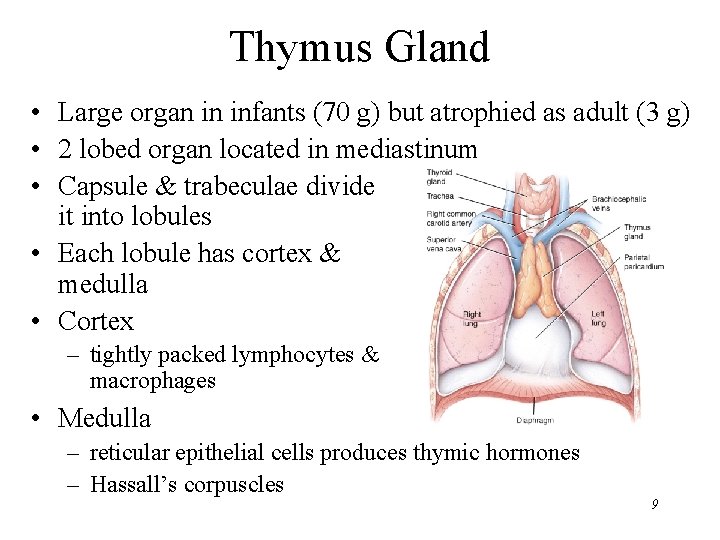
Thymus Gland • Large organ in infants (70 g) but atrophied as adult (3 g) • 2 lobed organ located in mediastinum • Capsule & trabeculae divide it into lobules • Each lobule has cortex & medulla • Cortex – tightly packed lymphocytes & macrophages • Medulla – reticular epithelial cells produces thymic hormones – Hassall’s corpuscles 9
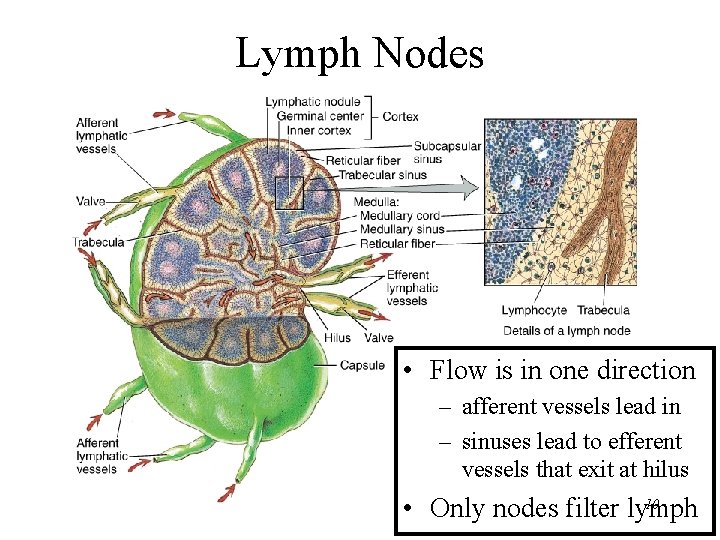
Lymph Nodes • Flow is in one direction – afferent vessels lead in – sinuses lead to efferent vessels that exit at hilus 10 • Only nodes filter lymph
Lymph Nodes • Bean-shaped organs, up to 1 inch long, located along lymphatic vessels – scattered throughout body but concentrated near mammary glands, axillae & groin • 2 regions: – cortex • lymphatic nodules with germinal centers containing dendritic cells – antigen-presenting cells and macrophages • B cells proliferate into antibody-secreting plasma cells – medulla • contains B cells & plasma cells in medullary cords 11
Metastasis Through Lymphatic System • Characteristic of malignant tumors • Spread of disease from one organ to another – cancer cells travel via blood or lymphatic system – cells establish new tumors where lodge • Secondary tumor sites can be predicted by direction of lymphatic flow from primary site • Cancerous lymph nodes are firm, enlarged and nontender -- infected lymph nodes are not firm and are very tender 12
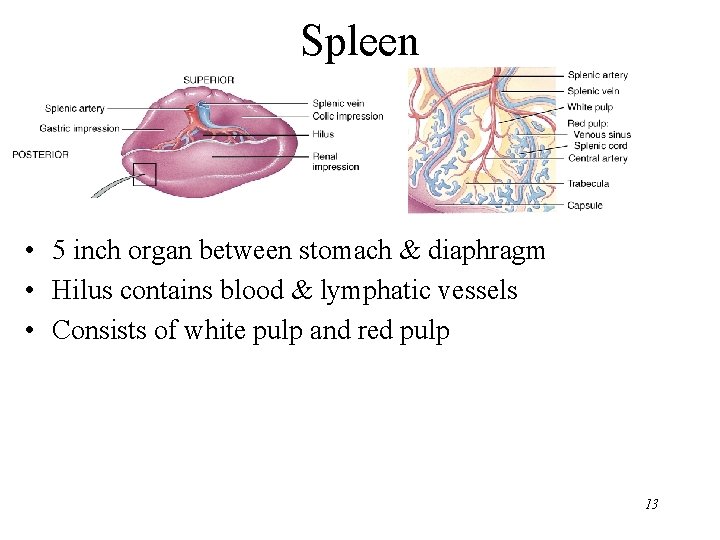
Spleen • 5 inch organ between stomach & diaphragm • Hilus contains blood & lymphatic vessels • Consists of white pulp and red pulp 13
Lymphatic Nodules • Concentrations of lymphatic tissue not surrounded by a capsule scattered throughout connective tissue of mucous membranes – mucosa-associated lymphoid tissue (MALT) • Peyer’s patches in the ileum of the small intestine • Appendix • Tonsils form ring at top of throat – adenoids (pharyngeal tonsil) – palatine tonsils (on each side wall) – lingual tonsil in the back of the tongue 14