
Chapter 19 The Light Reactions of Photosynthesis 2019
- Slides: 70
Chapter 19 The Light Reactions of Photosynthesis © 2019 W. H. Freeman and Company
CHAPTER 19 The Light Reactions of Photosynthesis
Ch. 19 Learning Objectives By the end of this chapter, you should be able to: 1. Describe the light reactions. 2. Identify the key products of the light reactions. 3. Explain how redox balance is maintained during the light reactions. 4. Explain how ATP is synthesized in chloroplasts. 5. Describe the function of the light-harvesting complex.
Ch. 19 Outline • 19. 1 Photosynthesis Takes Place in Chloroplasts • 19. 2 Light Absorption by Chlorophyll Induces Electron Transfer • 19. 3 Two Photosystems Generate a Proton Gradient and NADPH in Oxygenic Photosynthesis • 19. 4 A Proton Gradient across the Thylakoid Membrane Drives ATP Synthesis • 19. 5 Accessory Pigments Funnel Energy into Reaction Centers • 19. 6 The Ability to Convert Light into Chemical Energy Is Ancient
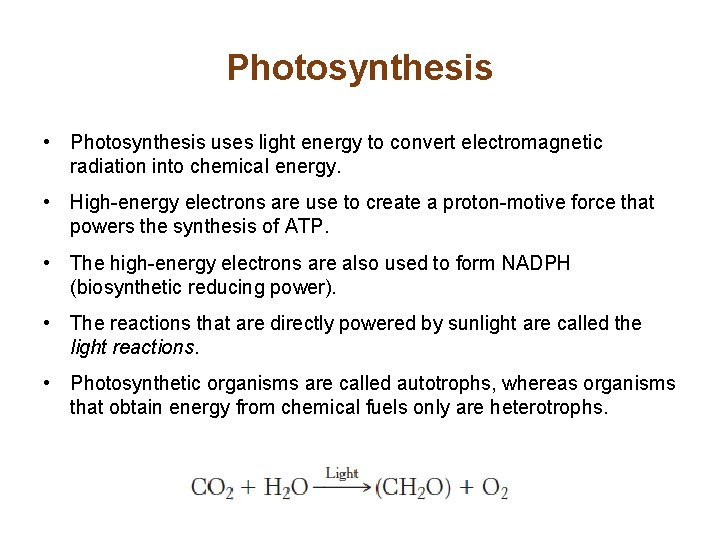
Photosynthesis • Photosynthesis uses light energy to convert electromagnetic radiation into chemical energy. • High-energy electrons are use to create a proton-motive force that powers the synthesis of ATP. • The high-energy electrons are also used to form NADPH (biosynthetic reducing power). • The reactions that are directly powered by sunlight are called the light reactions. • Photosynthetic organisms are called autotrophs, whereas organisms that obtain energy from chemical fuels only are heterotrophs.
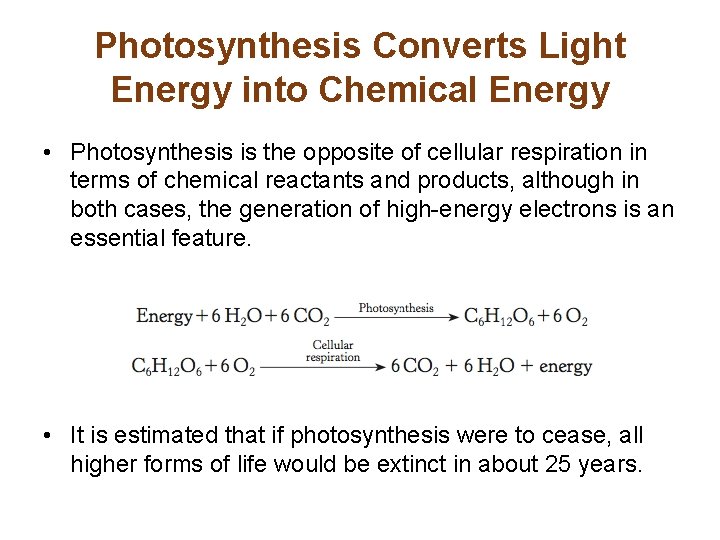
Photosynthesis Converts Light Energy into Chemical Energy • Photosynthesis is the opposite of cellular respiration in terms of chemical reactants and products, although in both cases, the generation of high-energy electrons is an essential feature. • It is estimated that if photosynthesis were to cease, all higher forms of life would be extinct in about 25 years.
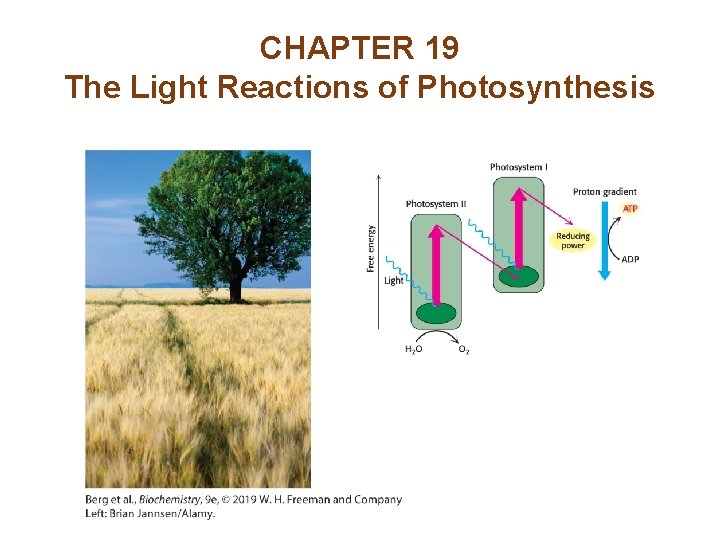
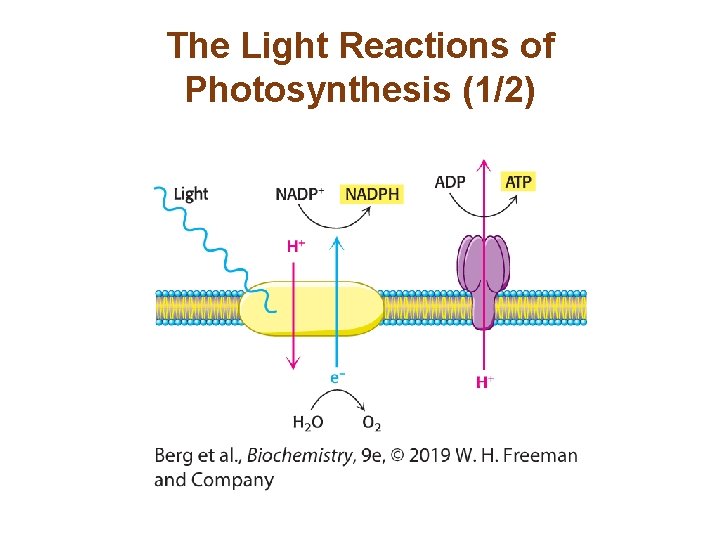
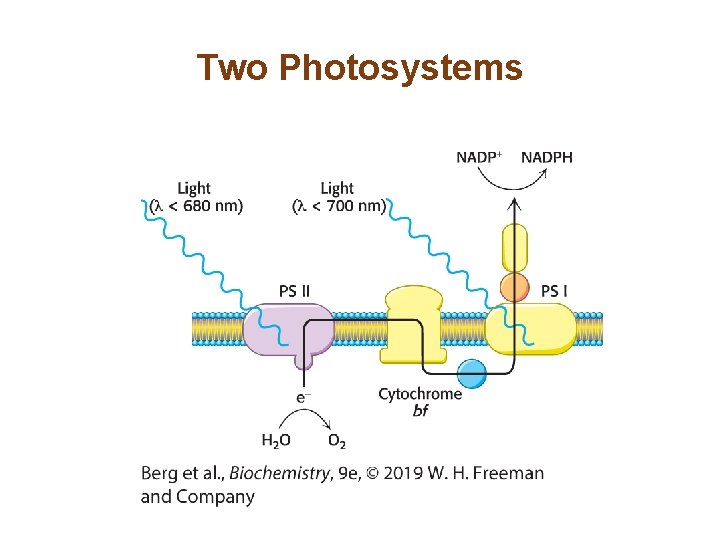
The Light Reactions of Photosynthesis (1/2) • Photosystem I generates reducing power in the form of NADPH but becomes electron deficient during this process. • Photosystem II oxidizes water and transfers the electrons to replenish the electrons lost by photosystem I. A side product of these reactions is O 2. • Electron flow from photosystem II to photosystem I creates a proton gradient across the chloroplast inner membrane, augmented by the protons released by the oxidation of water. This drives the synthesis of ATP.
The Light Reactions of Photosynthesis (1/2)
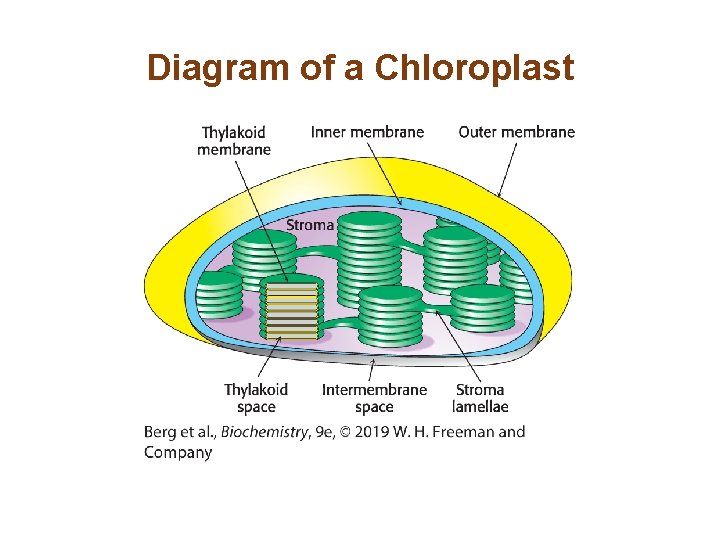
Section 19. 1 Photosynthesis Takes Place in Chloroplasts • The chloroplast is a double-membrane organelle. • The inner membrane surrounds a space called the stroma, which is the site of the dark reaction: the synthesis of glucose from CO 2 and H 2 O using ATP and NADPH formed in the light reactions. • In the stroma are membranous sacs called thylakoid membranes. Thylakoid membranes are the location of the light reactions of photosynthesis.
Diagram of a Chloroplast
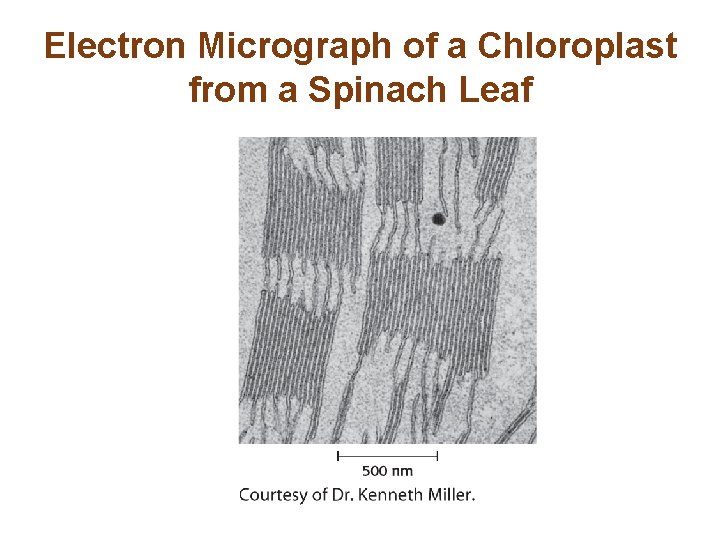
Electron Micrograph of a Chloroplast from a Spinach Leaf
The Primary Events of Photosynthesis Take Place in Thylakoid Membranes • The thylakoid membranes contain the components required for the light reactions of photosynthesis: 1. Light-harvesting proteins 2. Reaction centers 3. Electron-transport chains 4. ATP synthase • Like mitochondria, chloroplasts have a highly impermeable inner membrane and a more permeable outer membrane.
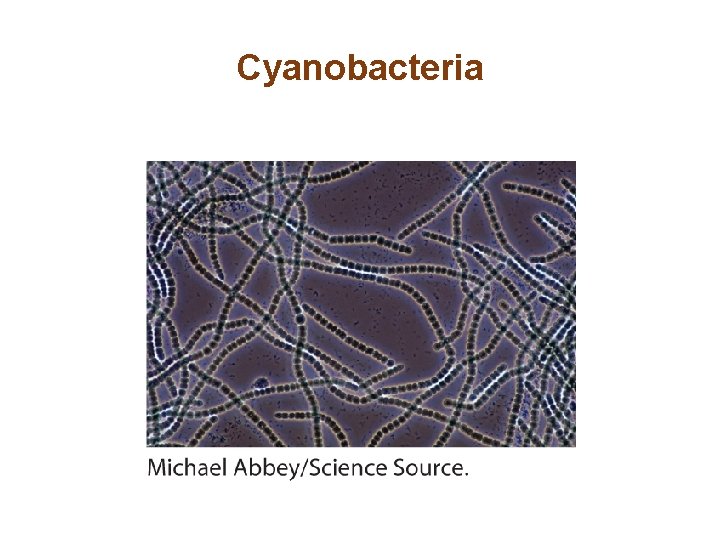
Chloroplasts Arose from an Endosymbiotic Event • Chloroplasts contain their own DNA and the machinery for replicating and expressing it, but they are not autonomous since they also require nuclear-encoded proteins. • Chloroplasts in higher plants and green algae are believed to be the descendants of an ancestor of a cyanobacterium that was engulfed by a eukaryotic host; chloroplasts of red and brown algae are derived from at least one additional event.
Cyanobacteria
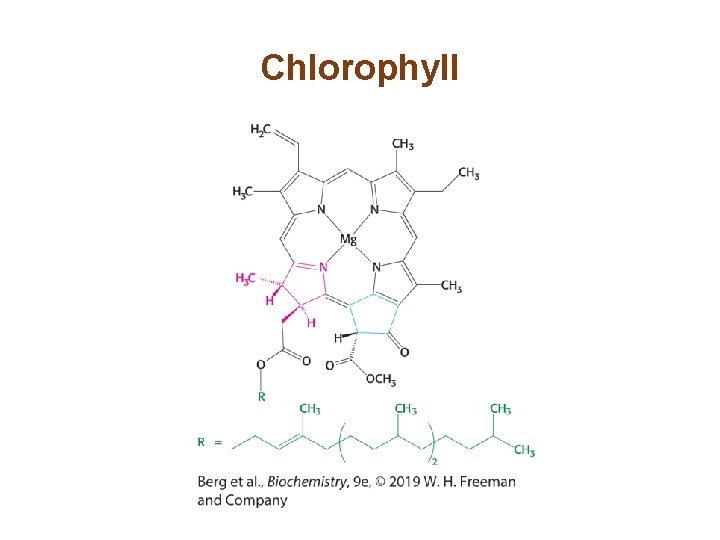
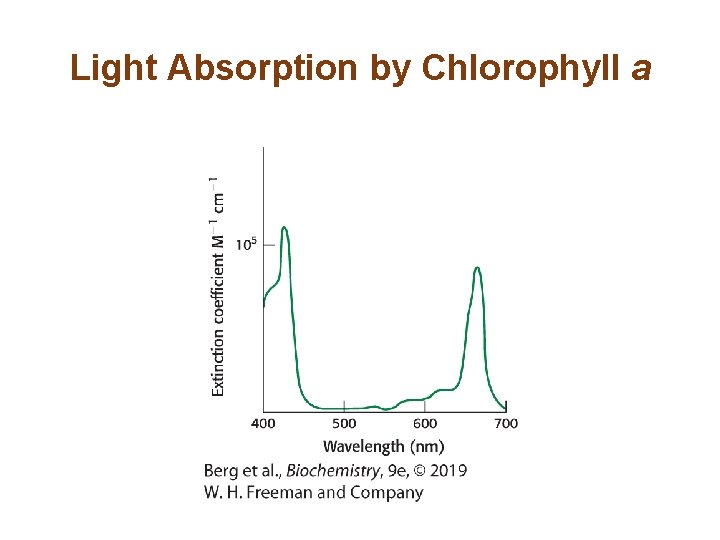
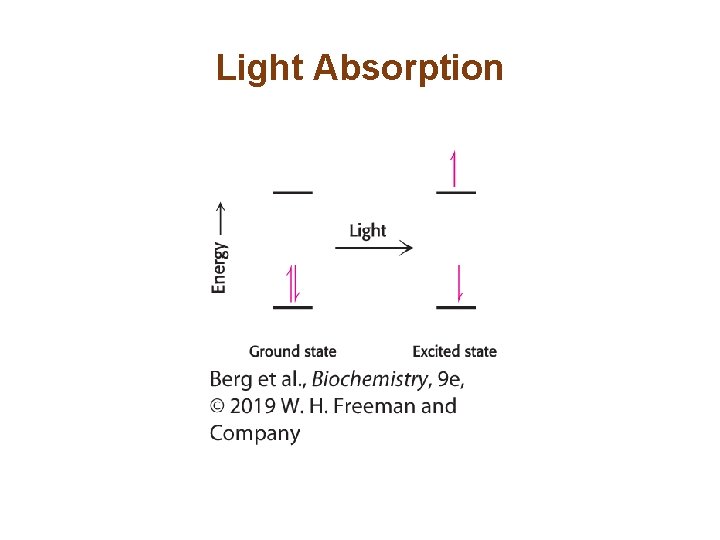
Section 19. 2 Light Absorption by Chlorophyll Induces Electron Transfer • Photosynthesis begins with the absorption of light by a photoreceptor molecule, also called a pigment. The principal photoreceptor in the chloroplasts of green plants is chlorophyll a. • When a photon of the appropriate energy is absorbed by a pigment, an electron in the pigment molecule jumps to a higher energy state. • The excited electron may fall to its original state, releasing the energy as light or heat.
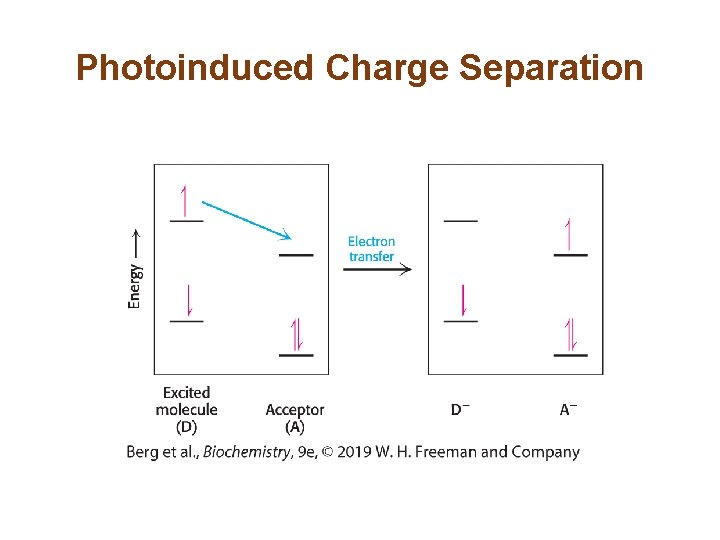
Electron Transfer • Another fate for the excited electron is to move to a nearby molecule that has a lower excited state, a process called electron transfer. • Electron transfer results in photoinduced charge separation because the initial molecule is now positively charged and the molecule that accepted the electron is negatively charged. • Separation of charge occurs at a site called the reaction center.
Chlorophyll
Light Absorption by Chlorophyll a
Light Absorption
Photoinduced Charge Separation
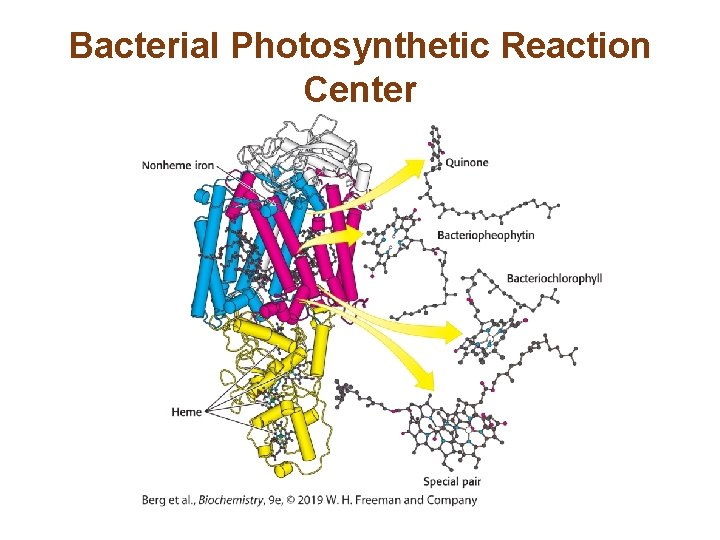
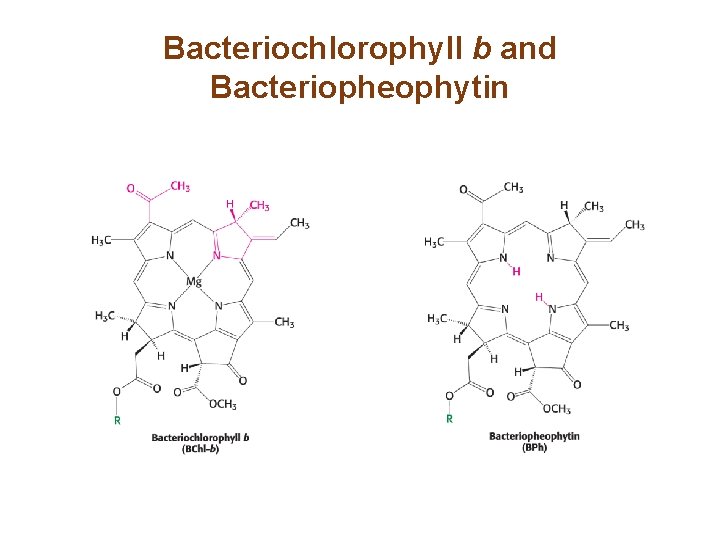
A Special Pair of Chlorophylls Initiate Charge Separation • The photosynthetic reaction center of Rhodopseudomonas viridis is well characterized. • Light absorption depends on two photosynthetic pigments—bacteriochlorophyll b (BChl-b) and bacteriopheophytin (BPh). • The reaction center, P 960, consists of a pair of BChl -b molecules.
Bacterial Photosynthetic Reaction Center
Bacteriochlorophyll b and Bacteriopheophytin
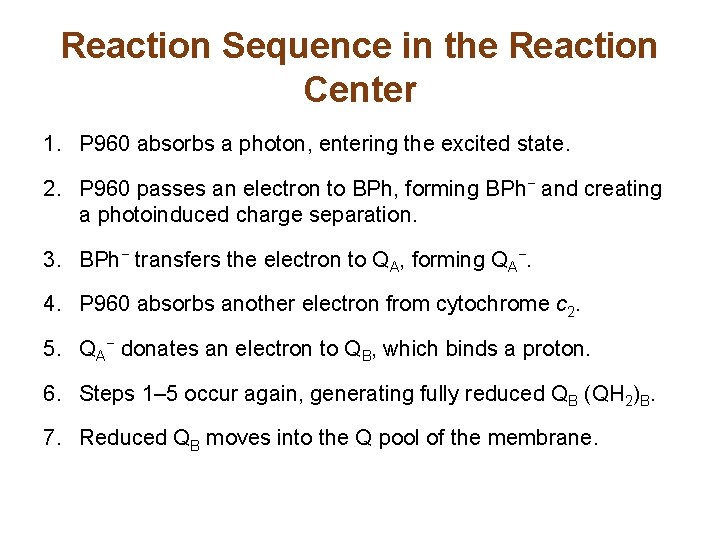
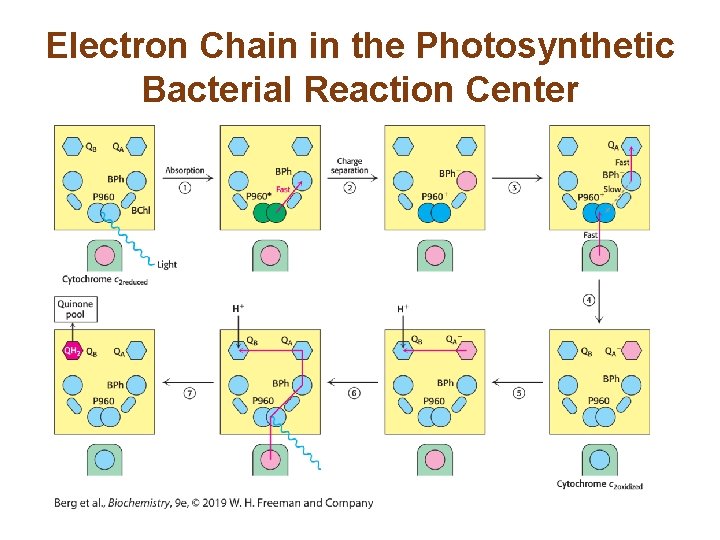
Reaction Sequence in the Reaction Center 1. P 960 absorbs a photon, entering the excited state. 2. P 960 passes an electron to BPh, forming BPh− and creating a photoinduced charge separation. 3. BPh− transfers the electron to QA, forming QA−. 4. P 960 absorbs another electron from cytochrome c 2. 5. QA− donates an electron to QB, which binds a proton. 6. Steps 1– 5 occur again, generating fully reduced QB (QH 2)B. 7. Reduced QB moves into the Q pool of the membrane.
Electron Chain in the Photosynthetic Bacterial Reaction Center
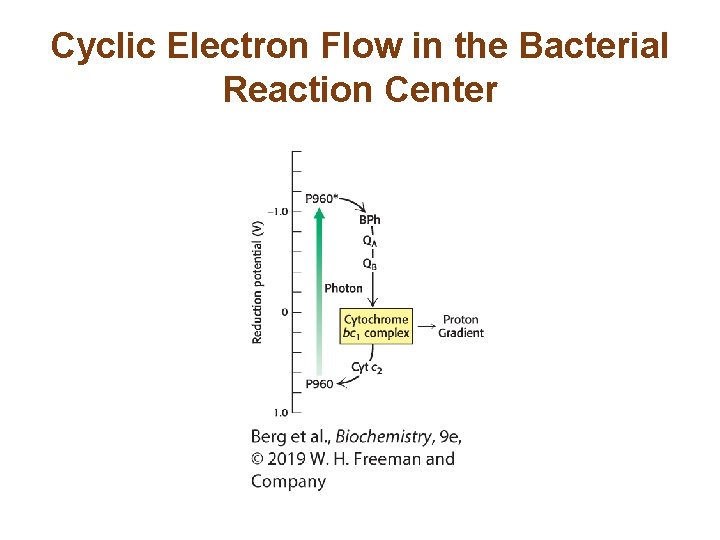
Cyclic Electron Flow Reduces the Cytochrome of the Reaction Center • Electrons from QH 2 are returned to cytochrome c 2 by the cytochrome bc 1 complex. • Cytochrome bc 1 complex is a proton pump that generates a proton gradient as it passes electrons to cytochrome c 2.
Cyclic Electron Flow in the Bacterial Reaction Center
Section 19. 3 Two Photosystems Generate a Proton Gradient and NADPH in Oxygenic Photosynthesis • Photosynthesis in green plants consists of two photosystems. • Photosystem I generates biosynthetic reducing power in the form of NADPH. • Photosystem II replenishes the electrons of photosystem I while generating a proton gradient that is used to synthesize ATP. • The missing electrons in photosystem II are replaced by the photolysis of water.
Two Photosystems
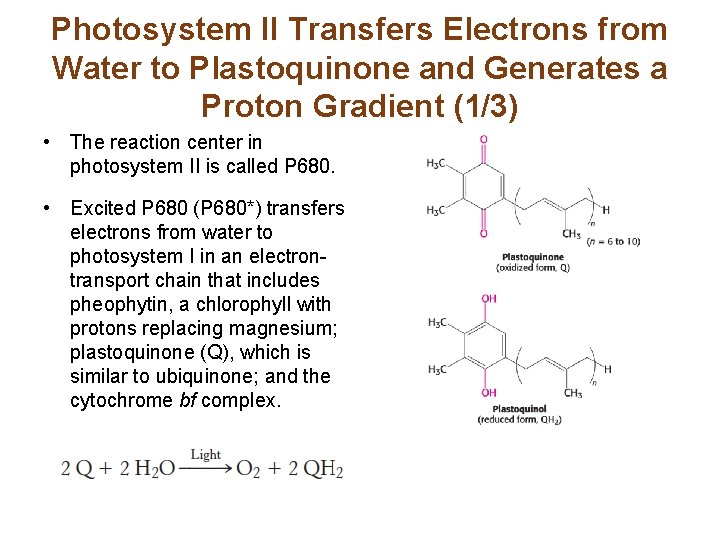
Photosystem II Transfers Electrons from Water to Plastoquinone and Generates a Proton Gradient (1/3) • The reaction center in photosystem II is called P 680. • Excited P 680 (P 680*) transfers electrons from water to photosystem I in an electrontransport chain that includes pheophytin, a chlorophyll with protons replacing magnesium; plastoquinone (Q), which is similar to ubiquinone; and the cytochrome bf complex.
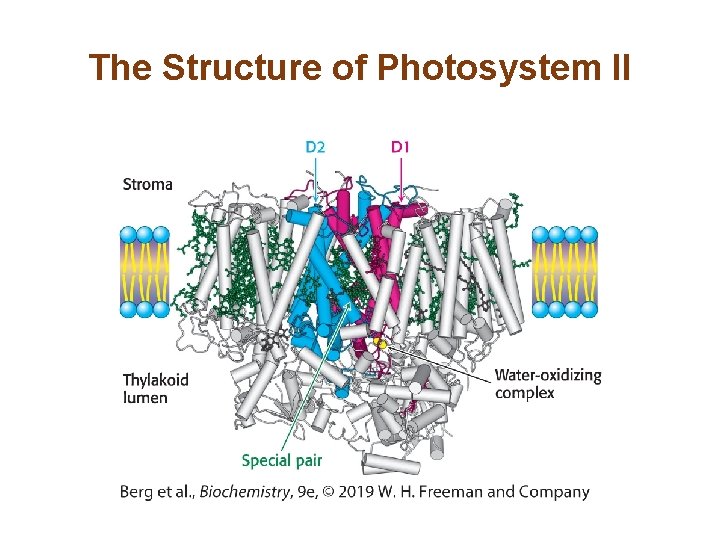
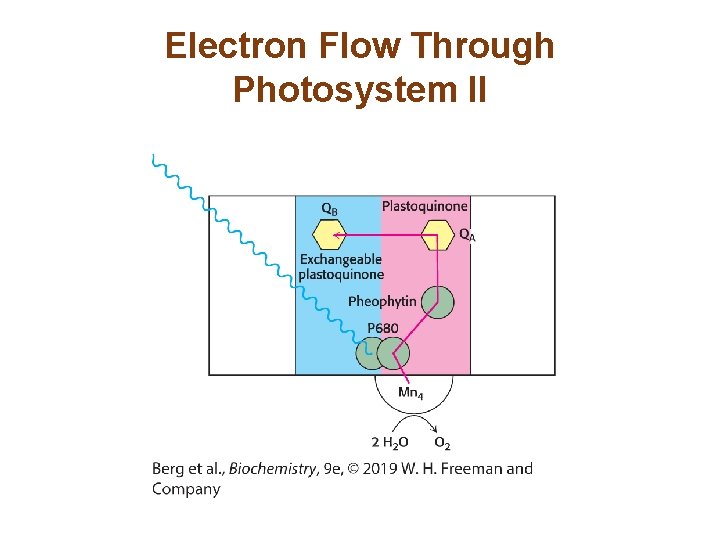
Photosystem II Transfers Electrons from Water to Plastoquinone and Generates a Proton Gradient (2/3) • P 680, the reaction center for photosystem II, is bound by the D 1 and D 2 subunits of the photosystem. • Upon excitation of P 680, electrons flow to pheophytin and then to plastoquinone. Finally, they flow to reduce plastoquinone (Q). • P 680+ extracts electrons from water bound at the manganese center to maintain redox balance.
The Structure of Photosystem II
Electron Flow Through Photosystem II
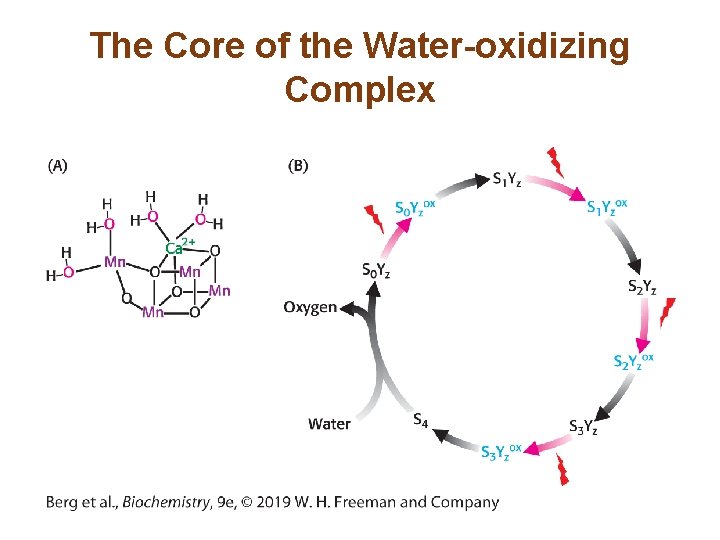
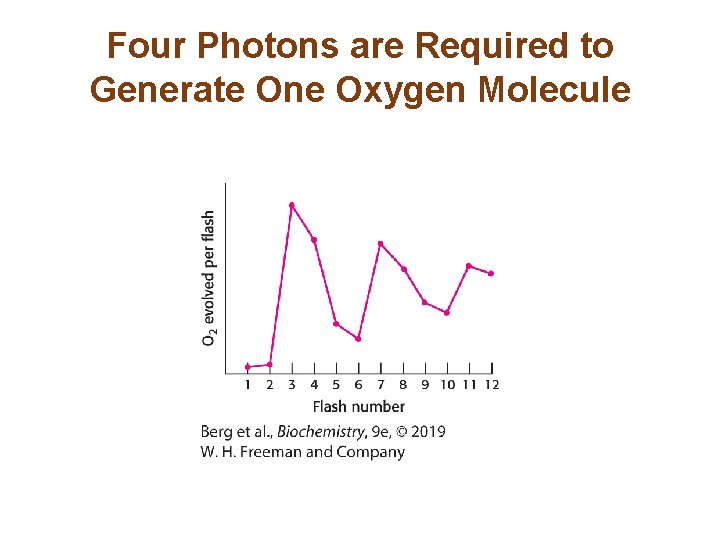
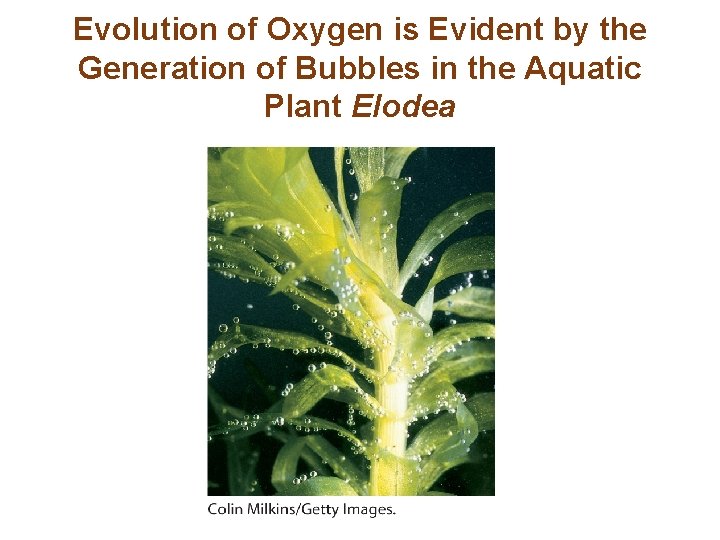
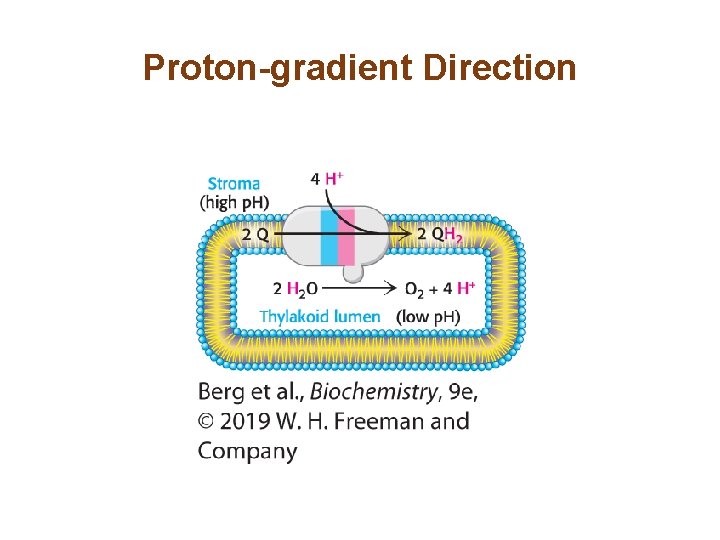
Photosystem II Transfers Electrons from Water to Plastoquinone and Generates a Proton Gradient (3/3) • P 680+ is a strong oxidant that removes electrons from water. This reaction, the photolysis of water, occurs at the water-oxidizing complex (also called the manganese center) of photosystem II. • Four photons are required to generate one oxygen molecule. • The four electrons extracted from water are used to reduce two Q to two QH 2. • The four protons used to reduce the Q molecules come from the stroma, and the four protons liberated from water are released into the lumen. • The photolysis of water is the source of O 2 for all life.
The Core of the Water-oxidizing Complex
Four Photons are Required to Generate One Oxygen Molecule
Evolution of Oxygen is Evident by the Generation of Bubbles in the Aquatic Plant Elodea
Proton-gradient Direction
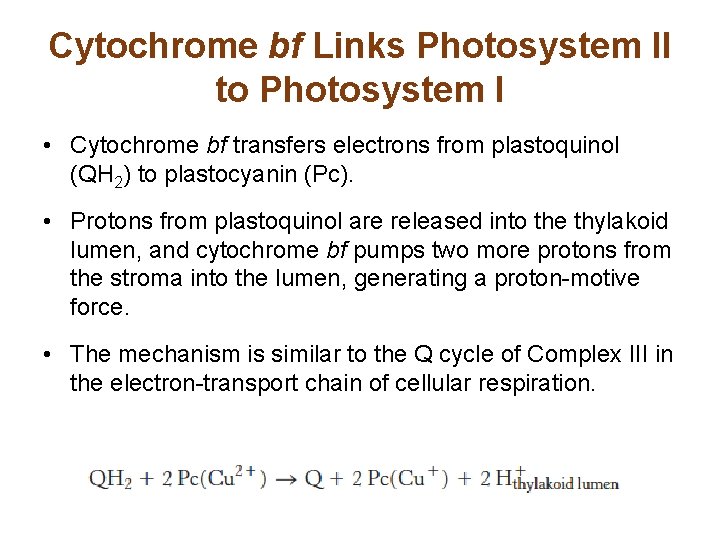
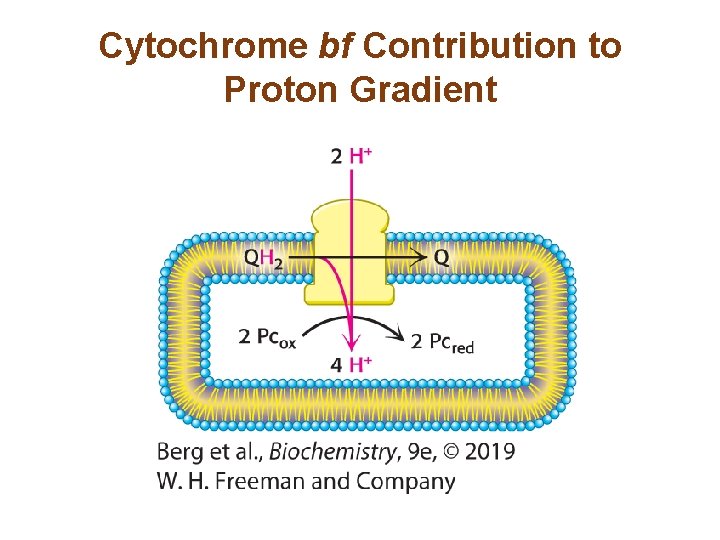
Cytochrome bf Links Photosystem II to Photosystem I • Cytochrome bf transfers electrons from plastoquinol (QH 2) to plastocyanin (Pc). • Protons from plastoquinol are released into the thylakoid lumen, and cytochrome bf pumps two more protons from the stroma into the lumen, generating a proton-motive force. • The mechanism is similar to the Q cycle of Complex III in the electron-transport chain of cellular respiration.
Cytochrome bf Contribution to Proton Gradient
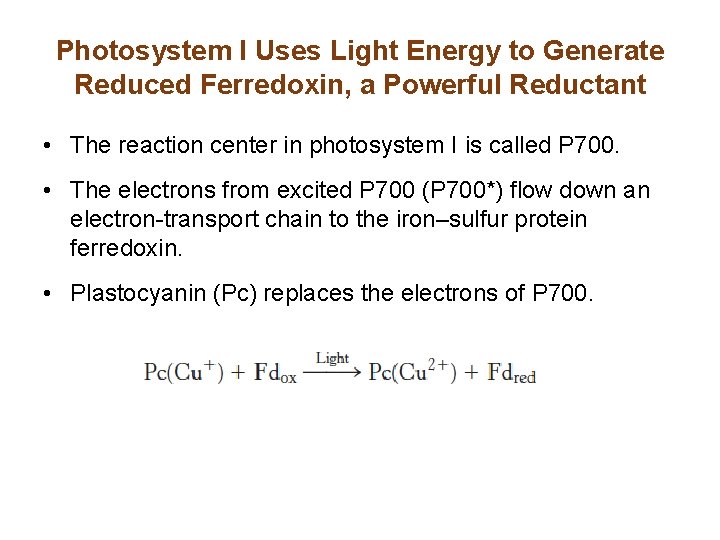
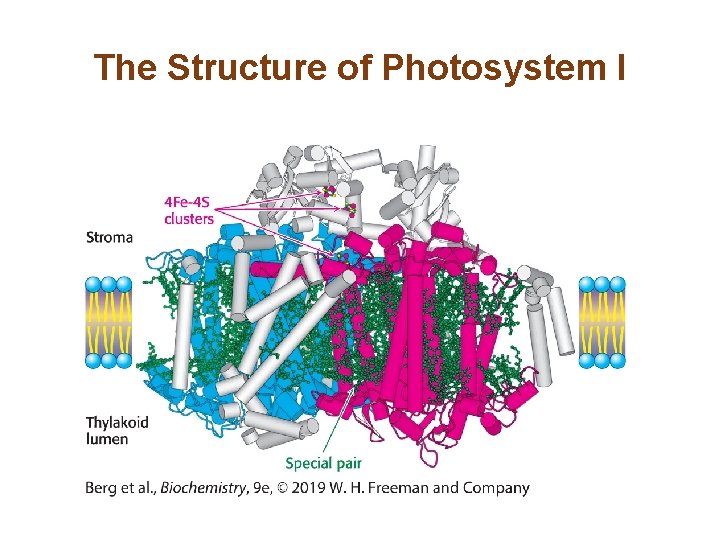
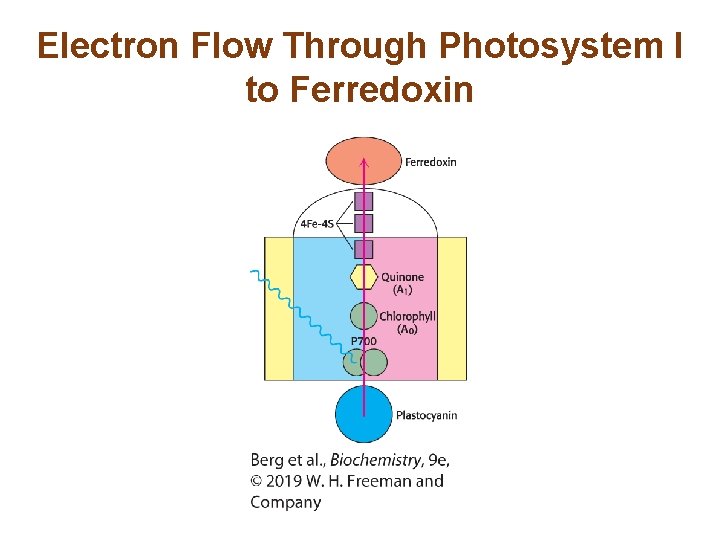
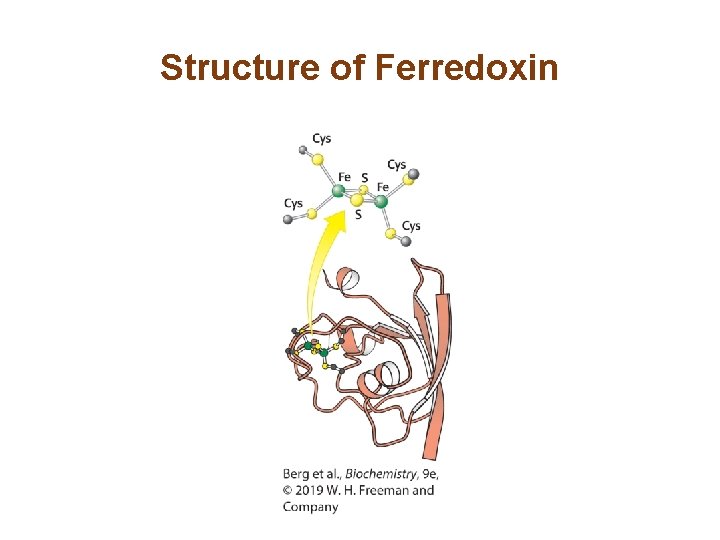
Photosystem I Uses Light Energy to Generate Reduced Ferredoxin, a Powerful Reductant • The reaction center in photosystem I is called P 700. • The electrons from excited P 700 (P 700*) flow down an electron-transport chain to the iron–sulfur protein ferredoxin. • Plastocyanin (Pc) replaces the electrons of P 700.
The Structure of Photosystem I
Electron Flow Through Photosystem I to Ferredoxin
Structure of Ferredoxin
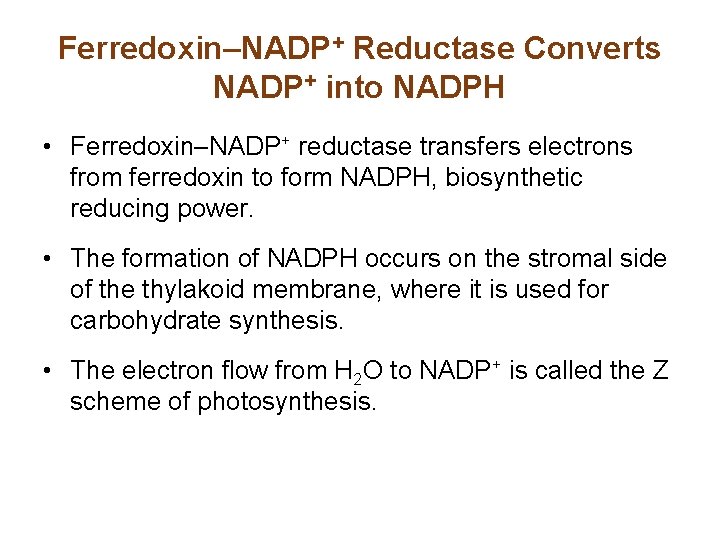
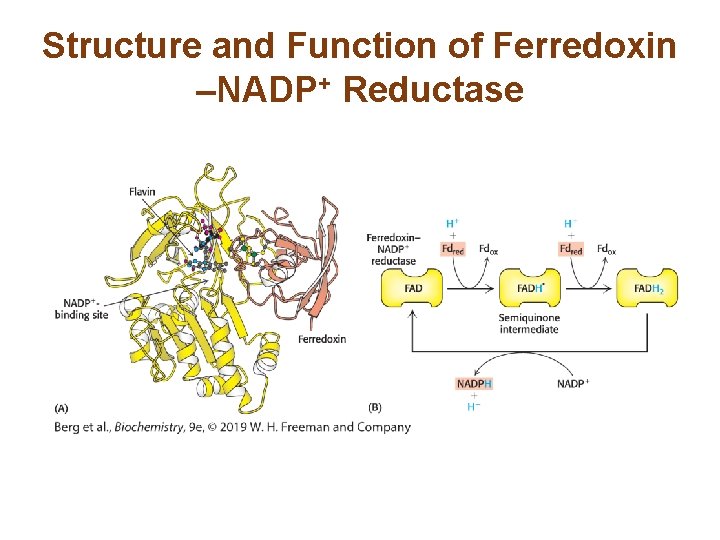
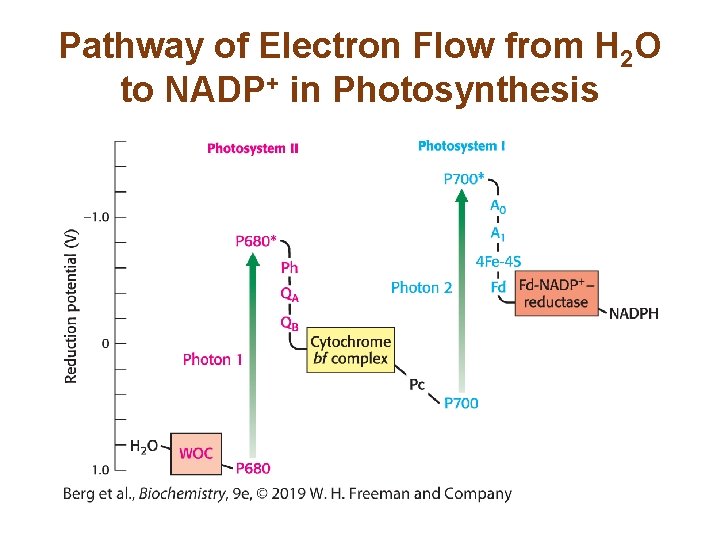
Ferredoxin–NADP+ Reductase Converts NADP+ into NADPH • Ferredoxin–NADP+ reductase transfers electrons from ferredoxin to form NADPH, biosynthetic reducing power. • The formation of NADPH occurs on the stromal side of the thylakoid membrane, where it is used for carbohydrate synthesis. • The electron flow from H 2 O to NADP+ is called the Z scheme of photosynthesis.
Structure and Function of Ferredoxin –NADP+ Reductase
Pathway of Electron Flow from H 2 O to NADP+ in Photosynthesis
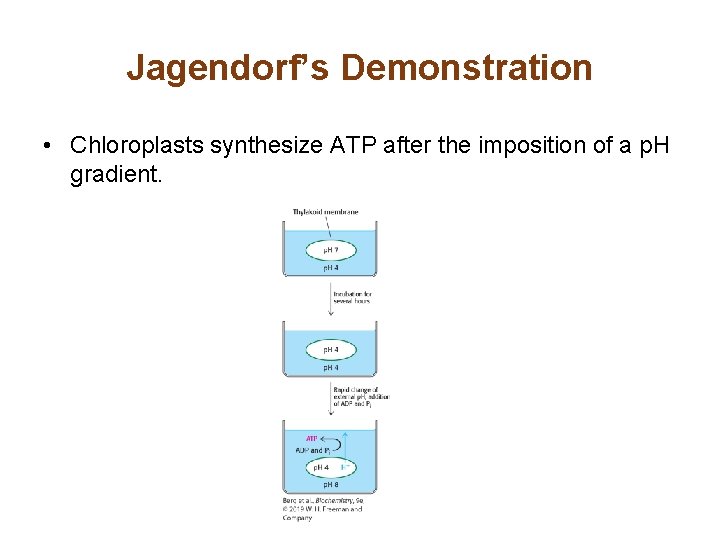
Section 19. 4 A Proton Gradient across the Thylakoid Membrane Drives ATP Synthesis • The flow of electrons from H 2 O to NADP+ generates a proton-motive force that is used to power the synthesis of ATP. • Thylakoid membranes exposed to an artificial p. H gradient synthesize ATP. • In chloroplasts, most of the energy of the proton-motive force consists of the proton gradient, with the membrane potential contributing little energy. • In chloroplasts, electroneutrality is maintained because Mg 2+ moves into the stroma when two H+ are pumped from the stroma into the thylakoid lumen. • In mitochondria, the membrane potential also contributes to the proton-motive force.
Jagendorf’s Demonstration • Chloroplasts synthesize ATP after the imposition of a p. H gradient.
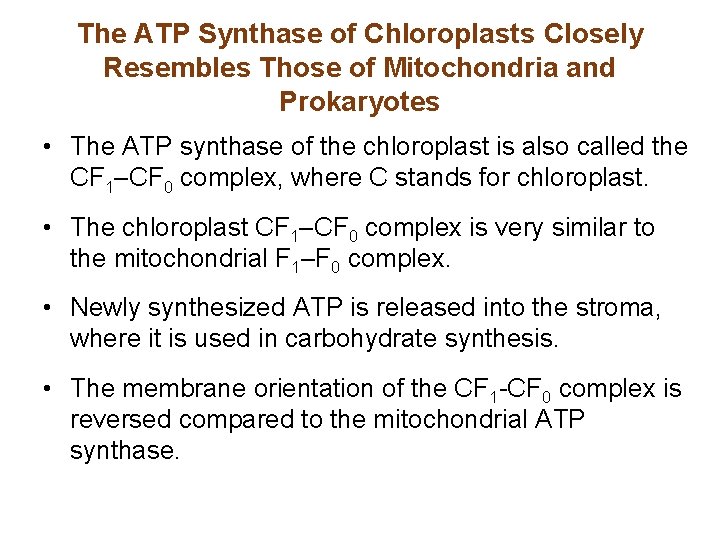
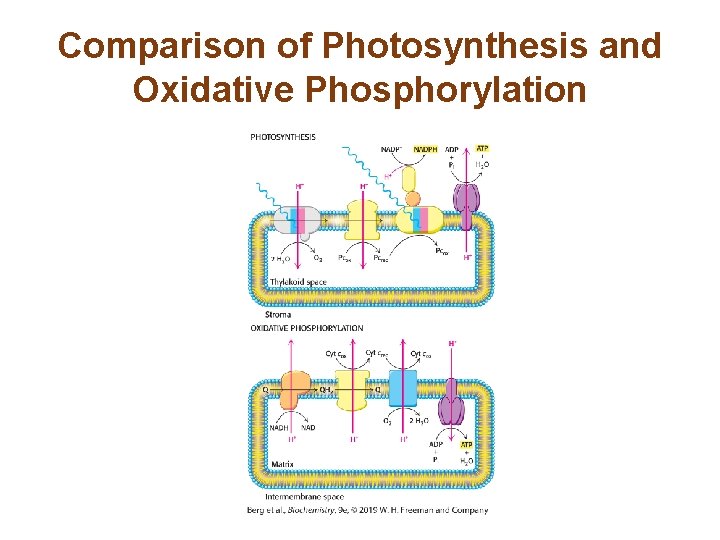
The ATP Synthase of Chloroplasts Closely Resembles Those of Mitochondria and Prokaryotes • The ATP synthase of the chloroplast is also called the CF 1–CF 0 complex, where C stands for chloroplast. • The chloroplast CF 1–CF 0 complex is very similar to the mitochondrial F 1–F 0 complex. • Newly synthesized ATP is released into the stroma, where it is used in carbohydrate synthesis. • The membrane orientation of the CF 1 -CF 0 complex is reversed compared to the mitochondrial ATP synthase.
Comparison of Photosynthesis and Oxidative Phosphorylation
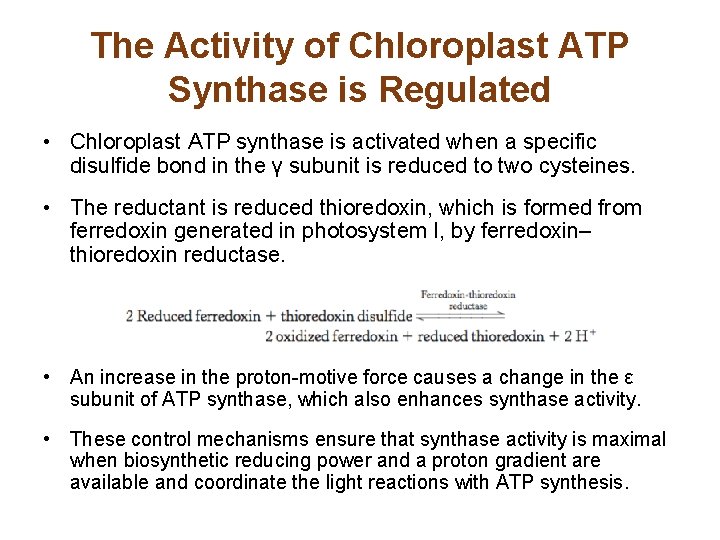
The Activity of Chloroplast ATP Synthase is Regulated • Chloroplast ATP synthase is activated when a specific disulfide bond in the γ subunit is reduced to two cysteines. • The reductant is reduced thioredoxin, which is formed from ferredoxin generated in photosystem I, by ferredoxin– thioredoxin reductase. • An increase in the proton-motive force causes a change in the ε subunit of ATP synthase, which also enhances synthase activity. • These control mechanisms ensure that synthase activity is maximal when biosynthetic reducing power and a proton gradient are available and coordinate the light reactions with ATP synthesis.
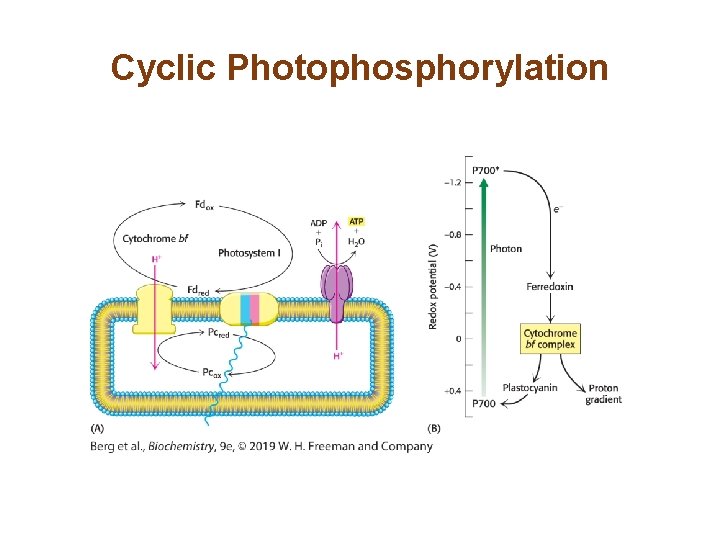
Cyclic Electron Flow through Photosystem I Leads to the Production of ATP Instead of NADPH • If the NADPH needs are met, cyclic electron flow generates ATP without forming NADPH. • The electrons of photosystem I flow from ferredoxin through cytochrome bf to plastocyanin and then return to P 700. • The protons pumped by cytochrome bf are used to synthesize ATP. • This process is called cyclic photophosphorylation. Photosystem II does not participate, and no O 2 is generated.
Cyclic Photophosphorylation
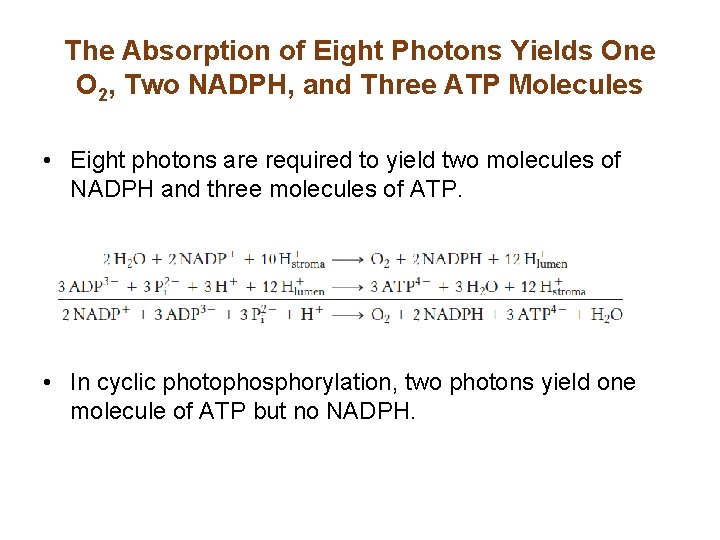
The Absorption of Eight Photons Yields One O 2, Two NADPH, and Three ATP Molecules • Eight photons are required to yield two molecules of NADPH and three molecules of ATP. • In cyclic photophosphorylation, two photons yield one molecule of ATP but no NADPH.
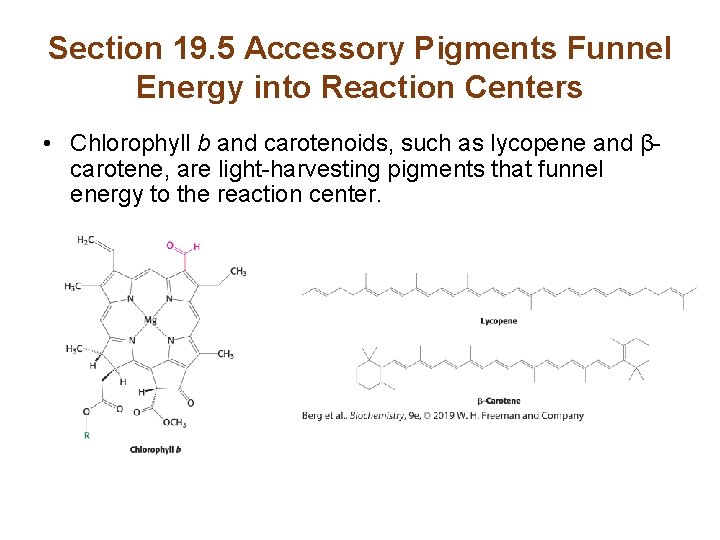
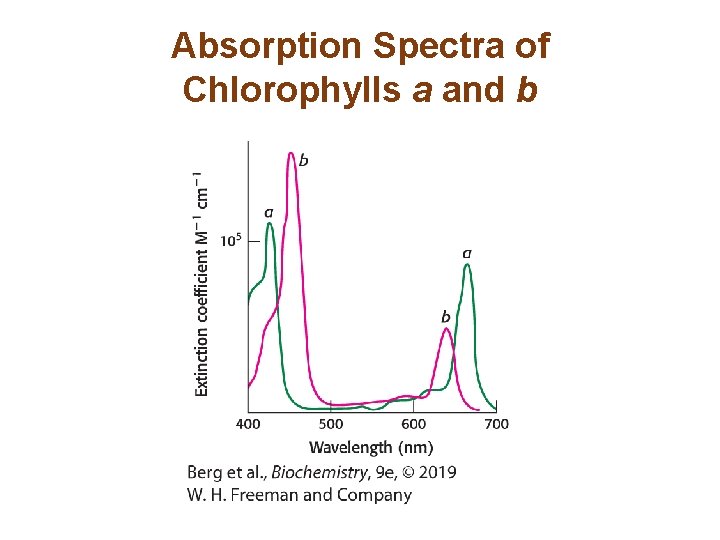
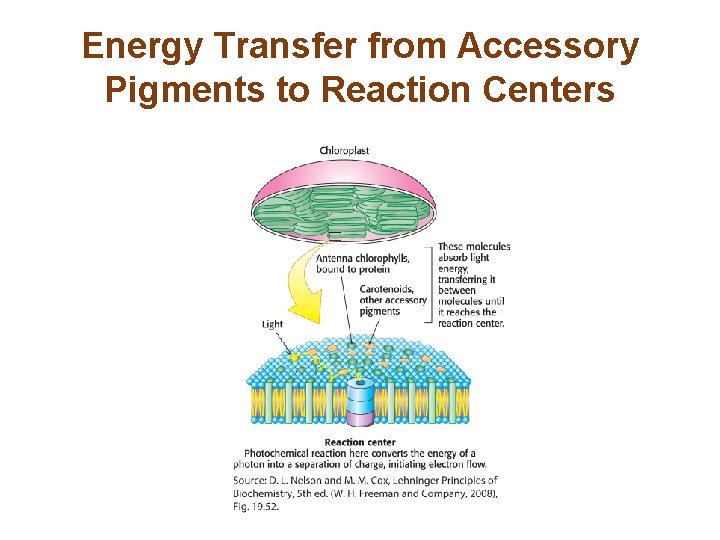
Section 19. 5 Accessory Pigments Funnel Energy into Reaction Centers • Chlorophyll b and carotenoids, such as lycopene and βcarotene, are light-harvesting pigments that funnel energy to the reaction center.
Absorption Spectra of Chlorophylls a and b
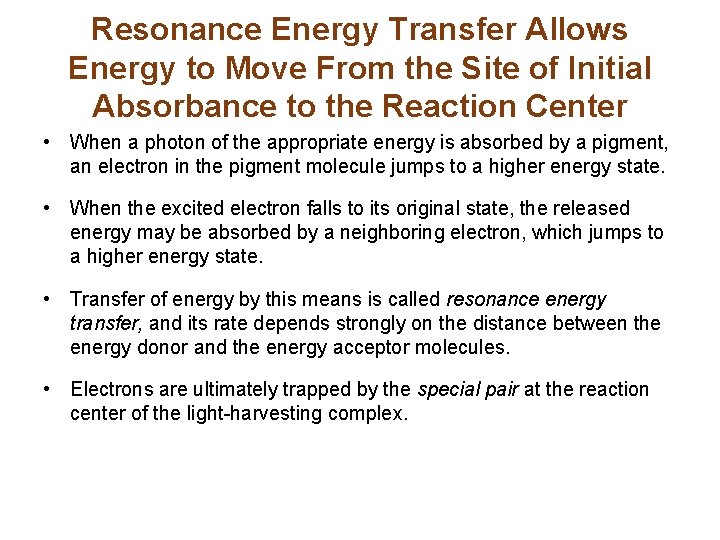
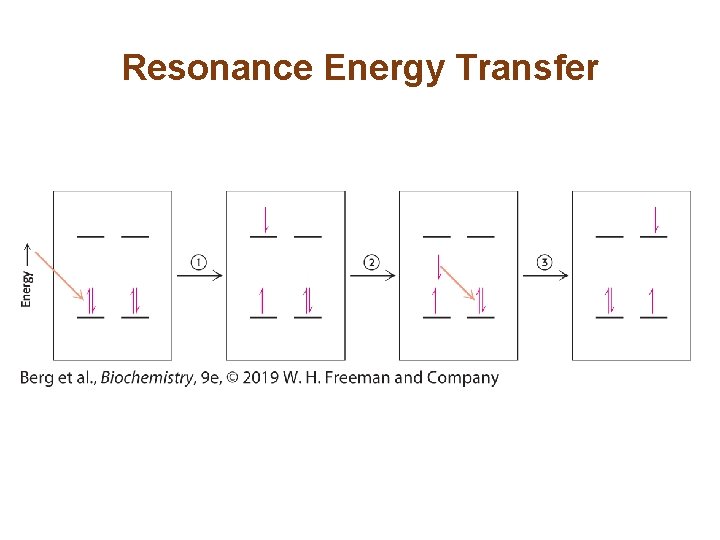
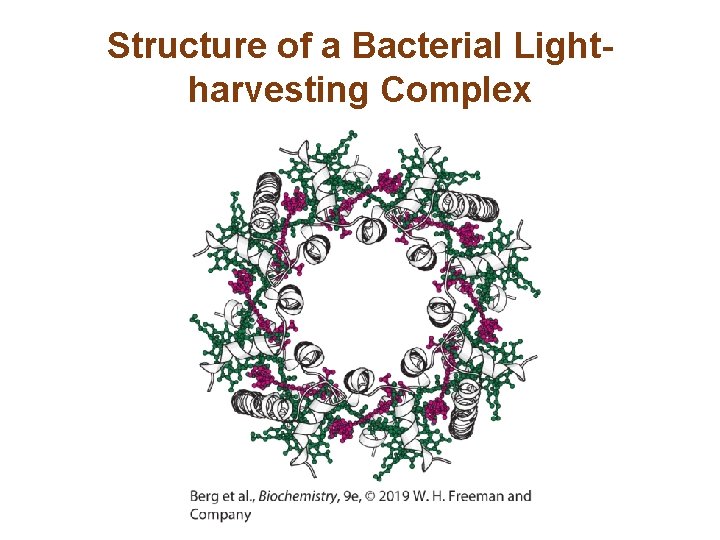
Resonance Energy Transfer Allows Energy to Move From the Site of Initial Absorbance to the Reaction Center • When a photon of the appropriate energy is absorbed by a pigment, an electron in the pigment molecule jumps to a higher energy state. • When the excited electron falls to its original state, the released energy may be absorbed by a neighboring electron, which jumps to a higher energy state. • Transfer of energy by this means is called resonance energy transfer, and its rate depends strongly on the distance between the energy donor and the energy acceptor molecules. • Electrons are ultimately trapped by the special pair at the reaction center of the light-harvesting complex.
Protective Function of Accessory Pigments • Accessory pigments help transfer energy to reaction centers, but also serve a protective role. • They are able to assist in suppressing harmful photochemical reactions. In bright sunlight, they use nonphotochemical quenching (NPQ) to direct photons away from the light-harvesting complex and release energy as heat, preventing formation of damaging reactive oxygen species (ROS). • Plants lacking carotenoids are quickly killed on exposure to light and oxygen.
Resonance Energy Transfer
Energy Transfer from Accessory Pigments to Reaction Centers
Structure of a Bacterial Lightharvesting Complex
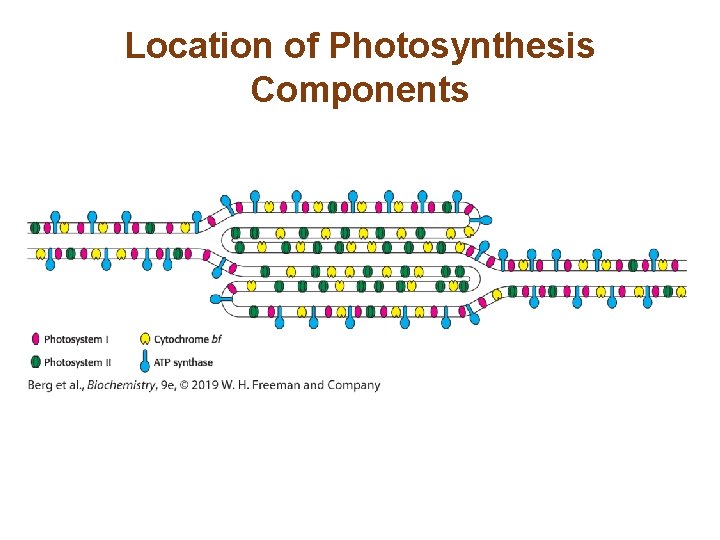
The Components of Photosynthesis Are Highly Organized • Thylakoid membranes are organized into stacked (appressed) and unstacked (nonappressed) regions. • Photosystem II is located in the stacked regions. • Photosystem I and ATP synthase are in unstacked regions, allowing their products—NADPH and ATP, respectively—ready access to the carbohydratesynthesizing enzymes of the stroma.
Location of Photosynthesis Components
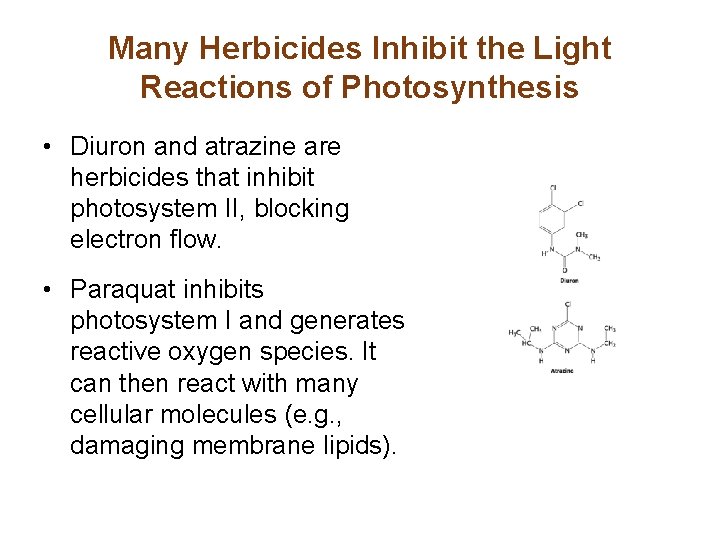
Many Herbicides Inhibit the Light Reactions of Photosynthesis • Diuron and atrazine are herbicides that inhibit photosystem II, blocking electron flow. • Paraquat inhibits photosystem I and generates reactive oxygen species. It can then react with many cellular molecules (e. g. , damaging membrane lipids).
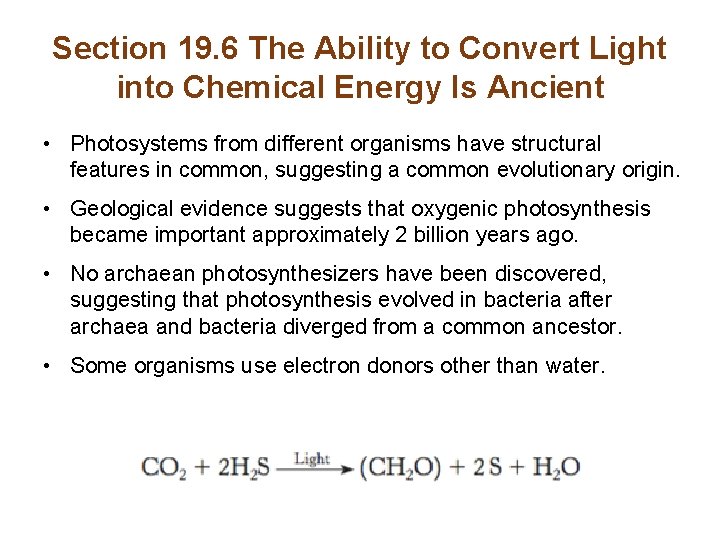
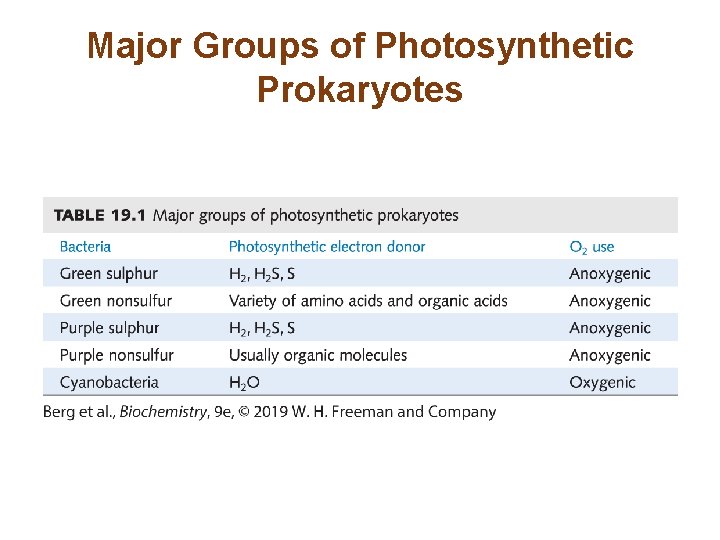
Section 19. 6 The Ability to Convert Light into Chemical Energy Is Ancient • Photosystems from different organisms have structural features in common, suggesting a common evolutionary origin. • Geological evidence suggests that oxygenic photosynthesis became important approximately 2 billion years ago. • No archaean photosynthesizers have been discovered, suggesting that photosynthesis evolved in bacteria after archaea and bacteria diverged from a common ancestor. • Some organisms use electron donors other than water.
Major Groups of Photosynthetic Prokaryotes
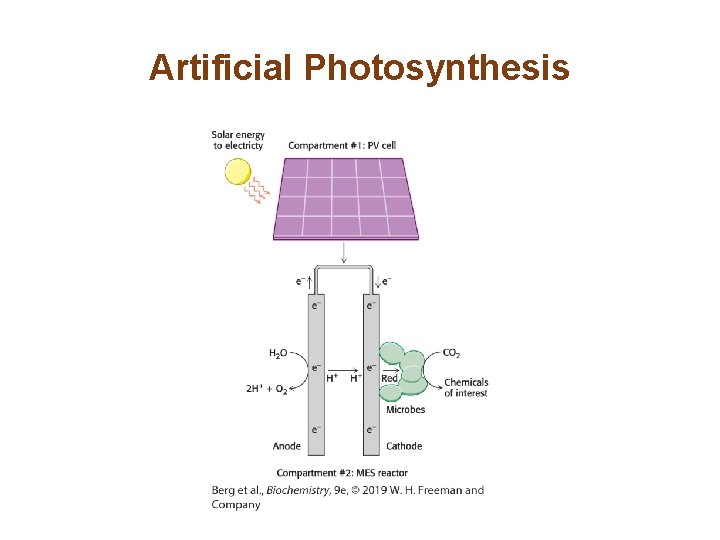
Artificial Photosynthetic Systems May Provide Clean, Renewable Energy • Research is currently underway to try to mimic the process of photosynthesis to provide clean energy. • Photovoltaic cells can use light energy to oxidize water, producing O 2 as well as H 2. Hydrogen gas is a fuel that, upon reaction with oxygen, generates energy with only water as the waste product. • Semiconductors made of perovskite (CH 3 NH 3 Pb. I 3) are promising, as they are especially efficient at capturing sunlight.
Artificial Photosynthesis
Increasing the Efficiency of Photosynthesis Will Increase Crop Yields • Nonphotochemical quenching (NPQ) acts as a botanical sunscreen, allowing plants to protect themselves from damaging ROS generated by intense sunlight. • NPQ can be quickly activated, allowing the energy absorbed by the light-harvesting complex to be lost as heat. However, it is then slow to turn off; this can result in a 30% depression in yield in some crops. • Researchers hope that understanding and targeting this slow shutdown will help to increase yields of crop plants such as corn. • This has already been effective in tobacco; genes introduced into the plant that quickened NPQ shutdown increased plant size 15%.