
CHAPTER 19 The First World War Overview Time


- Slides: 77
CHAPTER 19 The First World War Overview Time Lines SECTION 1 World War I Begins SECTION 2 American Power Tips the Balance SECTION 3 The War at Home SECTION 4 Wilson Fights for Peace Chapter Assessment Transparencies
CHAPTER 19 The First World War “The world must be made safe for democracy. ” President Woodrow Wilson, 1917 THEMES IN CHAPTER 19 Women in America Expanding Democracy Immigration and Migration HOME
CHAPTER 19 The First World War “The world must be made safe for democracy. ” President Woodrow Wilson, 1917 What do you know? • What images come to mind when you think about the First World War? • Which countries played major roles in the First World War? • What have you read or heard about the war? • What movies or television programs have you seen that deal with the war? How were both sides in the conflict portrayed? HOME
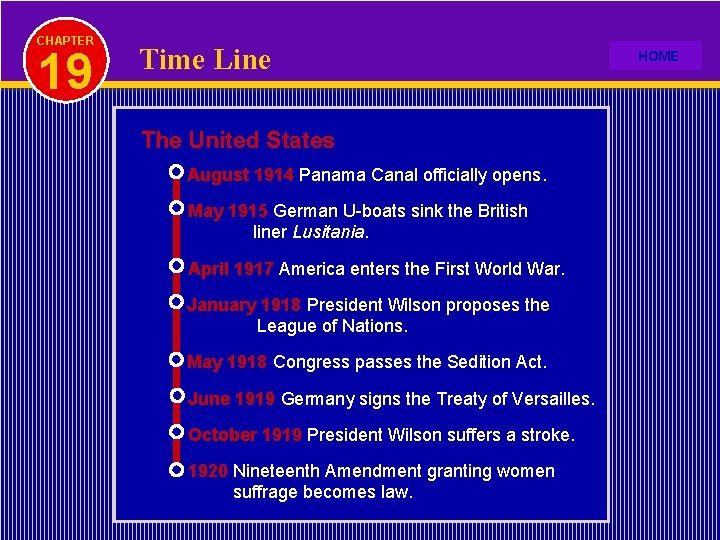
CHAPTER 19 Time Line The United States August 1914 Panama Canal officially opens. May 1915 German U-boats sink the British liner Lusitania. April 1917 America enters the First World War. January 1918 President Wilson proposes the League of Nations. May 1918 Congress passes the Sedition Act. June 1919 Germany signs the Treaty of Versailles. October 1919 President Wilson suffers a stroke. 1920 Nineteenth Amendment granting women suffrage becomes law. HOME
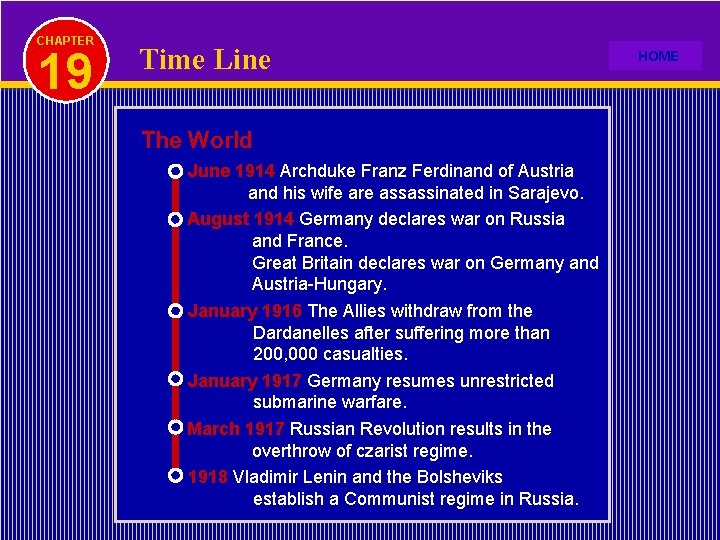
CHAPTER 19 Time Line The World June 1914 Archduke Franz Ferdinand of Austria and his wife are assassinated in Sarajevo. August 1914 Germany declares war on Russia and France. Great Britain declares war on Germany and Austria-Hungary. January 1916 The Allies withdraw from the Dardanelles after suffering more than 200, 000 casualties. January 1917 Germany resumes unrestricted submarine warfare. March 1917 Russian Revolution results in the overthrow of czarist regime. 1918 Vladimir Lenin and the Bolsheviks establish a Communist regime in Russia. HOME
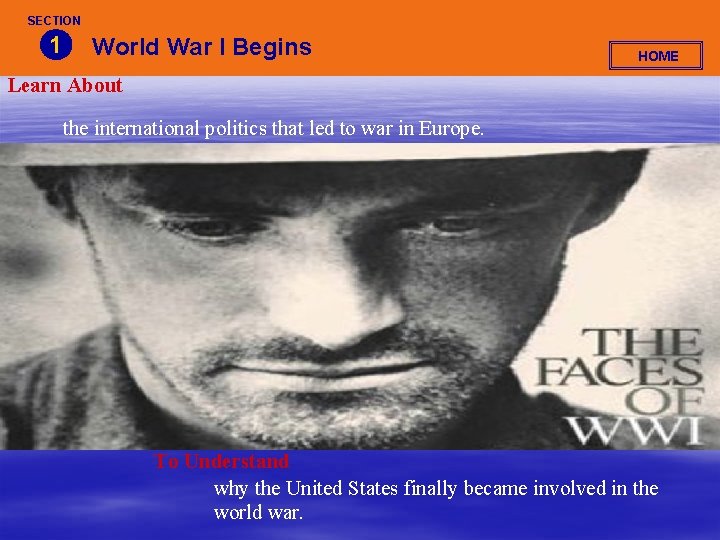
SECTION 1 World War I Begins HOME Learn About the international politics that led to war in Europe. To Understand why the United States finally became involved in the world war.
SECTION 1 World War I Begins Key Idea Long-term tensions erupt into a devastating war among European nations, while the United States tries to remain neutral. HOME
Section 1: World War I Begins § Causes of World War I – Nationalism, Imperialism, militarism, & the formation of a system of alliances § Nationalism: a devotion to the interests and culture of one’s nation – Larger countries felt the need to protect smaller countries, esp. those of interests § Ex. Russia & Austria Hungry rivals over Serbia
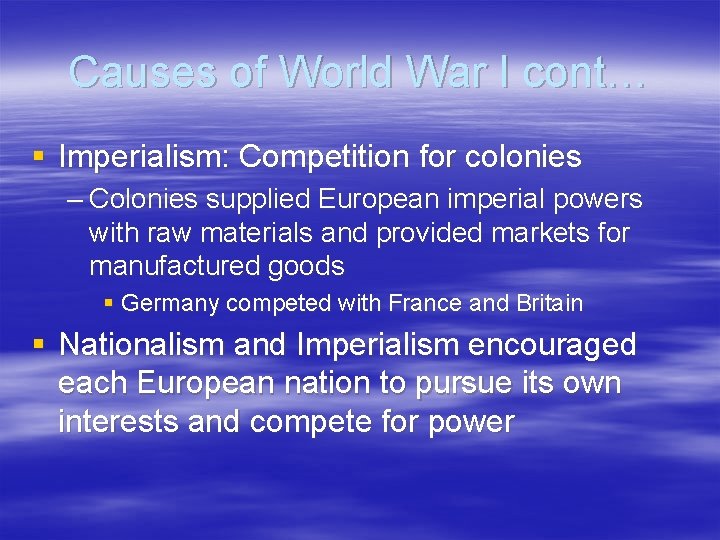
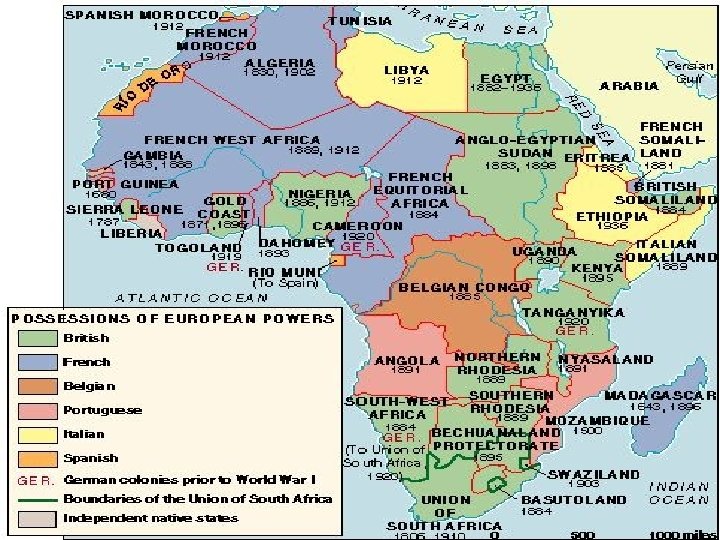
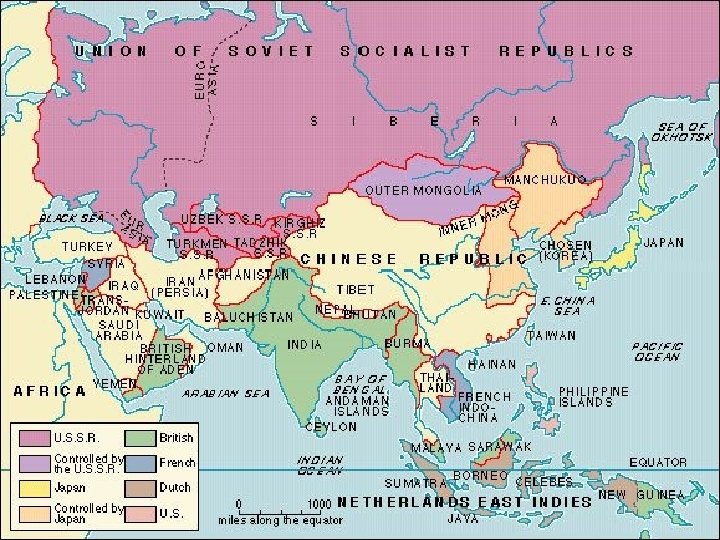
Causes of World War I cont… § Imperialism: Competition for colonies – Colonies supplied European imperial powers with raw materials and provided markets for manufactured goods § Germany competed with France and Britain § Nationalism and Imperialism encouraged each European nation to pursue its own interests and compete for power
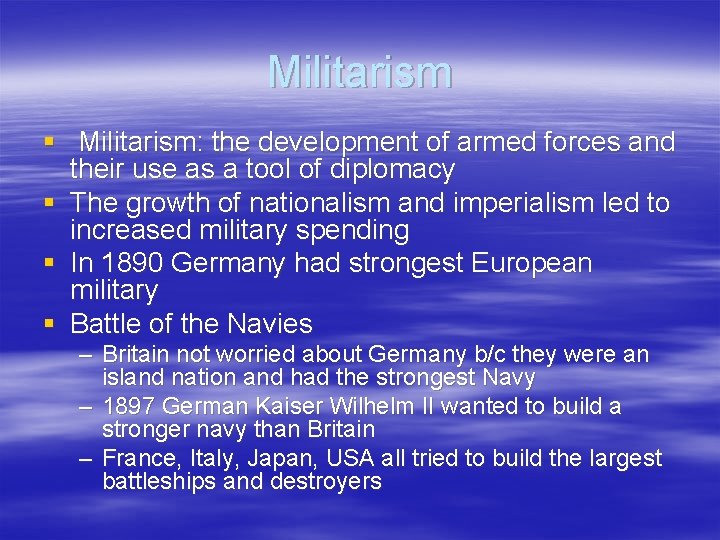
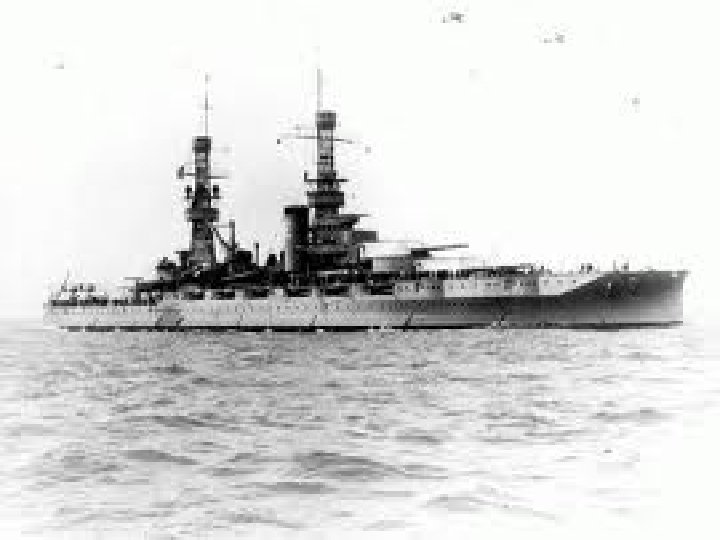
Militarism § Militarism: the development of armed forces and their use as a tool of diplomacy § The growth of nationalism and imperialism led to increased military spending § In 1890 Germany had strongest European military § Battle of the Navies – Britain not worried about Germany b/c they were an island nation and had the strongest Navy – 1897 German Kaiser Wilhelm II wanted to build a stronger navy than Britain – France, Italy, Japan, USA all tried to build the largest battleships and destroyers
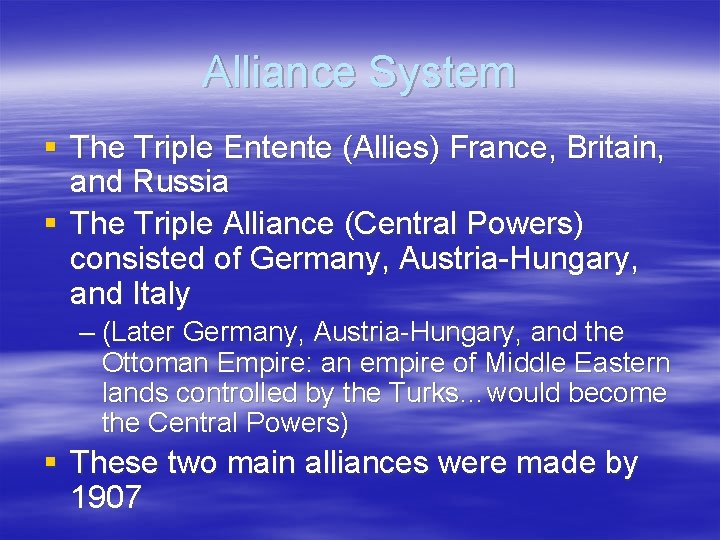
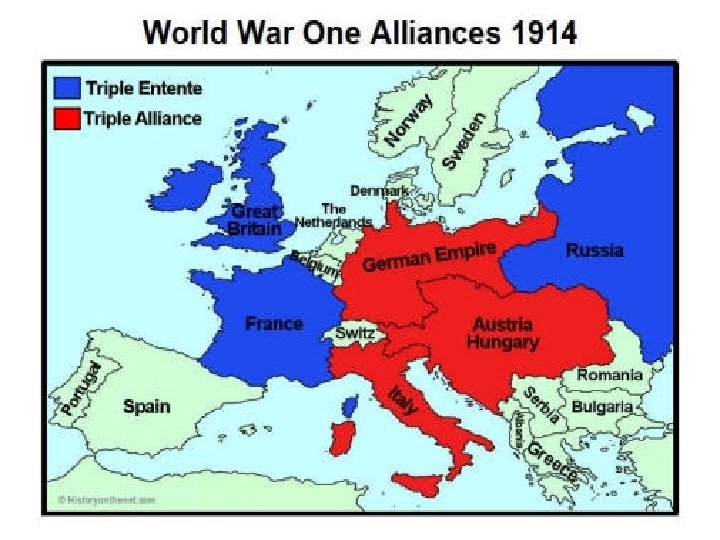
Alliance System § The Triple Entente (Allies) France, Britain, and Russia § The Triple Alliance (Central Powers) consisted of Germany, Austria-Hungary, and Italy – (Later Germany, Austria-Hungary, and the Ottoman Empire: an empire of Middle Eastern lands controlled by the Turks…would become the Central Powers) § These two main alliances were made by 1907
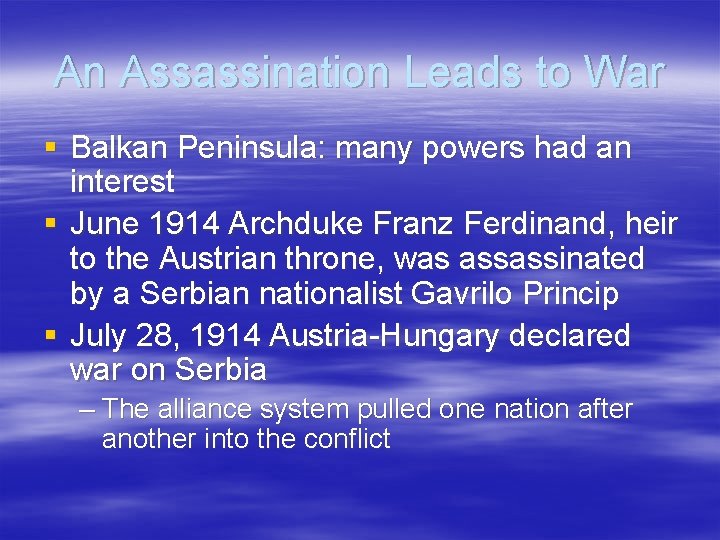
An Assassination Leads to War § Balkan Peninsula: many powers had an interest § June 1914 Archduke Franz Ferdinand, heir to the Austrian throne, was assassinated by a Serbian nationalist Gavrilo Princip § July 28, 1914 Austria-Hungary declared war on Serbia – The alliance system pulled one nation after another into the conflict
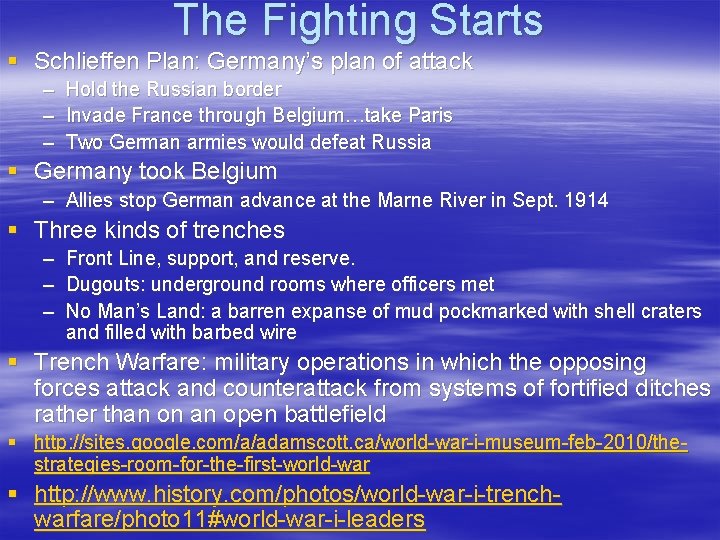
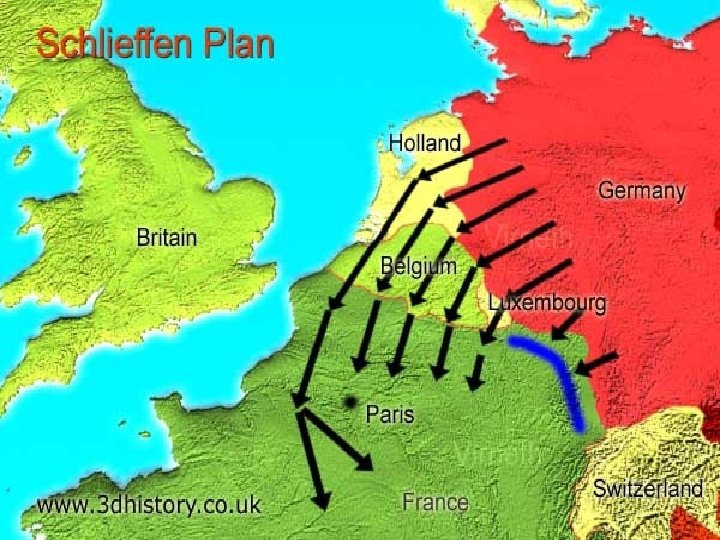
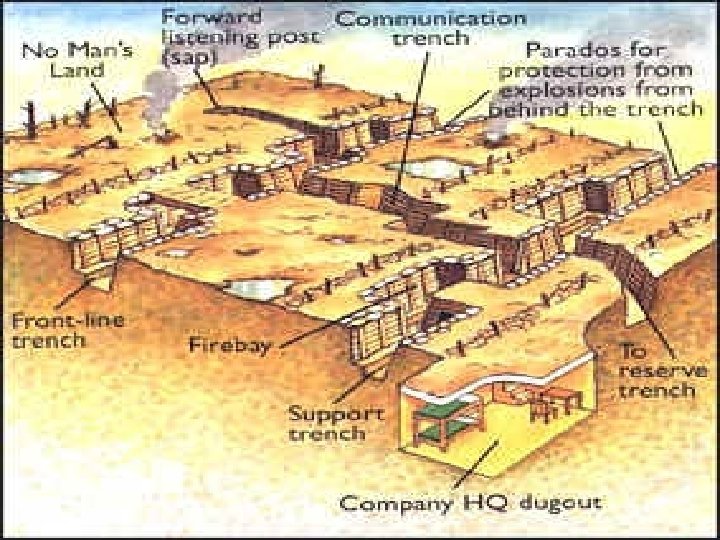
The Fighting Starts § Schlieffen Plan: Germany’s plan of attack – – – Hold the Russian border Invade France through Belgium…take Paris Two German armies would defeat Russia § Germany took Belgium – Allies stop German advance at the Marne River in Sept. 1914 § Three kinds of trenches – Front Line, support, and reserve. – Dugouts: underground rooms where officers met – No Man’s Land: a barren expanse of mud pockmarked with shell craters and filled with barbed wire § Trench Warfare: military operations in which the opposing forces attack and counterattack from systems of fortified ditches rather than on an open battlefield § http: //sites. google. com/a/adamscott. ca/world-war-i-museum-feb-2010/thestrategies-room-for-the-first-world-war § http: //www. history. com/photos/world-war-i-trenchwarfare/photo 11#world-war-i-leaders
Americans Question Neutrality § Divided loyalties – emigrated: to leave one’s country or region to settle in another – Peace…war was evil – Britain…democratic, common ancestry, etc… § After Germany aggressively swept through Belgium they became know as “the bully of Europe” § America’s economic ties with the Allies were far stronger than with the Central Powers
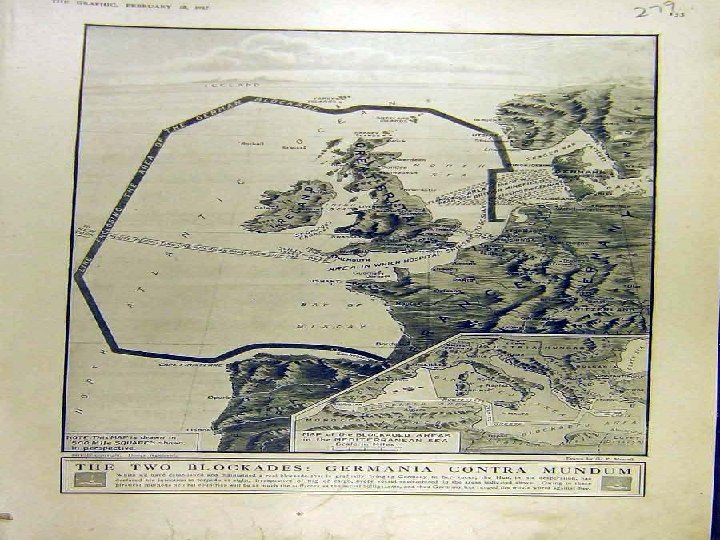
The War Hits Home § The US mobilized for war for two reasons – 1. ensure Allied repayment of debts – 2. prevent the Germans from threatening US shipping § The British Blockade of Germany – Kept out military supplies and food § By 1917 Famine struck Germany… 750, 000 starved to death – US a little upset w/Britian b/c they could not send goods to Germany – Germany ruined their chance with US with their U-boat response
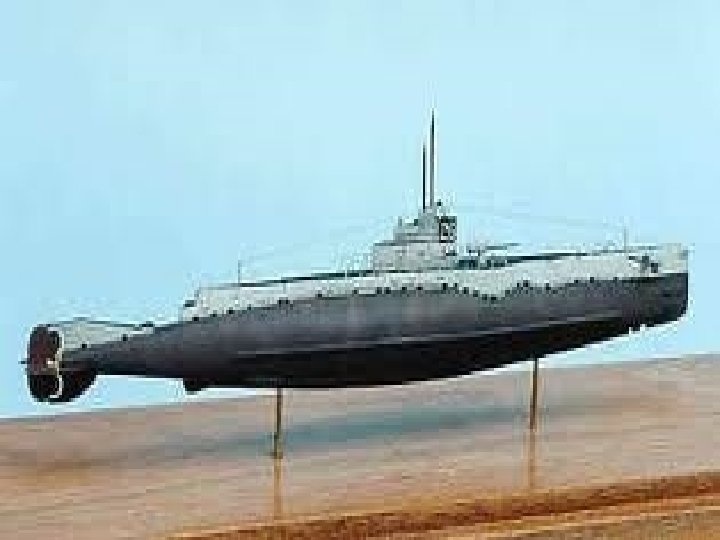
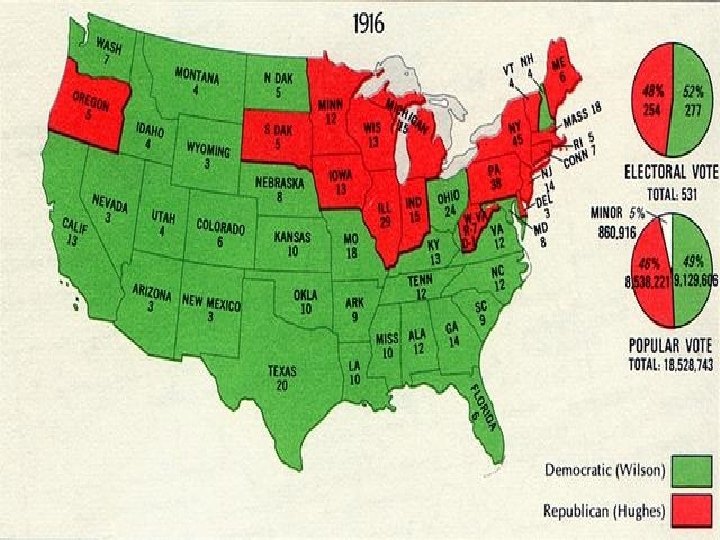
The War Hits Home cont… § German U-boat response – U-boat: submarine – Any ship found in waters around Britain would be sunk § Lusitania: British ship… 128 Americans died § Germany continued this practice of unrestricted submarine warfare – This angered Americans and turned them against the Central Powers § The 1916 Election – Democrat Wilson defeated Republican Hughes in a very close race
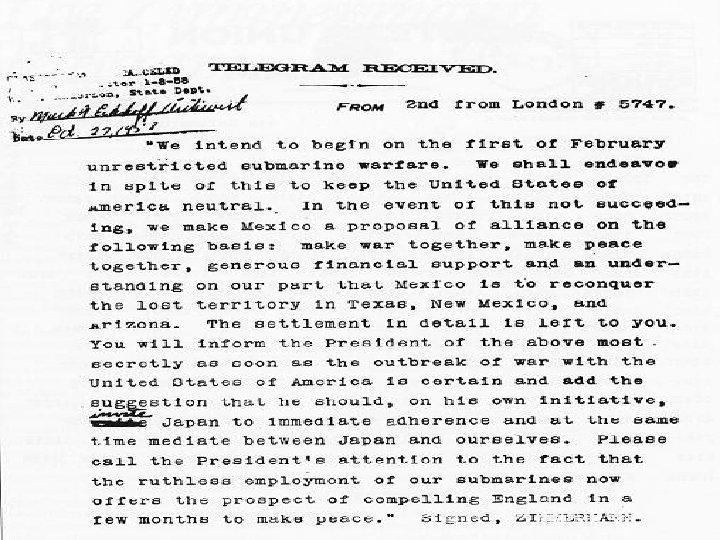
The United States Declares War § Wilson tries to mediate in January 1917 – Germany ignores Wilson’s call for peace § § 3 Main events that left Wilson no choice but to enter war 1. Kaiser announced that U-boats would sink all ships in British waters hostile or neutral…direct aim at US § 2. Zimmerman Note: a telegram from the German foreign minister to the German ambassador in Mexico that was intercepted by British – Proposed an alliance between Mexico and Germany – Germany would help Mexico recover lost territory in Texas, New Mexico, and Arizona § 3. Russian monarch oppressive govt was replaced with a representative govt – American claimed that this was a war of democracy over monarchies § April 1917 America declared war on Germany and joined the Allied forces
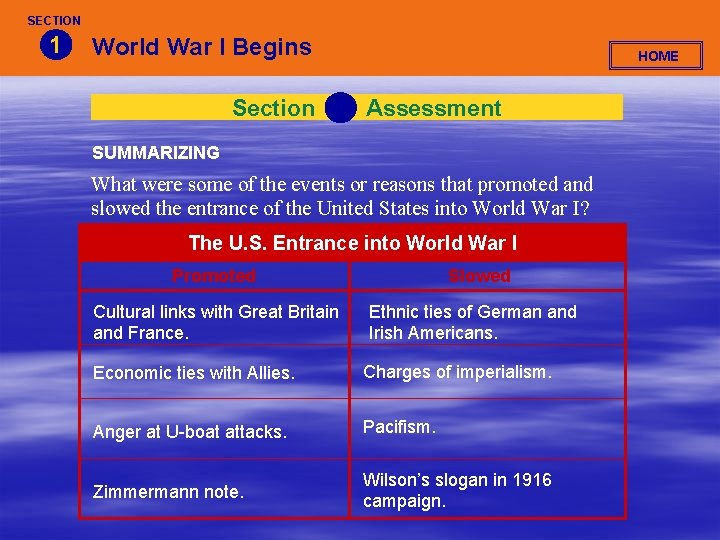
SECTION 1 World War I Begins HOME Section 1 Assessment SUMMARIZING What were some of the events or reasons that promoted and slowed the entrance of the United States into World War I? The U. S. Entrance into World War I Promoted Cultural links with Great Britain and France. Slowed Ethnic ties of German and Irish Americans. Economic ties with Allies. Charges of imperialism. Anger at U-boat attacks. Pacifism. Zimmermann note. Wilson’s slogan in 1916 campaign.
SECTION 1 World War I Begins Section 1 Assessment HYPOTHESIZING If Archduke Franz Ferdinand had not been assassinated, do you think World War I would still have occurred? THINK ABOUT • the long-term causes of World War I • the reason for the archduke’s assassination • the multinational interest in the Balkans HOME
SECTION 1 World War I Begins Section 1 Assessment ANALYZING ISSUES Why do you think Germany responded to Wilson’s call for “peace without victory” by escalating its U-boat attacks? THINK ABOUT • Germany’s military buildup • its reputation as “the bully of Europe” • its reason for using submarine warfare HOME
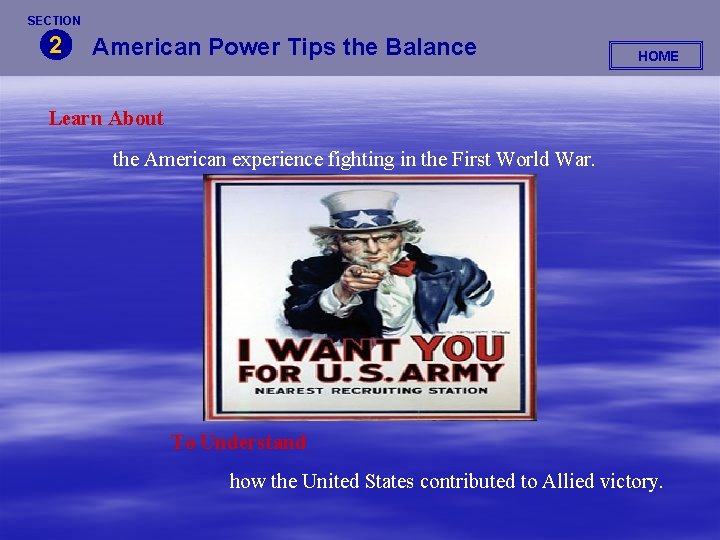
SECTION 2 American Power Tips the Balance HOME Learn About the American experience fighting in the First World War. To Understand how the United States contributed to Allied victory.
SECTION 2 American Power Tips the Balance Key Idea American forces, though poorly equipped at the outset, tip the balance decisively in favor of the Allies. HOME
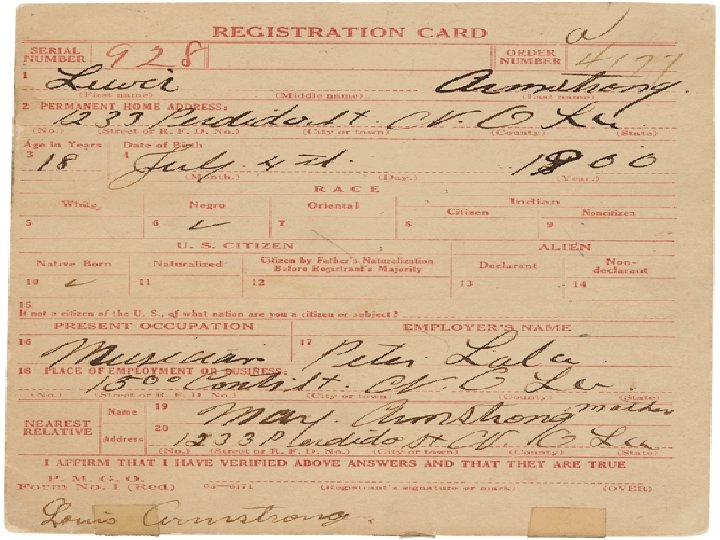
Section 2: American Power Tips the Balance § America Mobilizes – Selective Service Act: required men to register with the government in order to be randomly selected for military service § 1918, 24 million registered & 3 million drafted § All black 369 th Infantry Regiment saw more front line fighting than any other American unit § Women not allowed to enlist § Mass Production: had to expand navy largely b/c of German U-boats – 4 crucial steps US took in expanding fleet § 1. Exempted ship yard workers from the draft § 2. Used a public relations campaign to stress the importance of shipbuilding § 3. Used prefabricating construction techniques § 4. Took control of private ships for transatlantic duty – Had to do this in order to get troops and supplies across the Atlantic
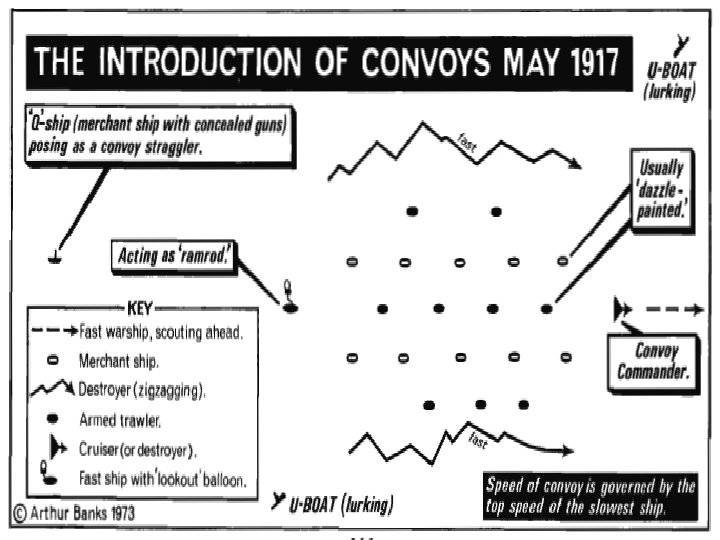
America Turns the Tide § Convoy system: heavy guard of destroyers escorted merchant ships back and forth across the Atlantic in groups protecting them from German Uboats § Fighting in Europe: American troops gave Allied forces a much needed energy boost § American Expeditionary Force (AEF): The US forces, led by General John Pershing, who fought with the Allies
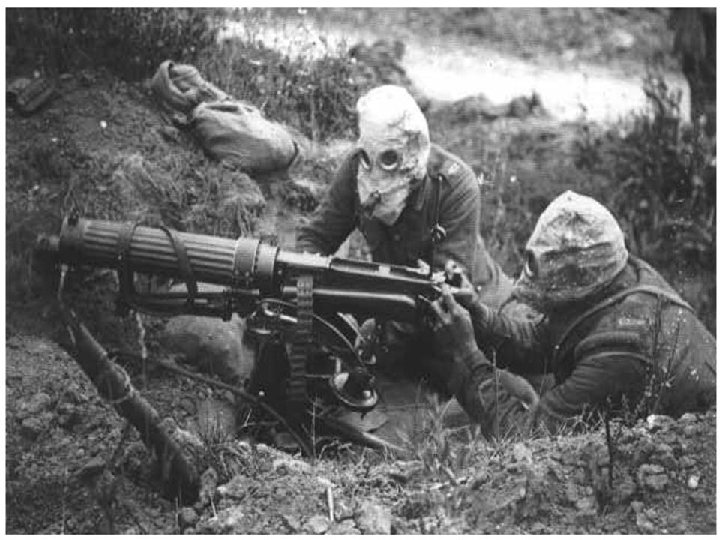
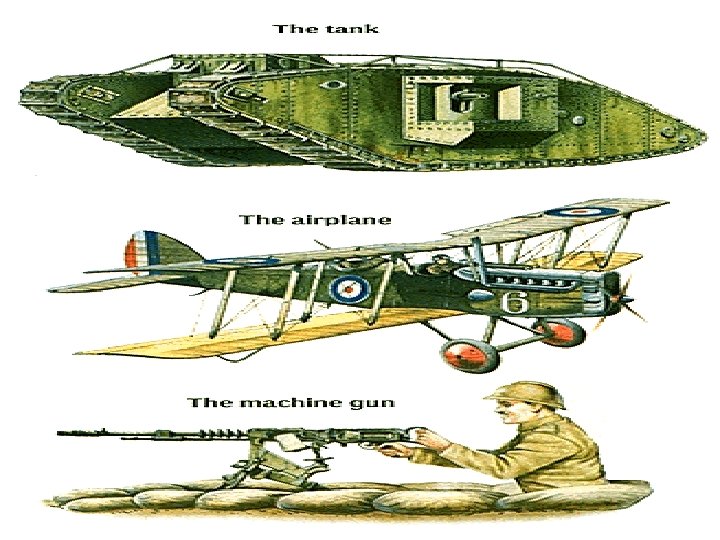
The War introduces New Weapons and New Hazards § New Weapons…weapons were either new or highly refined – Machine gun was refined – Tanks and airplanes were innovative § As the war went on both the tank and the airplane continued to develop and make increasing contributions to the war effort for both sides § New Hazards…physical and psychological – Physical: trench foot: disease caused by standing in cold wet trenches for long periods of time without changing into dry socks or boots § Amputate toes or even entire foot – Psychological: shell shock: described a complete emotional collapse from which many never recovered § Poison Gas: a yellow-green chlorine fog sickened, suffocated, burned, and blinded its victims. – Gas masks became standard issue § http: //www. firstworldwar. com/weaponry/index. htm
American Troops Go on the Offensive § Russia pulled out of the war in 1917…Germany shifted both armies to the western front in France – Germany was 50 miles from France when the US entered the war § US played a major role in keeping the Central Forces out of Paris § Alvin York: one of America’s great war heroes – Conscientious objector: person who opposes warfare on moral grounds § Bible says “thou shall not kill” § York decided that it was morally acceptable to fight if the cause was just
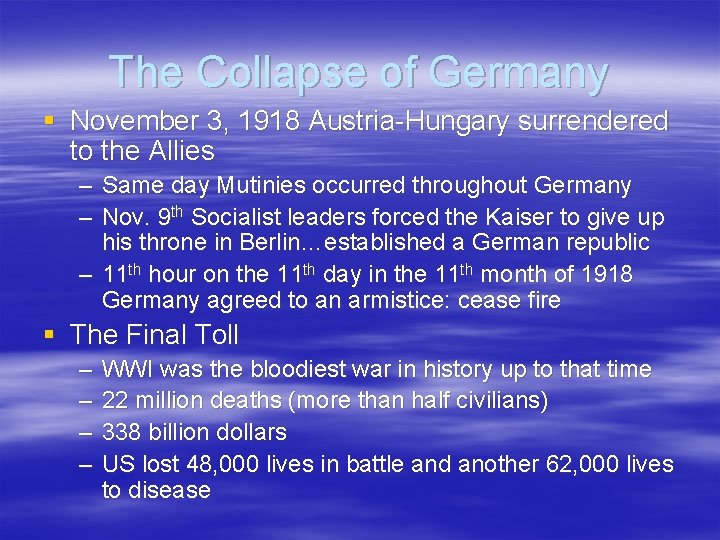
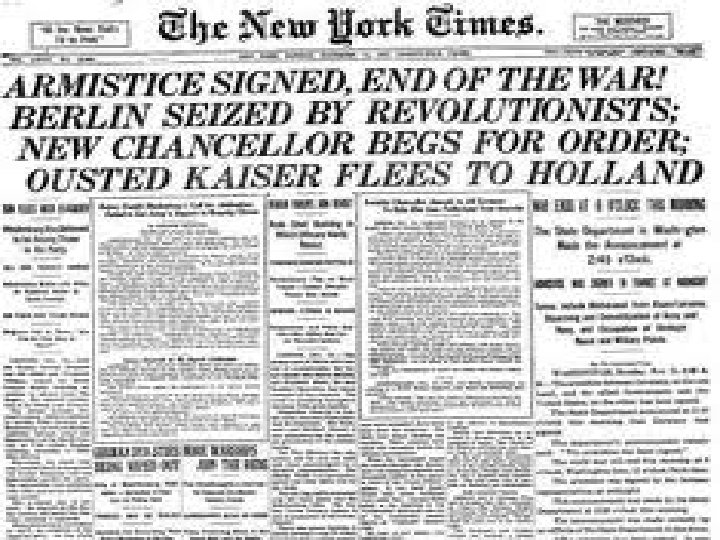
The Collapse of Germany § November 3, 1918 Austria-Hungary surrendered to the Allies – Same day Mutinies occurred throughout Germany – Nov. 9 th Socialist leaders forced the Kaiser to give up his throne in Berlin…established a German republic – 11 th hour on the 11 th day in the 11 th month of 1918 Germany agreed to an armistice: cease fire § The Final Toll – – WWI was the bloodiest war in history up to that time 22 million deaths (more than half civilians) 338 billion dollars US lost 48, 000 lives in battle and another 62, 000 lives to disease
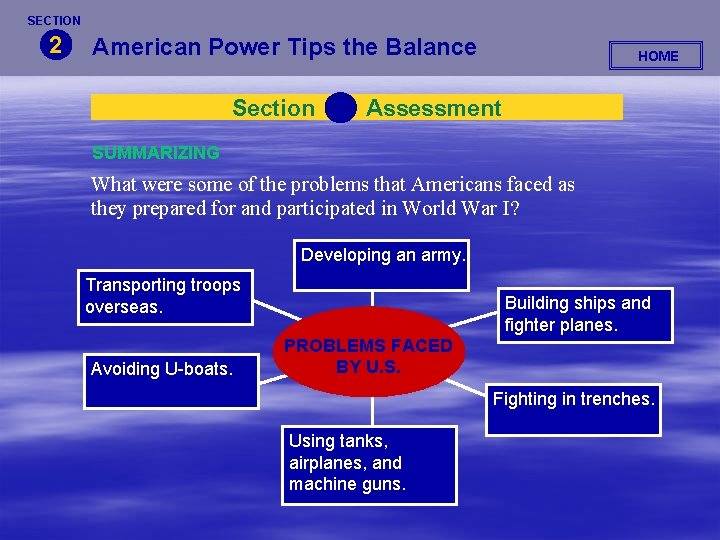
SECTION 2 American Power Tips the Balance HOME Section 2 Assessment SUMMARIZING What were some of the problems that Americans faced as they prepared for and participated in World War I? Developing an army. Transporting troops overseas. Avoiding U-boats. Building ships and fighter planes. PROBLEMS FACED BY U. S. Fighting in trenches. Using tanks, airplanes, and machine guns.
SECTION 2 American Power Tips the Balance Section 2 Assessment EVALUATING In your opinion, did the U. S. government use fair methods in selecting people to serve in the military? THINK ABOUT • the exemptions to the draft • the role played by women • the treatment of African Americans HOME
SECTION 2 American Power Tips the Balance Section 2 Assessment HYPOTHESIZING How might the events and outcome of World War I have been different if the United States had not sent troops to Europe? THINK ABOUT • the results of battles before the United States entered the war • the role of American soldiers in the fighting • the emotional impact of American troops HOME
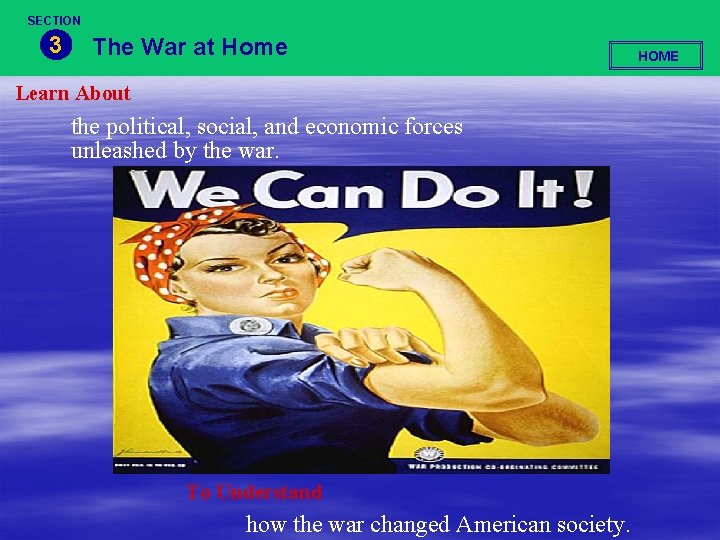
SECTION 3 The War at Home Learn About the political, social, and economic forces unleashed by the war. To Understand how the war changed American society. HOME
SECTION 3 The War at Home Key Idea The war unleashes a series of disruptions in American society as the U. S. government attempts to meet the demands of modern warfare. HOME
Section 3: The War at Home § Congress gives power to Wilson – Winning the war was not just a job for soldiers § Entire economy focused on the war § Wilson had direct control over economy – Power to fix prices & regulate certain war-related industries § War Industries Board (WIB): federal agency established to increase efficiency and discourage waste in war-related industries – Bernard Baruch: prosperous business-man who reorganized (WIB) § The Railroad Administration & Fuel Administration followed the (WIB) in order to regulate economy – “Gasless Sundays” & “lightless nights” – Daylight Savings Time-Ben Franklin in 1770’s
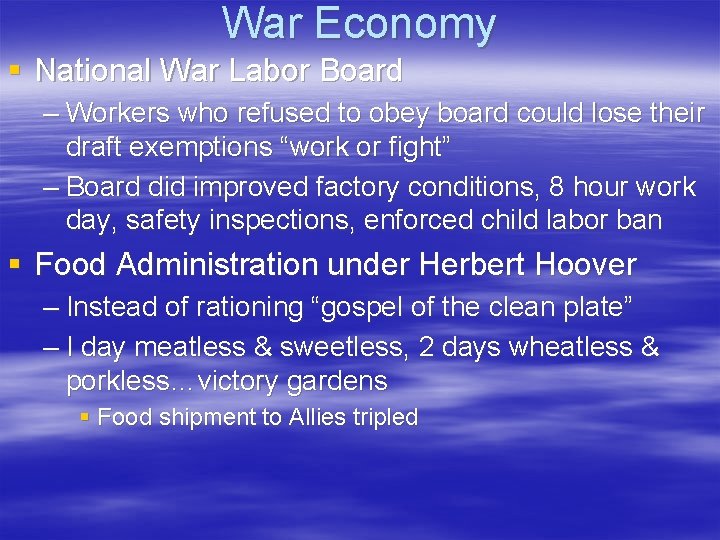
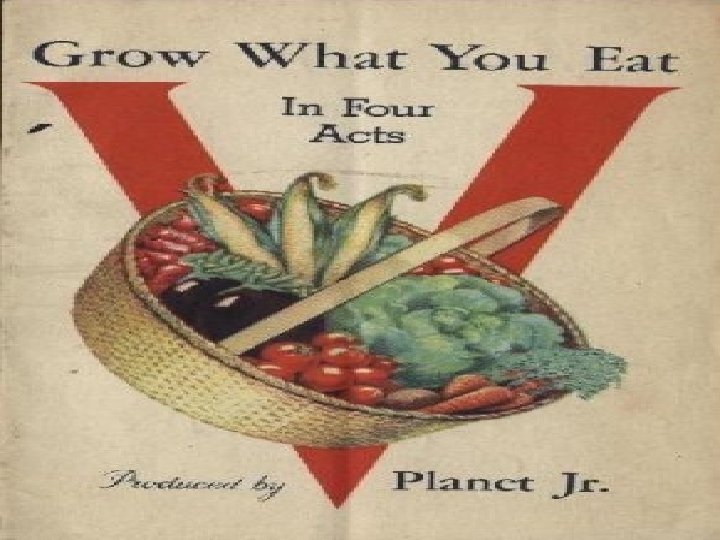
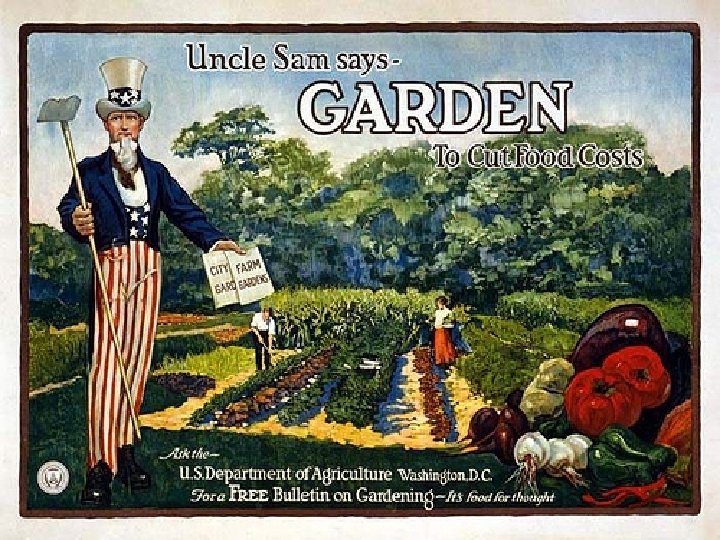
War Economy § National War Labor Board – Workers who refused to obey board could lose their draft exemptions “work or fight” – Board did improved factory conditions, 8 hour work day, safety inspections, enforced child labor ban § Food Administration under Herbert Hoover – Instead of rationing “gospel of the clean plate” – I day meatless & sweetless, 2 days wheatless & porkless…victory gardens § Food shipment to Allies tripled
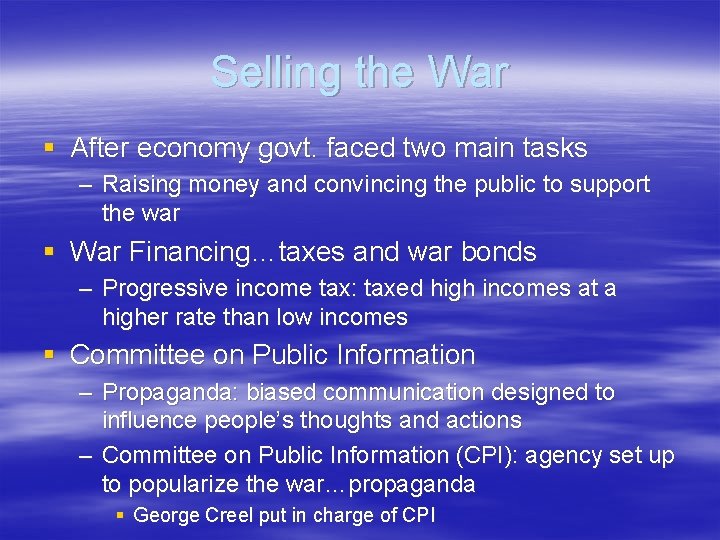
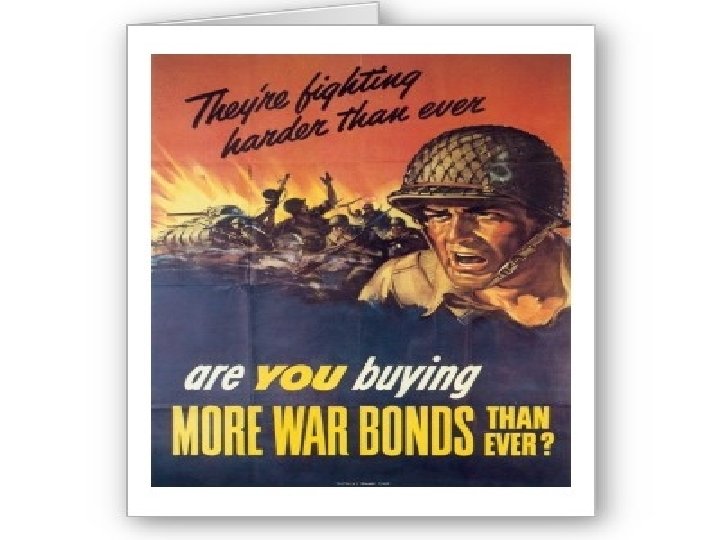
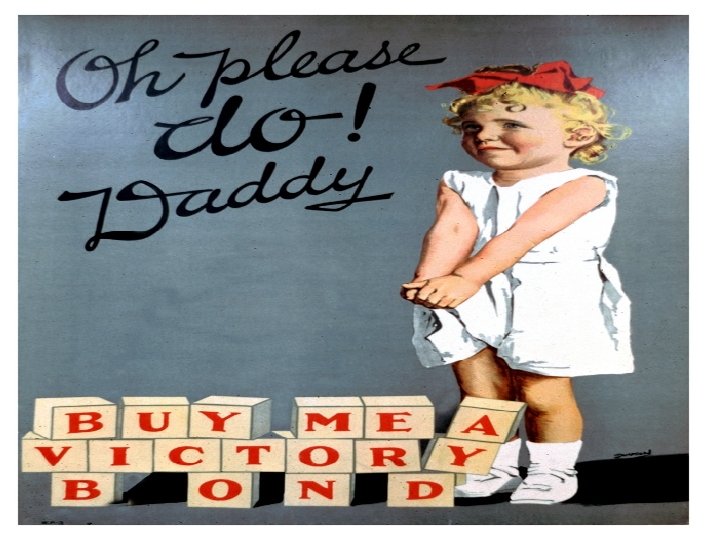
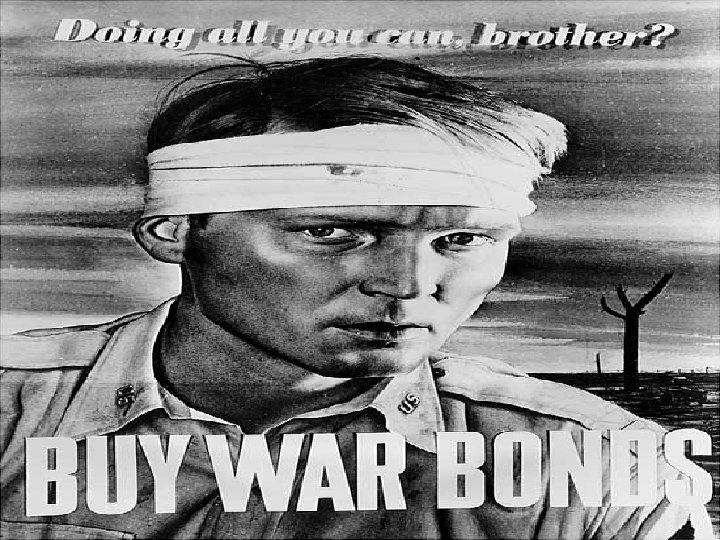
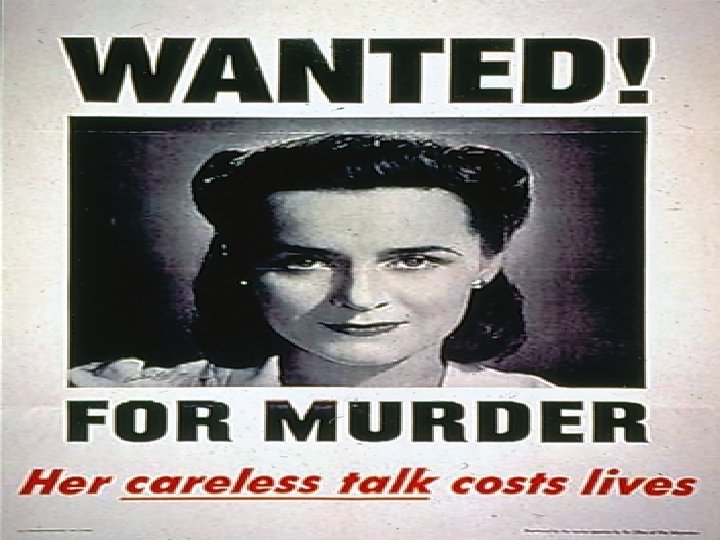
Selling the War § After economy govt. faced two main tasks – Raising money and convincing the public to support the war § War Financing…taxes and war bonds – Progressive income tax: taxed high incomes at a higher rate than low incomes § Committee on Public Information – Propaganda: biased communication designed to influence people’s thoughts and actions – Committee on Public Information (CPI): agency set up to popularize the war…propaganda § George Creel put in charge of CPI
Attacks on Civil Liberties Increase § Anti-immigrant Hysteria – Main targets were emigrates, especially from Germany § Espionage and Sedition Acts: two laws that imposed harsh penalties on anyone interfering with or speaking against US participation in World War I – Violations of the first amendment
The War Encourages Social Change § African Americans and the war – W. E. B. Du Bois believed that blacks should support the war effort in order to strengthen calls for racial justice – William Monroe Trotter believed that victims of racism should not support a racist government § The Great Migration: large-scale movement of hundreds of thousands of Southern blacks to cities in the North – Escaped Jim Crow South, escape racial discrimination, South’s cotton fields were not doing well, North had job opportunities…Henry Ford opened assembly line to black workers in 1914
The War Encourages Social Change cont… § Women in the War – Women moved into jobs that had been held exclusively by men – Jane Adams founded the Women’s Peace Party in 1915 – 1919 Congress passed the 19 th Amendment granting women the right to vote § It was ratified in 1920 § The Flu Epidemic: in 1918 ¼ of US population got the flu – Huge effect on economy – 500, 000 Americans dilled before it disappeared in 1919 – 30 million died worldwide… 2 nd worst in history to the Bubonic Plague in 1347 -1351 § http: //www. archives. gov/exhibits/influenzaepidemic/
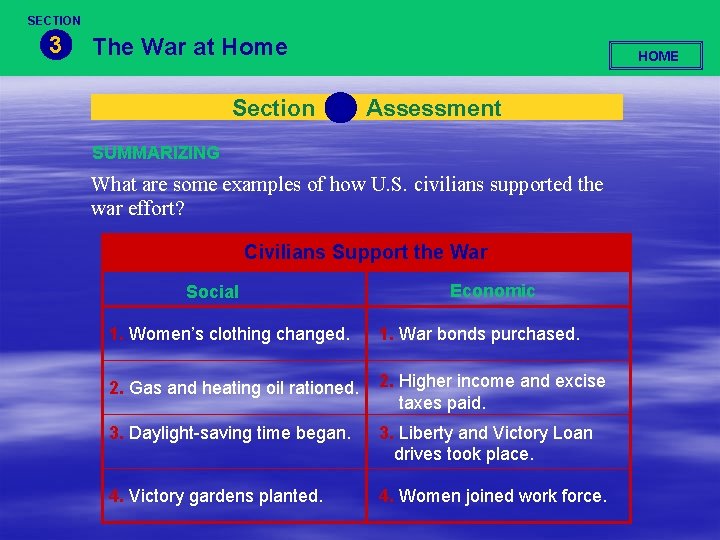
SECTION 3 The War at Home HOME Section 3 Assessment SUMMARIZING What are some examples of how U. S. civilians supported the war effort? Civilians Support the War Social Economic 1. Women’s clothing changed. 1. War bonds purchased. 2. Gas and heating oil rationed. 2. Higher income and excise taxes paid. 3. Daylight-saving time began. 3. Liberty and Victory Loan drives took place. 4. Victory gardens planted. 4. Women joined work force.
SECTION 3 The War at Home Section 3 Assessment 3 FORMING AND SUPPORTING OPINIONS Why do you think civil liberties were so easily violated by the people and government of the United States during the First World War? THINK ABOUT • the effect of the Committee on Public Information • the diverse ethnic backgrounds of Americans • the reasons for the Espionage and Sedition Acts HOME
SECTION 3 The War at Home SYNTHESIZING Section 3 Assessment 3 Were changes in the American economy during World War I beneficial to the country overall? THINK ABOUT • the effect on various groups of workers • the impact on African Americans • changes in the role of government HOME
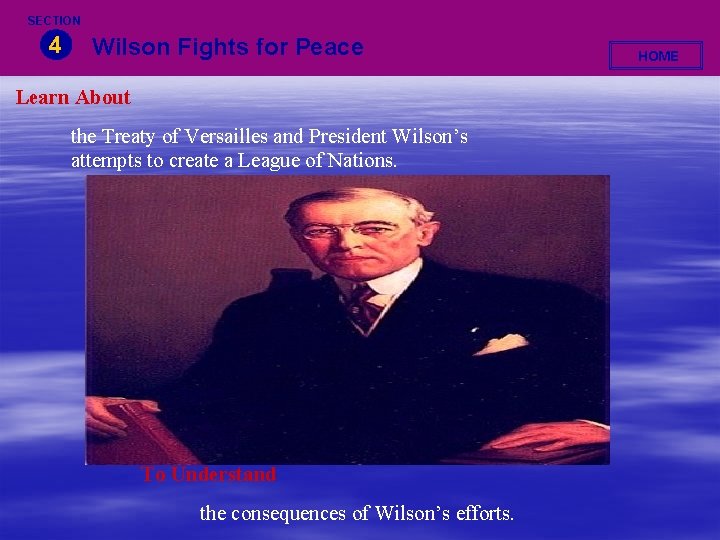
SECTION 4 Wilson Fights for Peace Learn About the Treaty of Versailles and President Wilson’s attempts to create a League of Nations. To Understand the consequences of Wilson’s efforts. HOME
SECTION 4 Wilson Fights for Peace Key Idea President Wilson’s plans for peace are modified by Allied leaders in Europe and by Americans who are eager to remove the country from foreign entanglements. HOME
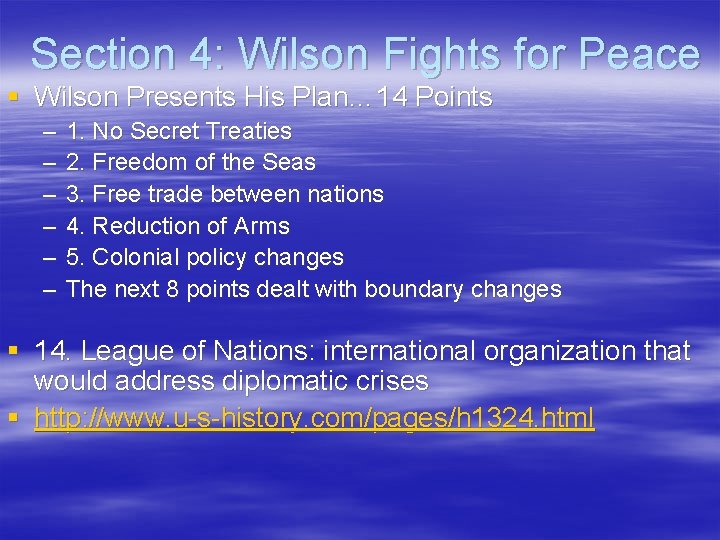
Section 4: Wilson Fights for Peace § Wilson Presents His Plan… 14 Points – – – 1. No Secret Treaties 2. Freedom of the Seas 3. Free trade between nations 4. Reduction of Arms 5. Colonial policy changes The next 8 points dealt with boundary changes § 14. League of Nations: international organization that would address diplomatic crises § http: //www. u-s-history. com/pages/h 1324. html
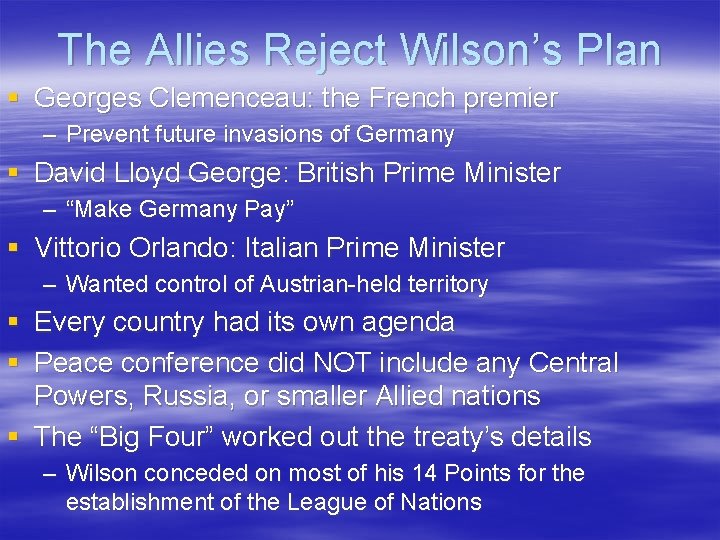
The Allies Reject Wilson’s Plan § Georges Clemenceau: the French premier – Prevent future invasions of Germany § David Lloyd George: British Prime Minister – “Make Germany Pay” § Vittorio Orlando: Italian Prime Minister – Wanted control of Austrian-held territory § § Every country had its own agenda Peace conference did NOT include any Central Powers, Russia, or smaller Allied nations § The “Big Four” worked out the treaty’s details – Wilson conceded on most of his 14 Points for the establishment of the League of Nations
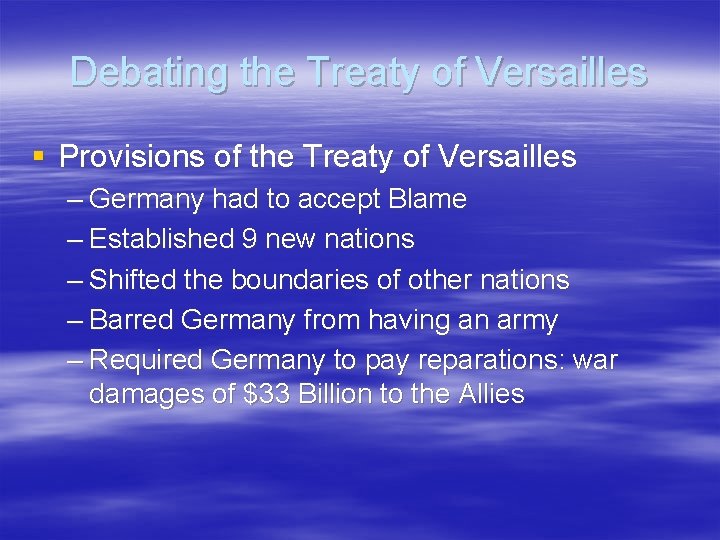
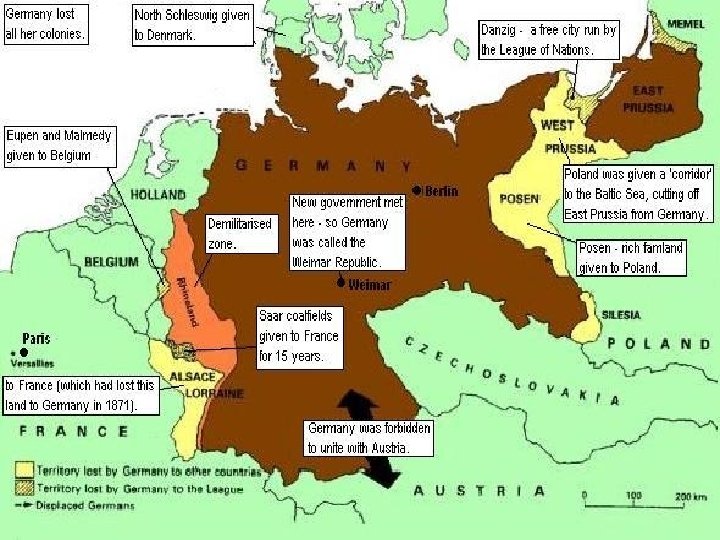
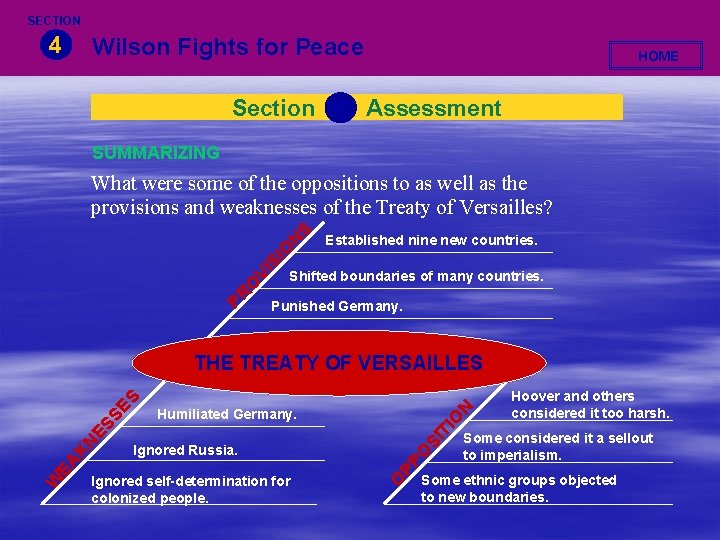
Debating the Treaty of Versailles § Provisions of the Treaty of Versailles – Germany had to accept Blame – Established 9 new nations – Shifted the boundaries of other nations – Barred Germany from having an army – Required Germany to pay reparations: war damages of $33 Billion to the Allies
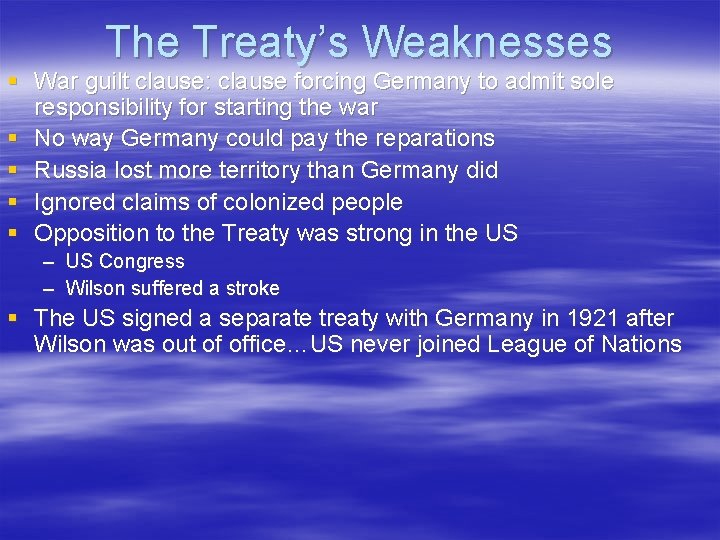
The Treaty’s Weaknesses § War guilt clause: clause forcing Germany to admit sole responsibility for starting the war § No way Germany could pay the reparations § Russia lost more territory than Germany did § Ignored claims of colonized people § Opposition to the Treaty was strong in the US – US Congress – Wilson suffered a stroke § The US signed a separate treaty with Germany in 1921 after Wilson was out of office…US never joined League of Nations
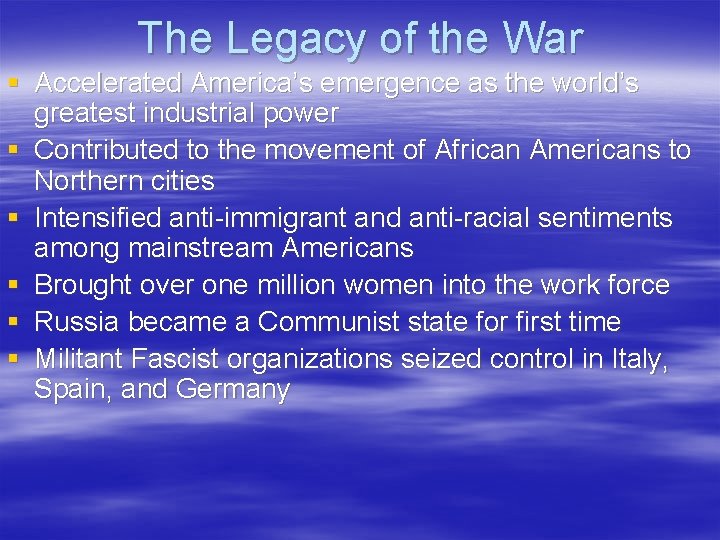
The Legacy of the War § Accelerated America’s emergence as the world’s greatest industrial power § Contributed to the movement of African Americans to Northern cities § Intensified anti-immigrant and anti-racial sentiments among mainstream Americans § Brought over one million women into the work force § Russia became a Communist state for first time § Militant Fascist organizations seized control in Italy, Spain, and Germany
SECTION 4 Wilson Fights for Peace HOME Section 4 Assessment SUMMARIZING PR O VI S IO N S What were some of the oppositions to as well as the provisions and weaknesses of the Treaty of Versailles? Established nine new countries. Shifted boundaries of many countries. Punished Germany. O N Humiliated Germany. SI TI PP Ignored self-determination for colonized people. O Ignored Russia. O W EA KN ES SE S THE TREATY OF VERSAILLES Hoover and others considered it too harsh. Some considered it a sellout to imperialism. Some ethnic groups objected to new boundaries.
SECTION 4 Wilson Fights for Peace Section 4 Assessment EVALUATING DECISIONS If you had been a member of the United States Senate in 1919, would you have supported or opposed ratification of the Treaty of Versailles? THINK ABOUT • the provisions of the treaty regarding Germany • the impact of new boundaries in Europe • the significance of membership in the League of Nations HOME
SECTION 4 Wilson Fights for Peace Section 4 Assessment FORMING OPINIONS What do you think were the most important reasons that Wilson failed to persuade the United States to join the League of Nations? THINK ABOUT • the attitudes of Europeans at Versailles • American attitudes about the League • Wilson’s tactics for getting the League adopted HOME
Chapter 19 Assessment 1. What were the long-term and immediate causes of World War I? 2. Where did Germany begin its war offensive, and what happened there? 3. What overt acts caused the United States to enter World War I in 1917? 4. How did the United States mobilize a strong military during World War I? 5. What new weapons made fighting in World War I deadlier than fighting in previous wars? HOME
Chapter 19 Assessment 6. What methods did the United States use to sell the war to the nation? 7. What events during World War I undermined Americans’ civil liberties? 8. What were the major effects of the Treaty of Versailles? 9. How did Wilson’s support for the League of Nations stand in the way of Senate support for the Treaty of Versailles? 10. What were the major international consequences of World War I? HOME