
Chapter 19 The Circulatory System The Circulatory System
- Slides: 18
Chapter 19 The Circulatory System
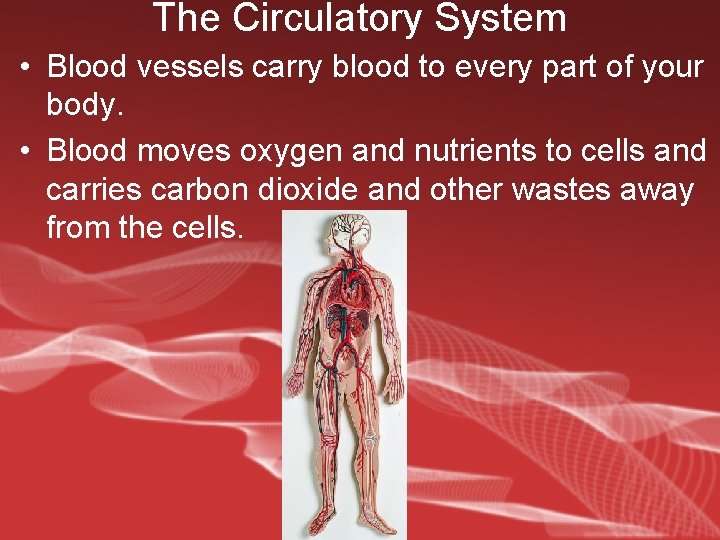
The Circulatory System • Blood vessels carry blood to every part of your body. • Blood moves oxygen and nutrients to cells and carries carbon dioxide and other wastes away from the cells.
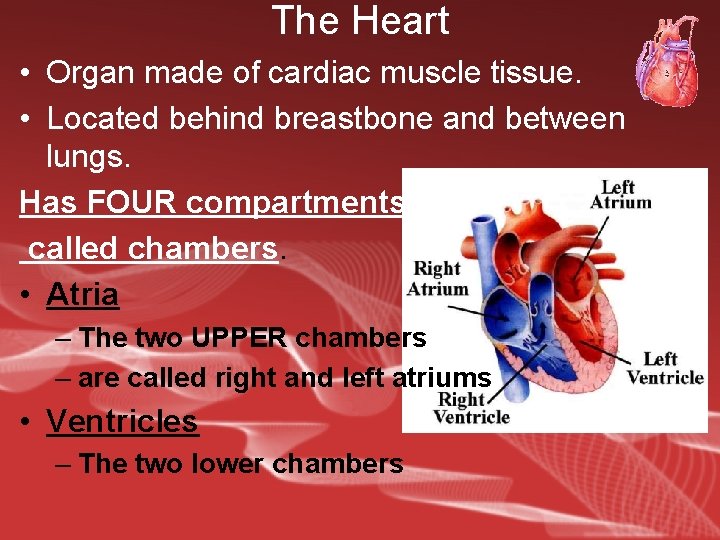
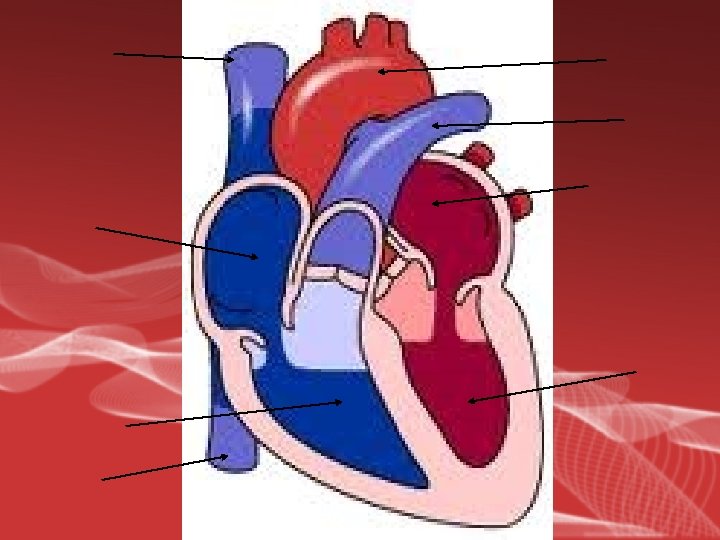
The Heart • Organ made of cardiac muscle tissue. • Located behind breastbone and between lungs. Has FOUR compartments called chambers. • Atria – The two UPPER chambers – are called right and left atriums • Ventricles – The two lower chambers
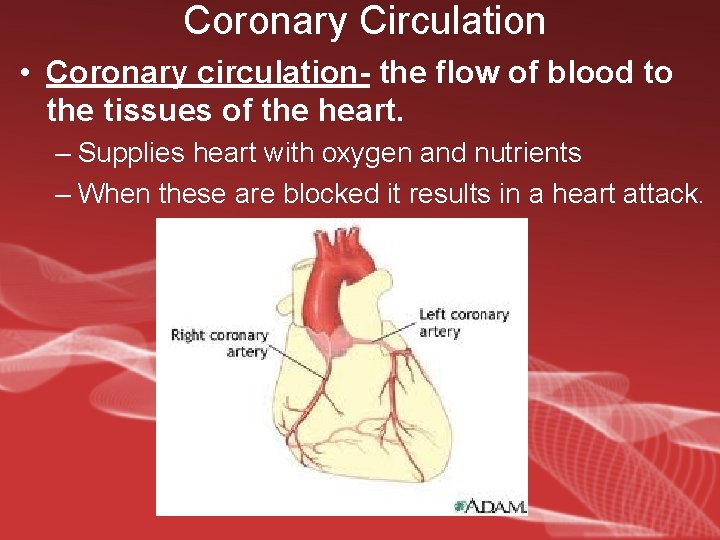
Coronary Circulation • Coronary circulation- the flow of blood to the tissues of the heart. – Supplies heart with oxygen and nutrients – When these are blocked it results in a heart attack.
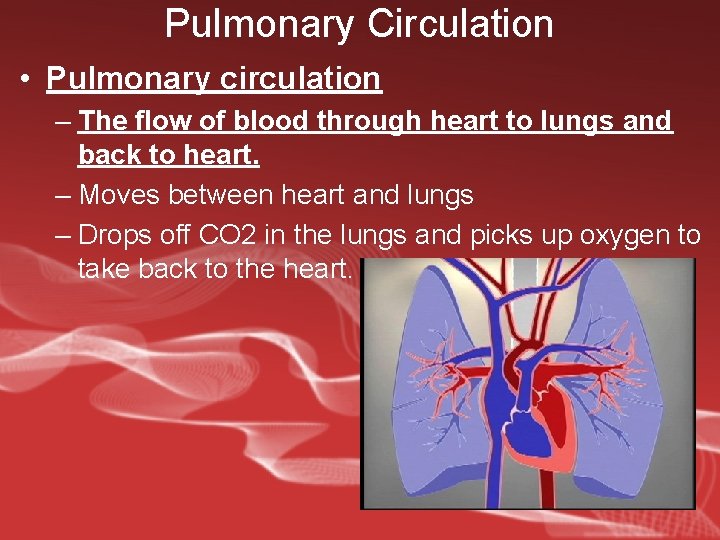
Pulmonary Circulation • Pulmonary circulation – The flow of blood through heart to lungs and back to heart. – Moves between heart and lungs – Drops off CO 2 in the lungs and picks up oxygen to take back to the heart.
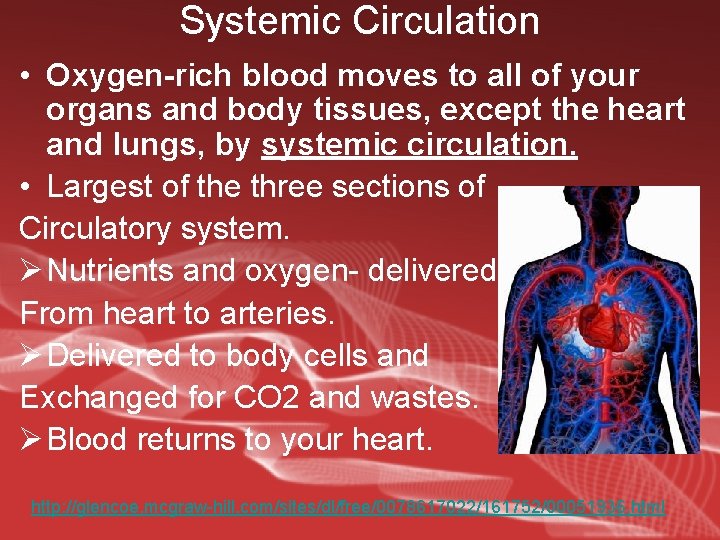
Systemic Circulation • Oxygen-rich blood moves to all of your organs and body tissues, except the heart and lungs, by systemic circulation. • Largest of the three sections of Circulatory system. Ø Nutrients and oxygen- delivered From heart to arteries. Ø Delivered to body cells and Exchanged for CO 2 and wastes. Ø Blood returns to your heart. http: //glencoe. mcgraw-hill. com/sites/dl/free/0078617022/161752/00051936. html
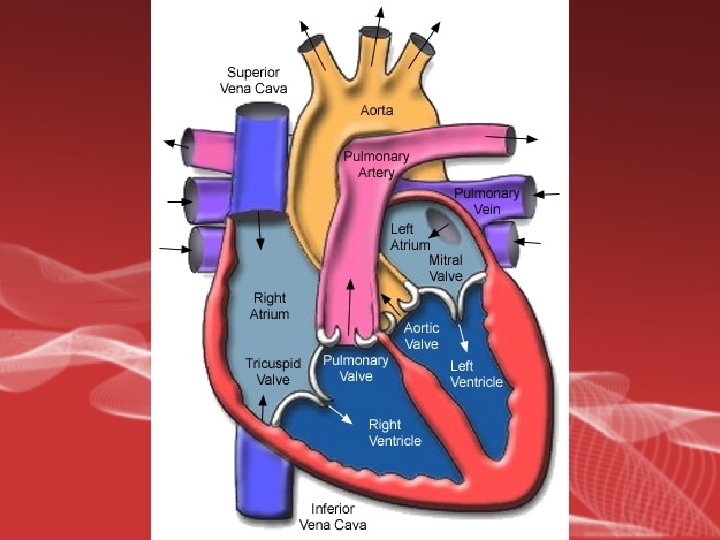
Path that Blood Takes • 1. Blood enters right atrium in veins from body tissues • 2. Right atrium contracts and blood enters right ventricle. • 3. Right ventricle contracts. • 4. Blood leaves right ventricle in pulmonary arteries. • 5. Blood in pulmonary arteries exchanges CO 2 for oxygen. • 6. Oxygen-rich blood returns to left atrium. • 7. Left atrium contracts and blood enters left ventricle. • 8. Left ventricle contracts. • 9. Blood leaves heart in arteries to body tissues.
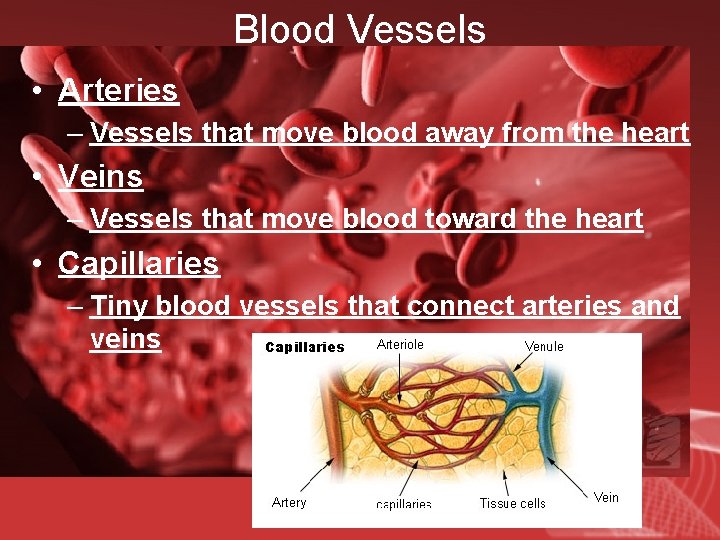
Blood Vessels • Arteries – Vessels that move blood away from the heart • Veins – Vessels that move blood toward the heart • Capillaries – Tiny blood vessels that connect arteries and veins
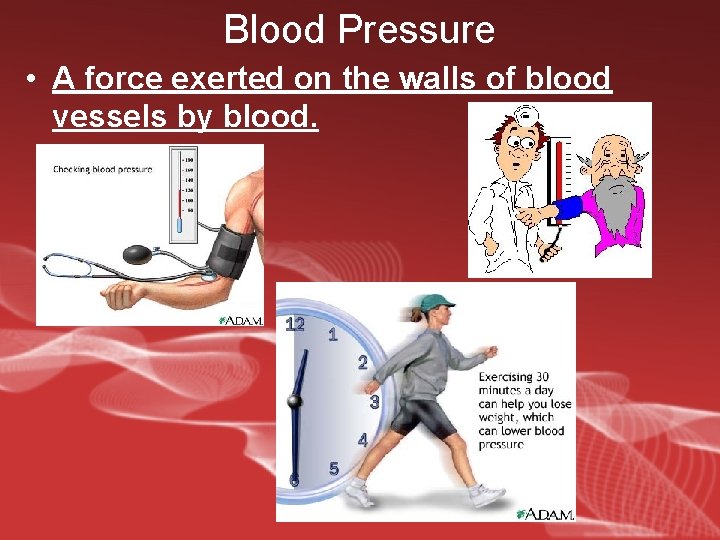
Blood Pressure • A force exerted on the walls of blood vessels by blood.
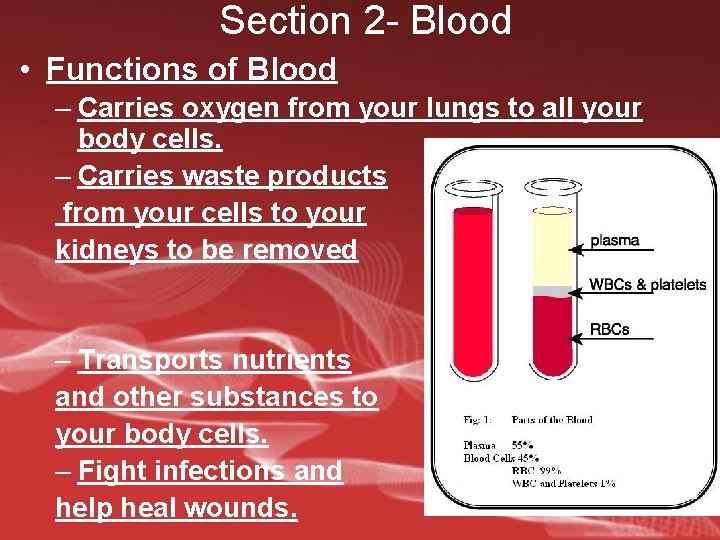
Section 2 - Blood • Functions of Blood – Carries oxygen from your lungs to all your body cells. – Carries waste products from your cells to your kidneys to be removed – Transports nutrients and other substances to your body cells. – Fight infections and help heal wounds.
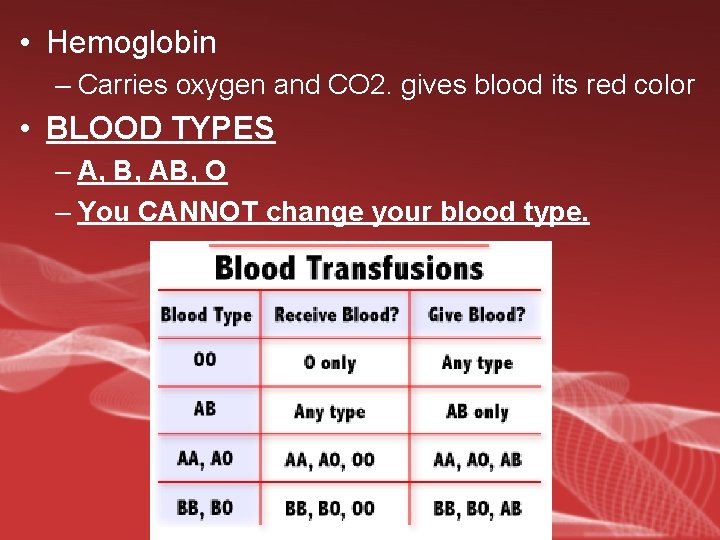
• Hemoglobin – Carries oxygen and CO 2. gives blood its red color • BLOOD TYPES – A, B, AB, O – You CANNOT change your blood type.
Diseases of Blood • Anemia is a blood disorder of the red blood cells in which tissues can’t get enough oxygen. – Loss of large amounts of blood – Diet lacking iron or certain vitamins • The production of increased numbers of immature white blood cells is a disease called leukemia. – Medicines, blood transfusions, and bone marrow transplants are treatments.
Section 3 - Lymphatic System • Lymph – The water and dissolved substances remaining between cells and diffused into lymphatic capillaries. • Lymph is made up of white blood cells, water, and dissolved substances. • Your lymphatic system collects fluid from body tissue spaces. • Uses skeletal and smooth muslces for movement.
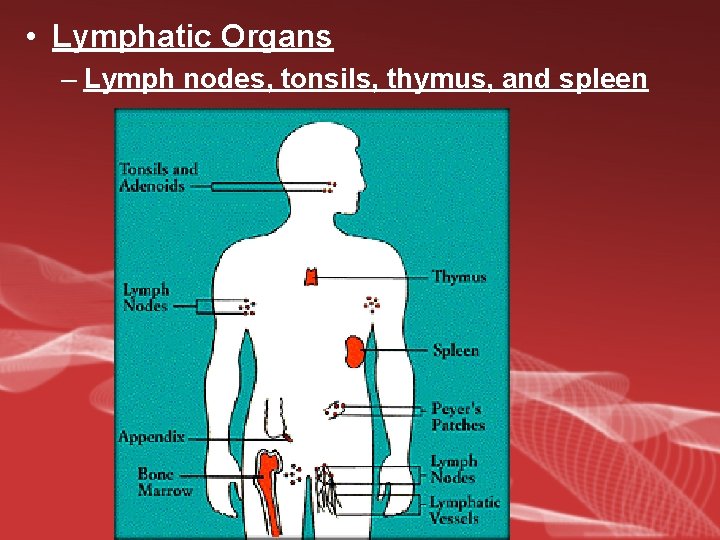
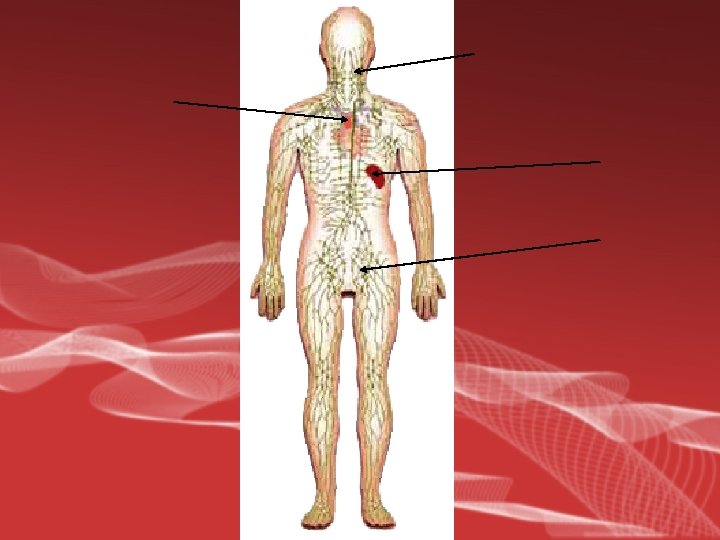
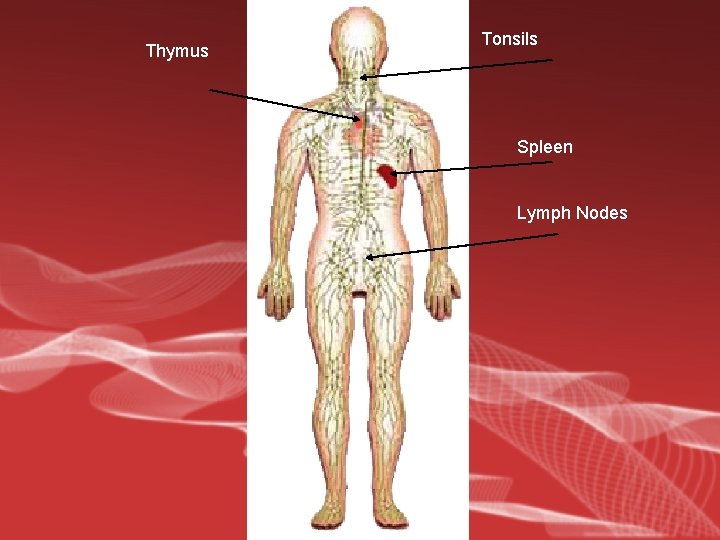
• Lymphatic Organs – Lymph nodes, tonsils, thymus, and spleen
Thymus Tonsils Spleen Lymph Nodes