
Chapter 19 The Age of Exploration History Background
Chapter 19 The Age of Exploration
History Background �Factors leading to the Age of Exploration ◦ The Crusades – Europeans wanted Asian goods ◦ Marco Polo’s visit to China – made people curious about the East. ◦ Navigation easier and more accurate. ◦ Renaissance cartographers improved map making. ◦ Improvements to wind driven ships made transoceanic voyages possible.

Countries sought own routes to East �Italian city-states monopolized trade routes to Asia �Portugal explored the African coast. �Vasco da Gama (Portugese) sailed around Africa and on to India. �Spain (Christopher Columbus) tried to reach India by going west. Americas came first!
Consequences of Reaching Americas �Spain and Portugal gained wealth. �Aztecs and Incas fell to superior technology and disease. �Soon English, French, and Dutch laid claim to the “New Worlds” �Native American cultures fell.
Europe profits �Develop industries �Build armies and navies �Birth of capitalism �Capitalism led to greater wealth among individuals and nations.
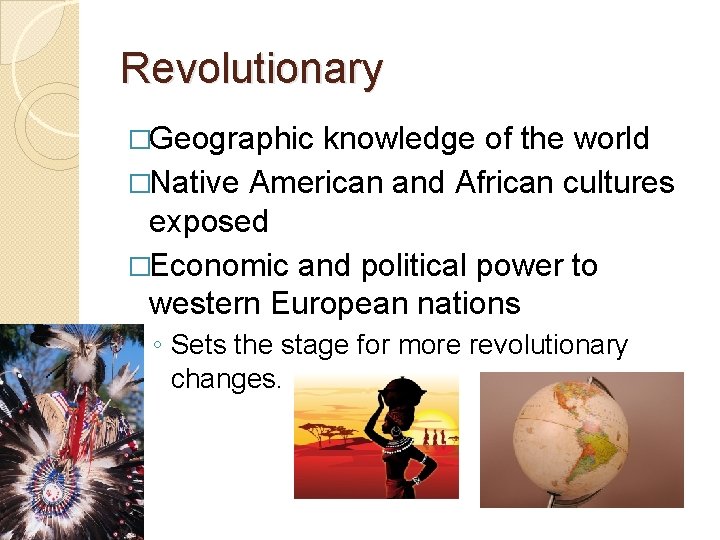
Revolutionary �Geographic knowledge of the world �Native American and African cultures exposed �Economic and political power to western European nations ◦ Sets the stage for more revolutionary changes.
Section 1: The Voyages of Discovery �Cartography – the science of making maps and globes �Caravel – a small, narrow ship with two or three masts and triangular sails �Galleon – a large, fast ship with three masts and both square and triangular sails that carried trade goods and treasures. �Circumnavigate – sail completely around
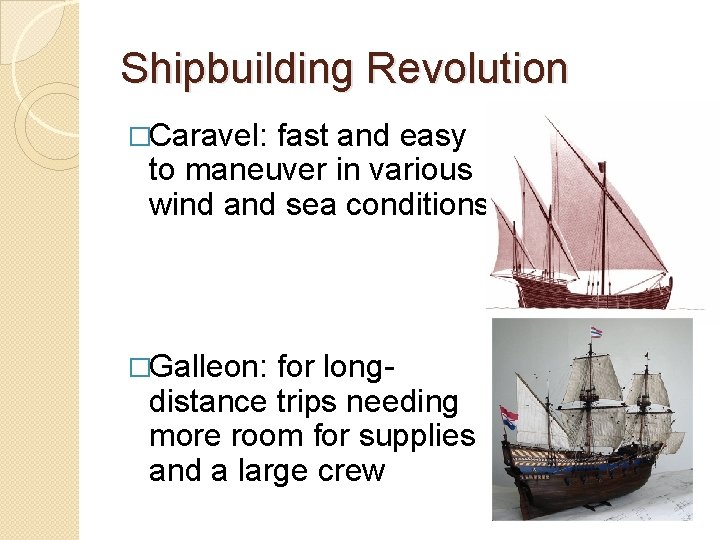
Shipbuilding Revolution �Caravel: fast and easy to maneuver in various wind and sea conditions �Galleon: for longdistance trips needing more room for supplies and a large crew
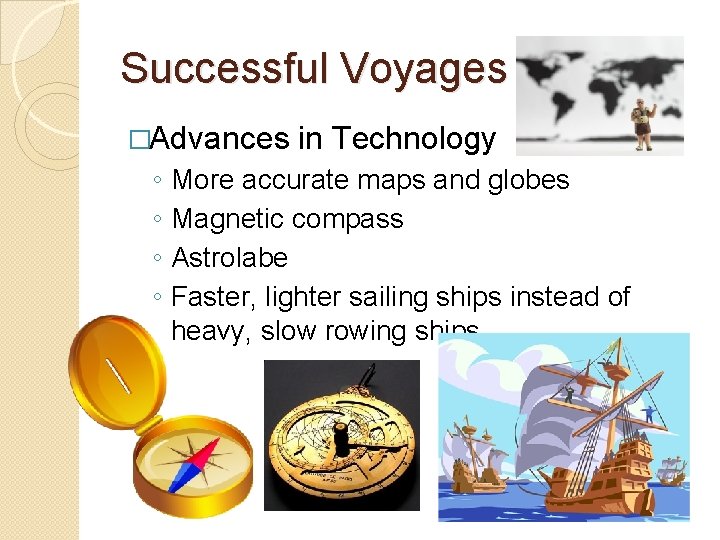
Successful Voyages �Advances ◦ ◦ in Technology More accurate maps and globes Magnetic compass Astrolabe Faster, lighter sailing ships instead of heavy, slow rowing ships
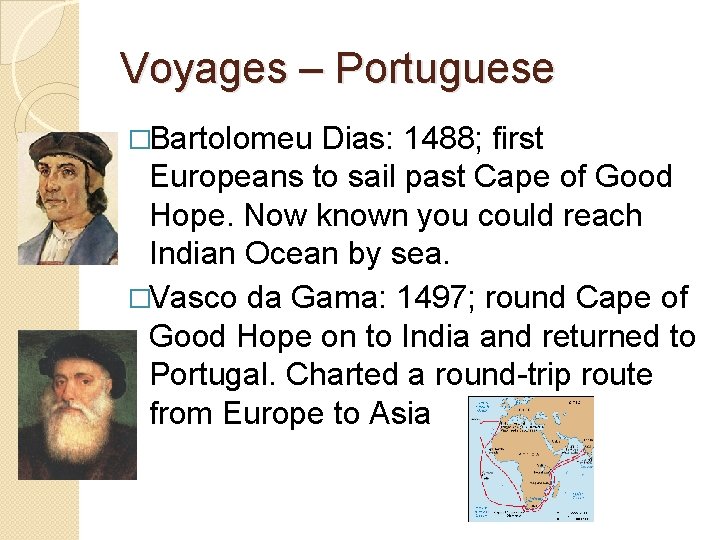
Voyages – Portuguese �Bartolomeu Dias: 1488; first Europeans to sail past Cape of Good Hope. Now known you could reach Indian Ocean by sea. �Vasco da Gama: 1497; round Cape of Good Hope on to India and returned to Portugal. Charted a round-trip route from Europe to Asia
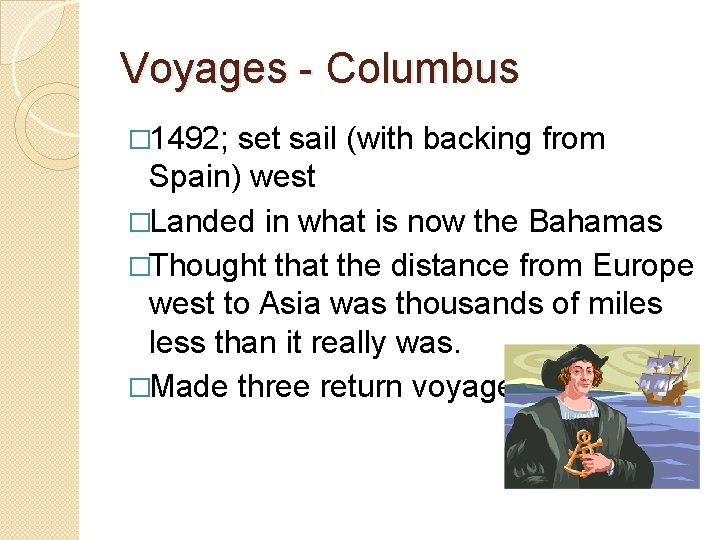
Voyages - Columbus � 1492; set sail (with backing from Spain) west �Landed in what is now the Bahamas �Thought that the distance from Europe west to Asia was thousands of miles less than it really was. �Made three return voyages
Voyages – The “New World” � 1500, Pedro Cabral, sailed to South America (thought he was going to the Indian Ocean) � 1501, Amerigo Vespucci concluded that Columbus had discovered a “New World” �A German cartographer named the new world “America”, a Latin version of Vespucci’s first name.
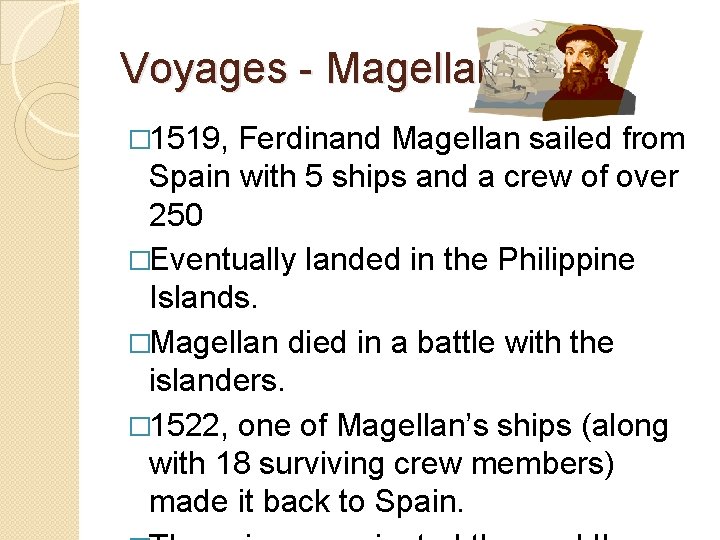
Voyages - Magellan � 1519, Ferdinand Magellan sailed from Spain with 5 ships and a crew of over 250 �Eventually landed in the Philippine Islands. �Magellan died in a battle with the islanders. � 1522, one of Magellan’s ships (along with 18 surviving crew members) made it back to Spain.
New View of the World �“The hidden half of the globe is brought to light” �Revealed the extent of Africa and the existence of the Americas �Europeans wanted to know about world geography �Printers made portable atlases �Gerardus Mercator published a new world map.
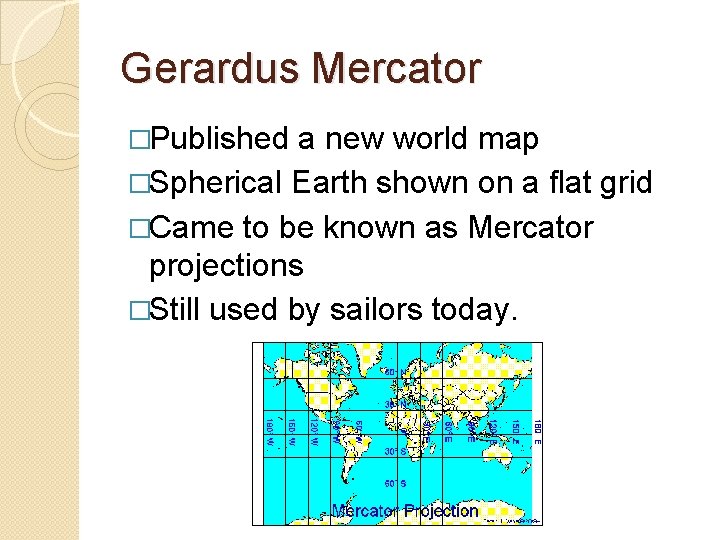
Gerardus Mercator �Published a new world map �Spherical Earth shown on a flat grid �Came to be known as Mercator projections �Still used by sailors today.
Section 2: The Conquest of the Americas �Bullion – precious metals melted into bars �Immunity – the ability of the body to fight a disease �Colonization – the process of taking over territory, creating new government, and settling towns
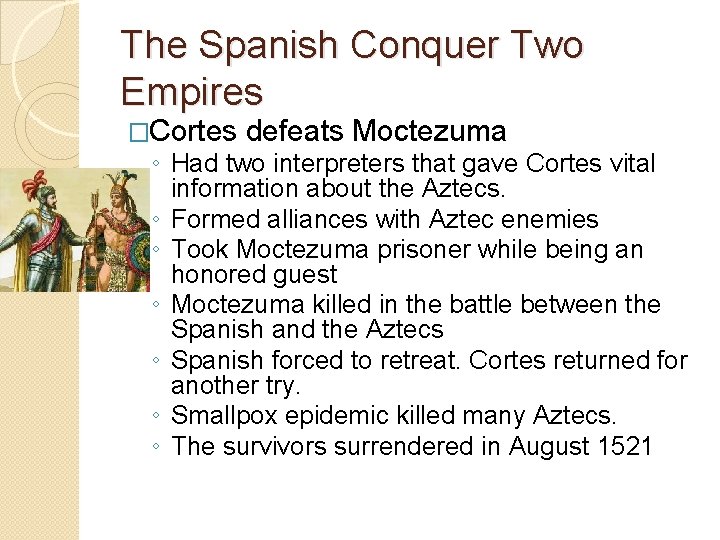
The Spanish Conquer Two Empires �Cortes defeats Moctezuma ◦ Had two interpreters that gave Cortes vital information about the Aztecs. ◦ Formed alliances with Aztec enemies ◦ Took Moctezuma prisoner while being an honored guest ◦ Moctezuma killed in the battle between the Spanish and the Aztecs ◦ Spanish forced to retreat. Cortes returned for another try. ◦ Smallpox epidemic killed many Aztecs. ◦ The survivors surrendered in August 1521

Aztec Poem “Nothing but flowers and songs of sorrow Are left in Mexico and Tlatelolco… We are crushed to the ground; We lie in ruins. ”
Francisco Pizarro �Pizarro took advantage of chaos caused by smallpox, civil war, and a divided Inca Empire. �Invited Atahualpa to a friendly meeting and threw him in prison. �Pizarro rejected the Inca ransom and had Atahualpa killed. �Without a leader, the Incas fell to the Spaniards in Cuzco 1533.
The Impact of Conquest �Enriched Spain but devastated the Aztecs and Incas �Spanish colonies brought great wealth to Spain; millions of Aztecs/Incas wiped out from disease and their cultural treasures destroyed �The wealth of the Spanish colonies in the Americas led to other Europeans’ desire for colonies in the Americas.
The Impact of Conquest �Conquistadors melted down carved gold ornaments, statues, and wall decorations. �These masterpieces of Aztec and Inca art were lost forever. �Conquistadors also ruined cities and built their own. ◦ Tore down Templo Mayor; built Mexico city over the ruins
The Impact of Conquest �Conquistadors destroyed temples, statues of Gods, and books �Killed native priests �Called the quipus “books of the devil” and burned them. �All Inca history was lost; Aztec history books were burned. �Millions of Aztecs/Incas died from smallpox, but the Spanish were immune.
Section 3 – The Planting of Colonies �Columbian Exchange: the exchange of people, other living things, and ideas between the Eastern and Western hemispheres �Missionaries: church members who try to convert people to a particular religion. �Mission: a religious settlement or base where missionaries work
Global Empires �European empires. nations founded global ◦ Trading Posts helped people to trade freely ◦ Colonies were established around the world ◦ Missions were built so church members could live there and preach their beliefs to others. ◦ Europeans established three types of
Missionaries’ Success �Most Successful: China, Japan, Philippine Islands �Least Successful: New France and English colonies
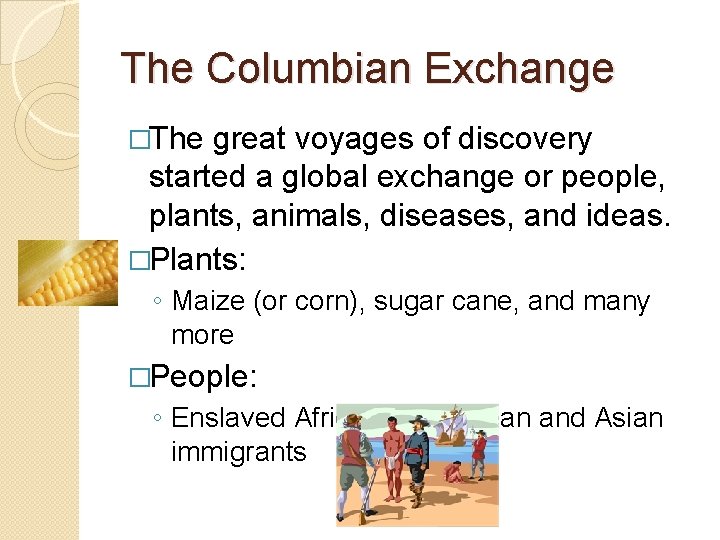
The Columbian Exchange �The great voyages of discovery started a global exchange or people, plants, animals, diseases, and ideas. �Plants: ◦ Maize (or corn), sugar cane, and many more �People: ◦ Enslaved Africans, European and Asian immigrants
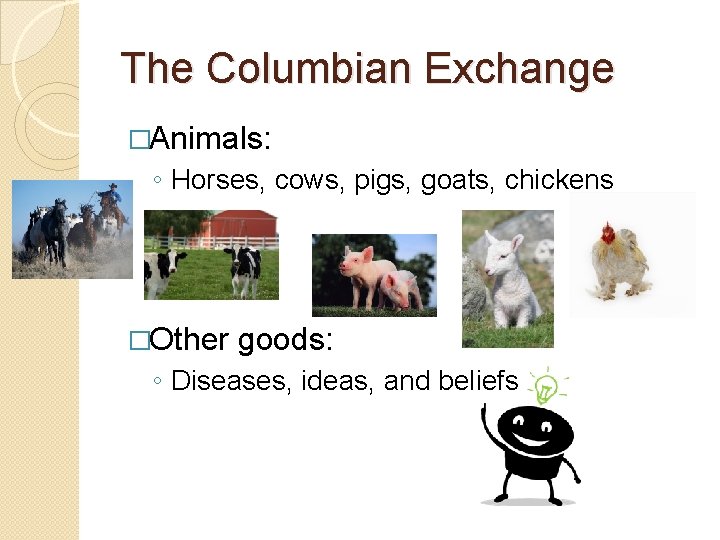
The Columbian Exchange �Animals: ◦ Horses, cows, pigs, goats, chickens �Other goods: ◦ Diseases, ideas, and beliefs
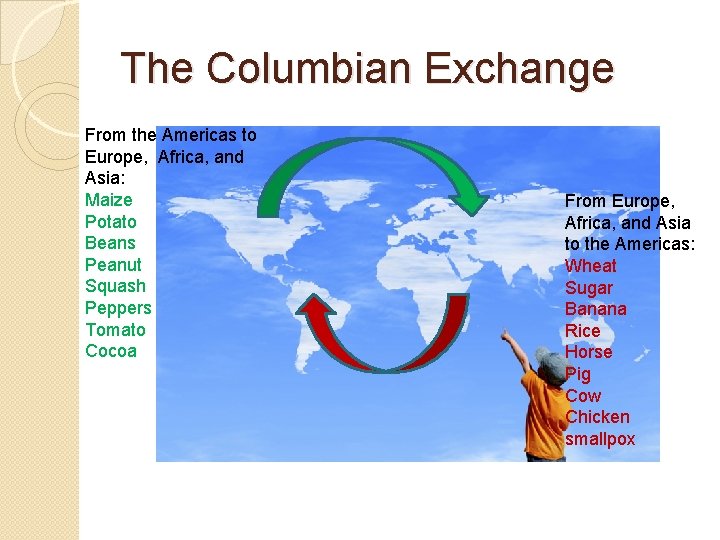
The Columbian Exchange From the Americas to Europe, Africa, and Asia: Maize Potato Beans Peanut Squash Peppers Tomato Cocoa From Europe, Africa, and Asia to the Americas: Wheat Sugar Banana Rice Horse Pig Cow Chicken smallpox
Section 4: The Origins of Modern Capitalism �Cottage industry: the use of workers at home with their own equipment �Traditional economy: an economy in which the exchange of goods is based on custom �Market economy: an economy in which prices and the distribution of goods are based on competition in a market
The Beginnings of Capitalism �Capitalism is an economy based on the private ownership of property and the use of property to compete for profits, or gains, in a market. �Main goal: to make the largest possible profit!
Key Parts of Capitalism �Free market (sellers compete to supply goods). Supply and demand – the price revolution �Using money to make even more profits �Landownership ◦ English landowners forced peasants off the land so they could use it to produce wool for sale. Wool was more profitable than farming.
Mercantilism �An economic policy that promotes building a nation’s strength by expanding its trade. �Goal: bring as much wealth as possible into the country. �Believed the main goal of trade was to make a nation more powerful. �Money from trade paid for strong powerful armies and navies.
Impact of Mercantilism �Sellers’ countries got richer �Buyers’ countries got poorer �Trading patterns increased �Raw materials often found in faraway lands
- Slides: 33