
Chapter 19 Protists 19 1 Introduction to Protists

- Slides: 17
Chapter 19 Protists 19. 1 Introduction to Protists § All protists are eukaryotes. § Some reproduce asexually by mitosis while others exchange genetic material during meiosis.
Chapter 19 Protists 19. 1 Introduction to Protists Classifying Protists § Some scientists classify protists by their methods of obtaining nutrition. § Animal-like protists § Plantlike protists § Funguslike protists
Chapter 19 Protists 19. 1 Introduction to Protists Animal-like Protists § Protozoans are heterotrophs and usually ingest bacteria, algae, or other protozoans.
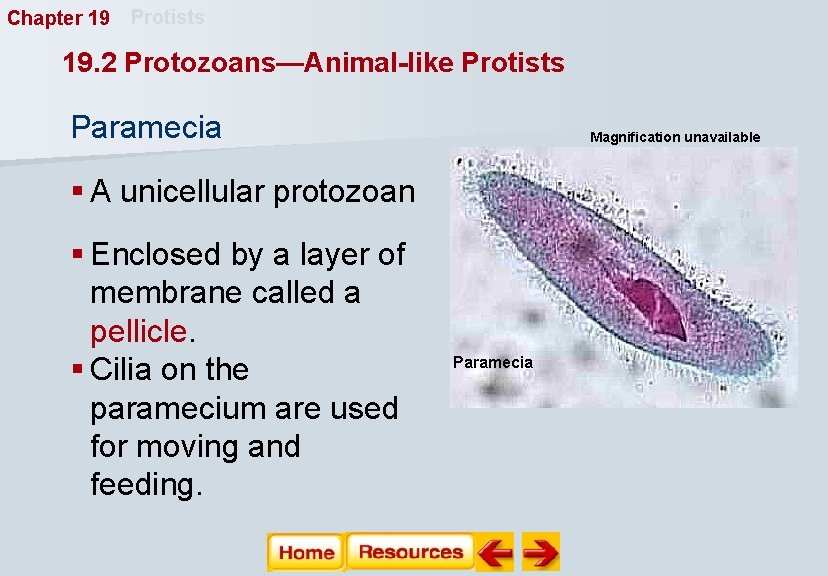
Chapter 19 Protists 19. 2 Protozoans—Animal-like Protists Paramecia Magnification unavailable § A unicellular protozoan § Enclosed by a layer of membrane called a pellicle. § Cilia on the paramecium are used for moving and feeding. Paramecia
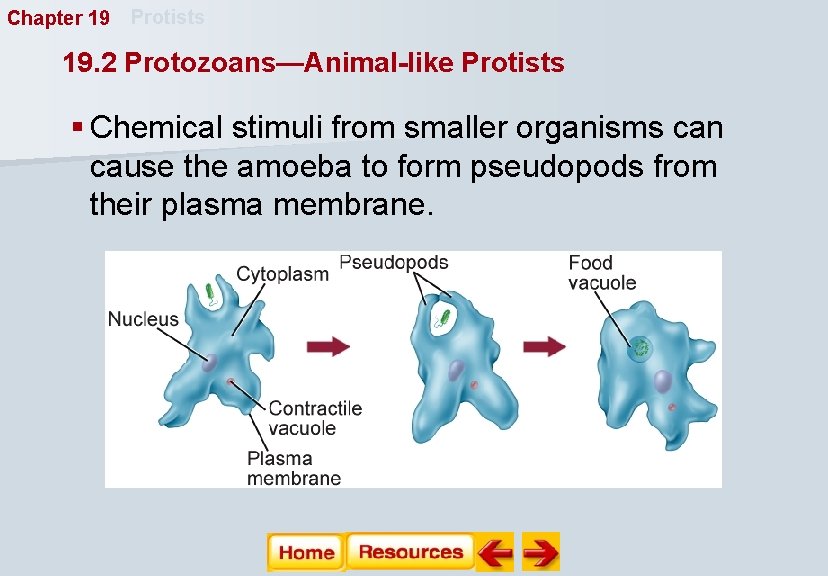
Chapter 19 Protists 19. 2 Protozoans—Animal-like Protists Sarcodina § Animal-like protists that use pseudopods for feeding and locomotion § The most commonly studied sarcodines are found in the genus Amoeba.
Chapter 19 Protists 19. 2 Protozoans—Animal-like Protists § Chemical stimuli from smaller organisms can cause the amoeba to form pseudopods from their plasma membrane.
Chapter 19 Protists 19. 2 Protozoans—Animal-like Protists Apicomplexa § Animal-like protists that belong to the phylum Apicomplexa also are known as sporozoans. § All sporozoans are parasitic.
Chapter 19 Protists 19. 2 Protozoans—Animal-like Protists Zoomastigina § Animal-like protozoans that use flagella for movement § Cause the infectious diseases American sleeping sickness and African sleeping sickness.
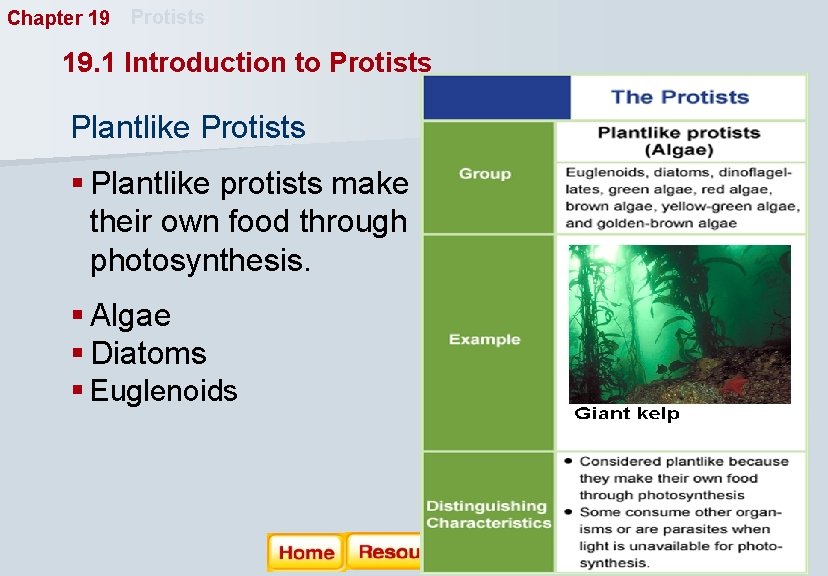
Chapter 19 Protists 19. 1 Introduction to Protists Plantlike Protists § Plantlike protists make their own food through photosynthesis. § Algae § Diatoms § Euglenoids
Chapter 19 Protists 19. 3 Algae—Plantlike Protists Characteristics of Algae § Contain photosynthetic pigments § Primary pigment is chlorophyll § Secondary pigments allow them to absorb light energy in deep water
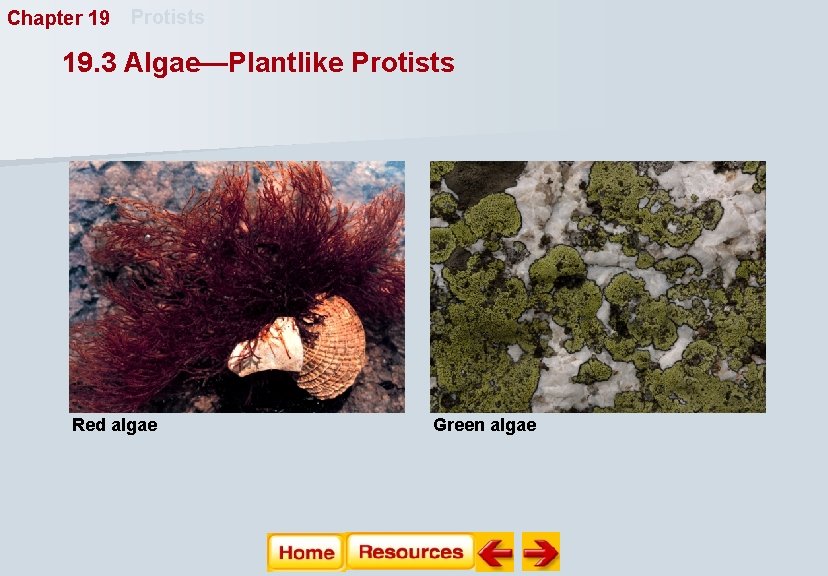
Chapter 19 Protists 19. 3 Algae—Plantlike Protists Red algae Green algae
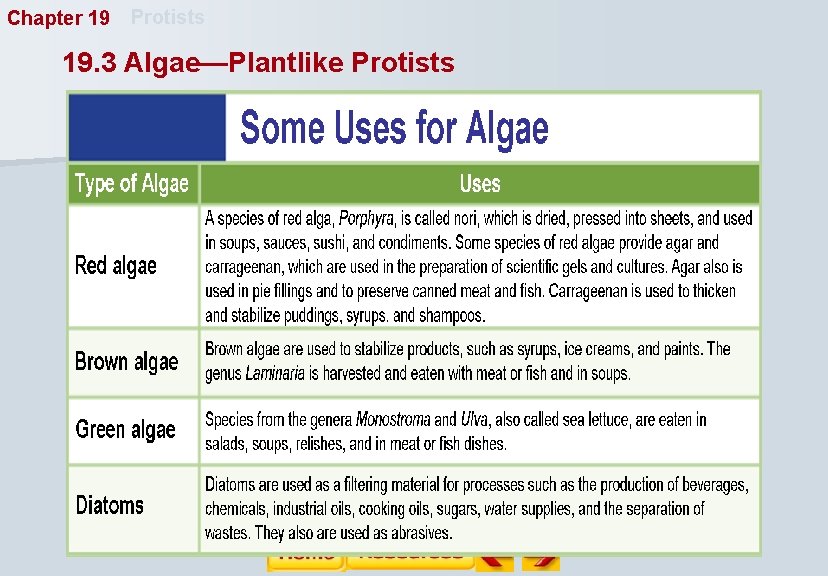
Chapter 19 Protists 19. 3 Algae—Plantlike Protists
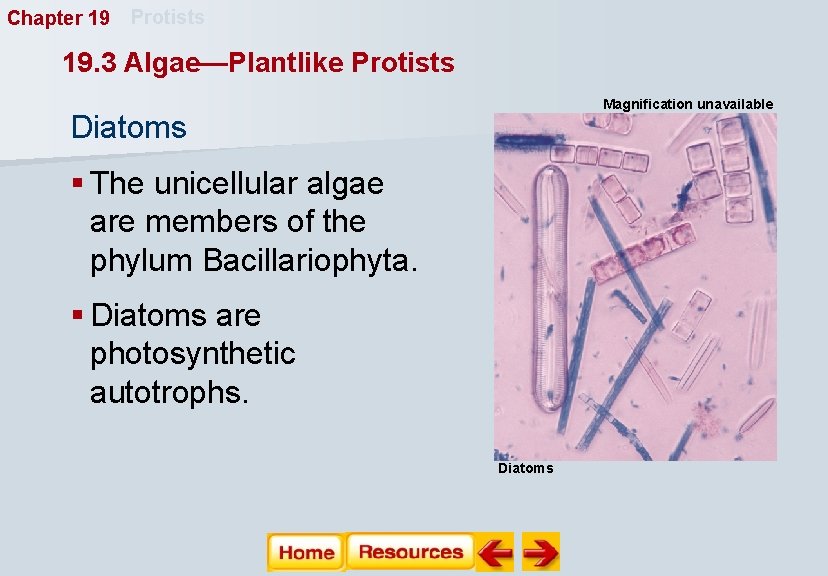
Chapter 19 Protists 19. 3 Algae—Plantlike Protists Magnification unavailable Diatoms § The unicellular algae are members of the phylum Bacillariophyta. § Diatoms are photosynthetic autotrophs. Diatoms
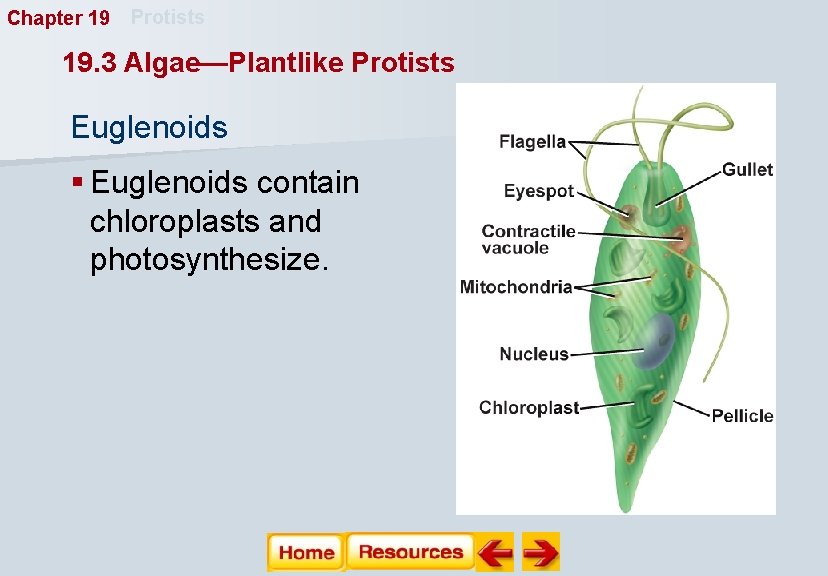
Chapter 19 Protists 19. 3 Algae—Plantlike Protists Euglenoids § Euglenoids contain chloroplasts and photosynthesize.
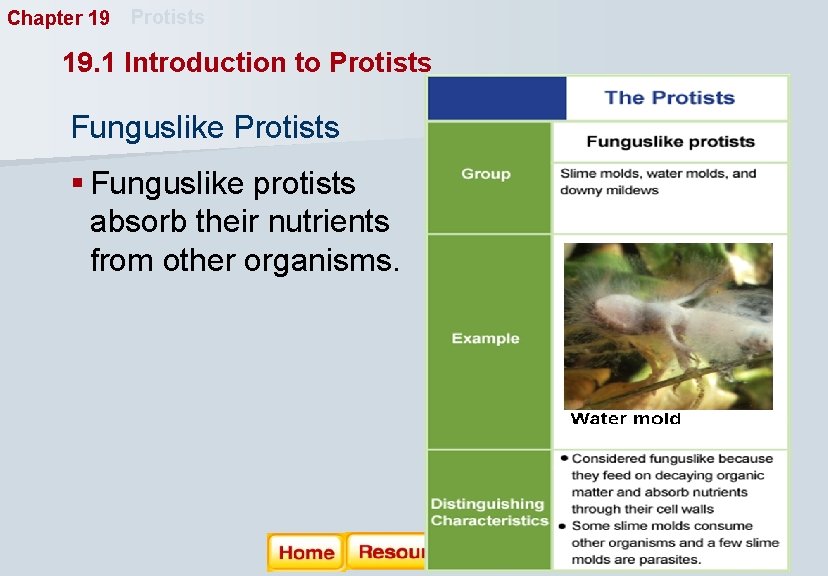
Chapter 19 Protists 19. 1 Introduction to Protists Funguslike Protists § Funguslike protists absorb their nutrients from other organisms.
Chapter 19 Protists 19. 4 Funguslike Protists Slime Molds § Slime molds use spores to reproduce. § Feed on decaying organic matter and absorb nutrients through their cell walls. § The cell walls of these protists contain cellulose or celluloselike compounds.
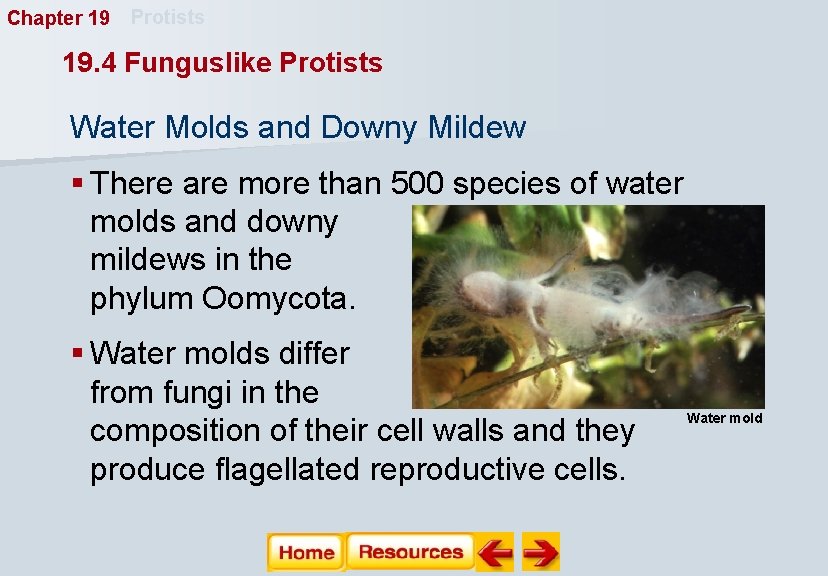
Chapter 19 Protists 19. 4 Funguslike Protists Water Molds and Downy Mildew § There are more than 500 species of water molds and downy mildews in the phylum Oomycota. § Water molds differ from fungi in the composition of their cell walls and they produce flagellated reproductive cells. Water mold