
CHAPTER 19 Progressive Movements Progressive Politics 1879 1917
- Slides: 41
CHAPTER 19 Progressive Movements, Progressive Politics 1879 -1917 © 2015 Pearson Education, Inc. All rights reserved.
The Revolt of the Intellectuals • Numerous people in the United States were thinking about how best to respond to the extraordinary changes brought about by immigration, urbanization, and the rapid industrialization of the country. • These upper-class reformers, newspaper reporters, ministers, writers, and college professors proposed new ways of ordering economic and political life.
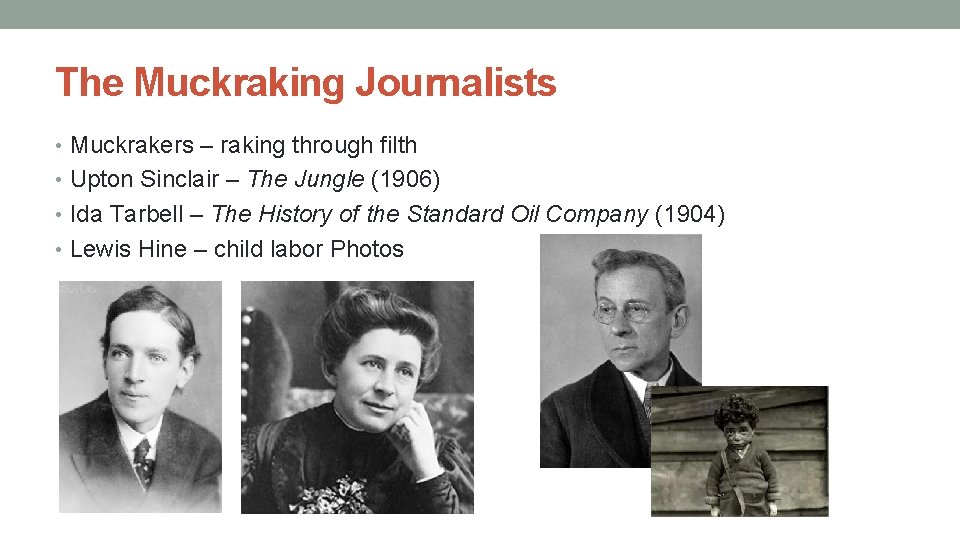
The Muckraking Journalists • Muckrakers – raking through filth • Upton Sinclair – The Jungle (1906) • Ida Tarbell – The History of the Standard Oil Company (1904) • Lewis Hine – child labor Photos
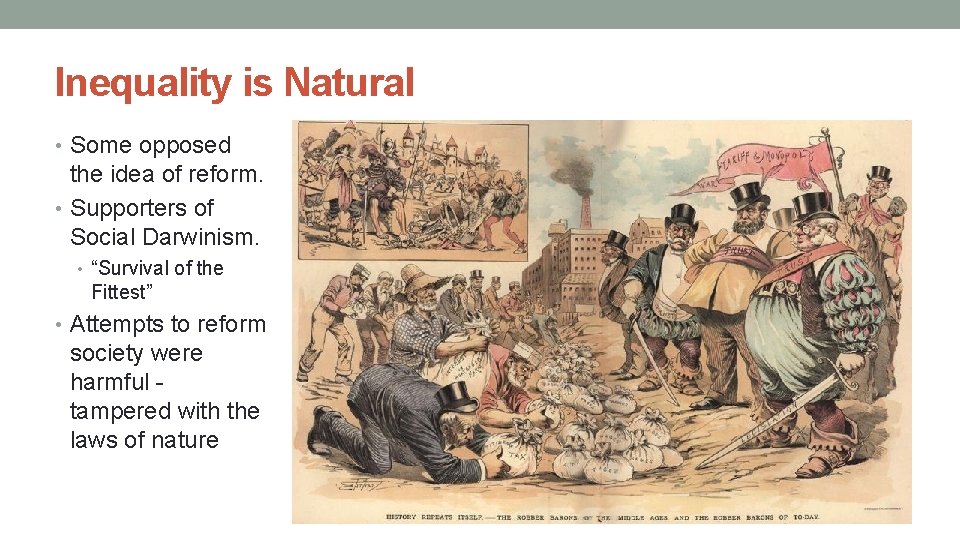
Inequality is Natural • Some opposed the idea of reform. • Supporters of Social Darwinism. • “Survival of the Fittest” • Attempts to reform society were harmful tampered with the laws of nature
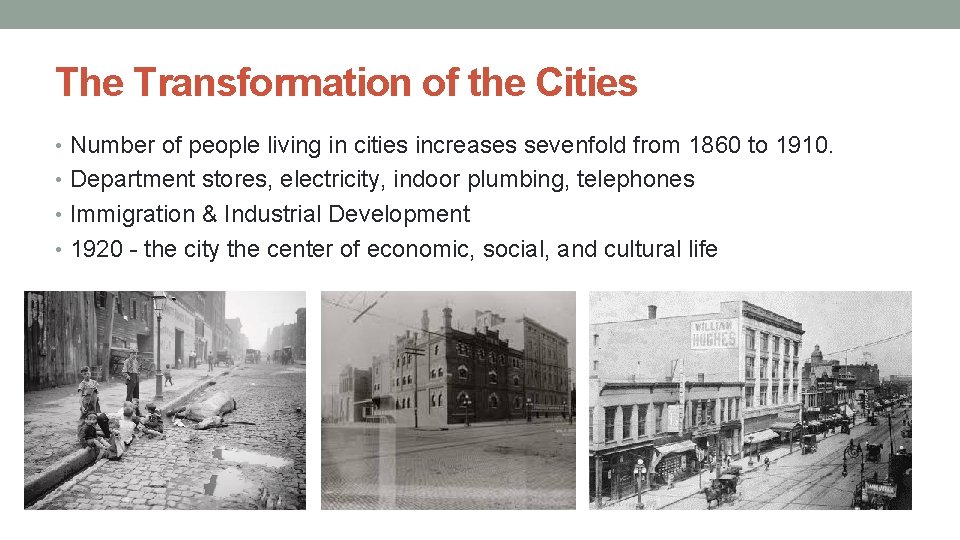
The Transformation of the Cities • Number of people living in cities increases sevenfold from 1860 to 1910. • Department stores, electricity, indoor plumbing, telephones • Immigration & Industrial Development • 1920 - the city the center of economic, social, and cultural life
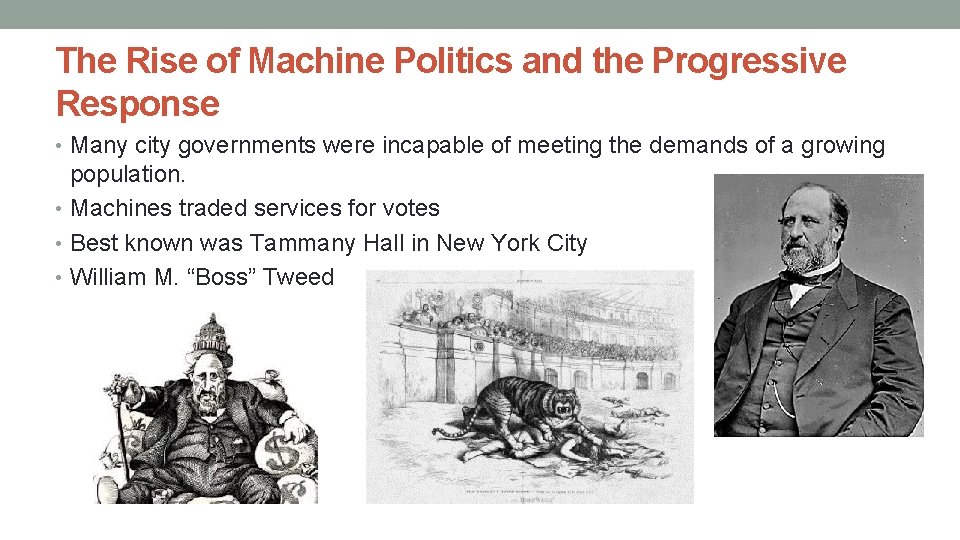
The Rise of Machine Politics and the Progressive Response • Many city governments were incapable of meeting the demands of a growing population. • Machines traded services for votes • Best known was Tammany Hall in New York City • William M. “Boss” Tweed
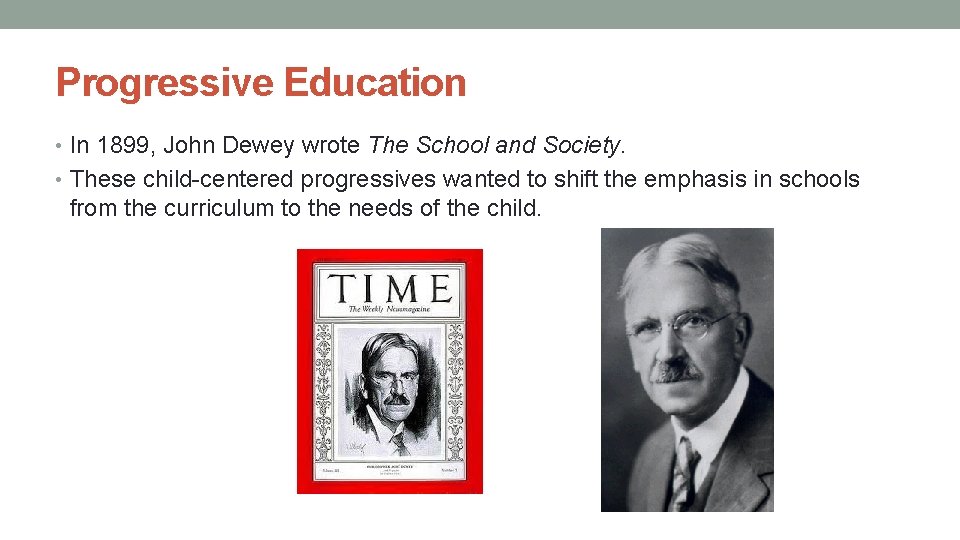
Progressive Education • In 1899, John Dewey wrote The School and Society. • These child-centered progressives wanted to shift the emphasis in schools from the curriculum to the needs of the child.
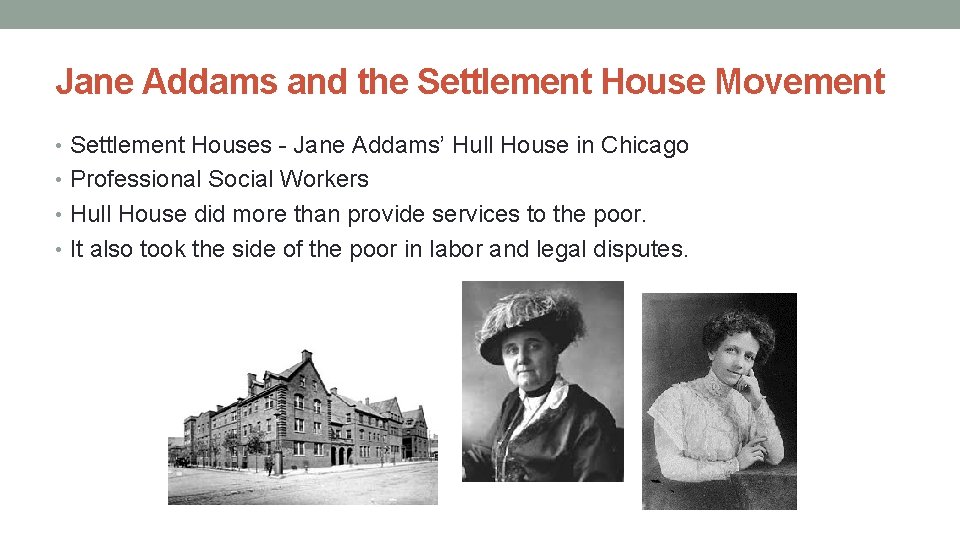
Jane Addams and the Settlement House Movement • Settlement Houses - Jane Addams’ Hull House in Chicago • Professional Social Workers • Hull House did more than provide services to the poor. • It also took the side of the poor in labor and legal disputes.
Religious Responses to the Gilded Age • In the late 1800 s, reform movements seeking to improve the lives of working people, bring an end to municipal corruption, and build a just economic order often took on the language and style of evangelical religion.
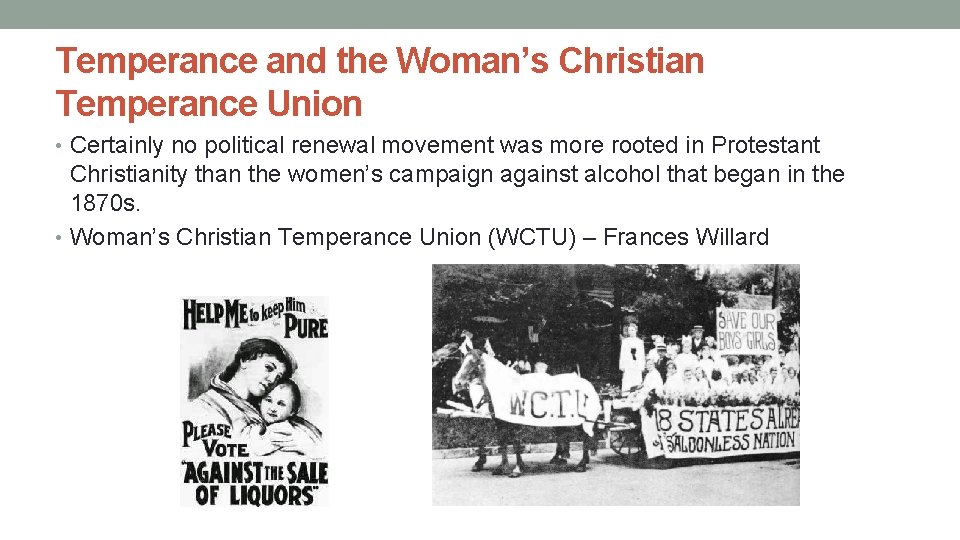
Temperance and the Woman’s Christian Temperance Union • Certainly no political renewal movement was more rooted in Protestant Christianity than the women’s campaign against alcohol that began in the 1870 s. • Woman’s Christian Temperance Union (WCTU) – Frances Willard
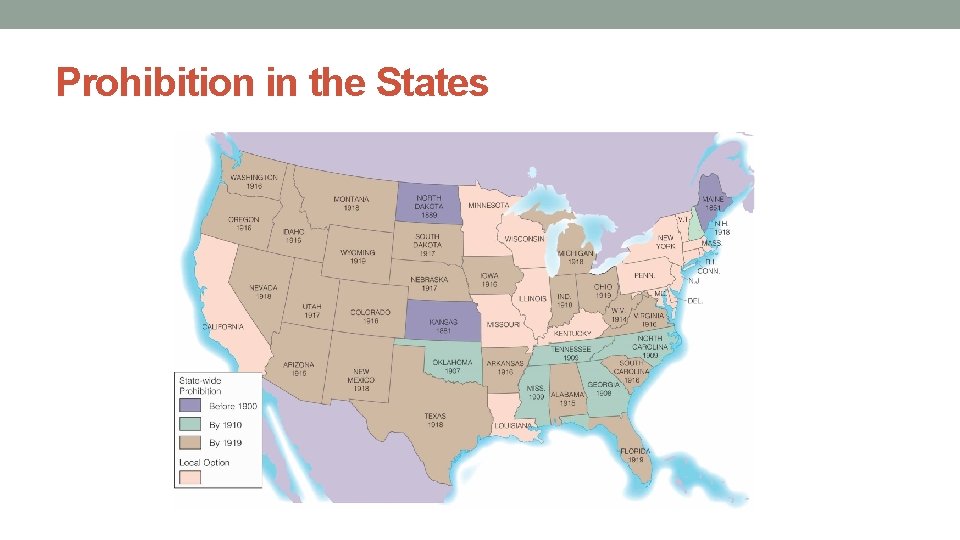
Prohibition in the States
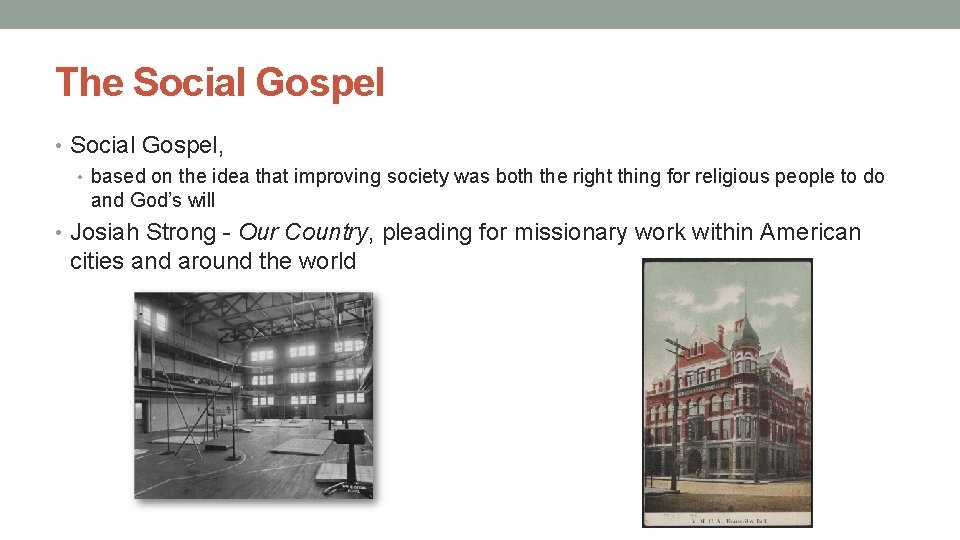
The Social Gospel • Social Gospel, • based on the idea that improving society was both the right thing for religious people to do and God’s will • Josiah Strong - Our Country, pleading for missionary work within American cities and around the world
Progressive Politics on the National Stage • U. S. Presidents from Roosevelt to Wilson would also mould public opinion on Progressivism. • Theodore Roosevelt – becomes the youngest president in American history
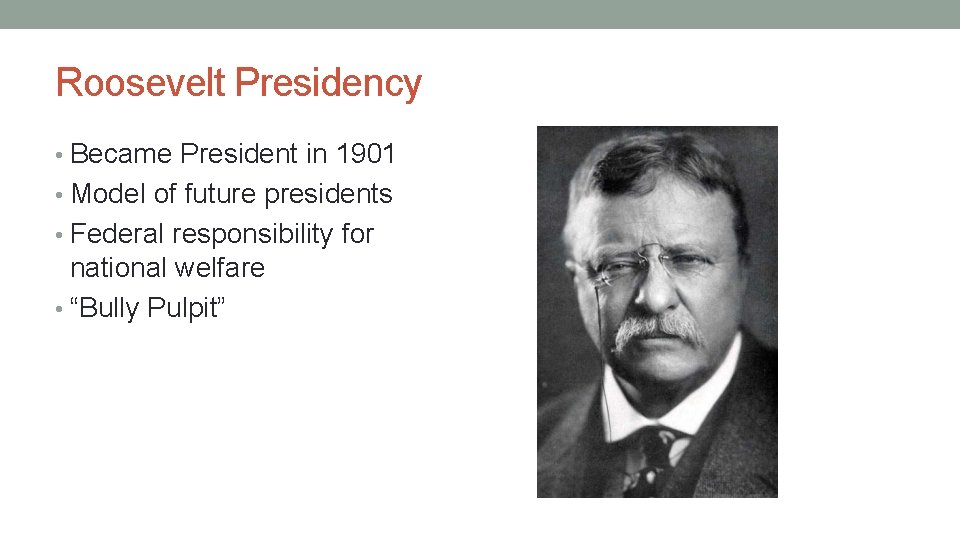
Roosevelt Presidency • Became President in 1901 • Model of future presidents • Federal responsibility for national welfare • “Bully Pulpit”
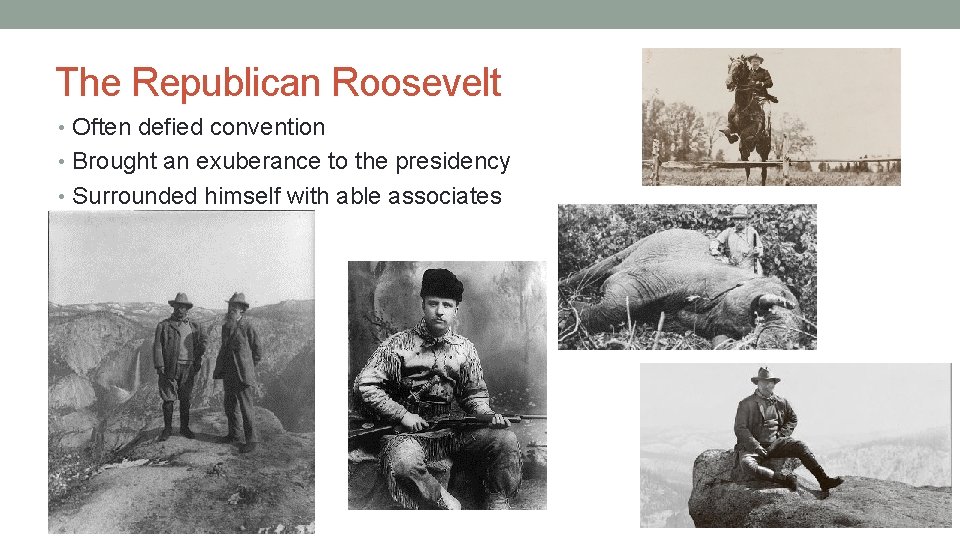
The Republican Roosevelt • Often defied convention • Brought an exuberance to the presidency • Surrounded himself with able associates
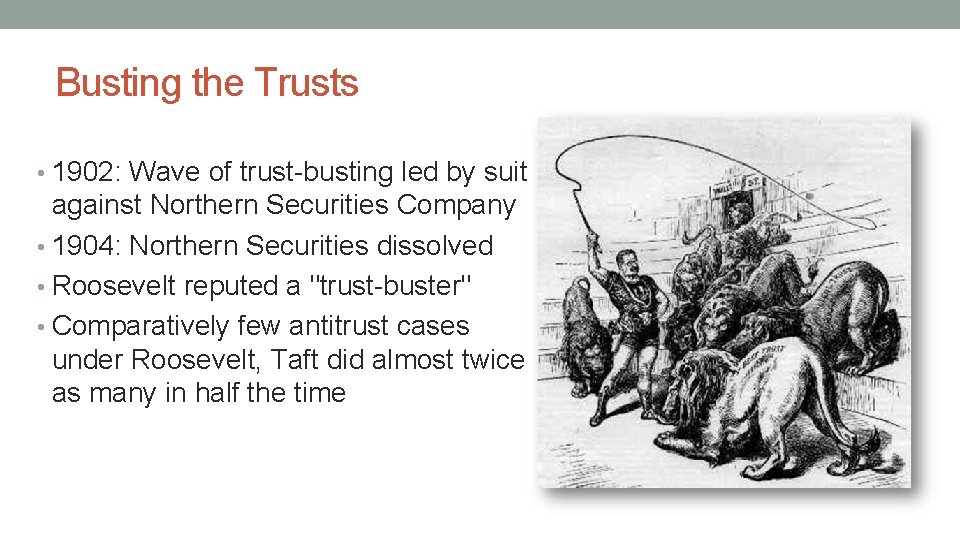
Busting the Trusts • 1902: Wave of trust-busting led by suit against Northern Securities Company • 1904: Northern Securities dissolved • Roosevelt reputed a "trust-buster" • Comparatively few antitrust cases under Roosevelt, Taft did almost twice as many in half the time
Conserving the Land • First comprehensive national conservation policy • Roosevelt worked with Gifford Pinchot, chief of Forest Service • Policy defined “conservation” as wise use of natural resources • Quadrupled acreage under federal protection
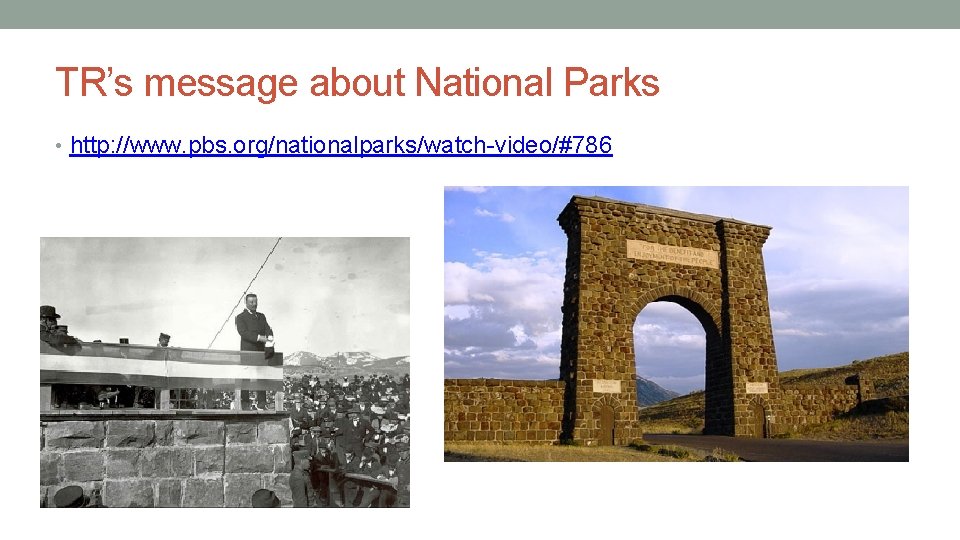
TR’s message about National Parks • http: //www. pbs. org/nationalparks/watch-video/#786
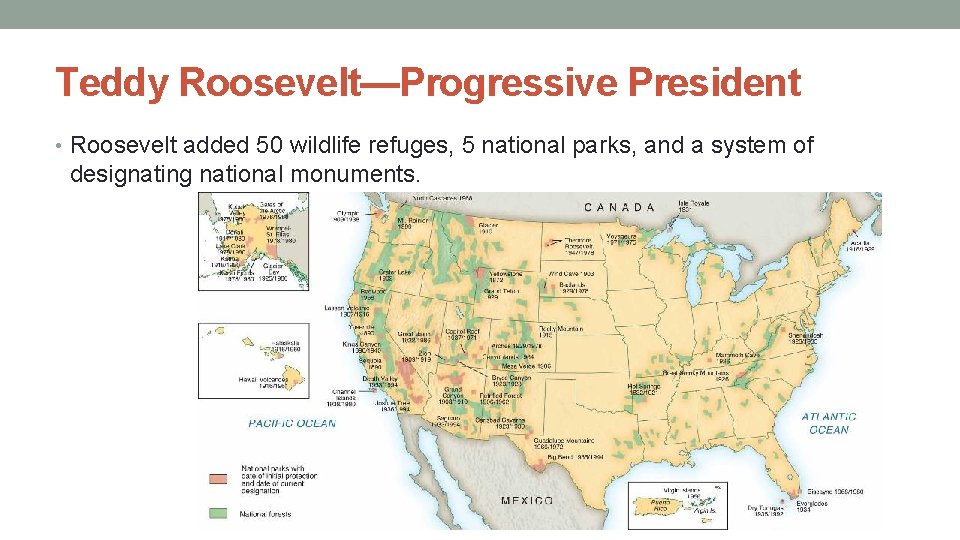
Teddy Roosevelt—Progressive President • Roosevelt added 50 wildlife refuges, 5 national parks, and a system of designating national monuments.
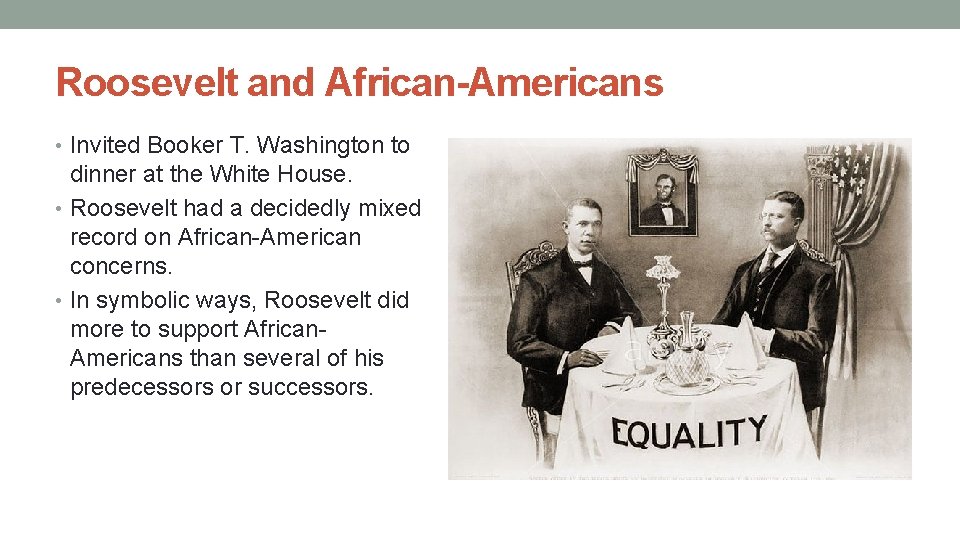
Roosevelt and African-Americans • Invited Booker T. Washington to dinner at the White House. • Roosevelt had a decidedly mixed record on African-American concerns. • In symbolic ways, Roosevelt did more to support African. Americans than several of his predecessors or successors.
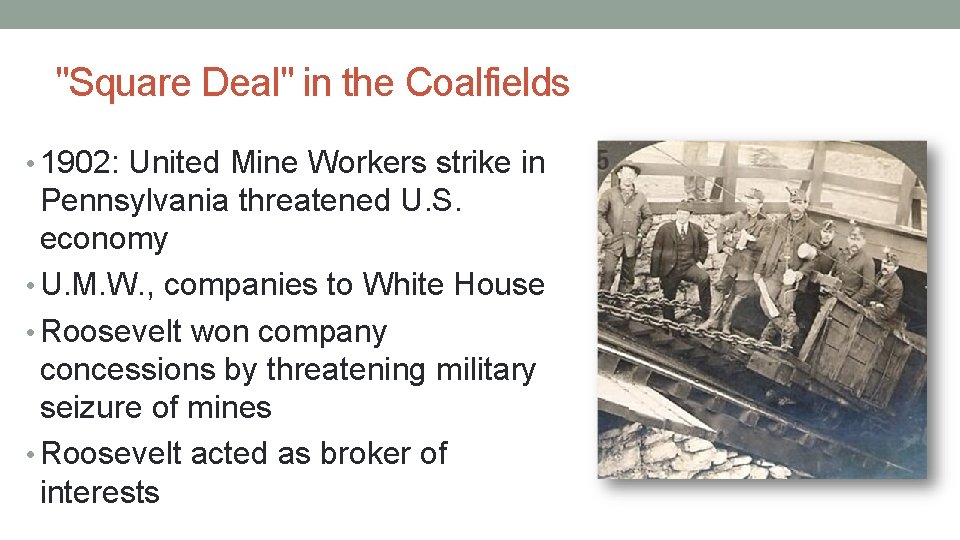
"Square Deal" in the Coalfields • 1902: United Mine Workers strike in Pennsylvania threatened U. S. economy • U. M. W. , companies to White House • Roosevelt won company concessions by threatening military seizure of mines • Roosevelt acted as broker of interests
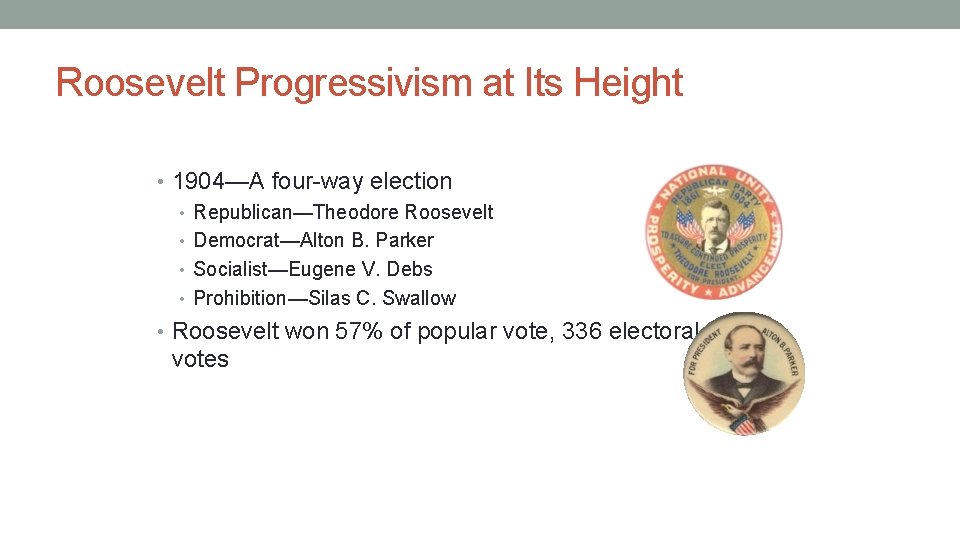
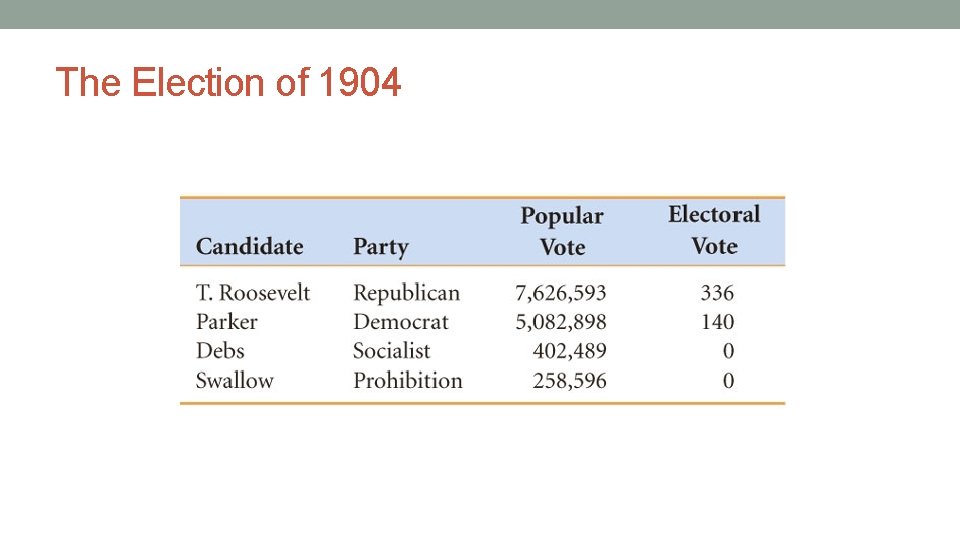
Roosevelt Progressivism at Its Height • 1904—A four-way election • Republican—Theodore Roosevelt • Democrat—Alton B. Parker • Socialist—Eugene V. Debs • Prohibition—Silas C. Swallow • Roosevelt won 57% of popular vote, 336 electoral votes
The Election of 1904
Regulating the Railroads • 1903: Elkins Act prohibited railroad rebates, strengthened Interstate Commerce Commission • Widespread popular demand for further railroad regulation after Roosevelt’s reelection • 1906: Hepburn Act further strengthened Interstate Commerce Commission • Membership from five to seven • May fix reasonable maximum rates • Jurisdiction broadened to include oil pipeline, express, sleeping car companies
Cleaning Up Food and Drugs • Upton Sinclair’s The Jungle (1906) prompted federal investigation of meatpacking industry • 1906: Meat Inspection Act • Sets rules for sanitary meatpacking • Requires government inspection of meat products • 1906: Pure Food and Drug Act • Required manufacturers to list certain ingredients • Banned manufacture and sale of adulterated drugs
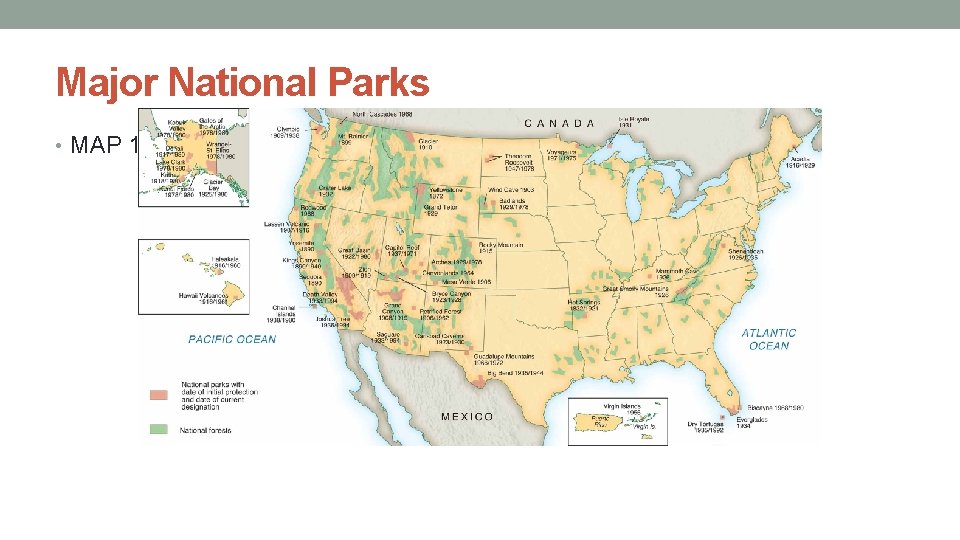
Major National Parks • MAP 19 -2, Major National Parks
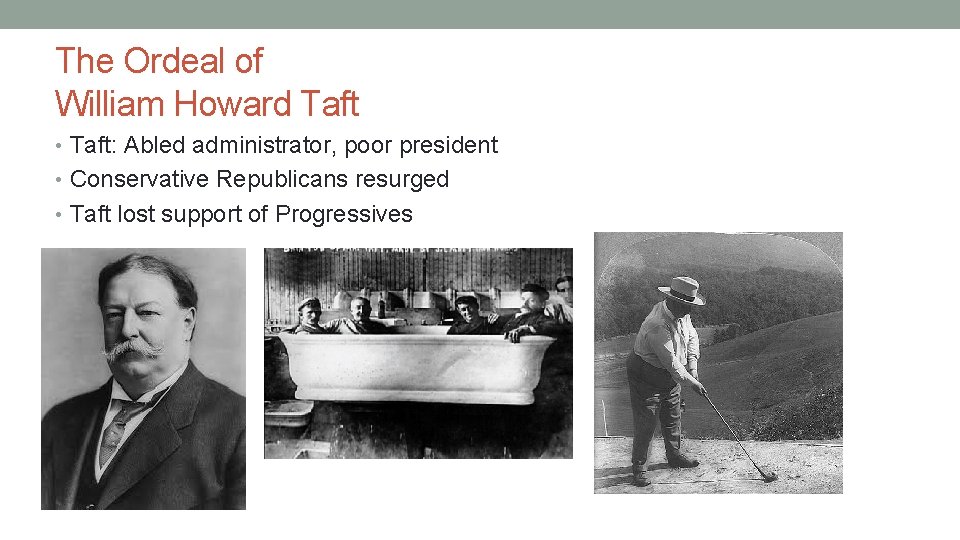
The Ordeal of William Howard Taft • Taft: Abled administrator, poor president • Conservative Republicans resurged • Taft lost support of Progressives
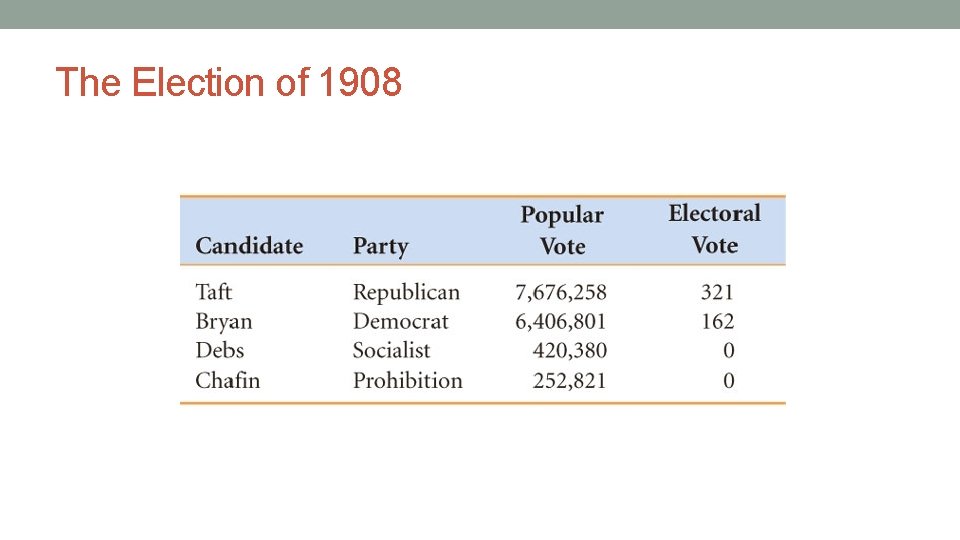
The Election of 1908
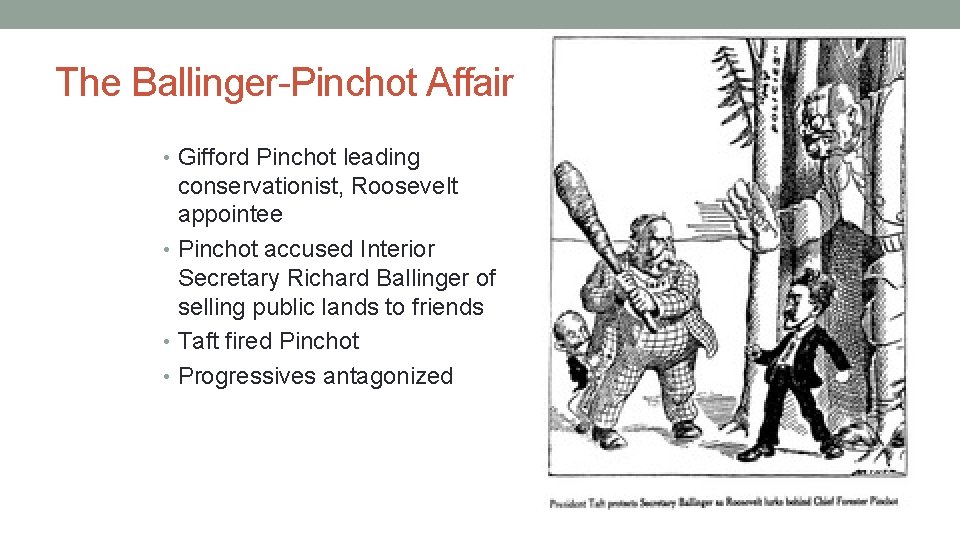
The Ballinger-Pinchot Affair • Gifford Pinchot leading conservationist, Roosevelt appointee • Pinchot accused Interior Secretary Richard Ballinger of selling public lands to friends • Taft fired Pinchot • Progressives antagonized
Taft Alienates the Progressives • 1910: Taft successfully pushed Mann- Elkins Act to strengthen ICC • Empowers ICC to fix railroad rates • Progressive Republicans attacked Taft’s plan of a Commerce Court to hear ICC appeals • Progressives obstructed Taft’s negotiations • 1910: Taft attacked Progressive Republicans, Democrats gained Congress
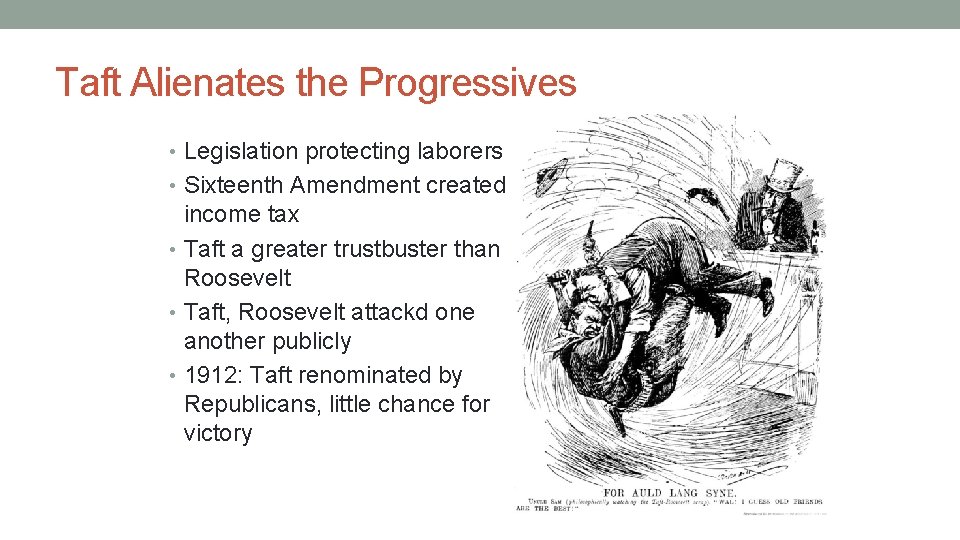
Taft Alienates the Progressives • Legislation protecting laborers • Sixteenth Amendment created income tax • Taft a greater trustbuster than Roosevelt • Taft, Roosevelt attackd one another publicly • 1912: Taft renominated by Republicans, little chance for victory
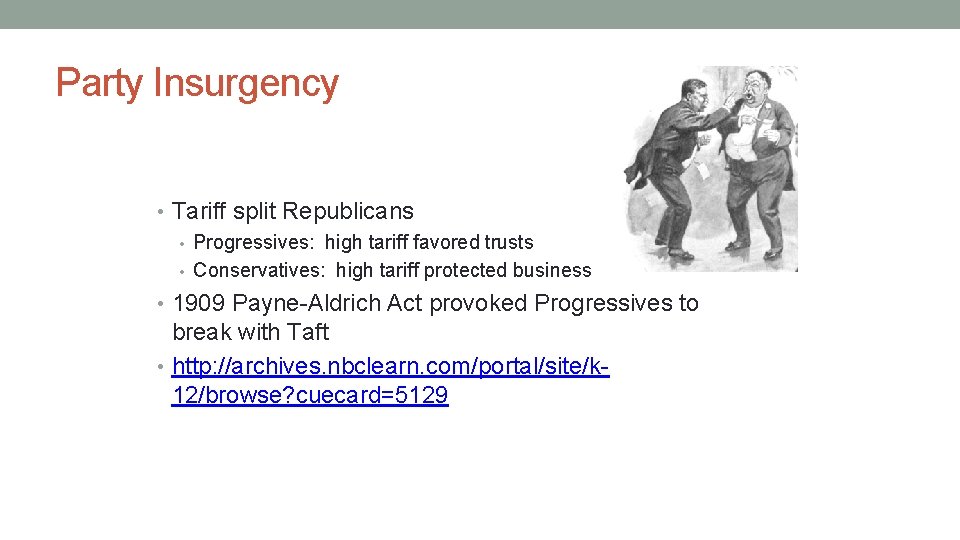
Party Insurgency • Tariff split Republicans • Progressives: high tariff favored trusts • Conservatives: high tariff protected business • 1909 Payne-Aldrich Act provoked Progressives to break with Taft • http: //archives. nbclearn. com/portal/site/k 12/browse? cuecard=5129
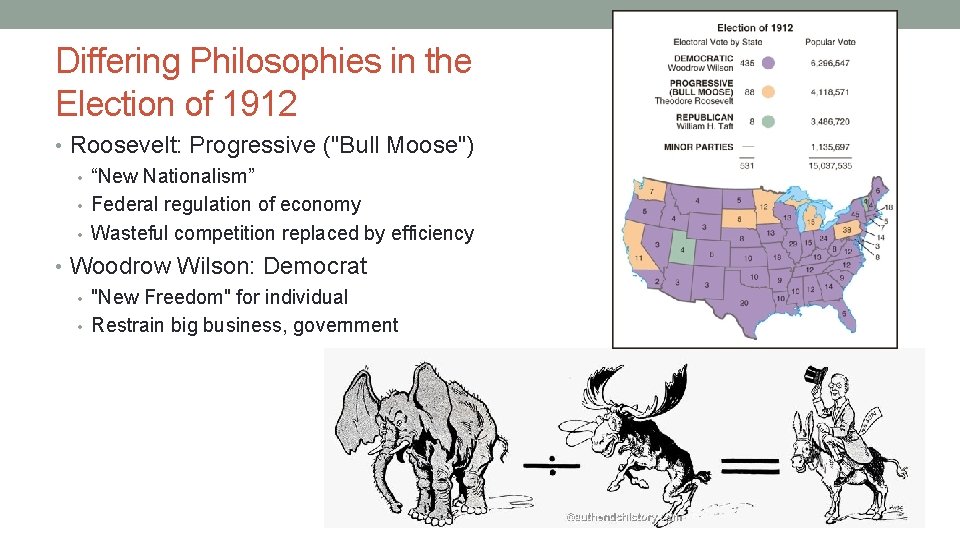
Differing Philosophies in the Election of 1912 • Roosevelt: Progressive ("Bull Moose") • “New Nationalism” • Federal regulation of economy • Wasteful competition replaced by efficiency • Woodrow Wilson: Democrat • "New Freedom" for individual • Restrain big business, government
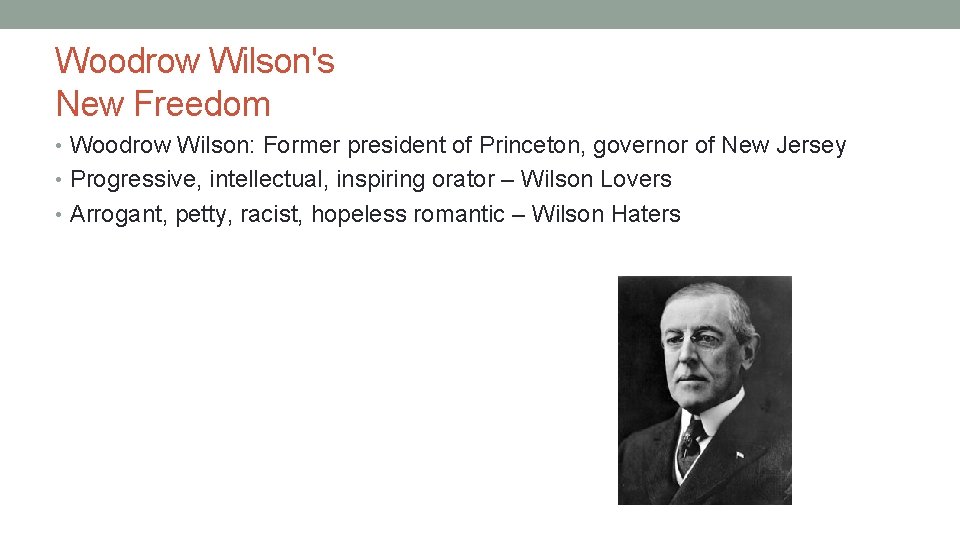
Woodrow Wilson's New Freedom • Woodrow Wilson: Former president of Princeton, governor of New Jersey • Progressive, intellectual, inspiring orator – Wilson Lovers • Arrogant, petty, racist, hopeless romantic – Wilson Haters
Woodrow Wilson’s New Freedom • Implemented his “New Freedom” program • Pledges of antitrust modification, tariff revision, and reform in banking and currency matters • Wilson failed miserably in race relations. • Wilson a staunch white supremacist • Allowed segregation in federal government offices, also anti-immigrant
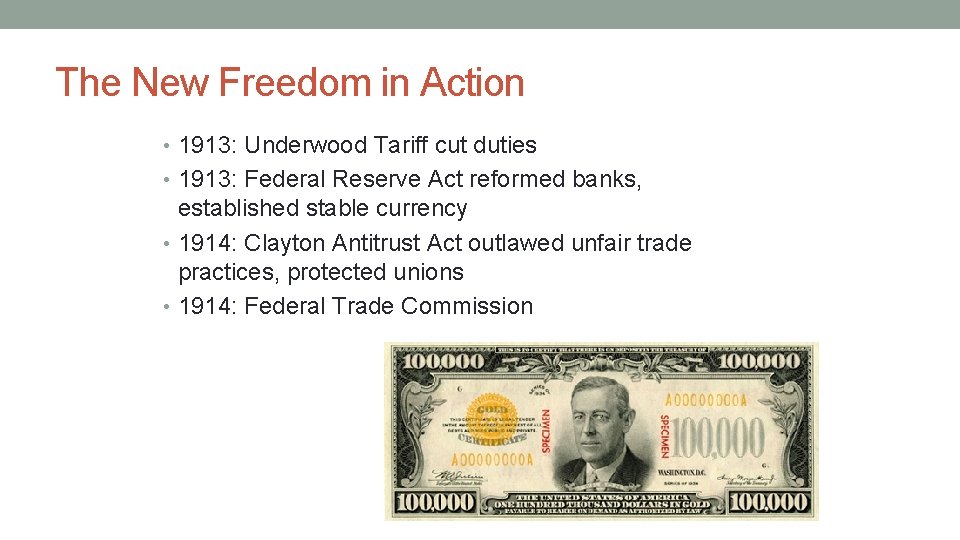
The New Freedom in Action • 1913: Underwood Tariff cut duties • 1913: Federal Reserve Act reformed banks, established stable currency • 1914: Clayton Antitrust Act outlawed unfair trade practices, protected unions • 1914: Federal Trade Commission
New Freedom in Action: Retreating from Reform • November, 1914: Wilson announces "New Freedom" has been achieved • It was “a time of healing because a time of just dealing” • Statement stunned many progressives
Wilson Moves Toward the New Nationalism • Reasons for the move • Distracted by the outbreak of war in Europe • Needed conservative Southern support • Republicans seemed to gain by attacking his programs • 1916: Presidential election
Wilson Moves Toward the New Nationalism • Wilson renewed reform in reelection bid • Federal Farm Loan Act • Intervened in strikes on behalf of workers • Attempted to ban child labor • Increased income taxes on the rich • Supported women’s suffrage • Program won Wilson a close election
The Fruits of the Progressivism • Reform of government at all levels • Intelligent planning of reform • World War I ends Progressive optimism
Period 6 LEQ • Evaluate the extent to which the Progressive Era (1890– 1920) marked a turning point in the history of women in the United States, analyzing what changed and what stayed the same from the period immediately before the Progressive Era to the period during and immediately after it.