
Chapter 19 Pricing Concepts Introduction Price the exchange
- Slides: 38
Chapter 19 Pricing Concepts
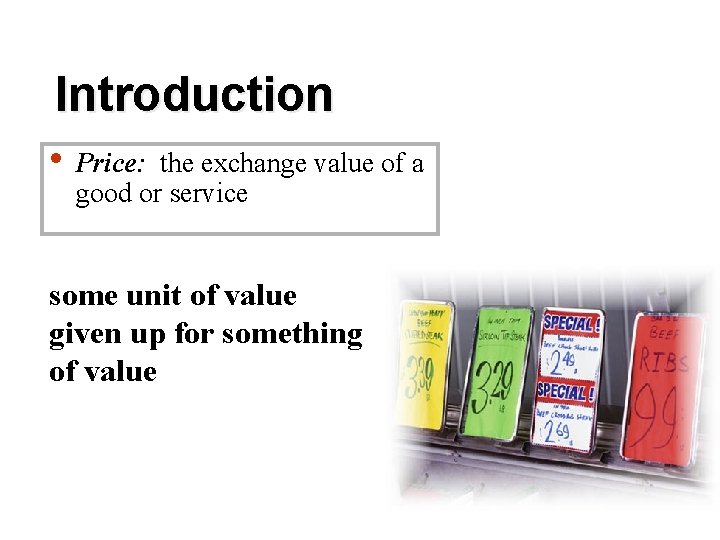
Introduction • Price: the exchange value of a good or service some unit of value given up for something of value
Other Terms • Terms Used • Tuition • Fare • Fine • Tip • Bribe
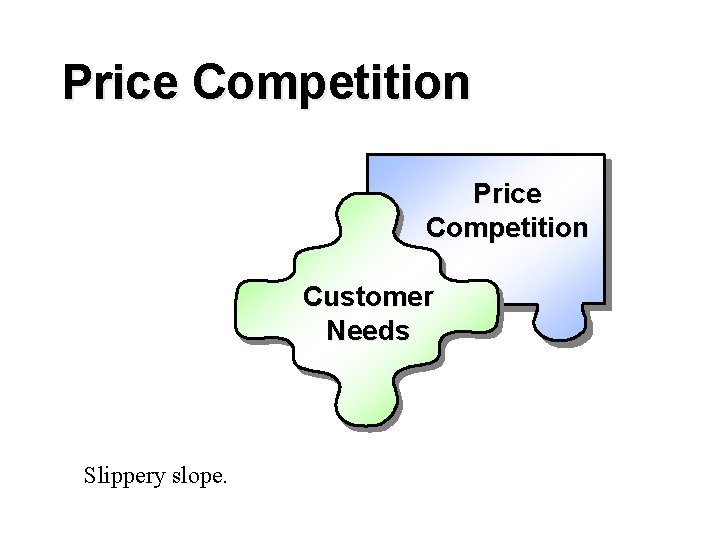
Price Competition Customer Needs Slippery slope.
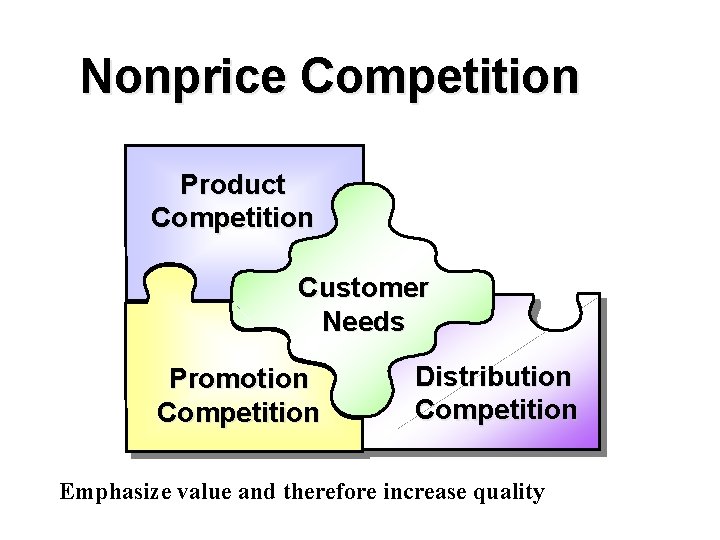
Nonprice Competition Product Competition Customer Needs Promotion Competition Distribution Competition Emphasize value and therefore increase quality
The Importance of Price to Marketers • Manage demand • Adapt to competitive environment • Psychology of the consumer • BOTTOMLINE issues
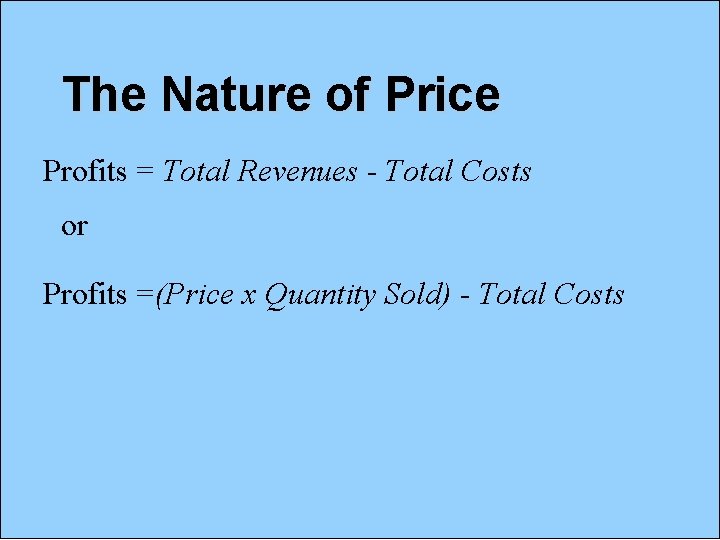
The Nature of Price Profits = Total Revenues - Total Costs or Profits =(Price x Quantity Sold) - Total Costs
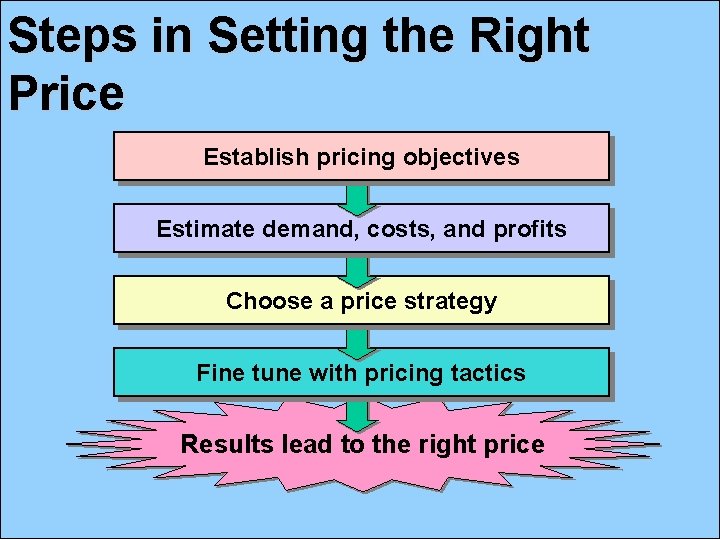
Steps in Setting the Right Price Establish pricing objectives Estimate demand, costs, and profits Choose a price strategy Fine tune with pricing tactics Results lead to the right price
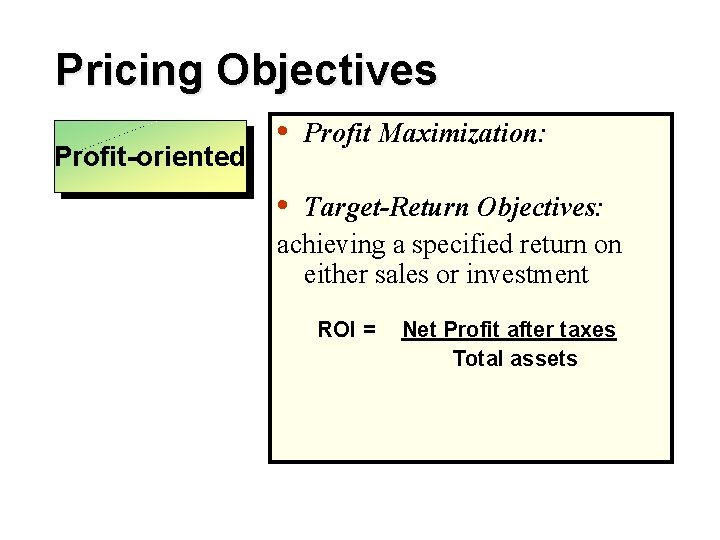
Pricing Objectives Profit-oriented • Profit Maximization: • Target-Return Objectives: achieving a specified return on either sales or investment ROI = Net Profit after taxes Total assets
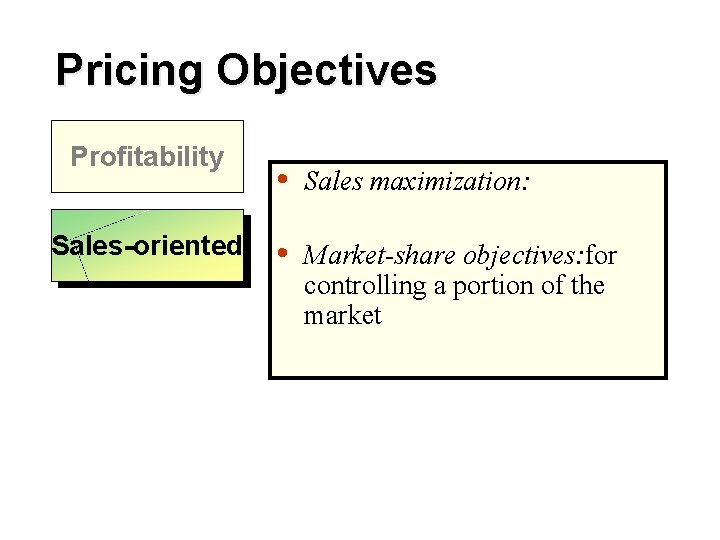
Pricing Objectives Profitability Sales-oriented • Sales maximization: • Market-share objectives: for controlling a portion of the market
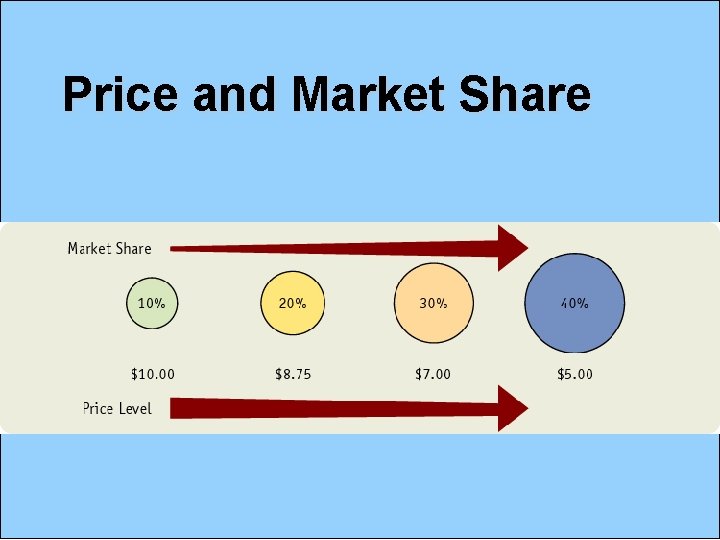
Price and Market Share
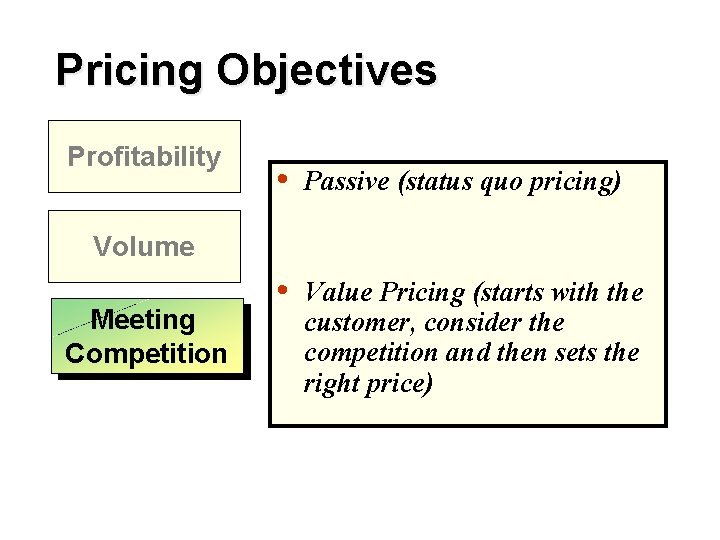
Pricing Objectives Profitability • Passive (status quo pricing) • Value Pricing (starts with the customer, consider the competition and then sets the right price) Volume Meeting Competition
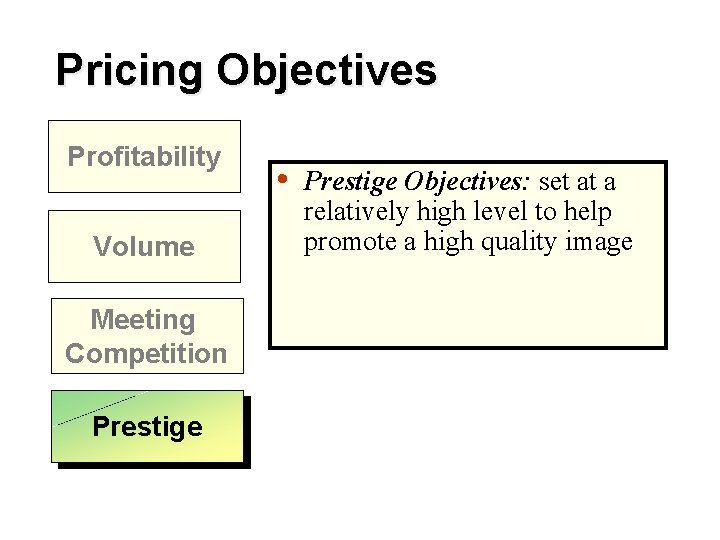
Pricing Objectives Profitability Volume Meeting Competition Prestige • Prestige Objectives: set at a relatively high level to help promote a high quality image
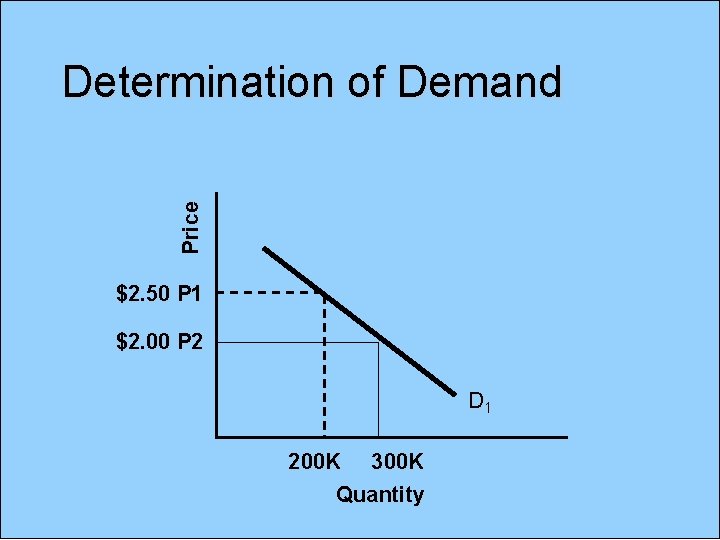
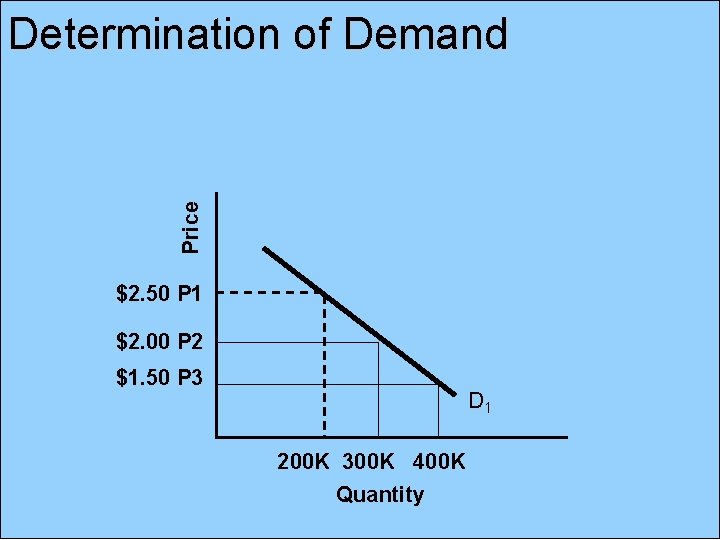
PRICE DETERMINATION IN ECONOMIC THEORY • Demand: schedule of the amounts of a firm’s good or service that consumers purchase at different prices during a specified period • Supply: schedule of the amounts of a good or service that firms will offer for sale at different prices during a specified time period.
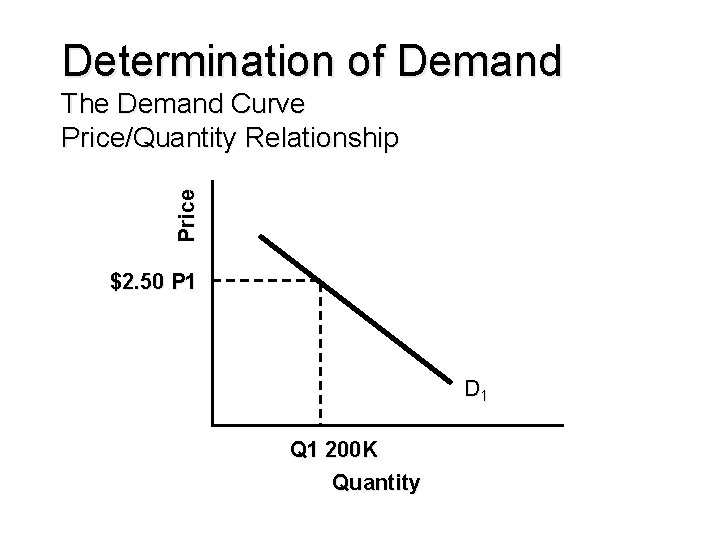
Determination of Demand Price The Demand Curve Price/Quantity Relationship $2. 50 P 1 D 1 Q 1 200 K Quantity
Price Determination of Demand $2. 50 P 1 $2. 00 P 2 D 1 200 K 300 K Quantity
Price Determination of Demand $2. 50 P 1 $2. 00 P 2 $1. 50 P 3 D 1 200 K 300 K 400 K Quantity
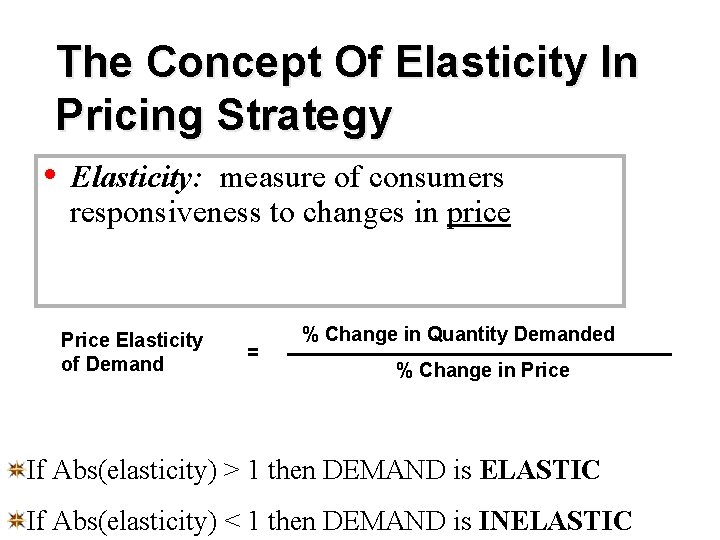
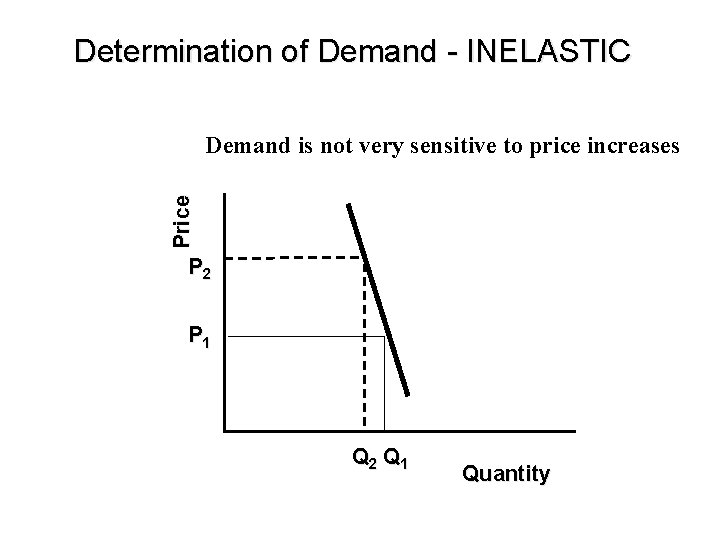
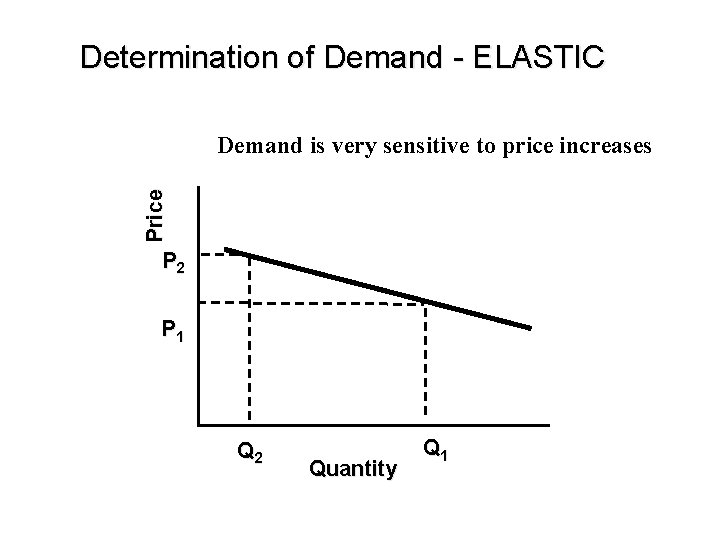
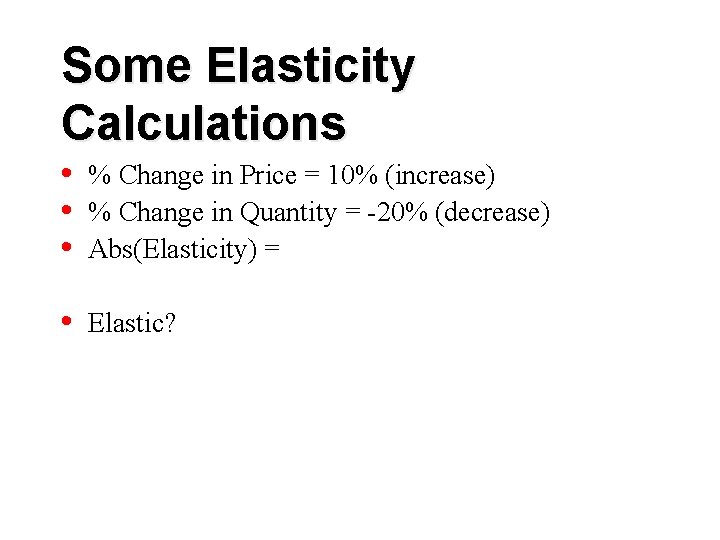
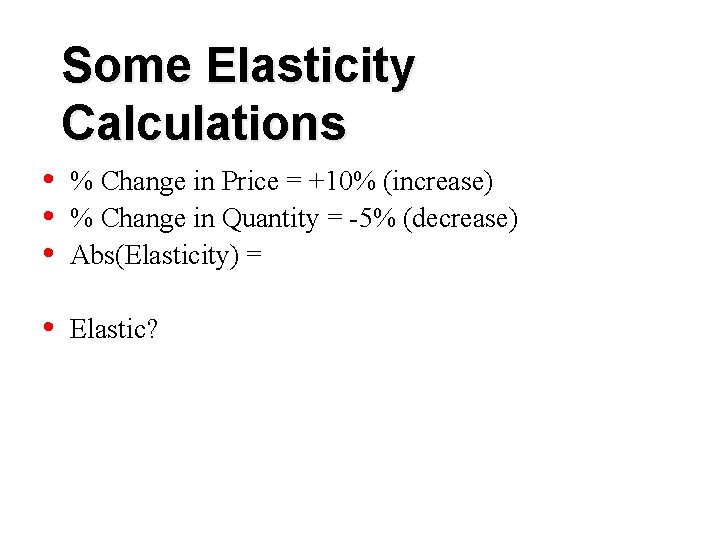
The Concept Of Elasticity In Pricing Strategy • Elasticity: measure of consumers responsiveness to changes in price Price Elasticity of Demand = % Change in Quantity Demanded % Change in Price If Abs(elasticity) > 1 then DEMAND is ELASTIC If Abs(elasticity) < 1 then DEMAND is INELASTIC
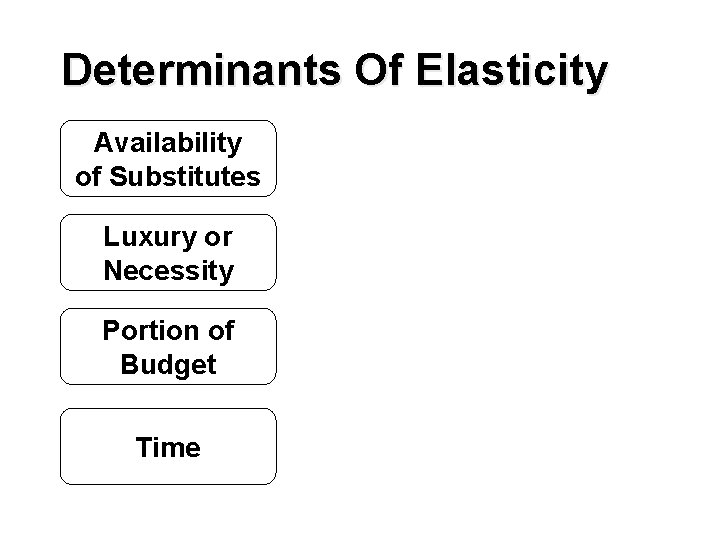
Determinants Of Elasticity Availability of Substitutes Luxury or Necessity Portion of Budget Time
Determination of Demand - INELASTIC Price Demand is not very sensitive to price increases P 2 P 1 Q 2 Q 1 Quantity
Determination of Demand - ELASTIC Price Demand is very sensitive to price increases P 2 P 1 Q 2 Quantity Q 1
Some Elasticity Calculations • • • % Change in Price = 10% (increase) % Change in Quantity = -20% (decrease) Abs(Elasticity) = • Elastic?
Some Elasticity Calculations • • • % Change in Price = +10% (increase) % Change in Quantity = -5% (decrease) Abs(Elasticity) = • Elastic?
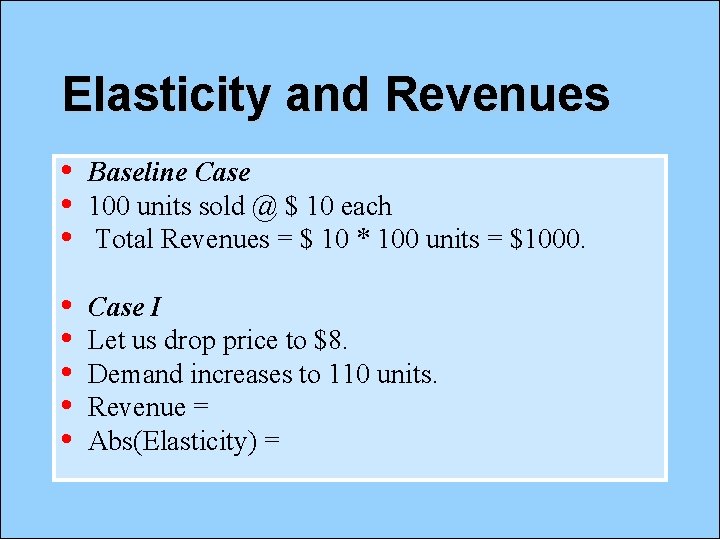
Elasticity and Revenues • • • Baseline Case 100 units sold @ $ 10 each Total Revenues = $ 10 * 100 units = $1000. • • • Case I Let us drop price to $8. Demand increases to 110 units. Revenue = Abs(Elasticity) =
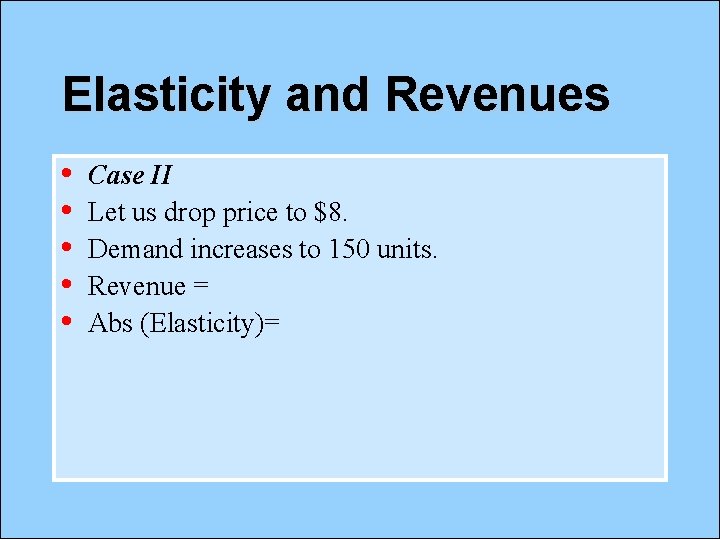
Elasticity and Revenues • • • Case II Let us drop price to $8. Demand increases to 150 units. Revenue = Abs (Elasticity)=
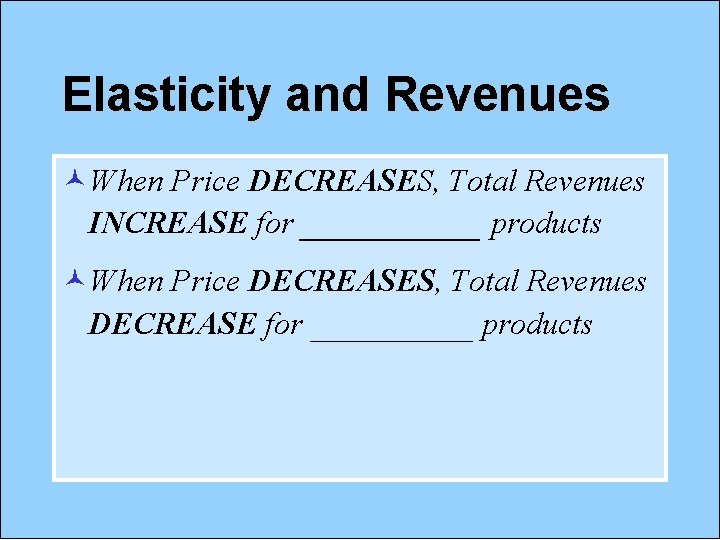
Elasticity and Revenues ©When Price DECREASES, Total Revenues INCREASE for _____ products ©When Price DECREASES, Total Revenues DECREASE for _____ products
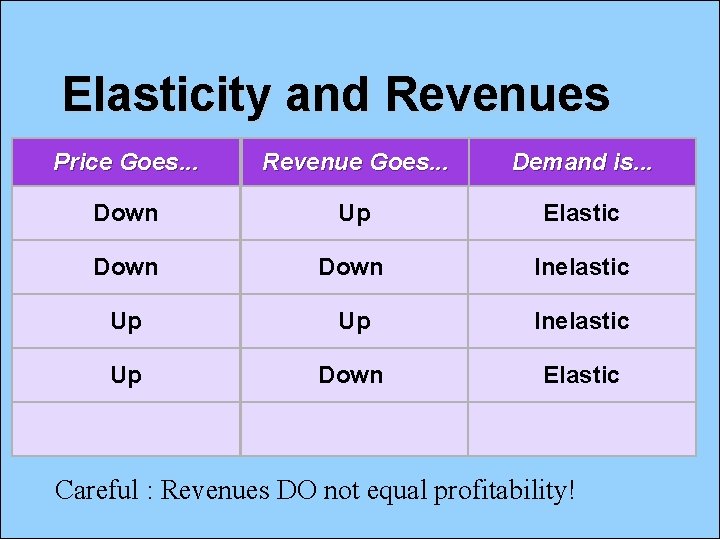
Elasticity and Revenues Price Goes. . . Revenue Goes. . . Demand is. . . Down Up Elastic Down Inelastic Up Up Inelastic Up Down Elastic Careful : Revenues DO not equal profitability!
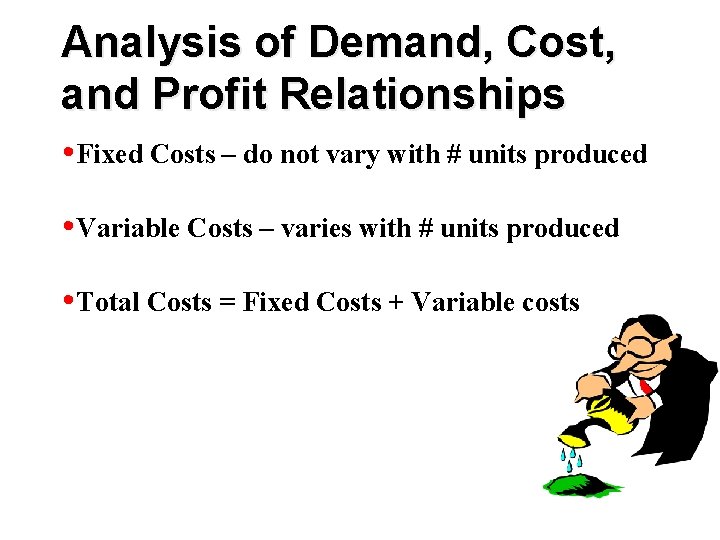
Analysis of Demand, Cost, and Profit Relationships • Fixed Costs – do not vary with # units produced • Variable Costs – varies with # units produced • Total Costs = Fixed Costs + Variable costs
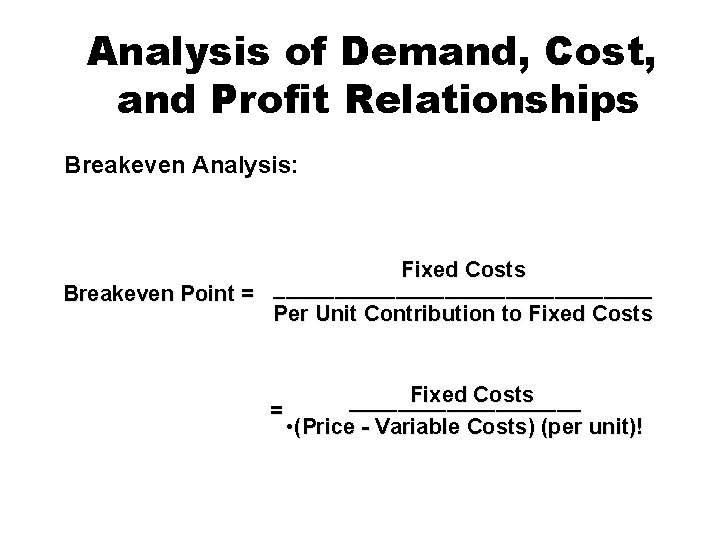
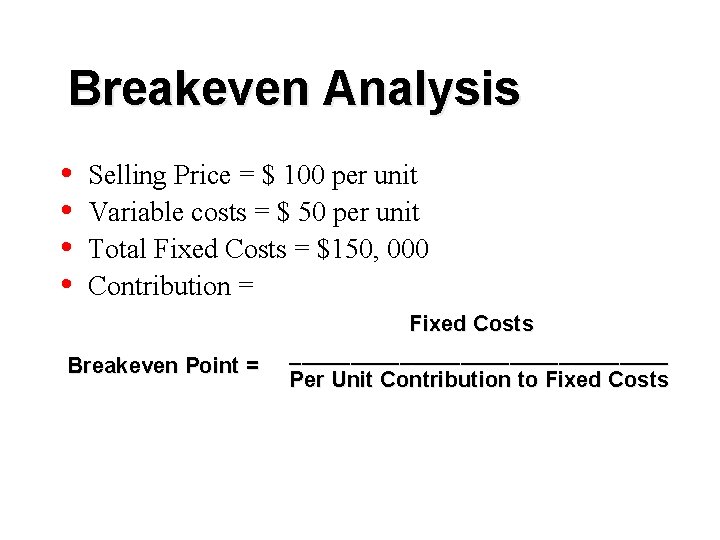
Analysis of Demand, Cost, and Profit Relationships Breakeven Analysis: Fixed Costs Breakeven Point = ________________ Per Unit Contribution to Fixed Costs __________ = • (Price - Variable Costs) (per unit)!
Evaluation of Breakeven Analysis • Effective tool in assessing the sales required for covering costs and achieving specified levels of profit. Sensitivity analysis. • Easily understood
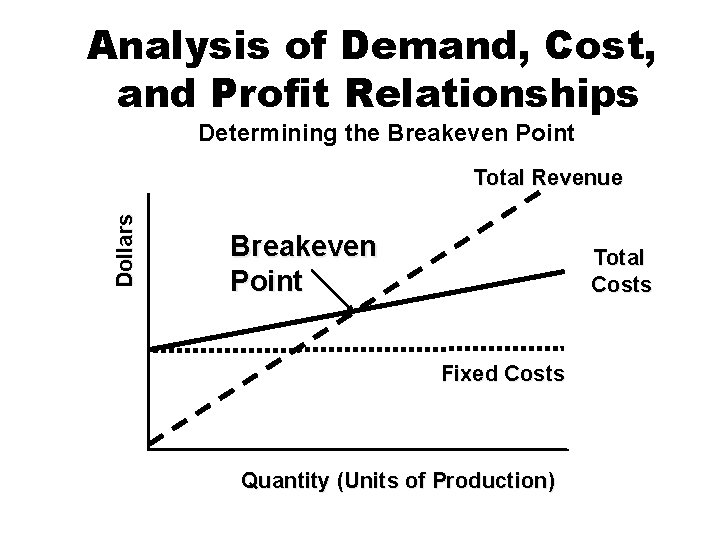
Analysis of Demand, Cost, and Profit Relationships Determining the Breakeven Point Dollars Total Revenue Breakeven Point Total Costs Fixed Costs Quantity (Units of Production)
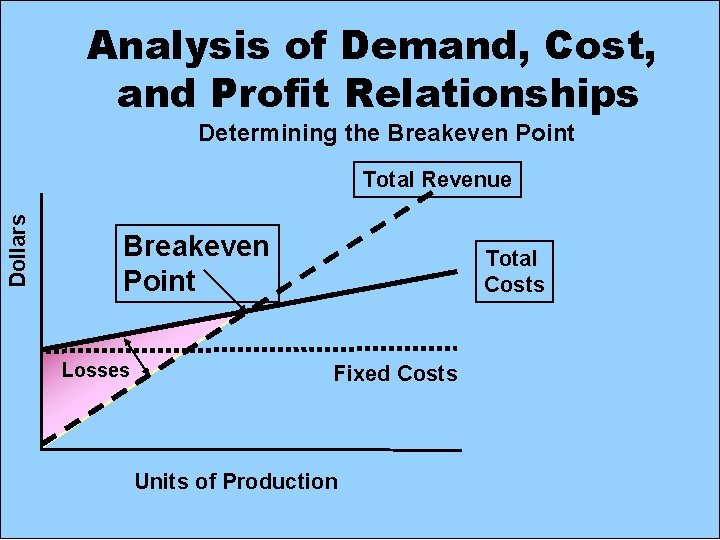
Analysis of Demand, Cost, and Profit Relationships Determining the Breakeven Point Dollars Total Revenue Breakeven Point Losses Total Costs Fixed Costs Units of Production
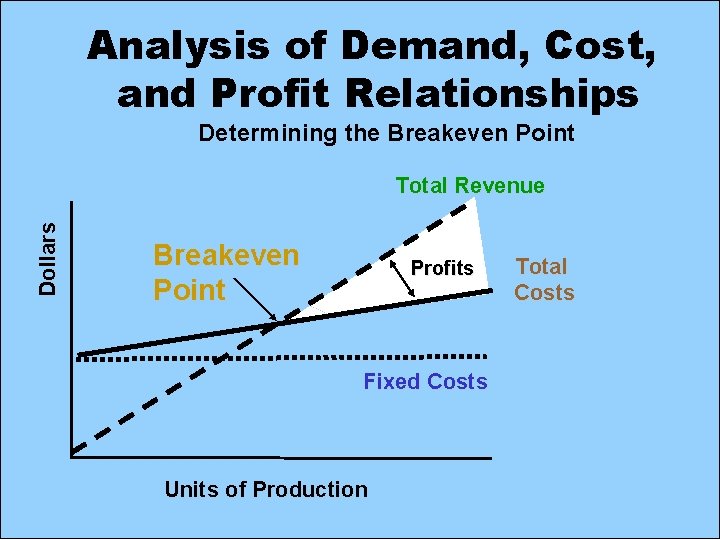
Analysis of Demand, Cost, and Profit Relationships Determining the Breakeven Point Dollars Total Revenue Breakeven Point Profits Fixed Costs Units of Production Total Costs
Breakeven Analysis • • Selling Price = $ 100 per unit Variable costs = $ 50 per unit Total Fixed Costs = $150, 000 Contribution = Breakeven Point = Fixed Costs ________________ Per Unit Contribution to Fixed Costs
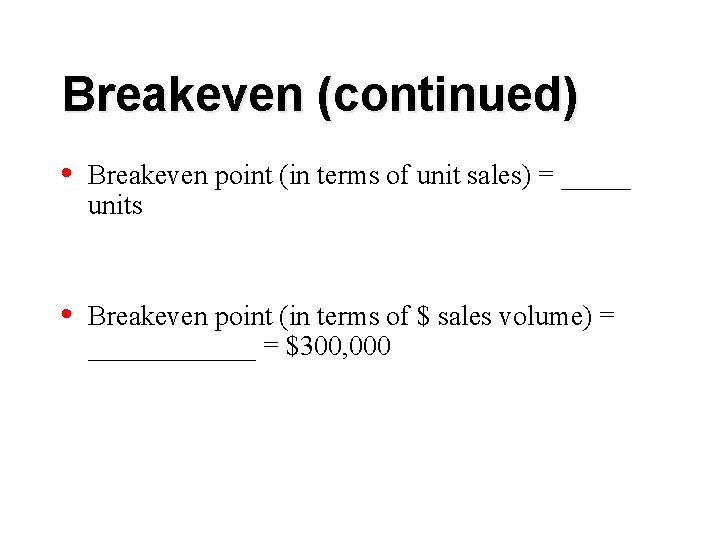
Breakeven (continued) • Breakeven point (in terms of unit sales) = _____ units • Breakeven point (in terms of $ sales volume) = ______ = $300, 000
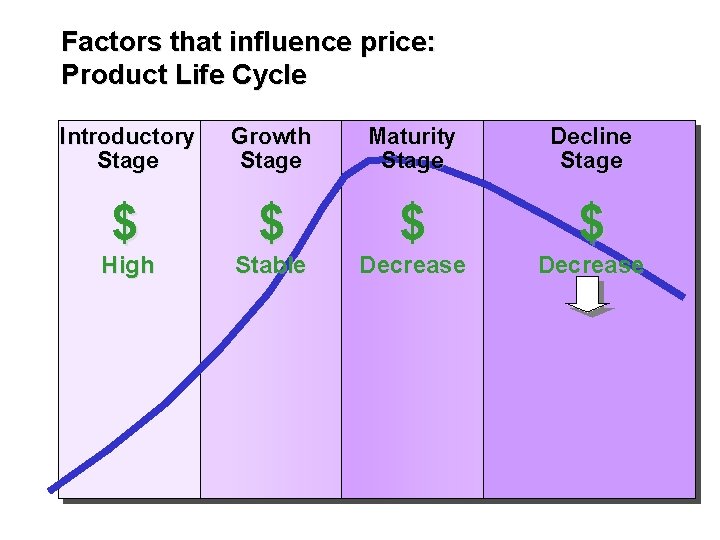
Factors that influence price: Product Life Cycle Introductory Stage Growth Stage Maturity Stage Decline Stage $ $ High Stable Decrease
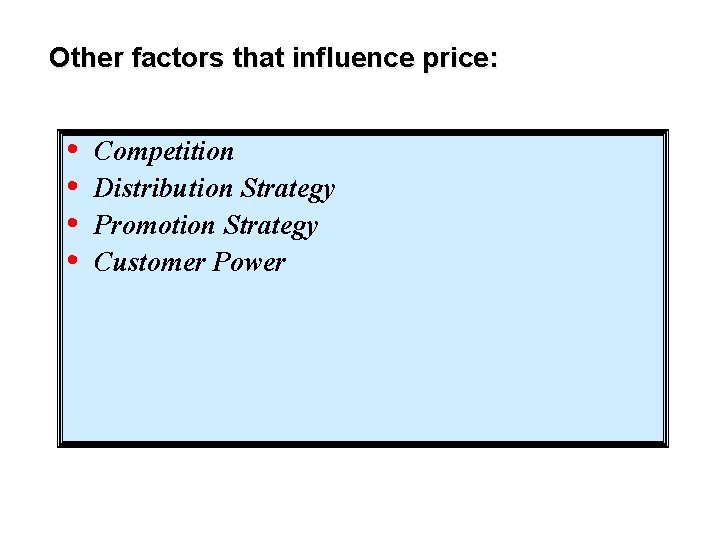
Other factors that influence price: • • Competition Distribution Strategy Promotion Strategy Customer Power